1. Search Result
Search Result
Results for "

5)P2

" in MedChemExpress (MCE) Product Catalog:

36

Inhibitors & Agonists

1

Fluorescent Dye

2

Biochemical Assay Reagents

4

Natural
Products

2

Isotope-Labeled Compounds

12

Oligonucleotides

Cat. No. Product Name Target Research Areas Chemical Structure
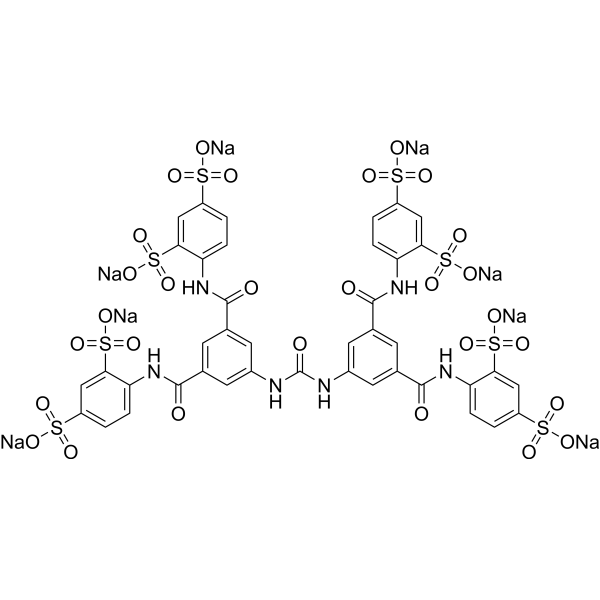
  • HY-112461A
    NF449 octasodium
    4 Publications Verification

    P2X Receptor Cardiovascular Disease
    NF449 octasodium is a highly potent P2X1 receptor antagonist, with IC50s of 0.28, 0.69, and 120 nM for rP2X1, rP2X1+5, P2X2+3, respectively. NF449 octasodium is a G-selective G Protein antagonist. NF449 octasodium suppresses the rate of GTP[γS] binding to Gsα-s, inhibits the stimulation of adenylyl cyclase activity, and blocks the coupling of β-adrenergic receptors to Gs .
    NF449 octasodium
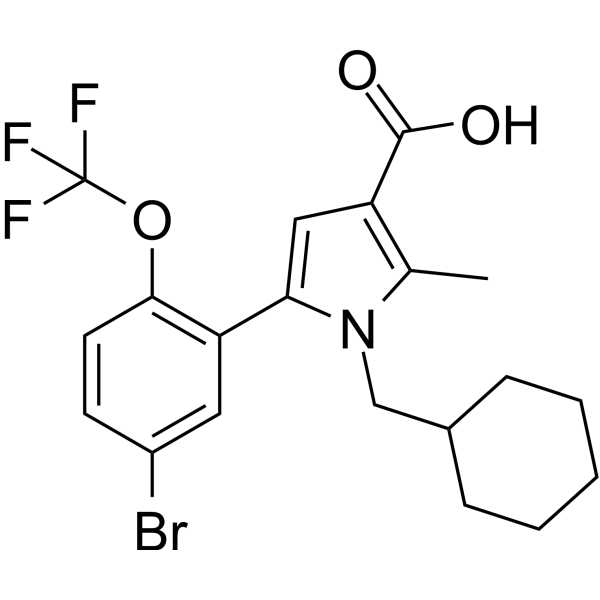
  • HY-125118
    GSK-A1
    2 Publications Verification

    PI4K HCV Infection
    GSK-A1 is a selective type III phosphatidylinositol 4-kinase PI4KA (PI4KIIIα) inhibitor with a pIC50 of 8.5-9.8. GSK-A1 inhibits PtdIns(4,5)P2 resynthesis with an IC50 of about 3 nM. GSK-A1 potently decreases the levels of PtdIns(4)P with a negligible effect on PtdIns(4,5)P2. GSK-A1 has the potential for anti-hepatitis C virus (HCV) research .
    GSK-A1
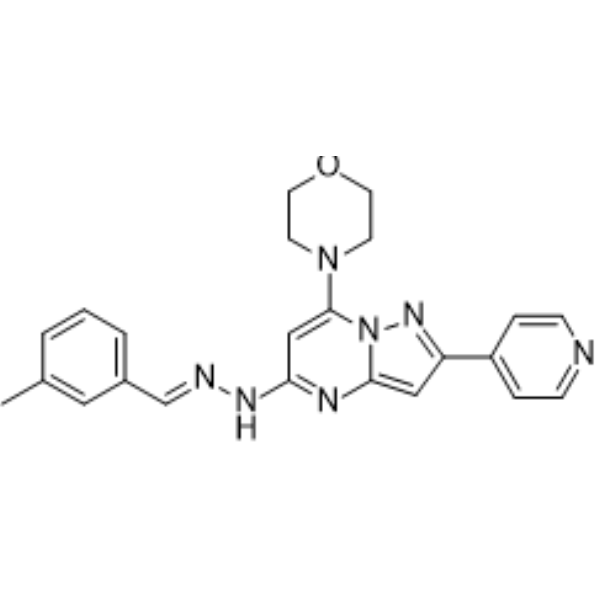
  • HY-15982
    APY0201
    5+ Cited Publications

    PIKfyve Interleukin Related Inflammation/Immunology
    APY0201 is a potent PIKfyve inhibitor, which inhibits the conversion of PtdIns3P to PtdIns(3,5)P2 in the presence of in the presence of [ 33P]ATP with an IC50 of 5.2 nM. APY0201 also inhibits IL-12/IL-23 production.
    APY0201
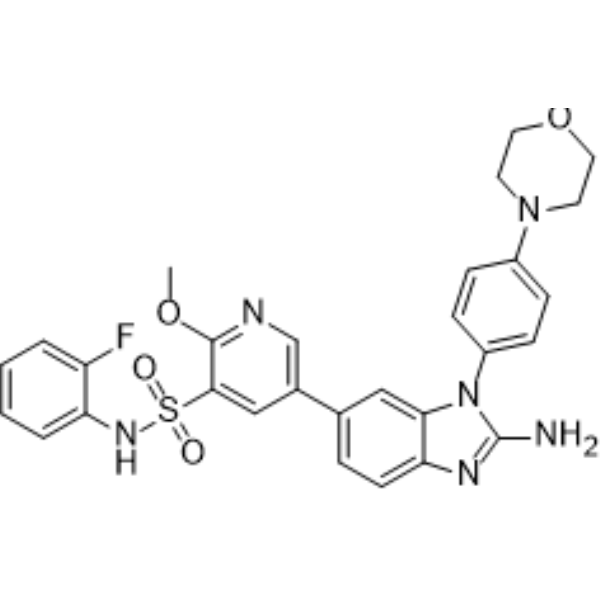
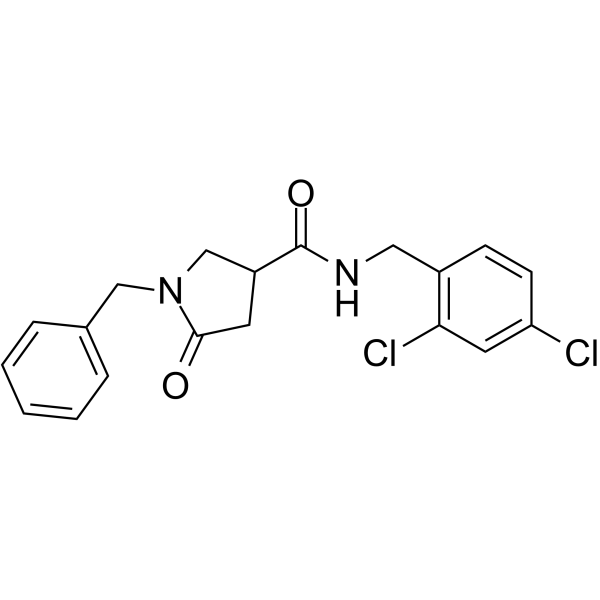
  • HY-115675

    PI4K Others
    NC03 is a PI4K2A inhibitor and reducing agent. NC03 inhibits the activity of PI4K2A, thereby reducing the production of PI4P in the cellular compartments where PI4K2A functions. NC03 rapidly induces a decrease in PI4P pools in the Golgi and endosomal compartments. NC03 reduces PI4P production in Rab7-positive late endosomes .
    NC03
  • HY-131615
    TPC2-A1-P
    4 Publications Verification

    Sodium Channel Others
    TPC2-A1-P is a powerful and membrane permeable agonist of two pore channel 2 (TPC2) with an EC50 of 10.5 μM. TPC2-A1-P plays its role by mimicking the physiological actions of PI(3,5)P2. TPC2-A1-P also shows higher potency to induce Na 2+ mobilisation from TPC2 than TPC-A1-N (HY-131614). TPC2-A1-P can be used to probe different functions of TPC2 channels in intact cells .
    TPC2-A1-P
  • HY-131614
    TPC2-A1-N
    Maximum Cited Publications
    8 Publications Verification

    Calcium Channel Others
    TPC2-A1-N is a powerful and Ca 2+-permeable agonist of two pore channel 2 (TPC2), which plays its role by mimicking the physiological actions of NAADP. TPC2-A1-P reproducibly evokes significant Ca 2+ responses from TPC2 (EC50=7.8 μM), and the effect can be blocked by several TPC blockers. TPC2-A1-N can be used to probe different functions of TPC2 channels in intact cells .
    TPC2-A1-N
  • HY-175067

    DHPI-4,5-P2 sodium salt; PI(4,5)P2 (6:0/6:0) sodium salt; PIP2[4',5'](6:0/6:0) sodium salt

    Biochemical Assay Reagents Others
    PtdIns-(4,5)-P2 (1,2-dihexanoyl) (sodium salt) is a synthetic analog of natural Ptdlns with C6:0 fatty acids at the sn-1 and sn-2 positions.
    PtdIns-(4,5)-P2 (1,2-dihexanoyl) sodium salt
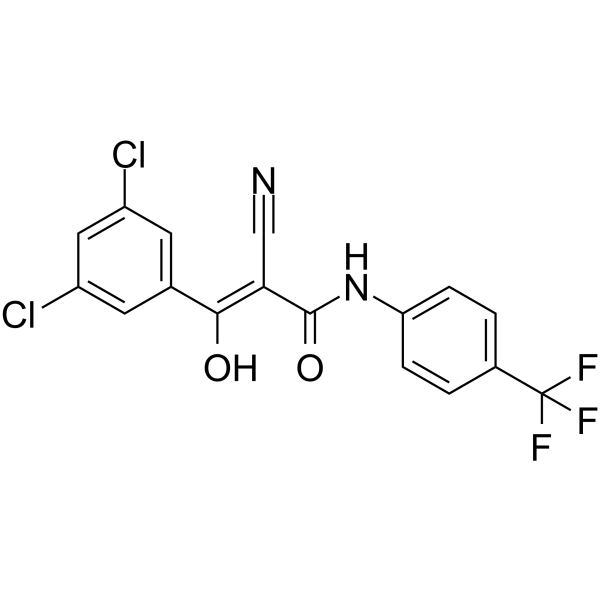
  • HY-112461

    P2X Receptor Cardiovascular Disease
    NF449 is a highly potent P2X1 receptor antagonist, with IC50s of 0.28, 0.69, and 120 nM for rP2X1, rP2X1+5, P2X2+3, respectively. NF449 is a G-selective G Protein antagonist. NF449 suppresses the rate of GTP[γS] binding to Gsα-s, inhibits the stimulation of adenylyl cyclase activity, and blocks the coupling of β-adrenergic receptors to Gs .
    NF449
  • HY-114457

    L-alpha-Phosphatidylinositol-4,5-bisphosphate; (PtdIns)-(4,5)-P2

    Phospholipase Inflammation/Immunology
    Phosphatidylinositol 4,5-bisphosphate (L-alpha-Phosphatidylinositol-4,5-bisphosphate) is a plasma membrane lipid that is enriched in the cytoplasmic leaflet of the plasma membrane. Phosphatidylinositol 4,5-bisphosphate serves as a substrate for phospholipase C and class I PI3K, generating diacylglycerol, inositol (1,4,5)-trisphosphate, and phosphatidylinositol (3,4,5)-trisphosphate. Phosphatidylinositol 4,5-bisphosphate contributes to lamellipodial protrusion, directional cell migration, focal adhesion lipid generation, and trafficking of the GABAA receptor. Phosphatidylinositol 4,5-bisphosphate can be used in research related to acute lung injury and pulmonary edema .
    Phosphatidylinositol 4,5-bisphosphate
  • HY-172741

    Drug Derivative Metabolic Disease
    Dioctanoyl PI(3,5)P2 sodium is a synthetic analog of PI(3,5)P2 (a natural phosphatidylinositol). Phosphatidylinositol phosphates (PIPs) are intracellular amphiphilic molecules implicated in numerous cellular responses including growth, division, movement, differentiation, neuro-exocytosis, and survival .
    Dioctanoyl PI(3,5)P2 sodium
  • HY-150059

    P2X Receptor Neurological Disease Inflammation/Immunology
    P2X7 receptor antagonist-2 is a potent P2X7 receptor antagonist with a pIC50 value of 6.5-7.5. P2X7 receptor antagonist-2 has efficacy of combating neuroinflammation .
    P2X7 receptor antagonist-2
  • HY-157712

    Biochemical Assay Reagents Others
    08:0 PI(4,5)P2 ammonium is suitable for identifying its binding site at the transient receptor potential vanilloid 4 (TRPV 4 N) terminus .
    08:0 PI(4,5)P2 ammonium
  • HY-149152

    Drug Derivative Metabolic Disease
    PtdIns-(4,5)-P2 (1,2-dioctanoyl) is a synthetic derivative of phosphatidylinositol.
    PtdIns-(4,5)-P2 (1,2-dioctanoyl)
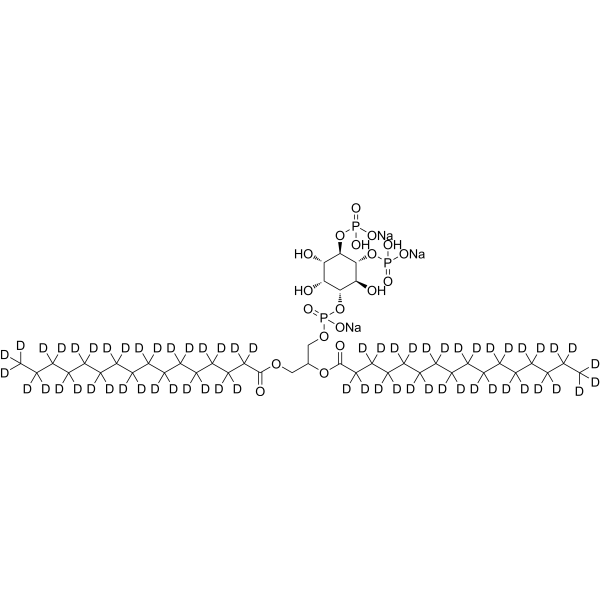
  • HY-139926S

    Isotope-Labeled Compounds Others
    PtdIns-(4,5)-P2 (1,2-dipamitoyl)-d62 (trisodium) is the deuterium labeled PtdIns-(4,5)-P2 (1,2-dipamitoyl) trisodium .
    PtdIns-(4,5)-P2 (1,2-dipamitoyl)-d62 trisodium
  • HY-146835S

    Isotope-Labeled Compounds Others
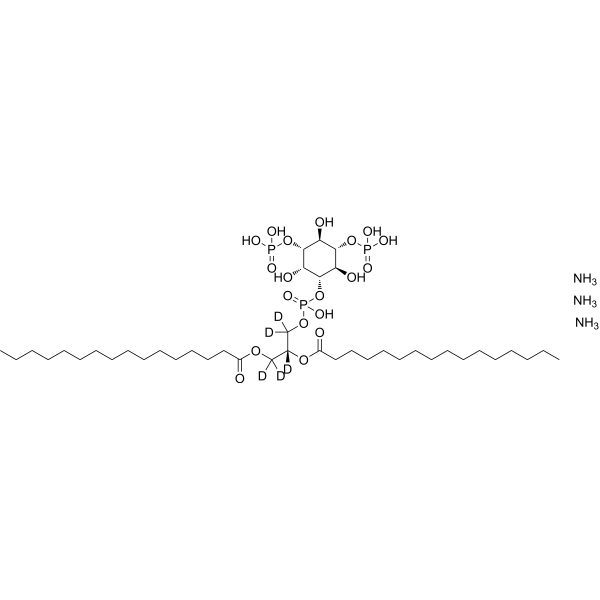
    (Rac)-16:0PI(3,5)P2-d5 (ammonium) is deuterium labeled (Rac)-16:0PI(3,5)P2 (ammonium).
    (Rac)-16:0PI(3,5)P2-d5 ammonium
  • HY-N15977

    Biochemical Assay Reagents Others
    18:1-6:0 Biotin PI(3,5)P2 ammonium is a biotinylated lipid.
    18:1-6:0 Biotin PI(3,5)P2 ammonium)
  • HY-RI02996A

    MicroRNA Cancer
    mmu-miR-3102-5p.2-5p antagomirs are chemically-modified oligonucleotides that hybridize with mature miRNAs. The miRNA antagomirs have 2 phosphorothioates at the 5' end, 4 phosphorothioates at the 3' end, 1 cholesterol group at the 3' end, and full-length nucleotide 2'-methoxy modification. The miRNA antagomirs strongly compete with mature miRNAs to prevent the complementary pairing of miRNAs and their target genes, thereby inhibiting miRNAs from functioning. Stability of miRNA antagomirs appears to be significantly higher than miRNA inhibitors, they exhibits enhanced cellular uptake, stability and regulatory activity in vivo.
    mmu-miR-3102-5p.2-5p antagomir
    mmu-miR-3102-5p.2-5p antagomir
  • HY-171899A

    GroPI(4,5)P2 trisodium; GPIP2 trisodium

    Calcium Channel Others
    Glycerophosphoinositol 4,5-diphosphate (GroPI(4,5)P2) trisodium is a slowly metabolized analog of InsP3. Glycerophosphoinositol 4,5-diphosphate trisodium has an EC50 of 1.228 μM for inducing calcium release, with a degradation time constant of 13 seconds. Glycerophosphoinositol 4,5-diphosphate trisodium can be used to study the effect of InsP3 degradation on calcium signal recovery .
    Glycerophosphoinositol 4,5-diphosphate trisodium
  • HY-157703

    1,2-Dioleoyl-sn-glycero-3-phospho-1′-myo-inositol-4′,5′-bisphosphate ammonium

    Biochemical Assay Reagents
    18:1 PI(4,5)P2 (1,2-Dioleoyl-sn-glycero-3-phospho-(1′-myo-inositol-4′,5′-bisphosphate) (ammonium)) is a kind of biochemical reagent.
    18:1 PI(4,5)P2
  • HY-175386

    Ins(4,5)-P2 sodium; 4,5-IP2 sodium

    Endogenous Metabolite Others
    D-myo-Inositol-4,5-diphosphate (sodium) is one of the members in inositol phosphate family of second messengers that play an important role in transmitting cellular signals. D-myo-Inositol-4,5-diphosphate (sodium) can open calcium channels and increase intracellular calcium upon binding to its receptor on the endoplasmic reticulum .
    D-myo-Inositol-4,5-diphosphate sodium
  • HY-E70631

    PI3K Cancer
    PIP5K1A phosphorylates PI4P to synthesize the important signalling phospholipid PI(4,5)P2. This phospholipid also serves as the substrate for PI3K for conversion into PI(3,4,5)P3 to stimulate cell growth and survival. PIP5K1A has been directly implicated in breast cancer and prostate cancer. PIP5K1A Recombinant Human Active Lipid Kinase is a recombinant PIP5K1A protein that can be used to study PIP5K1A-related functions .
    PIP5K1A Recombinant Human Active Lipid Kinase
  • HY-148972

    Liposome Others
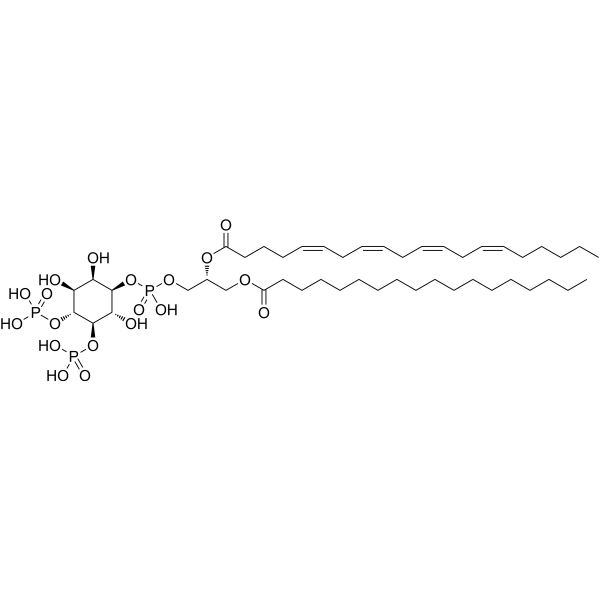
    PI(3,5)P2 diC16 is a synthetic inositol phospholipid. PI(3,5)P2 diC16 is a lipid molecule .
    PI(3,5)P2 diC16
  • HY-D3302

    DOPI-4,5-P2-biotin sodium; Phosphatidylinositol-4,5-diphosphate C-8-biotin sodium; PI(4,5)P2-biotin sodium

    Biochemical Assay Reagents Others
    PtdIns-(4,5)-P2-biotin (DOPI-4,5-P2-biotin) sodium is a biotin-labeled phosphatidylinositol 4,5-bisphosphate (PIP2) derivative. PtdIns-(4,5)-P2-biotin sodium uses a biotin tag to capture and purify natural PIP2 molecules and their interacting proteins.
    PtdIns-(4,5)-P2-biotin sodium
  • HY-175083

    Drug Derivative PI3K Others
    PtdIns-(4,5)-P2-biotin trisodium is a Biotin-labeled PtdIns-(4,5)-P2 analog. PtdIns-(4,5)-P2-biotin trisodium is an affinity probe of PI3Kγ. PI3Kγ can catalyse the phosphorylation of PtdIns-(4,5)-P2 at the 3′-OH group, giving rise to the second messenger PtdIns(3,4,5)-P3 .
    PtdIns-(4,5)-P2-biotin trisodium
  • HY-179554

    PI(4,5)P2-fluorescein triethylammonium

    Fluorescent Dye Others
    PtdIns-(4,5)-P2-fluorescein (PI(4,5)P2-fluorescein) triethylammonium is a fluorescently labeled phosphatidylinositol-4,5-bisphosphate, which is a marked form of an important phospholipid signaling molecule (PIP2) on the cell membrane. PtdIns-(4,5)-P2-fluorescein triethylammonium can be used to detect proteins that interact with phosphatidylinositol-4,5-bisphosphate, such as PI3K, PTEN, and PH domain proteins, etc .
    PtdIns-(4,5)-P2-fluorescein triethylammonium
  • HY-181446

    Endogenous Metabolite Others
    PtdIns-(4,5)-P2 (1,2-dipalmitoyl) ammonium (PI(4,5)P2) is a signaling molecule. PtdIns-(4,5)-P2 (1,2-dipalmitoyl) ammonium is critical at multiple stages of endocytosis, where it sequentially recruits adaptor proteins and accessory proteins to endocytic sites. PtdIns-(4,5)-P2 (1,2-dipalmitoyl) ammonium is considered essential for maintaining the structure of the Golgi apparatus and the transport of proteins within the Golgi apparatus .
    PtdIns-(4,5)-P2 (1,2-dipalmitoyl) ammonium
  • HY-172326

    Biochemical Assay Reagents Phospholipase Others
    DPPI-4,5-P2 ammonium is a sudstrate of Phosphoinositide-specific phospholipase C-δ1 (PI-PLC-δ1) .
    DPPI-4,5-P2 ammonium
  • HY-179898

    Biochemical Assay Reagents Metabolic Disease
    BODIPY TMR PI(4,5)P2 ester ammonium is a lipid that can be used to prepare lipid nanoparticles (LNPs) for drug delivery.
    BODIPY TMR PI(4,5)P2 ester ammonium
  • HY-N16001

    Biochemical Assay Reagents Others
    18:1-6:0 Biotin PI(4,5)P2 triammonium is a biotinylated lipid.
    18:1-6:0 Biotin PI(4,5)P2 triammonium
  • HY-R02996

    MicroRNA Cancer
    mmu-miR-3102-5p.2-5p mimics are small, chemically synthesized double-stranded RNAs that mimic endogenous miRNAs and enable miRNA functional analysis by up-regulation of miRNA activity.
    mmu-miR-3102-5p.2-5p mimic
    mmu-miR-3102-5p.2-5p mimic
  • HY-176831

    Ins(1,5)-P2 sodium; 1,5-IP2 sodium

    Endogenous Metabolite Others
    D-myo-Inositol-1,5-diphosphate (Ins(1,5)-P2) sodium is a member of the inositol phosphate molecular family .
    D-myo-Inositol-1,5-diphosphate sodium
  • HY-RI02996

    MicroRNA Cancer
    mmu-miR-3102-5p.2-5p inhibitors are chemically-modified oligonucleotides that hybridize with mature miRNAs. The miRNA inhibitors have full-length nucleotide 2'-methoxy modification. The miRNA inhibitors strongly compete with mature miRNAs to prevent the complementary pairing of miRNAs and their target genes, thereby inhibiting miRNAs from functioning.
    mmu-miR-3102-5p.2-5p inhibitor
    mmu-miR-3102-5p.2-5p inhibitor
  • HY-N16330

    Fluorescent Dye Others
    14:0-6:0(C2 NBD) PI(4,5)P2 TEA is a fluorescent lipid labeled with Nitrobenzoxadiazole (NBD) (Ex/Em = 460/540 nm).
    14:0-6:0(C2 NBD) PI(4,5)P2 TEA
  • HY-R02996A

    MicroRNA Cancer
    mmu-miR-3102-5p.2-5p agomirs are chemically-modified double-strand miRNA mimics with modified mature miRNA strand: 2 phosphorothioates at the 5' end, 4 phosphorothioates at the 3' end, 3' end cholesterol group, and full-length nucleotide 2'-methoxy modification. They are designed to mimic endogenous miRNAs and recommended for miRNA functional studies. Compared with miRNA mimics, they exhibits enhanced cellular uptake, stability and regulatory activity in vivo.
    mmu-miR-3102-5p.2-5p agomir
    mmu-miR-3102-5p.2-5p agomir
  • HY-172325

    Biochemical Assay Reagents Others
    DPPI-5-P (ammonium) (PtdIns-(5)-P1) can be phosphorylated to form disphosphates such as PtdIns-(4,5)-P2. DPPI-5-P (ammonium) can also be cleaved by PI-specific phospholipase C (PLC) to give inositol triphosphates .
    DPPI-5-P ammonium
  • HY-E70632

    Biochemical Assay Reagents Neurological Disease
    PIP5K1B participates in the biosynthesis of PI(4,5)P2. PIP5K1B is at the crossroad of different signaling pathways, mediating RAC1-dependent reorganization of actin filaments and contributing to the activation of phospholipase D2. PIP5K1B Recombinant Human Active Lipid Kinase can be used for the study of Friedreich’s ataxia (FRDA) .
    PIP5K1B Recombinant Human Active Lipid Kinase

Inquiry Online

Your information is safe with us. * Required Fields.

Salutation


Country or Region *

Applicant Name *


Organization Name *

Department *


Email Address *


Product Name *

Cat. No.


Requested quantity *

Phone Number *


Remarks

Inquiry Online

Inquiry Information

Product Name:
Cat. No.:
Quantity:
MCE Japan Authorized Agent:

