1. Search Result
Search Result
Results for "

Akinesia

" in MedChemExpress (MCE) Product Catalog:

6

Inhibitors & Agonists

1

Natural
Products

Cat. No. Product Name Target Research Areas Chemical Structure
  • HY-101357A

    5-HT Receptor Neurological Disease
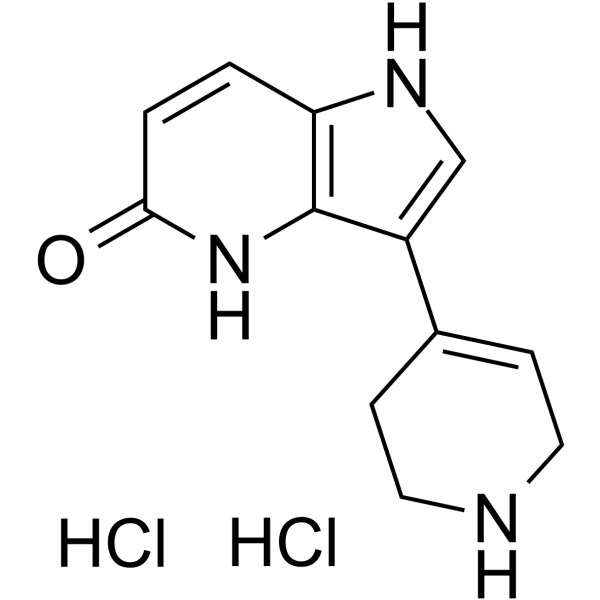
    CP 93129 dihydrochloride is a potent 5HT1B receptor agonist. CP 93129 dihydrochloride has the potential for parkinson's disease research .
    CP 93129 dihydrochloride
  • HY-101357AR

    Reference Standards 5-HT Receptor Neurological Disease
    CP 93129 (dihydrochloride) (Standard) is the analytical standard of CP 93129 (dihydrochloride). This product is intended for research and analytical applications. CP 93129 dihydrochloride is a potent 5HT1B receptor agonist. CP 93129 dihydrochloride has the potential for parkinson's disease research .
    CP 93129 dihydrochloride (Standard)
  • HY-11052A

    Opioid Receptor Neurological Disease
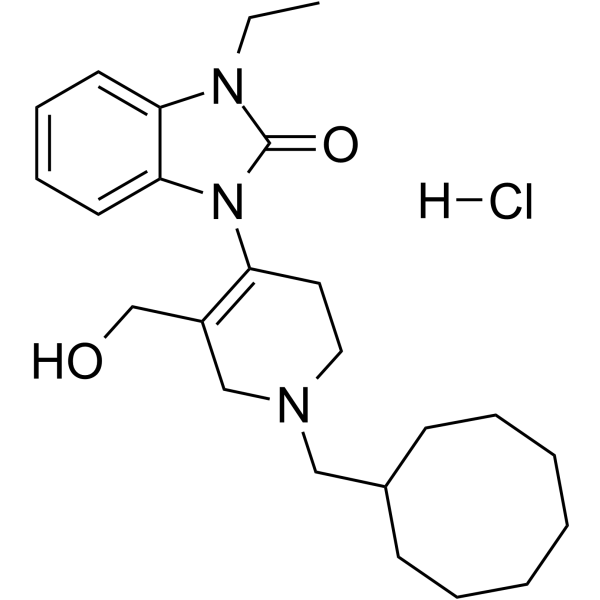
    Trap-101 hydrochloride is a potent, selective and competitive antagonist of NOP receptors over classical opioid receptors. Trap-101 stimulates GTPγ 35S binding to CHOhNOP membranes with pKi values of 8.65, 6.60, 6.14 and <5 for NOP, μ-, κ-, and δ-opioid receptors, respectively. Trap-101 attenuates motor deficits in a rat model of parkinson's disease and can be used for the research of nervous system diseases .
    Trap-101 hydrochloride
  • HY-18654A

    mGluR Neurological Disease
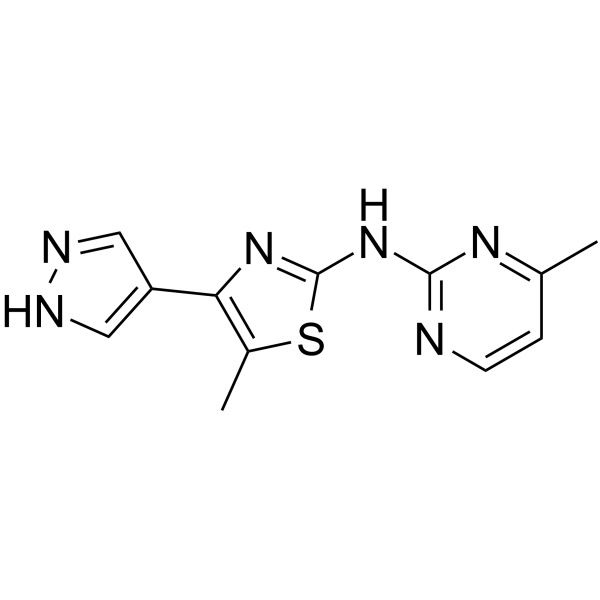
    ADX88178 TFA is an orally active, blood-brain barrier-penetrant, selective positive allosteric modulator of mGluR4, with an EC50 of 3.5 nM against hmGluR4. ADX88178 TFA modulates mGlu4 activity, enhances glutamate-mediated receptor activation, and increases the apparent affinity of glutamate for the receptor. ADX88178 TFA reverses haloperidol-induced catalepsy, potentiates the effects of levodopa (L-DOPA) and quinpirole, but fails to alleviate established abnormal involuntary movements, does not exacerbate L-DOPA-induced dyskinesia, and does not affect forelimb akinesia when administered alone. ADX88178 TFA can be used in research related to L-DOPA-induced dyskinesia and Parkinson's disease .
    ADX88178 TFA
  • HY-N7773

    TNF Receptor Interleukin Related Caspase SOD Neurological Disease Metabolic Disease
    Hibiscetin is an orally active anti-inflammatory, antioxidant, antihyperglycemic, hypolipidemic, hepatoprotective and neuroprotective agent. Hibiscetin reduces the levels of TNF-α, IL-1β and IL-6. Hibiscetin inhibits lipid peroxidation, reduces MDA levels, and induces the activities of antioxidant enzymes CAT, GSH and SOD. Hibiscetin lowers blood glucose, reverses reduced insulin levels, regulates adipokine levels, and reduces elevated AST and ALT levels. Hibiscetin alleviates Rotenone (HY-B1756)-induced akinesia and catalepsy, normalizes neurotransmitter levels, and modulates the activities of activated caspase 3 and BDNF. Hibiscetin can be used in the research of type 2 diabetes, Parkinson's disease and Huntington's disease .
    Hibiscetin
  • HY-180422

    Dopamine Receptor Neurological Disease
    (-)-UH 232 is a central dopamine (DA) receptor agonist. (-)-UH 232 weakly decreases 3, 4-dihydroxyphenylalanine (DOPA) formation in striatal and limbic brain regions in rats. (-)-UH 232 can be used for the research of neurological diseases including parkinson's disease and schizophrenia .
    (-)-UH 232

Inquiry Online

Your information is safe with us. * Required Fields.

Salutation


Country or Region *

Applicant Name *


Organization Name *

Department *


Email Address *


Product Name *

Cat. No.


Requested quantity *

Phone Number *


Remarks

Inquiry Online

Inquiry Information

Product Name:
Cat. No.:
Quantity:
MCE Japan Authorized Agent:

