

36 Results for "

Back

" in MedChemExpress (MCE) Product Catalog:
Products (36)

36 Results for "Back" in MCE Product Catalog:

2
2 Cited Publications
Cat. No.: HY-B0310
CAS No.: 76963-41-2
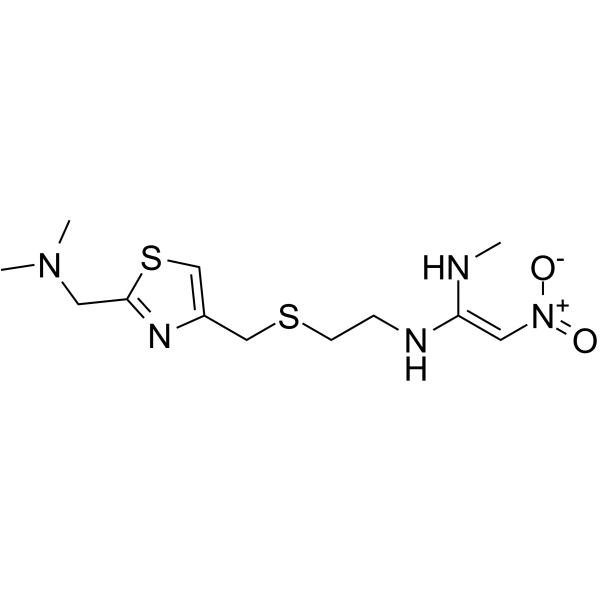
Nizatidine is a potent and orally active histamine H2 receptor antagonist, can be used for the research of stomach and intestines ulcers. Nizatidine works by decreasing the secretion of gastric acid the stomach makes and prevent ulcers from coming back after they have healed in animal models .
1
1 Cited Publications
Cat. No.: HY-W010056
CAS No.: 623-91-6
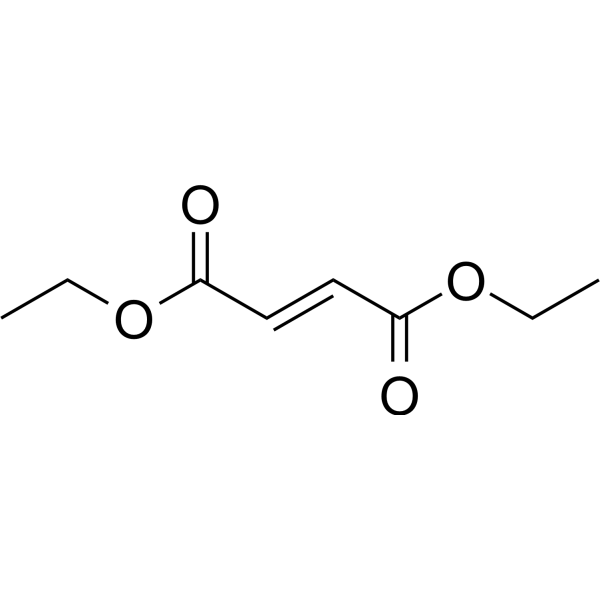
Diethyl fumarate is a Nrf2 inducer. Diethyl fumarate induces non-immunological contact urticaria, causing erythema, edema, and dose-dependent skin responses characterized by rapid onset, peak response, and subsequent resolution. The hybrid of Diethyl fumarate and Curcumin (HY-N0005) exerts neuroprotective effects. Diethyl fumarate can be used in the research of Parkinson's disease and non-immunological contact urticaria .
1
1 Cited Publications
Cat. No.: HY-P990071
CAS No.: 2489584-93-0
Synonyms: LY-3016859
Fepixnebart (LY3016859) is a humanized monoclonal hIgG4 antibody, which binds and neutralizes only TGFα and epiregulin with high affinity. Fepixnebart can be used for the study of diabetic nephropathy and broad-spectrum chronic pain, including diabetic peripheral neuropathic pain (DPNP), signs and symptoms of osteoarthritis (OA), and chronic low back pain (CLBP) .
Cat. No.: HY-B1833
CAS No.: 56287-74-2
Synonyms: HQ-495
Target:  

GABA Receptor

Research Areas:  

Neurological Disease

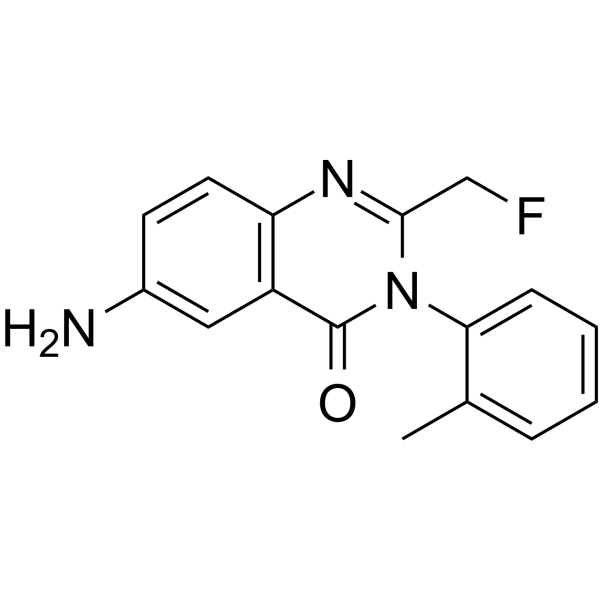
Afloqualone (HQ-495) is an orally active central muscle relaxant and antivertiginous agent that can increase the sensitivity of GABA receptors in neurons of the lateral vestibular nucleus. Afloqualone (HQ-495) can be used in the research of low back pain and neck-arm-shoulder syndrome .
Cat. No.: HY-17391
CAS No.: 606-04-2
Target:  

Adenosine Receptor

Research Areas:  

Endocrinology

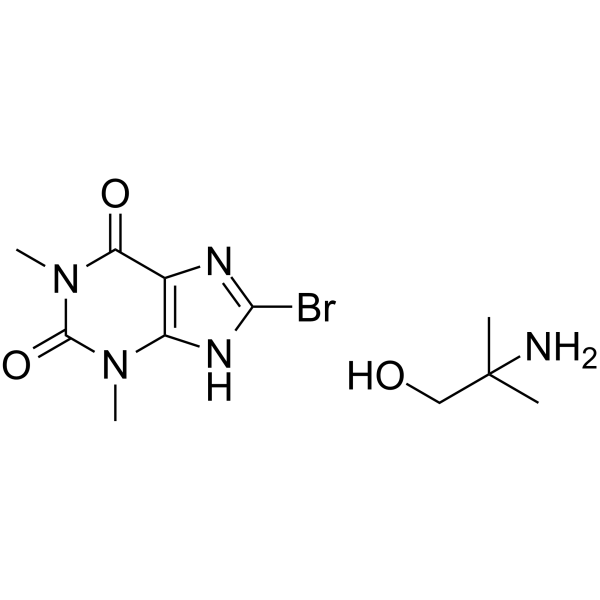
Pamabrom is a diuretic that acts on the opioid receptor-nitric oxide (NO) -cyclic guanosine monophosphate (cGMP) -K + channel pathway. Pamabrom exerts peripheral antinociceptive activity by activating this pathway. The mechanism involves activating opioid receptors, promoting the release of nitric oxide, and then influencing cyclic guanosine monophosphate and K channels to produce an analgesic effect. Pamabrom is orally active and is mainly used in the research and treatment of premenstrual syndrome and primary dysmenorrhea[1].
Cat. No.: HY-E70094
Target:  

DNA/RNA Synthesis

Research Areas:  

Others

T4 UvsX Recombinase helps initiate DNA replication on a double-stranded DNA template by catalyzing synapsis between the template and a homologous DNA single strand that serves as primer. T4 UvsX Recombinase greatly amplifies the snap-back (hairpin-primed) DNA synthesis that is catalyzed by the T4 DNA polymerase holoenzyme on linear, single-stranded DNA templates .
Cat. No.: HY-171846
CAS No.: 1889218-34-1
Target:  

TRP Channel

LY3526318 is an orally active, selective TRPA1 antagonist (IC50=5-6μM). LY3526318 blocks TRPA1 channels, inhibits pain signal transduction mediated by the channel, and exerts analgesic activity. LY3526318 is mainly used in the research of chronic pain-related fields, such as diabetic peripheral neuropathy, chronic low back pain, and pain caused by osteoarthritis .
Cat. No.: HY-153248
CAS No.: 253307-65-2
Purity:  99.44%
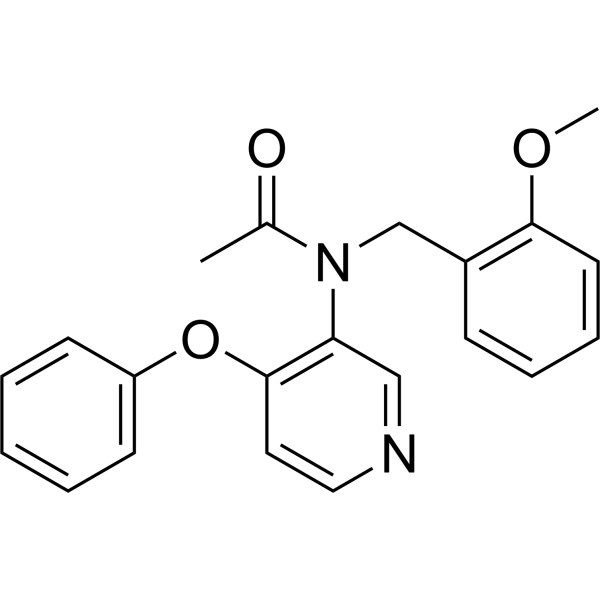
PBR28 is a translocator protein (TSPO) binding positron emission tomography (PET) radiotracer with blood-brain barrier permeability . PBR28 binds to TSPO, a marker of microglial activation and neuroinflammation, and is used for neuroinflammation imaging in brain diseases and HIV-infected individuals .
Cat. No.: HY-W009706
CAS No.: 22131-79-9
Synonyms: Allopydin; W-7320
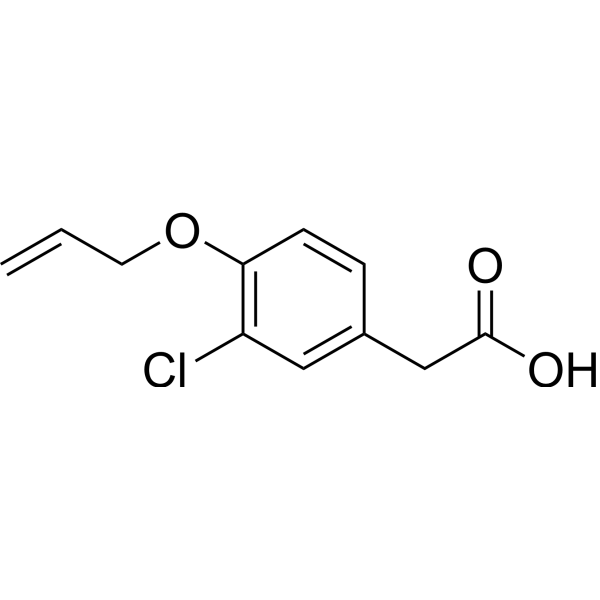
Alclofenac (Allopydin) is an orally active prostaglandin synthase inhibitor with anti-inflammatory, analgesic and antipyretic activities. Alclofenac irreversibly inhibits platelet aggregation. Alclofenac can be used in research related to rheumatoid arthritis, osteoarthritis, ankylosing spondylitis, low back pain and sciatica .
Cat. No.: HY-137959
CAS No.: 250780-40-6
Telmisartan acyl-β-D-glucuronide is an acyl-β-D-glucuronide and a metabolite of Telmisartan (HY-13955). Telmisartan acyl-β-D-glucuronide can be converted back to Telmisartan upon incubation with Glucuronidase. Partial acyl migration of Telmisartan acyl-β-D-glucuronide occurs under physiological conditions .
Cat. No.: HY-W010918R
CAS No.: 58-64-0
Synonyms: Adenosine diphosphate (Standard); ADP (Standard)
Adenosine 5'-diphosphate (Standard) is the analytical standard of Adenosine 5'-diphosphate. This product is intended for research and analytical applications. Adenosine 5'-diphosphate (Adenosine diphosphate) is a nucleoside diphosphate. Adenosine 5'-diphosphate is the product of ATP dephosphorylation by ATPases. Adenosine 5'-diphosphate induces human platelet aggregation and inhibits stimulated adenylate cyclase by an action at P2T-purinoceptors. In Vitro: Adenosine 5'-diphosphate consists of the pyrophosphate group, the pentose sugar ribose, and the nucleobase adenine. Adenosine 5'-diphosphate is the product of ATP dephosphorylation by ATPases. ADP is converted back to ATP by ATP synthases. ATP is an important energy transfer molecule in cells. Adenosine 5'-diphosphate is utilized in a wide number of cellular processes, including respiration, biosynthetic reactions, motility, and cell division.
Cat. No.: HY-157480
CAS No.: 3008543-34-5
Purity:  99.43%
Target:  

EGFR Aurora Kinase

Research Areas:  

Cancer

EGFR/AURKB-IN-1 (compound 7) is a dual-targeted EGFR/AURKB inhibitor, and inhibits the phpsphorylations of L858R EGFR and AURKB with IC50s of 0.07 and 1.1, respectively. EGFR/AURKB-IN-1 occupies the hydrophobic region I or the αC-helix out pocket of EGFR and the back pocket of AURKB, inhibiting the growth, division and metastasis of tumor cells, thus can be used for cancer research .
Cat. No.: HY-123045
CAS No.: 326823-27-2
Purity:  99.93%
Target:  

CDK

Research Areas:  

Cancer

PNU-292137 is an orally active, potent CDK2 inhibitor with IC50s of 37 nM and 92 nM for CDK2/cyclin A and CDK2/cyclin E, respectively. PNU-292137 makes interactions with the hydrophobic pocket at the back of the CDK2 ATP pocket. PNU-292137 efficiently inhibits tumor cell proliferation in human colon and prostate tumor cell lines. PNU-292137 exhibits antitumor activity (TGI>50%) in a mouse xenograft model .
Cat. No.: HY-178040
Insecticidal agent 26 (Compound A11), a spiro insecticidal agent, is a dual-functional inhibitor of pest Acetyl-CoA carboxylase (ACC) and Pyruvate carboxylase (PC). Insecticidal agent 26 has potent insecticidal activity against Sogatella furcifera with a LC50 of 11.0  μg/mL, with significant biosafety to bees. Insecticidal agent 26 can be used for management of white-backed planthoppers (WBPs) .
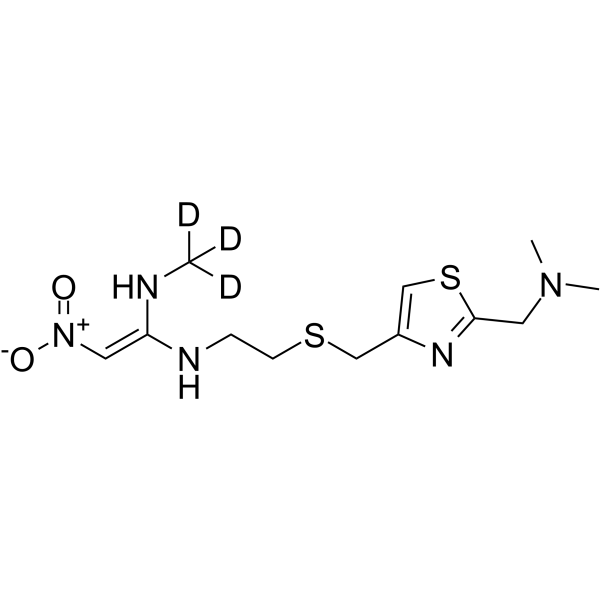
Cat. No.: HY-B0310S
CAS No.: 1246833-99-7
Nizatidine-d3 is the deuterium labeled Nizatidine. Nizatidine is a potent and orally active histamine H2 receptor antagonist, can be used for the research of stomach?and?intestines ulcers. Nizatidine works by decreasing the secretion of gastric?acid the stomach makes and prevent ulcers from coming back after they have healed in animal models .
Cat. No.: HY-B1833R
CAS No.: 56287-74-2
Synonyms: HQ-495 (Standard)
Research Areas:  

Neurological Disease

Afloqualone (Standard) is the analytical standard of Afloqualone. This product is intended for research and analytical applications. Afloqualone (HQ-495) is an orally active central muscle relaxant and antivertiginous agent that can increase the sensitivity of GABA receptors in neurons of the lateral vestibular nucleus. Afloqualone (HQ-495) can be used in the research of low back pain and neck-arm-shoulder syndrome .
Cat. No.: HY-108303
CAS No.: 80729-79-9
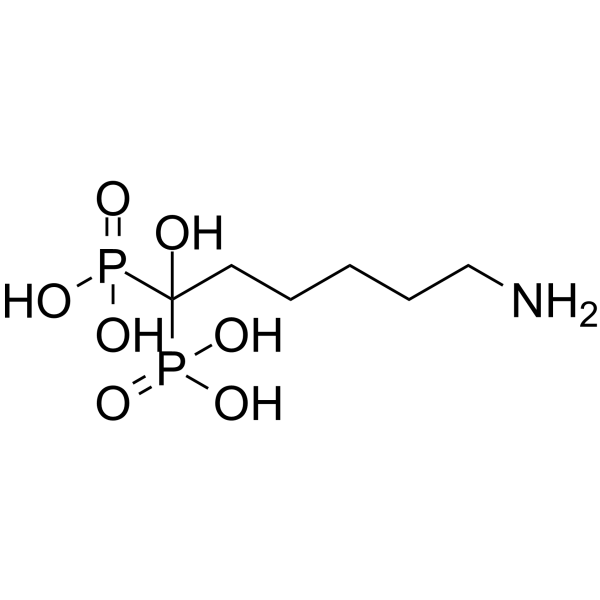
Neridronate sodium is a bisphosphonate. Bisphosphonates initiate the Apoptotic process. Neridronate sodium reduces the levels of bone resorption, bone turnover markers, the degree of back pain, and the risk of fractures. Neridronate sodium inhibits capillary tube formation. Neridronate sodium itself has weak anticancer activity, but liposomal encapsulation enhances this activity. Neridronate sodium can be used in research related to demineralizing metabolic bone diseases, thalassemia-associated osteoporosis, chronic inflammatory diseases, cancer, and osteogenesis imperfecta .
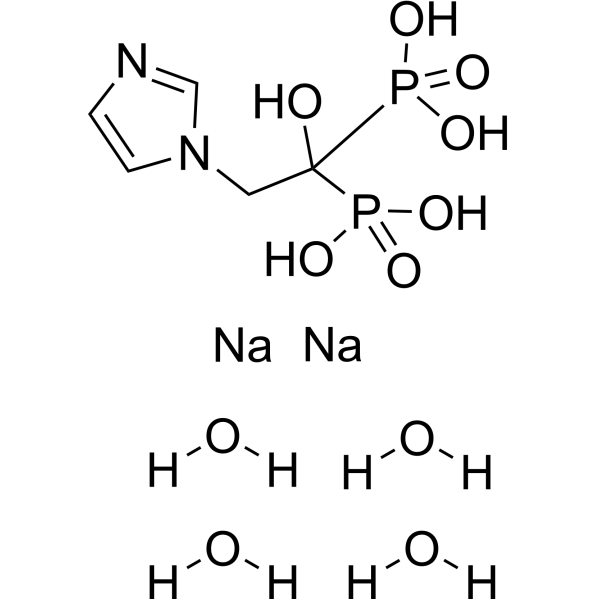
Cat. No.: HY-13777B
CAS No.: 165800-07-7
Synonyms: Zoledronate disodium tetrahydrate; CGP 42446 disodium tetrahydrate; CGP42446A disodium tetrahydrate; ZOL 446 disodium tetrahydrate
Research Areas:  

Metabolic Disease Cancer

Zoledronic Acid (Zoledronate) disodium tetrahydrate is a third-generation bisphosphonate (BP), with potent anti-resorptive activity. Zoledronic Acid disodium tetrahydrate inhibits the differentiation and apoptosis of osteoclasts. Zoledronic Acid disodium tetrahydrate also has anti-cancer effects .
Cat. No.: HY-173400
Target:  

TAM Receptor

Research Areas:  

Cancer

UNC8212 is a TAM kinase inhibitor. UNC8212 has potent inhibitory activity against MERTK and AXL (IC50: 1.5 nM and 1.3 nM, respectively), and also inhibits TYRO3 (IC50: 6.7 nM). UNC8212 mediates polypharmacological properties by targeting the structurally diverse "back pocket" region of the TAM kinase family. UNC8212 binds tightly to TAM kinases and potently inhibits MERTK and AXL phosphorylation. UNC8212 has anti-tumor effects and can be used in cancer immunotherapy and tumor cell targeting research .
Cat. No.: HY-W009706A
CAS No.: 24049-18-1
Synonyms: Allopydin sodium; W-7320 sodium
Alclofenac (Allopydin) sodium is an orally active prostaglandin synthase inhibitor with anti-inflammatory, analgesic and antipyretic activities. Alclofenac sodium irreversibly inhibits platelet aggregation. Alclofenac can be used in research related to rheumatoid arthritis, osteoarthritis, ankylosing spondylitis, low back pain and sciatica .

