

Search Result
Results for "
C. difficile
" in MedChemExpress (MCE) Product Catalog:
4
Isotope-Labeled Compounds
| Cat. No. |
Product Name |
Target |
Research Areas |
Chemical Structure |
-
- HY-B0975
-
|
Phenoxymethylpenicillin potassium salt
|
Bacterial
Antibiotic
|
Infection
|
|
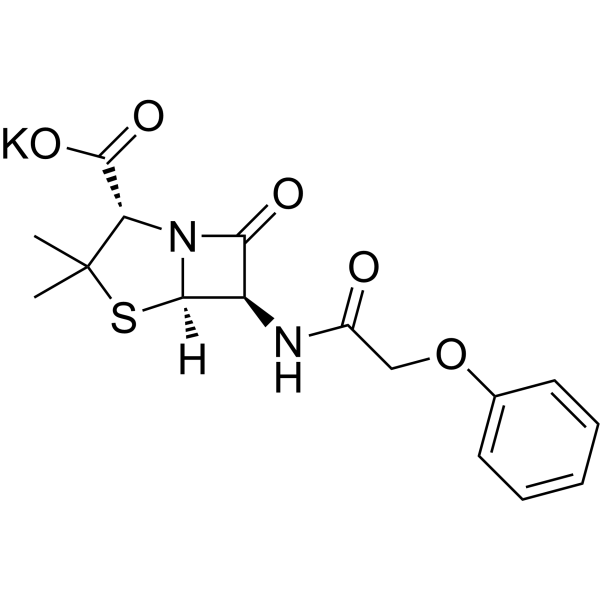
Penicillin V Potassium (Phenoxymethylpenicillin potassium salt) is an orally active antibiotic. Penicillin V Potassium inhibits the growth of Streptococci, C. difficile and S. aureus. Penicillin V Potassium can be used for the research of otitis, sinusitis, pharyngitis and tonsillitis .
|
-
-
- HY-B0975A
-
|
Phenoxymethylpenicillin
|
Antibiotic
Bacterial
|
Infection
|
|
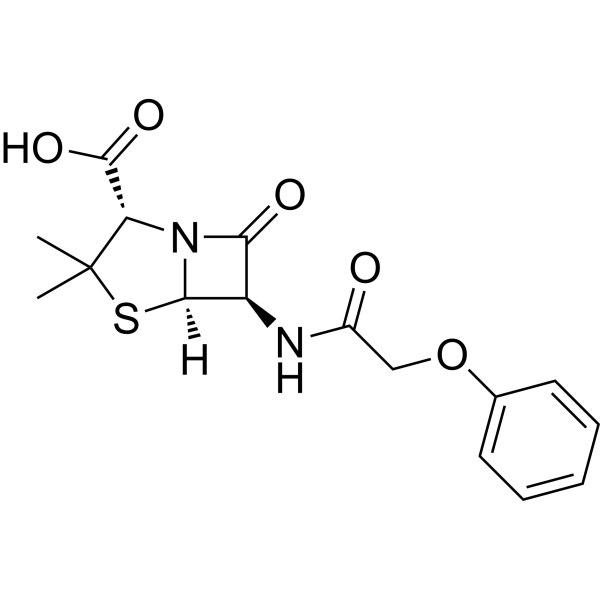
Penicillin V (Phenoxymethylpenicillin) is a potent and orally active antibiotic. Penicillin V shows antibacterial activity for Streptococci, Clostridium difficile and staphylococcus aureus. Penicillin V has the potential for the research of otitis, sinusitis, pharyngitis and tonsillitis .
|
-
-
- HY-16753
-
|
SMT19969
|
Bacterial
|
Infection
|
|
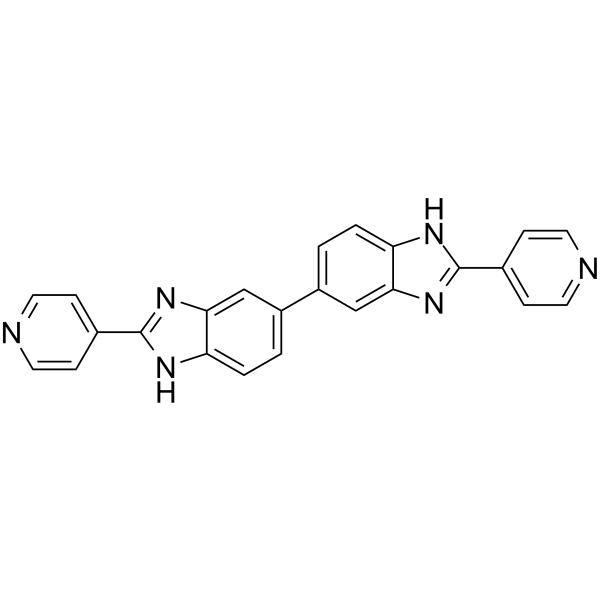
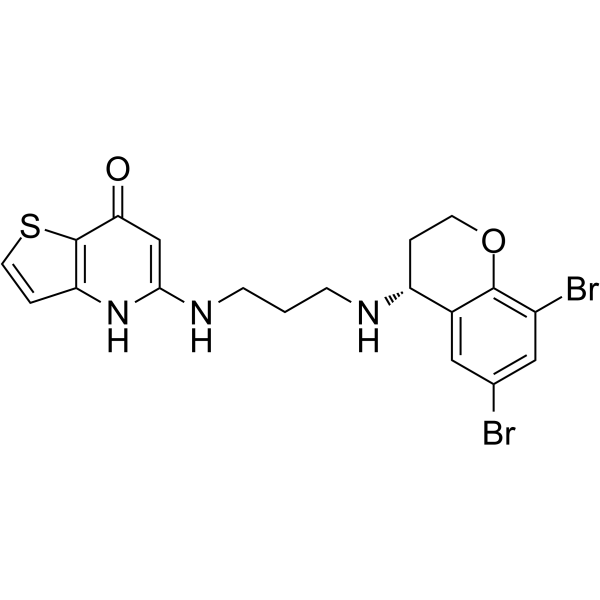
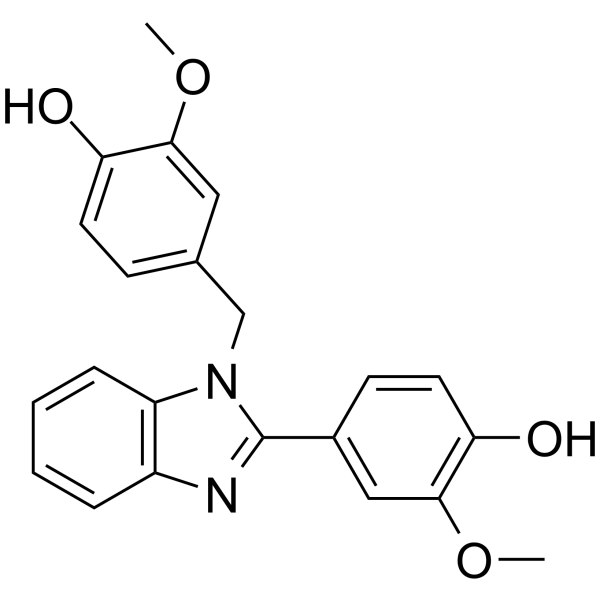
Ridinilazole is a novel antibacterial with MICs range of 0.06-0.25 µg/mL (MIC90=8 µg/mL) against C. difficile.
|
-
-
- HY-P1137
-
10Panx
1 Publications Verification
|
Gap Junction Protein
|
Others
|
|
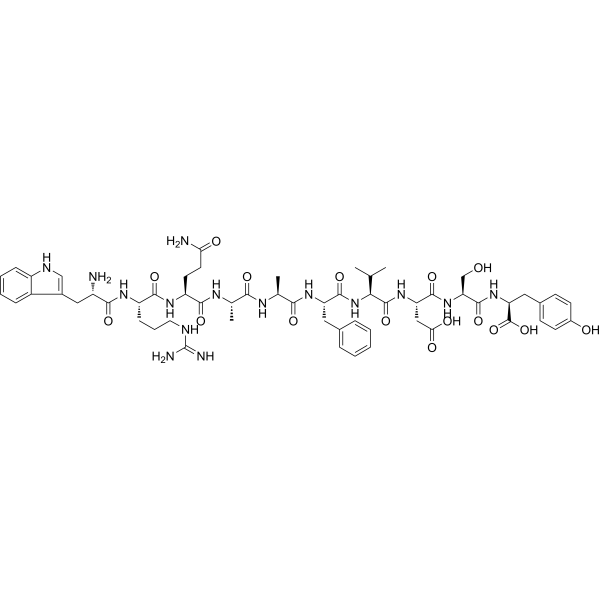
10Panx is a competitive inhibitor of selective Pannexin 1 (PANX1) channels. 10Panx blocks the opening of PANX1 channels, inhibits ATP release and downstream P2X7 receptor-mediated signaling pathways, thereby reducing cell death and inflammatory responses. 10Panx can be used in the study of diseases such as neuropathic pain, inflammatory bowel disease, and Clostridioides difficile infection. 10Panx can effectively reduce mechanical hyperalgesia and enhanced C-reflexes, and inhibit the expression of pro-inflammatory factors such as IL-6[1][2][3].
|
-
-
- HY-128357
-
|
ACX-362E; GLS-362E
|
Bacterial
DNA/RNA Synthesis
|
Infection
|
|
Ibezapolstat (ACX-362E) is a first-in-class, orally active DNA polymerase IIIC (pol IIIC) inhibitor, with a Ki of 0.325 μM for the DNA pol IIIC from C. difficile. Ibezapolstat is developed for the research of C. difficile infection(CDI) .
|
-
-
- HY-P9929
-
|
BLA761046; MBL-CDB1; MDX-1388
|
Bacterial
|
Infection
|
|
Bezlotoxumab (BLA761046; MBL-CDB1; MDX-1388) is a fully humanized IgG1/kappa monoclonal antibody directed against Clostridium difficile toxin B. Bezlotoxumab mediates the early reconstitution of gut microbiota to reduce the risk of recurrent Clostridium difficile infection (CDI). Bezlotoxumab can be used for the study of recurrent Clostridium difficile infection prevention .
|
-
-
- HY-P1108
-
|
|
CRFR
|
Neurological Disease
Inflammation/Immunology
|
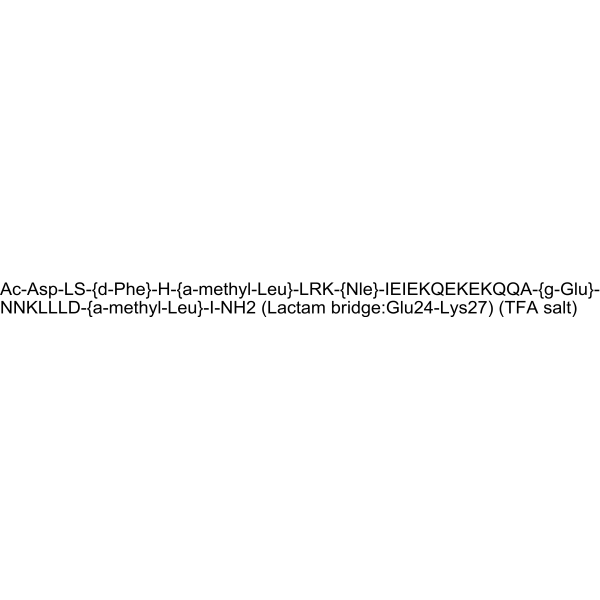
Astressin 2B is a blood-brain barrier-impermeable, highly selective CRFR2 antagonist (rCRFR2, IC50=0.57 nM). Astressin 2B blocks the protective effects mediated by CRFR2, thereby exacerbating indomethacin (HY-14397)-induced hemorrhagic intestinal injury in rats. Astressin 2B reverses the protective effects of Urocortin 1 against intestinal hypermotility, bacterial invasion and upregulation of inflammatory mediators. Astressin 2B also blocks the anxiogenic effect of Urocortin 2 and attenuates stress-induced anxiety-related behaviors. In the Clostridioides difficile toxin A (C. difficile toxin A)-mediated enteritis model, Astressin 2B mimics the phenotype of CRFR2-deficient mice, significantly exacerbating intestinal epithelial damage, edema, neutrophil migration and the expression of multiple proinflammatory cytokines. Astressin 2B is an important tool molecule for investigating the intestinal protective mechanisms of CRFR2 .
|
-
-
- HY-P1108A
-
|
|
CRFR
|
Neurological Disease
Inflammation/Immunology
|
Astressin 2B TFA is a blood-brain barrier-impermeable, highly selective CRFR2 antagonist (rCRFR2, IC50=0.57 nM). Astressin 2B TFA blocks the protective effects mediated by CRFR2, thereby exacerbating indomethacin (HY-14397)-induced hemorrhagic intestinal injury in rats. Astressin 2B TFA reverses the protective effects of Urocortin 1 against intestinal hypermotility, bacterial invasion and upregulation of inflammatory mediators. Astressin 2B TFA also blocks the anxiogenic effect of Urocortin 2 and attenuates stress-induced anxiety-related behaviors. In the Clostridioides difficile toxin A (C. difficile toxin A)-mediated enteritis model, Astressin 2B TFA mimics the phenotype of CRFR2-deficient mice, significantly exacerbating intestinal epithelial damage, edema, neutrophil migration and the expression of multiple proinflammatory cytokines. Astressin 2B TFA is an important tool molecule for investigating the intestinal protective mechanisms of CRFR2 .
|
-
-
- HY-18324
-
CRS3123
1 Publications Verification
REP-3123
|
Antibiotic
|
Inflammation/Immunology
|
|
CRS3123 is a potent and orally active narrow-spectrum antibiotic. CRS3123 inhibits bacterial methionyl-tRNA synthetase. CRS3123 has potent activity against Clostridium difficile (C. difficile) and aerobic Gram-positive bacteria but little activity against Gram-negative bacteria, including anaerobes. CRS3123 has the potential for the research of C. difficile infections .
|
-
-
- HY-105099
-
|
KRM-1648; ABI-1648
|
Antibiotic
DNA/RNA Synthesis
Bacterial
|
Infection
Inflammation/Immunology
|
|
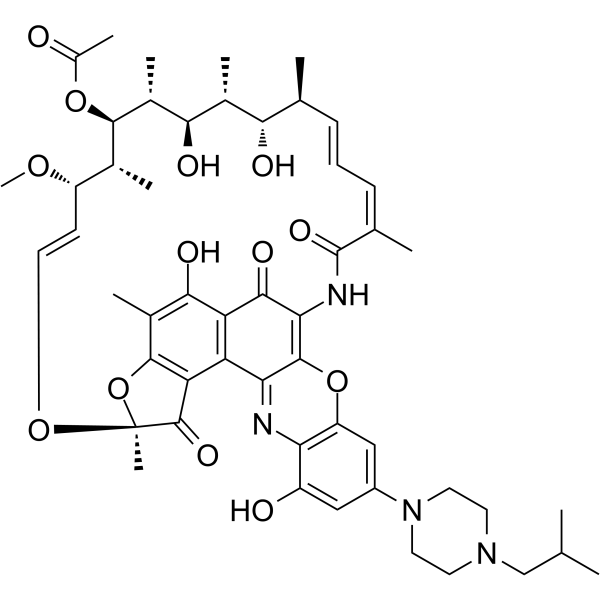
Rifalazil (KRM-1648; ABI-1648), a rifamycin derivative, inhibits the bacterial DNA-dependent RNA polymerase and kills bacterial cells by blocking off the β-subunit in RNA polymerase . Rifalazil (KRM-1648; ABI-1648) is an antibiotic, exhibits high potency against mycobacteria, gram-positive bacteria, Helicobacter pylori, C. pneumoniae and C. trachomatis with MIC values from 0.00025 to 0.0025 μg/ml . Rifalazil (KRM-1648; ABI-1648) has the potential for the treatment of Chlamydia infection, Clostridium difficile associated diarrhea (CDAD), and tuberculosis (TB) .
|
-
-
- HY-172670
-
|
|
Fungal
|
Infection
|
|
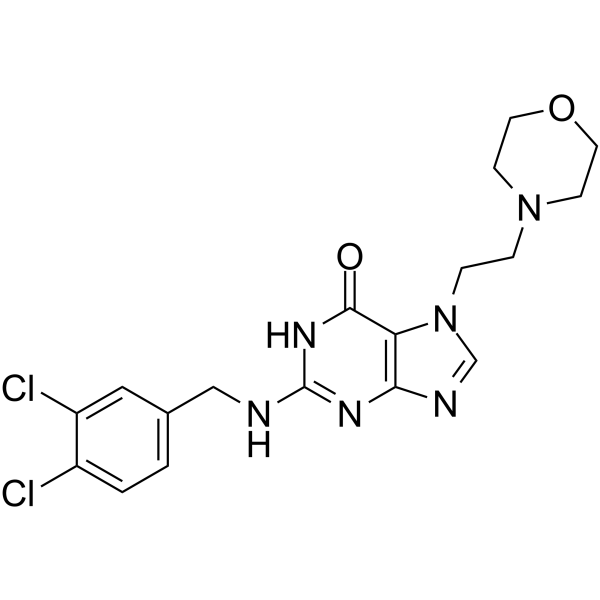
Spore germination-IN-1 (Compound 110) is an orally active spore germination inhibitor (IC50: 14 μM). Spore germination-IN-1 specifically inhibits the enzymatic activities of mature SleC and CspB on spores (Kd: 12 and 8 μM). Spore germination-IN-1 can be used in studies against C. difficile .
|
-
-
- HY-148041
-
|
|
ATP Synthase
|
Others
|
|
ATPase-IN-2 is an ATPase inhibitor with an IC50 value of 0.9 μM. ATPase-IN-2 inhibits C. difficile toxin B (TcdB) glycohydrolase activity with an AC50 value of 30.91 μM. ATPase-IN-2 can be used for the research of ATP-related .
|
-
-
- HY-156191
-
|
|
Bacterial
|
Infection
|
|
Cholic acid anilide, a Narylcholan-24-amide, is a potent inhibitor of C. difficile spore germination with an IC50 value of 1.8 μM in the spore germination assay conducted in Sodium phosphate media containing 6 mM Taurocholate (HY-B1131) and 12 mM Glycine (HY-Y0966). Cholic acid anilide has the potential for C. difficile infections research .
|
-
-
- HY-B0975S1
-
|
Phenoxymethylpenicillin-d5 potassium salt
|
Bacterial
Antibiotic
|
Infection
|
|
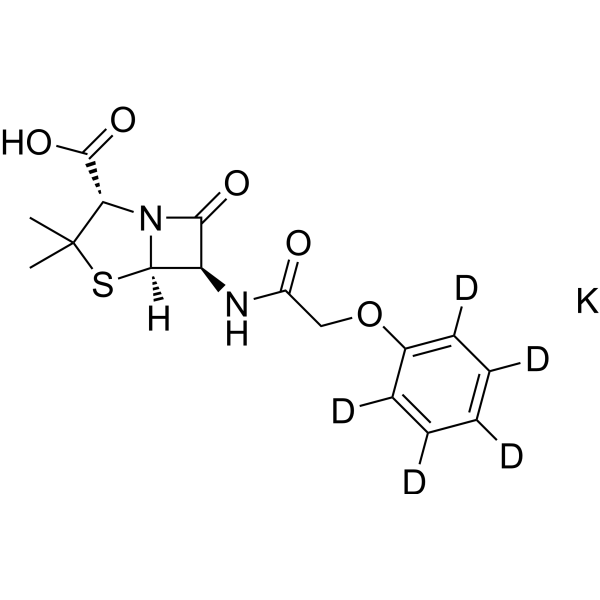
Penicillin V-d5 (potassium) is the deuterium labeled Penicillin V Potassium . Penicillin V Potassium (Phenoxymethylpenicillin potassium salt) is an orally active antibiotic. Penicillin V Potassium inhibits the growth of Streptococci, C. difficile and S. aureus. Penicillin V Potassium can be used for the research of otitis, sinusitis, pharyngitis and tonsillitis .
|
-
-
- HY-B0975AR
-
|
Phenoxymethylpenicillin (Standard)
|
Reference Standards
Antibiotic
Bacterial
|
Infection
|
|
Penicillin V (Standard) is the analytical standard of Penicillin V. This product is intended for research and analytical applications. Penicillin V (Phenoxymethylpenicillin) is a potent and orally active antibiotic. Penicillin V shows antibacterial activity for Streptococci, Clostridium difficile and staphylococcus aureus. Penicillin V has the potential for the research of otitis, sinusitis, pharyngitis and tonsillitis [4].
|
-
-
- HY-156283
-
|
|
Antibiotic
|
Infection
|
|
Antibacterial agent 159 (Compound 6d) is an antibiotic. Antibacterial agent 159 can effective against impetigo and C. difficile infection (CDI). Antibacterial agent 159 has no observed recurrence for C. difficile and exertes a minimal impact on the beneficial gut microbiome .
|
-
-
- HY-B0975R
-
|
Phenoxymethylpenicillin potassium salt (Standard)
|
Reference Standards
Bacterial
Antibiotic
|
Infection
|
|
Penicillin V (Potassium) (Standard) is the analytical standard of Penicillin V (Potassium). This product is intended for research and analytical applications. Penicillin V Potassium (Phenoxymethylpenicillin potassium salt) is an orally active antibiotic. Penicillin V Potassium inhibits the growth of Streptococci, C. difficile and S. aureus. Penicillin V Potassium can be used for the research of otitis, sinusitis, pharyngitis and tonsillitis .
|
-
-
- HY-163142
-
|
|
Bacterial
|
Infection
|
|
Antibacterial agent 172 (Compound 6a) is a <,i>Clostridioides difficile (Cd) SpoVD inhibitor (IC50=89 nM) that effectively inhibits sporulation of Clostridioides difficile. Antibacterial agent 172 can be used in the study of bacterial infections .
|
-
-
- HY-128357A
-
|
ACX-362E hydrochloride; GLS-362E hydrochloride
|
Bacterial
DNA/RNA Synthesis
|
Infection
|
|
Ibezapolstat hydrochloride is a first-in-class, orally active DNA polymerase IIIC (pol IIIC) inhibitor, with a Ki of 0.325 μM for the DNA pol IIIC from C. difficile. Ibezapolstat hydrochloride is developed for the research of C. difficile infection(CDI) .
|
-
-
- HY-156282
-
|
|
Bacterial
|
Infection
|
|
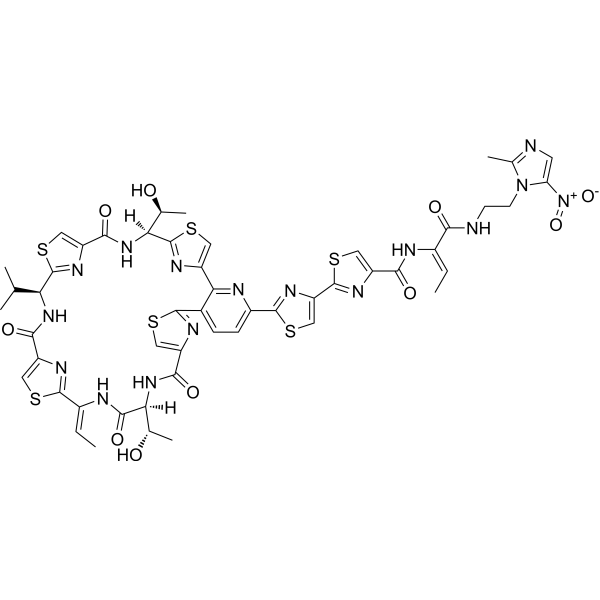
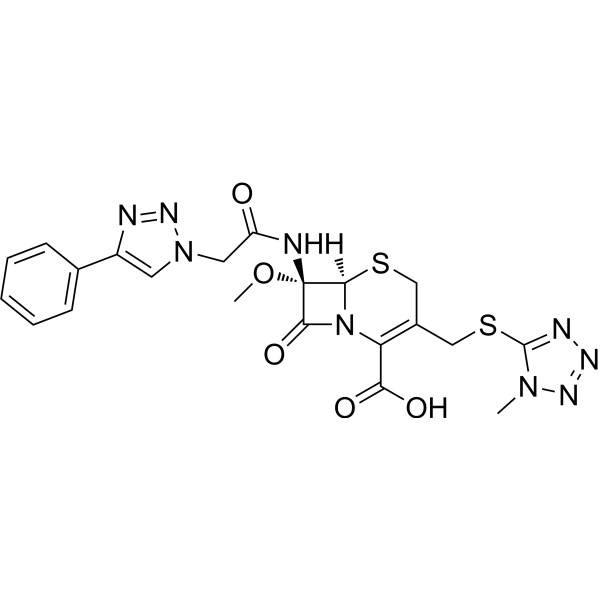
Antibacterial agent 158 (compound 6c), a Micrococcin analogue, and is effective against impetigo and C. difficile infection (CDI) .
|
-
-
- HY-171005
-
|
|
Bacterial
|
Infection
|
|
VPC162134 is an antibacterial agent, that inhibits H. pylori, C. jejuni, MRSA and S. epidermidis with MIC of 2.9, 17.5, 93.3 and 93.3 μM. VPC162134 is an inhibitor for pyruvate ferredoxin oxidoreductase (PFOR) .
|
-
-
- HY-123354
-
|
|
Bacterial
|
Infection
|
|
SC 44914 is a quinoxaline compound with antibacterial effects. SC-44914 has activity against Campylobacter jejuni, C. coli, and Clostridium difficile .
|
-
-
- HY-172768
-
|
|
Bacterial
|
Infection
|
|
SCUT1-2 is a bifunctional antibacterial agent with good oral bioavailability in mice (F=56.8%). SCUT1-2 can kill the vegetative cells of C. difficile with a MIC of 0.06-0.50 μg/mL, and inhibit spore germination in vitro. SCUT1-2 could alleviate the symptoms of weight loss and diarrhea in mice caused by C. difficile infection (CDI) and prevent recurrent CDI .
|
-
-
- HY-W749146
-
|
|
Antibiotic
Bacterial
|
Infection
|
|
Raja 42 is a gamma lactam antibiotic. Raja 42 is effective against a variety of different bacterias, including Gram-positive and Gram-negative bacteria, such as C. difficile strains .
|
-
-
- HY-B0975S
-
|
Phenoxymethylpenicillin-13C6 potassium salt
|
Isotope-Labeled Compounds
Bacterial
Antibiotic
|
Infection
|
|
Penicillin V- 13C6 (potassium) is the 13C6 labeled Penicillin V (potassium). Penicillin V Potassium (Phenoxymethylpenicillin potassium salt) is an orally active antibiotic. Penicillin V Potassium inhibits the growth of Streptococci, C. difficile and S. aureus. Penicillin V Potassium can be used for the research of otitis, sinusitis, pharyngitis and tonsillitis.
|
-
-
- HY-163042
-
|
|
Bacterial
|
Infection
|
|
HSGN-218 is an antibacterial agent with low Caco-2 permeability. HSGN-218 efficiently inhibits the growth of different C. difficile species with MIC values ranging from 0.007 μM to 0.07 μM.
|
-
-
- HY-W750848
-
|
|
Isotope-Labeled Compounds
Bacterial
Antibiotic
|
Infection
|
|
Raja 42-d10 is the deuterium labeled Raja 42 (HY-W749146). Raja 42 is a gamma lactam antibiotic. Raja 42 is effective against a variety of different bacterias, including Gram-positive and Gram-negative bacteria, such as C. difficile strains .
|
-
-
- HY-149610
-
|
|
Bacterial
|
Infection
|
|
Antibacterial agent 156 (Compound 57) is a selective and potent bactericidal against C. difficile and targets cell-wall synthesis. Antibacterial agent 156 exhibits bactericidal activity with the minimal inhibitory concentration of 0.5 μg/mL and 1 μg/mL against MIMIC50 (101 strains) and MIC90 (101 strains) .
|
-
-
- HY-B0975AS
-
|
|
Isotope-Labeled Compounds
Bacterial
Antibiotic
|
Infection
|
|
Penicillin V-d5 (Phenoxymethylpenicillin-d5) is the deuterium labeled Penicillin V. Penicillin V (Phenoxymethylpenicillin) is an orally active antibiotic. Penicillin V inhibits the growth of Streptococci, C. difficile and S. aureus. Penicillin V can be used for the research of otitis, sinusitis, pharyngitis and tonsillitis .
|
-
-
- HY-105099R
-
|
KRM-1648 (Standard); ABI-1648 (Standard)
|
Antibiotic
Reference Standards
DNA/RNA Synthesis
Bacterial
|
Infection
Inflammation/Immunology
|
|
Rifalazil (Standard) is the analytical standard of Rifalazil. This product is intended for research and analytical applications. Rifalazil (KRM-1648; ABI-1648), a rifamycin derivative, inhibits the bacterial DNA-dependent RNA polymerase and kills bacterial cells by blocking off the β-subunit in RNA polymerase[1]. Rifalazil (KRM-1648; ABI-1648) is an antibiotic, exhibits high potency against mycobacteria, gram-positive bacteria, Helicobacter pylori, C. pneumoniae and C. trachomatis with MIC values from 0.00025 to 0.0025 μg/ml[3]. Rifalazil (KRM-1648; ABI-1648) has the potential for the treatment of Chlamydia infection, Clostridium difficile associated diarrhea (CDAD), and tuberculosis (TB)[2].
|
-
-
- HY-P10914
-
|
|
MDM-2/p53
Autophagy
|
Inflammation/Immunology
Cancer
|
|
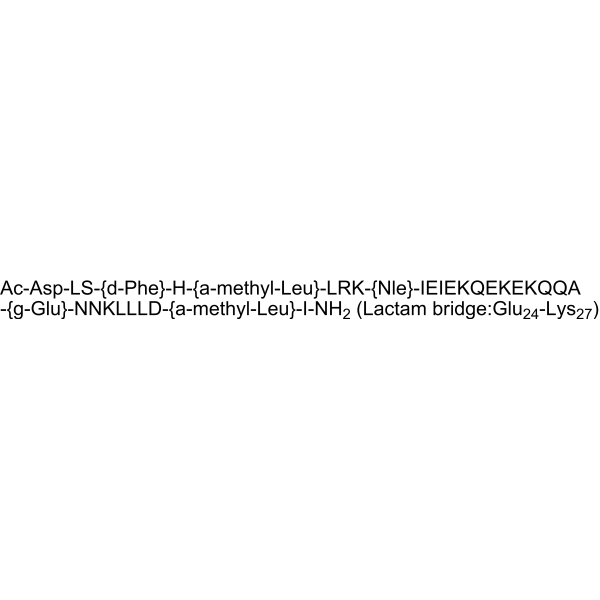
D-CopA3 is the inhibitor for MDM2 and the activator for p53 signaling pathway. D-CopA3 exhibits cytotoxicity in colorectal cancer cells HCT-116, LoVo, and RKO (IC50=15-18 μM), induces JNK/Beclin-1 mediated autophagy. D-CopA3 downregulates the expression of cell cycle inhibitory protein p21Cip1/Waf1, enhances the mucosal barrier function and reduces penetration of inflammatory mediators. D-CopA3 exhibits anti-inflammtory activity in mouse C. difficile toxin A-induced acute enteritis models and DSS (HY-116282)-induced chronic colitis models. D-CopA3 exhibits antitumor efficacy in mouse HCT-116 xenograft models .
|
-
-
- HY-131476
-
|
|
Bacterial
|
Infection
|
|
NAI-802 is a new lantibiotic. NAI-802 can be produced by Actinoplanes sp. NAI-802 shows a significant activity against Gram-positive anaerobic bacteria, such as Clostridium difficile, C. butyricum, C. perfringens and Peptostreptococcus asaccharolyticus with MIC ranges of 0.25-2 μg/mL .
|
-
-
- HY-116880
-
|
|
Bacterial
DNA/RNA Synthesis
|
Infection
|
|
DS-2969b is an orally active GyrB inhibitor with antibacterial activity. DS-2969b is is active against Clostridium difficile infection (MIC90: 0.06 μg/mL), which is 2-, 16-, and 32-fold lower than those of Fidaxomicin (HY-17580), Metronidazole (HY-B0318), and Vancomycin (HY-B0671), respectively. DS-2969b inhibits the supercoiling activity of C. difficile DNA gyrase. DS-2969b also exhibits activity against other Gram-positive anaerobes, including strict and facultative anaerobes. DS-2969b is safe and well tolerated in preclinical toxicology studies .
|
-
| Cat. No. |
Product Name |
Target |
Research Area |
-
- HY-P1137
-
10Panx
1 Publications Verification
|
Gap Junction Protein
|
Others
|
|
10Panx is a competitive inhibitor of selective Pannexin 1 (PANX1) channels. 10Panx blocks the opening of PANX1 channels, inhibits ATP release and downstream P2X7 receptor-mediated signaling pathways, thereby reducing cell death and inflammatory responses. 10Panx can be used in the study of diseases such as neuropathic pain, inflammatory bowel disease, and Clostridioides difficile infection. 10Panx can effectively reduce mechanical hyperalgesia and enhanced C-reflexes, and inhibit the expression of pro-inflammatory factors such as IL-6[1][2][3].
|
-
- HY-P1108
-
|
|
CRFR
|
Neurological Disease
Inflammation/Immunology
|
Astressin 2B is a blood-brain barrier-impermeable, highly selective CRFR2 antagonist (rCRFR2, IC50=0.57 nM). Astressin 2B blocks the protective effects mediated by CRFR2, thereby exacerbating indomethacin (HY-14397)-induced hemorrhagic intestinal injury in rats. Astressin 2B reverses the protective effects of Urocortin 1 against intestinal hypermotility, bacterial invasion and upregulation of inflammatory mediators. Astressin 2B also blocks the anxiogenic effect of Urocortin 2 and attenuates stress-induced anxiety-related behaviors. In the Clostridioides difficile toxin A (C. difficile toxin A)-mediated enteritis model, Astressin 2B mimics the phenotype of CRFR2-deficient mice, significantly exacerbating intestinal epithelial damage, edema, neutrophil migration and the expression of multiple proinflammatory cytokines. Astressin 2B is an important tool molecule for investigating the intestinal protective mechanisms of CRFR2 .
|
-
- HY-P1108A
-
|
|
CRFR
|
Neurological Disease
Inflammation/Immunology
|
Astressin 2B TFA is a blood-brain barrier-impermeable, highly selective CRFR2 antagonist (rCRFR2, IC50=0.57 nM). Astressin 2B TFA blocks the protective effects mediated by CRFR2, thereby exacerbating indomethacin (HY-14397)-induced hemorrhagic intestinal injury in rats. Astressin 2B TFA reverses the protective effects of Urocortin 1 against intestinal hypermotility, bacterial invasion and upregulation of inflammatory mediators. Astressin 2B TFA also blocks the anxiogenic effect of Urocortin 2 and attenuates stress-induced anxiety-related behaviors. In the Clostridioides difficile toxin A (C. difficile toxin A)-mediated enteritis model, Astressin 2B TFA mimics the phenotype of CRFR2-deficient mice, significantly exacerbating intestinal epithelial damage, edema, neutrophil migration and the expression of multiple proinflammatory cytokines. Astressin 2B TFA is an important tool molecule for investigating the intestinal protective mechanisms of CRFR2 .
|
-
- HY-P10914
-
|
|
MDM-2/p53
Autophagy
|
Inflammation/Immunology
Cancer
|
|
D-CopA3 is the inhibitor for MDM2 and the activator for p53 signaling pathway. D-CopA3 exhibits cytotoxicity in colorectal cancer cells HCT-116, LoVo, and RKO (IC50=15-18 μM), induces JNK/Beclin-1 mediated autophagy. D-CopA3 downregulates the expression of cell cycle inhibitory protein p21Cip1/Waf1, enhances the mucosal barrier function and reduces penetration of inflammatory mediators. D-CopA3 exhibits anti-inflammtory activity in mouse C. difficile toxin A-induced acute enteritis models and DSS (HY-116282)-induced chronic colitis models. D-CopA3 exhibits antitumor efficacy in mouse HCT-116 xenograft models .
|
| Cat. No. |
Product Name |
Target |
Research Area |
Image |
-
- HY-P9929
-
|
BLA761046; MBL-CDB1; MDX-1388
|
Bacterial
|
Infection
|
|
Bezlotoxumab (BLA761046; MBL-CDB1; MDX-1388) is a fully humanized IgG1/kappa monoclonal antibody directed against Clostridium difficile toxin B. Bezlotoxumab mediates the early reconstitution of gut microbiota to reduce the risk of recurrent Clostridium difficile infection (CDI). Bezlotoxumab can be used for the study of recurrent Clostridium difficile infection prevention .
|
-
(5)
-
- HY-P99277
-
|
Anti-C. difficile Toxin A Recombinant Antibody
|
Inhibitory Antibodies
|
Infection
|
|
Actoxumab (Anti-C. difficile Toxin A Recombinant Antibody) is a antitoxin antibody against C. difficile toxin A by neutralizing TcdA. Actoxumab prevents both the damage to the gut wall and the inflammatory response, which are associated with C. difficile. Actoxumab has synergy effect with Bezlotoxumab (HY-P9929) targeting TcdB .
|
-
(5)
| Cat. No. |
Product Name |
Category |
Target |
Chemical Structure |
| Cat. No. |
Compare |
Product Name |
Species |
Source |
Image |
Compare Products
|
| Products |
|
| Cat. No. |
|
| Species |
|
| Source |
|
| Tag |
|
| Accession |
|
| Gene ID |
|
| Molecular Weight |
|
| Purity |
|
| Endotoxin Level |
|
| Biological Activity |
|
| Appearance |
|
| Formulation |
|
| Storage & Stability |
|
| Shipping |
|
| Free Sample |
Yes
No
|
| Size |
* This product has been "discontinued".
Optimized version of product available:
|
| Cat. No. |
Product Name |
Chemical Structure |
-
- HY-B0975S1
-
|
|
|
Penicillin V-d5 (potassium) is the deuterium labeled Penicillin V Potassium . Penicillin V Potassium (Phenoxymethylpenicillin potassium salt) is an orally active antibiotic. Penicillin V Potassium inhibits the growth of Streptococci, C. difficile and S. aureus. Penicillin V Potassium can be used for the research of otitis, sinusitis, pharyngitis and tonsillitis .
|
-
-
- HY-B0975S
-
|
|
|
Penicillin V- 13C6 (potassium) is the 13C6 labeled Penicillin V (potassium). Penicillin V Potassium (Phenoxymethylpenicillin potassium salt) is an orally active antibiotic. Penicillin V Potassium inhibits the growth of Streptococci, C. difficile and S. aureus. Penicillin V Potassium can be used for the research of otitis, sinusitis, pharyngitis and tonsillitis.
|
-
-
- HY-W750848
-
|
|
|
Raja 42-d10 is the deuterium labeled Raja 42 (HY-W749146). Raja 42 is a gamma lactam antibiotic. Raja 42 is effective against a variety of different bacterias, including Gram-positive and Gram-negative bacteria, such as C. difficile strains .
|
-
-
- HY-B0975AS
-
|
|
|
Penicillin V-d5 (Phenoxymethylpenicillin-d5) is the deuterium labeled Penicillin V. Penicillin V (Phenoxymethylpenicillin) is an orally active antibiotic. Penicillin V inhibits the growth of Streptococci, C. difficile and S. aureus. Penicillin V can be used for the research of otitis, sinusitis, pharyngitis and tonsillitis .
|
-
Your information is safe with us. * Required Fields.
Inquiry Information
- Product Name:
- Cat. No.:
- Quantity:
- MCE Japan Authorized Agent:

