
38 Results for "

CLL-1

" in MedChemExpress (MCE) Product Catalog:
Products (38)

38 Results for "CLL-1" in MCE Product Catalog:

  • Recombinant Proteins Recommended:
1
1 Cited Publications
Cat. No.: HY-108052
CAS No.: 6906-38-3
Purity:  99.89%
Synonyms: Delphinidin 3-O-glucoside chloride; Delphinidin 3-O-β-glucoside chloride
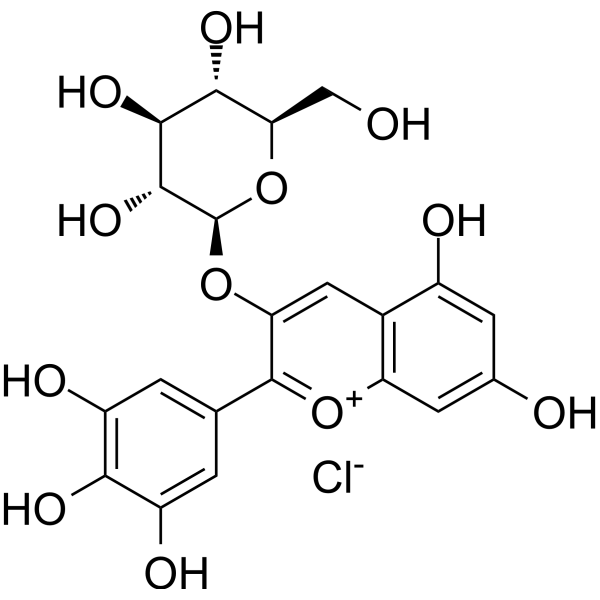
Delphinidin 3-glucoside chloride (Delphinidin 3-O-glucoside chloride) is an active anthocyanin found in Hibiscus sabdariffa extract. Delphinidin 3-glucoside chloride induces a pro-apoptotic effect in B cell chronic lymphocytic leukaemia (B CLL) . Delphinidin 3-glucoside chloride exerts phytoestrogen activity by binding to ERβ, with an IC50 of 9.7 μM . Delphinidin-3-O-glucoside chloride inhibits EGFR with an IC50 of 2.37 µM . Delphinidin 3-glucoside chloride exhibits antitumor effects through pAKT/IRF1/HOTAIR pathway. Delphinidin 3-glucoside chloride exhibits efficacy against oxidative stress, inhibits platelet activation and endothelial dysfunction .
Cat. No.: HY-P9961
CAS No.: 679818-59-8
Synonyms: GSK1841157; OMB-157

Target:  

CD20

Research Areas:  

Cancer

Ofatumumab is a fully human anti-CD20 monoclonal antibody that induces antibody-dependent cell-mediated cytotoxicity (ADCC) and complement-dependent cytotoxicity (CDC) in CD20-expressing B lymphocytes. Ofatumumab has strong lytic activity against CD20-positive B lymphocytes and eliminates CD20-positive tumor cells through ADCC and CDC. Ofatumumab is particularly effective against drug-resistant cells with low CD20 expression and can be applied to the research of chronic lymphocytic leukemia (CLL) .
Cat. No.: HY-100867A
CAS No.: 1952251-28-3
Purity:  99.86%
Synonyms: TAK-659 monohydrochloride; CB-659 monohydrochloride
Target:  

Syk FLT3

Research Areas:  

Cancer

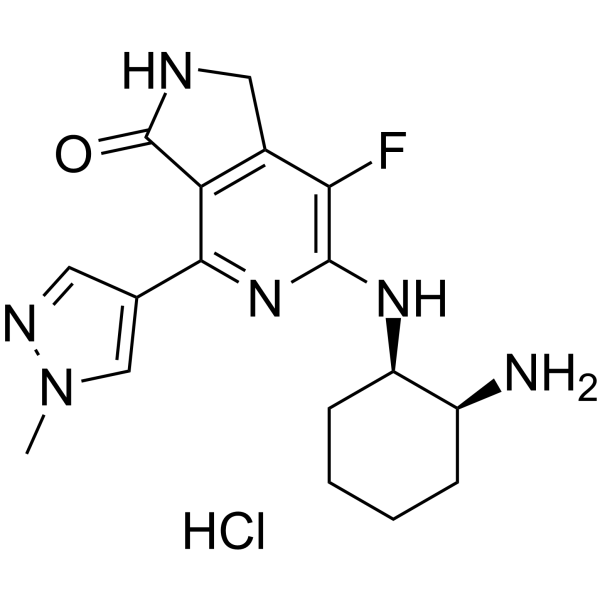
TAK-659 hydrochloride is a highly potent, selective, reversible and orally available dual inhibitor of spleen tyrosine kinase (SYK) and fms related tyrosine kinase 3 (FLT3), with an IC50 of 3.2 nM and 4.6 nM for SYK and FLT3, respectively. TAK-659 hydrochloride induces cell death in tumor cells but not in nontumor cells, and with potential for the treatment of chronic lymphocytic leukemia (CLL) .
Cat. No.: HY-174864
CAS No.: 3100147-70-1
Target:  

PROTACs NF-κB Apoptosis

Research Areas:  

Cancer

JP-163-16 is a RelA/p65 PROTAC degrader. JP-163-16 selectively reduces the expression of RelA/p65 in a proteasome-dependent manner in cells. JP-163-16 can induce cell apoptosis by inhibiting the NF-κB signaling pathway. JP-163-16 can be used for research on RelA/p65-dependent tumours, such as chronic lymphocytic leukaemia (CLL) .
Cat. No.: HY-P991224

Target:  

CCR

Research Areas:  

Inflammation/Immunology Cancer

CAP-100 is a monoclonal antibody that targets CCR7. CAP-100 neutralizes the ligand-binding site and signaling of CCR7. CAP-100 strongly inhibits CCR7-induced migration, extravasation, homing, and survival in chronic lymphocytic leukemia (CLL) samples. CAP-100 triggers potent tumor cell killing, mediated by host immune mechanism. CAP-100 shows a favorable toxicity profile on relevant hematopoietic subsets. CAP-100 is involved in research on anti-tumor and disease such as CLL .
Cat. No.: HY-138632
CAS No.: 2417370-42-2
Purity:  98.23%
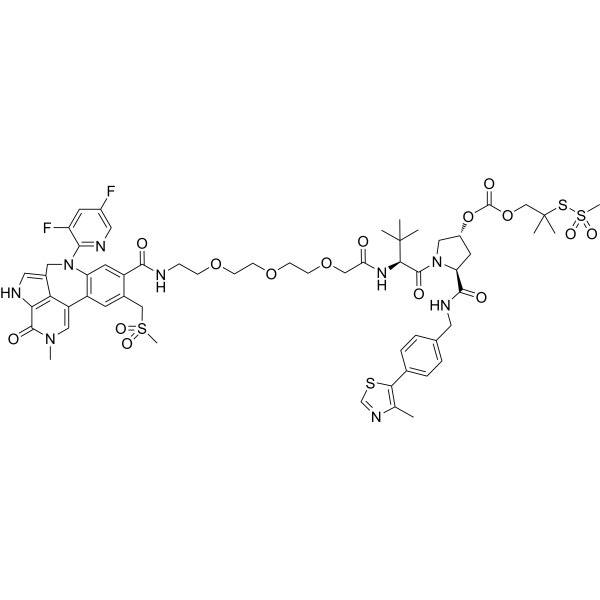
PROTAC BRD4 Degrader linker conjugate is a linker-payload conjugate as well as a bifunctional degrader of BRD4 that binds to VHL, consisting of PROTAC and a linker. PROTAC BRD4 Degrader linker conjugate can be conjugated with STEAP1 and CLL1 antibodies to degrade BRD4 protein, with DC50 values of 0.86 nM and 7.6 nM, respectively. PROTAC BRD4 Degrader linker conjugate can be used in research related to prostate cancer and acute myeloid leukemia (BRD4 ligand: (HY-129939); VHL ligand: (HY-125845)) [1].\n


Cat. No.: HY-171499
CAS No.: 872847-66-0
Synonyms: EL625
Target:  

MDM-2/p53

Research Areas:  

Cancer

Cenersen (EL625) is an oligonucleotide targeting TP53. Cenersen can eliminate the activity of TP53 gain-of-function mutants and increase the sensitivity of lymphoma cells to cytotoxic chemotherapy in vitro. Cenersen can be used for the study of chronic lymphocytic leukemia (CLL) .
Cat. No.: HY-160966
CAS No.: 2988804-46-0
Target:  

PROTACs Btk

Research Areas:  

Inflammation/Immunology Cancer

PROTAC BTK Degrader-10 (Example 1P) is a PROTAC degrader for BTK. PROTAC BTK Degrader-10 can be used for research of chronic lymphocytic leukemia (CLL) .
Cat. No.: HY-100867
CAS No.: 1312691-33-0
Synonyms: TAK-659; CB-659
Target:  

Syk FLT3

Research Areas:  

Cancer

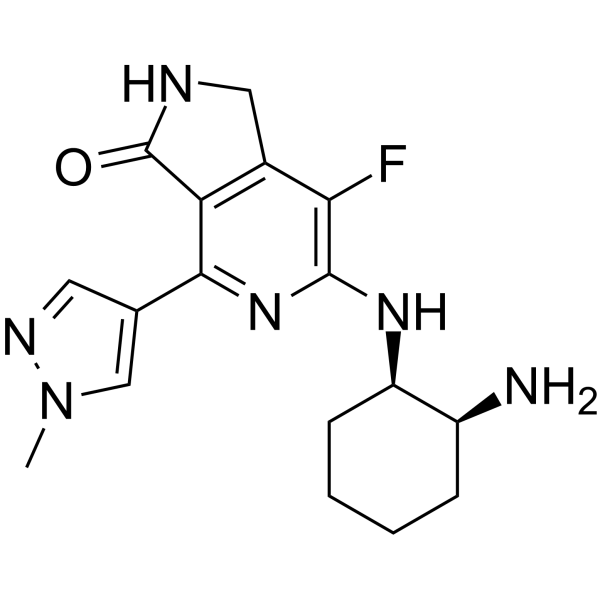
TAK-659 is a highly potent, selective, reversible and orally available dual inhibitor of spleen tyrosine kinase (SYK) and fms related tyrosine kinase 3 (FLT3), with an IC50 of 3.2 nM and 4.6 nM for SYK and FLT3, respectively. TAK-659 induces cell death in tumor cells but not in nontumor cells, and with potential for the treatment of chronic lymphocytic leukemia (CLL) .
Cat. No.: HY-177058
Research Areas:  

Inflammation/Immunology

DSP30 is a phosphorothioate cpG-oligodeoxynucleotide and a TLR9 agonist. DSP30 can activate immune system cells, including B cells and dendritic cells, by inducing proliferation and cytokine production.DSP30 can enhance the immunosuppressive function of bone marrow-multipotent mesenchymal stromal cells (BM-MSC). DSP30 combined with interleukin 2 (IL2) is an effective mitotic stimulant in B-cell disorders. DSP30 can be used for the genetic characteristic research and analysis of chronic lymphocytic leukemia (CLL) .
Cat. No.: HY-138633
CAS No.: 2417370-49-9
Purity:  99.75%
Research Areas:  

Cancer

PROTAC BRD4 Degrader-10 (compound 8b) is a PROTAC connected by ligands for von Hippel-Lindau and BRD4. PROTAC BRD4 Degrader-10 can be conjugated with STEAP1 and CLL1 antibodies to degrade the BRD4 protein in PC3 prostate cancer cells, with a DC50 of 1.3 nM and 18 nM, respectively [1].
Cat. No.: HY-138635
CAS No.: 2417370-90-0
Purity:  99.85%
Research Areas:  

Cancer

PROTAC BRD4 Degrader-12 (compound 9c) is a PROTAC connected by ligands for von Hippel-Lindau and BRD4. PROTAC BRD4 Degrader-12 can be conjugated with STEAP1 and CLL1 antibodies to degrade the BRD4 protein in PC3 prostate cancer cells, with a DC50 of 0.39 nM and 0.24 nM, respectively [1].
Cat. No.: HY-163607
CAS No.: 3033533-25-1
Target:  

Apoptosis NF-κB

Research Areas:  

Cancer

SpiD3, a spirocyclic dimer, is an anticancer agent. SpiD3 markedly inhibits malignant B-cell proliferation and suppressed NF-κB activation independent of TME-associated stimuli. SpiD3 induces apoptosis and inhibits protein synthesis in chronic lymphocytic leukemia cells. SpiD3 can be used for study of chronic lymphocytic leukemia (CLL) .
Cat. No.: HY-114461
CAS No.: 147025-57-8
Research Areas:  

Cancer

FD-895 is a spliceosome modulator derived from a polyketide natural product, targeting the SF3b subunit of the spliceosome. FD-895 possesses core biological activities for regulating RNA splicing (intron retention, alternative splicing) and inducing apoptosis of cancer cells. FD-895 can be used for the research of cancer, such as chronic lymphocytic leukemia (CLL) .
Cat. No.: HY-17600R
CAS No.: 1420477-60-6
Synonyms: ACP-196 (Standard)
Target:  

Reference Standards Btk

Research Areas:  

Cancer

Acalabrutinib (Standard) is the analytical standard of Acalabrutinib. This product is intended for research and analytical applications. Acalabrutinib (ACP-196) is an orally active, irreversible, and highly selective second-generation BTK inhibitor. Acalabrutinib binds covalently to Cys481 in the ATP-binding pocket of BTK. Acalabrutinib demonstrates potent on-target effects and efficacy in mouse models of chronic lymphocytic leukemia (CLL) . Acalabrutinib is a click chemistry reagent, itcontains an Alkyne group and can undergo copper-catalyzed azide-alkyne cycloaddition (CuAAc) with molecules containing Azide groups.
Cat. No.: HY-108052R
CAS No.: 6906-38-3
Synonyms: Delphinidin 3-O-glucoside chloride (Standard); Delphinidin 3-O-β-glucoside chloride (Standard)
Delphinidin 3-glucoside (chloride) (Standard) is the analytical standard of Delphinidin 3-glucoside (chloride). This product is intended for research and analytical applications. Delphinidin 3-glucoside chloride (Delphinidin 3-O-glucoside chloride) is an active anthocyanin found in Hibiscus sabdariffa extract. Delphinidin 3-glucoside chloride induces a pro-apoptotic effect in B cell chronic lymphocytic leukaemia (B CLL) . Delphinidin 3-glucoside chloride exerts phytoestrogen activity by binding to ERβ, with an IC50 of 9.7 μM . Delphinidin-3-O-glucoside chloride inhibits EGFR with an IC50 of 2.37 µM . Delphinidin 3-glucoside chloride exhibits antitumor effects through pAKT/IRF1/HOTAIR pathway. Delphinidin 3-glucoside chloride exhibits efficacy against oxidative stress, inhibits platelet activation and endothelial dysfunction .
Cat. No.: HY-P78623
Purity:  ≥ 90%, as determined by reducing SDS-PAGE.
Synonyms: CLEC12A; MICL; CLL-1; CLL1; DCAL2; DCAL-2; CD371
Species:  
Rat
Source:  
Cat. No.: HY-P84992
Synonyms: CLL1; MICL; CLL-1; DCAL-2; C-type lectin domain family 12 member A; CD371; CD371 nanobody;

Host:  

Mouse

Application:  

ELISA

Reactivity:  

Human

Cat. No.: HY-P81674
Synonyms: CLEC12A; MICL; CLL-1; CLL1; DCAL2; DCAL-2; CD371

Host:  

Rabbit

Application:  

FC, ELISA

Reactivity:  

Human

Cat. No.: HY-P84631
Synonyms: CLEC12A; MICL; CD371; CLL-1; DCAL-2

Host:  

Mouse

Application:  

WB, ICC/IF, FC, ELISA

Reactivity:  

Human

