1. Search Result
Search Result
Results for "

Cannabinoid Receptor Type 1

" in MedChemExpress (MCE) Product Catalog:

17

Inhibitors & Agonists

5

Natural
Products

2

Isotope-Labeled Compounds

Cat. No. Product Name Target Research Areas Chemical Structure
  • HY-110028

    Cannabinoid Receptor Fatty Acid Synthase (FASN) Androgen Receptor Endocrinology Cancer
    Leelamine hydrochloride is a tricyclic diterpene molecule that is extracted from the bark of pine trees . Leelamine hydrochloride is a cannabinoid receptor type 1 (CB1) agonist and a inhibitor of SREBP1-regulated fatty acid/lipid synthesis in prostate cancer cells that is not affected by androgen receptor status. Leelamine hydrochloride suppresses transcriptional activity of androgen receptor, which is known to regulate fatty acid synthesis [2,3].
    Leelamine hydrochloride
  • HY-116649

    AM4113

    Cannabinoid Receptor Neurological Disease Metabolic Disease
    CB1 antagonist 2 (AM4113) is an orally active cannabinoid receptor type 1 (CB1R) antagonist. CB1 antagonist 2 suppresses appetite, reduces body weight, and blocks addictive behaviors such as heroin addiction, without causing adverse effects like nausea and depression that are associated with traditional CB1 inverse agonists. CB1 antagonist 2 can be used in studies related to obesity and opioid addiction .
    CB1 antagonist 2
  • HY-113421

    Linoleic acid monoethanolamide

    Cannabinoid Receptor Neurological Disease
    Linoleoyl ethanolamide (Linoleic acid monoethanolamide) is classified as a fatty acid ethanolamide. Linoleoyl ethanolamide only weakly binds G-protein-coupled cannabinoid receptors of type-1(CB1)and CB2 receptors, and inhibits the binding of [3H]CP-55,940 with Kis of 10 and 25 μM, respectively. Linoleoyl ethanolamide is 4-fold less potent than anandamide at causing catalepsy in mice and it does not prolong sleep time .
    Linoleoyl ethanolamide
  • HY-113421S

    Isotope-Labeled Compounds Cannabinoid Receptor Neurological Disease
    Linoleoyl ethanolamide-d4 is a deuterated labeled Linoleoyl ethanolamide . Linoleoyl ethanolamide (Linoleic acid monoethanolamide) is classified as a fatty acid ethanolamide. Linoleoyl ethanolamide only weakly binds G-protein-coupled cannabinoid receptors of type-1(CB1)and CB2 receptors, and inhibits the binding of [3H]CP-55,940 with Kis of 10 and 25 μM, respectively. Linoleoyl ethanolamide is 4-fold less potent than anandamide at causing catalepsy in mice and it does not prolong sleep time .
    Linoleoyl ethanolamide-d4
  • HY-172587

    Cannabinoid Receptor Neurological Disease
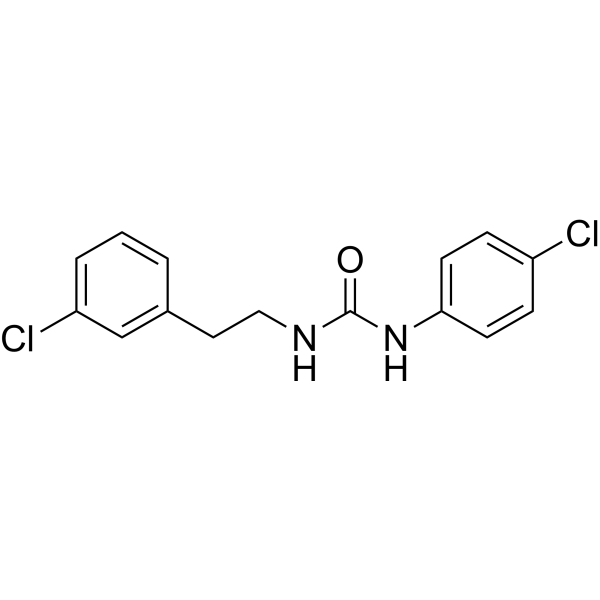
    CB1R Allosteric modulator 5 (compound 3) is a selective, and blood-brain barrier (BBB) permeable Cannabinoid receptor type 1 allosteric modulator with a pIC50 of 6.89. CB1R Allosteric modulator 5 attenuates both cocaine-seeking behavior specific to cue-induced reinstatement and cocaine-induced behavioral sensitization without altering locomotor activity .
    CB1R Allosteric modulator 5
  • HY-N6097

    Cannabinoid Receptor Neurological Disease
    Amauromine is a peripheral selective cannabinoid receptor type 1 (CB1) receptor antagonist with Ki and Kb values of 178 nM and 66.6 nM, respectively .
    Amauromine
  • HY-141411

    (Rac)-MRI-1867

    Cannabinoid Receptor NO Synthase Others
    (Rac)-Zevaquenabant ((Rac)-MRI-1867, compound 6b) is a cannabinoid receptor type 1 (CB1R)/iNOS antagonist, with a Ki of 5.7 nM for CB1R. (Rac)-Zevaquenabant is potential for the research of liver fibrosis .
    (Rac)-Zevaquenabant
  • HY-145196

    Cannabinoid Receptor Neurological Disease
    RTICBM-189 is a potent, brain-penetrant allosteric modulator of the cannabinoid type-1 (CB1) receptor with a pIC50 of 7.54 in Ca 2+ mobilization assay. RTICBM-189 has pIC50s of 5.29 and 6.25 for hCB1 and mCB1, respectively. RTICBM-189 significantly and selectively attenuates the reinstatement of the addictive agent-seeking behavior in rats .
    RTICBM-189
  • HY-144827

    Cannabinoid Receptor Neurological Disease Metabolic Disease
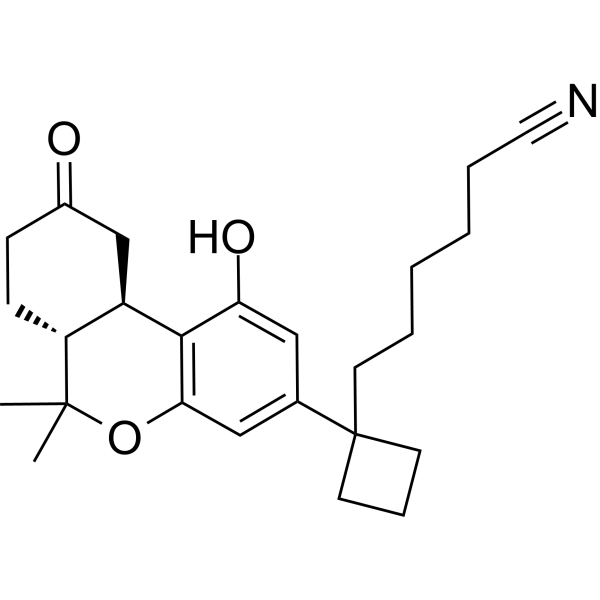
    AM8936 acts as a balanced and potent cannabinoid receptor type-1 (CB1) agonist in functional assays (EC50s of 8.6 and 1.4 nM for rCB1 and hCB1, respectively). AM8936 exhibits high affinity for rat CB1 (rCB1) with Ki of 0.55 nM. AM8936 is a potent and efficacious CB1 agonist in vivo. AM8936 can be used for the research of CNS and metabolic disorders, pain, glaucoma, etc .
    AM8936
  • HY-107019

    SR 147778

    Cannabinoid Receptor Metabolic Disease
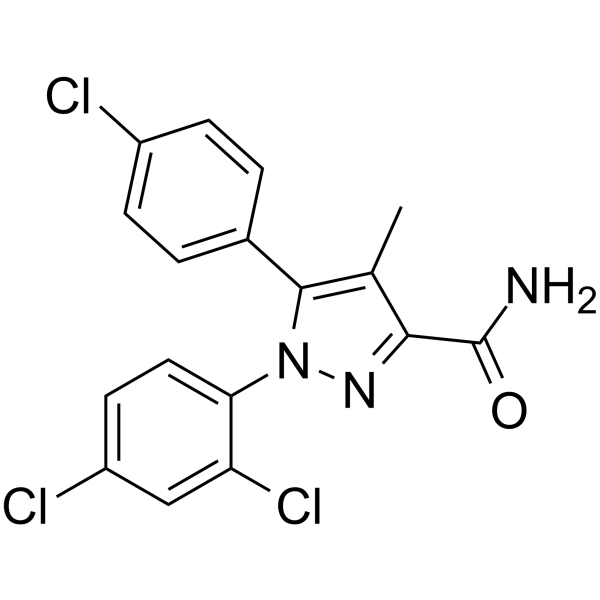
    Surinabant (SR 147778) is an orally active, selective cannabinoid receptor type 1 CB1R antagonist. Surinabant is used in studies of obesity and alcoholism .
    Surinabant
  • HY-135882

    TRP Channel Cannabinoid Receptor Endogenous Metabolite Neurological Disease
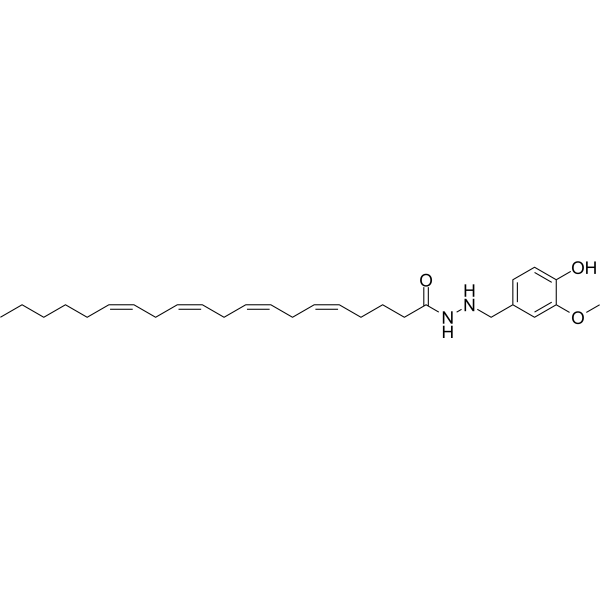
    OMDM-6 is a hybrid agonist of vanilloid receptor type 1 (VR1, TRPV1) (EC50=75 nM) and cannabinoid receptor type 1 (CB1) (Ki=3.2 μM). OMDM-6 inhibits anandamide cellular uptake (ACU) with a Ki of 7.0 μM .
    OMDM-6
  • HY-135881

    TRP Channel Endogenous Metabolite Neurological Disease
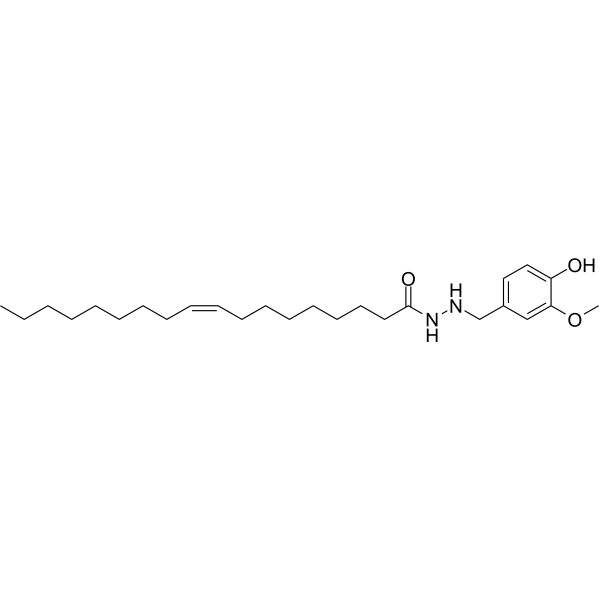
    OMDM-5 is a selective inhibitor of anandamide cellular uptake (ACU), with a Ki of 4.8 μM. OMDM-5 is also a potent vanilloid receptor type 1 (VR1, TRPV1) agonist, with an EC50 of 75 nM, and shows weakly active as cannabinoid receptor type 1 (CB1) ligand (Ki=4.9 μM) .
    OMDM-5
  • HY-112707

    Cannabinoid Receptor 5-HT Receptor Neurological Disease
    AM9405 is a novel peripherally active cannabinoid type 1 (CB1) and serotonin type 3 receptor agonist. AM9405 inhibits twitch contraction of the ileum and the colon with IC50s of 45.71 and 0.076 nM, respectively.
    AM9405
  • HY-174838

    Cannabinoid Receptor Neurological Disease Metabolic Disease Inflammation/Immunology
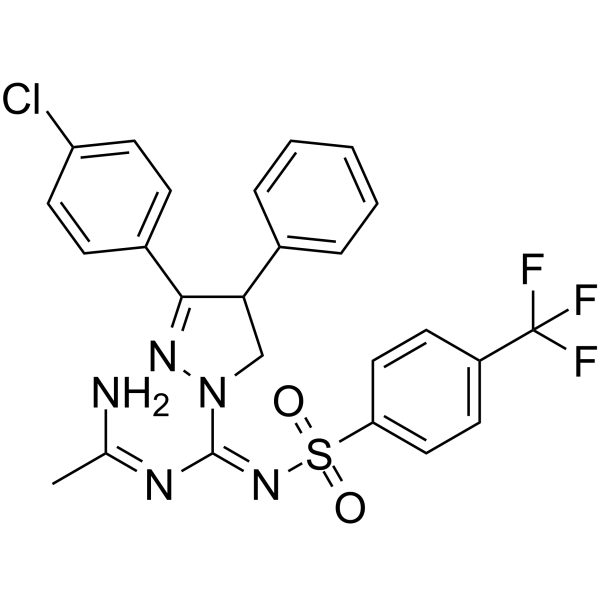
    CB1-IN-3 (Compound 6i) is a potent cannabinoid type 1 receptor (CB1) inhibitor. CB1-IN-3 is promising for research of obesity, inflammation, and neurological diseases .
    CB1-IN-3
  • HY-W770198

    2-Monolinolein-d5; 2-Monolinoleoylglycerol-d5

    Isotope-Labeled Compounds Cannabinoid Receptor Neurological Disease
    2-Linoleoyl glycerol-d5 (2-Monolinolein-d5; 2-Monolinoleoylglycerol-d5) is the deuterium labeled 2-Linoleoyl glycerol (HY-130311). 2-Linoleoyl glycerol (2-Monolinolein; 2-Monolinoleoylglycerol) is a monoacylglycerol that is an antagonist and partial agonist at the type 1 cannabinoid CB1 receptor. The potency of 2-Linoleoyl glycerol can be enhanced by JZL195 (HY-15250), an inhibitor of FAAH and MAGL, and inhibited by the CB1 antagonist AM251 (HY-15443) and Cannabidiol. As a CB1 antagonist, 2-Linoleoyl glycerol does not enhance, but only attenuates, the activity of the CB1/CB2 receptor ligands cannabinoids (AEA) and 2-arachidonoylglycerol (2-AG) .
    2-Linoleoyl glycerol-d5
  • HY-153693

    Cannabinoid Receptor Neurological Disease Inflammation/Immunology
    CB2 receptor agonist 4 (Compound 8) is a highly selective cannabinoid receptor type 2 (CB2 Receptor) agonist with an EC50 of 13.99 nM. CB2 receptor agonist 4 shows no significant activity against cannabinoid receptor type 1. CB2 receptor agonist 4 can be used for the research of pain and immune-related diseases .
    CB2 receptor agonist 4
  • HY-120093

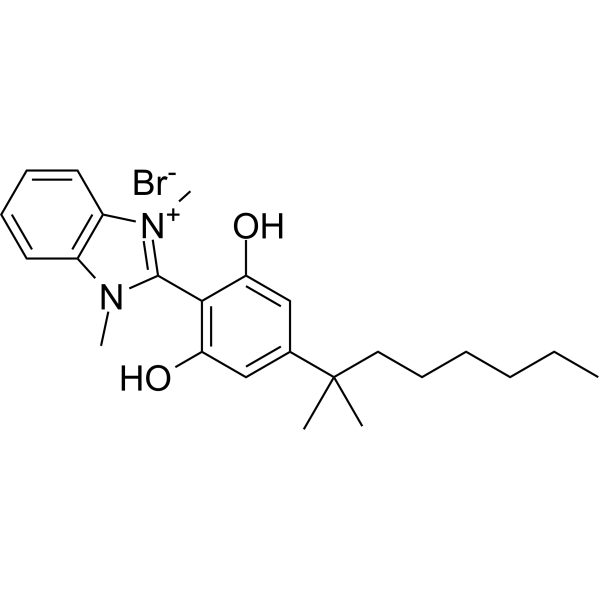
    Cannabinoid Receptor PERK Neurological Disease
    GAT100 is a negative allosteric modulator and covalent allosteric probe for cannabinoid receptor type 1 (CB1R). GAT100 acts as a positive allosteric modulator for orthosteric agonist CP55,940 binding to regulate the CB1R signaling pathway. GAT100 reduces the potency and efficacy of orthosteric CB1R agonists in terms of β-arrestin 1 recruitment, phosphorylation of PLCβ3 and ERK1/2, cAMP accumulation, and CB1R internalization. GAT100 is applicable to the research of psychobehavioral and somatic diseases .
    GAT100

Inquiry Online

Your information is safe with us. * Required Fields.

Salutation


Country or Region *

Applicant Name *


Organization Name *

Department *


Email Address *


Product Name *

Cat. No.


Requested quantity *

Phone Number *


Remarks

Inquiry Online

Inquiry Information

Product Name:
Cat. No.:
Quantity:
MCE Japan Authorized Agent:

