



Search Result
Results for "
Cross-reactivity
" in MedChemExpress (MCE) Product Catalog:
1
Biochemical Assay Reagents
| Cat. No. |
Product Name |
Target |
Research Areas |
Chemical Structure |
-
- HY-117109
-
|
|
Drug Derivative
|
Others
|
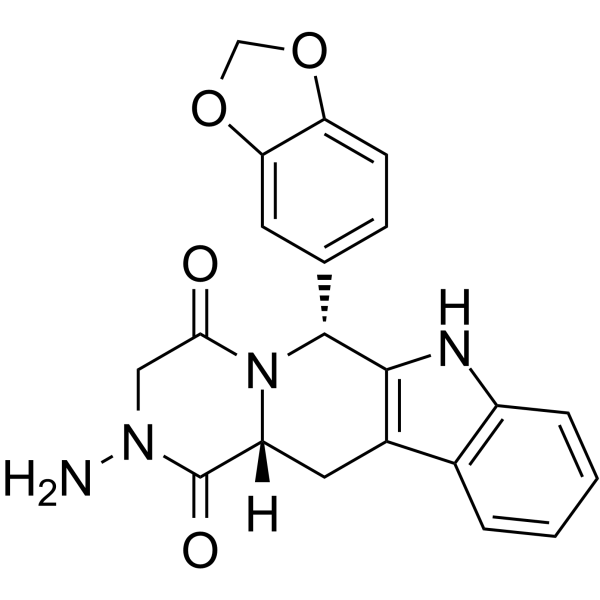
Amino Tadalafil is a phosphodiesterase type 5 (PDE5) inhibitor analog and tadalafil structural analog. Amino Tadalafil can be specifically detected by anti-tadalafil polyclonal antibodies, with a cross-reactivity of 105.2% with tadalafil. Amino Tadalafil can be incorporated into dietary supplements .
|
-
-
- HY-NP002J
-
|
|
Biochemical Assay Reagents
|
Others
|
|
Horse Serum Albumin is an abundant, multifunctional mammalian plasma protein and transport molecule. Horse Serum Albumin acts as an allergen, exhibits high cross-reactivity with serum albumins from other mammals, and contains epitope regions recognizable by antibodies. Horse Serum Albumin binds a variety of metabolites, drugs, nutrients, metals and other molecules .
|
-
-
- HY-107625A
-
|
|
MCHR1 (GPR24)
|
Neurological Disease
|
|
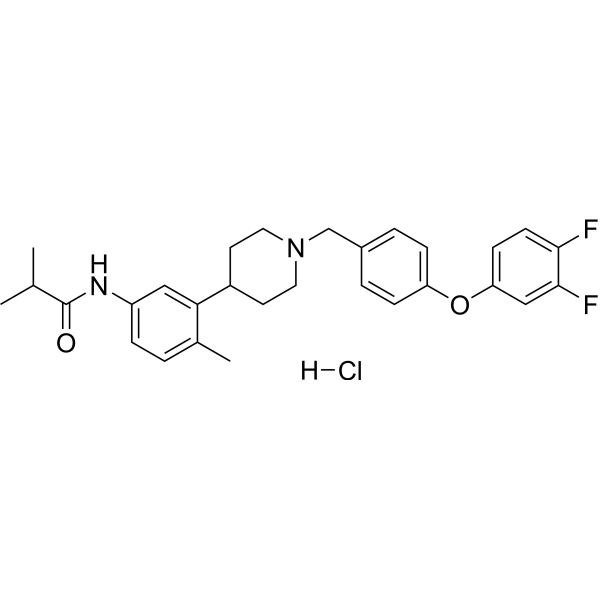
SNAP 94847 hydrochloride is a novel, high affinity selective melanin-concentrating hormonereceptor1 (MCHR1) antagonist with (Ki= 2.2 nM, Kd=530 pM), it displays >80-fold and >500-fold selectivity over MCHα1A and MCHD2 receptors respectively. SNAP 94847 hydrochloride binds with high affinity to the mouse and rat MCHR1 with minimal cross-reactivity to other GPCR, ion channels, enzymes, and transporters .
|
-
-
- HY-P1745
-
|
Insulin B chain (9-23)
|
MHC
Insulin Receptor
IFNAR
|
Inflammation/Immunology
|
|
InsB (9-23) (Insulin B chain (9-23)) is an HLA-DQ8-restricted insulin B-chain peptide composed of amino acid residues 9-23. InsB (9-23) serves as a major MHC II class-restricted antigen. InsB (9-23) supports the recognition and activation of T cells, stimulates the secretion of IFN-γ and cytokines, and induces cross-reactive immune responses. InsB (9-23)-specific CD4 T cells can initiate diabetes . InsB (9-23) can be used in research related to type 1 diabetes and autoimmune diabetes .
|
-
-
- HY-18977
-
KML29
3 Publications Verification
|
MAGL
|
Metabolic Disease
Inflammation/Immunology
|
|
KML29 is an extremely selective, orally active and irreversible MAGL inhibitor, with IC50 values of 15 nM, 43 nM and 5.9 nM for mouse, rat and human MAGL, respectively. KML29 exhibits minimal cross-reactivity toward other central and peripheral serine hydrolases, including no detectable activity against FAAH .
|
-
-
- HY-108613
-
|
|
MAGL
|
Neurological Disease
Cancer
|
|
JJKK 048 is a highly selective and potent monoacylglycerol lipase (MAGL) inhibitor with IC50 values of 214 pM, 275 pM and 363 pM for human, rat, and mouse MAGL. JJKK 048 displays low cross-reactivity with other endocannabinoid targets. JJKK 048 can be used in the research of diseases such as cancer, neurodegenerative diseases, and pain .
|
-
-
- HY-P99359
-
|
ABT-555; AE12-1Y-QL; Anti-RGMA Reference Antibody (elezanumab)
|
TGF-beta/Smad
|
Metabolic Disease
|
|
Elezanumab (ABT-555; AE12-1Y-QL) is a human monoclonal antibody that selectively targets repulsive guidance molecule A (RGMa). Elezanumab potently inhibited RGMa mediated BMP signalling via the SMAD1/5/8 pathway, with an IC50 around 97 pM. Elezanumab promotes neuroregeneration and neuroprotection in neuronal injury and demyelination models binds N-terminal RGMa, blocks BMP signaling and lacks RGMc cross-reactivity. elezanumab has neuroregenerative and neuroprotective activities without impact on iron metabolism .
|
-
-
- HY-145707
-
|
|
Mitochondrial Metabolism
|
Cancer
|
|
BAY-179, a chemical probe, is a potent, selective, and species cross-reactive complex I inhibitor. BAY-179 shows IC50 values of 79 nM, 38 nM, 27 nM, and 47 nM for human, mouse, rat, and dog complex I, respectively .
|
-
-
- HY-P99320
-
|
OMP 59R5; Anti-Human NOTCH2 Recombinant Antibody
|
Notch
|
Cancer
|
|
Tarextumab (OMP-59R5) is a cross-reactive, fully human IgG2 antibody that selectively inhibits Notch2 and Notch3 signaling. Tarextumab demonstrates broad-spectrum antitumor efficacy in xenograft models of epithelial tumors. Tarextumab can be used for the study of pancreatic cancer .
|
-
-
- HY-P2459
-
|
|
MHC
|
Neurological Disease
|
|
MOG (35-55), human is a component of CNS myelin. MOG (35-55), human is different from mMOG (35-55) by a proline for serine substitution at position 42. MOG (35-55), human is also immunogenic via bind to H-2b class II MHC and recognized by T cells, but not encephalitogenic, and is only partially cross-reactive with mMOG35–55. MOG (35-55), human induces minimal clinical signs of EAE relative to the rodent peptide .
|
-
-
- HY-128888
-
|
|
Isocitrate Dehydrogenase (IDH)
|
Cancer
|
|
(R,R)-GSK321 is a wild-type isocitrate dehydrogenase 1 (WT IDH1) inhibitor with an IC50 value of 120 nM. (R,R)-GSK321 as a mutant R132H IDH1 inhibitor, is an isomer of GSK321 with some wild-type cross reactivity .
|
-
-
- HY-W008293
-
|
|
Drug Derivative
|
Inflammation/Immunology
|
|
Himic anhydride is an acid anhydride compound and sensitizer. Himic anhydride with cross-reactivity to hexahydrophthalic anhydride. Himic anhydride induces immunoglobulin E (IgE)-mediated sensitization and allergic immune responses. Himic anhydride can be used for the research of occupational asthma .
|
-
-
- HY-103539
-
|
|
γ-secretase
|
Metabolic Disease
|
|
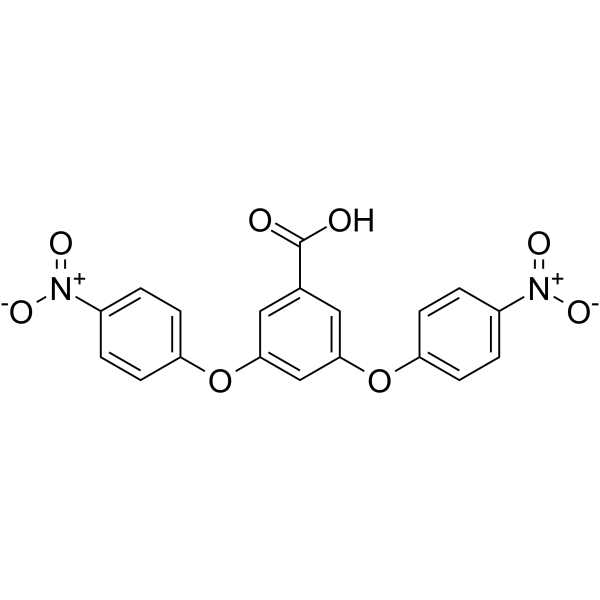
3,5-Bis(4-nitrophenoxy)benzoic acid is an inhibitor of γ-secretase. 3,5-Bis(4-nitrophenoxy)benzoic acid causes a decrease in the released levels of Aβ42 and notch-1 Aβ-like peptide 25 (Nβ25). 3,5-Bis(4-nitrophenoxy)benzoic acid, as a marker for fetal hypothyroidism, is a 3,3’-diiodothyronine sulfate (T2S) cross-reactive material in maternal serum .
|
-
-
- HY-P3350
-
|
|
Bacterial
|
Infection
|
|
LS-BF1 is a stable and low toxic cationic antimicrobial peptide. LS-BF1 displays broad spectrum of antibacterial activity, including the challenging ESKAPE pathogens, by cell membrane disruptive mechanism. LS-BF1 shows good in vivo efficacy for elimination of bacteria in a mouse infection model[1].
|
-
-
- HY-179414
-
|
|
Ras
|
Cancer
|
|
KRAS G12D-IN-34 (Compound 13) is a KRAS (G12D) inhibitor with IC50 values for KRAS (G12D) and KRAS (WT) of 1.05 nM and 1.59 μM respectively. KRAS G12D-IN-34 can be used for research on non-small cell lung cancer .
|
-
-
- HY-P11299
-
|
|
EBV
|
Infection
Neurological Disease
Inflammation/Immunology
|
|
EBNA-1 (386-405 aa) is a cross-reactive viral antigen peptide. EBNA-1 (386-405 aa) has a high molecular similarity to GlialCAM (370-389 aa) and it induces the production of cross-reactive antibodies that recognize both EBV antigens and glial cells in the central nervous system, thereby triggering autoimmune responses. EBNA-1 (386-405 aa) can used for Epstein-Barr virus (EBV) infection and multiple sclerosis (MS) research .
|
-
-
- HY-160060
-
|
|
Mucin
|
Cancer
|
|
MA3 aptamer sodium is an 86-base long DNA aptamer targeting the mucin MUC1. MA3 aptamer sodium binds to the peptide epitope of mucin 1 (MUC1) with a Kd of 38.3 nM and has minimal cross-reactivity with albumin .
|
-
-
- HY-107625
-
|
|
MCHR1 (GPR24)
|
Neurological Disease
Endocrinology
|
|
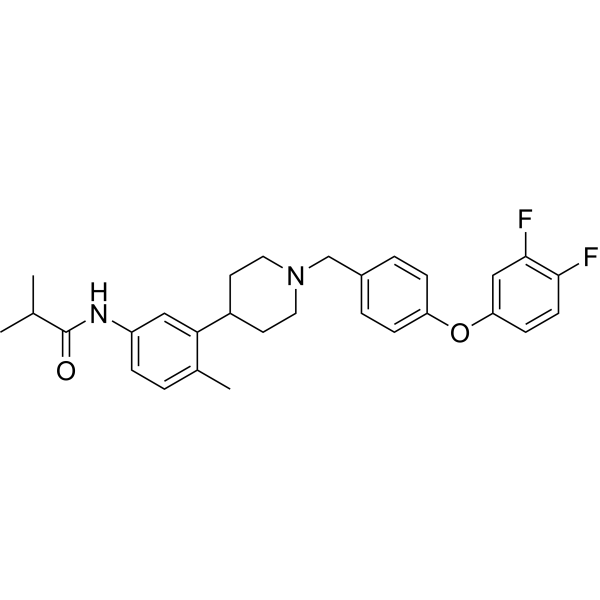
SNAP 94847 is a novel, high affinity selective melanin-concentrating hormonereceptor1 (MCHR1) antagonist with (Ki= 2.2 nM, Kd=530 pM), it displays >80-fold and >500-fold selectivity over MCHα1A and MCHD2 receptors respectively. SNAP 94847 binds with high affinity to the mouse and rat MCHR1 with minimal cross-reactivity to other GPCR, ion channels, enzymes, and transporters .
|
-
-
- HY-P10497A
-
|
|
Bacterial
|
Infection
Inflammation/Immunology
|
|
EBV BZLF1 (190-197) TFA is an immunodominant CEF-controlling peptide derived from Epstein-Barr virus (EBV). EBV BZLF1 (190-197) TFA is a suitable epitope for CD8+ T cells to stimulate the release of IFNg. CTL responses to EBV BZLF1 (190-197) TFA are diverse and cross-recognize similar peptides from both host self-proteins and bacterial proteins. EBV BZLF1 (190-197) TFA can be used to study autoimmune diseases .
|
-
-
- HY-P10497
-
|
|
Bacterial
|
Infection
Inflammation/Immunology
|
|
EBV BZLF1 (190-197) is an immunodominant CEF-controlling peptide derived from Epstein-Barr virus (EBV). EBV BZLF1 (190-197) is a suitable epitope for CD8+ T cells to stimulate the release of IFNg. CTL responses to EBV BZLF1 (190-197) are diverse and cross-recognize similar peptides from both host self-proteins and bacterial proteins. EBV BZLF1 (190-197) can be used to study autoimmune diseases .
|
-
-
- HY-W210476
-
|
|
SARS-CoV
|
Infection
|
|
Somantadine, an adamantane derivative, is an antiviral agent with high cross-reactivity with anti-amantadine monoclonal antibodies. Somantadine can be used for research of coronavirus-related diseases .
|
-
-
- HY-P1862
-
|
|
HSV
|
Infection
|
|
HSV-gB2 (498-505) is an immunodominant epitope from herpes simplex virus (HSV) glycoprotein B residues 498-505, acts as H-2Kb-restricted and HSV-1/2-cross-reactive cytotoxic T-lymphocyte (CTL) recognition epitope .
|
-
-
- HY-P10315
-
|
Q144-PLP(139-151)
|
Transmembrane Glycoprotein
|
Others
|
|
[Gln144]-PLP (139-151) is an experimental antigen used to study T cells respond to both autoantigens and cross-reactive non-autoantigens. [Gln144]-PLP (139-151) activates T cells by binding to T-cell Receptor (TCR), which triggers an immune response. [Gln144]-PLP (139-151) can be used to study the regulation of autoimmune diseases .
|
-
-
- HY-P5869
-
|
|
Calcium Channel
Sodium Channel
|
Neurological Disease
|
|
Kurtoxin is a selective Cav3 (T-type) voltage-gated Ca 2+ channel gating inhibitor with a Kd of 15 nM for Cav3.1 (α1G T-type) Ca 2+ channel. Kurtoxin can interact with high affinity with native neuronal high-threshold L-type, N-type, and P-type Ca 2+ channels in central and peripheral neurons. Kurtoxin also shows cross-reactivity with voltage-gated Na + channel .
|
-
-
- HY-P11145
-
|
|
Influenza Virus
|
Infection
Inflammation/Immunology
|
Influenza HA (529-537) is the amino acid sequence (IYATVAGSL) at positions 529-537 of the hemagglutinin (HA) of the influenza A virus. Influenza HA (529-537) can be recognized by three different specificities (H1-specific, H2-specific, H1/H2 cross-reactive) of CD8 + cytotoxic T-lymphocyte (CTL) clones. Influenza HA (529-537) can be used to understand T-cell immune specificity and to design new vaccines .
|
-
-
- HY-155471
-
|
|
Biochemical Assay Reagents
|
Others
|
|
IMP 245 is a symmetric di-HSG bivalent hapten. IMP 245 has low toxicity, high affinity binding to available antibodies and absence of cross reactivity or non-specific binding with body components .
|
-
-
- HY-P992357
-
|
|
PD-1/PD-L1
|
Cancer
|
|
GNUV201 is a PD-1 inhibitor with cross-reactivity in humans, mice and monkeys, which effectively blocks the PD-1/PD-L1 interaction. GNUV201 activates T cells and restores their anti-tumor activity, effectively inducing tumor regression. GNUV201 can be used in the research of related diseases such as colorectal cancer, melanoma, pancreatic cancer and colon cancer .
|
-
-
- HY-108613R
-
|
|
Reference Standards
MAGL
|
Neurological Disease
Cancer
|
|
JJKK 048 (Standard) is the analytical standard of JJKK 048 (HY-108613). This product is intended for research and analytical applications. JJKK 048 is a highly selective and potent monoacylglycerol lipase (MAGL) inhibitor with IC50 values of 214 pM, 275 pM and 363 pM for human, rat, and mouse MAGL. JJKK 048 displays low cross-reactivity with other endocannabinoid targets. JJKK 048 can be used in the research of diseases such as cancer, neurodegenerative diseases, and pain .
|
-
-
- HY-185430
-
|
|
TGF-β Receptor
|
Inflammation/Immunology
Cancer
|
|
HM-279 is a potent and orally active ALK5 inhibitor with an IC50 of 4.7 nM. HM-279 shows cross-reactivity with ALK7 (IC50 = 6.8 nM), but HM-279 has fair to good selectivity against other TGF-β receptor family kinases, with 4.5-693-fold selectivity. HM-279 demonstrates antitumor activity in vivo through CD8 + T cell immunity. HM-279 can be used for the research of colon cancer .
|
-
-
- HY-118903
-
|
|
PI3K
|
Cancer
|
|
PIK-124 is a thiazolidinone-based PI3Kγ-biased PI3K inhibitor, with an IC50 of 3 nM against PI3Kγ. PIK-124 exhibits cross-reactivity with PI3Kα (IC50 = 23 nM), PI3Kδ (IC50 = 340 nM), PI3KC2α (IC50 = 140 nM) and PI3KC2β (IC50 = 370 nM). PIK-124 is applicable to breast cancer-related research .
|
-
-
- HY-107625AR
-
|
|
Reference Standards
MCHR1 (GPR24)
|
Neurological Disease
|
|
SNAP 94847 hydrochloride (Standard) is the analytical standard of SNAP 94847 (hydrochloride) (HY-107625A). This product is intended for research and analytical applications. SNAP 94847 hydrochloride is a novel, high affinity selective melanin-concentrating hormonereceptor1 (MCHR1) antagonist with (Ki= 2.2 nM, Kd=530 pM), it displays >80-fold and >500-fold selectivity over MCHα1A and MCHD2 receptors respectively. SNAP 94847 hydrochloride binds with high affinity to the mouse and rat MCHR1 with minimal cross-reactivity to other GPCR, ion channels, enzymes, and transporters .
|
-
-
- HY-P992413
-
|
|
Integrin
|
Inflammation/Immunology
|
|
MOR102 is a fully human IgG4 monoclonal antibody and an ICAM-1 inhibitor, lacking cross-reactivity with ICAM-2 and ICAM-3. MOR102 binds to the LFA-1 binding site within ICAM-1 domain 1, blocks ICAM-1/LFA-1 interaction, binds human keratinocytes with increased binding to interferon-γ-stimulated keratinocytes. MOR102 inhibits lymphocyte adhesion, reduces lymphocyte proliferation, prevents local T-cell activation, reduces inflammatory infiltrate, restores orthokeratotic differentiation, and reduces epidermal thickness. MOR102 can be used for the research of psoriasis .
|
-
-
- HY-P991881
-
|
|
TGF-β Receptor
Hepcidin
Ferroportin
|
Cardiovascular Disease
|
|
KY1070 is a fully human anti-BMP6 antibody with a Kd of 0.00014 μM against the human BMP6. It exhibits high specificity for BMP6, showing no cross-reactivity with other members of the BMP family, and effectively inhibits BMP6-induced BMP receptor heterodimerization and hepcidin expression. KY1070 modulates Ferroportin expression on erythroid progenitor cells and accelerates erythropoiesis. In rodent anemia models, KY1070 reduces the required dose of erythropoietin (EPO) when used in combination with EPO and enhances the responsiveness of mice with chronic kidney disease (CKD)-associated anemia to EPO treatment. KY1070 is applicable for research on anemia of chronic disease [1] [2].
|
-
-
- HY-P992061
-
|
|
CD3
Calcium Channel
|
Inflammation/Immunology
|
|
Anti-Mouse CD3E Antibody (500A2) is an antibody targeting mouse CD3ε, which specifically binds to the region on CD3ε adjacent to the T cell receptor binding site. Anti-Mouse CD3E Antibody (500A2) triggers functional signal transduction in immature T cells and activates naive T cells. When cross-linked, Anti-Mouse CD3E Antibody (500A2) induces a rapid, robust and transient increase in cytoplasmic calcium concentration, acting as a potent calcium flux inducer. Anti-Mouse CD3E Antibody (500A2) is suitable for multiple experimental techniques such as flow cytometry, immunoprecipitation and EMARS reactions. It can be used to detect CD3E expression on thymocytes, mature T lymphocytes and NK-T cells from different mouse strains, or to identify membrane cluster components of the TCR complex, and shows no cross-reactivity with rat leukocytes .
|
-
-
- HY-P991850
-
|
|
Integrin
|
Inflammation/Immunology
|
|
Anti-Fibulin-4 Antibody (5G11) reacts with the human fibulin-4. Anti-Fibulin-4 Antibody (5G11) does not show any crossreactivity with other family members. Fibulin-4 is an elastic-fibre-associated glycoprotein.
|
-
| Cat. No. |
Product Name |
Type |
-
- HY-NP002J
-
|
|
Biochemical Assay Reagents
|
|
Horse Serum Albumin is an abundant, multifunctional mammalian plasma protein and transport molecule. Horse Serum Albumin acts as an allergen, exhibits high cross-reactivity with serum albumins from other mammals, and contains epitope regions recognizable by antibodies. Horse Serum Albumin binds a variety of metabolites, drugs, nutrients, metals and other molecules .
|
| Cat. No. |
Product Name |
Target |
Research Area |
-
- HY-P1745
-
|
Insulin B chain (9-23)
|
MHC
Insulin Receptor
IFNAR
|
Inflammation/Immunology
|
|
InsB (9-23) (Insulin B chain (9-23)) is an HLA-DQ8-restricted insulin B-chain peptide composed of amino acid residues 9-23. InsB (9-23) serves as a major MHC II class-restricted antigen. InsB (9-23) supports the recognition and activation of T cells, stimulates the secretion of IFN-γ and cytokines, and induces cross-reactive immune responses. InsB (9-23)-specific CD4 T cells can initiate diabetes . InsB (9-23) can be used in research related to type 1 diabetes and autoimmune diabetes .
|
-
- HY-P2459
-
|
|
MHC
|
Neurological Disease
|
|
MOG (35-55), human is a component of CNS myelin. MOG (35-55), human is different from mMOG (35-55) by a proline for serine substitution at position 42. MOG (35-55), human is also immunogenic via bind to H-2b class II MHC and recognized by T cells, but not encephalitogenic, and is only partially cross-reactive with mMOG35–55. MOG (35-55), human induces minimal clinical signs of EAE relative to the rodent peptide .
|
-
- HY-P3350
-
|
|
Bacterial
|
Infection
|
|
LS-BF1 is a stable and low toxic cationic antimicrobial peptide. LS-BF1 displays broad spectrum of antibacterial activity, including the challenging ESKAPE pathogens, by cell membrane disruptive mechanism. LS-BF1 shows good in vivo efficacy for elimination of bacteria in a mouse infection model[1].
|
-
- HY-P11299
-
|
|
EBV
|
Infection
Neurological Disease
Inflammation/Immunology
|
|
EBNA-1 (386-405 aa) is a cross-reactive viral antigen peptide. EBNA-1 (386-405 aa) has a high molecular similarity to GlialCAM (370-389 aa) and it induces the production of cross-reactive antibodies that recognize both EBV antigens and glial cells in the central nervous system, thereby triggering autoimmune responses. EBNA-1 (386-405 aa) can used for Epstein-Barr virus (EBV) infection and multiple sclerosis (MS) research .
|
-
- HY-P10497A
-
|
|
Bacterial
|
Infection
Inflammation/Immunology
|
|
EBV BZLF1 (190-197) TFA is an immunodominant CEF-controlling peptide derived from Epstein-Barr virus (EBV). EBV BZLF1 (190-197) TFA is a suitable epitope for CD8+ T cells to stimulate the release of IFNg. CTL responses to EBV BZLF1 (190-197) TFA are diverse and cross-recognize similar peptides from both host self-proteins and bacterial proteins. EBV BZLF1 (190-197) TFA can be used to study autoimmune diseases .
|
-
- HY-P10497
-
|
|
Bacterial
|
Infection
Inflammation/Immunology
|
|
EBV BZLF1 (190-197) is an immunodominant CEF-controlling peptide derived from Epstein-Barr virus (EBV). EBV BZLF1 (190-197) is a suitable epitope for CD8+ T cells to stimulate the release of IFNg. CTL responses to EBV BZLF1 (190-197) are diverse and cross-recognize similar peptides from both host self-proteins and bacterial proteins. EBV BZLF1 (190-197) can be used to study autoimmune diseases .
|
-
- HY-P1862
-
|
|
HSV
|
Infection
|
|
HSV-gB2 (498-505) is an immunodominant epitope from herpes simplex virus (HSV) glycoprotein B residues 498-505, acts as H-2Kb-restricted and HSV-1/2-cross-reactive cytotoxic T-lymphocyte (CTL) recognition epitope .
|
-
- HY-P10315
-
|
Q144-PLP(139-151)
|
Transmembrane Glycoprotein
|
Others
|
|
[Gln144]-PLP (139-151) is an experimental antigen used to study T cells respond to both autoantigens and cross-reactive non-autoantigens. [Gln144]-PLP (139-151) activates T cells by binding to T-cell Receptor (TCR), which triggers an immune response. [Gln144]-PLP (139-151) can be used to study the regulation of autoimmune diseases .
|
-
- HY-P5869
-
|
|
Calcium Channel
Sodium Channel
|
Neurological Disease
|
|
Kurtoxin is a selective Cav3 (T-type) voltage-gated Ca 2+ channel gating inhibitor with a Kd of 15 nM for Cav3.1 (α1G T-type) Ca 2+ channel. Kurtoxin can interact with high affinity with native neuronal high-threshold L-type, N-type, and P-type Ca 2+ channels in central and peripheral neurons. Kurtoxin also shows cross-reactivity with voltage-gated Na + channel .
|
-
- HY-P11145
-
|
|
Influenza Virus
|
Infection
Inflammation/Immunology
|
Influenza HA (529-537) is the amino acid sequence (IYATVAGSL) at positions 529-537 of the hemagglutinin (HA) of the influenza A virus. Influenza HA (529-537) can be recognized by three different specificities (H1-specific, H2-specific, H1/H2 cross-reactive) of CD8 + cytotoxic T-lymphocyte (CTL) clones. Influenza HA (529-537) can be used to understand T-cell immune specificity and to design new vaccines .
|
| Cat. No. |
Product Name |
Target |
Research Area |
Image |
-
- HY-P99382
-
|
JTX 2011; 37A10
|
Inhibitory Antibodies
|
Inflammation/Immunology
Cancer
|
|
Vopratelimab (JTX-2011) is a humanized immunoglobulin G1-kappa agonist monoclonal antibody that pecifically binds to the Inducible CO-Stimulator of T cells (ICOS). Vopratelimab retains species cross-reactivity with affinities of 0.93 nM to hICOS, 0.46 nM to cynomolgus ICOS, 3.7 nM to rat ICOS, and 0.64 nM to mICOS. Vopratelimab has antitumor immune response .
|
-
(5)
-
- HY-P99359
-
|
ABT-555; AE12-1Y-QL; Anti-RGMA Reference Antibody (elezanumab)
|
TGF-beta/Smad
|
Metabolic Disease
|
|
Elezanumab (ABT-555; AE12-1Y-QL) is a human monoclonal antibody that selectively targets repulsive guidance molecule A (RGMa). Elezanumab potently inhibited RGMa mediated BMP signalling via the SMAD1/5/8 pathway, with an IC50 around 97 pM. Elezanumab promotes neuroregeneration and neuroprotection in neuronal injury and demyelination models binds N-terminal RGMa, blocks BMP signaling and lacks RGMc cross-reactivity. elezanumab has neuroregenerative and neuroprotective activities without impact on iron metabolism .
|
-
(5)
-
- HY-P99320
-
|
OMP 59R5; Anti-Human NOTCH2 Recombinant Antibody
|
Notch
|
Cancer
|
|
Tarextumab (OMP-59R5) is a cross-reactive, fully human IgG2 antibody that selectively inhibits Notch2 and Notch3 signaling. Tarextumab demonstrates broad-spectrum antitumor efficacy in xenograft models of epithelial tumors. Tarextumab can be used for the study of pancreatic cancer .
|
-
(5)
-
- HY-P9942
-
|
|
Inhibitory Antibodies
|
Inflammation/Immunology
|
|
Sulesomab (IMMU-MN3) is a murine monoclonal antibody fragment of the IgG1 class that binds to Normal Cross-Reactive Antigen-90 present on leukocytes. Sulesomab is cleared into infection nonspecifically through increased capillary membrane permeability .
|
-
(5)
-
- HY-P992357
-
|
|
PD-1/PD-L1
|
Cancer
|
|
GNUV201 is a PD-1 inhibitor with cross-reactivity in humans, mice and monkeys, which effectively blocks the PD-1/PD-L1 interaction. GNUV201 activates T cells and restores their anti-tumor activity, effectively inducing tumor regression. GNUV201 can be used in the research of related diseases such as colorectal cancer, melanoma, pancreatic cancer and colon cancer .
|
-
(5)
-
- HY-P992413
-
|
|
Integrin
|
Inflammation/Immunology
|
|
MOR102 is a fully human IgG4 monoclonal antibody and an ICAM-1 inhibitor, lacking cross-reactivity with ICAM-2 and ICAM-3. MOR102 binds to the LFA-1 binding site within ICAM-1 domain 1, blocks ICAM-1/LFA-1 interaction, binds human keratinocytes with increased binding to interferon-γ-stimulated keratinocytes. MOR102 inhibits lymphocyte adhesion, reduces lymphocyte proliferation, prevents local T-cell activation, reduces inflammatory infiltrate, restores orthokeratotic differentiation, and reduces epidermal thickness. MOR102 can be used for the research of psoriasis .
|
-
(5)
-
- HY-P991881
-
|
|
TGF-β Receptor
Hepcidin
Ferroportin
|
Cardiovascular Disease
|
|
KY1070 is a fully human anti-BMP6 antibody with a Kd of 0.00014 μM against the human BMP6. It exhibits high specificity for BMP6, showing no cross-reactivity with other members of the BMP family, and effectively inhibits BMP6-induced BMP receptor heterodimerization and hepcidin expression. KY1070 modulates Ferroportin expression on erythroid progenitor cells and accelerates erythropoiesis. In rodent anemia models, KY1070 reduces the required dose of erythropoietin (EPO) when used in combination with EPO and enhances the responsiveness of mice with chronic kidney disease (CKD)-associated anemia to EPO treatment. KY1070 is applicable for research on anemia of chronic disease [1] [2].
|
-
(5)
-
- HY-P992061
-
|
|
CD3
Calcium Channel
|
Inflammation/Immunology
|
|
Anti-Mouse CD3E Antibody (500A2) is an antibody targeting mouse CD3ε, which specifically binds to the region on CD3ε adjacent to the T cell receptor binding site. Anti-Mouse CD3E Antibody (500A2) triggers functional signal transduction in immature T cells and activates naive T cells. When cross-linked, Anti-Mouse CD3E Antibody (500A2) induces a rapid, robust and transient increase in cytoplasmic calcium concentration, acting as a potent calcium flux inducer. Anti-Mouse CD3E Antibody (500A2) is suitable for multiple experimental techniques such as flow cytometry, immunoprecipitation and EMARS reactions. It can be used to detect CD3E expression on thymocytes, mature T lymphocytes and NK-T cells from different mouse strains, or to identify membrane cluster components of the TCR complex, and shows no cross-reactivity with rat leukocytes .
|
-
(5)
-
- HY-P991850
-
|
|
Integrin
|
Inflammation/Immunology
|
|
Anti-Fibulin-4 Antibody (5G11) reacts with the human fibulin-4. Anti-Fibulin-4 Antibody (5G11) does not show any crossreactivity with other family members. Fibulin-4 is an elastic-fibre-associated glycoprotein.
|
-
(5)
| Cat. No. |
Product Name |
|
Classification |
-
- HY-160060
-
|
|
|
Aptamers
|
|
MA3 aptamer sodium is an 86-base long DNA aptamer targeting the mucin MUC1. MA3 aptamer sodium binds to the peptide epitope of mucin 1 (MUC1) with a Kd of 38.3 nM and has minimal cross-reactivity with albumin .
|
Your information is safe with us. * Required Fields.
Inquiry Information
- Product Name:
- Cat. No.:
- Quantity:
- MCE Japan Authorized Agent:

