



JJKK 048
Based on 2 publication(s) in Google Scholar
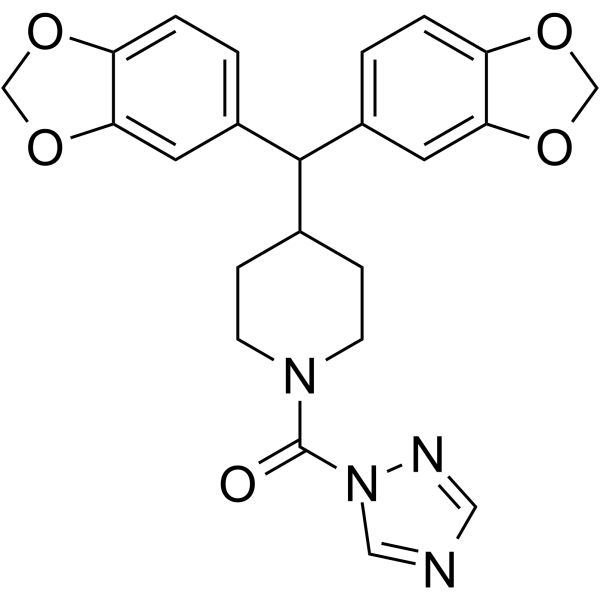
JJKK 048 is a highly selective and potent monoacylglycerol lipase (MAGL) inhibitor with IC50 values of 214 pM, 275 pM and 363 pM for human, rat, and mouse MAGL. JJKK 048 displays low cross-reactivity with other endocannabinoid targets. JJKK 048 can be used in the research of diseases such as cancer, neurodegenerative diseases, and pain.
연구목적의 판매만을 진행합니다. 환자를 대상으로 한 판매는 하지 않습니다.
- Purity : 99.55%
- CAS No.: 1515855-97-6
- 화학식: C23H22N4O5
- 분자량:434.44
-
보관:Powder -20°C, 3 years ; In solvent -80°C, 6 months , -20°C, 1 month

To place orders, for customer services and technical support, please contact: MedChemExpress USA
Tel: 609-228-6898 E-mail: [email protected] [email protected]


-
 Biological Activity
-
Chemical Information
-
용액&용해도
- 순도&문서
- References
-
 Help & FAQs


-
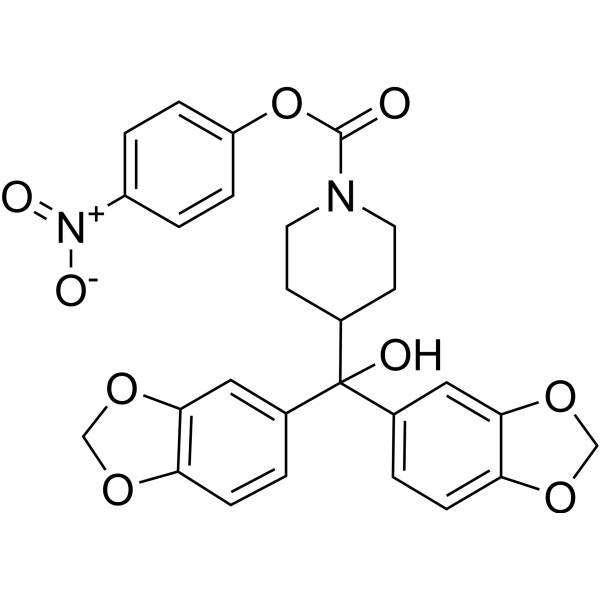
HY-15249
JZL 184MAGL Inhibitor -
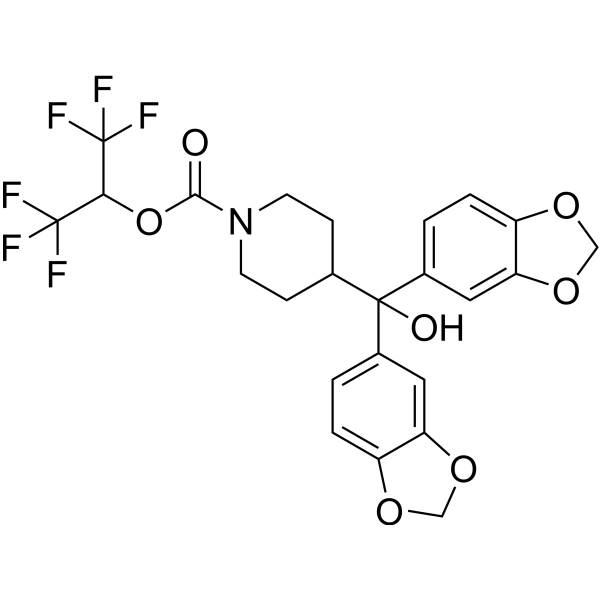
HY-18977
KML29MAGL Inhibitor -
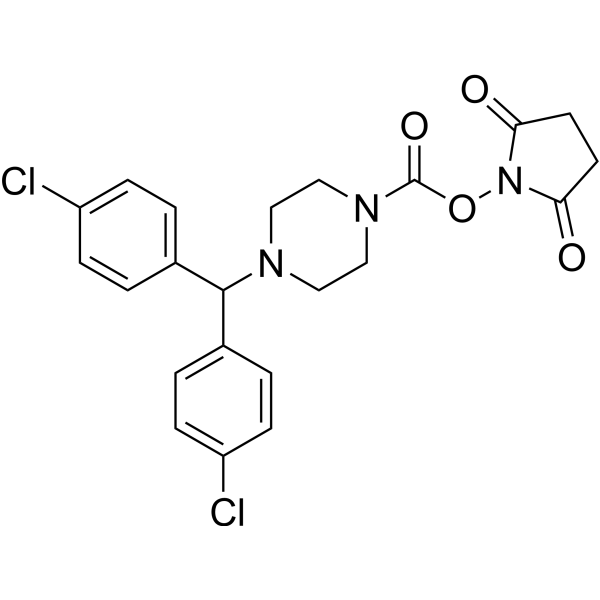
HY-117474
MJN110MAGL Inhibitor -
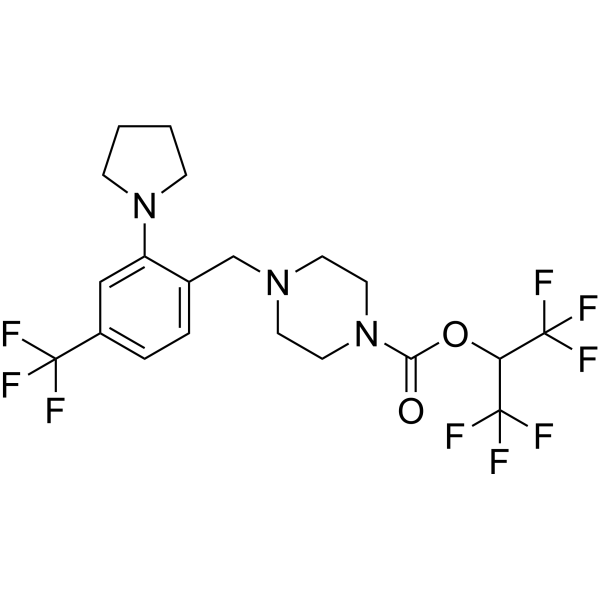
HY-117632
ElcubragistatMAGL Inhibitor -
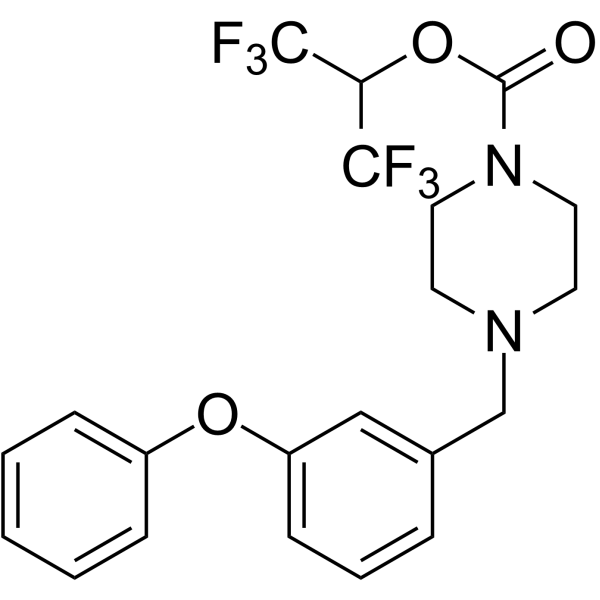
HY-12332
JW 642MAGL Inhibitor -
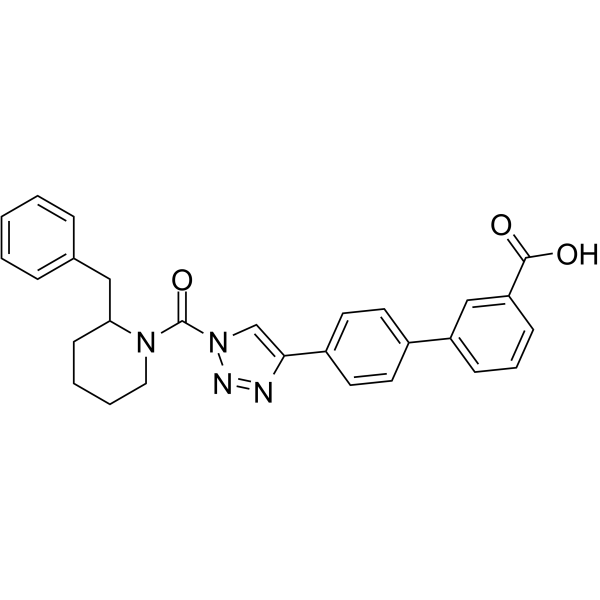
HY-120215
KT203 -
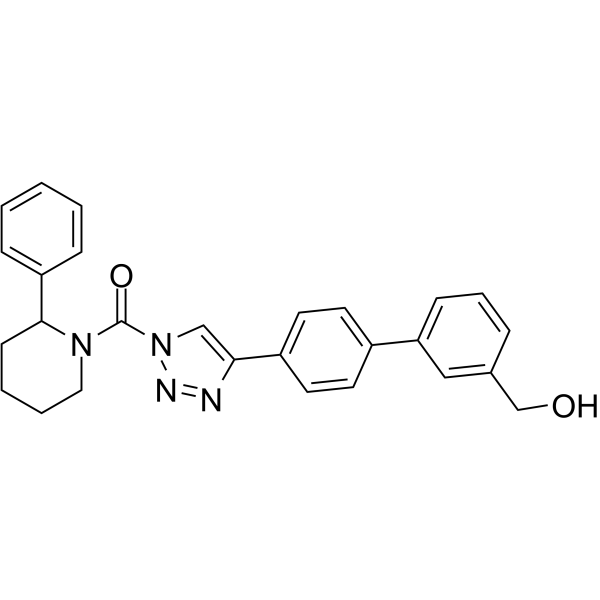
HY-120177
KT182 -
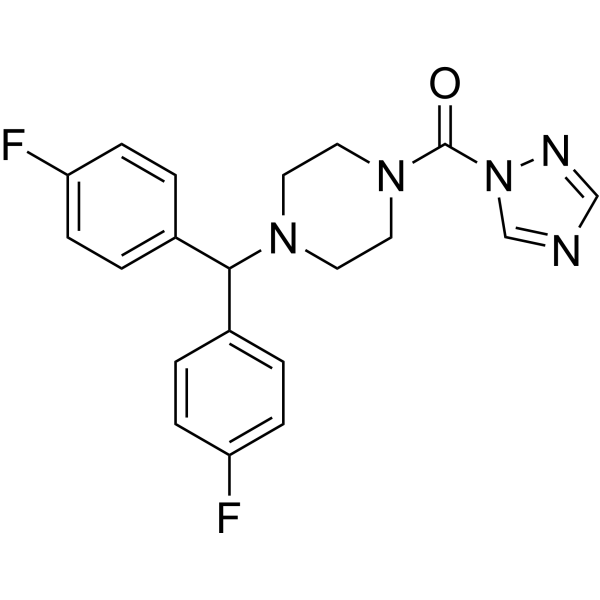
HY-118653
SAR629Monoglyceride Lipase Inhibitor -
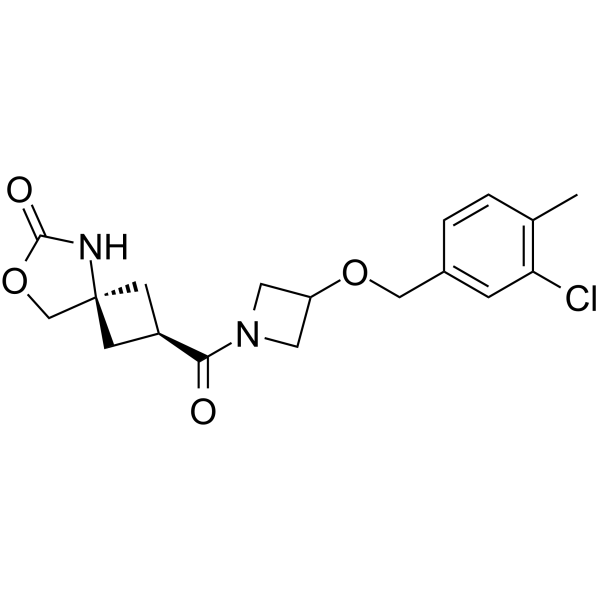
HY-132310
MAGL-IN-4MAGL Inhibitor -
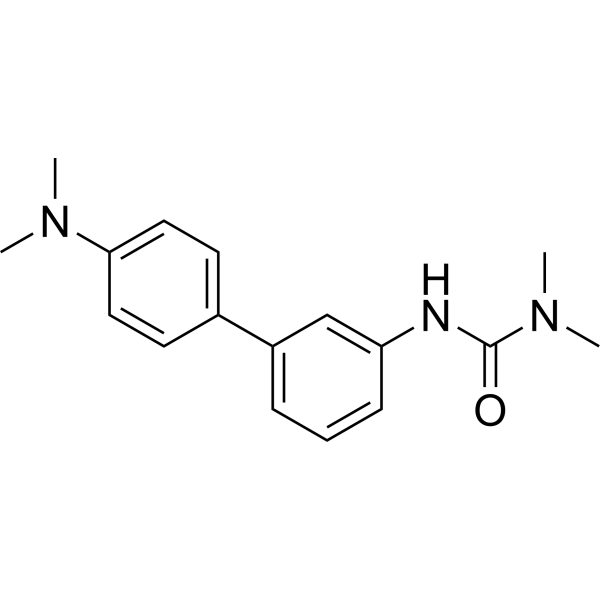
HY-15859
AtglistatinATGL Inhibitor -
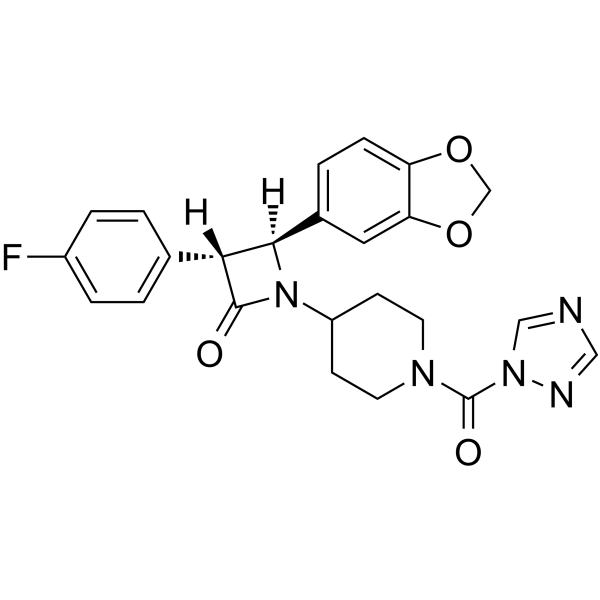
HY-119033
MGL-IN-1 -
HY-111512
PF-06795071
Publications Citing Use of MedChemExpress (MCE) JJKK 048
More

Biological Activity
제품 설명
IC50 & Target
MAGL[1]
Cellular Effect
|
Cell Line

|
Type | Value | Description | References |
|---|---|---|---|---|
| COS-7 | IC50 |
4800 nM
Compound: JJKK-048
|
Inhibition of human recombinant FAAH expressed in COS7 cells using anandamide as substrate
Inhibition of human recombinant FAAH expressed in COS7 cells using anandamide as substrate
|
[PMID: 25282655] |
| HEK293 | IC50 |
0.4 nM
Compound: JJKK-048
|
Inhibition of human recombinant MAGL expressed in HEK293 cells using 2-AG as substrate
Inhibition of human recombinant MAGL expressed in HEK293 cells using 2-AG as substrate
|
[PMID: 25282655] |
In Vitro
JJKK 048 covalently binds to the serine (S122) at the active site of MAGL to form a carbamate adduct, inhibiting the hydrolysis of 2-Arachidonoylglycerol (HY-W011051) (2-AG) by MAGL and thus increasing the tissue levels of 2-AG[1][2].
JJKK 048 selectively increases tissue levels of 2-AG but not AEA of endocannabinoid levels in inhibitor-treated brain sections[1].
JJKK 048 inhibits 2-AG hydrolysis in a dose-dependent manner in intact HEK293 cells transiently overexpressing human MAGL[1].
MedChemExpress (MCE) has not independently confirmed the accuracy of these methods. They are for reference only.
In Vivo
JJKK 048 (0.5-2 mg/kg; i.p.; single dose; acute administration) inhibits MAGL in peripheral tissues (liver, spleen, heart, and skeletal muscle) with some off - target effects in mouse[2].
JJKK 048 (0.5 mg/kg; i.p.; single dose; acute administration) promotes significant analgesia in a writhing test in male Albino Swiss mice without causing cannabimimetic side effects[2].
JJKK 048 (1-2 mg/kg; i.p.; single dose; acute administration) induces analgesia both in the writhing test and in the tail - immersion test, as well as hypomotility and hyperthermia, but not catalepsy in male Albino Swiss mice[2].
MedChemExpress (MCE) has not independently confirmed the accuracy of these methods. They are for reference only.
-
Animal Model:Male C57Bl/6J mice (8 weeks old, weight 20-26 g)[2]
-
Dosage:0.1 mg/kg, 0.5 mg/kg, 1 mg/kg, 2 mg/kg, 4 mg/kg, (dissolved in 5% (v/v) dimethylsulfoxide (DMSO) in gently heated 10% (w/v) HP-β-CD (HY-101103))
-
Administration:i.p., single dose
-
Result:Revealed a dose-dependent blockade of MAGL in the brain.
Increased brain 2-AG levels in a dose-dependent manner, while brain AEA levels remained unaffected.
-
Animal Model:Male Albino Swiss mice (weight 20-30 g), tetrad test model for cannabimimetic effects[2]
-
Dosage:0.5 mg/kg, 1 mg/kg, 2 mg/kg (dissolved in 5% (v/v) DMSO in gently heated 10% (w/v) HP-β-CD (HY-101103))
-
Administration:i.p., single dose
-
Result:Caused significant reduction in the writhing episodes of mice in the writhing test, indicating an antinociceptive effect.


Chemical Information
-
CAS No. 1515855-97-6
-
Appearance Solid
-
분자량 434.44
-
화학식 C23H22N4O5
-
Color White to off-white
-
SMILES
O=C(N1CCC(C(C2=CC=C(OCO3)C3=C2)C4=CC=C(OCO5)C5=C4)CC1)N6N=CN=C6
-
선적
Room temperature in continental US; may vary elsewhere.
-
보관
Powder -20°C 3 years In solvent -80°C 6 months -20°C 1 month


Publications (2)
-
Journal Impact Factor
-
Most Recent
-
J Pharm Sci
Monoacylglycerol lipase inhibitor JJKK048 ameliorates ABCG2 transporter-mediated regorafenib resistance induced by hypoxia in triple negative breast cancer cells. [Abstract]2023 Sep;112(9):2581-2590. PMID: 37220829 -


용액&용해도
In Vitro:
DMSO : 33.33 mg/mL (76.72 mM; ultrasonic and warming and heat to 60°C; Hygroscopic DMSO has a significant impact on the solubility of product, please use newly opened DMSO)
Please refer to the solubility information to select the appropriate solvent. Once prepared, please aliquot and store the solution to prevent product inactivation from repeated freeze-thaw cycles.
Storage method and period of stock solution: -80°C, 6 months; -20°C, 1 month. When stored at -80°C, please use it within 6 months. When stored at -20°C, please use it within 1 month.
Please refer to the solubility information to select the appropriate solvent. Once prepared, please aliquot and store the solution to prevent product inactivation from repeated freeze-thaw cycles.
Storage method and period of stock solution: -80°C, 6 months; -20°C, 1 month. When stored at -80°C, please use it within 6 months. When stored at -20°C, please use it within 1 month.
Concentration (start) × Volume (start) = Concentration (final) × Volume (final)
In Vivo:
Select the appropriate dissolution method based on your experimental animal and administration route.
- For the following dissolution methods, please ensure to first prepare a clear stock solution using an In Vitro approach and then sequentially add co-solvents:
- To ensure reliable experimental results, the clarified stock solution can be appropriately stored based on storage conditions. As for the working solution for In Vivo experiments, it is recommended to prepare freshly and use it on the same day.
- The percentages shown for the solvents indicate their volumetric ratio in the final prepared solution. If precipitation or phase separation occurs during preparation, heat and/or sonication can be used to aid dissolution.
Add each solvent one by one: 10% DMSO 40% PEG300 5% Tween-80 45% Saline
Solubility: ≥ 2.5 mg/mL (5.75 mM); Clear solution
This protocol yields a clear solution of ≥ 2.5 mg/mL (saturation unknown).
Taking 1 mL working solution as an example, add 100 μL DMSO stock solution (25.0 mg/mL) to 400 μL PEG300, and mix evenly; then add 50 μL Tween-80 and mix evenly; then add 450 μL Saline to adjust the volume to 1 mL.
Preparation of Saline: Dissolve 0.9 g sodium chloride in ddH₂O and dilute to 100 mL to obtain a clear Saline solution.
Add each solvent one by one: 10% DMSO 90% (20% SBE-β-CD in Saline)
Solubility: ≥ 2.5 mg/mL (5.75 mM); Clear solution
This protocol yields a clear solution of ≥ 2.5 mg/mL (saturation unknown).
Taking 1 mL working solution as an example, add 100 μL DMSO stock solution (25.0 mg/mL) to 900 μL 20% SBE-β-CD in Saline, and mix evenly.
Preparation of 20% SBE-β-CD in Saline (4°C, storage for one week): 2 g SBE-β-CD powder is dissolved in 10 mL Saline, completely dissolve until clear.
In Vivo Dissolution Calculator
Please enter the basic information of animal experiments:
-
-
-
-
Recommended: Prepare an additional quantity of animals to account for potential losses during experiments.
Please enter your animal formula composition:
-
%DMSO +
Recommended: Keep the proportion of DMSO in working solution below 2% if your animal is weak.
-
%+
-
+%Tween-80 + +
-
%Saline +
The co-solvents required include: DMSO, . All of co-solvents are available by MedChemExpress (MCE). , Tween 80. All of co-solvents are available by MedChemExpress (MCE).
Working solution concentration: 0.22 mg/mL
Method for preparing stock solution: mg drug dissolved in μL DMSO. Stock solution concentration: mg/mL.
1. Take μL DMSO stock solution;
2. Add μL .
μL , mix evenly;
3. Then add μL Tween 80, mix evenly;
4. Then add μL
Please ensure that the stock solution in the first step is dissolved to a clear state, and add co-solvents in sequence. You can use ultrasonic heating (ultrasonic cleaner, recommended frequency 20-40 kHz), vortexing, etc. to assist dissolution.


순도&문서
-
Data Sheet (284 KB)
-
SDS (393 KB)
- English - EN (393 KB)
- Français - FR (393 KB)
- Deutsch - DE (393 KB)
- Norwegian - NO (393 KB)
- Español - ES (393 KB)
- Swedish - SV (393 KB)
- Italian - IT (393 KB)
- Korean - KR (393 KB)
- Portuguese - PT (393 KB)
-
Handling Instructions (2659 KB)
References
[1]. Aaltonen N, et al. In Vivo Characterization of the Ultrapotent Monoacylglycerol Lipase Inhibitor {4-[bis-(benzo[d][1,3]dioxol-5-yl)methyl]-piperidin-1-yl}(1H-1,2,4-triazol-1-yl)methanone (JJKK-048). J Pharmacol Exp Ther. 2016 Oct;359(1):62-72. [Content Brief]
[2]. Aaltonen N, et al. Piperazine and piperidine triazole ureas as ultrapotent and highly selective inhibitors of monoacylglycerol lipase. Chem Biol. 2013 Mar 21;20(3):379-90. [Content Brief]


Complete Stock Solution Preparation Table
Please refer to the solubility information to select the appropriate solvent. Once prepared, please aliquot and store the solution to prevent product inactivation from repeated freeze-thaw cycles.
Storage method and period of stock solution: -80°C, 6 months; -20°C, 1 month. When stored at -80°C, please use it within 6 months. When stored at -20°C, please use it within 1 month.
| Optional Solvent | Concentration Solvent Mass | 1 mg | 5 mg | 10 mg | 25 mg |
|---|---|---|---|---|---|
| DMSO | 1 mM | 2.3018 mL | 11.5091 mL | 23.0181 mL | 57.5453 mL |
| 5 mM | 0.4604 mL | 2.3018 mL | 4.6036 mL | 11.5091 mL | |
| 10 mM | 0.2302 mL | 1.1509 mL | 2.3018 mL | 5.7545 mL | |
| 15 mM | 0.1535 mL | 0.7673 mL | 1.5345 mL | 3.8364 mL | |
| 20 mM | 0.1151 mL | 0.5755 mL | 1.1509 mL | 2.8773 mL | |
| 25 mM | 0.0921 mL | 0.4604 mL | 0.9207 mL | 2.3018 mL | |
| 30 mM | 0.0767 mL | 0.3836 mL | 0.7673 mL | 1.9182 mL | |
| 40 mM | 0.0575 mL | 0.2877 mL | 0.5755 mL | 1.4386 mL | |
| 50 mM | 0.0460 mL | 0.2302 mL | 0.4604 mL | 1.1509 mL | |
| 60 mM | 0.0384 mL | 0.1918 mL | 0.3836 mL | 0.9591 mL |


JJKK 048 Related Classifications
HY-108613 Related Classifications
 Powered by Bioz