



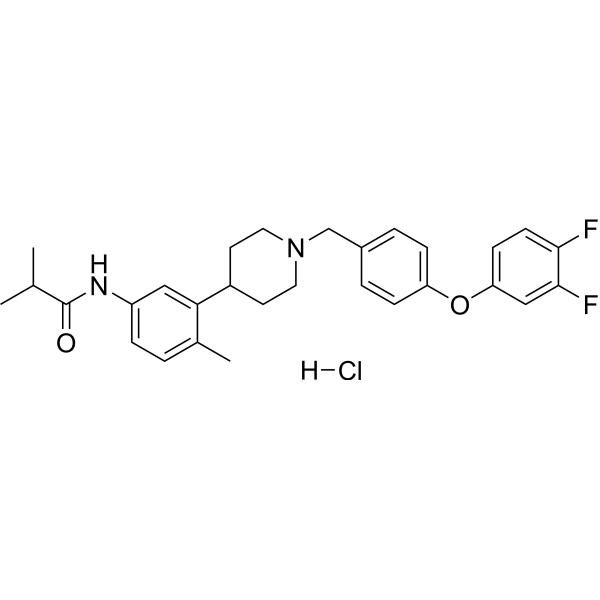
SNAP 94847 hydrochloride
Based on 2 publication(s) in Google Scholar
SNAP 94847 hydrochloride is a novel, high affinity selective melanin-concentrating hormonereceptor1 (MCHR1) antagonist with (Ki= 2.2 nM, Kd=530 pM), it displays >80-fold and >500-fold selectivity over MCHα1A and MCHD2 receptors respectively. SNAP 94847 hydrochloride binds with high affinity to the mouse and rat MCHR1 with minimal cross-reactivity to other GPCR, ion channels, enzymes, and transporters.
For research use only. We do not sell to patients.
- Purity : 99.90%
- CAS No.: 1781934-47-1
- Formula: C29H33ClF2N2O2
- Molecular Weight:515.03
-
Storage:
4°C, sealed storage, away from moisture
* In solvent : -80°C, 6 months; -20°C, 1 month (sealed storage, away from moisture)

To place orders, for customer services and technical support, please contact: MedChemExpress USA
Tel: 609-228-6898 E-mail: [email protected] [email protected]


-
 Biological Activity
-
Chemical Information
-
Solvent & Solubility
- Purity & Documentation
- References
-
 Help & FAQs


-
HY-P1108A
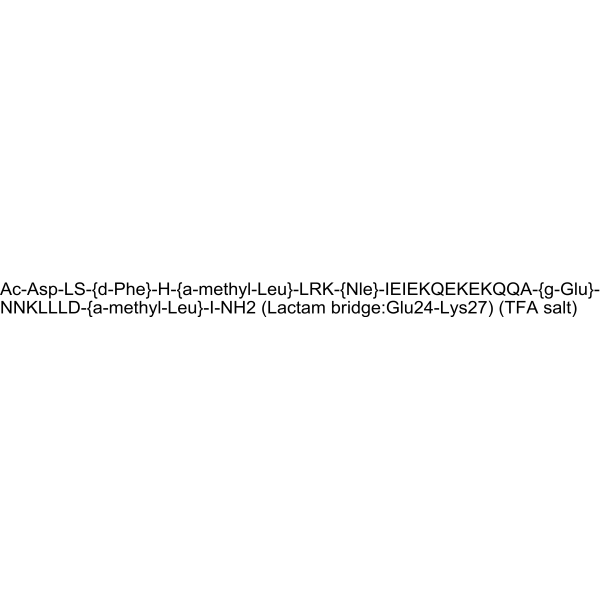
Astressin 2B TFACRFR2 Antagonist -
HY-U00257
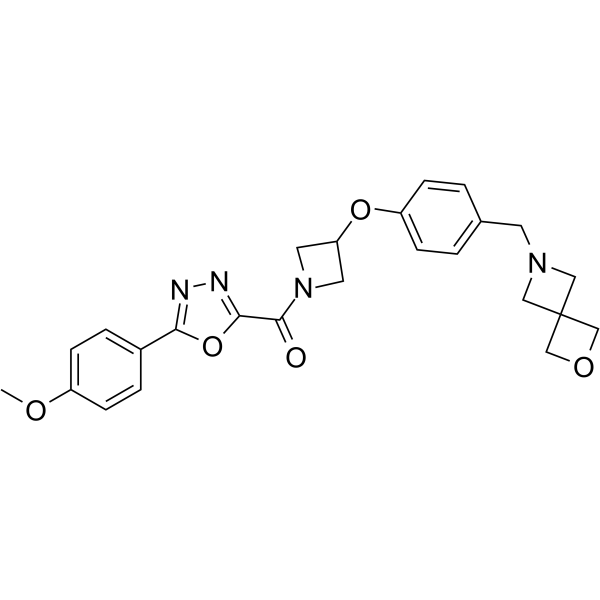
AZD1979 -

HY-107625AR
SNAP 94847 hydrochloride (Standard)Reference Standard -
HY-11083
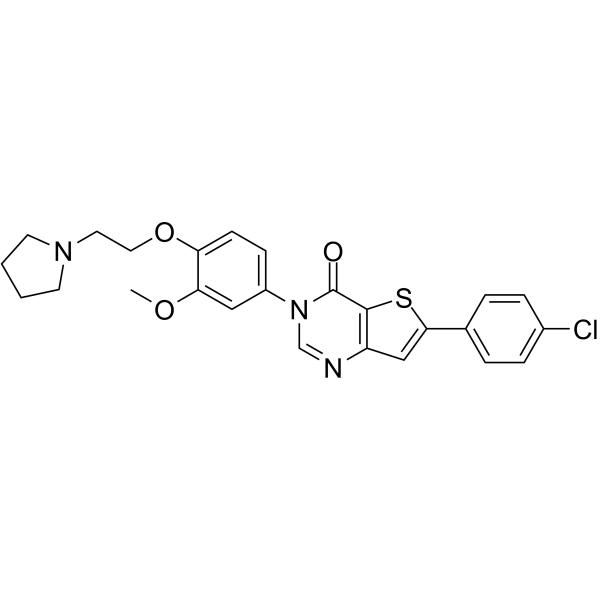
GW-803430MCH R1 Antagonist -
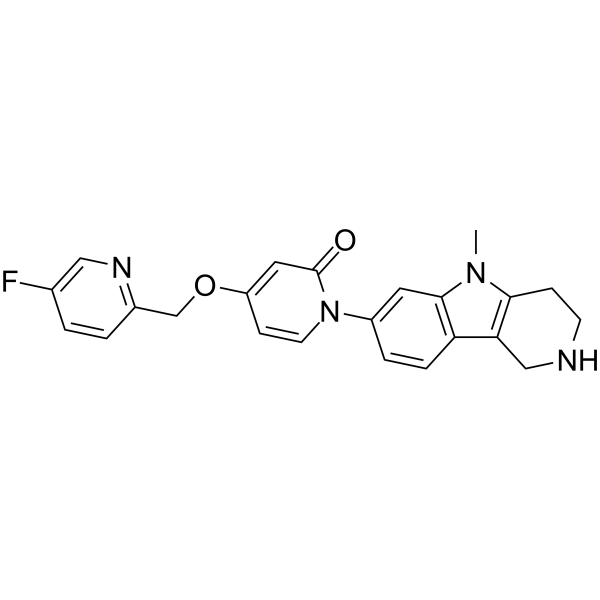
HY-111398
ALB-127158(a)MCH1 Receptor Antagonist -
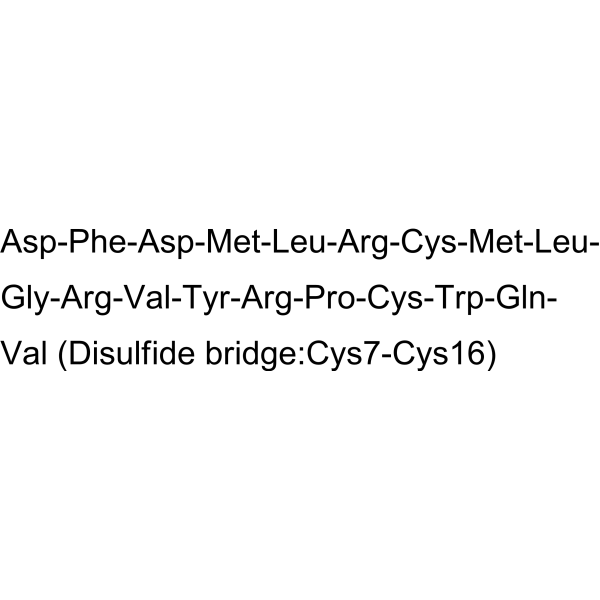
HY-P1205
MCH(human, mouse, rat)MCH-R Ligand -
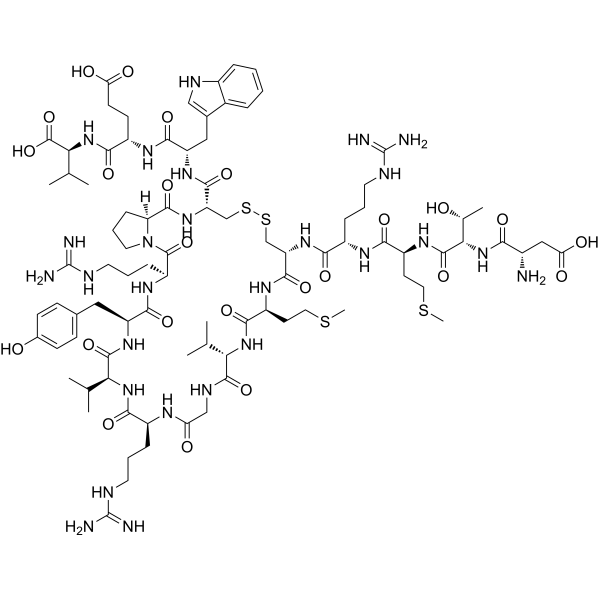
HY-P1525
Melanin Concentrating Hormone, salmonMCHR1 (GPR24) Agonist -
![[Ala17]-MCH](https://file.medchemexpress.com/product_pic/hy-p1204.gif)
HY-P1204
[Ala17]-MCHMCHR1 Ligand -
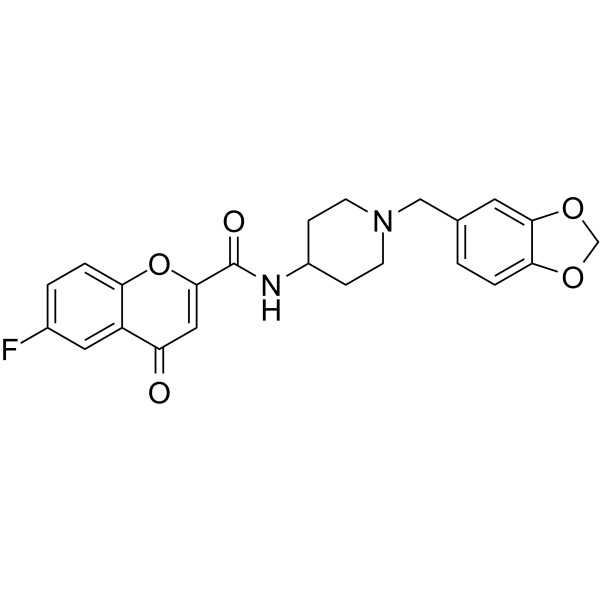
HY-100321
MCHR1 antagonist 2MCHR1 Antagonist -
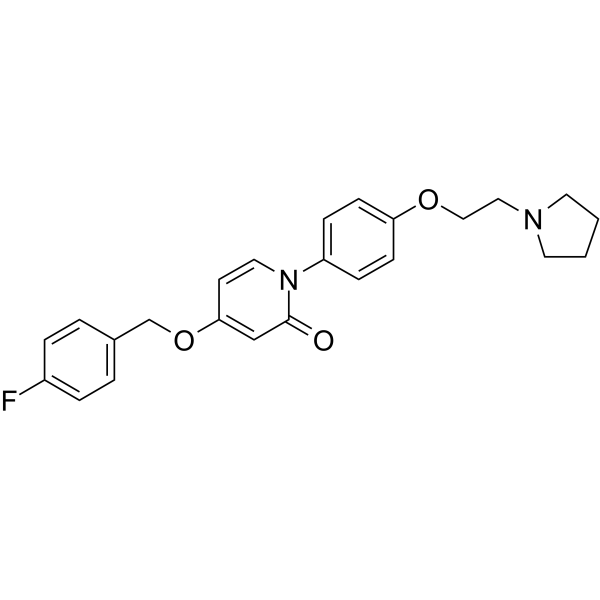
HY-107623
TC-MCH 7cSelective MCH1R Antagonist -
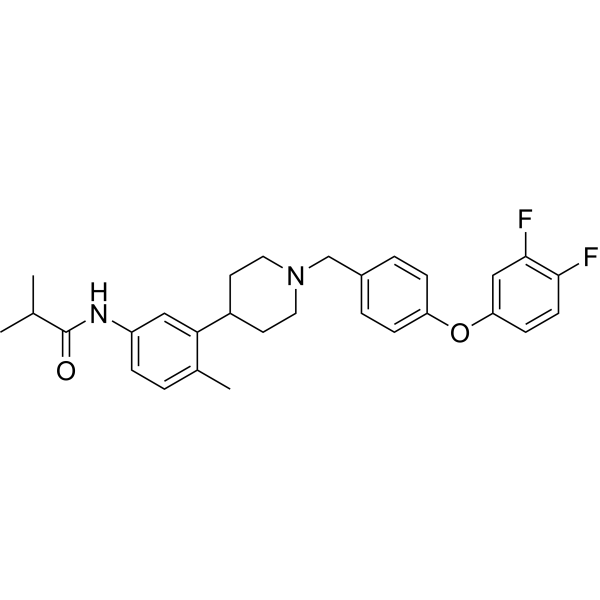
HY-107625
SNAP 94847MCHR1 Antagonist -

HY-P1869
Neuropeptide EI, rat
Publications Citing Use of MedChemExpress (MCE) SNAP 94847 hydrochloride
More

Biological Activity
Description
IC50 & Target
Ki: 2.2 nM (MCHR1); Kd: 530 pM (MCHR1)[3]
In Vivo
MedChemExpress (MCE) has not independently confirmed the accuracy of these methods. They are for reference only.
-
Animal Model:Rat[2]
-
Dosage:20 mg/kg
-
Administration:Oral administration; 20 mg/kg; 14 days
-
Result:Exhibited a exaggerated locomotor response to acute quinpirole.
-
Animal Model:Rat[2]
-
Dosage:10 mg/kg
-
Administration:Oral administration; 10 mg/kg
-
Result:Exhibited good physicochemical properties in rats.


Chemical Information
-
CAS No. 1781934-47-1
-
Appearance Solid
-
Molecular Weight 515.03
-
Formula C29H33ClF2N2O2
-
Color White to light yellow
-
SMILES
Cl[H].FC1=CC(OC(C=C2)=CC=C2CN3CCC(CC3)C4=CC(NC(C(C)C)=O)=CC=C4C)=CC=C1F
-
Shipping
Room temperature in continental US; may vary elsewhere.
-
Storage
4°C, sealed storage, away from moisture
* In solvent : -80°C, 6 months; -20°C, 1 month (sealed storage, away from moisture)


Publications (2)
-
Journal Impact Factor
-
Most Recent


Solvent & Solubility
In Vitro:
DMSO : 175 mg/mL (339.79 mM; Need ultrasonic; Hygroscopic DMSO has a significant impact on the solubility of product, please use newly opened DMSO)
H2O : < 0.1 mg/mL (insoluble)
Please refer to the solubility information to select the appropriate solvent. Once prepared, please aliquot and store the solution to prevent product inactivation from repeated freeze-thaw cycles.
Storage method and period of stock solution: -80°C, 6 months; -20°C, 1 month (sealed storage, away from moisture). When stored at -80°C, please use it within 6 months. When stored at -20°C, please use it within 1 month.
Please refer to the solubility information to select the appropriate solvent. Once prepared, please aliquot and store the solution to prevent product inactivation from repeated freeze-thaw cycles.
Storage method and period of stock solution: -80°C, 6 months; -20°C, 1 month (sealed storage, away from moisture). When stored at -80°C, please use it within 6 months. When stored at -20°C, please use it within 1 month.
Concentration (start) × Volume (start) = Concentration (final) × Volume (final)
In Vivo:
Select the appropriate dissolution method based on your experimental animal and administration route.
- For the following dissolution methods, please ensure to first prepare a clear stock solution using an In Vitro approach and then sequentially add co-solvents:
- To ensure reliable experimental results, the clarified stock solution can be appropriately stored based on storage conditions. As for the working solution for In Vivo experiments, it is recommended to prepare freshly and use it on the same day.
- The percentages shown for the solvents indicate their volumetric ratio in the final prepared solution. If precipitation or phase separation occurs during preparation, heat and/or sonication can be used to aid dissolution.
Add each solvent one by one: 10% DMSO 40% PEG300 5% Tween-80 45% Saline
Solubility: ≥ 2.08 mg/mL (4.04 mM); Clear solution
This protocol yields a clear solution of ≥ 2.08 mg/mL (saturation unknown).
Taking 1 mL working solution as an example, add 100 μL DMSO stock solution (20.8 mg/mL) to 400 μL PEG300, and mix evenly; then add 50 μL Tween-80 and mix evenly; then add 450 μL Saline to adjust the volume to 1 mL.
Preparation of Saline: Dissolve 0.9 g sodium chloride in ddH₂O and dilute to 100 mL to obtain a clear Saline solution.
Add each solvent one by one: 10% DMSO 90% (20% SBE-β-CD in Saline)
Solubility: ≥ 2.08 mg/mL (4.04 mM); Clear solution
This protocol yields a clear solution of ≥ 2.08 mg/mL (saturation unknown).
Taking 1 mL working solution as an example, add 100 μL DMSO stock solution (20.8 mg/mL) to 900 μL 20% SBE-β-CD in Saline, and mix evenly.
Preparation of 20% SBE-β-CD in Saline (4°C, storage for one week): 2 g SBE-β-CD powder is dissolved in 10 mL Saline, completely dissolve until clear.
In Vivo Dissolution Calculator
Please enter the basic information of animal experiments:
-
-
-
-
Recommended: Prepare an additional quantity of animals to account for potential losses during experiments.
Please enter your animal formula composition:
-
%DMSO +
Recommended: Keep the proportion of DMSO in working solution below 2% if your animal is weak.
-
%+
-
+%Tween-80 + +
-
%Saline +
The co-solvents required include: DMSO, . All of co-solvents are available by MedChemExpress (MCE). , Tween 80. All of co-solvents are available by MedChemExpress (MCE).
Working solution concentration: 0.22 mg/mL
Method for preparing stock solution: mg drug dissolved in μL DMSO. Stock solution concentration: mg/mL. * In solvent : -80°C, 6 months; -20°C, 1 month (sealed storage, away from moisture)
1. Take μL DMSO stock solution;
2. Add μL .
μL , mix evenly;
3. Then add μL Tween 80, mix evenly;
4. Then add μL
Please ensure that the stock solution in the first step is dissolved to a clear state, and add co-solvents in sequence. You can use ultrasonic heating (ultrasonic cleaner, recommended frequency 20-40 kHz), vortexing, etc. to assist dissolution.


Purity & Documentation
-
Data Sheet (273 KB)
-
SDS (252 KB)
- English - EN (252 KB)
- Français - FR (252 KB)
- Deutsch - DE (252 KB)
- Norwegian - NO (252 KB)
- Español - ES (252 KB)
- Swedish - SV (252 KB)
- Italian - IT (252 KB)
- Korean - KR (252 KB)
- Portuguese - PT (252 KB)
-
Handling Instructions (2659 KB)
References
[1]. David DJ, et al. Efficacy of the MCHR1 antagonist N-[3-(1-{[4-(3,4-difluorophenoxy)phenyl]methyl}(4-piperidyl))-4-methylphenyl]-2-methylpropanamide (SNAP 94847) in mouse models of anxiety and depression following acute and chronic administration is independent of hippocampal neurogenesis. J Pharmacol Exp Ther. 2007 Apr;321(1):237-48. Epub 2007 Jan 19. [Content Brief]
[2]. Nair SG, et al. Effects of the MCH1 receptor antagonist SNAP 94847 on high-fat food-reinforced operant responding and reinstatement of food seeking in rats.Psychopharmacology (Berl). 2009 Jul;205(1):129-40. [Content Brief]
[3]. Chen CA, et al. Synthesis and SAR investigations for novel melanin-concentrating hormone 1 receptor (MCH1) antagonists part 2: A hybrid strategy combining key fragments of HTS hits.J Med Chem. 2007 Aug 9;50(16):3883-90. [Content Brief]


Complete Stock Solution Preparation Table
Please refer to the solubility information to select the appropriate solvent. Once prepared, please aliquot and store the solution to prevent product inactivation from repeated freeze-thaw cycles.
Storage method and period of stock solution: -80°C, 6 months; -20°C, 1 month (sealed storage, away from moisture). When stored at -80°C, please use it within 6 months. When stored at -20°C, please use it within 1 month.
| Optional Solvent | Concentration Solvent Mass | 1 mg | 5 mg | 10 mg | 25 mg |
|---|---|---|---|---|---|
| DMSO | 1 mM | 1.9416 mL | 9.7082 mL | 19.4163 mL | 48.5409 mL |
| 5 mM | 0.3883 mL | 1.9416 mL | 3.8833 mL | 9.7082 mL | |
| 10 mM | 0.1942 mL | 0.9708 mL | 1.9416 mL | 4.8541 mL | |
| 15 mM | 0.1294 mL | 0.6472 mL | 1.2944 mL | 3.2361 mL | |
| 20 mM | 0.0971 mL | 0.4854 mL | 0.9708 mL | 2.4270 mL | |
| 25 mM | 0.0777 mL | 0.3883 mL | 0.7767 mL | 1.9416 mL | |
| 30 mM | 0.0647 mL | 0.3236 mL | 0.6472 mL | 1.6180 mL | |
| 40 mM | 0.0485 mL | 0.2427 mL | 0.4854 mL | 1.2135 mL | |
| 50 mM | 0.0388 mL | 0.1942 mL | 0.3883 mL | 0.9708 mL | |
| 60 mM | 0.0324 mL | 0.1618 mL | 0.3236 mL | 0.8090 mL | |
| 80 mM | 0.0243 mL | 0.1214 mL | 0.2427 mL | 0.6068 mL | |
| 100 mM | 0.0194 mL | 0.0971 mL | 0.1942 mL | 0.4854 mL |


SNAP 94847 hydrochloride Related Classifications
HY-107625A Related Classifications
 Powered by Bioz