








1. Search Result
Search Result
Results for "

Cy7 DiAcid

" in MedChemExpress (MCE) Product Catalog:

111

Inhibitors & Agonists

1

Fluorescent Dyes

111

Peptides

1

Natural
Products

4

Isotope-Labeled Compounds

Cat. No. Product Name Target Research Areas Chemical Structure
  • HY-114118
    Semaglutide
    30+ Cited Publications

    GLP Receptor Insulin Receptor α-synuclein Apoptosis p38 MAPK Autophagy Bcl-2 Family Neurological Disease Metabolic Disease Cancer
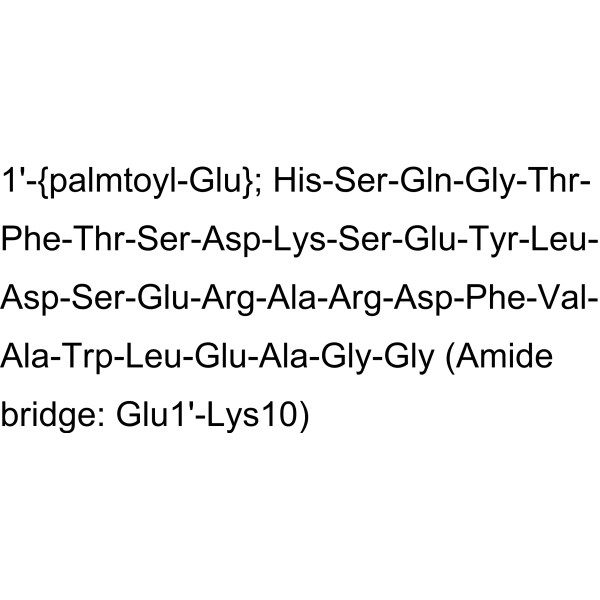
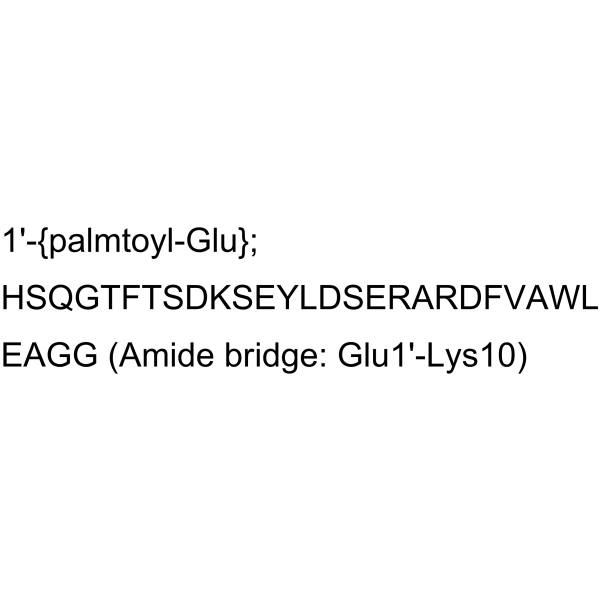
    Semaglutide is a long-acting, selective, competitive GLP-1R agonist that can penetrate the blood-brain barrier. After activating GLP-1R, Semaglutide promotes insulin secretion, inhibits gastric emptying and appetite, and at the same time enhances autophagy, inhibits oxidative stress and apoptosis. Semaglutide also regulates mitochondrial function and lipid metabolism (such as reducing de novo lipogenesis in the liver). Semaglutide has activities such as lowering blood sugar, reducing weight, neuroprotection (such as improving motor function in Parkinson's disease models, reducing α-synuclein aggregation) and improving hepatic steatosis. Semaglutide can be used for the study of neurodegenerative diseases and liver diseases such as type 2 diabetes, obesity, Parkinson's disease, metabolic associated fatty liver disease (MASLD), and cancer .
    Semaglutide
  • HY-P0014
    Liraglutide
    Maximum Cited Publications
    38 Publications Verification

    GCGR GLP Receptor Metabolic Disease Cancer
    Liraglutide is a glucagon-like peptide-1 (GLP-1) receptor agonist used clinically to treat type 2 diabetes mellitus.
    Liraglutide
  • HY-P3506
    Retatrutide
    3 Publications Verification

    LY3437943

    GCGR GLP Receptor Metabolic Disease
    Retatrutide (LY3437943) is a triple agonist peptide of the glucagon receptor (GCGR), glucosedependent insulinotropic polypeptide receptor (GIPR), and glucagon-like peptide-1 receptor (GLP-1R). Retatrutide binds human GCGR, GIPR, and GLP-1R with EC50 values of 5.79, 0.0643 and 0.775 nM, respectively. Retatrutide can be used for the research of obesity .
    Retatrutide
  • HY-P3462
    Cagrilintide
    3 Publications Verification

    CGRP Receptor Metabolic Disease
    Cagrilintide is an investigational novel long-acting acylated amylin analogue, acts as nonselective amylin receptors (AMYR) and calcitonin G protein-coupled receptor (CTR) agonist. Cagrilintide induces significant weight loss and reduces food intake. Cagrilintide has the potential for the research of obesity .
    Cagrilintide
  • HY-P3462A
    Cagrilintide acetate
    3 Publications Verification

    CGRP Receptor Metabolic Disease
    Cagrilintide acetate is a non-selective AMYR/CTR agonist and long-acting acylated amylase analogue. Cagrilintide acetate causes a reduction in food intake and significant weight loss in a dose-dependent manner. Cagrilintide acetate can be used in obesity studies .
    Cagrilintide acetate
  • HY-P4146

    BI 456906

    GLP Receptor GCGR Metabolic Disease
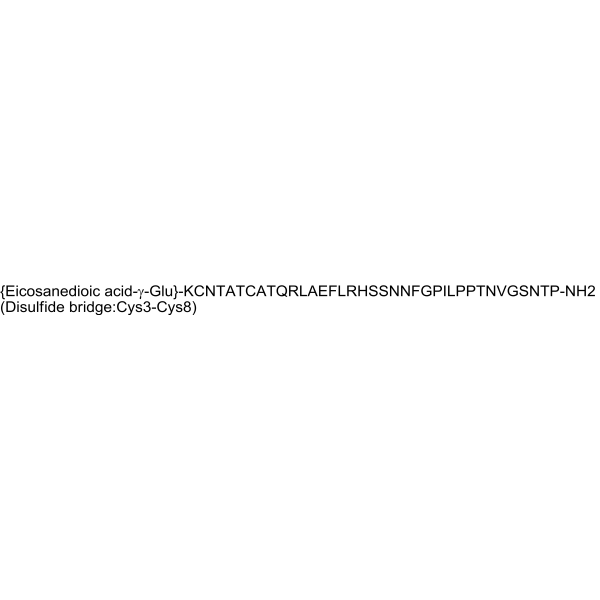
    Survodutide (BI 456906) is a potent, selective glucagon receptor/GLP-1 receptor (GCGR/GLP-1R) dual agonist with EC50s of 0.52 nM and 0.33 nM in CHO-K1 cells, respectively. Survodutide, a 29-amino-acid peptide, is a potent acylated peptide containing a C18 fatty acid. Survodutide has robust anti-obesity efficacy achieved by increasing energy expenditure and decreasing food intake .
    Survodutide
  • HY-114118B
    Semaglutide acetate
    30+ Cited Publications

    GLP Receptor Insulin Receptor α-synuclein Apoptosis p38 MAPK Autophagy Bcl-2 Family Neurological Disease Metabolic Disease Cancer
    Semaglutide acetate is a long-acting, selective, competitive GLP-1R agonist that can penetrate the blood-brain barrier. After activating GLP-1R, Semaglutide acetate promotes insulin secretion, inhibits gastric emptying and appetite, and at the same time enhances autophagy, inhibits oxidative stress and apoptosis. Semaglutide acetate also regulates mitochondrial function and lipid metabolism (such as reducing de novo lipogenesis in the liver). Semaglutide acetate has activities such as lowering blood sugar, reducing weight, neuroprotection (such as improving motor function in Parkinson's disease models, reducing α-synuclein aggregation) and improving hepatic steatosis. Semaglutide acetate can be used for the study of neurodegenerative diseases and liver diseases such as type 2 diabetes, obesity, Parkinson's disease, metabolic associated fatty liver disease (MASLD), and cancer .
    Semaglutide acetate
  • HY-114118A
    Semaglutide TFA
    30+ Cited Publications

    GLP Receptor Insulin Receptor α-synuclein Apoptosis p38 MAPK Autophagy Bcl-2 Family Neurological Disease Metabolic Disease Cancer
    Semaglutide TFA is a long-acting, selective, competitive GLP-1R agonist that can penetrate the blood-brain barrier. After activating GLP-1R, Semaglutide TFA promotes insulin secretion, inhibits gastric emptying and appetite, and at the same time enhances autophagy, inhibits oxidative stress and apoptosis. Semaglutide TFA also regulates mitochondrial function and lipid metabolism (such as reducing de novo lipogenesis in the liver). Semaglutide TFA has activities such as lowering blood sugar, reducing weight, neuroprotection (such as improving motor function in Parkinson's disease models, reducing α-synuclein aggregation) and improving hepatic steatosis. Semaglutide TFA can be used for the study of neurodegenerative diseases and liver diseases such as type 2 diabetes, obesity, Parkinson's disease, metabolic associated fatty liver disease (MASLD), and cancer .
    Semaglutide TFA
  • HY-P3366

    XW003

    GCGR Metabolic Disease
    Ecnoglutide (XW003) is a long-acting, cAMP-biased glucagon-like peptide 1 (GLP-1) receptor agonist. Ecnoglutide can be used for research of T2DM and obesity .
    Ecnoglutide
  • HY-P11274A

    Amycretin sodium; NN 9487 sodium

    Amylin Receptor Insulin Receptor GCGR Metabolic Disease
    Zenagamtide (Amycretin; NN 9487) sodium is an orally active, blood-brain barrier permeable triple agonist that targets GLP-1, amylin (Amylin Receptor) and calcitonin receptor (Calcitonin Receptor). Zenagamtide sodium is a single peptide consisting of 68 amino acids that can target brain regions regulating food intake, significantly suppress appetite and reduce energy intake. Therefore, Zenagamtide sodium improves body weight, waist circumference, glycated hemoglobin and lipid profile, and also alleviates the histological features of metabolic dysfunction-associated steatotic liver disease (MASLD) and enhances insulin sensitivity. Zenagamtide sodium may cause transient increases in heart rate and fluctuations in serum calcium levels, but it is an important compound for the study of overweight, obesity, insulin resistance and related metabolic diseases .
    Zenagamtide sodium
  • HY-114118CP

    GLP Receptor Insulin Receptor α-synuclein Apoptosis p38 MAPK Autophagy Bcl-2 Family Neurological Disease Metabolic Disease Cancer
    Semaglutide (crude) is the crude form of Semaglutide (HY-114118). Semaglutide is a long-acting, selective, competitive GLP-1R agonist that can penetrate the blood-brain barrier. After activating GLP-1R, Semaglutide promotes insulin secretion, inhibits gastric emptying and appetite, and at the same time enhances Autophagy, inhibits oxidative stress and Apoptosis. Semaglutide also regulates mitochondrial function and lipid metabolism (such as reducing de novo lipogenesis in the liver). Semaglutide has activities such as lowering blood sugar, reducing weight, neuroprotection (such as improving motor function in Parkinson's disease models, reducing α-synuclein aggregation) and improving hepatic steatosis. Semaglutide can be used for the study of neurodegenerative diseases and liver diseases such as type 2 diabetes, obesity, Parkinson's disease, metabolic associated fatty liver disease (MASLD), and cancer .
    Semaglutide (crude)
  • HY-P11245A

    Amylin Receptor Metabolic Disease
    NN1213 acetate, a long-acting human amylin peptide analog, is a selective Amylin receptor agonist with EC50 values of 0.177 and 0.262 nM for hAMY3R and rAMY3R, respectively. NN1213 acetate significantly reduces food intake and fat mass. NN1213 acetate can reduce body weightin diet-induced obese rats. NN1213 acetate can be used for the research of obesity .
    NN1213 acetate
  • HY-114118S3

    Isotope-Labeled Compounds GLP Receptor Insulin Receptor α-synuclein Apoptosis p38 MAPK Autophagy Bcl-2 Family Metabolic Disease
    Semaglutide- 13C6, 15N TFA is the 13C- and 15N-labeled Semaglutide TFA (HY-114118A). Semaglutide TFA is a long-acting, selective, competitive GLP-1R agonist that can penetrate the blood-brain barrier. After activating GLP-1R, Semaglutide TFA promotes insulin secretion, inhibits gastric emptying and appetite, and at the same time enhances autophagy, inhibits oxidative stress and apoptosis. Semaglutide TFA also regulates mitochondrial function and lipid metabolism (such as reducing de novo lipogenesis in the liver). Semaglutide TFA has activities such as lowering blood sugar, reducing weight, neuroprotection (such as improving motor function in Parkinson's disease models, reducing α-synuclein aggregation) and improving hepatic steatosis. Semaglutide TFA can be used for the study of neurodegenerative diseases and liver diseases such as type 2 diabetes, obesity, Parkinson's disease, metabolic associated fatty liver disease (MASLD), and cancer .
    Semaglutide-13C6,15N TFA
  • HY-P3506A
    Retatrutide TFA
    3 Publications Verification

    LY3437943 TFA

    GLP Receptor GCGR Metabolic Disease
    Retatrutide (LY3437943) TFA is a triple agonist peptide of the glucagon receptor (GCGR), glucosedependent insulinotropic polypeptide receptor (GIPR), and glucagon-like peptide-1 receptor (GLP-1R). Retatrutide TFA binds human GCGR, GIPR, and GLP-1R with EC50 values of 5.79, 0.0643 and 0.775 nM, respectively. Retatrutide TFA can be used for the research of obesity .
    Retatrutide TFA
  • HY-P2231
    Cotadutide
    1 Publications Verification

    MEDI0382

    GCGR Metabolic Disease
    Cotadutide (MEDI0382) is a potent dual agonist of glucagon-like peptide-1 (GLP-1) and GCGR with EC50 values of 6.9 pM and 10.2 pM, respectively. Cotadutide exhibits ability to facilitate both weight loss and glycaemic control, and alleviate fibrosis. Cotadutide can be used in the research of obesity and type 2 diabetes (T2D) .
    Cotadutide
  • HY-P2231A
    Cotadutide acetate
    1 Publications Verification

    MEDI0382 acetate

    GCGR Metabolic Disease
    Cotadutide (MEDI0382) acetate is a potent dual agonist of glucagon-like peptide-1 (GLP-1) and GCGR with EC50 values of 6.9 pM and 10.2 pM, respectively. Cotadutide acetate exhibits ability to facilitate both weight loss and glycaemic control, and alleviate fibrosis. Cotadutide acetate can be used in the research of obesity and type 2 diabetes (T2D) .
    Cotadutide acetate
  • HY-P11274

    Amycretin; NN 9487

    Amylin Receptor GCGR Insulin Receptor Metabolic Disease
    Zenagamtide (Amycretin; NN 9487) is an orally active, blood-brain barrier permeable triple agonist that targets GLP-1, amylin (Amylin Receptor) and calcitonin receptor (Calcitonin Receptor). Zenagamtide is a single peptide consisting of 68 amino acids that can target brain regions regulating food intake, significantly suppress appetite and reduce energy intake. Therefore, Zenagamtide improves body weight, waist circumference, glycated hemoglobin and lipid profile, and also alleviates the histological features of metabolic dysfunction-associated steatotic liver disease (MASLD) and enhances insulin sensitivity. Zenagamtide may cause transient increases in heart rate and fluctuations in serum calcium levels, but it is an important compound for the study of overweight, obesity, insulin resistance and related metabolic diseases .
    Zenagamtide
  • HY-P10957

    MBX 1416

    GLP Receptor Metabolic Disease
    Imapextide is a glucagon-like peptide-1 (GLP-1) receptor antagonist that can be used in hypoglycemia research .
    Imapextide
  • HY-P3291
    Dapiglutide
    1 Publications Verification

    ZP7570

    GCGR Metabolic Disease
    Dapiglutide (ZP7570) is a long-acting glucagon-like peptide-1 receptor 1R (GLP-1R)/Glucagon-like peptide-2 receptor (GLP-2R) dual agonist. Dapiglutide alleviates intestinal dysfunction in a mouse short bowel model and has anti-obesity effects .
    Dapiglutide
  • HY-P10026

    LY-3457263

    Neuropeptide Y Receptor Metabolic Disease
    Nisotirotide (LY-3457263) is a subcutaneous injectable NPY2 receptor agonist. By mimicking peptide YY (PYY), Nisotirotide inhibits appetite and can be used in the research of diseases such as obesity and diabetes .
    Nisotirostide
  • HY-P11285A

    Long acting GIPRA-1 TFA

    Insulin Receptor Metabolic Disease
    LAGIPRA peptide TFA is a long-acting GIP1R agonist. LAGIPRA peptide TFA enhances insulin sensitivity by augmenting glucose disposal and reduces branched-chain amino acids (BCAAs) and ketoacids. LAGIPRA peptide TFA has the potential for the research of type 2 diabetes .
    LAGIPRA peptide TFA
  • HY-P11245

    Amylin Receptor Metabolic Disease
    NN1213, a long-acting human amylin peptide analog, is a selective Amylin receptor agonist with EC50 values of 0.177 and 0.262 nM for hAMY3R and rAMY3R, respectively. NN1213 significantly reduces food intake and fat mass. NN1213 can reduce body weightin diet-induced obese rats. NN1213 can be used for the research of obesity .
    NN1213
  • HY-P11271

    Insulin Receptor GLP Receptor Metabolic Disease
    Ribupatide is a dual gastric inhibitory polypeptide (GIP) and glucagon-like peptide 1 (GLP-1) receptor agonist. Enicepatide can be studied in antidiabetic research .
    Ribupatide
  • HY-P10302A

    GLP Receptor Metabolic Disease Inflammation/Immunology
    GLP-1R/GIPR agonist-1 sodium is a dual GLP-1/GIP receptor agonist, with an EC50 of 0.57 nM for GLP-1R and an EC50 of 0.75 nM for GIPR. GLP-1R/GIPR agonist-1 sodium reduces food intake, inhibits weight gain, repairs islet damage, improves glucose tolerance, regulates serum lipid and liver enzyme levels, ameliorates hepatic vacuolization, reduces hepatic fat accumulation, delays the progression of hepatic fibrosis, and exhibits long-lasting hypoglycemic activity. GLP-1R/GIPR agonist-1 sodium can be used in research related to type 2 diabetes, obesity, and non-alcoholic steatohepatitis .
    GLP-1R/GIPR agonist-1 (soduim)
  • HY-D1095

    Fluorescent Dye
    Cy7 DiAcid belongs to the cyanine dye series and is a common fluorescent marker for biomolecules that can interact with biomolecules. Cyanine dyes may also bind to double-helical DNA through intercalation and exhibit enhanced fluorescence upon binding.
    Cy7 DiAcid
  • HY-P10218
    MANS peptide
    1 Publications Verification

    MARCKS PKC Inflammation/Immunology Cancer
    MANS peptide is an inhibitor for myristoylated alanine-rich C kinase substrate (MARCKS), which competes with MARCKS in cells for membrane binding, and thus inhibits the stimulation of mucin secretion and tumor metastasis .
    MANS peptide
  • HY-P0014S1

    Isotope-Labeled Compounds GLP Receptor GCGR Others
    Liraglutide- 13C6, 15 tetraTFA is the 13C and 15N labeled Liraglutide (HY-P0014) . Liraglutide is a glucagon-like peptide-1 (GLP-1) receptor agonist used for the study of type 2 diabetes mellitus .
    Liraglutide-13C5,15N tetraTFA
  • HY-P10271

    NNC0090-2746; MAR709; RO6811135

    GLP Receptor Metabolic Disease
    RG7697 is a dual agonist for glucagon-like peptide receptor (GLP Receptor) and glucosedependent insulinotropic polypeptide receptor (GIPR), with EC50 of 5 and 3 pM, respectively. RG7697 exhibits antihyperglycemic property .
    RG7697
  • HY-P10218A
    MANS peptide TFA
    1 Publications Verification

    MARCKS PKC Inflammation/Immunology Cancer
    MANS peptide TFA is the TFA salt form of MANS peptide (HY-P10218). MANS peptide TFA is an inhibitor for myristoylated alanine-rich C kinase substrate (MARCKS), which competes with MARCKS in cells for membrane binding, and thus inhibits the stimulation of mucin secretion and tumor metastasis .
    MANS peptide TFA
  • HY-P0014B
    Liraglutide TFA
    Maximum Cited Publications
    38 Publications Verification

    GLP Receptor Metabolic Disease
    Liraglutide (TFA) is an agonist of glucagon-like peptide 1 receptor (GLP-1). Liraglutide (TFA) can activate GLP-1, leading to the release of insulin in the presence of increased glucose concentration. Liraglutide (TFA) also reduces glucagon secretion in a glucose-dependent manner. Liraglutide (TFA) can be studied in research on type 2 diabetes .
    Liraglutide TFA
  • HY-P10269

    GZR18

    GLP Receptor Metabolic Disease
    Bofanglutide (GZR18) is an analog of glucagon-like peptide-1 (GLP-1), which exhibits agonistic activity for GLP-1 receptor, with an EC50 of 0.677 nM. GZR18 ameliorates type 2 diabetes .
    Bofanglutide
  • HY-P3143

    PD-1/PD-L1 Cancer
    BMSpep-57 is a potent and competitive macrocyclic peptide inhibitor of PD-1/PD-L1 interaction with an IC50 of 7.68 nM. BMSpep-57 binds to PD-L1 with Kds of 19 nM and 19.88 nM in MST and SPR assays, respectively. BMSpep-57 facilitates T cell function by in creasing IL-2 production in PBMCs .
    BMSpep-57
  • HY-P11285

    Long acting GIPRA-1

    Insulin Receptor Metabolic Disease
    LAGIPRA peptide is a long-acting GIP1R agonist. LAGIPRA peptide enhances insulin sensitivity by augmenting glucose disposal and reduces branched-chain amino acids (BCAAs) and ketoacids. LAGIPRA peptide has the potential for the research of type 2 diabetes .
    LAGIPRA peptide
  • HY-P11273

    OK 101

    Chemerin Receptor Neurological Disease Inflammation/Immunology
    Urcosimod (OK 101) is a lipid-coupled chemokine peptide, a ChemR23 G protein-coupled receptor agonist, which has been shown to have anti-inflammatory and analgesic activities. Urcosimod can be used for dry eye research .
    Urcosimod
  • HY-153476A

    GLP Receptor GCGR Inflammation/Immunology
    GIP/GLP-1 dual receptor agonist-1 sodium is a GIP/GLP-1 dual receptor agonist. GIP/GLP-1 dual receptor agonist-1 sodium is used in the research of metabolic disorders and fatty liver diseases, including non-alcoholic steatohepatitis (NASH) and non-alcoholic fatty liver disease (NAFLD) .
    GIP/GLP-1 dual receptor agonist-1 sodium
  • HY-153476

    GCGR GLP Receptor Inflammation/Immunology
    GIP/GLP-1 dual receptor agonist-1 is a GIP/GLP-1 dual receptor agonist. GIP/GLP-1 dual receptor agonist-1 is used in the research of metabolic disorders and fatty liver diseases, including non-alcoholic steatohepatitis (NASH) and non-alcoholic fatty liver disease (NAFLD) .
    GIP/GLP-1 dual receptor agonist-1
  • HY-P10032

    NNC9204-1177

    GCGR GLP Receptor Cytochrome P450 Metabolic Disease
    NN1177 is a long-acting GLP-1/glucagon receptor co-agonist. NN1177 can induce a dose-dependent body weight loss in diet-induced obese (DIO) mice .
    NN1177
  • HY-P11290

    Melanocortin Receptor Metabolic Disease
    MC4-NN2-0453, a α-MSH analog, is a selective MC4R agonist. MC4-NN2-0453 can be used for obesity research .
    MC4-NN2-0453
  • HY-P10341

    GCGR Metabolic Disease
    ZP3022 is a dual agonist of glucagon-like peptide-1 (GLP-1) and gastrin that has the ability to sustainably improve glycemic control. Additionally, ZP3022 can effectively increase β-cell mass, promote β-cell proliferation, and enhance the function of pancreatic islets. ZP3022 can be used in anti-diabetic research .
    ZP3022
  • HY-169089

    Drug Derivative Cancer
    RP-182-PEG3-K palmitic acid-NH2 (Compound 1a) is a fatty acid derivative of the immunomodulatory peptide RP-182. RP-182-PEG3-K palmitic acid-NH2 inhibits CD206 high M2-like macrophage (IC50 of 3.2 μM) and induces phagocytosis. RP-182-PEG3-K palmitic acid-NH2 exhibits antitumor efficacy in mouse B16 melanoma allografts .
    RP-182-PEG3-K(palmitic acid)-NH2
  • HY-P3388

    GLP Receptor Cardiovascular Disease Metabolic Disease
    Utreglutide is an effective glucagon-like peptide 1 (GLP-1) receptor agonist. Utreglutide can lower blood pressure, blood lipids and body weight, and improve cardiovascular metabolism. Utreglutide can be used for research on type 2 diabetes or non-type 2 diabetes obesity .
    Utreglutide
  • HY-P10591

    Olatorepatidum

    Insulin Receptor GLP Receptor Metabolic Disease
    Olatorepatide (Olatorepatidum) is a dual gastric inhibitory polypeptide (GIP) receptor and glucagon like peptide 1 (GLP-1) receptor agonist, with antidiabetic effect .
    Olatorepatide
  • HY-P11271A

    Insulin Receptor GLP Receptor Metabolic Disease
    Ribupatide TFA is a dual gastric inhibitory polypeptide (GIP) and glucagon-like peptide 1 (GLP-1) receptor agonist. Ribupatide TFA can be studied in antidiabetic research .
    Ribupatide TFA
  • HY-P3506B

    LY3437943 acetate

    GCGR GLP Receptor Metabolic Disease
    Retatrutide (LY3437943) acetate is a triple agonist peptide of the glucagon receptor (GCGR), glucosedependent insulinotropic polypeptide receptor (GIPR), and glucagon-like peptide-1 receptor (GLP-1R). Retatrutide acetate inhibits human GCGR, GIPR, and GLP-1R with EC50 values of 5.79, 0.0643 and 0.775 nM, respectively. Retatrutide acetate can be used for the research of obesity .
    Retatrutide acetate
  • HY-P10965

    ZT002

    GLP Receptor Metabolic Disease
    Zovaglutide (ZT002) is a long-acting, selective GLP-1 receptor agonist. Zovaglutide enhances albumin binding capacity via dual fatty acid chain modification. Zovaglutide exerts metabolic effects through central and peripheral GLP-1 pathways, thereby promoting satiety, reducing caloric intake and enhancing glucose-dependent insulin secretion, with no activity against GIP or glucagon receptors. Zovaglutide can be used in research on type 2 diabetes or obesity .
    Zovaglutide
  • HY-P11233

    GLP Receptor Metabolic Disease
    Acmopatide (Compound E-153) is a dual-acting GIP/GLP-1 receptor agonist. Acmopatide is used in anti-diabetic research .
    Acmopatide
  • HY-P11235

    PF-08653944; MET-097

    GLP Receptor Metabolic Disease
    Berobenatide is a glucagon-like peptide-1 (GLP-1) receptor agonist .
    Berobenatide
  • HY-P0014AS

    Isotope-Labeled Compounds GLP Receptor Metabolic Disease
    Liraglutide-d8 tetraTFA is deuterium labeled Liraglutide (HY-P0014). Liraglutide is a glucagon-like peptide-1 (GLP-1) receptor agonist used for the study of type 2 diabetes mellitus .
    Liraglutide-d8 tetraTFA
  • HY-P4146A

    BI 456906 TFA

    GLP Receptor GCGR Metabolic Disease
    Survodutide (BI 456906) TFA is a potent, selective glucagon receptor/GLP-1 receptor (GCGR/GLP-1R) dual agonist with EC50s of 0.52 nM and 0.33 nM in CHO-K1 cells, respectively. Survodutide TFA, a 29-amino-acid peptide, is a potent acylated peptide containing a C18 fatty acid. Survodutide TFA has robust anti-obesity efficacy achieved by increasing energy expenditure and decreasing food intake .
    Survodutide TFA
  • HY-P11270

    BGM0504; BG128

    Insulin Receptor GLP Receptor Metabolic Disease
    Relsipatide (BG128) is a dual gastric inhibitory polypeptide (GIP) and glucagon-like peptide 1 (GLP-1) receptor agonist. Enicepatide can be studied in antidiabetic research .
    Relsipatide

Inquiry Online

Your information is safe with us. * Required Fields.

Salutation


Country or Region *

Applicant Name *


Organization Name *

Department *


Email Address *


Product Name *

Cat. No.


Requested quantity *

Phone Number *


Remarks

Inquiry Online

Inquiry Information

Product Name:
Cat. No.:
Quantity:
MCE Japan Authorized Agent:

