






Search Result
Results for "
Cys535
" in MedChemExpress (MCE) Product Catalog:
| Cat. No. |
Product Name |
Target |
Research Areas |
Chemical Structure |
-
- HY-P0017
-
-
-
- HY-P1275
-
-
-
- HY-P5322
-
|
|
Transmembrane Glycoprotein
|
Cardiovascular Disease
Cancer
|
|
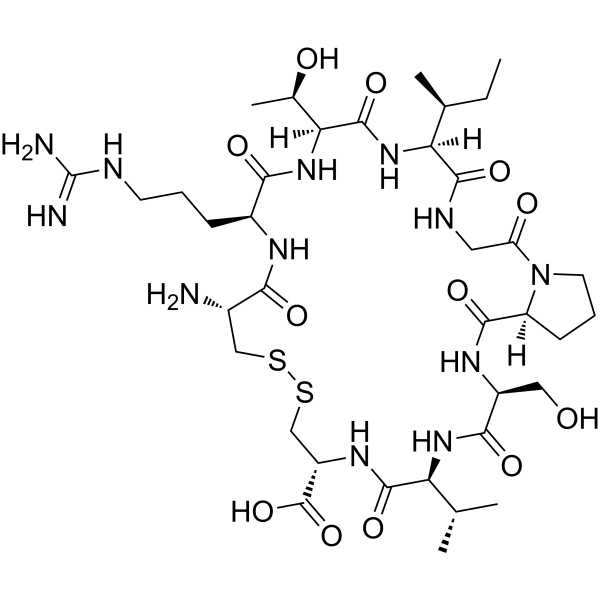
Thrombospondin (TSP-1)-derived CD36 binding motif is a bioactive hexapeptide. Thrombospondin (TSP-1)-derived CD36 binding motif interferes with the interaction between cells and the extracellular matrix by binding to CD36 and angiostatin, thereby affecting the cell adhesion and migration process. Thrombospondin (TSP-1)-derived CD36 binding motif inhibits platelet aggregation. Thrombospondin (TSP-1)-derived CD36 binding motif exerts an anti-tumor effect against colon cancer .
|
-
-
- HY-P10486
-
|
|
Bacterial
|
Infection
|
|
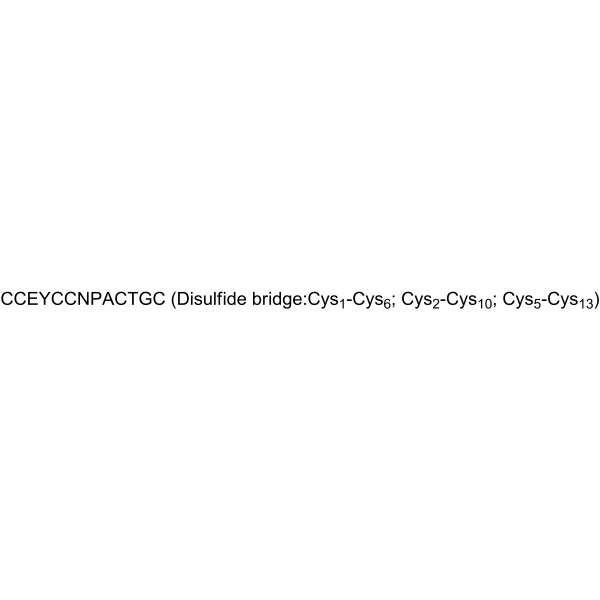
AIP-II is a cyclic peptide signaling molecule for quorum sensing, which is produced by Staphylococcus aureus. AIP-II potently inhibits AgrC-III in Methicillin (HY-121544)-resistant type III Staphylococcus aureus strain AH1747, with an IC50 of 0.532 nM. AIP-II binds to the AgrC-II receptor and regulates virulence gene expression in Staphylococcus aureus .
|
-
-
- HY-106302
-
|
Moli1901; Lancovutide
|
Bacterial
|
Infection
Inflammation/Immunology
|
|
Duramycin (Moli1901) is a lantibiotic derived from Streptomyces cinnamoneuma. Duramycin also is a antimicrobial peptide. Duramycin can be used for the research of cystic fibrosis (CF) .
|
-
-
- HY-P3561A
-
|
|
Melanocortin Receptor
|
Neurological Disease
|
|
Agouti-related Protein (AGRP) (83-132) Amide (human) TFA is a fragment of agouti-related protein (AGRP) which is a protein found in abundance in the arcuate nucleus of the hypothalamus. AgRP primarily acts as an inverse agonist for the melanocortin-4 receptor (MC4R) to increase food intake .
|
-
-
- HY-12537
-
-
-
- HY-106216
-
|
|
Elastase
|
Infection
Inflammation/Immunology
|
|
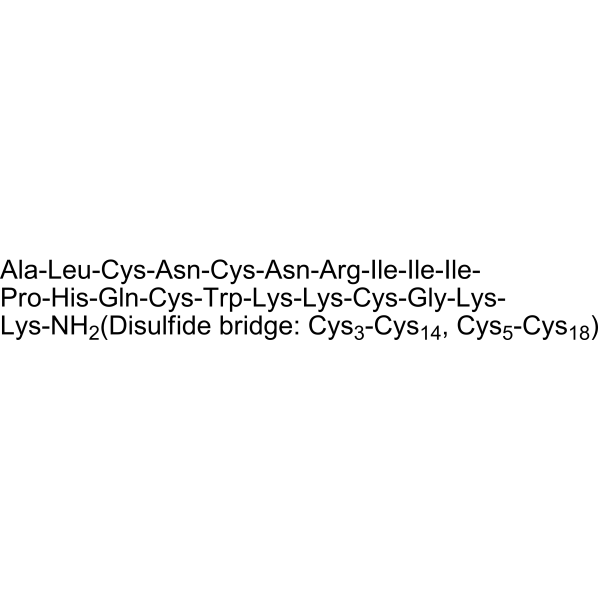
Tiprelestat is a potent human neutrophil elastase inhibitor. Tiprelestat has antimicrobial and anti-inflammatory activities. Tiprelestat can be used in the research of inflammation/immune disease .
|
-
-
- HY-P5533
-
|
|
Biochemical Assay Reagents
|
Cancer
|
|
CRT, an iron peptide mimic, can bind to apo-transferrin (apo-Tf). CRT can be used to modify nanoparticles, and enhances drug delivery efficiency .
|
-
-
- HY-P5792
-
|
ANP (3-28) (human)
|
Endothelin Receptor
|
Cardiovascular Disease
Metabolic Disease
|
|
Atrial natriuretic peptide (3-28) (human) (ANP (3-28) (human)) is a peptide hormone that is synthesized and secreted by the atrial myocardium. Atrial natriuretic peptide (3-28) (human) is involved in the regulation of blood pressure, fluid balance, and electrolyte homeostasis .
|
-
-
- HY-P1164A
-
-
-
- HY-108814A
-
|
DX-88 TFA
|
Kallikrein
|
Cardiovascular Disease
|
|
Ecallantide (DX-88) TFA is a specific recombinant plasma kallikrein inhibitor. Ecallantide inhibits the production of bradykinin. Ecallantide may be used to prevent acute attacks of angioedema .
|
-
-
- HY-P3282
-
|
|
Guanylate Cyclase
|
Metabolic Disease
|
|
MM 419447, a linaclotide metabolite, is a guanylate cyclase-C agonist. MM 419447 has the potential for the research of the irritable bowel syndrome with constipation (IBS-C) .
|
-
-
- HY-17584A
-
|
|
Guanylate Cyclase
|
Cancer
|
|
Linaclotide acetate is a potent and selective guanylate cyclase C agonist; developed for the treatment of constipation-predominant irritable bowel syndrome (IBS-C) and chronic constipation.
|
-
-
- HY-P1525A
-
|
MCH (salmon) TFA
|
MCHR1 (GPR24)
|
Cardiovascular Disease
Neurological Disease
Metabolic Disease
Endocrinology
|
|
Melanin Concentrating Hormone, salmon TFA (MCH (salmon) TFA) is a 19-amino-acid neuropeptide initially identified in the pituitary gland of teleost fish, which regulates food intake, energy balance, sleep state, and the cardiovascular system. Melanin-concentrating hormone is a ligand for an orphan G protein-coupled receptor (SLC-1/GPR24) and MCHR2.
|
-
-
- HY-P5011
-
-
-
- HY-P1525
-
|
MCH (salmon)
|
MCHR1 (GPR24)
|
Cardiovascular Disease
Neurological Disease
Metabolic Disease
Endocrinology
|
|
Melanin Concentrating Hormone, salmon is a 19-amino-acid neuropeptide initially identified in the pituitary gland of teleost fish, which regulates food intake, energy balance, sleep state, and the cardiovascular system. Melanin-concentrating hormone is a ligand for an orphan G protein-coupled receptor (SLC-1/GPR24) and MCHR2.
|
-
-
- HY-P3055A
-
|
DTX-I TFA
|
Potassium Channel
|
Cancer
|
|
Dendrotoxin-I (DTX-I) TFA is a potent K + channel blocker with IC50s of 0.13-50 nM for voltage-gated potassium channel subunits KV1.1, KV1.2 and KV1.6. Dendrotoxin-I TFA, a neurotoxin, has the potential for cancer research .
|
-
-
- HY-P3277
-
|
|
Ras
|
Cancer
|
|
KRpep-2d is a potent K-Ras inhibitor and inhibits proliferation of K-Ras-driven cancer cells. KRpep-2d can be used for cancer research .
|
-
-
- HY-P5089A
-
-
-
- HY-P5089
-
-
-
- HY-P2707
-
|
α-DTX
|
Sodium Channel
Potassium Channel
|
Neurological Disease
|
|
α-Dendrotoxin (α-DTX) is a voltage-gated K + channel blocker and an acid-sensing ion channel (ASIC) inhibitor. α-Dendrotoxin blocks Kv1.1, Kv1.2, Kv1.6 and D-type (ID) voltage-gated K + channels, and reversibly inhibits slowly inactivating potassium currents. α-Dendrotoxin induces epilepsy-related behaviors in mice. α-Dendrotoxin can be used in studies related to tonic-clonic seizures .
|
-
-
- HY-P3269
-
|
|
Calcium Channel
|
Cardiovascular Disease
|
|
Calciseptine is a natural polypeptide toxin found in the venom of the black mamba snake (Dendroaspis p. polylepis). Calciseptine is a highly effective and selective blocker of the L-type channel of the Cav1.2 subtype, with an IC50 value of 92 nM. Calciseptine has no effect on Cav3.1, Cav2.2, Cav2.1, Cav1.1, voltage-sensitive sodium channels and potassium channels. Calciseptine exhibits negative inotropic and negative relaxant effects on mice, and does not affect heart rate or the action potential of sinoatrial node pacemaker cells. Calciseptine can be used for research on cardiovascular diseases[1].
|
-
-
- HY-P11071
-
|
|
PCSK9
|
Cardiovascular Disease
|
|
PCSK9 Inhibitor, EGF-A is a PCSK9 inhibitor. PCSK9 Inhibitor, EGF-A is residues 293-334 of the EGF-A domain of the low-density lipoprotein (LDL) receptor. PCSK9 Inhibitor, EGF-A can prevent PCSK9-induced intracellular LDLR degradation. PCSK9 Inhibitor, EGF-A can be used in the study of hypercholesterolemia and premature atherosclerosis .
|
-
-
- HY-P10654
-
-
-
- HY-108814
-
|
DX-88
|
Kallikrein
|
Cardiovascular Disease
|
|
Ecallantide (DX-88) is a specific plasma kallikrein inhibitor. Ecallantide inhibits the production of bradykinin. Ecallantide can be used to prevent acute attacks of angioedema .
|
-
-
- HY-P1719
-
-
-
- HY-P5459
-
|
|
Bacterial
Elastase
|
Infection
|
|
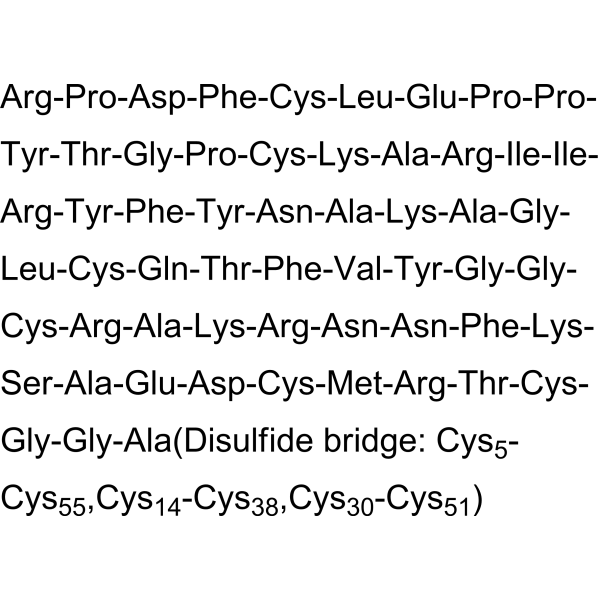
Elafin,also known as elafin-specific inhibitor (ESI) or skin anti-leucoprotease (SKALP), is a low molecular weight inhibitor of human neutrophil elastase (HNE) and proteinase 3 in lung. Elafin is antibiotic against Pseudomonas aeruginosa and Staphylococcus aureus .
|
-
-
- HY-P3561
-
|
|
Melanocortin Receptor
|
Neurological Disease
|
|
Agouti-related Protein (AGRP) (83-132) Amide (human) is a fragment of agouti-related protein (AGRP) which is a protein found in abundance in the arcuate nucleus of the hypothalamus. AgRP primarily acts as an inverse agonist for the melanocortin-4 receptor (MC4R) to increase food intake .
|
-
-
- HY-125472
-
|
|
p97
|
Cancer
|
|
LC-1028 (Compound 20) is an irreversible, non-competitive, covalent p97 inhibitor with a Ki app value of 33.2 nM. LC-1028 covalently modifies the cysteine residues (Cys105, Cys522, Cys535) of p97. LC-1028 can be used in the research of pancreatic cancer .
|
-
-
- HY-P10720
-
|
|
Endogenous Metabolite
|
Cardiovascular Disease
|
C-Type Natriuretic Peptide (1-53), Porcine, Rat, mouse is an activator of particulate guanylate cyclase B (pGC-B), which is highly expressed in endothelial cells, kidneys, and the heart. C-Type Natriuretic Peptide (1-53), Porcine, Rat, mouse can mediate a potent anti-fibrotic effect in human cardiac and renal fibroblasts by generating the second messenger cGMP .
|
-
-
- HY-P1164
-
-
-
- HY-P4205
-
|
|
Aminopeptidase
|
Cancer
|
|
Aminopeptidase N Ligand (CD13) NGR peptide is a polypeptide targeting CD13 and can be used as a carrier to mediate intracellular transmission. Aminopeptidase N Ligand (CD13) NGR peptide is often used in cancer research .
|
-
-
- HY-P3055
-
|
DTX-I
|
Potassium Channel
|
Neurological Disease
Cancer
|
|
Dendrotoxin-I (DTX-I) is a potent K + channels blocker with IC50s of 0.13-50 nM for voltage-gated potassium channel subunits KV1.1, KV1.2 and KV1.6, respectively. Dendrotoxin-I, a neurotoxin, has the potential for cancer research .
|
-
-
- HY-P5158
-
|
|
Adrenergic Receptor
|
Others
|
|
Conopeptide rho-TIA is a peptide derived from the venom contained in the predatory sea snail Conus tulipa, has highly selective and noncompetitive inhibitor at human α1B-Adrenergic Receptor. Conopeptide rho-TIA acts a competitive inhibitor at human α1A-Adrenergic Receptor and α1D-Adrenergic Receptor. Conopeptide rho-TIA binds to each subtype and may provide useful information for the development of novel α1-Adrenergic Receptor subtype-selective drugs .
|
-
-
- HY-P3065
-
|
|
Calcium Channel
|
Neurological Disease
|
|
Calcicludine is a protein toxin from the venom of the green mamba that inhibits high-voltage-activated calcium channel, especially L-type calcium channel .
|
-
-
- HY-P1018
-
-
-
- HY-P3707
-
|
|
Apoptosis
|
Cancer
|
|
Tumor targeted pro-apoptotic peptide (CNGRC-GG-D(KLAKLAK)2) is an anti-tumor peptide. Tumor targeted pro-apoptotic peptide disrupts mitochondrial membranes and promotes apoptosis, showing anticancer activity in mice .
|
-
-
- HY-P5071
-
|
|
Bacterial
|
Infection
|
|
EcAMP3 is a hairpin-like peptide. EcAMP3 has antifungal and antibacterial activity. EcAMPs precursor family contains seven identical cysteine motifs: C1XXXC2(11–13)C3XXXC4 .
|
-
-
- HY-P4869
-
|
|
Ras
|
Others
|
|
Biotin-KRpep-2d acetate is a biotin-labeled KRpep-2d (HY-P3277) .
|
-
-
- HY-P3277A
-
|
|
Ras
|
Cancer
|
|
KRpep-2d (TFA) is a potent K-Ras inhibitor and inhibits proliferation of K-Ras-driven cancer cells. KRpep-2d can be used for cancer research .
|
-
-
- HY-P5887
-
-
-
- HY-P1403
-
|
|
Potassium Channel
|
Others
|
|
Tertiapin LQ is a specific and reversible renal outer medullary potassium ROMK1 (Kir1.1) channel inhibitor .
|
-
-
- HY-P5648
-
|
|
Bacterial
|
Infection
|
|
PhD2 is an antimicrobial peptide derived from monkey white blood cells. PhD2 has activity against bacteria and fungus Candida albicans .
|
-
-
- HY-P5649
-
|
|
Bacterial
|
Infection
|
|
PhD3 is an antimicrobial peptide derived from monkey white blood cells. PhD3 has activity against bacteria and fungus Candida albicans .
|
-
-
- HY-P5626
-
|
|
Bacterial
|
Infection
|
|
Seabream hepcidin is an antimicrobial peptide with anti-bacterial (V.anguillarum), fungal (S.cerevisiae) and viral hemorrhagic septicemia virus activity .
|
-
-
- HY-P5920
-
-
-
- HY-P3269A
-
|
|
Calcium Channel
|
Cardiovascular Disease
|
|
Calciseptine TFA, a polypeptide found in black mamba venom, is a selcetive Cav1.2 L-type calcium channel inhibitor with an IC50 of 92 nM. Calciseptine TFA binds to the pore domain shoulder at repeats III and IV of Cav1.2, stabilizing an inactivated conformation. Calciseptine TFA exhibits negative inotropic and negative relaxant effects on mice, and does not affect heart rate or the action potential of sinoatrial node pacemaker cells. Calciseptine TFA can be used for the research of cardiovascular diseases .
|
-
| Cat. No. |
Product Name |
Target |
Research Area |
-
- HY-P0017
-
-
- HY-P1275
-
-
- HY-P5322
-
|
|
Transmembrane Glycoprotein
|
Cardiovascular Disease
Cancer
|
|
Thrombospondin (TSP-1)-derived CD36 binding motif is a bioactive hexapeptide. Thrombospondin (TSP-1)-derived CD36 binding motif interferes with the interaction between cells and the extracellular matrix by binding to CD36 and angiostatin, thereby affecting the cell adhesion and migration process. Thrombospondin (TSP-1)-derived CD36 binding motif inhibits platelet aggregation. Thrombospondin (TSP-1)-derived CD36 binding motif exerts an anti-tumor effect against colon cancer .
|
-
- HY-P10486
-
|
|
Bacterial
|
Infection
|
|
AIP-II is a cyclic peptide signaling molecule for quorum sensing, which is produced by Staphylococcus aureus. AIP-II potently inhibits AgrC-III in Methicillin (HY-121544)-resistant type III Staphylococcus aureus strain AH1747, with an IC50 of 0.532 nM. AIP-II binds to the AgrC-II receptor and regulates virulence gene expression in Staphylococcus aureus .
|
-
- HY-P3561A
-
|
|
Melanocortin Receptor
|
Neurological Disease
|
|
Agouti-related Protein (AGRP) (83-132) Amide (human) TFA is a fragment of agouti-related protein (AGRP) which is a protein found in abundance in the arcuate nucleus of the hypothalamus. AgRP primarily acts as an inverse agonist for the melanocortin-4 receptor (MC4R) to increase food intake .
|
-
- HY-12537
-
-
- HY-106216
-
|
|
Elastase
|
Infection
Inflammation/Immunology
|
|
Tiprelestat is a potent human neutrophil elastase inhibitor. Tiprelestat has antimicrobial and anti-inflammatory activities. Tiprelestat can be used in the research of inflammation/immune disease .
|
-
- HY-P5533
-
|
|
Biochemical Assay Reagents
|
Cancer
|
|
CRT, an iron peptide mimic, can bind to apo-transferrin (apo-Tf). CRT can be used to modify nanoparticles, and enhances drug delivery efficiency .
|
-
- HY-P5792
-
|
ANP (3-28) (human)
|
Endothelin Receptor
|
Cardiovascular Disease
Metabolic Disease
|
|
Atrial natriuretic peptide (3-28) (human) (ANP (3-28) (human)) is a peptide hormone that is synthesized and secreted by the atrial myocardium. Atrial natriuretic peptide (3-28) (human) is involved in the regulation of blood pressure, fluid balance, and electrolyte homeostasis .
|
-
- HY-P1164A
-
-
- HY-108814A
-
|
DX-88 TFA
|
Kallikrein
|
Cardiovascular Disease
|
|
Ecallantide (DX-88) TFA is a specific recombinant plasma kallikrein inhibitor. Ecallantide inhibits the production of bradykinin. Ecallantide may be used to prevent acute attacks of angioedema .
|
-
- HY-P3282
-
|
|
Guanylate Cyclase
|
Metabolic Disease
|
|
MM 419447, a linaclotide metabolite, is a guanylate cyclase-C agonist. MM 419447 has the potential for the research of the irritable bowel syndrome with constipation (IBS-C) .
|
-
- HY-17584A
-
|
|
Guanylate Cyclase
|
Cancer
|
|
Linaclotide acetate is a potent and selective guanylate cyclase C agonist; developed for the treatment of constipation-predominant irritable bowel syndrome (IBS-C) and chronic constipation.
|
-
- HY-P1525A
-
|
MCH (salmon) TFA
|
MCHR1 (GPR24)
|
Cardiovascular Disease
Neurological Disease
Metabolic Disease
Endocrinology
|
|
Melanin Concentrating Hormone, salmon TFA (MCH (salmon) TFA) is a 19-amino-acid neuropeptide initially identified in the pituitary gland of teleost fish, which regulates food intake, energy balance, sleep state, and the cardiovascular system. Melanin-concentrating hormone is a ligand for an orphan G protein-coupled receptor (SLC-1/GPR24) and MCHR2.
|
-
- HY-P5011
-
-
- HY-P1525
-
|
MCH (salmon)
|
MCHR1 (GPR24)
|
Cardiovascular Disease
Neurological Disease
Metabolic Disease
Endocrinology
|
|
Melanin Concentrating Hormone, salmon is a 19-amino-acid neuropeptide initially identified in the pituitary gland of teleost fish, which regulates food intake, energy balance, sleep state, and the cardiovascular system. Melanin-concentrating hormone is a ligand for an orphan G protein-coupled receptor (SLC-1/GPR24) and MCHR2.
|
-
- HY-P3055A
-
|
DTX-I TFA
|
Potassium Channel
|
Cancer
|
|
Dendrotoxin-I (DTX-I) TFA is a potent K + channel blocker with IC50s of 0.13-50 nM for voltage-gated potassium channel subunits KV1.1, KV1.2 and KV1.6. Dendrotoxin-I TFA, a neurotoxin, has the potential for cancer research .
|
-
- HY-P3277
-
|
|
Ras
|
Cancer
|
|
KRpep-2d is a potent K-Ras inhibitor and inhibits proliferation of K-Ras-driven cancer cells. KRpep-2d can be used for cancer research .
|
-
- HY-P5089A
-
-
- HY-P5089
-
-
- HY-P2707
-
|
α-DTX
|
Sodium Channel
Potassium Channel
|
Neurological Disease
|
|
α-Dendrotoxin (α-DTX) is a voltage-gated K + channel blocker and an acid-sensing ion channel (ASIC) inhibitor. α-Dendrotoxin blocks Kv1.1, Kv1.2, Kv1.6 and D-type (ID) voltage-gated K + channels, and reversibly inhibits slowly inactivating potassium currents. α-Dendrotoxin induces epilepsy-related behaviors in mice. α-Dendrotoxin can be used in studies related to tonic-clonic seizures .
|
-
- HY-P3269
-
|
|
Calcium Channel
|
Cardiovascular Disease
|
|
Calciseptine is a natural polypeptide toxin found in the venom of the black mamba snake (Dendroaspis p. polylepis). Calciseptine is a highly effective and selective blocker of the L-type channel of the Cav1.2 subtype, with an IC50 value of 92 nM. Calciseptine has no effect on Cav3.1, Cav2.2, Cav2.1, Cav1.1, voltage-sensitive sodium channels and potassium channels. Calciseptine exhibits negative inotropic and negative relaxant effects on mice, and does not affect heart rate or the action potential of sinoatrial node pacemaker cells. Calciseptine can be used for research on cardiovascular diseases[1].
|
-
- HY-P11071
-
|
|
PCSK9
|
Cardiovascular Disease
|
|
PCSK9 Inhibitor, EGF-A is a PCSK9 inhibitor. PCSK9 Inhibitor, EGF-A is residues 293-334 of the EGF-A domain of the low-density lipoprotein (LDL) receptor. PCSK9 Inhibitor, EGF-A can prevent PCSK9-induced intracellular LDLR degradation. PCSK9 Inhibitor, EGF-A can be used in the study of hypercholesterolemia and premature atherosclerosis .
|
-
- HY-P10654
-
-
- HY-108814
-
|
DX-88
|
Kallikrein
|
Cardiovascular Disease
|
|
Ecallantide (DX-88) is a specific plasma kallikrein inhibitor. Ecallantide inhibits the production of bradykinin. Ecallantide can be used to prevent acute attacks of angioedema .
|
-
- HY-P5163
-
|
|
Peptides
|
Inflammation/Immunology
|
|
NMB-1 is a conopeptide analogue. NMB-1 selectively inhibits sustained mechanically activated currents in sensory neurons (IC50: 1 μM). NMB-1 inhibits mechanical pain. NMB-1 can be used for research of hearing and pressure-evoked pain .
|
-
- HY-P1719
-
-
- HY-P5459
-
|
|
Bacterial
Elastase
|
Infection
|
|
Elafin,also known as elafin-specific inhibitor (ESI) or skin anti-leucoprotease (SKALP), is a low molecular weight inhibitor of human neutrophil elastase (HNE) and proteinase 3 in lung. Elafin is antibiotic against Pseudomonas aeruginosa and Staphylococcus aureus .
|
-
- HY-P3561
-
|
|
Melanocortin Receptor
|
Neurological Disease
|
|
Agouti-related Protein (AGRP) (83-132) Amide (human) is a fragment of agouti-related protein (AGRP) which is a protein found in abundance in the arcuate nucleus of the hypothalamus. AgRP primarily acts as an inverse agonist for the melanocortin-4 receptor (MC4R) to increase food intake .
|
-
- HY-P10720
-
|
|
Endogenous Metabolite
|
Cardiovascular Disease
|
C-Type Natriuretic Peptide (1-53), Porcine, Rat, mouse is an activator of particulate guanylate cyclase B (pGC-B), which is highly expressed in endothelial cells, kidneys, and the heart. C-Type Natriuretic Peptide (1-53), Porcine, Rat, mouse can mediate a potent anti-fibrotic effect in human cardiac and renal fibroblasts by generating the second messenger cGMP .
|
-
- HY-P1164
-
-
- HY-P4205
-
|
|
Aminopeptidase
|
Cancer
|
|
Aminopeptidase N Ligand (CD13) NGR peptide is a polypeptide targeting CD13 and can be used as a carrier to mediate intracellular transmission. Aminopeptidase N Ligand (CD13) NGR peptide is often used in cancer research .
|
-
- HY-P3055
-
|
DTX-I
|
Potassium Channel
|
Neurological Disease
Cancer
|
|
Dendrotoxin-I (DTX-I) is a potent K + channels blocker with IC50s of 0.13-50 nM for voltage-gated potassium channel subunits KV1.1, KV1.2 and KV1.6, respectively. Dendrotoxin-I, a neurotoxin, has the potential for cancer research .
|
-
- HY-P5158
-
|
|
Adrenergic Receptor
|
Others
|
|
Conopeptide rho-TIA is a peptide derived from the venom contained in the predatory sea snail Conus tulipa, has highly selective and noncompetitive inhibitor at human α1B-Adrenergic Receptor. Conopeptide rho-TIA acts a competitive inhibitor at human α1A-Adrenergic Receptor and α1D-Adrenergic Receptor. Conopeptide rho-TIA binds to each subtype and may provide useful information for the development of novel α1-Adrenergic Receptor subtype-selective drugs .
|
-
- HY-P3065
-
|
|
Calcium Channel
|
Neurological Disease
|
|
Calcicludine is a protein toxin from the venom of the green mamba that inhibits high-voltage-activated calcium channel, especially L-type calcium channel .
|
-
- HY-P1018
-
-
- HY-P3707
-
|
|
Apoptosis
|
Cancer
|
|
Tumor targeted pro-apoptotic peptide (CNGRC-GG-D(KLAKLAK)2) is an anti-tumor peptide. Tumor targeted pro-apoptotic peptide disrupts mitochondrial membranes and promotes apoptosis, showing anticancer activity in mice .
|
-
- HY-P5071
-
|
|
Bacterial
|
Infection
|
|
EcAMP3 is a hairpin-like peptide. EcAMP3 has antifungal and antibacterial activity. EcAMPs precursor family contains seven identical cysteine motifs: C1XXXC2(11–13)C3XXXC4 .
|
-
- HY-P4869
-
|
|
Ras
|
Others
|
|
Biotin-KRpep-2d acetate is a biotin-labeled KRpep-2d (HY-P3277) .
|
-
- HY-P3277A
-
|
|
Ras
|
Cancer
|
|
KRpep-2d (TFA) is a potent K-Ras inhibitor and inhibits proliferation of K-Ras-driven cancer cells. KRpep-2d can be used for cancer research .
|
-
- HY-P5887
-
-
- HY-P1403
-
|
|
Potassium Channel
|
Others
|
|
Tertiapin LQ is a specific and reversible renal outer medullary potassium ROMK1 (Kir1.1) channel inhibitor .
|
-
- HY-P5648
-
|
|
Bacterial
|
Infection
|
|
PhD2 is an antimicrobial peptide derived from monkey white blood cells. PhD2 has activity against bacteria and fungus Candida albicans .
|
-
- HY-P5649
-
|
|
Bacterial
|
Infection
|
|
PhD3 is an antimicrobial peptide derived from monkey white blood cells. PhD3 has activity against bacteria and fungus Candida albicans .
|
-
- HY-P5626
-
|
|
Bacterial
|
Infection
|
|
Seabream hepcidin is an antimicrobial peptide with anti-bacterial (V.anguillarum), fungal (S.cerevisiae) and viral hemorrhagic septicemia virus activity .
|
-
- HY-P5920
-
-
- HY-P3269A
-
|
|
Calcium Channel
|
Cardiovascular Disease
|
|
Calciseptine TFA, a polypeptide found in black mamba venom, is a selcetive Cav1.2 L-type calcium channel inhibitor with an IC50 of 92 nM. Calciseptine TFA binds to the pore domain shoulder at repeats III and IV of Cav1.2, stabilizing an inactivated conformation. Calciseptine TFA exhibits negative inotropic and negative relaxant effects on mice, and does not affect heart rate or the action potential of sinoatrial node pacemaker cells. Calciseptine TFA can be used for the research of cardiovascular diseases .
|
-
- HY-P3196
-
|
|
Peptides
|
Cancer
|
|
Tozuleristide is a tumor-targeting agent covalently conjugated to a derivative of the near-infrared fluorescent dye indocyanine green (ICG). Tozuleristide has the ability to penetrate the blood-brain barrier. Tozuleristide can be used in research related to fluorescence-guided surgery (FGS) .
|
| Cat. No. |
Product Name |
Category |
Target |
Chemical Structure |
Your information is safe with us. * Required Fields.
Inquiry Information
- Product Name:
- Cat. No.:
- Quantity:
- MCE Japan Authorized Agent:

