Search Result
Results for "
Cysteine (Standard)
" in MedChemExpress (MCE) Product Catalog:
1
Biochemical Assay Reagents
1
Isotope-Labeled Compounds
| Cat. No. |
Product Name |
Target |
Research Areas |
Chemical Structure |
-
- HY-N0005R
-
|
Diferuloylmethane (Standard); Natural Yellow 3 (Standard); Turmeric yellow (Standard)
|
Reference Standards
Histone Acetyltransferase
Epigenetic Reader Domain
Keap1-Nrf2
Autophagy
Mitophagy
Influenza Virus
Ferroptosis
|
Infection
Neurological Disease
Inflammation/Immunology
Cancer
|
|
Curcumin (Standard) is the analytical standard of Curcumin (HY-N0005). This product is intended for research and analytical applications. Curcumin (Diferuloylmethane), a natural phenolic compound, is a p300/CREB-binding protein-specific inhibitor of acetyltransferase, represses the acetylation of histone/nonhistone proteins and histone acetyltransferase-dependent chromatin transcription. Curcumin is a photosensitizer against microorganisms. Curcumin shows inhibitory effects on NF-κB and MAPKs, and has diverse pharmacologic effects including anti-inflammatory, antioxidant, antiproliferative and antiangiogenic activities. Curcumin induces stabilization of Nrf2 protein through Keap1 cysteine modification.
|
-
-
- HY-W009749A
-
|
|
Drug Intermediate
|
Others
|
|
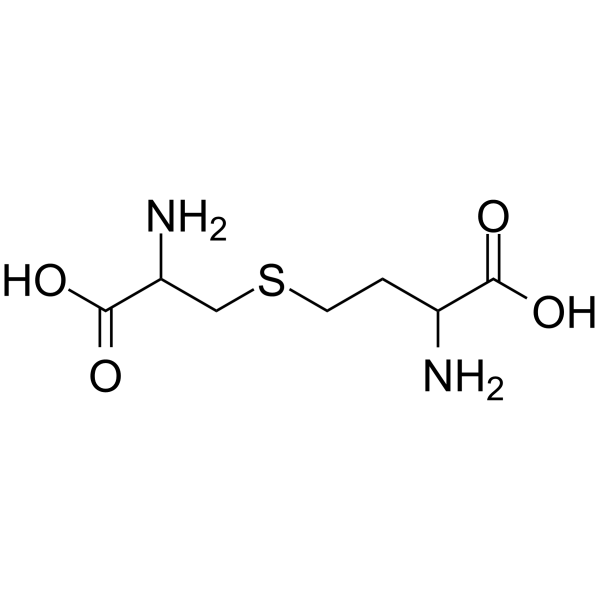
DL-Cystathionine is a mixture of 4 isomers of cystathionine and allocystathionine. DL-Cystathionine also is an intermediate in the biosynthesis of amino acid cysteine. DL-Cystathionine serves as a standard for quantifying tissue cystathionine .
|
-
-
- HY-N0191R
-
|
Andrographis (Standard)
|
Reference Standards
NF-κB
SARS-CoV
Influenza Virus
Autophagy
Parasite
|
Infection
Inflammation/Immunology
Cancer
|
|
Andrographolide (Standard) is the analytical standard of Andrographolide. This product is intended for research and analytical applications. Andrographolide is a NF-κB inhibitor, which inhibits NF-κB activation through covalent modification of a cysteine residue on p50 in endothelial cells without affecting IκBα degradation or p50/p65 nuclear translocation. Andrographolide has antiviral effects.
|
-
-
- HY-Y0337R
-
|
Cysteine (Standard)
|
Reference Standards
Endogenous Metabolite
|
Metabolic Disease
Cancer
|
|
L-Cysteine (Standard) is the analytical standard of L-Cysteine. This product is intended for research and analytical applications. L-Cysteine is a conditionally essential amino acid, which acts as a precursor for biologically active molecules such as hydrogen sulphide (H2S), glutathione and taurine. L-Cysteine suppresses ghrelin and reduces appetite in rodents and humans .
|
-
-
- HY-B0215R
-
|
N-AcetylCysteine (Standard); N-Acetyl-L-Cysteine (Standard); NAC (Standard)
|
Reference Standards
Reactive Oxygen Species (ROS)
Endogenous Metabolite
Apoptosis
Ferroptosis
Influenza Virus
Disulfidptosis
|
Infection
Neurological Disease
Cancer
|
|
Acetylcysteine (Standard) is the analytical standard of Acetylcysteine. This product is intended for research and analytical applications. Acetylcysteine (N-Acetylcysteine) is a mucolytic agent which reduces the thickness of the mucus. Acetylcysteine is a ROS inhibitor . Acetylcysteine is a cysteine precursor, prevents hemin-induced ferroptosis by neutralizing toxic lipids generated by arachidonate-dependent activity of 5-lipoxygenases . Acetylcysteine induces cell apoptosis . Acetylcysteine also has anti-influenza virus activities . In addition, Acetylcysteine is the most stable form of cysteine during drug delivery and can be used in disulfidptosis studies .
|
-
-
- HY-34477R
-
|
Iodoacetamide (Standard)
|
DNA Alkylator/Crosslinker
Reference Standards
|
Others
|
|
2-Iodoacetamide (Standard) is the analytical standard of 2-Iodoacetamide. This product is intended for research and analytical applications. 2-Iodoacetamide (Iodoacetamide), an alkylating agent, is a commonly used agent for alkylation of cysteine during sample preparation for proteomics .
|
-
-
- HY-19528R
-
|
SAH (S-AdenosylhomoCysteine) (Standard)
|
Reference Standards
Endogenous Metabolite
|
Metabolic Disease
|
|
SAH (Standard) is the analytical standard of SAH. This product is intended for research and analytical applications. SAH (S-Adenosylhomocysteine) is an amino acid derivative and a modulartor in several metabolic pathways. It is an intermediate in the synthesis of cysteine and adenosine . SAH is an inhibitor for METTL3-METTL14 heterodimer complex (METTL3-14) with an IC50 of 0.9 μM .
|
-
-
- HY-W009749AS
-
|
|
Isotope-Labeled Compounds
Drug Intermediate
|
Others
|
|
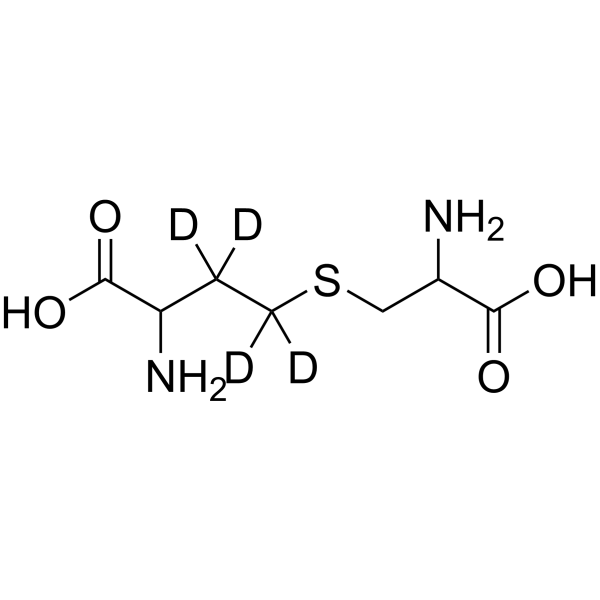
DL-Cystathionine-d4 is the deuterium labeled DL-Cystathionine (HY-W009749A). DL-Cystathionine is a mixture of 4 isomers of cystathionine and allocystathionine. DL-Cystathionine also is an intermediate in the biosynthesis of amino acid cysteine. DL-Cystathionine serves as a standard for quantifying tissue cystathionine .
|
-
-
- HY-N0394R
-
|
|
Reference Standards
Endogenous Metabolite
Ferroptosis
ROS Kinase
Keap1-Nrf2
|
Metabolic Disease
Inflammation/Immunology
Cancer
|
|
L-Cystine (Standard) is the analytical standard of L-Cystine. This product is intended for research and analytical applications. L-Cystine, the extracellular form of L-Cysteine (HY-Y0337), is a nutritionally dispensable semiessential sulfur-containing amino acid, occurring in proteins of plants and animals. L-Cystine induces Nrf2 protein elevation in a Keap1 (HY-P75897)-dependent manner and activates Nrf2 transcription factor. L-cystine can elicit cytoprotection by reducing ROS generation and protecting against oxidant- or doxorubicin-induced apoptosis. The reduced reabsorption of L-Cystine in renal tubules and its poor solubility in urine are the important causes of cystine precipitation and cystine crystal formation eventually leading to kidney stones. L-Cystine combined with L-theanine (HY-15121) enhances the production of antigen-specific IgG by increasing glutathione (GSH) levels and T helper 2 (Th2) mediated responses in mice. L-Cystine is promising for research of cystinuria and cystinosis
|
-
-
- HY-101409R
-
|
O-Acetyl-L-serine (Standard)
|
Reference Standards
Endogenous Metabolite
|
Infection
|
|
O-Acetylserine (Standard) is the analytical standard of O-Acetylserine. This product is intended for research and analytical applications. O-Acetylserine (O-Acetyl-L-serine) is an intermediate in the biosynthesis of the amino acid cysteine in bacteria and plants.
|
-
-
- HY-B2188R
-
|
L-S-MethylCysteine (Standard)
|
Reactive Oxygen Species (ROS)
Reference Standards
|
Neurological Disease
Metabolic Disease
|
|
S-Methyl-L-cysteine (Standard) is the analytical standard of S-Methyl-L-cysteine. This product is intended for research and analytical applications. S-Methyl-L-cysteine is a natural product that acts as a substrate in the catalytic antioxidant system mediated by methionine sulfoxide reductase A (MSRA), with antioxidative, neuroprotective, and anti-obesity activities.
|
-
-
- HY-100229R
-
|
E64d (Standard); E64c ethyl ester (Standard)
|
Reference Standards
Cathepsin
SARS-CoV
|
Neurological Disease
|
|
Aloxistatin (Standard) is the analytical standard of Aloxistatin. This product is intended for research and analytical applications. Aloxistatin (E64d) is a cell-permeable and irreversible broad-spectrum cysteine protease inhibitor. Aloxistatin (E64d) exhibits entry-blocking effect for MERS-CoV.
|
-
-
- HY-113110R
-
|
L-Cysteinylglycine (Standard); Cys-Gly (Standard); H-Cys-Gly-OH (Standard)
|
Reference Standards
Endogenous Metabolite
Reactive Oxygen Species (ROS)
DNA/RNA Synthesis
|
Cardiovascular Disease
Cancer
|
|
Cysteinylglycine (Standard) is the analytical standard of Cysteinylglycine. This product is intended for research and analytical applications. Cysteinylglycine is a dipeptide formed by the peptide bond linkage between cysteine (Cysteine) and glycine (Glycine). Cysteinylglycine is an important metabolic intermediate in the human body, mainly derived from the degradation of glutathione (GSH). Cysteinylglycine reduces ferric iron to ferrous iron, drives the redox cycle of iron, generates reactive oxygen species (ROS), stimulates oxidative reactions, induces lipid peroxidation of human plasma LDL lipoproteins, and causes oxidative damage to DNA bases. Cysteinylglycine can be used as a biomarker to evaluate ischemic heart disease, breast cancer and other conditions .
|
-
-
- HY-18234AR
-
|
|
Reference Standards
Cathepsin
Ser/Thr Protease
Virus Protease
|
Infection
Inflammation/Immunology
|
|
Leupeptin (hemisulfate) (Standard) is the analytical standard of Leupeptin (hemisulfate). This product is intended for research and analytical applications. Leupeptin hemisulfate is a broad-spectrum, membrane-permeable protease inhibitor. Leupeptin hemisulfate potently inhibits serine, cysteine and threonine proteases. Leupeptin hemisulfate inhibits Mpro (the main protease of SARS-CoV-2) and also has anti-inflammatory activity[1][2][3].
|
-
-
- HY-W016715R
-
|
|
Reference Standards
Endogenous Metabolite
|
Metabolic Disease
|
|
L-Cysteine (hydrochloride hydrate) (Standard) is the analytical standard of L-Cysteine (hydrochloride hydrate). This product is intended for research and analytical applications. L-Cysteine hydrochloride hydrate is a conditionally essential amino acid, which acts as a precursor for biologically active molecules such as hydrogen sulphide (H2S), glutathione and taurine. L-Cysteine hydrochloride hydrate suppresses ghrelin and reduces appetite in rodents and humans .
|
-
-
- HY-W018555R
-
|
|
Reference Standards
Endogenous Metabolite
Bacterial
|
Infection
Neurological Disease
|
|
D-Cysteine (Standard) is the analytical standard of D-Cysteine. This product is intended for research and analytical applications. D-Cysteine, the D-isomer of cysteine, is an orally active antibacterial agent and a regulator of neural progenitor cell proliferation. D-Cysteine can inhibit Escherichia coli, Streptococcus mutans, and Streptococcus sanguinis. The no-observed-adverse-effect level of D-Cysteine in rats should be less than 500 mg/kg/day[1][2][3][4].
|
-
-
- HY-Y0337AR
-
|
|
Reference Standards
Endogenous Metabolite
|
Metabolic Disease
Cancer
|
|
L-Cysteine (hydrochloride) (Standard) is the analytical standard of L-Cysteine (hydrochloride). This product is intended for research and analytical applications. L-Cysteine hydrochloride is an orally active conditionally essential amino acid, which acts as a precursor for biologically active molecules such as hydrogen sulphide (H2S), glutathione and taurine. L-Cysteine hydrochloride suppresses ghrelin and reduces appetite in rodents. L-Cysteine hydrochloride inhibits Aspergillus flavus growth and AFB synthesis by disrupting cell structure and antioxidant system balance. L-Cysteine hydrochloride enhances relaxant responses of rat aortic rings to NO and reduces responses to endothelium-derived relaxing factor (EDRF) [4].
|
-
-
- HY-45609R
-
|
|
Reference Standards
Drug Derivative
|
Metabolic Disease
|
|
L-Cysteine S-sulfate sodium hydrate (Standard) is the analytical standard of L-Cysteine S-sulfate sodium hydrate (HY-45609). This product is intended for research and analytical applications. L-Cysteine S-sulfate sodium hydrate is an S-sulfated derivative of L-cysteine (HY-Y0337). L-Cysteine S-sulfate sodium hydrate is the substrate for cystine lyase, it can be used in mass spectrometry and chromatography analyses .
|
-
-
- HY-W013573R
-
-
-
- HY-136386R
-
|
|
Reference Standards
Reactive Oxygen Species (ROS)
|
Others
|
|
N-Acetyl-D-cysteine (Standard) is the analytical standard of N-Acetyl-D-cysteine. This product is intended for research and analytical applications. N-Acetyl-D-cysteine has antioxidant activities and scavenges ROS through the reaction with its thiol group, but cannot enter the glutathione metabolic pathway .
|
-
-
- HY-111827R
-
|
|
Histamine Receptor
|
Cardiovascular Disease
Others
Metabolic Disease
Inflammation/Immunology
|
|
S-1-Propenyl-L-cysteine (Standard) is the analytical standard of S-1-Propenyl-L-cysteine. This product is intended for research and analytical applications. S-1-Propenyl-L-cysteine is a stereoisomer of S-allyl-l-cysteine, extracted from garlic, with immunomodulatory effects and reduces blood pressure in a hypertensive animal model . S-1-Propenyl-L-cysteine exhibits antioxidative efficacy through a NO-dependent BACH1 signaling pathway . S-1-Propenyl-L-cysteine is orally active.
|
-
-
- HY-121765R
-
|
N,S-Diacetyl-L-Cysteine (Standard)
|
Reference Standards
Endogenous Metabolite
|
Metabolic Disease
|
|
Dacisteine (Standard) is the analytical standard of Dacisteine. This product is intended for research and analytical applications. Dacisteine (N,S-Diacetyl-L-cysteine) is a cysteine derivative and displays a less New Delhi metallo-beta-lactamase-1 (NDM-1) inhibitor with an IC50 value of 1000 μM . Dacisteine can be used for the treatment of cardiovascular and cerebrovascular diseases caused by platelet aggregation .
|
-
-
- HY-114245R
-
-
-
- HY-132242R
-
|
SFN-NAC (Standard)
|
Reference Standards
HDAC
Apoptosis
Drug Metabolite
|
Cancer
|
|
Pipemidic acid (trihydrate) (Standard) is the analytical standard of Pipemidic acid (trihydrate). This product is intended for research and analytical applications. Pipemidic acid trihydrate, a derivative of Piromidic acid, is an antibacterial agent. Pipemidic acid trihydrate inhibits DNA gyrase. Pipemidic acid trihydrate is active against gram-negative bacteria including Pseudomonas aeruginosa as well as some gram-positive bacteria. Pipemidic acid trihydrate can be used for the research of intestinal, urinary, and biliary tract infections .
|
-
-
- HY-100803R
-
|
2-Aminoethanesulfinic acid (Standard)
|
Reference Standards
Endogenous Metabolite
|
Neurological Disease
|
|
Hypotaurine (Standard) is the analytical standard of Hypotaurine. This product is intended for research and analytical applications. Hypotaurine (2-aminoethanesulfinic acid), an intermediate in taurine biosynthesis from cysteine in astrocytes, is an endogenous inhibitory amino acid of the glycine receptor. Antioxidant[1].
|
-
-
- HY-W009749B
-
|
|
Drug Intermediate
|
Others
|
|
DL-Cystathionine dihydrochloride is a mixture of 4 isomers of cystathionine and allocystathionine. DL-Cystathionine dihydrochloride also is an intermediate in the biosynthesis of amino acid cysteine. DL-Cystathionine dihydrochloride serves as a standard for quantifying tissue cystathionine .
|
-
-
- HY-125773R
-
|
Beta-cyano-l-alanine (Standard)
|
Endogenous Metabolite
Reference Standards
|
Neurological Disease
|
|
β-cyano-L-Alanine (Standard) is the analytical standard of β-cyano-L-Alanine. This product is intended for research and analytical applications. β-cyano-L-Alanine (Beta-cyano-l-alanine), a nitrile of widespread occurrence in higher plants, is enzymatically produced by cyanoalanine synthase from cyanide and cysteine as substrates . β-cyano-L-Alanine abolishes the protective effect of ethanol on cerebral ischemia/reperfusion (I/R) injury .
|
-
-
- HY-13509R
-
|
|
RGS Protein
|
Inflammation/Immunology
|
|
CCG-50014 (Standard) is the analytical standard of CCG-50014. This product is intended for research and analytical applications. CCG-50014 is the most potent against the regulator of G-protein signaling protein type 4 (RGS4) (IC50 =30 nM) and is >20-fold selective for RGS4 over other RGS proteins. CCG-50014 binds covalently to the RGS, forming an adduct on two cysteine residues located in an allosteric regulatory site . CCG50014, reduces nociceptive responses and enhances opioid-mediated analgesic effects in the mouse formalin test .
|
-
-
- HY-114796
-
|
|
Lipoxygenase
|
Inflammation/Immunology
|
|
tHGA is a compound with anti-inflammatory activity and has the activity to inhibit soybean 15-LOX. tHGA showed significant inhibitory effects in experiments on human leukocytes, with an IC50 value of 0.42 μM, which is close to the effect of commonly used standard NDGA. tHGA concentration-dependently inhibits the synthesis of 5-LOX products, especially the cysteine leukotriene LTC(4), with an IC50 value of 1.80 μM. and showed no cytotoxicity. The anti-inflammatory effects of tHGA do not appear to be through redox or metal chelation mechanisms, as the compound was negative in these bioactivity tests. tHGA works through a dual LOX/COX inhibition mechanism and has higher selectivity for 5-LOX and COX-2, with an IC50 value of 0.40 μM .
|
-
-
- HY-W251393R
-
|
β-Isobuteine (Standard)
|
Reference Standards
Endogenous Metabolite
|
Metabolic Disease
|
|
S-(2-Carboxypropyl)-L-cysteine (β-Isobuteine) (Standard) is the analytical standard of S-(2-Carboxypropyl)-L-cysteine (HY-W251393). This product is intended for research and analytical applications. S-(2-Carboxypropyl)-L-cysteine is a sulfur-containing amino acid derivative. S-(2-Carboxypropyl)-L-cysteine is excreted in urine within 24 hours after acute ingestion of black garlic by humans.
|
-
-
- HY-102087R
-
|
|
Reference Standards
Cathepsin
|
Cancer
|
|
JPM-OEt (Standard) is the analytical standard of JPM-OEt (HY-102087). This product is intended for research and analytical applications. JPM-OEt is a broad spectrum cysteine cathepsin inhibitor. JPM-OEt binds covalently in the active site, and irreversibly inhibits the cysteine cathepsin family. Antitumor activity .
|
-
-
- HY-101779R
-
|
|
Reference Standards
Glycosidase
|
Others
|
|
DCG04 (Standard) is the analytical standard of DCG04 (HY-101779). This product is intended for research and analytical applications. DCG04 is a multivalent ligand for the mannose-6-phosphate receptor. DCG-04 is an activity-based probe for cysteine cathepsins, and can be used for labelling numerous cysteine cathepsins in cell and tissue lysates .
|
-
-
- HY-101847R
-
-
-
- HY-100739R
-
|
|
Proteasome
Reference Standards
|
Cancer
|
|
RA190 (Standard) is the analytical standard of RA190 (HY-100739). This product is intended for research and analytical applications. RA190, a bis-benzylidine piperidon, inhibits proteasome function by covalently binding to cysteine 88 of ubiquitin receptor RPN13.
|
-
-
- HY-100216R
-
|
SPDP Crosslinker (Standard); Py-ds-Prp-OSu (Standard)
|
ADC Linker
Reference Standards
|
Cancer
|
|
SPDP (Standard) is the analytical standard of SPDP (HY-100216). This product is intended for research and analytical applications. SPDP (SPDP Crosslinker) is a short-chain crosslinker for amine-to-sulfhydryl conjugation via NHS-ester and pyridyldithiol reactive groups that form cleavable (reducible) disulfide bonds with cysteine sulfhydryls. It is a glutathione cleavable ADC linker used for the antibody-drug conjugates (ADCs) .
|
-
-
- HY-108137R
-
|
|
Reference Standards
Cathepsin
HSV
SARS-CoV
|
Infection
Inflammation/Immunology
|
|
Z-LVG-CHN2 (Standard) is the analytical standard of Z-LVG-CHN2 (HY-108137). This product is intended for research and analytical applications. Z-LVG-CHN2 is a cell-permeable and irreversible inhibitor of cysteine proteinase. Z-LVG-CHN2 is a tripeptide derivative and mimics part of the human cysteine proteinase-binding center. Z-LVG-CHN2 displays an inhibition on HSV whereas no significant effect on poliovirus replication. Z-LVG-CHN2 effectively blocks SARS-COV-2 replication (EC50=190 nM) via inhibition of SARS-COV-2 3CL pro protease .
|
-
-
- HY-W017464R
-
|
N-Acetyl-4-benzoquinone Imine (Standard)
|
Drug Metabolite
Reference Standards
Endogenous Metabolite
|
Metabolic Disease
|
|
NAPQI (Standard) is the analytical standard of NAPQI (HY-W017464). This product is intended for research and analytical applications. NAPQI is the toxic metabolite of Acetaminophen (HY-66005). NAPQI is also an inhibitor of enzymes in the vitamin K cycle. NAPQI is rapidly detoxified by glutathione (GSH), but in situations of GSH deficiency, excess NAPQI reacts with cysteine residues in proteins, causing cell death and toxicity in the liver .
|
-
-
- HY-134222AR
-
|
N-Acetyl-L-serine (Standard)
|
Reference Standards
Endogenous Metabolite
|
Infection
|
|
N-Acetylserine (Standard) is the analytical standard of N-Acetylserine (HY-134222A). This product is intended for research and analytical applications. N-Acetylserine (N-Acetyl-L-serine) is a physiological inducer of cysteine biosynthesis and activator of CysB. N-Acetylserine can bind to the CysB apoprotein. N-Acetylserine stimulates cysJIH transcription in vitro. N-Acetylserine can be used in the research of SARS-CoV-2 infection .
|
-
-
- HY-138540R
-
|
N-Dodecylimidazole (Standard)
|
Fungal
Reference Standards
|
Cancer
|
|
1-Dodecylimidazole (Standard) is the analytical standard of 1-Dodecylimidazole. This product is intended for research and analytical applications. 1-Dodecylimidazole (N-Dodecylimidazole) is a lysosomotropic detergent and a cytotoxic agent. 1-Dodecylimidazole causes cell death by its acid-dependent accumulation in lysosomes, disruption of the lysosomal membrane, and releaseof cysteine proteases into the cytoplasm. 1-Dodecylimidazole has hypocholesterolaemic activity and broad-spectrum antifungal activity .
|
-
-
- HY-100433R
-
|
|
PDI
Reference Standards
|
Cancer
|
|
PACMA 31 (Standard) is the analytical standard of PACMA 31 (HY-100433). This product is intended for research and analytical applications. PACMA 31 is an irreversible, orally active protein disulfide isomerase (PDI) inhibitor with an IC50 of 10 μM. PACMA 31 forms a covalent bond with the active site cysteines of PDI. PACMA 31 shows tumor targeting ability and significantly suppresses ovarian tumor growth without causing toxicity to normal tissues . PACMA 31 is a click chemistry reagent, it contains an Alkyne group and can undergo copper-catalyzed azide-alkyne cycloaddition (CuAAc) with molecules containing Azide groups.
|
-
-
- HY-E71363
-
|
|
Cathepsin
|
Cardiovascular Disease
Inflammation/Immunology
|
|
Papain (USP) refers to Papain (HY-P1645) that meets the standards of the US Pharmacopoeia. Papain is a cysteine protease of the peptidase C1 family. Papain enhances red cell agglutination by anti-D and anti-A, and increases red cell sensitivity to K cell-mediated lysis in ADCC assays. Papain can induce pulmonary emphysema. Papain can be used for the researches of Rh haemolytic disease of the newborn and pulmonary emphysema .
|
-
| Cat. No. |
Product Name |
Type |
-
- HY-138540R
-
|
N-Dodecylimidazole (Standard)
|
Biochemical Assay Reagents
|
|
1-Dodecylimidazole (Standard) is the analytical standard of 1-Dodecylimidazole. This product is intended for research and analytical applications. 1-Dodecylimidazole (N-Dodecylimidazole) is a lysosomotropic detergent and a cytotoxic agent. 1-Dodecylimidazole causes cell death by its acid-dependent accumulation in lysosomes, disruption of the lysosomal membrane, and releaseof cysteine proteases into the cytoplasm. 1-Dodecylimidazole has hypocholesterolaemic activity and broad-spectrum antifungal activity .
|
| Cat. No. |
Product Name |
Category |
Target |
Chemical Structure |
-
- HY-N0005R
-
-
-
- HY-N0191R
-
-
-
- HY-Y0337R
-
-
-
- HY-B0215R
-
-
-
- HY-19528R
-
-
-
- HY-N0394R
-
|
|
Structural Classification
Human Gut Microbiota Metabolites
Microorganisms
Amino acids
Endogenous metabolite
Source Classification
|
Reference Standards
Endogenous Metabolite
Ferroptosis
ROS Kinase
Keap1-Nrf2
|
|
L-Cystine (Standard) is the analytical standard of L-Cystine. This product is intended for research and analytical applications. L-Cystine, the extracellular form of L-Cysteine (HY-Y0337), is a nutritionally dispensable semiessential sulfur-containing amino acid, occurring in proteins of plants and animals. L-Cystine induces Nrf2 protein elevation in a Keap1 (HY-P75897)-dependent manner and activates Nrf2 transcription factor. L-cystine can elicit cytoprotection by reducing ROS generation and protecting against oxidant- or doxorubicin-induced apoptosis. The reduced reabsorption of L-Cystine in renal tubules and its poor solubility in urine are the important causes of cystine precipitation and cystine crystal formation eventually leading to kidney stones. L-Cystine combined with L-theanine (HY-15121) enhances the production of antigen-specific IgG by increasing glutathione (GSH) levels and T helper 2 (Th2) mediated responses in mice. L-Cystine is promising for research of cystinuria and cystinosis
|
-
-
- HY-101409R
-
-
-
- HY-B2188R
-
-
-
- HY-113110R
-
-
-
- HY-18234AR
-
-
-
- HY-W016715R
-
|
|
Structural Classification
Amino acids
Endogenous metabolite
Source Classification
|
Reference Standards
Endogenous Metabolite
|
|
L-Cysteine (hydrochloride hydrate) (Standard) is the analytical standard of L-Cysteine (hydrochloride hydrate). This product is intended for research and analytical applications. L-Cysteine hydrochloride hydrate is a conditionally essential amino acid, which acts as a precursor for biologically active molecules such as hydrogen sulphide (H2S), glutathione and taurine. L-Cysteine hydrochloride hydrate suppresses ghrelin and reduces appetite in rodents and humans .
|
-
-
- HY-W018555R
-
-
-
- HY-Y0337AR
-
|
|
Structural Classification
Amino acids
Endogenous metabolite
Source Classification
|
Reference Standards
Endogenous Metabolite
|
|
L-Cysteine (hydrochloride) (Standard) is the analytical standard of L-Cysteine (hydrochloride). This product is intended for research and analytical applications. L-Cysteine hydrochloride is an orally active conditionally essential amino acid, which acts as a precursor for biologically active molecules such as hydrogen sulphide (H2S), glutathione and taurine. L-Cysteine hydrochloride suppresses ghrelin and reduces appetite in rodents. L-Cysteine hydrochloride inhibits Aspergillus flavus growth and AFB synthesis by disrupting cell structure and antioxidant system balance. L-Cysteine hydrochloride enhances relaxant responses of rat aortic rings to NO and reduces responses to endothelium-derived relaxing factor (EDRF) [4].
|
-
-
- HY-45609R
-
-
-
- HY-W013573R
-
-
-
- HY-136386R
-
-
-
- HY-111827R
-
|
|
Liliaceae
Ketones, Aldehydes, Acids
Allium sativum Linn.
Plants
Source Classification
|
Histamine Receptor
|
|
S-1-Propenyl-L-cysteine (Standard) is the analytical standard of S-1-Propenyl-L-cysteine. This product is intended for research and analytical applications. S-1-Propenyl-L-cysteine is a stereoisomer of S-allyl-l-cysteine, extracted from garlic, with immunomodulatory effects and reduces blood pressure in a hypertensive animal model . S-1-Propenyl-L-cysteine exhibits antioxidative efficacy through a NO-dependent BACH1 signaling pathway . S-1-Propenyl-L-cysteine is orally active.
|
-
-
- HY-121765R
-
|
N,S-Diacetyl-L-Cysteine (Standard)
|
Natural Products
Endogenous metabolite
Source Classification
|
Reference Standards
Endogenous Metabolite
|
|
Dacisteine (Standard) is the analytical standard of Dacisteine. This product is intended for research and analytical applications. Dacisteine (N,S-Diacetyl-L-cysteine) is a cysteine derivative and displays a less New Delhi metallo-beta-lactamase-1 (NDM-1) inhibitor with an IC50 value of 1000 μM . Dacisteine can be used for the treatment of cardiovascular and cerebrovascular diseases caused by platelet aggregation .
|
-
-
- HY-114245R
-
-
-
- HY-100803R
-
-
-
- HY-125773R
-
-
-
- HY-W251393R
-
-
-
- HY-W017464R
-
-
-
- HY-134222AR
-
-
| Cat. No. |
Product Name |
Chemical Structure |
-
- HY-W009749AS
-
|
|
|
DL-Cystathionine-d4 is the deuterium labeled DL-Cystathionine (HY-W009749A). DL-Cystathionine is a mixture of 4 isomers of cystathionine and allocystathionine. DL-Cystathionine also is an intermediate in the biosynthesis of amino acid cysteine. DL-Cystathionine serves as a standard for quantifying tissue cystathionine .
|
-
Your information is safe with us. * Required Fields.
Inquiry Information
- Product Name:
- Cat. No.:
- Quantity:
- MCE Japan Authorized Agent:

