8 Results for "

D-Histidine

" in MedChemExpress (MCE) Product Catalog:
Products (8)

8 Results for "D-Histidine" in MCE Product Catalog:

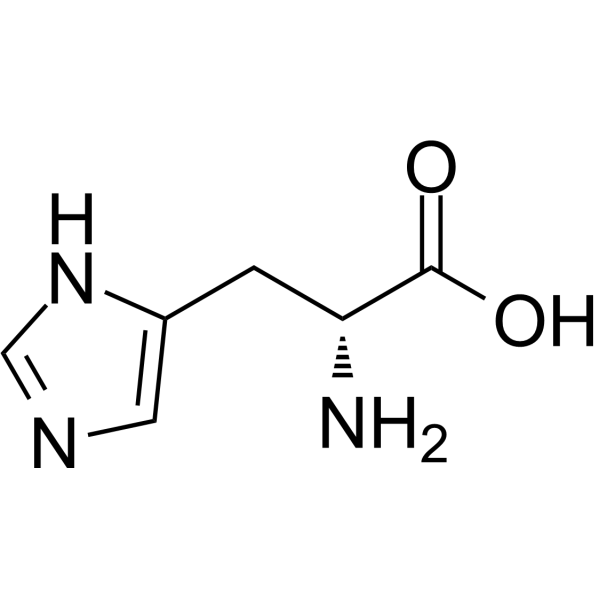
Cat. No.: HY-W012572
CAS No.: 351-50-8
D-Histidine is an anti-biofilm agent that targets bacterial quorum sensing systems (such as RhlI/RhlR pathway) and has antibacterial activity. D-Histidine works by non-covalently binding to bacterial regulatory factors or copper ion complexes, selectively inhibiting bacterial biofilm formation and motility. D-Histidine downregulates quorum sensing-related gene expression, reduces the synthesis of virulence factors (such as alginate and proteases), and interferes with bacterial membrane stability, inhibiting biofilm formation, promoting the disintegration of mature biofilms, and enhancing antibiotic sensitivity. D-Histidine is also an efficient catalyst for the salt-induced peptide formation (SIPF) reaction, which promotes the condensation of amino acids to form dipeptides (such as dialanine and dilysine) by forming a complex with copper ions (Cu 2+) .
loading...
    loading...
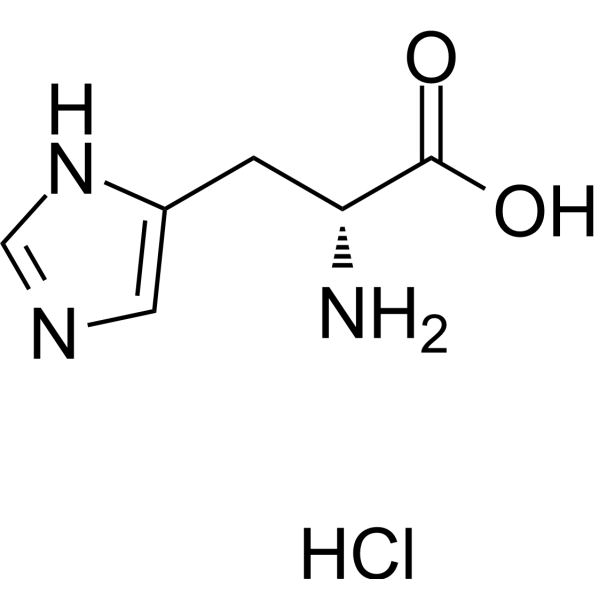
Cat. No.: HY-W012572A
CAS No.: 328526-86-9
D-Histidine hydrochloride hydrate is an anti-biofilm agent that targets bacterial quorum sensing systems (such as RhlI/RhlR pathway) and has antibacterial activity. D-Histidine hydrochloride hydrate works by non-covalently binding to bacterial regulatory factors or copper ion complexes, selectively inhibiting bacterial biofilm formation and motility. D-Histidine hydrochloride hydrate downregulates quorum sensing-related gene expression, reduces the synthesis of virulence factors (such as alginate and proteases), and interferes with bacterial membrane stability, inhibiting biofilm formation, promoting the disintegration of mature biofilms, and enhancing antibiotic sensitivity. D-Histidine hydrochloride hydrate is also an efficient catalyst for the salt-induced peptide formation (SIPF) reaction, which promotes the condensation of amino acids to form dipeptides (such as dialanine and dilysine) by forming a complex with copper ions (Cu 2+) .
loading...
    loading...
Cat. No.: HY-W012572R
CAS No.: 351-50-8
D-Histidine (Standard) is the analytical standard of D-Histidine (HY-W012572). This product is intended for research and analytical applications. D-Histidine is an anti-biofilm agent that targets bacterial quorum sensing systems (such as RhlI/RhlR pathway) and has antibacterial activity. D-Histidine works by non-covalently binding to bacterial regulatory factors or copper ion complexes, selectively inhibiting bacterial biofilm formation and motility. D-Histidine downregulates quorum sensing-related gene expression, reduces the synthesis of virulence factors (such as alginate and proteases), and interferes with bacterial membrane stability, inhibiting biofilm formation, promoting the disintegration of mature biofilms, and enhancing antibiotic sensitivity. D-Histidine is also an efficient catalyst for the salt-induced peptide formation (SIPF) reaction, which promotes the condensation of amino acids to form dipeptides (such as dialanine and dilysine) by forming a complex with copper ions (Cu 2+) .
loading...
    loading...
Cat. No.: HY-W142156
CAS No.: 6341-24-8
Research Areas:  

Others

D-Histidine monohydrochloride is a histidine derivative .
loading...
    loading...
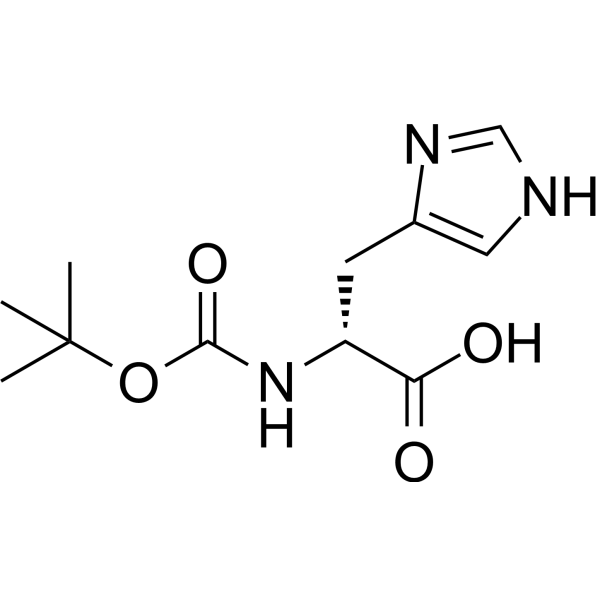
Cat. No.: HY-W052246
CAS No.: 50654-94-9
Research Areas:  

Others

(tert-Butoxycarbonyl)-D-histidine is a histidine derivative .
loading...
    loading...
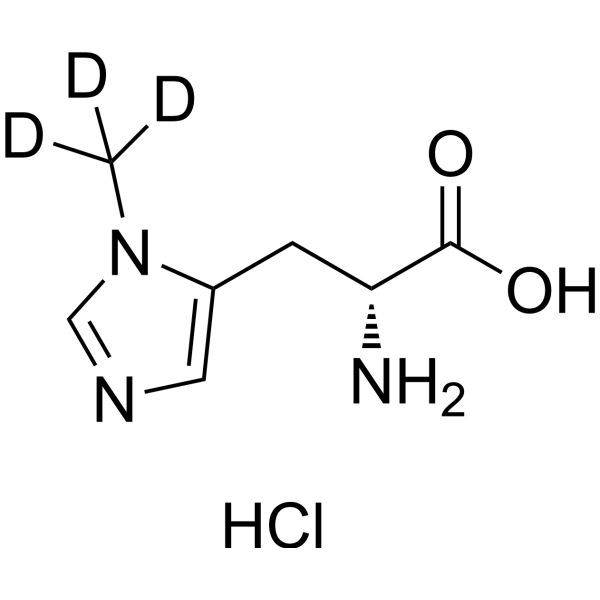
Cat. No.: HY-W017007SB
3-Methyl-D-histidine-d3 hydrochloride is the deuterium labeled 3-Methyl-D-histidine hydrochloride. 3-Methyl-D-histidine hydrochloride can be found in actin and myosin and is a derivative of histidine .
loading...
    loading...
Cat. No.: HY-W048701
CAS No.: 157355-79-8
Research Areas:  

Others

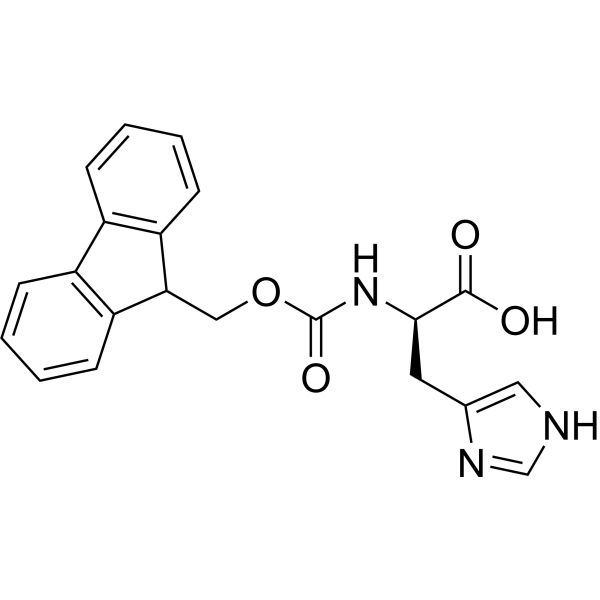
(((9H-Fluoren-9-yl)methoxy)carbonyl)-D-histidine is a histidine derivative .
loading...
    loading...
Cat. No.: HY-W051937
CAS No.: 393568-74-6
Research Areas:  

Others

N-[(1,1-Dimethylethoxy)carbonyl]-1-(triphenylmethyl)-D-histidine is a histidine derivative .
loading...
    loading...

