Search Result
Results for "
Direct dyes
" in MedChemExpress (MCE) Product Catalog:
3
Biochemical Assay Reagents
| Cat. No. |
Product Name |
Target |
Research Areas |
Chemical Structure |
-
- HY-D0333
-
|
Sirius Red
|
Amyloid-β
|
Others
|
|
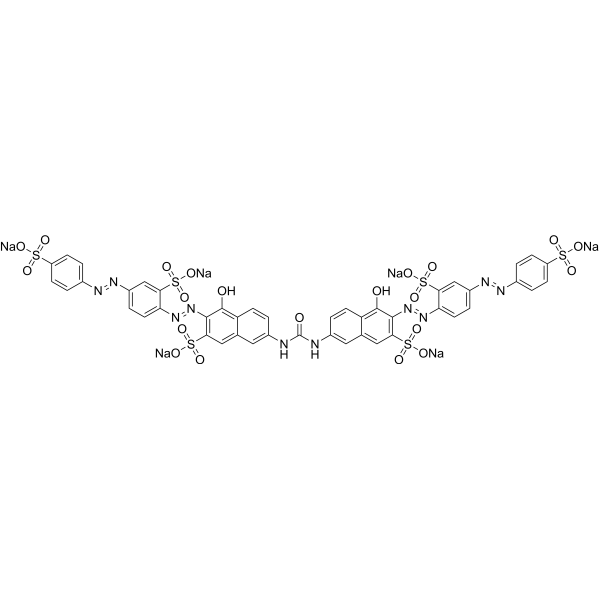
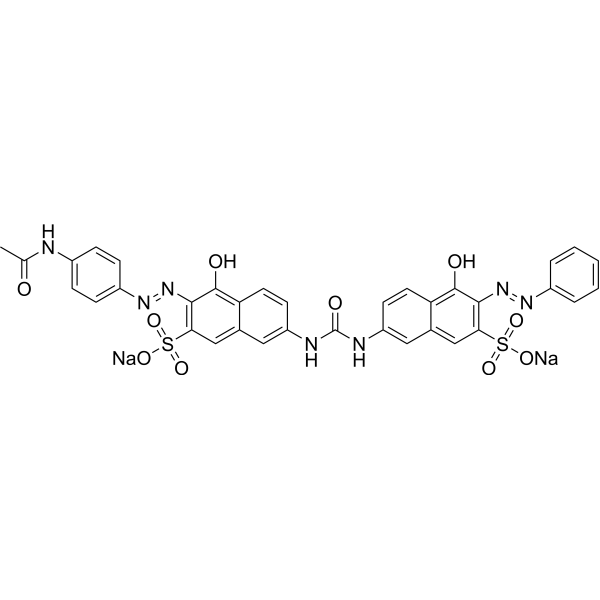
Direct Red 80 (Sirius Red) is a polyazo dye used principally in staining methods for collagen and amyloid. Direct Red 80 does not release benzidine upon degradation and is safer than many traditional direct dyes .
|
-
-
- HY-D0256
-
|
Chlorazol Black E; Ferristatin II disodium; C.I. 30235
|
Biochemical Assay Reagents
|
Others
|
|
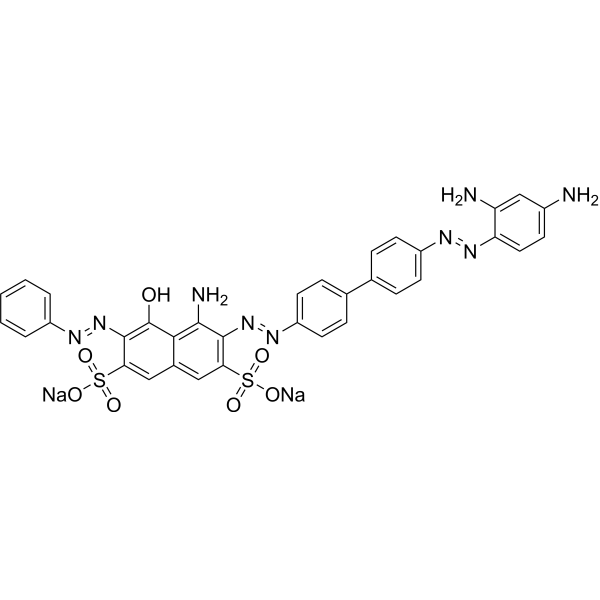
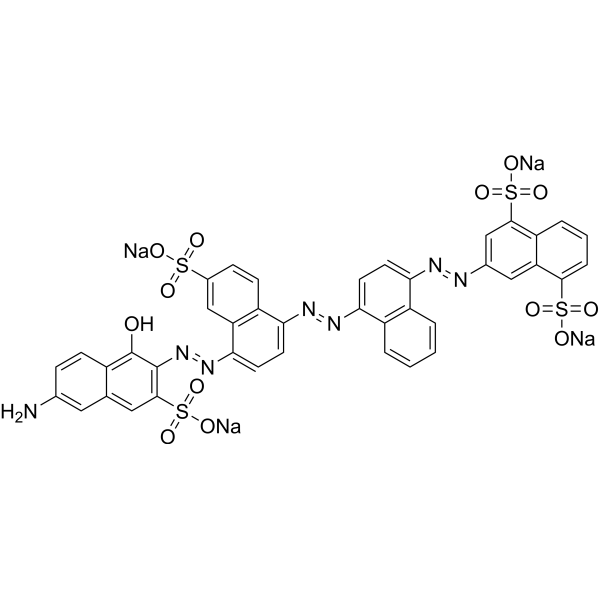
Direct Black 38 (Chlorazol Black E) is a benzidine-based azo dye, a substrate of Enterococcus gallinarum, and is mainly used for textile dyeing. Direct Black 38 is biodegradable after being reduced by microbial enzymes (such as Enterococcus gallinarum azoreductase), breaking the azo bonds and releasing benzidine and 4-aminobiphenyl. Direct Black 38 can be used in environmental toxicology, wastewater treatment and carcinogenicity studies, but its metabolite benzidine is listed as a human carcinogen .
|
-
-
- HY-D0166A
-
|
|
Biochemical Assay Reagents
|
Others
|
|
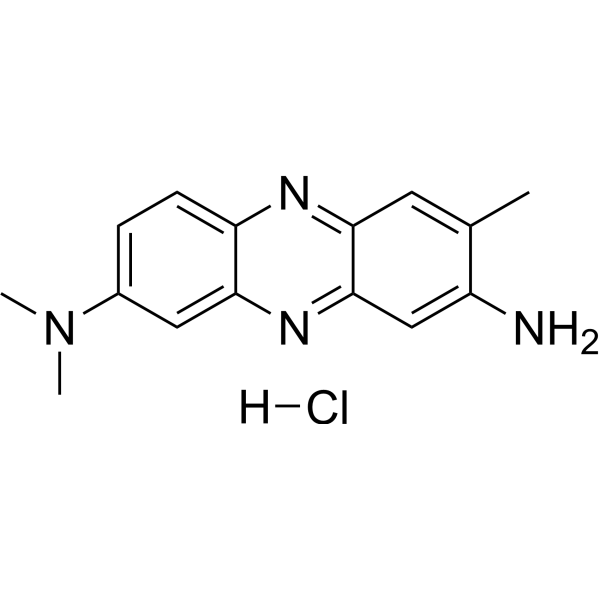
Neutral Red (IND) is an organic dye commonly used in biology and cytology laboratories. It can be used to stain living cells, secreted proteins and other molecular structures, etc., and has a wide range of applications in cell imaging and staining. In addition, Neutral Red (IND) is widely used in industrial fields such as water treatment, food processing and paper manufacturing, for example as an indicator or colorant. Although the compound has no direct medical application, it has important application value in the fields of biology, chemistry and industry.
|
-
-
- HY-D0939
-
|
Chicago Sky Blue 6B
|
Amyloid-β
NF-κB
|
Inflammation/Immunology
|
|
Direct Blue 1 (Chicago Sky Blue 6B) is a complex dye for background autofluorescence in immunofluorescence histochemistry. Direct Blue 1 is a potent and competitive VGLUT inhibitor. Direct Blue 1 can inhibit the Aβ-binding small molecule PrP ligand. Direct Blue 1 has anti-inflammatory activity .
|
-
-
- HY-D1725
-
|
|
Fluorescent Dye
DNA Stain
|
Others
|
|
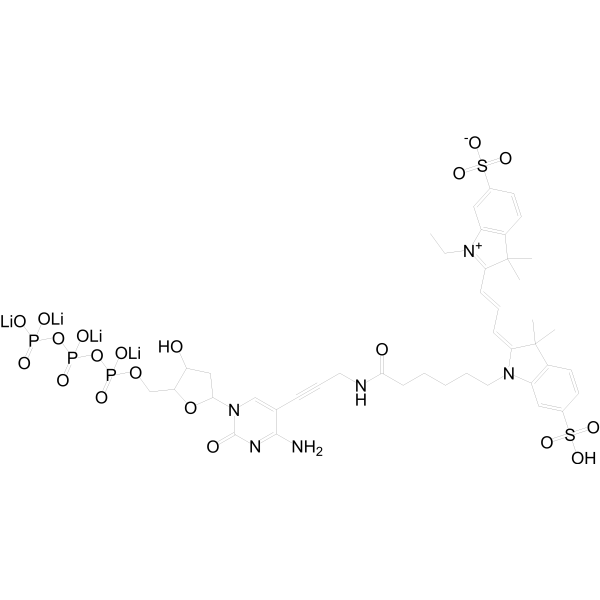
Cy3-dCTP is a directly fluorescently labeled deoxyribonucleotide, in which Cy3 is a cyanine fluorescent dye. Cy3-dCTP is used for direct enzymatic labeling of DNA and cDNA: with the aid of DNA polymerases, this modified nucleotide is incorporated into the extending DNA strand during processes such as reverse transcription, PCR, nick translation or random primer labeling .
|
-
-
- HY-D0953
-
|
Solvent Blue 38
|
Environmental Pollutants
Fluorescent Dye
|
Neurological Disease
|
|
Direct Blue 86 (Solvent Blue 38) is a myelin-sheath stain, commonly utilized in microscopy to detect demyelination in the central nervous system. Direct Blue 86 also is a dye with various applications including as a commercial dye in the printing of cotton and mucilage glue fabrics .
|
-
-
- HY-W800703
-
|
|
Fluorescent Dye
|
Others
|
|
Alexa Fluor 594 azide is an azide-modified fluorescent dye and also a FRET acceptor reactant. Owing to its negligible direct absorption under 488 nm excitation light, excellent photostability, and the ability of its azide group to participate in the CuAAC reaction, Alexa Fluor 594 azide can be paired with a donor dye for single-molecule imaging via TIRFM, thereby enabling the visual monitoring of CuNP-catalyzed click reactions .
|
-
-
- HY-B1937
-
|
Bio-Soft S 101 sodium
|
Environmental Pollutants
Biochemical Assay Reagents
|
Others
|
|
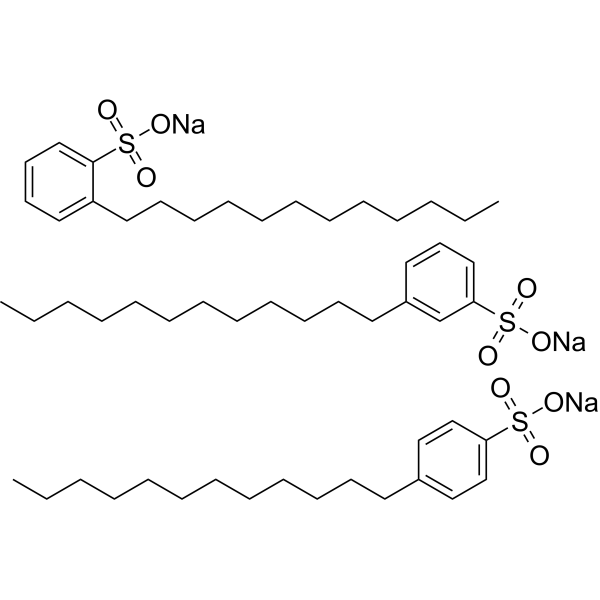
Sodium dodecylbenzenesulfonate (Bio-Soft S 101 sodium) is a nonionic surfactant commonly used in a variety of applications for cleaning and treating industrial equipment. It has good cleaning power and environmental compatibility, and can effectively remove oil, dirt and other forms of contamination. In addition, in textile, paper, leather and other industries, the compound can also be used for fixing and stabilizing dyes and colors. Although the compound has no direct application in the medical field, it plays an important role in industry and laboratory research.
|
-
-
- HY-121030
-
|
N-(7-Dimethylamino-4-methyl-3-coumarinyl)maleimide
|
Fluorescent Dye
|
Others
|
|
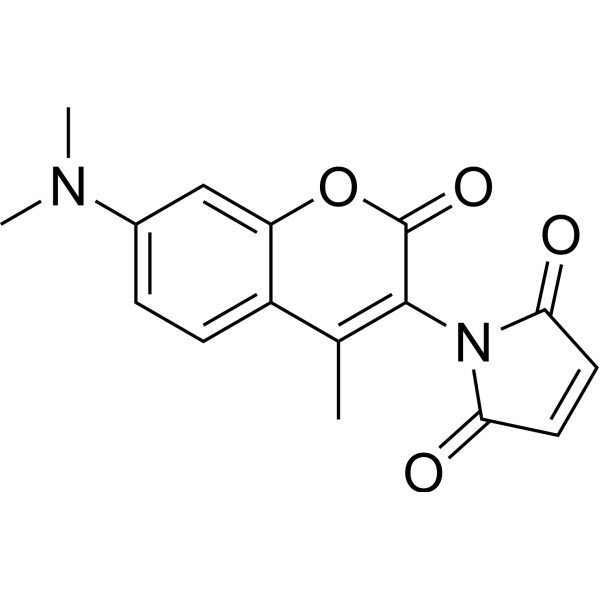
DACM (N-(7-Dimethylamino-4-methyl-3-coumarinyl)maleimide) is a thiol-directed fluorescent dye (Ex=396 nm, Em=468 nm) .
|
-
-
- HY-D0950A
-
|
|
DNA Stain
|
Others
|
|
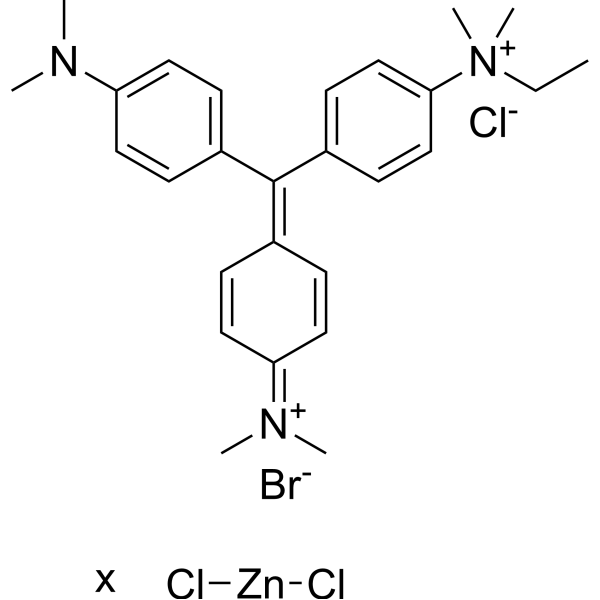
Methyl Green zinc chloride is a potent fluorescent dye. Methyl Green zinc chloride is a DNA stains of cells and electrophoretic gels. Methyl Green zinc chloride can be used as direct measuring of viability by both microscopy and flow cytometry, with peaks at 633 and 677 nm .
|
-
-
- HY-D1196
-
|
|
Fluorescent Dye
|
|
|
Direct Blue 71 is a good dyeing agent for cotton fabrics and can be adsorbed by palm ash and removed from the aqueous solution.
|
-
-
- HY-154834
-
|
|
Fluorescent Dye
|
Others
|
|
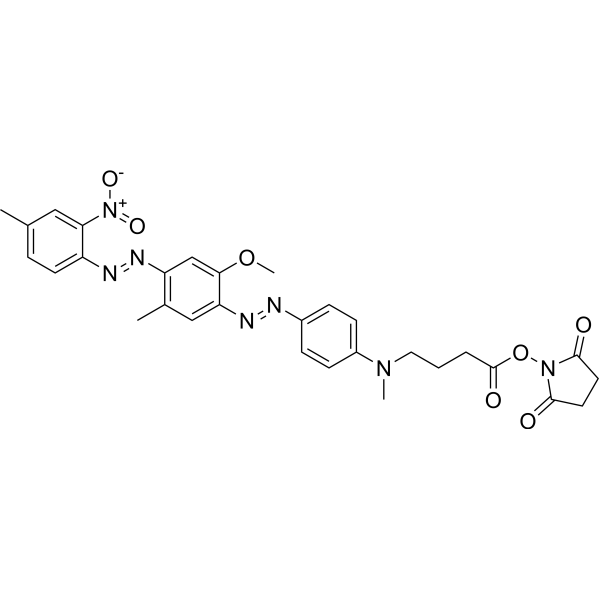
BHQ-1 NHS is a quencher and fluorescent dye. BHQ-1 NHS enables direct labeling via fluorescently labeled nucleotides .
|
-
-
- HY-D0245
-
-
-
- HY-D0563
-
|
|
Fluorescent Dye
|
Others
|
|
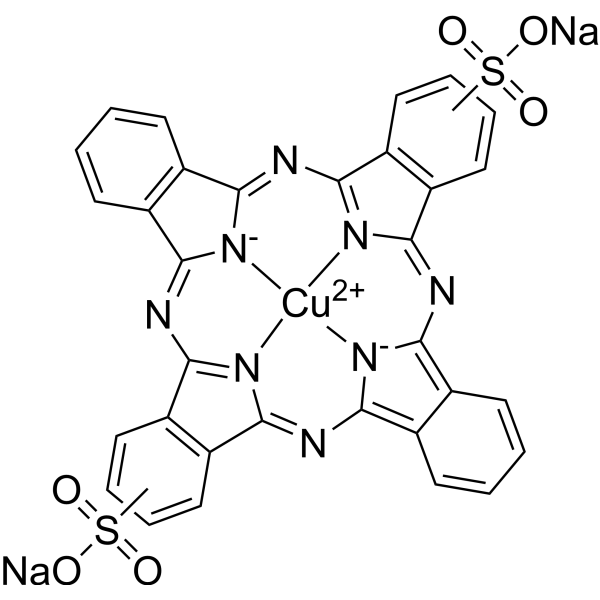
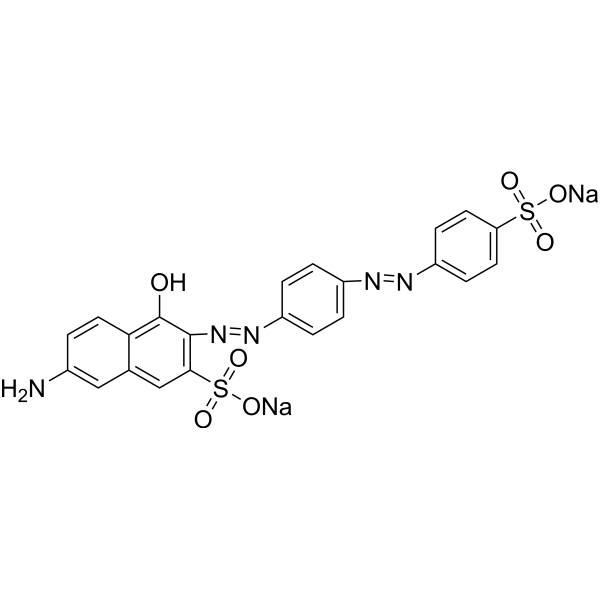
Direct yellow 86 is a multifunctional dye. Dyes are important tools in biological experiments. They can help researchers observe and analyze cell structures, track biomolecules, evaluate cell functions, distinguish cell types, detect biomolecules, study tissue pathology and monitor microorganisms. Their applications range from basic scientific research to clinical A wide range of diagnostics. Dyes are also widely used in traditional fields such as textile dyeing, as well as in emerging fields such as functional textile processing, food pigments and dye-sensitized solar cells.
|
-
-
- HY-D0485
-
|
|
Fluorescent Dye
|
Others
|
|
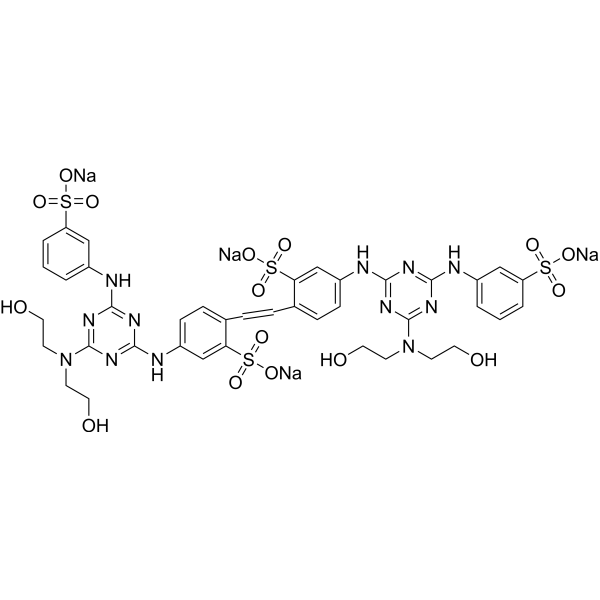
Fluorescent brightener 24 is a stilbene-type fluorescent brightener and fading regulator .
|
-
-
- HY-D0350
-
-
-
- HY-D1270
-
|
|
SARS-CoV
|
Infection
|
|
Direct Violet 1, an azo dye, is a textile dye. Direct Violet 1 is also the protein-protein interaction (PPI) between the SARS-CoV-2 spike protein and ACE2 inhibitor with IC50s of 1.47-2.63 μM .
|
-
-
- HY-W127722
-
-
-
- HY-D0404
-
|
|
Fluorescent Dye
|
Neurological Disease
|
|
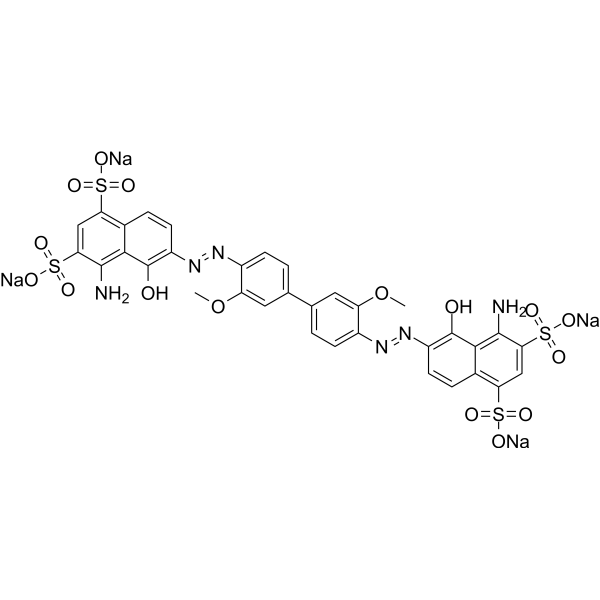
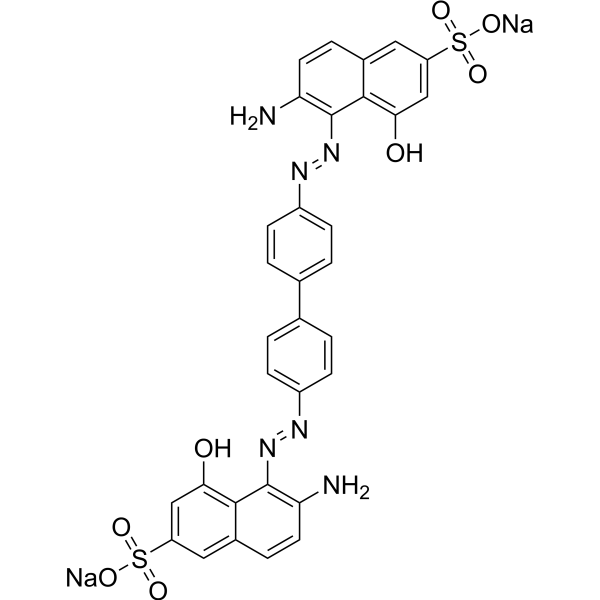
Direct Red 254 is a bisazo dye for textile applications. Direct Red 254 can be used for amyloid tissue staining in basic research on neurodegenerative diseases (e.g., Alzheimer's disease) .
|
-
-
- HY-D2253
-
|
|
Fluorescent Dye
|
Others
|
|
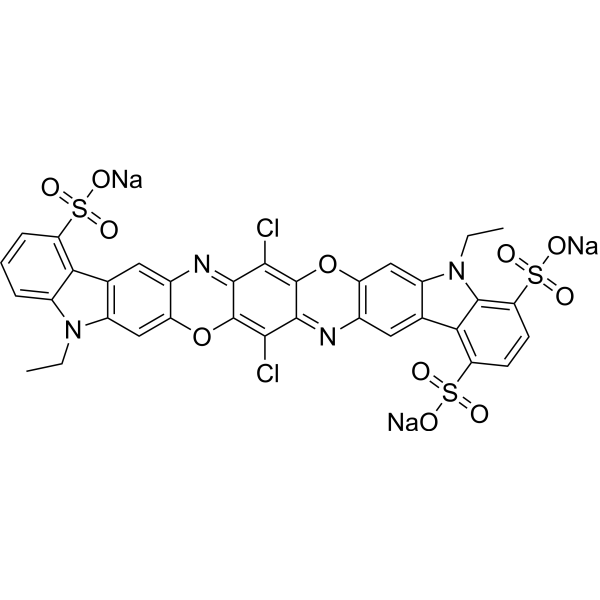
Direct Blue 108 has the structure of triphenyl two oxazine, and can be used in dyeing of cotton, viscose fiber, silk and its blended fabrics .
|
-
-
- HY-D0334
-
|
|
Fluorescent Dye
|
|
|
Direct Red 81 is a diazo dye with a very high water solubility. The dye adsorption efficiency of Direct Red 81 is increased by increasing the adsorbent dose and adsorption time .
|
-
-
- HY-D0539
-
-
-
- HY-D1183
-
-
-
- HY-D1207
-
|
|
Fluorescent Dye
|
|
|
Direct Orange 26 is a good dyeing agent for cotton fabrics.
|
-
-
- HY-D0648
-
-
-
- HY-D0518
-
-
-
- HY-D0774
-
|
|
Fluorescent Dye
|
|
|
Direct Black 168 is a good dyeing agent for cotton fabrics.
|
-
-
- HY-D0482
-
|
|
Fluorescent Dye
|
|
|
C.I. Direct blue 80 is a good dyeing agent for cotton fabrics.
|
-
-
- HY-D0419
-
|
|
Fluorescent Dye
|
|
|
C.I. Direct green 26 is a good dyeing agent for cotton fabrics.
|
-
-
- HY-D0465
-
|
|
Fluorescent Dye
|
|
|
C.I. Direct black 80 is a good dyeing agent for cotton fabrics.
|
-
-
- HY-D0256A
-
|
Chlorazol Black E free acid; Ferristatin II; C.I. 30235 free acid
|
Biochemical Assay Reagents
|
Others
|
|
Direct Black 38 (Chlorazol Black E; Ferristatin II disodium) free acid is a benzidine-based azo dye, a substrate of Enterococcus gallinarum, and is mainly used for textile dyeing. Direct Black 38 free acid is biodegradable after being reduced by microbial enzymes (such as Enterococcus gallinarum azoreductase), breaking the azo bonds and releasing benzidine and 4-aminobiphenyl. Direct Black 38 free acid can be used in environmental toxicology, wastewater treatment and carcinogenicity studies, but its metabolite benzidine is listed as a human carcinogen .
|
-
-
- HY-D0473
-
|
|
Fluorescent Dye
|
Others
|
|
C.I. Direct yellow 27 is a multifunctional dye. Dyes are important tools in biological experiments. They can help researchers observe and analyze cell structures, track biomolecules, evaluate cell functions, distinguish cell types, detect biomolecules, study tissue pathology and monitor microorganisms. Their applications range from basic scientific research to clinical A wide range of diagnostics. Dyes are also widely used in traditional fields such as textile dyeing, as well as in emerging fields such as functional textile processing, food pigments and dye-sensitized solar cells.
|
-
-
- HY-D0045
-
|
5-ROX, SE
|
Fluorescent Dye
|
Others
|
|
5-Carboxy-X-rhodamin N-succinimidyl ester (5-ROX, SE) is a labeling reagent. 5-Carboxy-X-rhodamin N-succinimidyl ester can be used in the preparation of charge-modified dye-labeled Dideoxynucleotide Triphosphates (ddNTP) to "direct-load" DNA sequencing .
|
-
-
- HY-D0898
-
|
|
Biochemical Assay Reagents
|
Others
|
|
2,4-Dichlorobenzenediazonium tetrafluoroborate is an organic compound commonly used in organic synthesis and dye preparation reactions. It can be used as an azotating agent to form azo dyes with other organic substances, and can be used in coatings, pigments and paints and other industries. In addition, the compound is widely used in certain chemical analysis and detection methods, such as in scientific instruments such as electron microscopes and mass spectrometers. Although the compound has no direct medical applications, it plays an important role in chemical research and laboratory studies.
|
-
-
- HY-D0247
-
|
Direct Yellow 12
|
Fluorescent Dye
|
|
|
ChrysophenineCI Direct black 80 is an azo dye.
|
-
-
- HY-D1035
-
-
-
- HY-D0401
-
-
-
- HY-D0361
-
-
-
- HY-D0483
-
|
|
Fluorescent Dye
|
|
|
Direct yellow 106 is a good dyeing agent for cotton fabrics.
|
-
-
- HY-D1165
-
-
-
- HY-D0338
-
|
|
Fluorescent Dye
|
|
|
Direct Yellow 26 is a good dyeing agent for cotton fabrics.
|
-
-
- HY-D0432
-
|
|
Fluorescent Dye
|
|
|
Direct yellow 34 is a good dyeing agent for cotton fabrics.
|
-
-
- HY-D1238
-
-
-
- HY-D0329
-
-
-
- HY-D0325
-
|
|
Fluorescent Dye
|
|
|
Direct Black BH sodium is a good dyeing agent for cotton fabrics.
|
-
-
- HY-D0540
-
-
-
- HY-D0683
-
|
|
Fluorescent Dye
|
|
|
Direct yellow 28 is a good dyeing agent for cotton fabrics.
|
-
-
- HY-D0658
-
-
-
- HY-D1226
-
|
|
Fluorescent Dye
|
|
|
Direct violet 51 is a good dyeing agent for cotton fabrics.
|
-
-
- HY-D0440
-
|
|
Fluorescent Dye
|
|
|
C.I. Direct green 28 is a good dyeing agent for cotton fabrics.
|
-
- HY-D0443
-
|
|
Fluorescent Dye
|
|
|
C.I. Direct black 22 is a good dyeing agent for cotton fabrics.
|
-
- HY-D0437
-
|
|
Fluorescent Dye
|
|
|
C.I. Direct blue 75 is a good dyeing agent for cotton fabrics.
|
-
- HY-D0396
-
|
DR16
|
Fluorescent Dye
|
|
|
C.I. Direct red 16 is a good dyeing agent for cotton fabrics.
|
-
- HY-D0451
-
|
|
Fluorescent Dye
|
|
|
C.I. Direct orange 102 is a good dyeing agent for cotton fabrics.
|
-
- HY-D0436
-
|
|
Fluorescent Dye
|
|
|
C.I. Direct black 32 is a good dyeing agent for cotton fabrics.
|
-
- HY-D0425
-
-
- HY-D0462
-
|
|
Fluorescent Dye
|
Others
|
|
Direct Yellow 44 is a multifunctional dye. Dyes are important tools in biological experiments. They can help researchers observe and analyze cell structures, track biomolecules, evaluate cell functions, distinguish cell types, detect biomolecules, study tissue pathology and monitor microorganisms. Their applications range from basic scientific research to clinical A wide range of diagnostics. Dyes are also widely used in traditional fields such as textile dyeing, as well as in emerging fields such as functional textile processing, food pigments and dye-sensitized solar cells.
|
-
- HY-D0397
-
|
|
Fluorescent Dye
|
Others
|
|
C.I. Direct Violet 9 is a multifunctional dye. Dyes are important tools in biological experiments. They can help researchers observe and analyze cell structures, track biomolecules, evaluate cell functions, distinguish cell types, detect biomolecules, study tissue pathology and monitor microorganisms. Their applications range from basic scientific research to clinical A wide range of diagnostics. Dyes are also widely used in traditional fields such as textile dyeing, as well as in emerging fields such as functional textile processing, food pigments and dye-sensitized solar cells.
|
-
- HY-D0456
-
|
|
Fluorescent Dye
|
Others
|
|
C.I. Direct violet 66 is a multifunctional dye. Dyes are important tools in biological experiments. They can help researchers observe and analyze cell structures, track biomolecules, evaluate cell functions, distinguish cell types, detect biomolecules, study tissue pathology and monitor microorganisms. Their applications range from basic scientific research to clinical A wide range of diagnostics. Dyes are also widely used in traditional fields such as textile dyeing, as well as in emerging fields such as functional textile processing, food pigments and dye-sensitized solar cells.
|
-
- HY-D1688
-
|
|
Fluorescent Dye
|
Others
|
|
Flubida-2 is a cell permeable dye which can be hydrolyzed to Fubi-2 by endoesterases in cells (after hydrolysis, Ex=492 nm, Em=517 nm). Flubida-2 can be used to detect pH at a specific site in a cell organelle by directing the probe to where avidin fusion proteins are located .
|
-
- HY-W800702
-
|
|
Fluorescent Dye
|
Others
|
|
BP Fluor 555 Azide is a water-soluble, bright orange-fluorescent dye with excitation ideally suited for the 532 nm or 555 nm laser lines and visualized with TRITC (tetramethylrhodamine) filter sets. BP Fluor 555 conjugates of antibodies, peptides, and proteins are pH insensitive from pH 4 to pH 10. AF 555 conjugates ideally suited for detection of low abundance targets.
BP Fluor 555 Azide can be reacted with terminal alkynes via a copper-catalyzed click reaction (CuAAC). It also reacts with strained cyclooctyne via a copper-free “click chemistry” reaction to form a stable triazole and does not require Cu-catalyst or elevated temperatures. The brightness and photostability of this dye are best suited to direct imaging of low-abundance targets.
|
-
- HY-B1937R
-
|
Bio-Soft S 101 sodium (Standard)
|
Biochemical Assay Reagents
Reference Standards
|
Others
|
|
Sodium dodecylbenzenesulfonate (Standard) is the analytical standard of Sodium dodecylbenzenesulfonate. This product is intended for research and analytical applications. Sodium dodecylbenzenesulfonate (Bio-Soft S 101 sodium) is a nonionic surfactant commonly used in a variety of applications for cleaning and treating industrial equipment. It has good cleaning power and environmental compatibility, and can effectively remove oil, dirt and other forms of contamination. In addition, in textile, paper, leather and other industries, the compound can also be used for fixing and stabilizing dyes and colors. Although the compound has no direct application in the medical field, it plays an important role in industry and laboratory research.
|
-
- HY-W800692
-
|
|
Fluorescent Dye
|
Others
|
|
BP Fluor 350 Azide is a blue-fluorescent, azide-activated probe that reacts with terminal alkynes via a copper-catalyzed click reaction (CuAAC). It also reacts with strained cyclooctyne via a copper-free click chemistry reaction to form a stable triazole and does not require Cu-catalyst or elevated temperatures.
BP Fluor 350 is a water-soluble, moderately photostable, blue-fluorescent probe optimally excited by the 350 nm laser line. It is routinely used for generation of stable signal in imaging and flow cytometry. The brightness and photostability of blue dyes are best suited to direct imaging of high-abundance targets.
|
-
- HY-W761989
-
|
|
Fluorescent Dye
|
Others
|
|
Direct Brown 95, a synthetic dye, finds extensive application in the textile industry for imparting color to fabrics. It serves as a stain in histology and cytology, aiding in the differentiation of diverse cell types. Additionally, it serves as a marker in molecular biology, facilitating the detection of DNA and RNA.
|
-
| Cat. No. |
Product Name |
Type |
-
- HY-D0333
-
|
Sirius Red
|
Fluorescent Dyes
|
|
Direct Red 80 (Sirius Red) is a polyazo dye used principally in staining methods for collagen and amyloid. Direct Red 80 does not release benzidine upon degradation and is safer than many traditional direct dyes .
|
-
- HY-D0256
-
|
Chlorazol Black E; Ferristatin II disodium; C.I. 30235
|
Fluorescent Dyes
|
|
Direct Black 38 (Chlorazol Black E) is a benzidine-based azo dye, a substrate of Enterococcus gallinarum, and is mainly used for textile dyeing. Direct Black 38 is biodegradable after being reduced by microbial enzymes (such as Enterococcus gallinarum azoreductase), breaking the azo bonds and releasing benzidine and 4-aminobiphenyl. Direct Black 38 can be used in environmental toxicology, wastewater treatment and carcinogenicity studies, but its metabolite benzidine is listed as a human carcinogen .
|
-
- HY-D0166A
-
|
|
Fluorescent Dyes
|
|
Neutral Red (IND) is an organic dye commonly used in biology and cytology laboratories. It can be used to stain living cells, secreted proteins and other molecular structures, etc., and has a wide range of applications in cell imaging and staining. In addition, Neutral Red (IND) is widely used in industrial fields such as water treatment, food processing and paper manufacturing, for example as an indicator or colorant. Although the compound has no direct medical application, it has important application value in the fields of biology, chemistry and industry.
|
-
- HY-D0939
-
|
Chicago Sky Blue 6B
|
Fluorescent Dyes
|
|
Direct Blue 1 (Chicago Sky Blue 6B) is a complex dye for background autofluorescence in immunofluorescence histochemistry. Direct Blue 1 is a potent and competitive VGLUT inhibitor. Direct Blue 1 can inhibit the Aβ-binding small molecule PrP ligand. Direct Blue 1 has anti-inflammatory activity .
|
-
- HY-D1725
-
|
|
Fluorescent Dyes
|
|
Cy3-dCTP is a directly fluorescently labeled deoxyribonucleotide, in which Cy3 is a cyanine fluorescent dye. Cy3-dCTP is used for direct enzymatic labeling of DNA and cDNA: with the aid of DNA polymerases, this modified nucleotide is incorporated into the extending DNA strand during processes such as reverse transcription, PCR, nick translation or random primer labeling .
|
-
- HY-121030
-
|
N-(7-Dimethylamino-4-methyl-3-coumarinyl)maleimide
|
Fluorescent Dyes
|
|
DACM (N-(7-Dimethylamino-4-methyl-3-coumarinyl)maleimide) is a thiol-directed fluorescent dye (Ex=396 nm, Em=468 nm) .
|
-
- HY-D0950A
-
|
|
Fluorescent Dyes
|
|
Methyl Green zinc chloride is a potent fluorescent dye. Methyl Green zinc chloride is a DNA stains of cells and electrophoretic gels. Methyl Green zinc chloride can be used as direct measuring of viability by both microscopy and flow cytometry, with peaks at 633 and 677 nm .
|
-
- HY-D1196
-
|
|
Fluorescent Dyes
|
|
Direct Blue 71 is a good dyeing agent for cotton fabrics and can be adsorbed by palm ash and removed from the aqueous solution.
|
-
- HY-D0245
-
-
- HY-D0563
-
|
|
Fluorescent Dyes
|
|
Direct yellow 86 is a multifunctional dye. Dyes are important tools in biological experiments. They can help researchers observe and analyze cell structures, track biomolecules, evaluate cell functions, distinguish cell types, detect biomolecules, study tissue pathology and monitor microorganisms. Their applications range from basic scientific research to clinical A wide range of diagnostics. Dyes are also widely used in traditional fields such as textile dyeing, as well as in emerging fields such as functional textile processing, food pigments and dye-sensitized solar cells.
|
-
- HY-D0350
-
-
- HY-D1270
-
|
|
Fluorescent Dyes
|
|
Direct Violet 1, an azo dye, is a textile dye. Direct Violet 1 is also the protein-protein interaction (PPI) between the SARS-CoV-2 spike protein and ACE2 inhibitor with IC50s of 1.47-2.63 μM .
|
-
- HY-W127722
-
-
- HY-D0404
-
|
|
Fluorescent Dyes
|
|
Direct Red 254 is a bisazo dye for textile applications. Direct Red 254 can be used for amyloid tissue staining in basic research on neurodegenerative diseases (e.g., Alzheimer's disease) .
|
-
- HY-D2253
-
|
|
Fluorescent Dyes
|
|
Direct Blue 108 has the structure of triphenyl two oxazine, and can be used in dyeing of cotton, viscose fiber, silk and its blended fabrics .
|
-
- HY-D0334
-
|
|
Fluorescent Dyes
|
|
Direct Red 81 is a diazo dye with a very high water solubility. The dye adsorption efficiency of Direct Red 81 is increased by increasing the adsorbent dose and adsorption time .
|
-
- HY-D0539
-
-
- HY-D1183
-
-
- HY-D1207
-
-
- HY-D0648
-
-
- HY-D0518
-
-
- HY-D0774
-
-
- HY-D0482
-
-
- HY-D0419
-
|
|
Fluorescent Dyes
|
|
C.I. Direct green 26 is a good dyeing agent for cotton fabrics.
|
-
- HY-D0465
-
|
|
Fluorescent Dyes
|
|
C.I. Direct black 80 is a good dyeing agent for cotton fabrics.
|
-
- HY-D0256A
-
|
Chlorazol Black E free acid; Ferristatin II; C.I. 30235 free acid
|
Fluorescent Dyes
|
|
Direct Black 38 (Chlorazol Black E; Ferristatin II disodium) free acid is a benzidine-based azo dye, a substrate of Enterococcus gallinarum, and is mainly used for textile dyeing. Direct Black 38 free acid is biodegradable after being reduced by microbial enzymes (such as Enterococcus gallinarum azoreductase), breaking the azo bonds and releasing benzidine and 4-aminobiphenyl. Direct Black 38 free acid can be used in environmental toxicology, wastewater treatment and carcinogenicity studies, but its metabolite benzidine is listed as a human carcinogen .
|
-
- HY-D0473
-
|
|
Fluorescent Dyes
|
|
C.I. Direct yellow 27 is a multifunctional dye. Dyes are important tools in biological experiments. They can help researchers observe and analyze cell structures, track biomolecules, evaluate cell functions, distinguish cell types, detect biomolecules, study tissue pathology and monitor microorganisms. Their applications range from basic scientific research to clinical A wide range of diagnostics. Dyes are also widely used in traditional fields such as textile dyeing, as well as in emerging fields such as functional textile processing, food pigments and dye-sensitized solar cells.
|
-
- HY-D0247
-
|
Direct Yellow 12
|
Fluorescent Dyes
|
|
ChrysophenineCI Direct black 80 is an azo dye.
|
-
- HY-D1035
-
-
- HY-D0401
-
-
- HY-D0361
-
-
- HY-D0483
-
-
- HY-D1165
-
-
- HY-D0338
-
-
- HY-D0432
-
-
- HY-D1238
-
-
- HY-D0329
-
-
- HY-D0325
-
|
|
Fluorescent Dyes
|
|
Direct Black BH sodium is a good dyeing agent for cotton fabrics.
|
-
- HY-D0540
-
-
- HY-D0683
-
-
- HY-D0658
-
-
- HY-D1226
-
-
- HY-D0440
-
|
|
Fluorescent Dyes
|
|
C.I. Direct green 28 is a good dyeing agent for cotton fabrics.
|
-
- HY-D0443
-
|
|
Fluorescent Dyes
|
|
C.I. Direct black 22 is a good dyeing agent for cotton fabrics.
|
-
- HY-D0437
-
-
- HY-D0396
-
|
DR16
|
Fluorescent Dyes
|
|
C.I. Direct red 16 is a good dyeing agent for cotton fabrics.
|
-
- HY-D0451
-
|
|
Fluorescent Dyes
|
|
C.I. Direct orange 102 is a good dyeing agent for cotton fabrics.
|
-
- HY-D0436
-
|
|
Fluorescent Dyes
|
|
C.I. Direct black 32 is a good dyeing agent for cotton fabrics.
|
-
- HY-D0425
-
-
- HY-D0462
-
|
|
Fluorescent Dyes
|
|
Direct Yellow 44 is a multifunctional dye. Dyes are important tools in biological experiments. They can help researchers observe and analyze cell structures, track biomolecules, evaluate cell functions, distinguish cell types, detect biomolecules, study tissue pathology and monitor microorganisms. Their applications range from basic scientific research to clinical A wide range of diagnostics. Dyes are also widely used in traditional fields such as textile dyeing, as well as in emerging fields such as functional textile processing, food pigments and dye-sensitized solar cells.
|
- HY-D0397
-
|
|
Fluorescent Dyes
|
|
C.I. Direct Violet 9 is a multifunctional dye. Dyes are important tools in biological experiments. They can help researchers observe and analyze cell structures, track biomolecules, evaluate cell functions, distinguish cell types, detect biomolecules, study tissue pathology and monitor microorganisms. Their applications range from basic scientific research to clinical A wide range of diagnostics. Dyes are also widely used in traditional fields such as textile dyeing, as well as in emerging fields such as functional textile processing, food pigments and dye-sensitized solar cells.
|
- HY-D0456
-
|
|
Fluorescent Dyes
|
|
C.I. Direct violet 66 is a multifunctional dye. Dyes are important tools in biological experiments. They can help researchers observe and analyze cell structures, track biomolecules, evaluate cell functions, distinguish cell types, detect biomolecules, study tissue pathology and monitor microorganisms. Their applications range from basic scientific research to clinical A wide range of diagnostics. Dyes are also widely used in traditional fields such as textile dyeing, as well as in emerging fields such as functional textile processing, food pigments and dye-sensitized solar cells.
|
- HY-D1688
-
|
|
Fluorescent Dyes
|
|
Flubida-2 is a cell permeable dye which can be hydrolyzed to Fubi-2 by endoesterases in cells (after hydrolysis, Ex=492 nm, Em=517 nm). Flubida-2 can be used to detect pH at a specific site in a cell organelle by directing the probe to where avidin fusion proteins are located .
|
- HY-W800702
-
|
|
Fluorescent Dyes
|
|
BP Fluor 555 Azide is a water-soluble, bright orange-fluorescent dye with excitation ideally suited for the 532 nm or 555 nm laser lines and visualized with TRITC (tetramethylrhodamine) filter sets. BP Fluor 555 conjugates of antibodies, peptides, and proteins are pH insensitive from pH 4 to pH 10. AF 555 conjugates ideally suited for detection of low abundance targets.
BP Fluor 555 Azide can be reacted with terminal alkynes via a copper-catalyzed click reaction (CuAAC). It also reacts with strained cyclooctyne via a copper-free “click chemistry” reaction to form a stable triazole and does not require Cu-catalyst or elevated temperatures. The brightness and photostability of this dye are best suited to direct imaging of low-abundance targets.
|
- HY-W800692
-
|
|
Fluorescent Dyes
|
|
BP Fluor 350 Azide is a blue-fluorescent, azide-activated probe that reacts with terminal alkynes via a copper-catalyzed click reaction (CuAAC). It also reacts with strained cyclooctyne via a copper-free click chemistry reaction to form a stable triazole and does not require Cu-catalyst or elevated temperatures.
BP Fluor 350 is a water-soluble, moderately photostable, blue-fluorescent probe optimally excited by the 350 nm laser line. It is routinely used for generation of stable signal in imaging and flow cytometry. The brightness and photostability of blue dyes are best suited to direct imaging of high-abundance targets.
|
| Cat. No. |
Product Name |
Type |
-
- HY-B1937
-
|
Bio-Soft S 101 sodium
|
Biochemical Assay Reagents
|
|
Sodium dodecylbenzenesulfonate (Bio-Soft S 101 sodium) is a nonionic surfactant commonly used in a variety of applications for cleaning and treating industrial equipment. It has good cleaning power and environmental compatibility, and can effectively remove oil, dirt and other forms of contamination. In addition, in textile, paper, leather and other industries, the compound can also be used for fixing and stabilizing dyes and colors. Although the compound has no direct application in the medical field, it plays an important role in industry and laboratory research.
|
-
- HY-D0898
-
|
|
Biochemical Assay Reagents
|
|
2,4-Dichlorobenzenediazonium tetrafluoroborate is an organic compound commonly used in organic synthesis and dye preparation reactions. It can be used as an azotating agent to form azo dyes with other organic substances, and can be used in coatings, pigments and paints and other industries. In addition, the compound is widely used in certain chemical analysis and detection methods, such as in scientific instruments such as electron microscopes and mass spectrometers. Although the compound has no direct medical applications, it plays an important role in chemical research and laboratory studies.
|
-
- HY-B1937R
-
|
Bio-Soft S 101 sodium (Standard)
|
Biochemical Assay Reagents
|
|
Sodium dodecylbenzenesulfonate (Standard) is the analytical standard of Sodium dodecylbenzenesulfonate. This product is intended for research and analytical applications. Sodium dodecylbenzenesulfonate (Bio-Soft S 101 sodium) is a nonionic surfactant commonly used in a variety of applications for cleaning and treating industrial equipment. It has good cleaning power and environmental compatibility, and can effectively remove oil, dirt and other forms of contamination. In addition, in textile, paper, leather and other industries, the compound can also be used for fixing and stabilizing dyes and colors. Although the compound has no direct application in the medical field, it plays an important role in industry and laboratory research.
|
-
- HY-K0537
-
|
|
|
MCE Blood Direct PCR Kit (with Dye) is specifically designed for direct amplification from blood samples. It enables PCR amplification directly from whole blood without the need for conventional DNA extraction and purification steps, thereby significantly simplifying the workflow and improving detection efficiency.
|
-
- HY-K0536
-
|
|
|
MCE Mouse Tissue Direct PCR Kit – Pro (with Dye) is specifically designed for direct PCR amplification from tissue samples. It enables rapid, one-step release of genomic DNA from various mouse tissues (such as tail, ear, toe, and muscle), which can be directly used for downstream PCR amplification and analysis without the need for conventional DNA extraction and purification steps, thereby significantly simplifying the experimental workflow.
|
-
- HY-K0534
-
|
|
|
MCE Mouse Tissue Direct PCR Kit (with Dye) is specifically designed for direct PCR amplification from tissue samples. It enables rapid, one-step release of genomic DNA from various mouse tissues (such as tail, ear, toe, and muscle), which can be directly used for downstream PCR amplification and analysis without the need for conventional DNA extraction and purification steps, thereby significantly simplifying the experimental workflow.
|
-
- HY-K0539
-
|
|
|
MCE Plant Tissue Direct PCR Kit (with Dye) is specifically designed for direct amplification from various plant leaf samples. The kit enables rapid release of genomic DNA from plant tissues (such as rice, maize, tobacco, rapeseed, etc.) in a single step. The resulting lysate can be directly used for downstream PCR amplification without the need for conventional DNA extraction and purification, thereby significantly simplifying the experimental workflow.
|
-
- HY-K0538
-
|
|
|
MCE Animal Tissue Direct PCR Kit (with Dye) is specifically designed for direct amplification from a variety of animal tissue samples. It enables rapid release of genomic DNA from animal tissues (such as insect legs/wings, mouse tails, ears, toes, skin, and internal organs) in a single step, allowing the lysate to be used directly for downstream PCR amplification without the need for conventional DNA extraction and purification procedures, thereby significantly simplifying the workflow.
|
| Cat. No. |
Product Name |
|
Classification |
-
- HY-D1725
-
|
|
|
Labeling and Fluorescence Imaging
|
|
Cy3-dCTP is a directly fluorescently labeled deoxyribonucleotide, in which Cy3 is a cyanine fluorescent dye. Cy3-dCTP is used for direct enzymatic labeling of DNA and cDNA: with the aid of DNA polymerases, this modified nucleotide is incorporated into the extending DNA strand during processes such as reverse transcription, PCR, nick translation or random primer labeling .
|
-
- HY-W800703
-
|
|
|
Azide
|
|
Alexa Fluor 594 azide is an azide-modified fluorescent dye and also a FRET acceptor reactant. Owing to its negligible direct absorption under 488 nm excitation light, excellent photostability, and the ability of its azide group to participate in the CuAAC reaction, Alexa Fluor 594 azide can be paired with a donor dye for single-molecule imaging via TIRFM, thereby enabling the visual monitoring of CuNP-catalyzed click reactions .
|
Your information is safe with us. * Required Fields.
Inquiry Information
- Product Name:
- Cat. No.:
- Quantity:
- MCE Japan Authorized Agent:

