1. Search Result
Search Result
Results for "

Fe(II)

" in MedChemExpress (MCE) Product Catalog:

16

Inhibitors & Agonists

2

Fluorescent Dye

1

Biochemical Assay Reagents

2

Natural
Products

Cat. No. Product Name Target Research Areas Chemical Structure
  • HY-D0221

    NSC 112125; 2,4,6-Tipyidyl-s-tiazie

    MOFs Fluorescent Dye Others
    2,4,6-Tri-2-pyridinyl-1,3,5-triazine (NSC 112125) is a colorimetric reagent for detecting iron. 2,4,6-Tri-2-pyridinyl-1,3,5-triazine forms a complex with Fe (II) and can be quantified as a measure of iron concentration by colorimetric detection at 594 nm .
    2,4,6-Tri-2-pyridinyl-1,3,5-triazine
  • HY-W345885

    β-glucuronidase Metabolic Disease
    Saccharic acid is a competitive and potent inhibitor of β-glucuronidase. Saccharic acid inhibits glucuronide synthesis. Saccharic acid as an efficient iron chelate to enhance photo-Fenton
    degradation of organic contaminants .
    Saccharic acid
  • HY-D2339

    Fluorescent Dye Others
    H-FluNox is a selective fluorescent probe that senses labile heme using biomimetic N-oxide deoxygenation to trigger fluorescence. H-FluNox is more than 100-fold selective for labile heme over Fe(II), enabling the discrimination of labile heme from labile Fe(II) pools in living cells. H-FluNox is sensitive enough to detect the subcellular labile heme. (λex=490 nm, λem=535 nm)
    H-FluNox
  • HY-114524
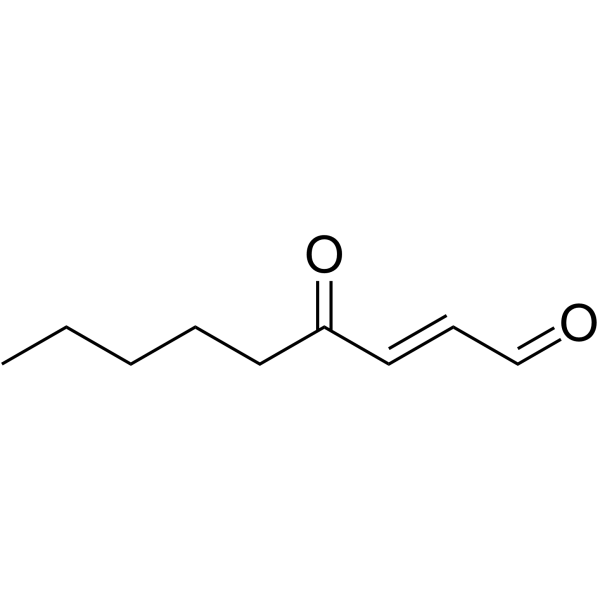
    (E)-4-Oxo-2-nonenal
    1 Publications Verification

    4-ONE

    TRP Channel Cardiovascular Disease
    (E)-4-Oxo-2-nonenal (4-ONE) is one of the major hemolytic decomposition products of lipid hydroperoxides. (E)-4-Oxo-2-nonenal is a major product of the FeII-mediated breakdown of lipid hydroperoxides. (E)-4-Oxo-2-nonenal is a potent transient receptor potential ankyrin 1 (TRPA1) agonist .
    (E)-4-Oxo-2-nonenal
  • HY-120420

    Antibiotic Cancer
    N4Py is a pentadentate ligand, that forms a stable complex with metal ions, such as iron, platinum, and copper. N4py mimics the metal binding domains of iron-dependent antibiotics like Bleomycin(HY-17565), forms the DNA-cleaving FeII-N4Py complexes, generates reactive oxygen species (ROS), and causes oxidative damage in cells. N4py can be used in cancer research .
    N4Py
  • HY-175698

    ACSL Family Ferroptosis Microtubule/Tubulin COX Glutathione Peroxidase Cancer
    Ferroptosis inducer-9 is a ferroptosis inducer and colchicine site tubulin polymerization inhibitor. Ferroptosis inducer-9 inhibits MCF-7 cell growth with an IC50 of 14 nM and inhibits [ 3H]colchicine binding. Ferroptosis inducer-9 reduces expression of GPX4 and FTH, increases COX2 and ACSL4, lowers GSH, NADP+, and NADPH levels, increases LPO, MDA, and Fe(II) levels, and decreases SOD concentrations. Ferroptosis inducer-9 demonstrates significant anti-tumor efficacy in HCT116 CRC xenograft model. Ferroptosis inducer-9 can be used for the study of triple negative breast cancer (TNBC) and colorectal cancer (CRC) .
    Ferroptosis inducer-9
  • HY-157917

    Biochemical Assay Reagents Others
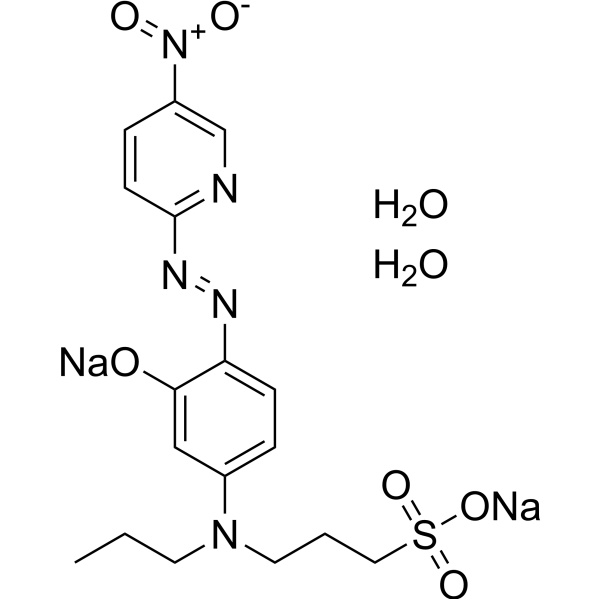
    Nitro-PAPS disodium dihydrate is a highly sensitive colometric reagent for Fe(II) detection with a maximal absorption wavelength of 592 nm. Nitro-PAPS disodium dihydrate is suitable for the determination of Fe(II) in serum and also be used to determine micro molar levels of Cu, Zn, Ni, Co and V .
    Nitro-PAPS disodium dihydrate
  • HY-148340

    Biochemical Assay Reagents Others
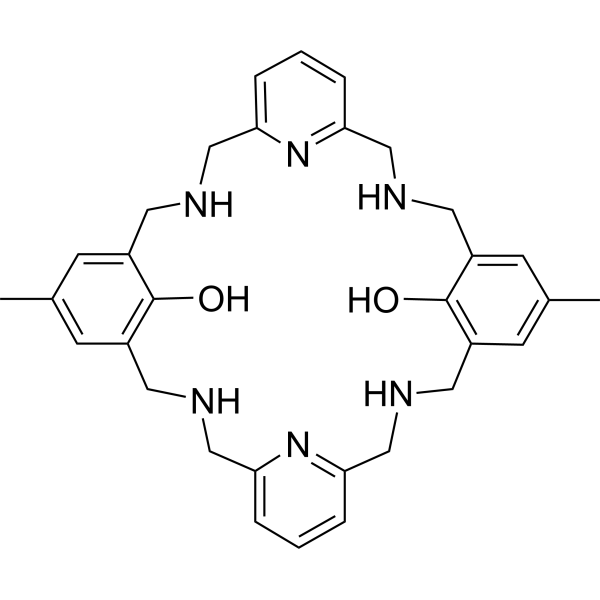
    24RBPyBC is a dinucleating macrocyclic ligand, it contains phenolate pyridine, bipyridine, and amino groups form dinuclear Fe(II) and Fe(III) complexes .
    24RBPyBC
  • HY-W130303

    N-Acetylacetamide; Diacetylamine; Diacetimide

    Biochemical Assay Reagents Others
    Diacetamide is shown to form a variety of new compounds with a general formula [M(C4H7O2N) 3](ClO4)2, where M = Mn(II), Fe(II), Co(II), Ni(II), or Zn(II). Diacetamide ligands can be used in uranium extraction from wastewater. Diacetamide can be used for amidase synthesis .
    Diacetamide
  • HY-E70583

    TET Protein Others
    Recombinant Ten-Eleven Translocase is a recombinant Fe(II)- and α-ketoglutarate-dependent dioxygenase. Recombinant Ten-Eleven Translocase converts 5-methylcytosine (5mC) to 5-hydroxymethylcytosine (5hmC), and then to 5-formylcytosine (5fC) and 5-carboxycytosine (5caC) through a series of oxidation reactions. Then, 5caC is further converted into uracil (U) through the action of a conversion agent or enzyme, and uracil (U) is converted into thymine (T) through PCR, thereby achieving single-base resolution and high-accuracy identification of DNA methylation sites .
    Recombinant Ten-Eleven Translocase
  • HY-138185

    SF 2738A

    Bacterial Apoptosis Cancer
    Collismycin A is a bacterial metabolite originally isolated from Streptomyces that has diverse biological activities, including antibacterial, antiproliferative, and neuroprotective properties. It is active against a variety of bacteria (MICs=6.25 and 100 μg/mL) and fungi (MICs=12.5-100 μg/mL). It inhibits proliferation of A549 lung, HCT116 colon, and HeLa cervical cancer cells (IC50s=0.3, 0.6, and 0.3 μM, respectively) and NIH373 fibroblasts (IC50=56.6 μM) but not MDA-MD-231 breast cancer cells (IC50=>100 μM). Collismycin A forms a complex with Fe(II) and Fe(III) at a 2:1 ratio, and the addition of iron ions inhibits the antiproliferative effect of collismycin A on HeLa cells, an effect that does not occur with the addition of zinc, manganese, copper, or magnesium ions.3 Collismycin A (1 μM) prevents apoptosis in the brain region of zebrafish larvae in a model of neuronal cell death induced by all-trans retinoic acid.
    Collismycin A
  • HY-E70905

    Endogenous Metabolite Metabolic Disease
    Taurine Dioxygenase, E. coli (EC 1.14.11.17) is a Fe(II) and α-ketoglutaric aciddependent dioxygenase, which enables E.coli to use taurine as a sulfur source. Taurine Dioxygenase catalyzes the conversion of the amino acid taurine (2-aminoethane-1-sulfonic acid) to sulfite and aminoacetaldehyde.
    Taurine Dioxygenase, E. coli
  • HY-149151

    Endogenous Metabolite PKC Glycosidase TNF Receptor Reactive Oxygen Species (ROS) Infection Inflammation/Immunology
    Variegatic acid is a secondary metabolite derived from basidiomycete fungi. Variegatic acid is a PKCβ1 inhibitor with an IC₅₀ of 36.2 μM. Variegatic acid inhibits antigen- or calcium ionophore-induced β-hexosaminidase release (IC₅₀ values of 10.4 μM and 22.2 μM, respectively) and TNF-α secretion (IC₅₀ values of 16.8 μM and 20.1 μM, respectively). Variegatic acid suppresses the enzymatic activity of calcium-activated PKCβ1 and reduces Fe(III) to Fe(II) in a pH-dependent manner, enabling the generation of hydroxyl radicals (·OH) through reaction with H₂O₂, which facilitates the degradation of lignocellulose. Variegatic acid is useful for studying biological degradation and allergic responses.
    Variegatic acid
  • HY-E71279

    Biochemical Assay Reagents Others
    β-Carotene 3-hydroxylase (EC 1.14.13.129) requires ferredoxin and Fe (II) . Also acts on other carotenoids with a β-end group.
    β-Carotene 3-hydroxylase
  • HY-183618

    PROTACs Histone Demethylase Cancer
    DW-229 is a PROTAC degrader derived from Deferiprone (HY-B0568), targeting Fe(II)/α‑ketoglutarate‑dependent histone lysine demethylases (KDMs). DW-229 degrades KDM2A, KDM3A, KDM5B, KDM4A‑C, KDM5C, KDM6B in breast cancer cells. DW-229 shows IC50 < 0.5 μM against MCF‑7 cells and IC50 of 8.87 μM against MDA‑MB‑231 cells, with high cancer cell selectivity. DW-229 can be used for the research of breast cancer, liver cancer, prostate cancer, lung cancer .
    DW-229
  • HY-182675

    Antibiotic Bacterial Infection
    Antibiotic adjuvant 5 (Compound 2) acts as an Antibiotic adjuvant. Antibiotic adjuvant 5 enhances the activity of Azithromycin (HY-17506), Clarithromycin (HY-17508), Doripenem (HY-B0187) and Rifampin (HY-B0272) against *Pseudomonas aeruginosa* PAO1. When used in combination with Azithromycin, Antibiotic adjuvant 5 increases the survival rate of *Galleria mellonella* during *Pseudomonas aeruginosa* PAO1 infection. Antibiotic adjuvant 5 is applicable for the research of *Pseudomonas aeruginosa* infection .
    Antibiotic adjuvant 5

Inquiry Online

Your information is safe with us. * Required Fields.

Salutation


Country or Region *

Applicant Name *


Organization Name *

Department *


Email Address *


Product Name *

Cat. No.


Requested quantity *

Phone Number *


Remarks

Inquiry Online

Inquiry Information

Product Name:
Cat. No.:
Quantity:
MCE Japan Authorized Agent:

