1. Search Result
Search Result
Results for "

Fragile

" in MedChemExpress (MCE) Product Catalog:

24

Inhibitors & Agonists

5

Natural
Products

1

Antibodies

Cat. No. Product Name Target Research Areas Chemical Structure
  • HY-N0794
    Proanthocyanidins
    4 Publications Verification

    Bacterial Fungal Infection Cardiovascular Disease Inflammation/Immunology Cancer
    Proanthocyanidin (Procyanidin) are a class of polyphenolic that are widely distributed in higher plants, consisted of an electrophilic flavanyl unit. Proanthocyanidin can be used as antioxidant and anti-cancers agent. Proanthocyanidin also exhibit anti-inflammatory, cardioprotective, antibacterial and antifungal properties, which can be used in the treatment of chronic venous insufficiency, capillary fragility, sunburn and retinopathy. .
    Proanthocyanidins
  • HY-15257
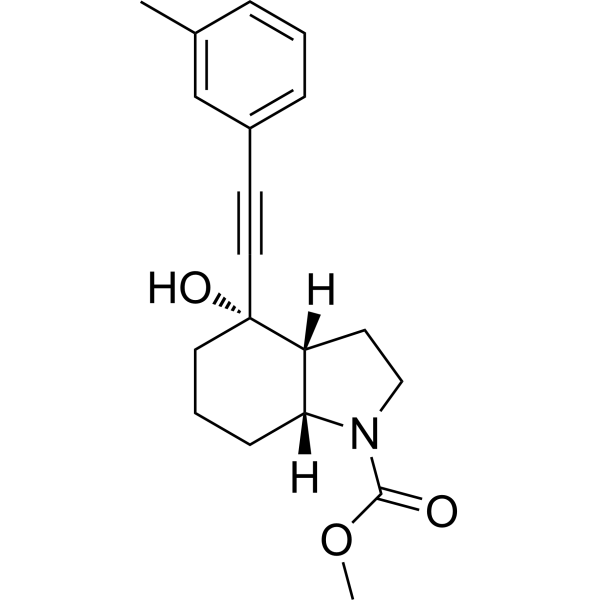
    Mavoglurant
    4 Publications Verification

    AFQ056

    mGluR Neurological Disease
    Mavoglurant (AFQ056) is a potent, selective, non-competitive and orally active mGluR5 antagonist, with an IC50 of 30 nM. Mavoglurant shows a >300 fold selectivity for the mGluR5 over all targets (238) tested. Mavoglurant can be used for the research of Fragile X syndrome (FXS), and L-dopa induced dyskinesias in Parkinson's disease . Mavoglurant is a click chemistry reagent, it contains an Alkyne group and can undergo copper-catalyzed azide-alkyne cycloaddition (CuAAc) with molecules containing Azide groups.
    Mavoglurant
  • HY-15446
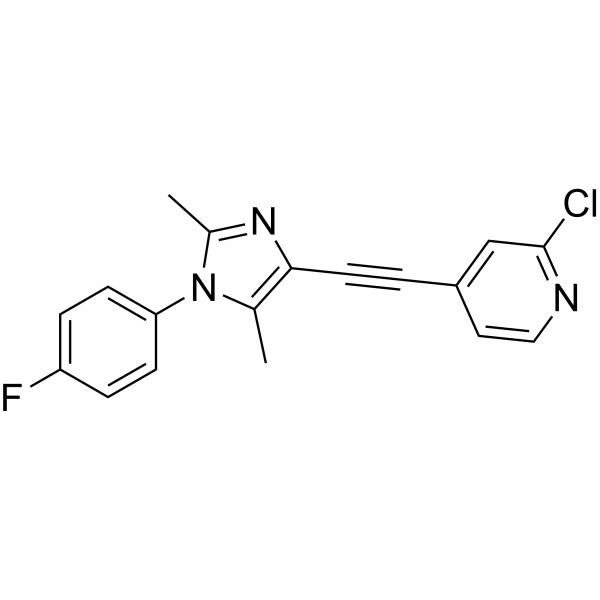
    Basimglurant
    1 Publications Verification

    RG7090; RO4917523

    mGluR Neurological Disease
    Basimglurant (RG7090; RO4917523) is a selective, orally active, blood-brain barrier permeable negative allosteric modulator of metabotropic glutamate receptor 5 (mGluR5), with a Ki of 1.4 nM (against [ 3H]-ABP688 (HY-110141)) and 35.6 nM (against [ 3H]-MPEP (HY-14609A)). Basimglurant inhibits mGlu5-mediated signaling pathways and receptor constitutive activity, regulates dopamine levels in the nucleus accumbens, exerts anxiolytic, antidepressant-like, analgesic and arousal-promoting effects, and alters δ-wave power during non-rapid eye movement sleep. Basimglurant can be used in research on depression, fragile X syndrome, anxiety disorders, etc .
    Basimglurant
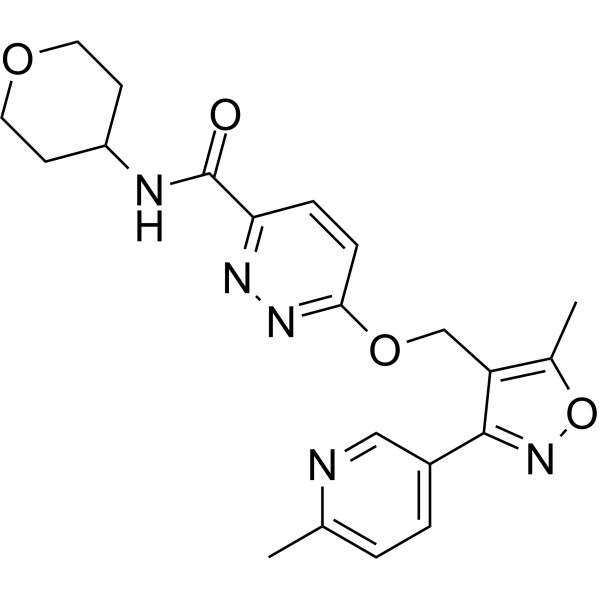
  • HY-132806

    RG-7816; RO-7017773

    GABA Receptor Neurological Disease
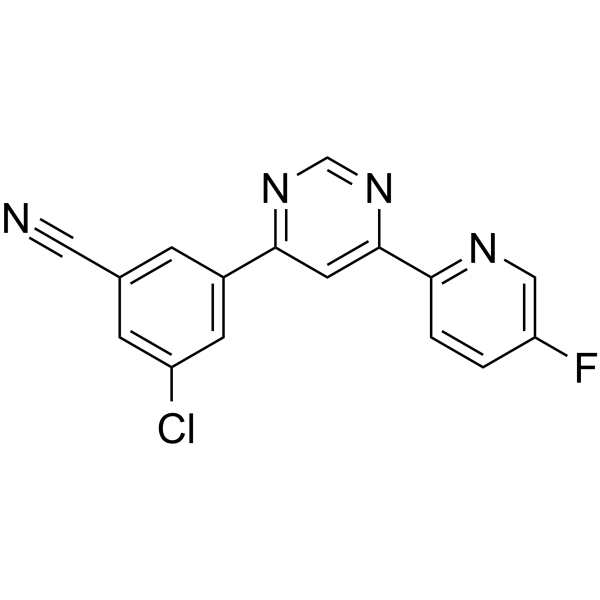
    Alogabat is a positive allosteric modulator (PAM) and agonist (Ki <100 nM) of the GABAA α5 receptor, targeting the α5β3γ2 subunit with a Ki of 8.7 nM. Alogabat increases the expression level of α5β3γ2 in oocytes (1.97-fold). GABAA has been implicated in cognitive impairment associated with central nervous system (CNS) disorders, brain cancer (including brain tumors such as medulloblastoma), and can be used in the study of mild cognitive impairment (MCI), amnestic MCI (aMCI), age-associated memory impairment (AAMI), age-related cognitive decline (ARCD), dementia, Alzheimer's disease (AD), prodromal AD, post-traumatic stress disorder (PTSD), schizophrenia, bipolar disorder, amyotrophic lateral sclerosis (ALS), cognitive impairment associated with cancer treatment, mental retardation, Parkinson's disease (PD), autism spectrum disorder, fragile X, Rett syndrome, obsessive-compulsive behavior, and substance addiction .
    Alogabat
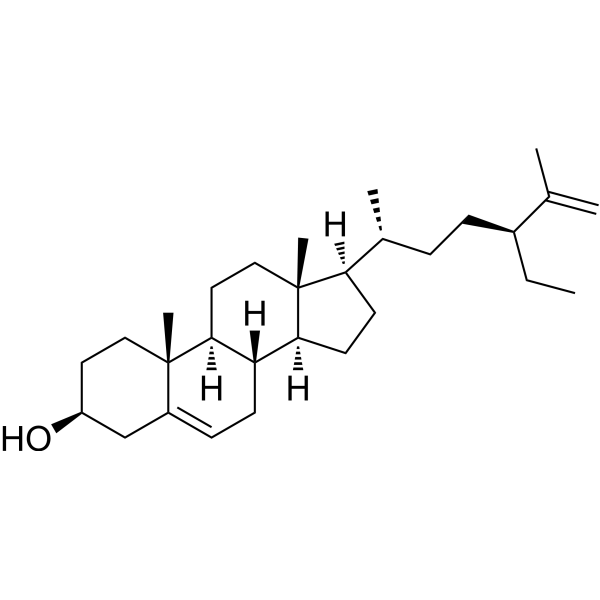
  • HY-129159

    Apoptosis Caspase Bcl-2 Family Others
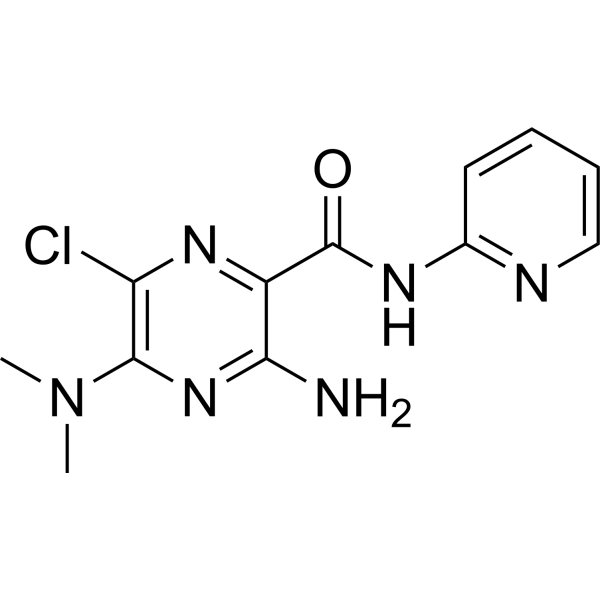
    (-)-Clerosterol is a natural product that can be isolated from Codium fragile .
    (-)-Clerosterol
  • HY-170781

    LIM Kinase (LIMK) Metabolic Disease
    MDI-114215 (compound 85) is an allosteric LIMK1/2 dual inhibitor with good in vivo tolerance. MDI-114215 can inhibit cofilin phosphorylation in mouse brain region-induced pluripotent stem cells (iPSCs), which can be used for Fragile X Syndrome (FXS) research .
    MDI-114215
  • HY-W062697
    HTL14242
    1 Publications Verification

    HTL0014242

    mGluR Neurological Disease
    HTL14242 (HTL0014242) is an advanced and orally active mGlu5 NAM with a pKi and a pIC50 of 9.3 and 9.2, respectively . HTL14242 can be used for the research of parkinson’s disease .
    HTL14242
  • HY-103564

    mGluR Neurological Disease
    ACDPP is a specific mGluR5 antagonist. ACDPP partially bolcks the increase of fragile X mental retardation protein (FMRP) caused by DHPG (HY-12598A) (group I mGluR Agonist) .
    ACDPP
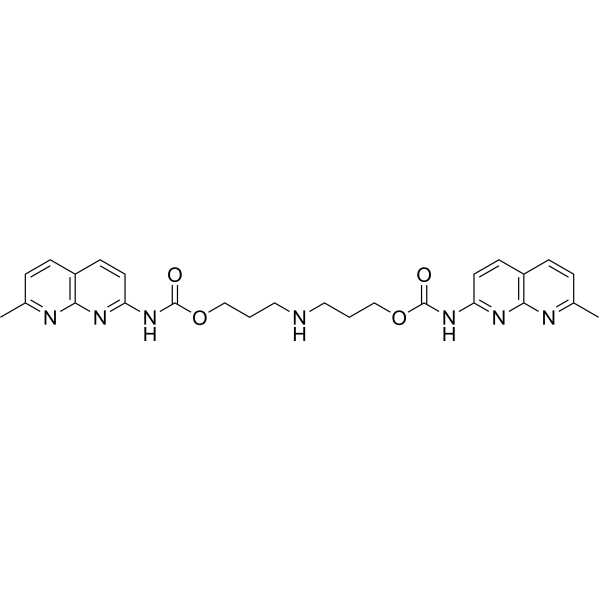
  • HY-145996

    Biochemical Assay Reagents Cardiovascular Disease Infection
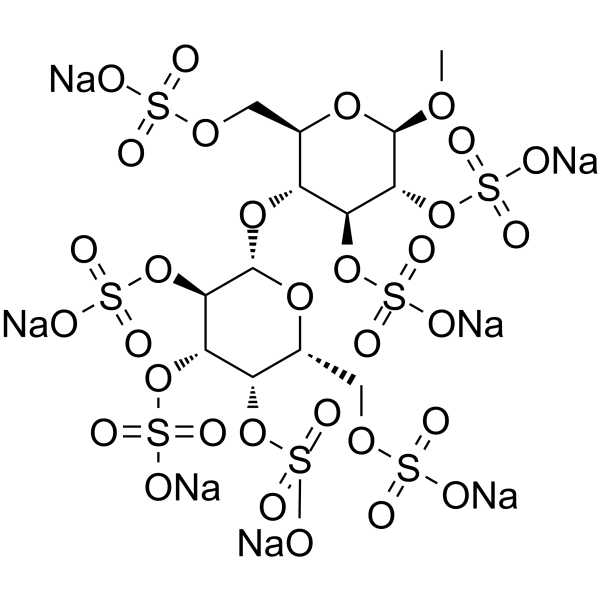
    STC314 is a histone-neutralizing agent. STC314 inhibits histone-mediated cytotoxicity, blocks histone-induced erythrocyte aggregation, reduces fragility, restores deformability and inhibits histone-induced aggregation and degranulation in human erythrocytes. STC314 reduces histone-mediated tissue damage, thrombocytopenia, anemia, and cell death, and improves survival in preclinical models. STC314 can be used for the research of sepsis, ischemia-reperfusion injury, and deep-vein thrombosis .
    STC314
  • HY-W773779

    GSK-3 Neurological Disease Metabolic Disease Cancer
    GSK3-IN-9 (Compound 0713) is a selective glycogen synthase kinase 3 (GSK3) inhibitor. GSK3-IN-9 Fragile X syndrome, attention deficit hyperactivity disorder (ADHD), childhood seizure, intellectual disability, diabetes, acute myeloid leukemia (AML), autism, and psychiatric disorder .
    GSK3-IN-9
  • HY-174229

    LIM Kinase (LIMK) Neurological Disease Cancer
    SM311 (Compound 10), a chemical probe, is a potent selective irreversible LIMK1 inhibitor (EC50=0.045 μM, >30-fold selective over LIMK2). SM311 blocks cofilin phosphorylation and actin cytoskeleton regulation. SM311 is promising for research of neurodegenerative diseases like Fragile X syndrome (FXS) and Alzheimer’s disease, as well as tumor invasion .
    SM311
  • HY-N4145

    Cinnamtannin A3; Cinnamtannin II

    Drug Derivative Bacterial Fungal Infection Cardiovascular Disease Inflammation/Immunology Cancer
    Procyanidin A3 (Cinnamtannin A3; Cinnamtannin II) is a sub class of Proanthocyanidins (HY-N0794). Proanthocyanidin are a class of polyphenolic that are widely distributed in higher plants, consisted of an electrophilic flavanyl unit. Proanthocyanidin can be used as antioxidant and anti-cancer agent. Proanthocyanidin also exhibit anti-inflammatory, cardioprotective, antibacterial and antifungal properties, which can be used in the treatment of chronic venous insufficiency, capillary fragility, sunburn and retinopathy .
    Procyanidin A3
  • HY-129159R

    Others Reference Standards Others
    (-)-Clerosterol (Standard) is the analytical standard of (-)-Clerosterol. This product is intended for research and analytical applications. (-)-Clerosterol is a natural product that can be isolated from Codium fragile .
    (-)-Clerosterol (Standard)
  • HY-121503

    Others Neurological Disease
    FD44 is a phenothiazine small molecule that inhibits the interaction between neuronal calcium sensor 1 (NCS-1) and the guanine exchange factor Ric8a, a key regulator of synapse number and neurotransmitter release probability. In the Drosophila genetic autism model of fragile X syndrome (FXS), FD44 restored normal synapse number and associative learning .
    FD44
  • HY-155238

    GABA Receptor Neurological Disease
    E2730 is a noncompetitive but selective inhibitor of gamma-aminobutyric acid (GABA) transporter 1 (GAT1) with orally available and antiepileptic activity. E2730-mediated GAT1 inhibition is positively correlated with environmental GABA levels and selectively inhibits GAT1-mediated GABA uptake. E2730 (5-50 mg/kg; po) in rat amygdala ignition model, and in mouse cornea ignition (5-50 mg/kg), drug resistance 6Hz-44mA has demonstrated in vivo efficacy in models of psychomotor epilepsy (5-50 mg/kg), fragile X syndrome (2.5-300 mg/kg), and Dravet syndrome (10 mg/kg, 20 mg/kg) .
    E2730
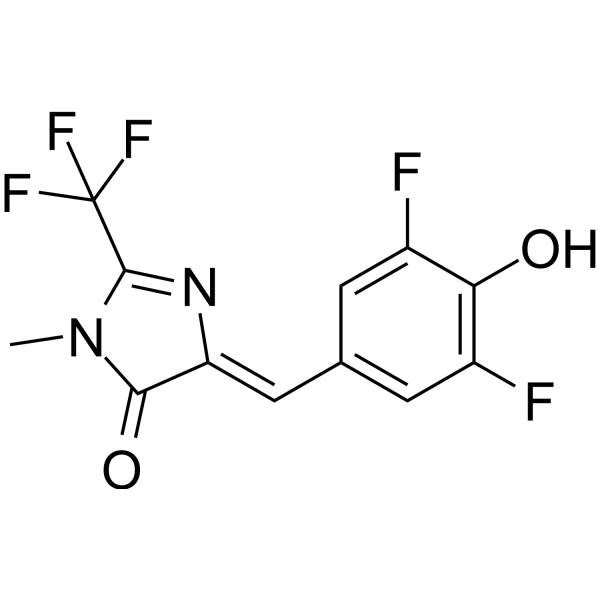
  • HY-176856

    Potassium Channel Neurological Disease
    Maxi-K modulator 1 (Example 1) is a Maximum conductance calcium-activated potassium (Maxi-K) channel modulator. Maxi-K modulator 1 has a potent stimulating effect on Maxi-K channel activity. Maxi-K modulator 1 can be used for fragile X syndrome research .
    Maxi-K modulator 1
  • HY-148717

    Others Neurological Disease
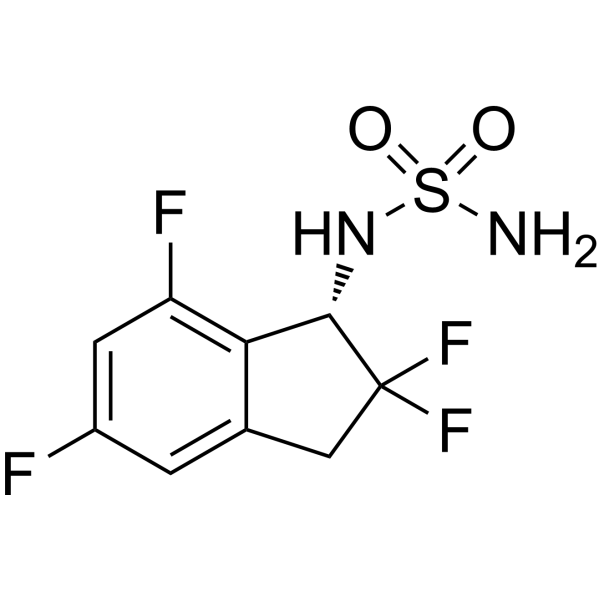
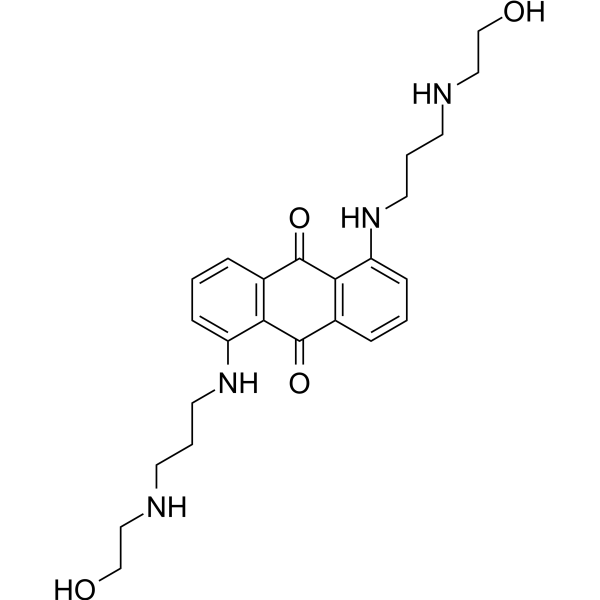
    NSC363998 (free base) is an orally active compound. NSC363998 (free base) can suppress rCGG90 induced neurotoxicity. NSC363998 (free base) can be used for the research of neurodegenerative disorder such as Fragile X associated tremor/ataxia syndrome (FXTAS) .
    NSC363998 free base
  • HY-15257R

    AFQ056 (Standard)

    mGluR Reference Standards Neurological Disease
    Mavoglurant (Standard) is the analytical standard of Mavoglurant. This product is intended for research and analytical applications. Mavoglurant (AFQ056) is a potent, selective, non-competitive and orally active mGluR5 antagonist, with an IC50 of 30 nM. Mavoglurant shows a >300 fold selectivity for the mGluR5 over all targets (238) tested. Mavoglurant can be used for the research of Fragile X syndrome (FXS), and L-dopa induced dyskinesias in Parkinson's disease . Mavoglurant is a click chemistry reagent, it contains an Alkyne group and can undergo copper-catalyzed azide-alkyne cycloaddition (CuAAc) with molecules containing Azide groups.
    Mavoglurant (Standard)
  • HY-N16480

    Lindetannin trimer

    Drug Derivative Bacterial Fungal Infection Cardiovascular Disease Inflammation/Immunology Cancer
    Lindetannin (Lindetannin trimer) is an A-type trimer of proanthocyanidin (HY-N0794) found in the bark of Cinnamomum trees. Proanthocyanidin are a class of polyphenolic that are widely distributed in higher plants, consisted of an electrophilic flavanyl unit. Proanthocyanidin can be used as antioxidant and anti-cancer agent. Proanthocyanidin also exhibit anti-inflammatory, cardioprotective, antibacterial and antifungal properties, which can be used in the treatment of chronic venous insufficiency, capillary fragility, sunburn and retinopathy .
    Lindetannin
  • HY-181828

    iGluR Dopamine Receptor Neurological Disease
    SePP is a blood-brain barrier-permeable NMDAR antagonist and dopamine/norepinephrine reuptake inhibitor, with a Ki of 28.7 nM for rat NMDAR. SePP exerts anticonvulsant effects. SePP can be used in research related to fragile X syndrome .
    SePP
  • HY-182587

    mAChR Neurological Disease
    VU0415248 is a selective muscarinic acetylcholine receptor 1 (M1) inhibitor. VU0415248 inhibits acetylcholine-induced calcium mobilization in cells expressing human and rat M1 muscarinic acetylcholine receptors, with an IC50 of 0.4 and 0.18 μM, respectively. VU0415248 is applicable to the research of Parkinson's disease, movement disorders and fragile X syndrome .
    VU0415248
  • HY-114515

    RG7090 sulfate; RO4917523 sulfate

    mGluR Neurological Disease
    Basimglurant (RG7090; RO4917523) sulfate is a selective, orally active, blood-brain barrier permeable negative allosteric modulator of metabotropic glutamate receptor 5 (mGluR5), with a Ki of 1.4 nM (against [ 3H]-ABP688 (HY-110141)) and 35.6 nM (against [ 3H]-MPEP (HY-14609A)). Basimglurant sulfate inhibits mGlu5-mediated signaling pathways and receptor constitutive activity, regulates dopamine levels in the nucleus accumbens, exerts anxiolytic, antidepressant-like, analgesic and arousal-promoting effects, and alters δ-wave power during non-rapid eye movement sleep. Basimglurant sulfate can be used in research on depression, fragile X syndrome, anxiety disorders, etc .
    Basimglurant sulfate
  • HY-15446R

    RG7090 (Standard); RO4917523 (Standard)

    Reference Standards mGluR Neurological Disease
    Basimglurant (RG7090; RO4917523) (Standard) is the analytical standard of Basimglurant. This product is intended for research and analytical applications. Basimglurant is a selective, orally active, blood-brain barrier permeable negative allosteric modulator of metabotropic glutamate receptor 5 (mGluR5), with a Ki of 1.4 nM (against [ 3H]-ABP688 (HY-110141)) and 35.6 nM (against [ 3H]-MPEP (HY-14609A)). Basimglurant inhibits mGlu5-mediated signaling pathways and receptor constitutive activity, regulates dopamine levels in the nucleus accumbens, exerts anxiolytic, antidepressant-like, analgesic and arousal-promoting effects, and alters δ-wave power during non-rapid eye movement sleep. Basimglurant can be used in research on depression, fragile X syndrome, anxiety disorders, etc.
    Basimglurant (Standard)
  • HY-125444

    LIM Kinase (LIMK) Neurological Disease Cancer
    TH251 is a LIMK1 and LIMK2 inhibitor with IC50s of 52 nM and 47 nM against LIMK1 and LIMK2, respectively. TH251 binds to inactive αC-out and DFG-out LIMK1 conformations, inhibits unphosphorylated LIMK1 and LIMK2 enzymatic activity, and exhibits unchanged potency despite PAK-mediated phosphorylation of either kinase. TH251 can be used for the research of cancers, glaucoma, and CNS diseases .
    TH251

Inquiry Online

Your information is safe with us. * Required Fields.

Salutation


Country or Region *

Applicant Name *


Organization Name *

Department *


Email Address *


Product Name *

Cat. No.


Requested quantity *

Phone Number *


Remarks

Inquiry Online

Inquiry Information

Product Name:
Cat. No.:
Quantity:
MCE Japan Authorized Agent:

