17 Results for "

IRF-1

" in MedChemExpress (MCE) Product Catalog:
Products (17)

17 Results for "IRF-1" in MCE Product Catalog:

1
1 Cited Publications
Cat. No.: HY-171006
CAS No.: 701225-07-2
IRF1-IN-1 (Compound I-2) is an IRF1 inhibitor. IRF1-IN-1 decreases the recruitment of IRF1 to the promoter of CASP1. IRF1-IN-1 inhibits cell death signaling pathway (i.e., cleavage of Caspase 1, GSDMD, IL-1 and PARP1). IRF1-IN-1 has a protective effect on ionizing radiation-induced inflammatory skin injury [1].
1
1 Cited Publications
Cat. No.: HY-108052
CAS No.: 6906-38-3
Purity:  99.89%
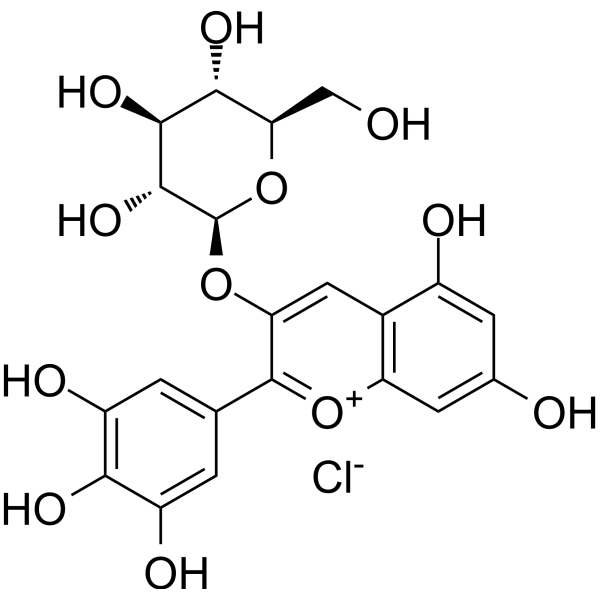
Synonyms: Delphinidin 3-O-glucoside chloride; Delphinidin 3-O-β-glucoside chloride
Delphinidin 3-glucoside chloride (Delphinidin 3-O-glucoside chloride) is an active anthocyanin found in Hibiscus sabdariffa extract. Delphinidin 3-glucoside chloride induces a pro-apoptotic effect in B cell chronic lymphocytic leukaemia (B CLL) [1]. Delphinidin 3-glucoside chloride exerts phytoestrogen activity by binding to ERβ, with an IC50 of 9.7 μM . Delphinidin-3-O-glucoside chloride inhibits EGFR with an IC50 of 2.37 µM . Delphinidin 3-glucoside chloride exhibits antitumor effects through pAKT/IRF1/HOTAIR pathway. Delphinidin 3-glucoside chloride exhibits efficacy against oxidative stress, inhibits platelet activation and endothelial dysfunction .
1
1 Cited Publications
Cat. No.: HY-171007
CAS No.: 708245-32-3
IRF1-IN-2 (Compound I-19) is an IRF1 inhibitor. IRF1-IN-2 decreases the recruitment of IRF1 to the promoter of CASP1. IRF1-IN-2 inhibits cell death signaling pathway (i.e., cleavage of Caspase 1, GSDMD, IL-1 and PARP1; inhibits the Pho of TKB1, upregulates GPX4 and downregulates FACL4). IRF1-IN-2 has a protective effect on ionizing radiation-induced inflammatory skin injury [1].
1
1 Cited Publications
Cat. No.: HY-133897
CAS No.: 26988-72-7
Purity:  99.18%
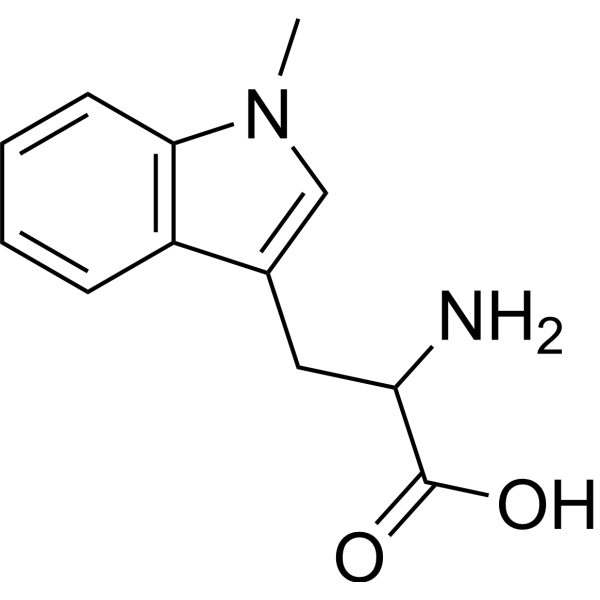
Synonyms: 1-Methyl-DL-tryptophan; (Rac)-NLG-8189
(Rac)-Indoximod (1-Methyl-DL-tryptophan) is an indoleamine 2,3-dioxygenase (IDO) inhibitor. Co-treatment with IFN-γ and (Rac)-Indoximod markedly reduces the activity of human cardiac myofibroblasts (hCMs) expressing α-SMA and induces apoptosis through up-regulating the IRF-1, Fas, and FasL genes [1].
Cat. No.: HY-176222
Target:  

Caspase

Research Areas:  

Inflammation/Immunology

IRF1 antagonist 1 (8003-3282) is a potent IRF1 (interferon regulatory factor) antagonist with anti-inflammatory activity. IRF1 antagonist 1 can maintain blood-brain barrier integrity and reduce brain edema. IRF1 antagonist 1 can improve neurological outcomes in an acute traumatic brain injury (TBI) mouse model [1].
Cat. No.: HY-Y0148
CAS No.: 1679-53-4
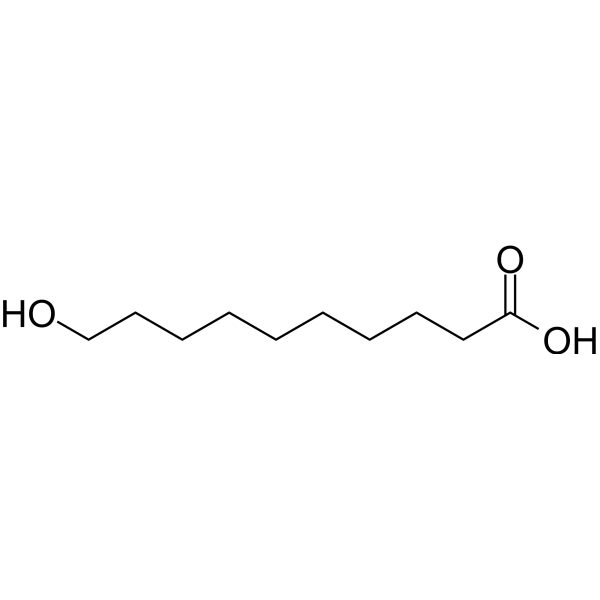
Synonyms: NSC 15139; 10-HDAA
10-Hydroxydecanoic acid (10-HDAA) is a saturated fatty acid derived from 10-hydroxy-trans-2-decenoic acid, which can be isolated from royal jelly. 10-Hydroxydecanoic acid exhibits various biological activities, including anti-inflammatory, insecticidal, anti-malarial, and anti-Leishmania properties, as well as enhancing antigen-specific immune responses. The anti-inflammatory effects of 10-Hydroxydecanoic acid are primarily mediated by inhibiting the activation of NF-κB and the translation of interferon regulatory factor 1 (IRF-1), which reduces the production of interleukin 6 (IL-6) and nitric oxide (NO) in inflammatory cells. Additionally, 10-Hydroxydecanoic acid alleviates neuroinflammatory responses through the p53-autophagy pathway and the p53-NLRP3 pathway. Finally, 10-Hydroxydecanoic acid enhances antigen-specific immune responses by promoting the effective uptake of antigens by microfold cells [1] .
Cat. No.: HY-RS06902
Research Areas:  

Others

IRF1 Human Pre-designed siRNA Set A contains three designed siRNAs for IRF1 gene (Human), as well as a negative control, a positive control, and a FAM-labeled negative control.

Cat. No.: HY-17663
CAS No.: 2992741-10-1
Target:  

PARP STAT STING IFNAR

Research Areas:  

Cancer

KMR-206 is a PARP7 inhibitor with an IC50 of 13.7 nM. KMR-206 relieves AHR-mediated transcriptional repression and enhances CYP1A1 expression in the presence of TCDD. KMR-206 induces the STING-dependent IFN-β signaling pathway and increases the levels of STAT1, pSTAT1 and nuclear PARP7 in cancer cells. KMR-206 reduces the viability of lung adenocarcinoma cells, enhances radiation-induced immunogenic signals, and induces the production of immunogenic signals in glioblastoma cancer stem cells. KMR-206 destabilizes FRA1 to increase IRF1 levels and promotes the IRF3-CBP/p300 interaction. KMR-206 can be used in studies related to lung adenocarcinoma and glioblastoma [1] .
Cat. No.: HY-RS16716
Research Areas:  

Others

Irf1 Mouse Pre-designed siRNA Set A contains three designed siRNAs for Irf1 gene (Mouse), as well as a negative control, a positive control, and a FAM-labeled negative control.

Cat. No.: HY-RS23151
Research Areas:  

Others

Irf1 Rat Pre-designed siRNA Set A contains three designed siRNAs for Irf1 gene (Rat), as well as a negative control, a positive control, and a FAM-labeled negative control.

Cat. No.: HY-108052R
CAS No.: 6906-38-3
Synonyms: Delphinidin 3-O-glucoside chloride (Standard); Delphinidin 3-O-β-glucoside chloride (Standard)
Delphinidin 3-glucoside (chloride) (Standard) is the analytical standard of Delphinidin 3-glucoside (chloride). This product is intended for research and analytical applications. Delphinidin 3-glucoside chloride (Delphinidin 3-O-glucoside chloride) is an active anthocyanin found in Hibiscus sabdariffa extract. Delphinidin 3-glucoside chloride induces a pro-apoptotic effect in B cell chronic lymphocytic leukaemia (B CLL) [1]. Delphinidin 3-glucoside chloride exerts phytoestrogen activity by binding to ERβ, with an IC50 of 9.7 μM . Delphinidin-3-O-glucoside chloride inhibits EGFR with an IC50 of 2.37 µM . Delphinidin 3-glucoside chloride exhibits antitumor effects through pAKT/IRF1/HOTAIR pathway. Delphinidin 3-glucoside chloride exhibits efficacy against oxidative stress, inhibits platelet activation and endothelial dysfunction .
Cat. No.: HY-P86084
Synonyms: IRF1; Interferon regulatory factor 1; IRF-1

Host:  

Rabbit

Application:  

WB, IHC-P, ICC/IF, IP, ELISA

Reactivity:  

Human, Mouse, Rat

Cat. No.: HY-P703152
Purity:  ≥ 80%, as determined by reducing SDS-PAGE.
Synonyms: Interferon regulatory factor 1; IRF1; Homo sapiens; Human; IRF-1; Activator; DNA-binding; Repressor
Species:  
Source:  
Cat. No.: HY-P83373
Synonyms: IRF1; Interferon regulatory factor 1; IRF-1

Host:  

Rabbit

Application:  

WB, IHC-F, IHC-P, ICC/IF, IP

Reactivity:  

Human, Mouse, Rat

Cat. No.: HY-P83373A
Synonyms: IRF1; Interferon regulatory factor 1; IRF-1

Host:  

Rabbit

Application:  

WB, IHC-F, IHC-P, ICC/IF, IP

Reactivity:  

Human, Mouse, Rat

Cat. No.: HY-Y0148R
CAS No.: 1679-53-4
Synonyms: NSC 15139 (Standard); 10-HDAA (Standard)
10-Hydroxydecanoic acid (Standard) is the analytical standard of 10-Hydroxydecanoic acid. This product is intended for research and analytical applications. 10-Hydroxydecanoic acid (10-HDAA) is a saturated fatty acid derived from 10-hydroxy-trans-2-decenoic acid, which can be isolated from royal jelly. 10-Hydroxydecanoic acid exhibits various biological activities, including anti-inflammatory, insecticidal, anti-malarial, and anti-Leishmania properties, as well as enhancing antigen-specific immune responses. The anti-inflammatory effects of 10-Hydroxydecanoic acid are primarily mediated by inhibiting the activation of NF-κB and the translation of interferon regulatory factor 1 (IRF-1), which reduces the production of interleukin 6 (IL-6) and nitric oxide (NO) in inflammatory cells. Additionally, 10-Hydroxydecanoic acid alleviates neuroinflammatory responses through the p53-autophagy pathway and the p53-NLRP3 pathway. Finally, 10-Hydroxydecanoic acid enhances antigen-specific immune responses by promoting the effective uptake of antigens by microfold cells[1][2][3][4][5].
Cat. No.: HY-113382R
CAS No.: 616-04-6
Synonyms: 1-Methylhydantoin (Standard)
Delphinidin 3-glucoside (chloride) (Standard) is the analytical standard of Delphinidin 3-glucoside (chloride). This product is intended for research and analytical applications. Delphinidin 3-glucoside chloride (Delphinidin 3-O-glucoside chloride) is an active anthocyanin found in Hibiscus sabdariffa extract. Delphinidin 3-glucoside chloride induces a pro-apoptotic effect in B cell chronic lymphocytic leukaemia (B CLL) [1]. Delphinidin 3-glucoside chloride exerts phytoestrogen activity by binding to ERβ, with an IC50 of 9.7 μM . Delphinidin-3-O-glucoside chloride inhibits EGFR with an IC50 of 2.37 µM . Delphinidin 3-glucoside chloride exhibits antitumor effects through pAKT/IRF1/HOTAIR pathway. Delphinidin 3-glucoside chloride exhibits efficacy against oxidative stress, inhibits platelet activation and endothelial dysfunction .
  • 1

