




1. Search Result
Search Result
Results for "

MHC class I peptide

" in MedChemExpress (MCE) Product Catalog:

23

Inhibitors & Agonists

27

Peptides

12

Recombinant Proteins

Cat. No. Product Name Target Research Areas Chemical Structure
  • HY-P1489
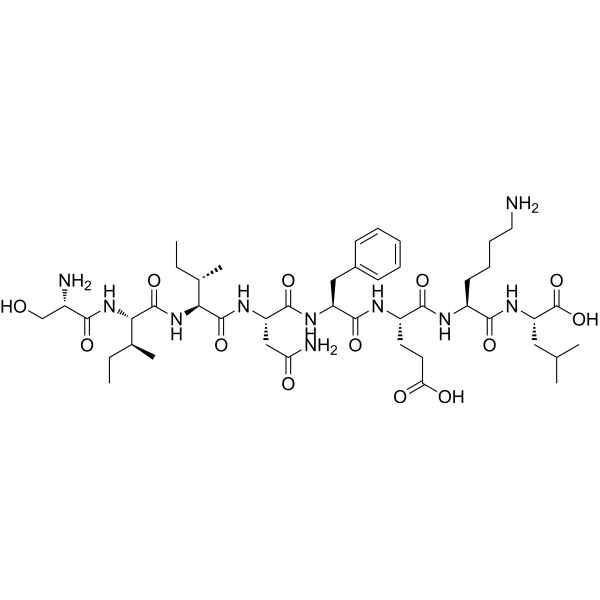
    OVA Peptide(257-264)
    Maximum Cited Publications
    15 Publications Verification

    MHC Inflammation/Immunology
    OVA Peptide(257-264) is a class I (Kb)-restricted peptide epitope of OVA, an octameric peptide can be from ovalbumin presented by the class I MHC molecule, H-2Kb.
    OVA Peptide(257-264)
  • HY-P1489A
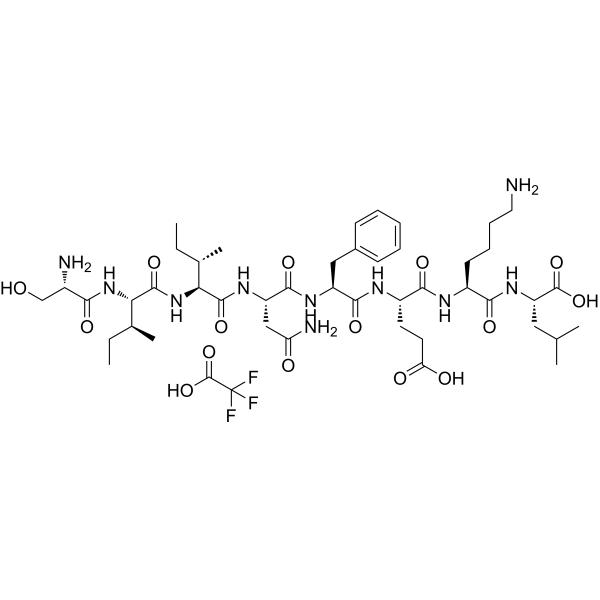
    OVA Peptide(257-264) TFA
    Maximum Cited Publications
    15 Publications Verification

    MHC Inflammation/Immunology
    OVA Peptide(257-264) TFA is a class I (Kb)-restricted peptide epitope of OVA, an octameric peptide can be from ovalbumin presented by the class I MHC molecule, H-2Kb.
    OVA Peptide(257-264) TFA
  • HY-P1569
    LCMV gp33-41
    3 Publications Verification

    LCMV GP(33-41) M-peptide; gp33 epitope

    Arenavirus Infection Inflammation/Immunology
    LCMV gp33-41, the carboxyl-extended 9-aa-long peptide, is an lymphocytic choriomeningitis virus sequence restricted by MHC class I H-2Db molecules and presented to cytotoxic T lymphocytes .
    LCMV gp33-41
  • HY-P3715
    OVA peptide
    2 Publications Verification

    MHC Inflammation/Immunology
    OVA peptide mainly exists in egg white, it is a class I (Kb)-restricted peptide epitope of ovalbumin presented by the class I MHC (major histocompatibility complex) molecule, H-2Kb (class I genes of the mouse MHC). OVA peptide has been widely studied in allergy research .
    OVA peptide
  • HY-P4193

    MHC Inflammation/Immunology Cancer
    AH1 is an immunodominant MHC class I-restricted nonamer peptide recognized by CD8 + cytotoxic T lymphocytes. AH1 derives from the envelope protein (gp70) of an endogenous ecotropic murine leukemia virus and is presented by the MHC class I L d molecule. AH1 can be used for the research of colorectal carcinoma .
    AH1
  • HY-P11303

    CD74 MHC Neurological Disease Cancer
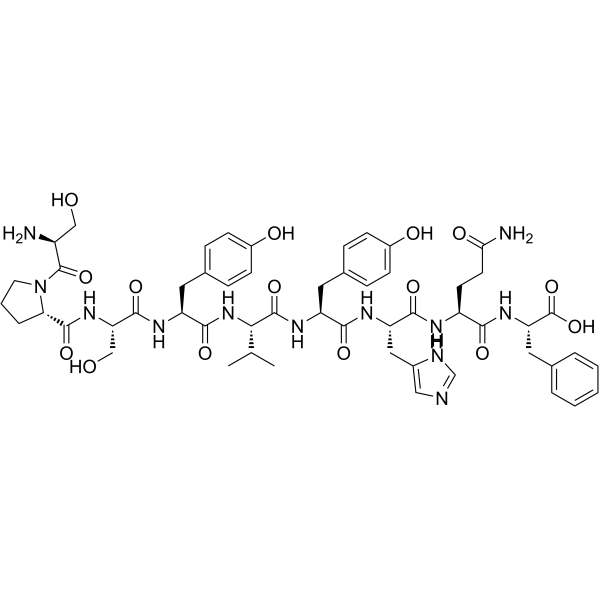
    PADRE peptide is a pan-HLA-DR binding epitope and immunostimulant. PADRE peptide binds to the peptide-binding groove of MHC class II molecules for presentation to CD4 + T cells, thereby effectively stimulating specific immune responses. PADRE peptide not only enhances anti-tumor immune responses, inhibits tumor growth and prolongs survival; it also significantly increases the frequency of E7-specific CD8 + T cells and improves therapeutic efficacy against TC-1 tumors when used in combination with E7 peptide-based vaccines and poly (I:C). The intensity of the immune response induced by PADRE peptide is lower than that of the Ii-PADRE DNA vaccine, and it fails to enhance the immune effect of CRT-E7 DNA. PADRE peptide is widely applicable to research on related tumors such as melanoma, glioblastoma and cervical cancer .
    PADRE peptide
  • HY-P5411

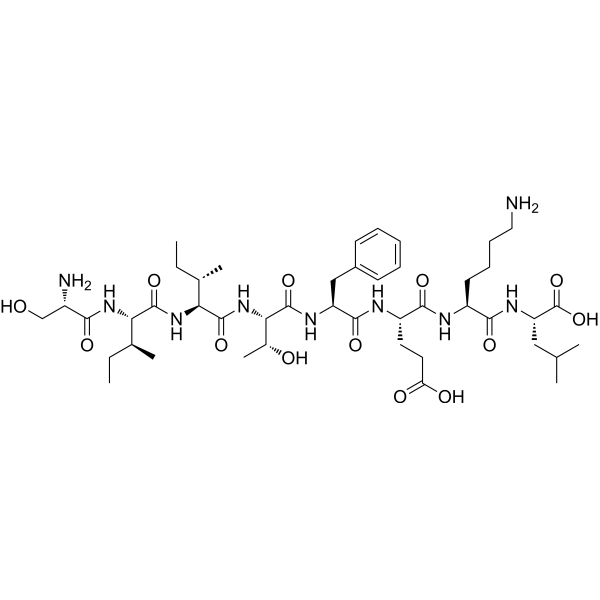
    SIITFEKL, OVA (257-264) Variant

    MHC Others
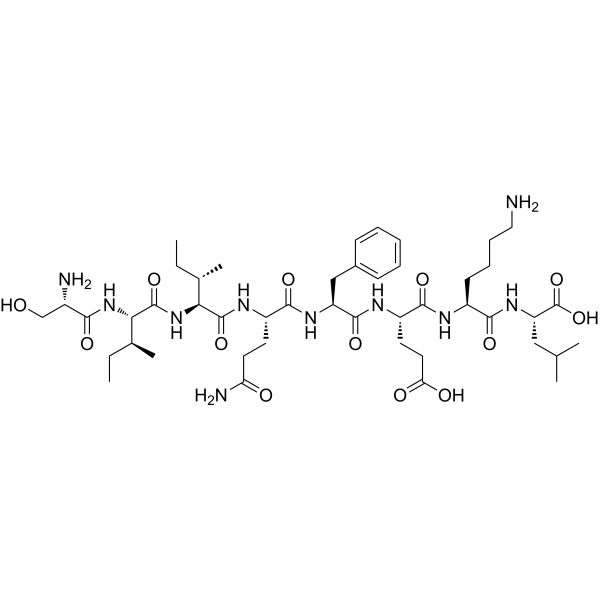
    OVA-T4 Peptide (SIITFEKL, OVA (257-264) Variant) is a low-affinity variant of OVA (257-264) (SIINFEKL). OVA-T4 Peptide has similar binding to H-2Kb MHC class I molecules as OVA (257-264), but has a much lower affinity for the OT-I TCR25 .
    OVA-T4 Peptide
  • HY-P11058

    OVAp

    MHC Cancer
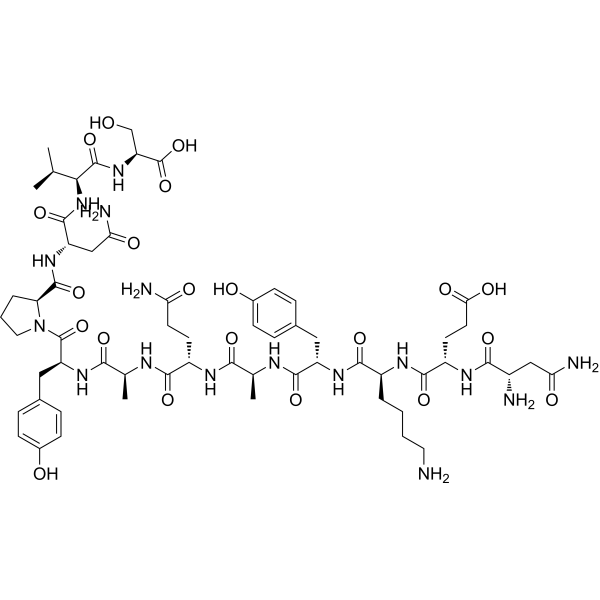
    OVA(250-264) (OVAvac) (OVAp) is an antigen peptide that can be from ovalbumin (OVA) presented by the class I MHC molecule, H-2Kb. OVA(250-264) combined withαMSLN (anti-MSLN antibody) significantly induces antigen-specific CD8 + T cell generation and infiltration for enhancing antitumor efficacy in orthotopic pancreatic cancer mice model. OVA(250-264) can be used for neoantigen vaccine development in pancreatic cancer immunotherapy research .
    OVA(250-264)
  • HY-P2527

    Tyrosinase Inflammation/Immunology
    Tyrosinase-related Protein 2 (TRP-2) (181-188) is a tyrosinase-related protein 2 (TRP-2)-derived peptide, corresponding to residues 180-188. Tyrosinase-related Protein 2 (TRP-2) (181-188) is the major reactive epitope within TRP-2 recognized by anti-B16 CTLs. Tyrosinase-related Protein 2 (TRP-2) (181-188) is a peptide conforming to the MHC class I H2-Kb binding motif .
    Tyrosinase-related Protein 2 (TRP-2) (181-188)
  • HY-P5410

    MHC Others
    OVA-Q4 Peptide is a biological active peptide. (Q4 Peptide (SIIQFEKL) is a variant of the agonist ovalbumin (OVA) peptide (257-264), SIINFEKL. OVA Peptide is a class I (Kb)-restricted peptide epitope of ovalbumin presented by the class I MHC (major histocompatibility complex) molecule, H-2Kb (class I genes of the mouse MHC).)
    OVA-Q4 Peptide
  • HY-P1569A
    LCMV gp33-41 TFA
    3 Publications Verification

    LCMV GP(33-41) M-peptide TFA; gp33 epitope TFA

    Arenavirus Inflammation/Immunology
    LCMV gp33-41 (TFA), the carboxyl-extended 9-aa-long peptide, is an lymphocytic choriomeningitis virus sequence restricted by MHC class I H-2Db molecules and presented to cytotoxic T lymphocytes .
    LCMV gp33-41 TFA
  • HY-P5453

    CD3 Others
    CFP10 (71–85) is a biological active peptide. (CFP1071–85, that elicited IFN-γ production and CTL activity by both CD4+ and CD8+ T cells from persons expressing multiple MHC class II and class I molecules)
    CFP10 (71–85)
  • HY-P2525

    MHC Inflammation/Immunology
    GAD65 (206-220) is glutamic acid decarboxylase (GAD) 65-derived peptide, corresponding to residues 180-188. GAD65 is presented to T cells in association with I-Ag7 MHC class II molecules and a major pancreatic antigens targeted by self-reactive T cells in type I diabetes mellitus .
    GAD65 (206-220)
  • HY-P10582A

    MHC Inflammation/Immunology
    SIYNFEKL TFA is a variant of major MHC class I-restricted epitope SIINFEKL. SIYNFEKL TFA is an antigenic peptide, that can stimulate specific T cells in experimental settings to study the competitive interaction between T cell. SIYNFEKL TFA exhibits low affinity for the OT-I T cell receptor (TCR), and can be used for detection of CD8+ T cells .
    SIYNFEKL TFA
  • HY-P10581A

    MHC Inflammation/Immunology
    SIIVFEKL TFA is a variant of the major MHC class I-restricted epitope SIINFEKL. SIIVFEKL TFA is an antigenic peptide, that can stimulate specific T cells in experimental settings to study the competitive interaction between T cells. SIIVFEKL TFA exhibits low affinity for the OT-I T cell receptor (TCR), and can be used for detection of CD8+ T cells .
    SIIVFEKL TFA
  • HY-P1489B

    MHC Inflammation/Immunology
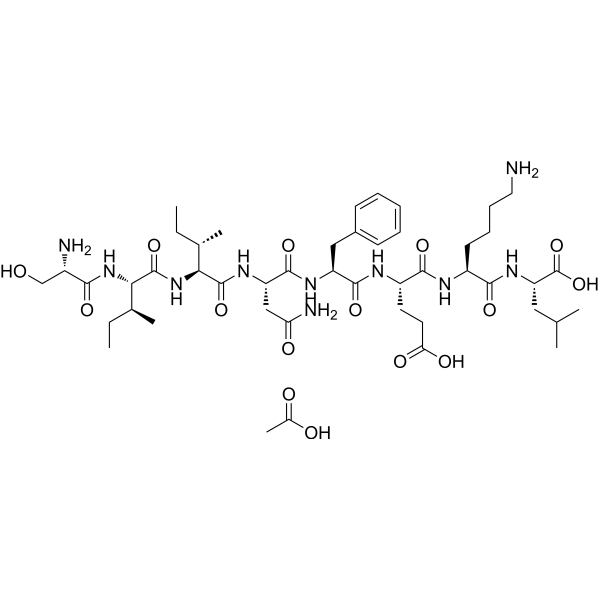
    OVA Peptide(257-264) acetate salt is a class I (Kb)-restricted peptide epitope of OVA, an octameric peptide can be from ovalbumin presented by the class I MHC molecule, H-2Kb .
    OVA Peptide(257-264) acetate salt
  • HY-106156

    MHC Cardiovascular Disease Inflammation/Immunology
    Allotrap 07 is a synthetic peptide composed of residues 75-84 of HLA-B7, a class I MHC molecule. Allotrap 07 combined with Cyclosporin A (HY-B0579) induces donor-specific tolerance in rat cardiac allografts, significantly prolonging graft survival .
    Allotrap 07
  • HY-P4044

    HBV Infection
    HBV Seq2 aa:28-39 is a HBsAg peptide, which binds to major histocompatibility complex (MHC) class I molecules .
    HBV Seq2 aa:28-39
  • HY-P3070

    MHC Infection Others
    H2-D b restricted epitopes VSV Nucleoprotein (52-59) is a 9-mer peptide derived from the nucleoprotein of Vesicular Stomatitis Virus (VSV). H2-D b restricted epitopes VSV Nucleoprotein (52-59) binds to MHC class I molecules and presents itself to CD8+ T cells, thereby activating cytotoxic T lymphocytes (CTLs), which can recognize and kill cells expressing the corresponding antigen. H2-D b restricted epitopes VSV Nucleoprotein (52-59) can be used in the development of CTL vaccines against Ebola virus .
    H2-D b restricted epitopes VSV  Nucleoprotein (52-59)
  • HY-P2674

    MHC Inflammation/Immunology Cancer
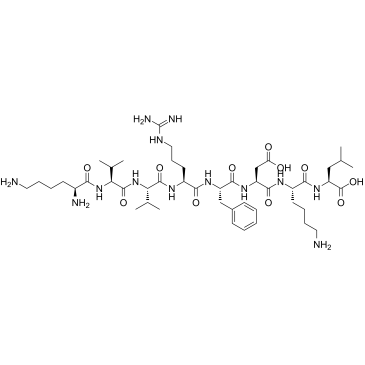
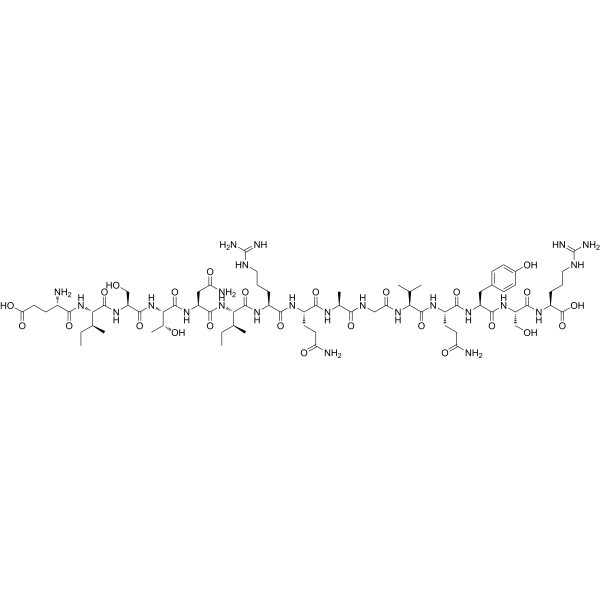
    KDEL is a tetrapeptide serving as an endoplasmic reticulum (ER) retrieval/retention signal. KDEL can target and deliver exogenous antigen peptides to the ER, significantly enhance and prolong MHC class I molecule presentation, and effectively boost anti-tumor immune responses .
    KDEL
  • HY-P11701

    MHC Others
    SEIDLILGY is a nonapeptide identified as a peptide ligand derived from mouse major histocompatibility complex class I (MHC). SEIDLILGY serves as a tool chemical stimulant for the specific activation of sensory neurons expressing the particular vomeronasal receptor (V2rf2) .
    SEIDLILGY
  • HY-P11700

    MHC Inflammation/Immunology
    AAPDARETA is a mutated MHC-associated peptide with reduced binding affinity to H-2D b MHC molecules. AAPDARETA activates subsets of mouse main olfactory epithelium sensory neurons and induces Ca 2+ transients .
    AAPDARETA
  • HY-P11397

    MHC Cancer
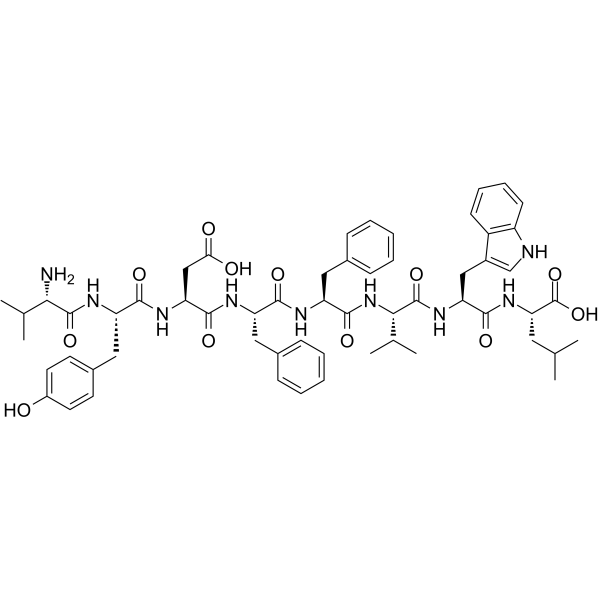
    VLPDVFIRCV, a melanoma antigen-derived peptide, is the intron sequence (nt 38-67) of the N-acetylglucosamine transferase V (GnT-V) gene. VLPDVFIRCV has a high affinity for MHC-I class molecules, but it cannot activate the immune response against natural tumor cells. The cytotoxic T lymphocytes (CTL) induced by VLPDVFIRCV can specifically lyse T2 cells loaded with this peptide in the chromium release experiment. VLPDVFIRCV can be used for vaccine design research .
    VLPDVFIRCV

Inquiry Online

Your information is safe with us. * Required Fields.

Salutation


Country or Region *

Applicant Name *


Organization Name *

Department *


Email Address *


Product Name *

Cat. No.


Requested quantity *

Phone Number *


Remarks

Inquiry Online

Inquiry Information

Product Name:
Cat. No.:
Quantity:
MCE Japan Authorized Agent:

