



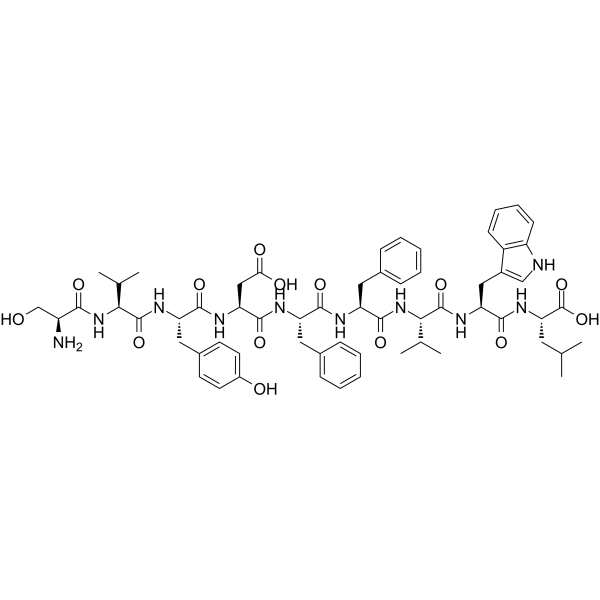
mTRP-2 (180-188)

Based on 1 Customer Validation
mTRP-2 (180-188) is an MHC class I-restricted tumor-associated antigenic peptide derived from mouse tyrosinase-related protein 2 (TRP-2). mTRP-2 (180-188) binds to HLA-A*0201 with an ID50 of 36 nM. mTRP-2 (180-188) can be presented by H-2Kb molecules and activate TRP-2-specific cytotoxic T lymphocytes (CTL). mTRP-2 (180-188) induces immune responses against B16 melanoma by promoting antigen-specific T cell proliferation, cytokine release, and CTL-mediated tumor cell killing. mTRP-2 (180-188) can be used in studies related to melanoma, glioma, and tumor immunology.
For research use only. We do not sell to patients.
- Purity : 99.94%
- CAS No.: 219312-69-3
- Formula: C61H78N10O14
- Molecular Weight:1175.33
-
Storage:
Sealed storage, away from moisture and light, under nitrogen.
Powder -80°C, 2 years , -20°C, 1 year* In solvent : -80°C, 6 months; -20°C, 1 month (sealed storage, away from moisture and light, under nitrogen)

To place orders, for customer services and technical support, please contact: MedChemExpress USA
Tel: 609-228-6898 E-mail: [email protected] [email protected]


-
 Biological Activity
-
Chemical Information
-
Solvent & Solubility
- Protocols
- Purity & Documentation
- References
-
 Help & FAQs





Biological Activity
Description
IC50 & Target
[2]|
HLA-A*0201 36 nM (ID50) |
In Vitro
mTRP-2 (180-188) (5 μg/mL) stimulates mouse splenocytes to generate TRP-2-specific CTLs, and the generated CTLs recognize B16 melanoma cells and exert antigen-specific cytotoxic effects[1].
mTRP-2 (180-188) induces the generation of CTLs from HLA-A0201-positive melanoma samples, and these CTLs specifically recognize peptide-loaded T2 cells, COS-7 cells expressing HLA-A0201/TRP-2, as well as HLA-A2-positive and TRP-2-positive melanoma cells[2].
mTRP-2 (180-188) (1 μM; 5 days) stimulates TRP-2-specific TCR transgenic lymphocytes in the presence of IL-2 and generates CD8+ T cell effector cells with potent antigen-specific cytotoxic activity[5].
MedChemExpress (MCE) has not independently confirmed the accuracy of these methods. They are for reference only. Further protocols information, click here.
In Vivo
Dendritic cell vaccine loaded with mTRP-2 (180-188) induces CTL-mediated protective immune responses in C57BL/6 mice and inhibits the growth of subcutaneous B16 melanoma[3].
mTRP-2 (180-188) (1 μM; 5 days) generates TRP-2-specific CD8+ T cell effector cells in vitro. Repeated intravenous transfer of these cells reduces B16 lung tumor nodules, but does not significantly inhibit the growth of subcutaneous B16 tumors[5].
MedChemExpress (MCE) has not independently confirmed the accuracy of these methods. They are for reference only.
-
Animal Model:C57BL/6 (H-2b) (male, 8-12 weeks of age, melanoma model via s.c. challenge with 1×10⁵ live B16F10 melanoma cells)[3]
-
Dosage:mTRP-2 (180-188): 25 μM for DC loading; DCs: 4 × 10⁵
-
Administration:s.c.; twice with 2-week interval
-
Result:Induced high-avidity TRP-2-specific CTLs and provided approximately 80% protection against subsequent B16 melanoma challenge.
-
Animal Model:C57BL/6 (female, 6-12 weeks old, intravenous injection of 2×10⁵ B16/BL6 melanoma cells to induce pulmonary tumor nodules)[5]
-
Dosage:mTRP-2 (180-188): 1 μM during ex vivo T-cell activation; TRP-2-specific effector cells: 1 × 10⁷/mouse
-
Administration:i.v.; 3 doses on days 3, 7, 11 after tumor challenge
-
Result:Significantly reduced the number of pulmonary B16 tumor nodules compared to control groups.
Significantly reduced lung weight compared to control groups.
-
Animal Model:C57BL/6 (female, 6-12 weeks old, subcutaneous injection of 1×10⁵ B16/BL6 melanoma cells)[5]
-
Dosage:5×10⁶ TRP-2(180-188)-specific TCR transgenic lymph node cells; 2.5×10⁵ TRP-2(180-188)-pulsed bone marrow-derived dendritic cells per dorsal flank
-
Administration:i.v. (lymph node cells); s.c. (dendritic cells)
-
Result:Did not reduce subcutaneous B16 tumor growth compared to control-vaccinated or untransferred mice.
Maintained high CD44 expression, granzyme B expression, and IFN-γ production with only modest, statistically significant reductions in IFN-γ at later time points.
Maintained high CD107a mobilization with only modest, statistically significant reductions in CD107a at later time points.
-
Animal Model:C57BL/6 (female, 6-12 weeks old, intravenous injection of 2×10⁵ B16/BL6 melanoma cells to induce pulmonary tumor nodules)[5]
-
Dosage:5×10⁶ TRP-2(180-188)-specific TCR transgenic lymph node cells; 2.5×10⁵ TRP-2(180-188)-pulsed bone marrow-derived dendritic cells per dorsal flank
-
Administration:i.v. (lymph node cells); s.c. (dendritic cells; 3 days after tumor challenge)
-
Result:Did not reduce the number of pulmonary B16 tumor nodules compared to control groups.


Chemical Information
-
CAS No. 219312-69-3
-
Appearance Solid
-
Molecular Weight 1175.33
-
Formula C61H78N10O14
-
Color White to off-white
-
Sequence
Ser-Val-Tyr-Asp-Phe-Phe-Val-Trp-Leu
-
Sequence Shortening
SVYDFFVWL
-
Shipping
Room temperature in continental US; may vary elsewhere.
-
Storage
Sealed storage, away from moisture and light, under nitrogen
Powder -80°C 2 years -20°C 1 year * In solvent : -80°C, 6 months; -20°C, 1 month (sealed storage, away from moisture and light, under nitrogen)


Solvent & Solubility
In Vitro:
DMSO : ≥ 50 mg/mL (42.54 mM; Hygroscopic DMSO has a significant impact on the solubility of product, please use newly opened DMSO)
* "≥" means soluble, but saturation unknown.
Please refer to the solubility information to select the appropriate solvent. Once prepared, please aliquot and store the solution to prevent product inactivation from repeated freeze-thaw cycles.
Storage method and period of stock solution: -80°C, 6 months; -20°C, 1 month (sealed storage, away from moisture and light, under nitrogen). When stored at -80°C, please use it within 6 months. When stored at -20°C, please use it within 1 month.
Please refer to the solubility information to select the appropriate solvent. Once prepared, please aliquot and store the solution to prevent product inactivation from repeated freeze-thaw cycles.
Storage method and period of stock solution: -80°C, 6 months; -20°C, 1 month (sealed storage, away from moisture and light, under nitrogen). When stored at -80°C, please use it within 6 months. When stored at -20°C, please use it within 1 month.
Concentration (start) × Volume (start) = Concentration (final) × Volume (final)

Protocols
-
BrdU Incorporation Assay
Bromodeoxyuridine (BrdU) incorporation assay is based on the principle that BrdU, a thymidine analog, is incorporated into newly synthesized DNA during the S phase of the cell cycle, thereby serving as a marker of DNA replication and cellular proliferation. Incorporated BrdU can be detected using anti-BrdU antibodies following DNA denaturation, enabling visualization or quantification of proliferating cells through immunochemical detection methods such as immunofluorescence or immunohistochemistry.
-
Somatic Cell Culture
A method of simulating the in vivo environment in vitro to maintain the cell growth, differentation and main functions.
-
CFSE Dye Dilution Proliferation Assay
The CFSE (carboxyfluorescein diacetate succinimidyl ester) dye dilution proliferation assay is based on the covalent labeling of intracellular proteins by a cell-permeant fluorescent dye that becomes fluorescent upon intracellular ester cleavage and then is stably retained within cells. As labeled cells divide, the dye is partitioned equally between daughter cells, resulting in a stepwise halving of fluorescence intensity that can be quantified by flow cytometry to determine the number of cell divisions undergone by each cell population. This fluorescence dilution approach enables quantitative tracking of lymphocyte proliferation at the single-cell level over multiple rounds of division. CFSE-based proliferation analysis has been widely applied to measure antigen-driven lymphocyte expansion in vitro, where discrete fluorescence peaks correspond to successive cell divisions and allow reconstruction of proliferative history within heterogeneous populations.
-
Dye-dilution cell tracking and proliferation staining
Dye-dilution cell tracking assays quantify cell proliferation by covalently labeling intracellular proteins with a stable fluorescent dye that is equally partitioned between daughter cells during mitosis, resulting in stepwise halving of fluorescence intensity with each cell division as measured by flow cytometry histograms. Carboxyfluorescein diacetate succinimidyl ester (CFSE) is a prototypical dye that diffuses into cells, is enzymatically converted into a fluorescent compound, and then covalently binds intracellular amine groups, producing long-lived fluorescence suitable for tracking multiple rounds of division in vitro and in vivo. Successive generations of dividing cells form discrete peaks of decreasing fluorescence intensity, enabling estimation of proliferation history, precursor frequency, and division index within heterogeneous populations. Alternative dyes such as CellTrace Violet (CTV) and far-red membrane dyes (e. g. , PKH26) follow the same dilution principle but differ
-
CCK-8/WST-8 Cell Proliferation Assay
The CCK-8/WST-8 assay is based on the reduction of the water-soluble tetrazolium salt WST-8 to a water-soluble formazan product by cellular dehydrogenases in metabolically active cells, where the generated formazan amount is proportional to the number of living cells and is quantified by measuring absorbance in the visible range, providing a colorimetric readout for cell viability and proliferation assessment. This class of tetrazolium-based assays improves upon earlier MTT-based systems by producing a water-soluble formazan, eliminating the need for organic solubilization steps and enabling direct spectrophotometric measurement in culture medium.
-
Protocol for Cell Cycle
Cell-cycle analysis by flow cytometry measures DNA content in single cells to estimate the fraction of cells in G0/G1, S, and G2/M phases. Propidium iodide intercalates into DNA, and after RNA removal with RNase, fluorescence intensity reflects cellular DNA content: 2N cells are assigned to G0/G1, cells between 2N and 4N to S phase, and 4N cells to G2/M. DNA-content analysis alone cannot reliably separate G0 from G1 or G2 from M. Ki-67 can distinguish quiescent G0 cells from cycling cells, EdU or BrdU incorporation marks active DNA synthesis in S phase, and phospho-histone H3 staining identifies mitotic cells within the 4N population.
-
Cell Counting-Based Growth Curve Assay
Cell counting-based growth curve assays quantify cell proliferation by directly measuring changes in viable cell number over time using manual or automated counting methods such as hemocytometer-based counting or instrument-assisted cell enumeration, enabling construction of growth curves that reflect population expansion dynamics in response to culture conditions. A widely used approach is trypan blue exclusion with hemocytometer counting, where membrane-compromised (non-viable) cells take up the dye, allowing discrimination between viable and non-viable cells while simultaneously enabling total cell number quantification. Repeated sampling across time points allows estimation of proliferation rate, growth phases, and comparative growth kinetics between experimental conditions.
-
Research Protocol for Inflammation-related Diseases
The NLRP3 inflammasome is a cytosolic innate immune signaling platform that integrates priming signals and danger-signal activation to promote caspase-1 activation, maturation of IL-1β and IL-18, and gasdermin D-mediated pyroptotic cell death. The core experimental logic is to determine whether inflammatory disease phenotypes are driven by increased NLRP3 expression, ASC-containing inflammasome assembly, caspase-1 cleavage, GSDMD cleavage, and extracellular release of IL-1β/IL-18 rather than by nonspecific cell injury alone. The pathway is strongly linked to inflammation-related disease phenotypes because monosodium urate crystals activate NALP3/NLRP3 inflammasome signaling in gout-like crystal inflammation, cholesterol crystals activate NLRP3 inflammasomes in atherogenesis models, and DSS-induced intestinal inflammation has been reported to involve NLRP3 inflammasome activity. However, experimental colitis studies also show context-dependent protective effects of NLRP3 inflammasome co
-
Colony Formation (Clonogenic) Assay
The clonogenic (colony formation) assay measures the ability of a single cell to retain reproductive viability and form a macroscopic colony, typically defined as a cluster derived from one progenitor cell after a defined growth period. This assay is widely used to evaluate cell survival after exposure to ionizing radiation or cytotoxic treatments and is considered a standard method in radiation biology for generating dose-response relationships of reproductive cell death. Colony formation reflects long-term proliferative capacity rather than short-term metabolic activity, and survival is quantified by comparing treated versus untreated conditions based on colony number and derived survival fractions.
-
Research Protocol for Cancer Immunology
Cancer immunology studies how the immune system recognizes, suppresses, edits, or fails to eliminate malignant cells through tumor antigen release, antigen presentation, T-cell priming, immune trafficking, tumor-cell killing, and feedback inhibition in the tumor microenvironment. The cancer-immunity cycle links tumor antigenicity, dendritic-cell priming, CD8+ T-cell infiltration, cytotoxic function, and immune-checkpoint regulation to tumor rejection or immune escape. Immune-checkpoint pathways such as PD-1/PD-L1 and CTLA-4 suppress antitumor T-cell activity and can be therapeutically blocked, but many tumors remain resistant because of poor antigen presentation, weak T-cell infiltration, suppressive myeloid cells, regulatory T cells, and tumor-intrinsic immune-exclusion programs. Unresolved questions include which immune-cell states predict response, how tumor-intrinsic pathways exclude immune cells, how myeloid suppression limits checkpoint blockade, and which combination strategies
-
Cell Viability Determination by MTT Colorimetric Assay
The following protocol uses the MTT colorimetric assay as a classic literature-established method for assessing cell viability/metabolic activity in cultured mammalian cells. MTT[3-(4,5-dimethylthiazol-2-yl)-2,5-diphenyltetrazolium bromide] is reduced by metabolically active cells to a colored formazan product; the amount of formazan is quantified spectrophotometrically and provides an indirect measure of metabolically active viable cells. Importantly, MTT reduction reflects cellular oxidoreductase/metabolic activity rather than an absolute direct count of living cells, so changes in cellular metabolism can alter the signal independently of cell number.
-
EdU Incorporation Assay (Click Chemistry-Based DNA Synthesis Measurement)
The EdU incorporation assay measures DNA synthesis by adding the thymidine analog 5-ethynyl-2′-deoxyuridine to cells or tissues, where it is incorporated into newly synthesized DNA during S phase. Incorporated EdU is detected by copper-catalyzed azide-alkyne cycloaddition, in which a fluorescent azide covalently reacts with the ethynyl group on EdU, allowing S-phase cells to be detected by fluorescence microscopy, flow cytometry, or high-content imaging. EdU detection does not require DNA denaturation or anti-BrdU antibody access, which preserves sample structure and improves compatibility with immunostaining and multiparameter cytometry compared with BrdU-based detection. EdU can be cytotoxic in a cell-type- and exposure-dependent manner, so pulse duration, concentration, and continuous-labeling designs should be validated for each cell type.
-
Ki-67 Immunostaining Proliferation Assay
Ki-67 immunostaining measures the growth fraction of a cell population by detecting Ki-67, a nuclear antigen present in proliferating cells and absent in quiescent G0 cells. The readout is the percentage of Ki-67-positive nuclei among total counted cells, commonly called the Ki-67 labeling index or proliferation index.
-
PCNA Immunodetection Proliferation Assay
PCNA immunodetection measures proliferative activity by detecting proliferating cell nuclear antigen, a nuclear protein associated with DNA polymerase δ function and DNA replication. The assay readout is the proportion of PCNA-positive nuclei among total counted cells, but PCNA labeling is not identical to BrdU labeling because PCNA can mark late G1/early S-associated replication competence and may persist beyond active DNA synthesis depending on fixation and extraction conditions.
-
Protocol for Cell Counting and Cell Density Analysis
Cell counting and cell-density analysis estimate the number of cells in a known volume or field area. Manual hemocytometer counting uses a chamber of defined geometry to convert counted cells into cells/mL, while automated counters and image-analysis workflows detect cell objects from optical, brightfield, fluorescence, impedance, or digital-image features. Trypan blue viability counting is based on dye exclusion: viable cells with intact membranes exclude dye, while non-viable cells with compromised membranes stain blue. The readout is total cell density, viable-cell density, dead-cell density, and percent viability. Cell density can also be estimated from microscopy images by counting objects per image area, from flow cytometry using calibrated volume or reference particles, or from in situ microscopy in bioreactors after calibration against reference methods such as hemocytometer or flow cytometry.
-
MTT Cell Proliferation Assay
The MTT assay is a colorimetric endpoint assay for estimating viable cell number, cell growth, cytotoxicity, or cell activation in cultured mammalian cells. Living cells reduce the yellow tetrazolium salt MTT into purple/blue formazan, while dead cells do not generate the same signal; the resulting color can be quantified with a multiwell spectrophotometer. MTT reduction is commonly interpreted as a readout of metabolic activity that often correlates with viable cell number, but it should not be treated as a direct cell-counting method unless the assay is optimized for the cell type and experimental condition. Studies show that MTT reduction can involve mitochondrial and non-mitochondrial reducing systems, and formazan may accumulate in intracellular lipid droplets rather than simply marking mitochondria.


Purity & Documentation
-
Data Sheet (281 KB)
-
SDS (254 KB)
- English - EN (254 KB)
- Français - FR (254 KB)
- Deutsch - DE (254 KB)
- Norwegian - NO (254 KB)
- Español - ES (254 KB)
- Swedish - SV (254 KB)
- Italian - IT (254 KB)
- Korean - KR (254 KB)
- Portuguese - PT (254 KB)
-
Handling Instructions (2659 KB)
References
[1]. Zhu X, et al. Toll like receptor-3 ligand poly-ICLC promotes the efficacy of peripheral vaccinations with tumor antigen-derived peptide epitopes in murine CNS tumor models. Journal of translational medicine. 2007 Feb 12;5:10. [Content Brief]
[2]. Parkhurst MR, et al. Identification of a shared HLA-A*0201-restricted T-cell epitope from the melanoma antigen tyrosinase-related protein 2 (TRP2). Cancer research. 1998 Nov 01;58(21):4895-901. [Content Brief]
[3]. Schreurs MWJ, et al. Dendritic cells break tolerance and induce protective immunity against a melanocyte differentiation antigen in an autologous melanoma model. Cancer Res. 2000;60:6995-7001. [Content Brief]
[4]. Singh V, et al. Melanoma progression despite infiltration by in vivo-primed TRP-2-specific T cells. Journal of immunotherapy (Hagerstown, Md. : 1997). 2009;32(2):129-39. [Content Brief]


Complete Stock Solution Preparation Table
Please refer to the solubility information to select the appropriate solvent. Once prepared, please aliquot and store the solution to prevent product inactivation from repeated freeze-thaw cycles.
Storage method and period of stock solution: -80°C, 6 months; -20°C, 1 month (sealed storage, away from moisture and light, under nitrogen). When stored at -80°C, please use it within 6 months. When stored at -20°C, please use it within 1 month.
| Optional Solvent | Concentration Solvent Mass | 1 mg | 5 mg | 10 mg | 25 mg |
|---|---|---|---|---|---|
| DMSO | 1 mM | 0.8508 mL | 4.2541 mL | 8.5082 mL | 21.2706 mL |
| 5 mM | 0.1702 mL | 0.8508 mL | 1.7016 mL | 4.2541 mL | |
| 10 mM | 0.0851 mL | 0.4254 mL | 0.8508 mL | 2.1271 mL | |
| 15 mM | 0.0567 mL | 0.2836 mL | 0.5672 mL | 1.4180 mL | |
| 20 mM | 0.0425 mL | 0.2127 mL | 0.4254 mL | 1.0635 mL | |
| 25 mM | 0.0340 mL | 0.1702 mL | 0.3403 mL | 0.8508 mL | |
| 30 mM | 0.0284 mL | 0.1418 mL | 0.2836 mL | 0.7090 mL | |
| 40 mM | 0.0213 mL | 0.1064 mL | 0.2127 mL | 0.5318 mL |


mTRP-2 (180-188) Related Classifications
HY-P1827 Related Classifications
 Powered by Bioz