1. Search Result
Search Result
Results for "

MIP-1α

" in MedChemExpress (MCE) Product Catalog:

20

阻害剤およびアゴニスト

3

ペプチド

2

天然物

4

組換えタンパク質

1

抗体

製品番号 製品名 Target 研究分野 構造式
  • HY-B1829A
    Dexamethasone phosphate disodium
    10+ Cited Publications

    Dexamethasone 21-phosphate disodium

    Glucocorticoid Receptor TGF-β Receptor Interleukin Related Neurological Disease Inflammation/Immunology
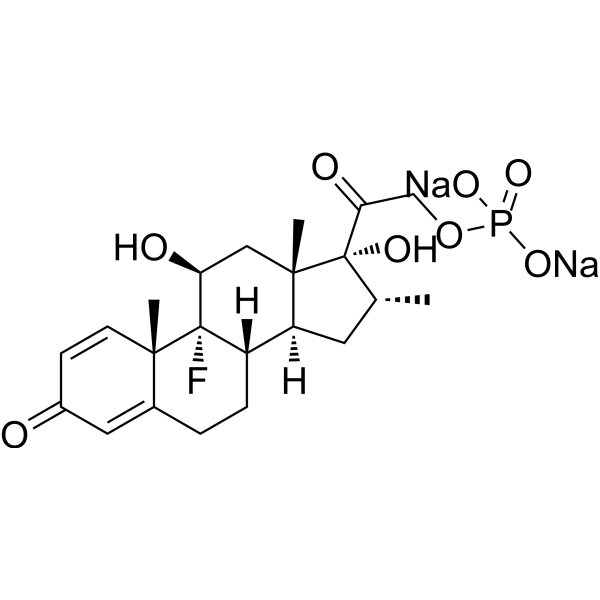
    Dexamethasone phosphate (Dexamethasone 21-phosphate) disodium is a prodrug form of the glucocorticoid Dexamethasone (HY-14648). Dexamethasone phosphate disodium is produced by introducing a phosphate ester group at the 21-position of the Dexamethasone molecule, forming a salt with sodium ions, thereby significantly improving water solubility. Dexamethasone phosphate disodium inhibits LPS (HY-D1056)-induced degradation of IRAK-1 and IRAK-4, and blocks LPS-induced activation of TRAF6, p-TAK1 and p-JNK. Dexamethasone phosphate disodium inhibits the secretion of RANTES, TGF1 and NO, promotes the production of MIP-1α and IL-10, and blocks microglial migration. Dexamethasone phosphate disodium is almost completely converted to Dexamethasone in rat blood, and supports transdermal delivery via iontophoresis. Dexamethasone phosphate disodium can be used in research related to steroid-dependent ulcerative colitis, chemotherapy-induced vomiting, allergic asthma and acute colitis (inflammatory bowel disease) [1] .
    Dexamethasone phosphate disodium
  • HY-B0498
    Bindarit
    25+ Cited Publications

    AF2838

    CCR Neurological Disease Inflammation/Immunology Endocrinology Cancer
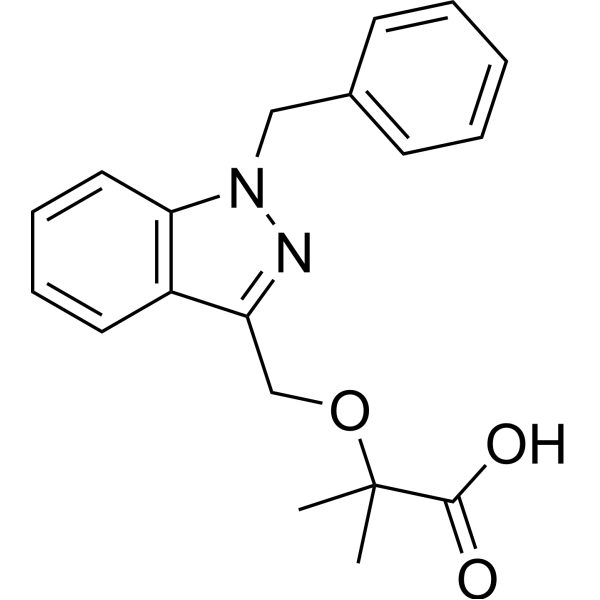
    Bindarit (AF2838) is a selective inhibitor of the monocyte chemotactic proteins MCP-1/CCL2, MCP-3/CCL7, and MCP-2/CCL8, and no effect on other CC and CXC chemokines such as MIP-1α/CCL3, MIP-1β/CCL4, MIP-3/CCL23. Bindarit also has anti-inflammatory activity [1].
    Bindarit
  • HY-17028

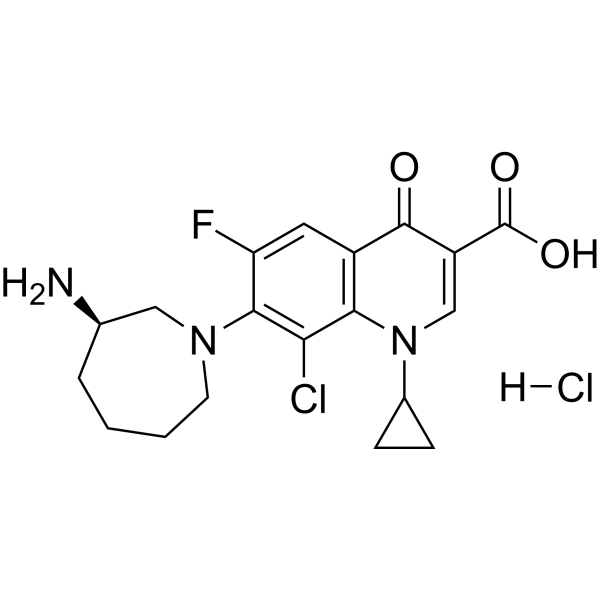
    Bacterial Antibiotic DNA/RNA Synthesis Topoisomerase Infection Inflammation/Immunology
    Besifloxacin Hydrochloride is a fourth generation fluoroquinolone antibiotic. Besifloxacin Hydrochloride is a DNA gyrase and topoisomerase IV inhibitor. Besifloxacin Hydrochloride has broad-spectrum antibacterial activity, it is effective against Gram-negative and Gram-positive aerobic and anaerobic strains and reduces the incidence of drug resistance. Besifloxacin Hydrochloride has anti-inflammatory activity. Besifloxacin Hydrochloride can be used in bacterial conjunctivitis research [1] .
    Besifloxacin Hydrochloride
  • HY-19974
    TAK-220
    3 Publications Verification

    CCR HIV Infection Endocrinology
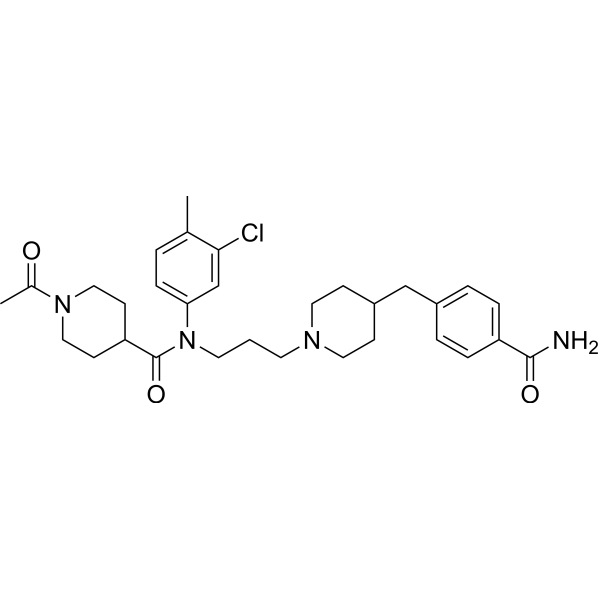
    TAK-220 is a selective and orally bioavailable CCR5 antagonist, with IC50s of 3.5 nM and 1.4 nM for inhibition on the binding of RANTES and MIP-1α to CCR5, respectively, but shows no effect on the binding to CCR1, CCR2b, CCR3, CCR4, or CCR7; TAK-220 also selectively inhibits HIV-1, with EC50s of 1.2 nM (HIV-1 KK), 0.72 nM (HIV-1 CTV), 1.7 nM (HIV-1 HKW), 1.7 nM (HIV-1 HNK), 0.93 nM (HIV-1 HTN), and 0.55 nM (HIV-1 HHA), and EC90s of 12 nM (HIV-1 KK), 5 nM (HIV-1 CTV), 12 nM (HIV-1 HKW), 28 nM (HIV-1 HNK), 15 nM (HIV-1 HTN), and 4 nM (HIV-1 HHA) in PBMCs.
    TAK-220
  • HY-P4191A

    CCR Inflammation/Immunology
    Met-RANTES (human) acetate is the acetate form of Met-RANTES (human) (HY-P4191). Met-RANTES (human) acetate is the antagonist for CCR1 and CCR5. Met-RANTES (human) acetate inhibits chemokines human MIP-1α and MIP-1β with IC50 of 5 and 2 nM. Met-RANTES (human) acetate reduces bone destruction and ameliorates rats adjuvant-induced arthritis (AIA) [1].
    Met-RANTES (human) acetate
  • HY-B1829AR

    Dexamethasone 21-phosphate disodium (Standard)

    Glucocorticoid Receptor Reference Standards Interleukin Related TGF-β Receptor Neurological Disease Metabolic Disease Inflammation/Immunology
    Dexamethasone phosphate (Dexamethasone 21-phosphate) disodium (Standard) is the analytical standard of Dexamethasone phosphate disodium (HY-B1829A). This product is intended for research and analytical applications. Dexamethasone phosphate (Dexamethasone 21-phosphate) disodium is a prodrug form of the glucocorticoid Dexamethasone (HY-14648). Dexamethasone phosphate disodium is produced by introducing a phosphate ester group at the 21-position of the Dexamethasone molecule, forming a salt with sodium ions, thereby significantly improving water solubility. Dexamethasone phosphate disodium inhibits LPS (HY-D1056)-induced degradation of IRAK-1 and IRAK-4, and blocks LPS-induced activation of TRAF6, p-TAK1 and p-JNK. Dexamethasone phosphate disodium inhibits the secretion of RANTES, TGF1 and NO, promotes the production of MIP-1α and IL-10, and blocks microglial migration. Dexamethasone phosphate disodium is almost completely converted to Dexamethasone in rat blood, and supports transdermal delivery via iontophoresis. Dexamethasone phosphate disodium can be used in research related to steroid-dependent ulcerative colitis, chemotherapy-induced vomiting, allergic asthma and acute colitis (inflammatory bowel disease).
    Dexamethasone phosphate disodium (Standard)
  • HY-B1829
    Dexamethasone phosphate
    10+ Cited Publications

    Dexamethasone 21-phosphate

    Glucocorticoid Receptor TGF-β Receptor Interleukin Related Neurological Disease Inflammation/Immunology
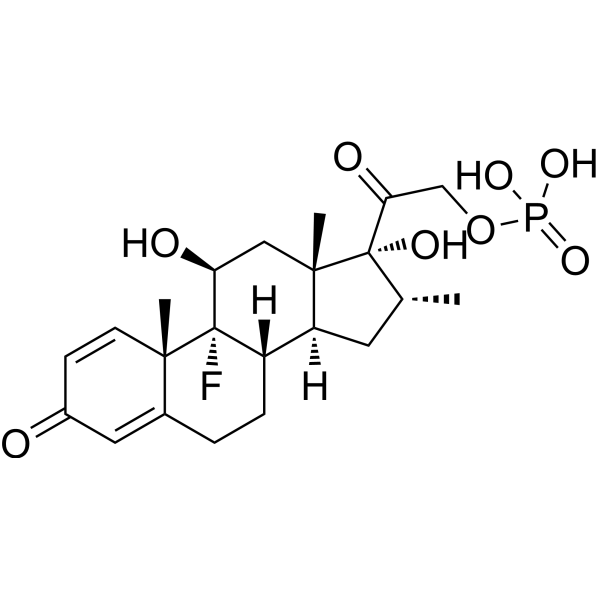
    Dexamethasone phosphate (Dexamethasone 21-phosphate) is a prodrug form of the glucocorticoid Dexamethasone (HY-14648). Dexamethasone phosphate is prepared by introducing a phosphate ester group to the hydroxyl group at position 21 of the Dexamethasone molecule. Dexamethasone phosphate inhibits LPS (HY-D1056)-induced degradation of IRAK-1 and IRAK-4, and blocks LPS-induced activation of TRAF6, p-TAK1 and p-JNK. Dexamethasone phosphate inhibits the secretion of RANTES, TGF-β1 and NO, promotes the production of MIP-1α and IL-10, and blocks microglial migration. Dexamethasone phosphate is almost completely converted to Dexamethasone in rat blood, and supports transdermal delivery via iontophoresis. Dexamethasone phosphate can be used in research related to steroid-dependent ulcerative colitis, chemotherapy-induced vomiting, allergic asthma and acute colitis (inflammatory bowel disease) [1] .
    Dexamethasone phosphate
  • HY-P4191

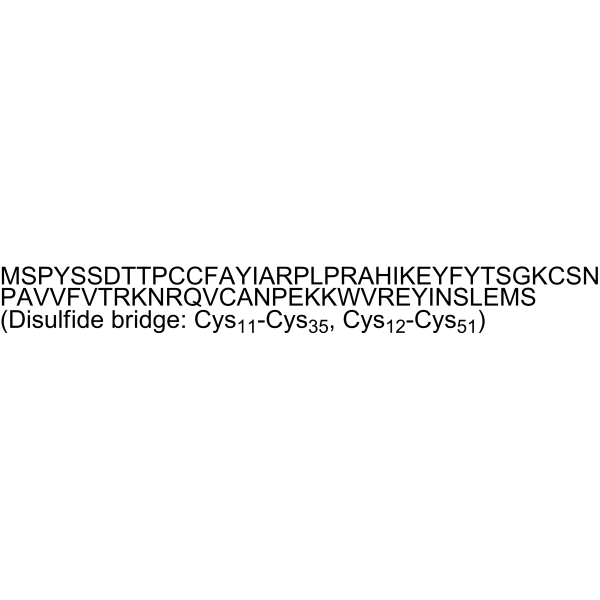
    MSPYSSDTTPCCFAYIARPLPRAHIKEYFYTSGKCSN

    CCR Inflammation/Immunology
    Met-RANTES (human) is the antagonist for CCR1 and CCR5. Met-RANTES (human) inhibits chemokines human MIP-1α and MIP-1β with IC50 of 5 and 2 nM. Met-RANTES (human) reduces bone destruction and ameliorates rats adjuvant-induced arthritis (AIA) [1].
    Met-RANTES (human)
  • HY-B0155

    SCH 417690; SCH-D; MK-7690 free base

    CCR HIV Infection Cancer
    Vicriviroc (SCH 417690) is an orally active CCR5 antagonist with the IC50 of 10 nM, and also inhibts MIP-1α and intracellular calcium release induced by the ligand RANTES (10 nM) with the IC50 values of 0.91 nM and 16 nM,,respectively. Vicriviroc can inhibits human immunodeficiency virus type 1 (HIV-1) infection, and can also used for study of cancer [1] .
    Vicriviroc
  • HY-P3627

    Drug Derivative Cancer
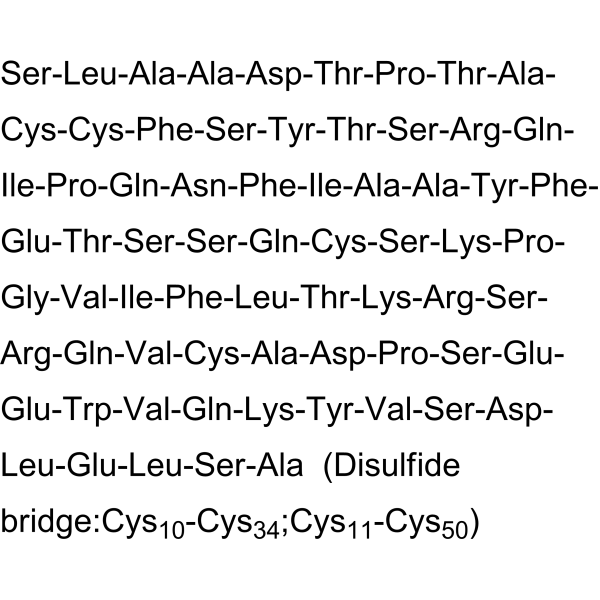
    Nagrestipen, a human macrophage inflammatory protein-1 alpha (MIP-1α) variant, also known as ECI 301. Nagrestipen has antitumor activity and can be used in therapeutic trials to study cancer, tumors, metastases, radiation oncology, and tumor metastasis [1].
    Nagrestipen
  • HY-B0155B

    SCH 417690 malate; SCH-D malate; MK-7690

    CCR HIV Infection Cancer
    Vicriviroc (SCH 417690) malate is an orally active CCR5 antagonist with the IC50 of 10 nM, and also inhibts MIP-1α and intracellular calcium release induced by the ligand RANTES (10 nM) with the IC50 values of 0.91 nM and 16 nM,,respectively. Vicriviroc malate can inhibits human immunodeficiency virus type 1 (HIV-1) infection, and can also used for study of cancer [1] .
    Vicriviroc malate
  • HY-110391

    VUF 2274

    CCR Neurological Disease Inflammation/Immunology
    BX-513 is a highly potent and selective CCR1 antagonist. BX-513 effectively inhibits the binding of radiolabeled MIP-1α and RANTES to CCR1, with Ki values of 40 nM and 60 nM, respectively. BX-513 suppresses MIP-1α-induced extracellular acidification, MIP-1α- and RANTES-induced intracellular calcium mobilization, as well as MIP-1α- and RANTES-induced migration of peripheral blood mononuclear cells. BX-513 can be used for the research of rheumatoid arthritis and multiple sclerosis [1].
    BX-513
  • HY-B1829R

    Dexamethasone 21-phosphate (Standard)

    Glucocorticoid Receptor Reference Standards TGF-β Receptor Interleukin Related Neurological Disease Inflammation/Immunology
    Dexamethasone phosphate (Standard) (Dexamethasone 21-phosphate (Standard)) is the analytical standard of Dexamethasone phosphate (HY-B1829). This product is intended for research and analytical applications. Dexamethasone phosphate (Dexamethasone 21-phosphate) is a prodrug form of the glucocorticoid Dexamethasone (HY-14648). Dexamethasone phosphate is prepared by introducing a phosphate ester group to the hydroxyl group at position 21 of the Dexamethasone molecule. Dexamethasone phosphate inhibits LPS (HY-D1056)-induced degradation of IRAK-1 and IRAK-4, and blocks LPS-induced activation of TRAF6, p-TAK1 and p-JNK. Dexamethasone phosphate inhibits the secretion of RANTES, TGF1 and NO, promotes the production of MIP-1α and IL-10, and blocks microglial migration. Dexamethasone phosphate is almost completely converted to Dexamethasone in rat blood, and supports transdermal delivery via iontophoresis. Dexamethasone phosphate can be used in research related to steroid-dependent ulcerative colitis, chemotherapy-induced vomiting, allergic asthma and acute colitis (inflammatory bowel disease).
    Dexamethasone phosphate (Standard)
  • HY-118962

    CCR HIV Infection
    E913 is a CCR5 antagonist that competes with the binding of antibodies to CCR5 which recognize the C-terminal half of the second extracellular loop (ECL2B) of CCR5. E913 can specifically block the binding of macrophage inflammatory protein-1alpha (MIP-1alpha) to CCR5 (IC50 = 0.002 μM) and MIP-1alpha-elicited cellular Ca 2+ mobilization (IC50 = 0.02 μM). E913 inhibits the replication of laboratory and primary R5 HIV-1 strains as well as various multidrug-resistant monocyte/macrophage tropic (R5) HIV-1 (IC50 = 0.03-0.06 μM). E913 can be used for the research of infection, such as HIV-1 infection [1].
    E913
  • HY-15544

    CCR Inflammation/Immunology
    CCR1 antagonist 10 (example 1) is a potent and orally active CCR1 antagonist. CCR1 antagonist 10 inhibits 125I-MIP-1α binding to THP-1 cell membranes with an Ki value of 2.3 nM [1].
    CCR1 antagonist 10
  • HY-103360B

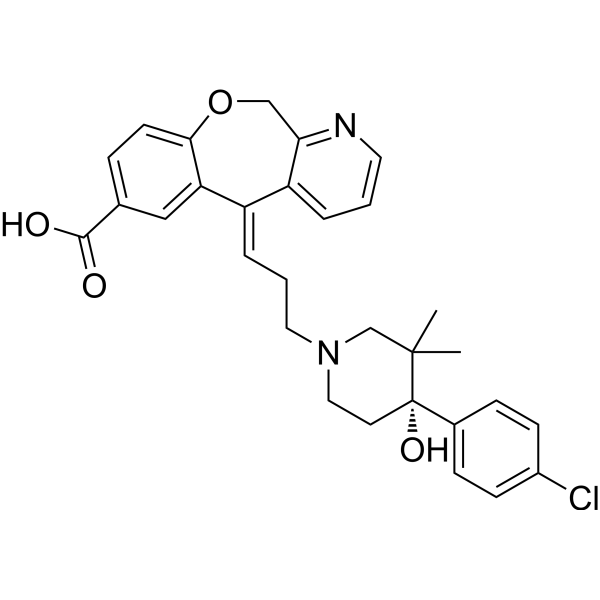
    CCR Inflammation/Immunology
    trans-J-113863 is a potent chemokine CCR1 and CCR3 receptor antagonist, and inhibits MIP-1α-induced chemotaxis in CCR1 transfectants and eotaxin-induced chemotaxis in CCR3 transfectants with IC50 of 9.57 and 93.8 nM,respectively [1] .
    trans-J-113863
  • HY-145854

    Bacterial Infection Inflammation/Immunology
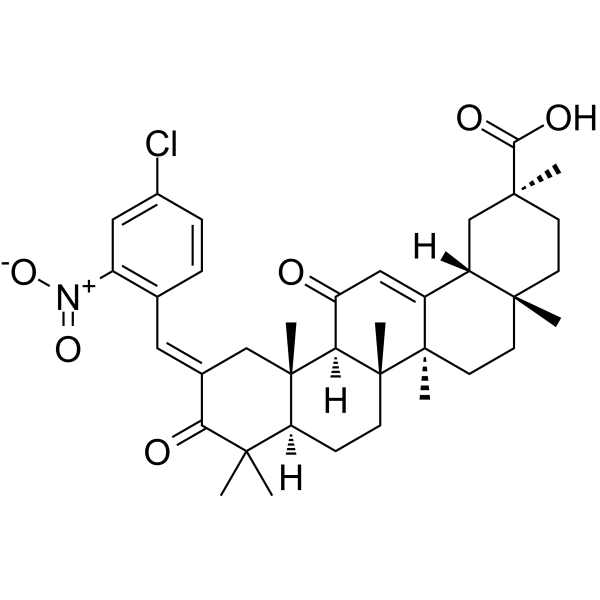
    GA-O-06, a 18β-Glycyrrhetinic acid derivative, is a potent antimicrobial and anti-inflammatory agent. GA-O-06 exerts anti-inflammation through the inhibition of NO, pro-inflammatory cytokines and chemokines. GA-O-06 displays a high antimicrobial activity against Gram-positive bacteria [1].
    GA-O-06
  • HY-145853

    Bacterial Infection Inflammation/Immunology
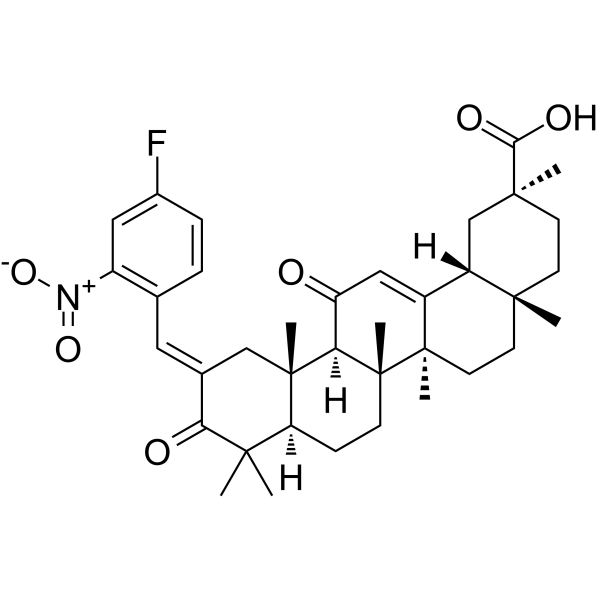
    GA-O-02, a 18β-Glycyrrhetinic acid derivative, is a potent antimicrobial and anti-inflammatory agent. GA-O-02 exerts anti-inflammation through the inhibition of NO, pro-inflammatory cytokines and chemokines. GA-O-02 displays a high antimicrobial activity against Gram-positive bacteria [1].
    GA-O-02
  • HY-17028A

    Bacterial Antibiotic DNA/RNA Synthesis Topoisomerase Infection Inflammation/Immunology
    (Rac)-Besifloxacin Hydrochloride is a fourth generation fluoroquinolone antibiotic. (Rac)-Besifloxacin Hydrochloride is a DNA gyrase and topoisomerase IV inhibitor. (Rac)-Besifloxacin Hydrochloride has broad-spectrum antibacterial activity, it is effective against Gram-negative and Gram-positive aerobic and anaerobic strains and reduces the incidence of drug resistance. (Rac)-Besifloxacin Hydrochloride has anti-inflammatory activity. Besifloxacin Hydrochloride can be used in bacterial conjunctivitis research [1] .
    (Rac)-Besifloxacin hydrochloride
  • HY-N10175

    NO Synthase NF-κB ERK Interleukin Related TNF Receptor Reactive Oxygen Species (ROS) Inflammation/Immunology
    keleyacetal C, a meroterpenoid compound with anti-inflammatory effects via inhibiting NF-κB, ERK1/2 and IRF3 signaling pathways. Berkeleyacetal C significantly inhibits the expression of iNOS and the following NO production by macrophages. Berkeleyacetal C inhibits expression and secretion of key pro-inflammatory factors and chemokines (TNF-α, IL-6, IL-1β, MIP-1α, and MCP-1). Berkeleyacetal C also inhibits activation of neutrophils and reactive oxygen species (ROS) production. Berkeleyacetal C can be used for the study of inflammatory disorders [1].
    Berkeleyacetal C

オンラインお問い合わせ

入力情報は安全に管理されます. 必須入力項目.

タイトル


国或いは地域 *

お名前 *


組纖名 *

デパートメント *


メールアドレス *


製品名 *

製品番号


カスタマ需要量 *

電話番号 *


必ず会社名を記載ください。個人への返信は行いません。

備考

バルクお問い合わせ

Inquiry Information

製品名:
製品番号:
数量:
MCE 日本正規代理店:

