11 Results for "

Microcystis

" in MedChemExpress (MCE) Product Catalog:
Products (11)

11 Results for "Microcystis" in MCE Product Catalog:

1
1 Cited Publications
Cat. No.: HY-N13022
CAS No.: 1415-93-6
Humic acid is an important component of organic matter in soil and water, and serves as a plant regulator. Humic acid has multiple reactive activities such as surface adsorption, ion exchange, and complexation. Humic acid can enhance pyrene degradation by Mycobacterium NJS-1. Humic acid can inhibit the activity of superoxide dismutase and scavenge hydroxyl radicals. Humic acid is also toxic to CEM cells .
loading...
    loading...
Cat. No.: HY-W017277
CAS No.: 15356-60-2
Synonyms: D-Menthol
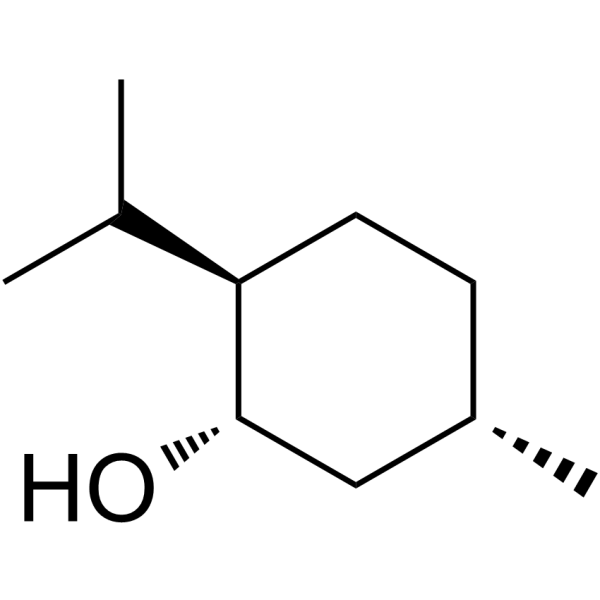
(+)-Menthol (D-Menthol) is one of the optical isomers of Menthol. (+)-Menthol can reduce the electrically evoked contractions of rat phrenic hemidiaphragm in vitro. Local anaesthetic activity. (+)-Menthol inhibits fungal growth and sporulation. (+)-Menthol can also inhibit the growth of Microcystis aeruginosa cells .
loading...
    loading...
Cat. No.: HY-141617
CAS No.: 53862-35-4
Purity:  99.10%
Target:  

Liposome

Research Areas:  

Metabolic Disease

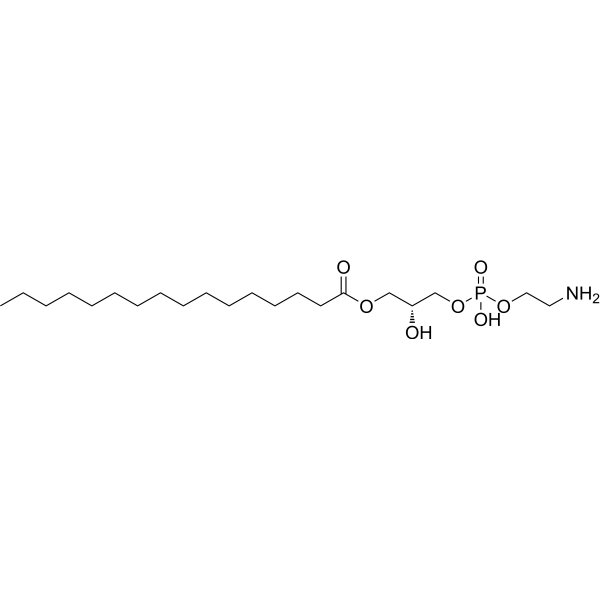
1-Palmitoyl-2-hydroxy-sn-glycero-3-PE is a naturally occurring lysophospholipid. 1-Palmitoyl-2-hydroxy-sn-glycero-3-PE also acts as an immune response regulator and toxicity alleviator produced by Microcystis aeruginosa under Cu 2+ stress .
loading...
    loading...
Cat. No.: HY-N7989
CAS No.: 56316-75-7
Synonyms: Tellimoside
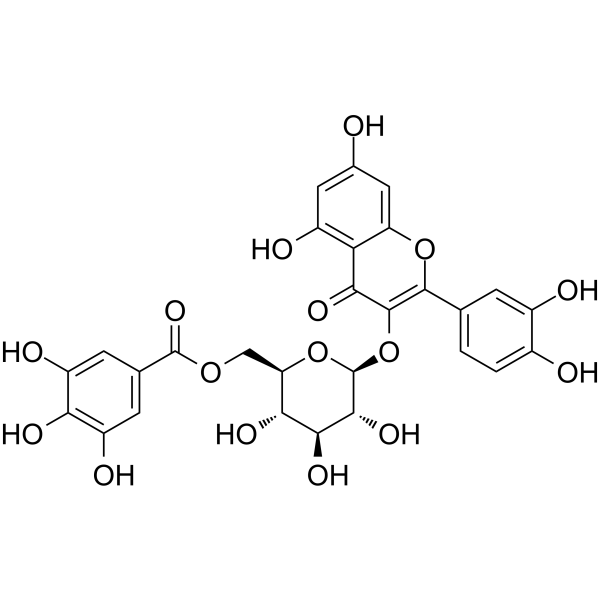
Quercetin 3-O-(6''-O-galloyl)-β-D-glucoside (Tellimoside) is a flavonol glycoside with strong inhibitory activity against the growth of Microcystis aeruginosa .
loading...
    loading...
Cat. No.: HY-W011165
CAS No.: 52123-30-5
Synonyms: L-Lysyl-L-lysine dihydrochloride
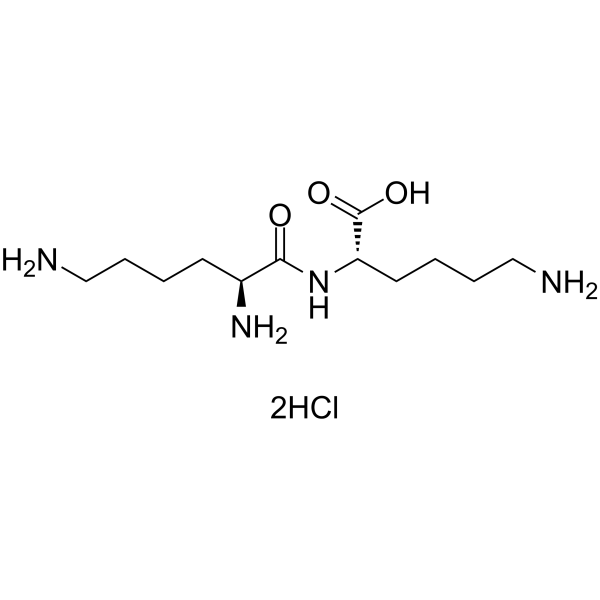
Lysyllysine dihydrochloride (L-Lysyl-L-lysine dihydrochloride) is an orally active PepT1 substrate. Lysyllysine dihydrochloride enhances whole-body protein synthesis, improves intestinal structure, alleviates intestinal mucosal inflammation, and exhibits higher lysine bioavailability in neonatal piglets with PN-induced intestinal atrophy. Lysyllysine dihydrochloride inhibits the growth of axenic cyanobacterial strains and induces their cell lysis. Lysyllysine dihydrochloride can be used in studies related to intestinal atrophy and metabolism .
loading...
    loading...
Cat. No.: HY-P11334
CAS No.: 850131-23-6
Cyanostatin B, a cyanobacterial lipopeptide, is a leucine aminopeptidase M (LAP) inhibitor (IC50 = 12 ng/mL). Cyanostatin B is a weak inhibitor of protein phosphatase (PP2A) and also exhibits weak inhibitory activity against angiotensin-converting enzyme (ACE), with an IC50 value of 130 μg/mL. Cyanostatin B demonstrates both cytotoxic and genotoxic effects on human hepatocytes, although non-toxic to Artemia salina. Cyanostatin B inhibits the proliferation of HepG2 cells, induces DNA single-strand breaks, and causes genomic instability. .
loading...
    loading...
Cat. No.: HY-120791
CAS No.: 13184-13-9
Synonyms: L-Lysyl-L-lysine
Lysyllysine (L-Lysyl-L-lysine ) is an orally active PepT1 substrate. Lysyllysine enhances whole-body protein synthesis, improves intestinal structure, alleviates intestinal mucosal inflammation, and exhibits higher lysine bioavailability in neonatal piglets with PN-induced intestinal atrophy. Lysyllysine inhibits the growth of axenic cyanobacterial strains and induces their cell lysis. Lysyllysine can be used in studies related to intestinal atrophy and metabolism .
loading...
    loading...
Cat. No.: HY-W017277R
CAS No.: 15356-60-2
Synonyms: D-Menthol (Standard)
(+)-Menthol (Standard) is the analytical standard of (+)-Menthol. This product is intended for research and analytical applications. (+)-Menthol (D-Menthol) is one of the optical isomers of Menthol. (+)-Menthol can reduce the electrically evoked contractions of rat phrenic hemidiaphragm in vitro. Local anaesthetic activity. (+)-Menthol inhibits fungal growth and sporulation. (+)-Menthol can also inhibit the growth of Microcystis aeruginosa cells .
loading...
    loading...
Cat. No.: HY-W700062
CAS No.: 78995-98-9
β-Cyclocitral-d5 is the deuterium labeled β-Cyclocitral (HY-W010231). β-Cyclocitral, a volatile oxidized derivative of β-carotene, is a grazer defence signal unique to the Cyanobacterium Microcystis. β-Cyclocitral, one of the predominant volatile terpenoid compounds, can upregulate the expression of defence genes to enhance excess light (EL) acclimation. β-Cyclocitral is a powerful repellent .
loading...
    loading...
Cat. No.: HY-P11338
CAS No.: 297730-40-6
Target:  

Endogenous Metabolite

Research Areas:  

Cancer

Microcyclamide (Compound 1), a cytotoxic cyclic hexapeptide, is a microbial secondary metabolite. Microcyclamide can be isolated from the cyanobacterium Microcystis aeruginosa. Microcyclamide has moderate cytotoxicity against P388 murine leukemia cells with an IC50 of 1.2 μg/mL. Microcyclamide can be used for cancers research .
loading...
    loading...
Cat. No.: HY-120791A
CAS No.: 73343-51-8
Synonyms: L-Lysyl-L-lysine trihydrochloride
Lysyllysine trihydrochloride (L-Lysyl-L-lysine trihydrochloride) is an orally active PepT1 substrate. Lysyllysine trihydrochloride enhances whole-body protein synthesis, improves intestinal structure, alleviates intestinal mucosal inflammation, and exhibits higher lysine bioavailability in neonatal piglets with PN-induced intestinal atrophy. Lysyllysine trihydrochloride inhibits the growth of axenic cyanobacterial strains and induces their cell lysis. Lysyllysine trihydrochloride can be used in studies related to intestinal atrophy and metabolism .
loading...
    loading...
  • 1

