14 Results for "

Non-narcotic

" in MedChemExpress (MCE) Product Catalog:
Products (14)

14 Results for "Non-narcotic" in MCE Product Catalog:

1
1 Cited Publications
Cat. No.: HY-121685A
CAS No.: 1449686-84-3
Purity:  99.98%
Target:  

Potassium Channel

Research Areas:  

Neurological Disease

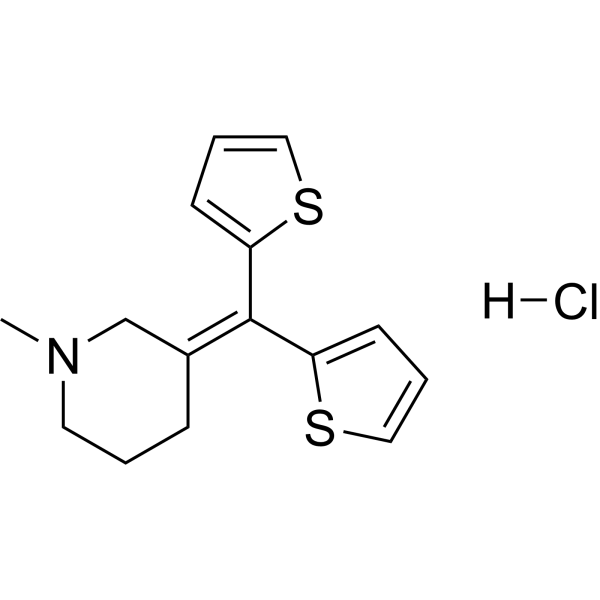
Tipepidine hydrochloride reversibly inhibits dopamine (DA) D2 receptor-mediated GIRK currents (IDA(GIRK)) with an IC50 of 7.0 μM. Tipepidine hydrochloride subsequently activates VTA dopamine neuron . Tipepidine hydrochloride, a non-narcotic antitussive, exerts an antidepressant-like effect .
loading...
    loading...
Cat. No.: HY-B1551
CAS No.: 104-31-4
Synonyms: BenzoNonatine
Target:  

Sodium Channel

Research Areas:  

Neurological Disease

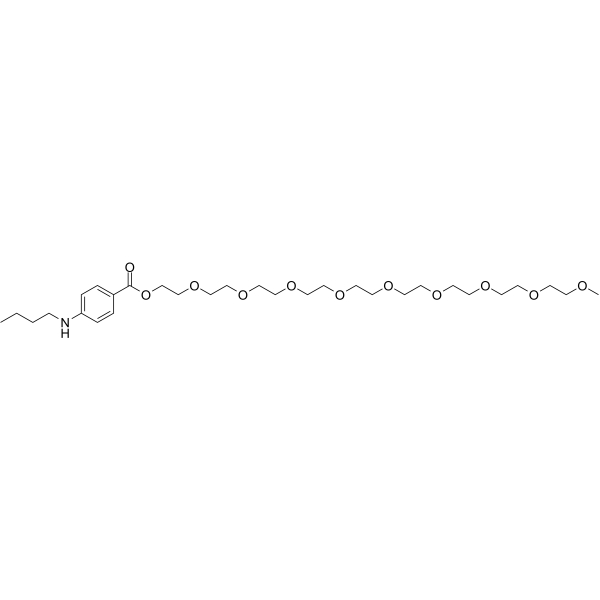
Benzonatate (Benzononatine) is an orally active and non-narcotic peripheral antitussive agent. Benzonatate is a reversible voltage-gated Na + channels inhibitor. Benzonatate dampens the activity of cough stretch receptors .
loading...
    loading...
Cat. No.: HY-133024
CAS No.: 30914-89-7
Purity:  99.86%
Target:  

5-HT Receptor

Research Areas:  

Neurological Disease

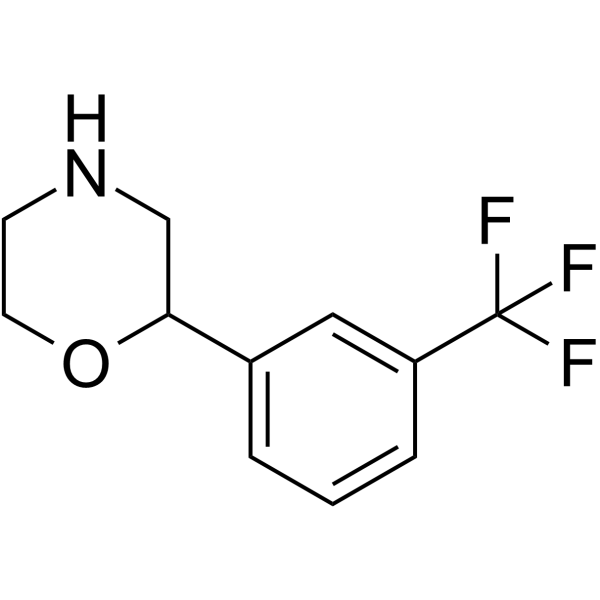
Flumexadol is a selective and affinity 5-HT2C receptor agonist with a Ki of 25 nM for the (+)-enantiomer of Flumexadol, and is 40-fold selective over the 5-HT2A receptor. Flumexadol is an orally active non-narcotic analgesic .
loading...
    loading...
Cat. No.: HY-121685
CAS No.: 5169-78-8
Target:  

Potassium Channel

Research Areas:  

Neurological Disease

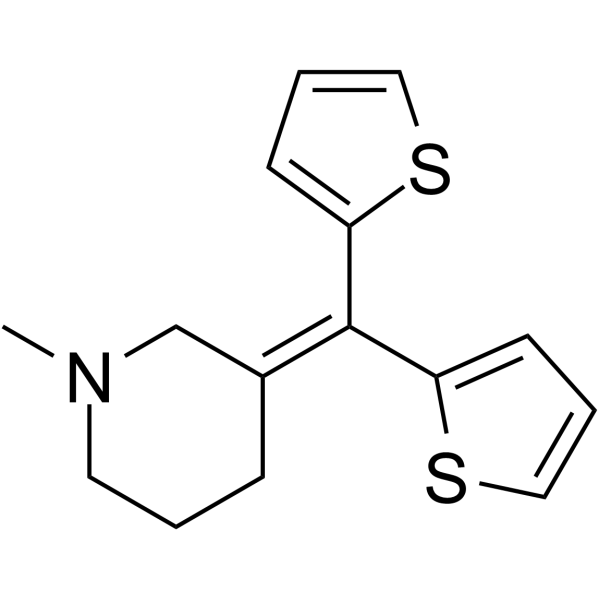
Tipepidine reversibly inhibits dopamine (DA) D2 receptor-mediated GIRK currents (IDA(GIRK)) with an IC50 of 7.0 μM. Tipepidine subsequently activates VTA dopamine neuron . Tipepidine, a non-narcotic antitussive, exerts an antidepressant-like effect .
loading...
    loading...
Cat. No.: HY-W748379
CAS No.: 553-69-5
Synonyms: (±)-Phenyramidol
Target:  

Drug Derivative

Research Areas:  

Neurological Disease

Fenyramidol is an Aminopyridine derivative. Fenyramidol can be used as a moderately potent, non-narcotic muscle relaxant with concomitant analgesic activity .
loading...
    loading...
Cat. No.: HY-105733A
CAS No.: 34144-82-6
Target:  

Others

Research Areas:  

Others

Suxemerid disulfate is a non-narcotic cough suppressant .
loading...
    loading...
Cat. No.: HY-119912
CAS No.: 55300-30-6
Synonyms: Stakane dihydrochloride
Target:  

COX

Antrafenine (Stakane) dihydrochloride is a non-narcotic analgesic. Antrafenine dihydrochloride demonstrates central analgesic effects in acetic acid writhing test and mouse hot plate test experiments. Antrafenine dihydrochloride significantly alleviates osteoarthritis pain. Antrafenine dihydrochloride exhibits mild anti-inflammatory activity in a rat toe edema model. Antrafenine dihydrochloride can be used for pain and anti-inflammatory research .
loading...
    loading...
Cat. No.: HY-100294
CAS No.: 115762-17-9
Synonyms: UP 26-91
Target:  

Others

Research Areas:  

Neurological Disease

Ruzadolane (UP 26-91) is a non-narcotic, centrally-acting analgesic agent.
loading...
    loading...
Cat. No.: HY-128418
CAS No.: 32760-16-0
Benzonatate (PEGn) is a unique non-narcotic antitussive agent that has sodium channel-blocking properties and anesthetic effects on the respiratory stretch receptors .
loading...
    loading...
Cat. No.: HY-B1551R
CAS No.: 104-31-4
Synonyms: BenzoNonatine (Standard)
Research Areas:  

Neurological Disease

Benzonatate (Standard) (Benzononatine (Standard)) is the analytical standard of Benzonatate (HY-B155). This product is intended for research and analytical applications. Benzonatate (Benzononatine) is an orally active and non-narcotic peripheral antitussive agent. Benzonatate is a reversible voltage-gated Na + channels inhibitor. Benzonatate dampens the activity of cough stretch receptors.
loading...
    loading...
Cat. No.: HY-121260
CAS No.: 482-74-6
Cryptopine is a non-narcotic isoquinoline alkaloid. Cryptopine can reduce the activities of glutathione S-transferase (GST) and glutathione reductase (GR), depletes intracellular glutathione levels, stimulates lipid peroxidation, and induces cytotoxicity by disrupting the cellular defense system. Cryptopine binds stably to key targets of liver cancer and also exhibits anthelmintic activity against Dactylogyrus intermedius. Cryptopine can be used in studies related to liver cancer and Dactylogyrus intermedius infection .
loading...
    loading...
Cat. No.: HY-B2185
CAS No.: 14698-07-8
Tipepidine citrate is a non-narcotic antitussive agent. Tipepidine citrate reversibly inhibits dopamine D2 receptor-mediated GIRK current (IDA(GIRK)), thereby activating VTA dopamine neurons, with an IC50 of 7.0 μM for IDA(GIRK). Tipepidine activates AMPK. Tipepidine citrate has antidepressant-like effects. Tipepidine citrate enhances the analgesic effect of Carbamazepine (HY-B0246). Tipepidine citrate improves adipose tissue fibrosis and glucose intolerance in high-fat diet-induced obese mice .
loading...
    loading...
Cat. No.: HY-105628
CAS No.: 3734-17-6
Synonyms: CI-427
Target:  

Others

Prodilidine (CI-427) is an orally active, pyrrolidine-derived non-narcotic pain inhibitor. Prodilidine exerts analgesic activity against various nociceptive stimuli, and shows no antipyretic, anti-inflammatory or respiratory depressive effects. Prodilidine fails to inhibit withdrawal symptoms of addictive agents in monkeys, but exhibits excitatory effects and enhances the crossed extensor reflex at toxic doses. Prodilidine is well absorbed from the gastrointestinal tract and metabolized via hepatic microsomal N-demethylation, displaying isomer-specific activity, toxicity and metabolic characteristics. Prodilidine can be used in research related to chronic pain (e.g., cancer-, musculoskeletal/arthritis-derived), traumatic pain and arthritic pain .
loading...
    loading...
Cat. No.: HY-A0177
CAS No.: 18053-31-1
Target:  

GABA Receptor

Research Areas:  

Inflammation/Immunology

Fominoben is a type of benzamide-based antitussive agent. Fominoben works by acting on the central nervous system to increase alveolar ventilation, thereby improving the blood oxygen levels in patients with pulmonary diseases (COLD). Fominoben can bind to the benzodiazepine receptor binding sites in the brain and also has anti-anxiety and anti-convulsant effects. Fominoben can be used in research on hypoxemia.
loading...
    loading...
  • 1

