18 Results for "

Sarcoma+180

" in MedChemExpress (MCE) Product Catalog:
Products (18)

18 Results for "Sarcoma+180" in MCE Product Catalog:

Cat. No.: HY-116073
CAS No.: 1113-41-3
Target:  

Acyltransferase

Research Areas:  

Infection Cancer

L-Penicillamine is an orally active serine palmitoyltransferase (SPT) inhibitor. L-Penicillamine inactivates the PLP cofactor by forming adducts, thereby inhibiting SPT activity and reducing sphingolipid biosynthesis. L-Penicillamine not only blocks tumor access to vitamin B6, but also stabilizes the human papillomavirus 16 E6 oncoprotein monomer and inhibits its polymerization, exhibiting a unique anticancer mechanism. L-Penicillamine effectively delays the growth of Sarcoma-180, induces tumor necrosis and prolongs survival (though long-term use may lead to Pyridoxine (HY-B1328) deficiency and weight loss) .
loading...
    loading...
Cat. No.: HY-116514
CAS No.: 18457-55-1
Purity:  ≥98.0%
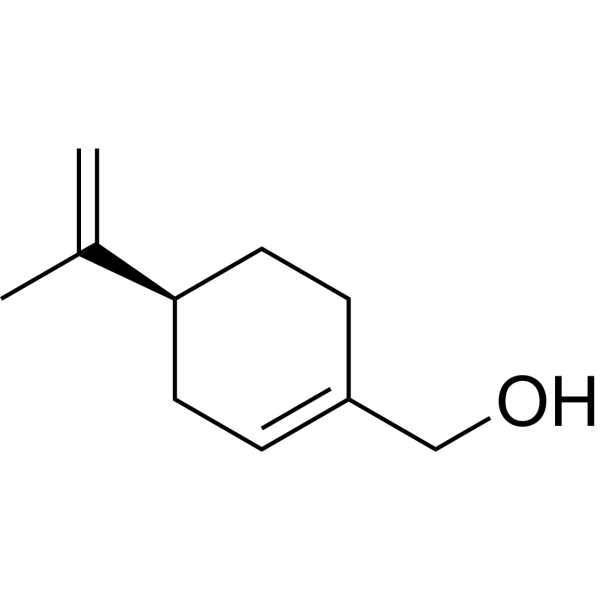
(S)-(-)-Perillyl alcohol, a monoterpene, is an orally active farnesyl transferase and geranylgeranyl transferase inhibitor. (S)-(-)-Perillyl alcohol up-regulates the mannose-6-phosphate receptor, facilitating TGF-β1 activation and cytostasis,. (S)-(-)-Perillyl alcohol induces apoptosis in cancer cells, modulates cyclin D1 and AP-1 activity. (S)-(-)-Perillyl alcohol exhibits antitumor activity against sarcoma tumors in mice. (S)-(-)-Perillyl alcohol can be used for the research of squamous cell carcinoma of the esophagus and sarcoma 180 .
loading...
    loading...
Cat. No.: HY-N0891
CAS No.: 115810-12-3
Synonyms: Tubeimoside-B
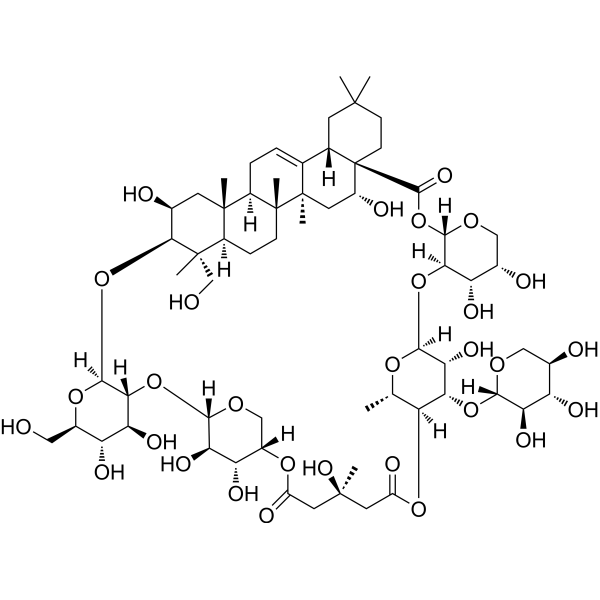
Tubeimoside II is an orally active triterpenoid saponin and antiviral agent that binds to PACT/PRKRA with Kd values of 5.37 μM and 133.1 μM, respectively. Tubeimoside II inhibits oxidase-dependent EGFR activation and reduces TGF-β1-induced oxidative stress. Tubeimoside II activates the RIG-I signaling pathway and increases IFN-β secretion. Tubeimoside II suppresses TPA-induced ear edema, mouse sarcoma 180 growth, and TPA-induced skin tumor formation. Tubeimoside II exerts broad-spectrum antiviral activity against SARS-CoV-2, HCoV-OC43, and IAV-H1N1/FM1. Tubeimoside II can be used in research related to retinoblastoma, respiratory viral infections, skin tumors, and sarcoma 180 .
loading...
    loading...
Cat. No.: HY-W781133
CAS No.: 106343-54-8
Synonyms: cis-[Pt(NH3)2N1-pyridineCl]Cl
Research Areas:  

Cancer

cDPCP (cis-[Pt(NH3)2(N1-pyridine)Cl]Cl) is a DNA crosslinking agent and also a substrate for OCT1 and OCT2. DPCP exhibits anticancer activity and can improve the survival rate of sarcoma-180 mice. cDPCP is suitable for the research of colorectal cancer and cancers with appropriate cation transporters .
loading...
    loading...
Cat. No.: HY-N0566
CAS No.: 85999-40-2
Synonyms: Anemosapogenin
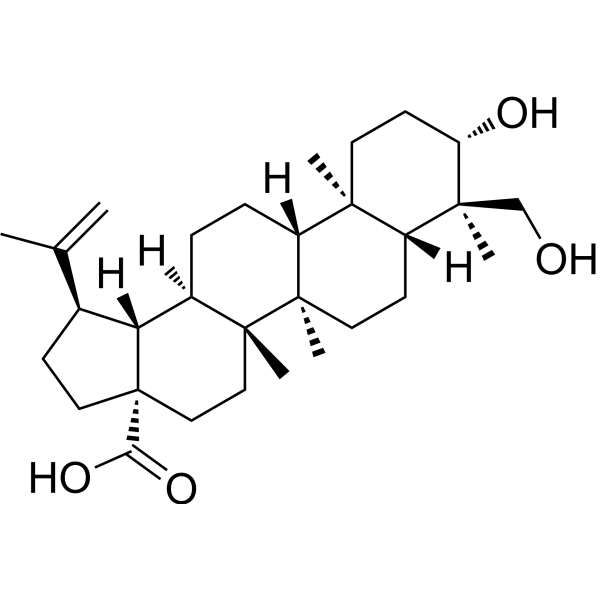
23-Hydroxybetulinic acid (Anemosapogenin) is an orally active triterpenoid with broad-spectrum anticancer activity. 23-Hydroxybetulinic acid reduces the levels of Bcl-2 and survivin, elevates the level of Bax, promotes the cleavage/activation of caspase-3 and caspase-9, and induces apoptosis via the endogenous mitochondrial pathway involving cytochrome C release and mitochondrial membrane potential disruption. 23-Hydroxybetulinic acid arrests the cell cycle at S and G1 phases, inhibits cancer cell proliferation, blocks the MAPK signaling pathway, regulates MMP2, and induces autophagic apoptosis by upregulating beclin-1. 23-Hydroxybetulinic acid inhibits the activity and efflux function of P-gp, increases the intracellular accumulation of chemotherapeutic drugs, and synergistically enhances cytotoxicity with Doxorubicin (HY-15142). 23-Hydroxybetulinic acid inhibits the phosphorylation and nuclear translocation of STAT6, blocks M2 macrophage polarization, and reduces M2 macrophage-mediated apoptosis resistance of colon cancer cells. 23-Hydroxybetulinic acid can be used in related studies on chronic myeloid leukemia, hepatocellular carcinoma, sarcoma 180, multidrug-resistant breast cancer, leukemia, Doxorubicin-induced cardiotoxicity, and colorectal cancer .
loading...
    loading...
Cat. No.: HY-128514
CAS No.: 32388-21-9
Synonyms: Oxazinomycin
Minimycin (Oxazinomycin) is a nucleoside antibiotic with a broad-spectrum antibacterial activity. Minimycin has inhibitory effect on mouse Ehrlich ascites carcinoma, ascites type and solid type sarcoma-180 .
loading...
    loading...
Cat. No.: HY-N14616
CAS No.: 5016-18-2
Reumycin is a 7-azapteridine antibiotic. Reumycin is toxic to Airy carcinoma, sarcoma-180, sarcoma-37, lymphosarcoma and other tumor cells .
loading...
    loading...
Cat. No.: HY-125664
CAS No.: 480439-84-7
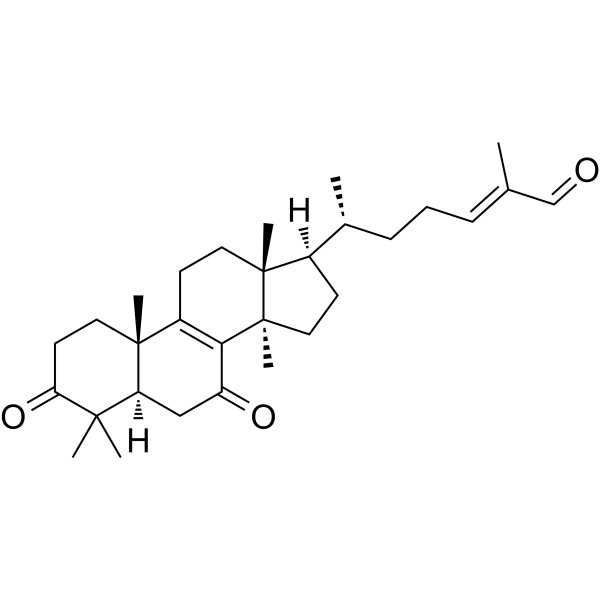
Lucialdehyde B is a tetracyclic triterpene isolated from the substrates of Ganoderma lucidum with antiviral and cytotoxic activities. Lucialdehyde B has cytotoxic effects against Lewis lung cancer (LLC), T-47D, Sarcoma 180 and Meth-A tumor cell lines .
loading...
    loading...
Cat. No.: HY-N14853
CAS No.: 2057463-74-6
Ossamycin is a macrolide antibiotic. Ossamycin has anti-fungal effect, and it has weaker anti-Gram-positive bacterial effect. Ossamycin inhibits L cells, Epstein-Barr ascites cancer cells, KB cells, sarcoma-180 cells, L-1210 cells, HeLa cells in cell culture with IC50s (μg/mL) of 0.007, 0.008, 0.005, 0.008, 0.003, 0.005, respectively .
loading...
    loading...
Cat. No.: HY-N14522
CAS No.: 80937-34-4
Gilvocarcin E has anti-Gram-positive bacterial activity and can inhibit sarcoma 180 and P388 leukemia cells .
loading...
    loading...
Cat. No.: HY-N14178
CAS No.: 749-18-8
Category:  

Microorganisms Antibiotics

Target:  

Bacterial

Cyclacidin has anti-individual Gram-positive bacteria (subtilis, Gambosia occidentalis) activity, and has inhibitory effect on sarcoma 180 and so on .
loading...
    loading...
Cat. No.: HY-N15050
CAS No.: 18700-78-2
Cervicarcin is an antitumor antibiotic with a strong inhibitory effect on sarcoma 180 and sarcoma NF, but has a weak effect on sarcoma 37, Ehrman's ascites cancer and Friend leukemia .
loading...
    loading...
Cat. No.: HY-169596
CAS No.: 96551-81-4
Target:  

Aminopeptidase

Research Areas:  

Cancer

Arphamenine A is an aminopeptidase B inhibitor found in Chromobacteriuin violaceum HMG361-CF4. Arphamenine A can inhibit the activity of aminopeptidase B, and can inhibit sarcoma 180 and invasive micropapillary carcinoma (IMC) cancer .
loading...
    loading...
Cat. No.: HY-117818
CAS No.: 132609-35-9
Synonyms: Antibiotic DC 116
Sapurimycin is an antitumor antibiotic isolated from Streptomyces DO-116 and belongs to the capramycin family. Sapurimycin exhibits potent activity against Gram-positive bacteria and exhibits significant antitumor effects against leukemia P388 and sarcoma 180 in mouse models. In vitro studies have shown that Sapurimycin can induce single-strand breaks in supercoiled plasmid DNA .
loading...
    loading...
Cat. No.: HY-130596
CAS No.: 94448-15-4
DC-86-M is an antibiotic, which can be isolated from Streptomyces luteogriseus. DC-86-M exhibits antibacterial activities against Bacillus subtilis, Staphylococcus aureus, Enterococcus faecalis, Vibrio anguillarum, and Proteus vulgaris, with MIC <1 μg/mL. DC-86-M exhibits antitumor activity against mouse sarcoma 180 with LD50 of 25 mg/kg .
loading...
    loading...
Cat. No.: HY-N0891R
CAS No.: 115810-12-3
Synonyms: Tubeimoside-B (Standard)
Tubeimoside II (Standard) (Tubeimoside-B (Standard)) is the analytical standard of Tubeimoside II (HY-N0891). This product is intended for research and analytical applications. Tubeimoside II is an orally active triterpenoid saponin and antiviral agent that binds to PACT/PRKRA with Kd values of 5.37 μM and 133.1 μM, respectively. Tubeimoside II inhibits oxidase-dependent EGFR activation and reduces TGF-β1-induced oxidative stress. Tubeimoside II activates the RIG-I signaling pathway and increases IFN-β secretion. Tubeimoside II suppresses TPA-induced ear edema, mouse sarcoma 180 growth, and TPA-induced skin tumor formation. Tubeimoside II exerts broad-spectrum antiviral activity against SARS-CoV-2, HCoV-OC43, and IAV-H1N1/FM1. Tubeimoside II can be used in research related to retinoblastoma, respiratory viral infections, skin tumors, and sarcoma 180 .
loading...
    loading...
Cat. No.: HY-116514R
CAS No.: 18457-55-1
(S)-(-)-Perillyl alcohol (Standard) is the analytical standard of (S)-(-)-Perillyl alcohol (HY-116514). This product is intended for research and analytical applications. (S)-(-)-Perillyl alcohol, a monoterpene, is an orally active farnesyl transferase and geranylgeranyl transferase inhibitor. (S)-(-)-Perillyl alcohol up-regulates the mannose-6-phosphate receptor, facilitating TGF-β1 activation and cytostasis,. (S)-(-)-Perillyl alcohol induces apoptosis in cancer cells, modulates cyclin D1 and AP-1 activity. (S)-(-)-Perillyl alcohol exhibits antitumor activity against sarcoma tumors in mice. (S)-(-)-Perillyl alcohol can be used for the research of squamous cell carcinoma of the esophagus and sarcoma 180.
loading...
    loading...
Cat. No.: HY-N0566R
CAS No.: 85999-40-2
Synonyms: Anemosapogenin (Standard)
23-Hydroxybetulinic acid (Standard) is the analytical standard of 23-Hydroxybetulinic acid (HY-N0566). This product is intended for research and analytical applications. 23-Hydroxybetulinic acid (Anemosapogenin) is an orally active triterpenoid with broad-spectrum anticancer activity. 23-Hydroxybetulinic acid reduces the levels of Bcl-2 and survivin, elevates the level of Bax, promotes the cleavage/activation of caspase-3 and caspase-9, and induces apoptosis via the endogenous mitochondrial pathway involving cytochrome C release and mitochondrial membrane potential disruption. 23-Hydroxybetulinic acid arrests the cell cycle at S and G1 phases, inhibits cancer cell proliferation, blocks the MAPK signaling pathway, regulates MMP2, and induces autophagic apoptosis by upregulating beclin-1. 23-Hydroxybetulinic acid inhibits the activity and efflux function of P-gp, increases the intracellular accumulation of chemotherapeutic drugs, and synergistically enhances cytotoxicity with Doxorubicin (HY-15142). 23-Hydroxybetulinic acid inhibits the phosphorylation and nuclear translocation of STAT6, blocks M2 macrophage polarization, and reduces M2 macrophage-mediated apoptosis resistance of colon cancer cells. 23-Hydroxybetulinic acid can be used in related studies on chronic myeloid leukemia, hepatocellular carcinoma, sarcoma 180, multidrug-resistant breast cancer, leukemia, Doxorubicin-induced cardiotoxicity, and colorectal cancer.
loading...
    loading...
  • 1

