17 Results for "

Shrimp

" in MedChemExpress (MCE) Product Catalog:
Products (17)

17 Results for "Shrimp" in MCE Product Catalog:

1
1 Cited Publications
Cat. No.: HY-131146
CAS No.: 43056-63-9
Purity:  99.89%
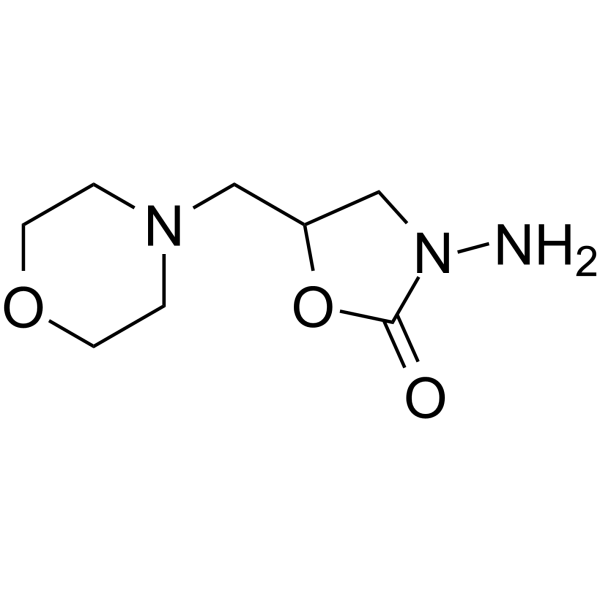
Synonyms: 3-Amino-5-morpholinomethyl-2-oxazolidone
Target:  

Drug Metabolite

Research Areas:  

Infection

AMOZ is a carcinogenic metabolite of Furaltadone (HY-B1148A), which forms stable tissue residues by covalently binding to proteins as a hapten. AMOZ can be coupled with carrier proteins (such as BSA/OVA) to induce immune response and is released after acid hydrolysis. AMOZ residues can be detected by competitive ELISA method, and the detection limit in the monoclonal antibody 2E5.1 test is as low as 0.16 μg/kg (shrimp sample). AMOZ can be used as a typical marker to monitor drug residues in animal-derived foods in the field of food safety[1][2].
1
1 Cited Publications
Cat. No.: HY-N2512
CAS No.: 589-68-4
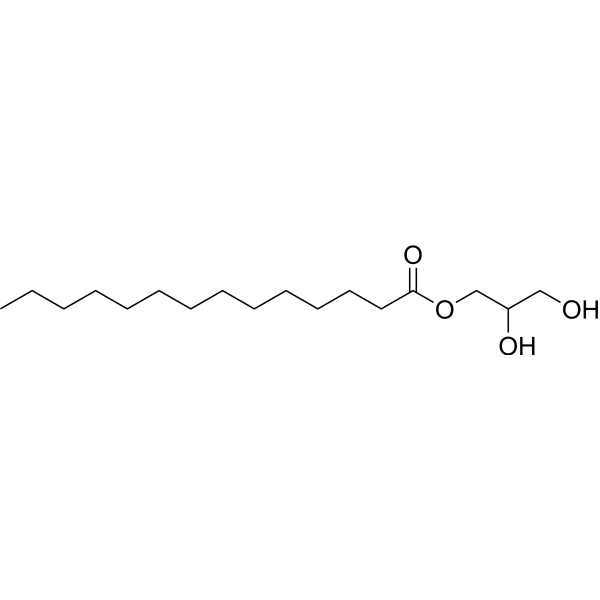
1-Monomyristin acts as an insecticide, enzyme inhibitor, antibacterial and antifungal agent, with an IC50 of 18 μM against rat FAAH and an IC50 of 32 μM against rat MAGL. 1-Monomyristin inhibits 2-oleoylglycerol hydrolysis via MAGL. 1-Monomyristin suppresses the growth of Staphylococcus aureus, Aggregatibacter actinomycetemcomitans and Candida albicans. 1-Monomyristin is lethal to brine shrimp . 1-Monomyristin exhibits marginal cytotoxicity against prostate cancer cells. 1-Monomyristin is applicable to research related to bacterial infections, fungal infections, renal cancer, prostate adenocarcinoma and pancreatic cancer .
Cat. No.: HY-P2853
CAS No.: 9013-72-3
Hemocyanin is an extracellular giant copper-containing glycoprotein. Hemocyanin can be found in the hemolymph of both mollusk and arthropod. Hemocyanin is responsible for oxygen transport. Hemocyanin is also involved in several physiological processes, such as energy storage, osmoregulation, molt cycle and exoskeleton formation. Hemocyanin in shrimp can enhance its immune response by modulating the p38 MAPK pathway. Hemocyanin from Penaeus monodon could act as an antiviral agent against a variety of viruses including DNA and RNA viruses. Hemocyanin from horseshoe crab Carcinoscorpius rotundicauda could possess a strong antimicrobial defense by the production of ROS activated with microbial proteases. Hemocyanin from L. vannamei would be effective against cervical cancer cell growth .
Cat. No.: HY-126389B
CAS No.: 1398-61-4
Chitin, from shrimp shells (chitinase substrate) serves as a substrate for chitinase. Chitin, from shrimp shells (chitinase substrate) is a long-chain polymer of N-acetylglucosamine with β-(1-4) linkages. Chitin, from shrimp shells (chitinase substrate) is found in the exoskeleton of crabs. Chitin, from shrimp shells (chitinase substrate) inhibits the activation of NF-κB p65, alters the translocation of NF-κB p65 to the nucleus, and interacts with the cell wall of Candida species. Chitin, from shrimp shells (chitinase substrate) exerts antifungal and anti-inflammatory effects. Chitin, from shrimp shells (chitinase substrate) can be used in the research of gastric ulcer and candidiasis .
Cat. No.: HY-W750676
CAS No.: 7542-45-2
Synonyms: AstaREAL; AstaXin; BioAstin
Target:  

Endogenous Metabolite

Research Areas:  

Metabolic Disease

rac-Astaxanthin is a carotenoid pigment found primarily in marine animals including shrimp and salmon. It is a potent lipid-soluble antioxidant.
Cat. No.: HY-126389A
CAS No.: 1398-61-4
Chitin, from shrimp shells (powder) is a long-chain polymer of N-acetylglucosamine with β-(1-4) linkages. Chitin, from shrimp shells (powder) is found in the exoskeleton of crabs. Chitin, from shrimp shells (powder) inhibits the activation of NF-κB p65, alters the translocation of NF-κB p65 to the nucleus, and interacts with the cell wall of Candida species. Chitin, from shrimp shells (powder) exerts antifungal and anti-inflammatory effects. Chitin, from shrimp shells (powder) can be used in the research of gastric ulcer and candidiasis .
Cat. No.: HY-N3968
CAS No.: 17303-67-2
Synonyms: GTN; (R)-(+)-Goniothalamin
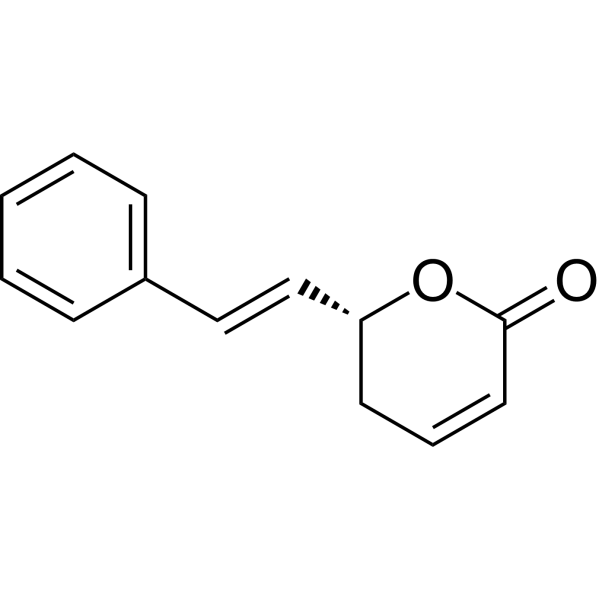
Goniothalamin (GTN) is a styryl lactone. Goniothalamin exhibits insecticidal, anti-tumor and antibacterial activities. Goniothalamin induces cell cycle arrest and apoptosis in tumor cells. Goniothalamin acts as a larvicide against Culex quinquefasciatus larvae and as a cytotoxin against brine shrimp larvae. Goniothalamin functions as an antibacterial agent against Gram-positive and Gram-negative bacteria, and also acts as an antifungal agent against pathogens including Candida albicans, Trichophyton rubrum and Trichophyton mentagrophytes. Goniothalamin is applicable to research related to breast cancer, lymphatic filariasis, bacterial infections and fungal infections .
Cat. No.: HY-W750676R
CAS No.: 7542-45-2
Synonyms: AstaREAL (Standard); AstaXin (Standard); BioAstin (Standard)
(rac./meso)-Astaxanthin (Standard) is the analytical standard of (rac./meso)-Astaxanthin. This product is intended for research and analytical applications. rac-Astaxanthin is a carotenoid pigment found primarily in marine animals including shrimp and salmon. It is a potent lipid-soluble antioxidant.
Cat. No.: HY-W145695
CAS No.: 68232-35-9
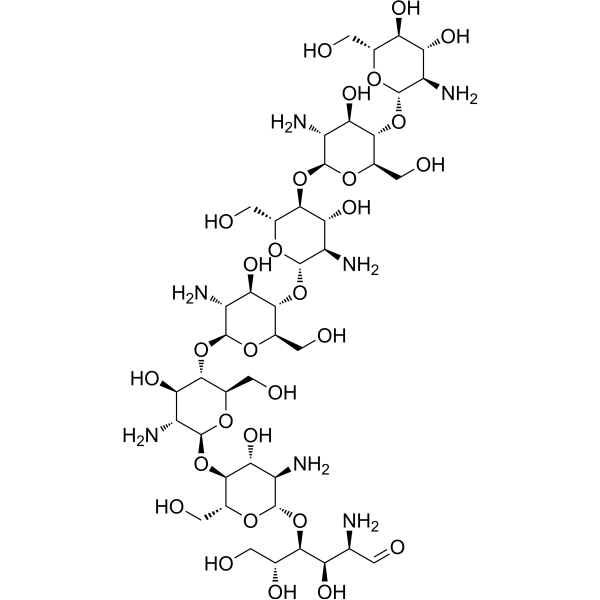
Chitoheptaose is an orally active chitooligosaccharide (degree of polymerization = 7). Chitoheptaose can be extracted from the exoskeletons of crustaceans, such as the shells of crabs, shrimps and lobsters. Chitoheptaose reduces pro-inflammatory cytokines while increasing the levels of anti-inflammatory cytokines (decreasing the levels of pro-inflammatory cytokines IL-1β, IL-17A and IFN-γ, and increasing the level of the anti-inflammatory cytokine IL-10). Chitoheptaose possesses antioxidant, anti-inflammatory and anti-Apoptotic activities. Chitoheptaose improves cardiac parameters, alleviates myocarditis injury, and exerts cardioprotective effects in a rat model of myocarditis. Chitoheptaose can be used in studies related to myocarditis .
Cat. No.: HY-135422
CAS No.: 10089-10-8
Synonyms: Methylustin
Target:  

Bacterial Fungal

Nidulin (Methylustin) is a depsidone isolated from a marine fungus Aspergillus unguis. Nidulin shows antifungal and antibacterial against pathogenetic strains, Pseudomonas aeruginosa, Methicillin-resistant Staphylococcus aureus and Candida albicans with inhibition zones of 9.5 mm, 9.0 mm and 9.0 mm, respectively. Nidulin exhibits potent larvicidality against brine shrimp .
Cat. No.: HY-E70382
Research Areas:  

Others

Shrimp Alkaline Phosphatase (SAP), a nucleotide phosphatase, can catalyze the removal of 5′ phosphates from nucleic acid templates. Shrimp Alkaline Phosphatase is readily inactivated in the absence of chelators and is widely used phosphatases in molecular cloning .
Cat. No.: HY-N11642
CAS No.: 1443298-77-8
Target:  

Others

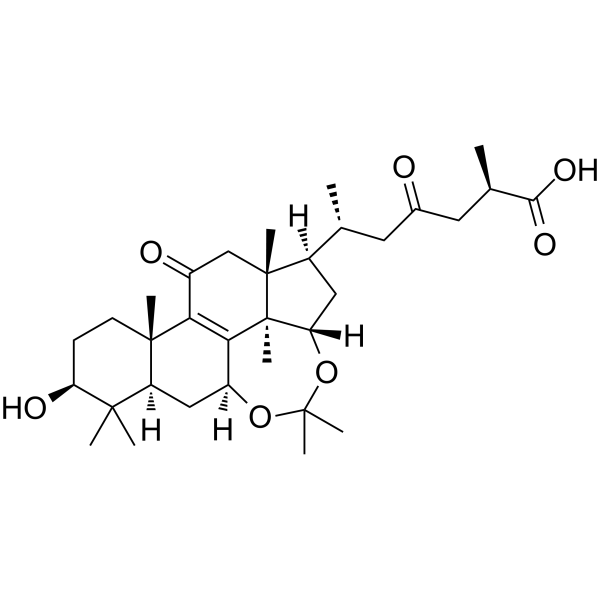
Ganodermacetal is a highly oxidized lanostane triterpene, that can be isolated from G. amboinense. Ganodermacetal shows a marked toxicity to brine shrimp larvae .
Cat. No.: HY-130807
CAS No.: 5627-00-9
Research Areas:  

Others

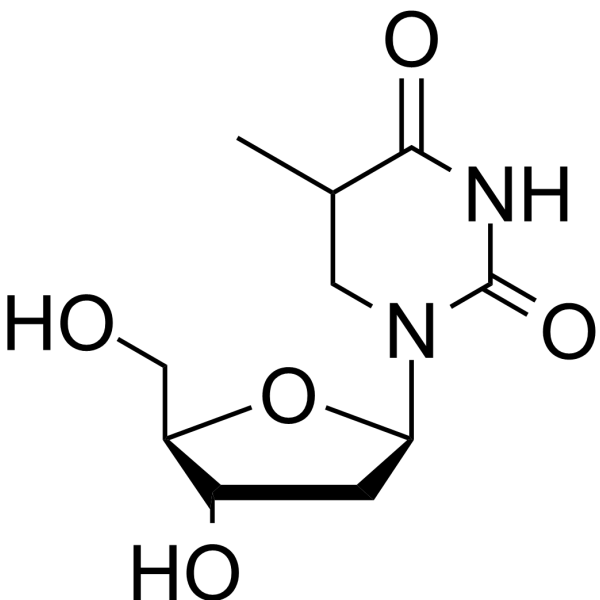
5,6-Dihydrothymidine (DHdThd), a irradiation marker, is a target antigen for the enzyme-linked immunosorbent assay of shrimp irradiation history .
Cat. No.: HY-137801
CAS No.: 51103-58-3
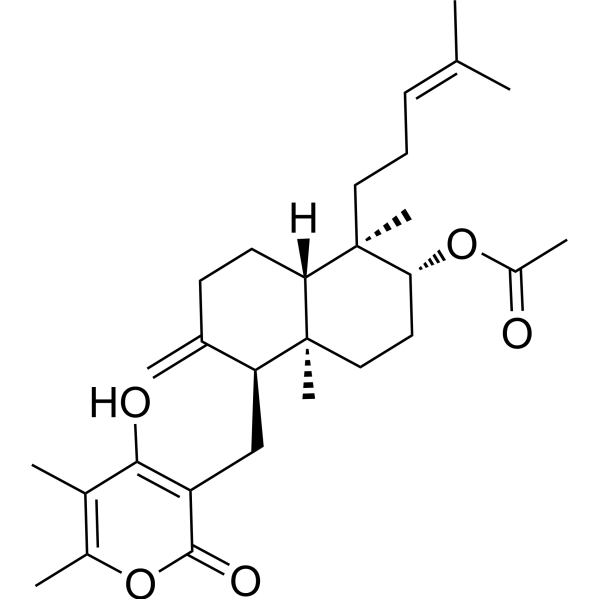
Sesquicillin A is an insecticidal antibiotic, a fungal metabolite isolated from white plantain. Sesquicillin A inhibits the growth of A. salina brine shrimp with the MIC value of 6.25 µg/mL .
Cat. No.: HY-N8373
CAS No.: 165467-50-5
Target:  

Bacterial

Research Areas:  

Infection

Beauvericin A is a cyclodepsipeptide and derivative of beauvericin originally isolated from B. bassiana that has diverse biological activities. It is active against M. tuberculosis (MIC=25 μg/mL) and P. falciparum (IC50=12 μg/mL).2 Beauvericin A is toxic to brine shrimp (LD100=32 μg/mL).
Cat. No.: HY-W017765
CAS No.: 602-09-5
Target:  

Cholinesterase (ChE)

Research Areas:  

Others

2,2'-Dihydroxy-1,1'-binaphthyl is an acetylcholinesterase (AChE) inhibitor with an IC50 value of 21.9 μM against human AChE. 2,2'-Dihydroxy-1,1'-binaphthyl exhibits cytotoxicity against Artemia nauplii .
Cat. No.: HY-N2230A
CAS No.: 20375-37-5
(E/Z)-N-p-trans-Coumaroyltyramine is an amide. (E/Z)-N-p-trans-Coumaroyltyramine is present in the leaves of Annona muricata L. (E/Z)-N-p-trans-Coumaroyltyramine exhibits certain brine shrimp larvicidal activity .
  • 1

