1. Search Result
Search Result
Results for "

Stereochemistry

" in MedChemExpress (MCE) Product Catalog:

24

Inhibitors & Agonists

2

Biochemical Assay Reagents

1

Peptides

9

Natural
Products

Cat. No. Product Name Target Research Areas Chemical Structure
  • HY-B1018A
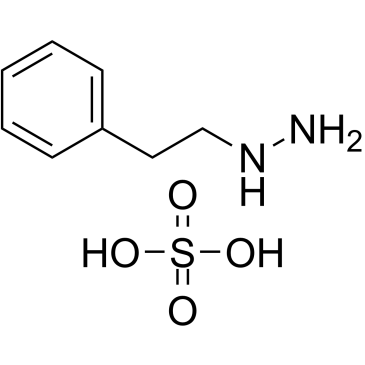
    Phenelzine sulfate
    5+ Cited Publications

    Monoamine Oxidase GABA Receptor Histone Demethylase Cardiovascular Disease Neurological Disease Metabolic Disease Inflammation/Immunology Cancer
    Phenelzine sulfate, an antidepressant agent, is an irreversible and orally active monoamine oxidase (MAO-A and MAO-B) inhibitor. Phenelzine sulfate inhibits GABA transaminase and primary amine oxidase (PrAO), and sequester reactive aldehydes. Phenelzine sulfate also inhibits LSD1 (Ki: 5.6 μM) and suppresses oxidative stress and lipogenesis. Phenelzine sulfate elevates neurotransmitters (serotonin, norepinephrine, dopamine). Phenelzine sulfate is studied in neurological, metabolic and cancer diseases for depression and anxiety disorders, stroke, spinal cord injury, traumatic brain injury, multiple sclerosis, Parkinson’s disease, Alzheimer’s disease, inflammatory pain, obesity and prostate cancer .
    Phenelzine sulfate
  • HY-137824

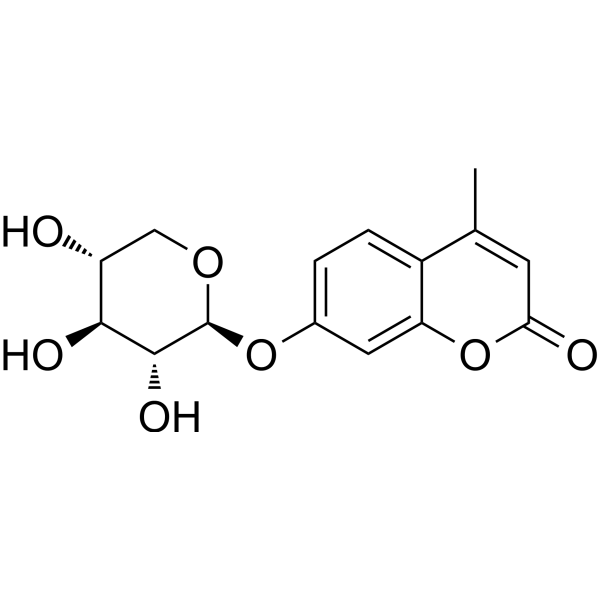
    4-Methylumbelliferyl-β-D-xyloside

    Biochemical Assay Reagents Others
    4-Methylumbelliferyl-β-D-xylopyranoside (4-Methylumbelliferyl-β-D-xyloside) is an enzymatically hydrolyzable β-D-xylopyranoside substrate. The enzymatic hydrolysis of 4-Methylumbelliferyl-β-D-xylopyranoside is mediated by the stereochemistry-retaining β-D-xylosidase GSXynB2 via a two-step catalytic process (xylosylation followed by dexylosidation). 4-Methylumbelliferyl-β-D-xylopyranoside serves as a substrate for the β-xylosidase of Trichoderma reesei QM 9414, and its enzymatic hydrolysis process is limited by the dexylosidation step.
    4-Methylumbelliferyl-β-D-xylopyranoside
  • HY-126584

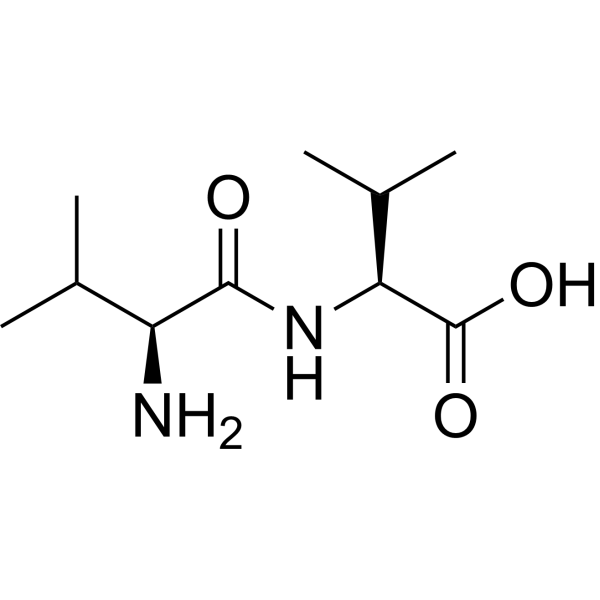
    Val-Val

    Drug Intermediate Oligopeptide Cotransporter Others
    H-Val-Val-OH (Val-Val) is a stereochemistry-dependent substrate and inhibitor of apical oligopeptide transporters. H-Val-Val-OH undergoes apical intracellular accumulation in human intestinal cells via carrier-mediated transport, and inhibits the uptake of Cephalexin (HY-B0200) through interaction with transporters. Substitution of L-valine with D-valine in H-Val-Val-OH abolishes its binding ability to apical oligopeptide transporters .
    H-Val-Val-OH
  • HY-W010394

    Biochemical Assay Reagents Others
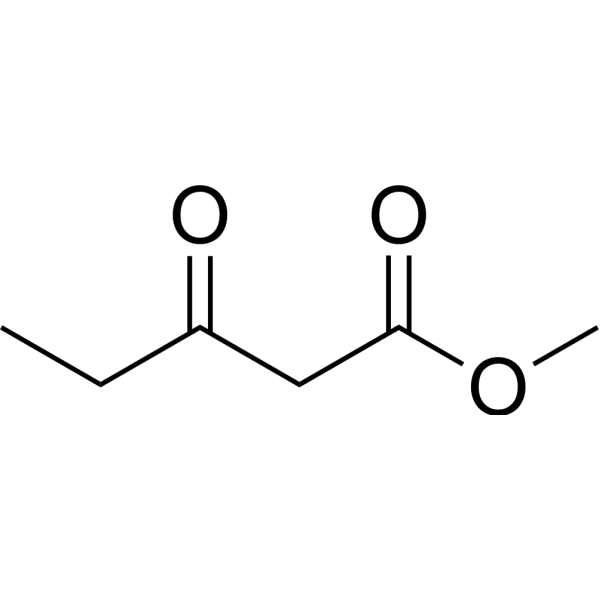
    Methyl 3-oxopentanoate, which is also known as diethyl acetylmalonate or MEAM, Methyl 3-oxopentanoate is commonly used as a building block for the synthesis of various organic compounds, including pharmaceuticals, agrochemicals, and flavorings, and it can also Used as a reagent in organic chemical reactions, especially the formation of carbon-carbon bonds through malonate synthesis, the researchers also investigated the potential use of Methyl 3-oxopentanoate in the development of chiral auxiliaries that can aid in the selection of Controlling the stereochemistry of chemical reactions.
    Methyl 3-oxopentanoate
  • HY-120949

    Opioid Receptor Neurological Disease
    (1R,2R)-U-50488 hydrochloride is the absolute stereochemistry of (±)-U-50488 hydrochloride. (±)-U-50488 hydrochloride is a selective κ opioid receptor (KOR) agonist .
    (1R,2R)-U-50488 hydrochloride
  • HY-175402

    Drug Isomer Infection Inflammation/Immunology
    (S)-5-Hydroxyequol is a (S)-stereochemistry of 5-Hydroxyequol. (S)-5-Hydroxyequol can be used for research on oxidative damage, fungal infections, inflammation, and immunosuppression .
    (S)-5-Hydroxyequol
  • HY-W039854

    1,2,3,4-Tetra-O-acetyl-beta-D-glucopyranose, 96%

    Biochemical Assay Reagents Others
    1,2,3,4-Tetra-O-acetyl-β-D-glucopyranose, 96% (1,2,3,4-Tetra-O-acetyl-beta-D-glucopyranose, 96%) can be used in glycobiology research to study glycosylation mechanisms, glycosidic bond formation, and stereochemistry.
    1,2,3,4-Tetra-O-acetyl-β-D-glucopyranose, 96%
  • HY-W035375

    Drug Metabolite Neurological Disease
    Mephedrone metabolite hydrochloride ((±)-ephedrine stereochemistry) is a metabolite of Mephedrone.
    Mephedrone metabolite hydrochloride ((±)-ephedrine stereochemistry)
  • HY-113801

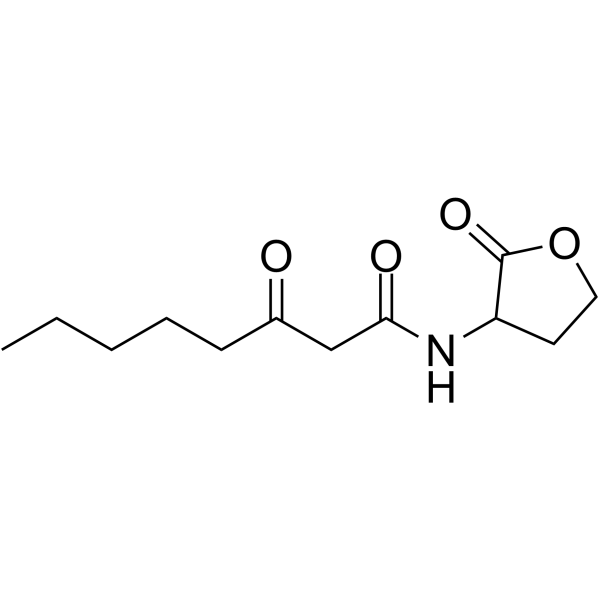
    (Rac)-3-oxo-C8-HSL

    Endogenous Metabolite Metabolic Disease
    N-(3-Oxooctanoyl)-DL-homoserine lacton is a member of N-Acyl homoserine lactone (AHL) from gram-negative bacteria, with stereochemistry-dependent growth regulatory activity for roots .
    N-(3-Oxooctanoyl)-DL-homoserine lactone
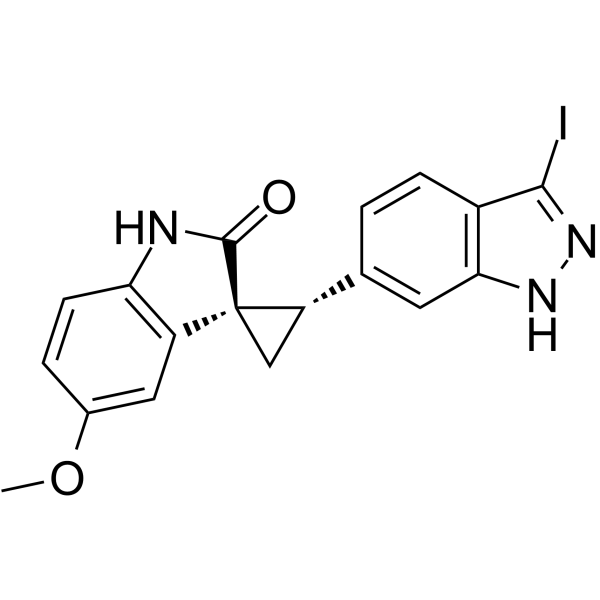
  • HY-134775A

    Polo-like Kinase (PLK) Cancer
    PLK4-IN-3 is a less active absolute stereochemistry of PLK4-IN-1. PLK4-IN-1 is a PLK4 inhibitor, with an IC50 of 0.65 μM .
    PLK4-IN-3
  • HY-W144704B

    Drug Intermediate Others
    (3RS, 7R, 11R)-Dihydrophytol is the hydrogenation intermediate in the synthesis of Phytanic acid (HY-113067) from Phytol (HY-N3075) .
    (3RS,7R,11R)-Dihydrophytol
  • HY-N12962

    Others Others
    11S(12R)-EET is a dominant enantiomer of epoxytrienoic acid (EET) that is metabolized at a higher rate in rat organs. It shows enantiomeric-dependent reaction selectivity in hydration, especially in the case of 11,12-EET, where water addition is non-regioselective, while in 8,9-EET, water addition occurs mainly at the C9 position. In addition, 11S(12R)-EET generates diol products with specific stereochemistry through enzymatic hydration reactions, which are affected by the selective recognition of epoxidases, reaction conversion rates, and substrate binding parameters .
    11S(12R)-EET
  • HY-137938

    Bacterial Infection
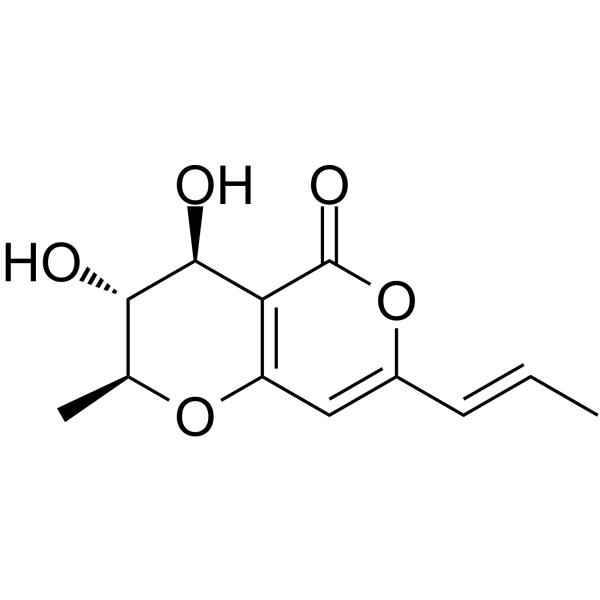
    Radicinol is a metabolite of cochliobolus lunata, and absolute stereochemistry of radicinin .
    Radicinol
  • HY-160983

    DNA/RNA Synthesis Cancer
    PHYLPA-8 is an inhibitor for DNA polymerase-α, which exhibits weak inhibitory activity for the stereochemistry of the fatty acid moiety and the cyclic phosphate .
    PHYLPA-8
  • HY-117542

    Histone Methyltransferase Neurological Disease
    D595 is a phenylethylamine calcium channel blocker with potent negative inotropic activity. D595 has shown significant efficacy in its corresponding pharmacological studies, especially in inhibiting the uptake of monoamine neurotransmitters. D595 has high affinity in binding to the dopamine transporter (DAT), serotonin transporter (SERT), and norepinephrine transporter (NET). Structural adjustments of D595, especially changes in the hydroxyl stereochemistry, significantly affect its interaction with the transporters, showing a specific preference for stereoisomers .
    D595
  • HY-N15259

    Biochemical Assay Reagents Others
    3'R-HBHL is a reference compound used for determining the stereochemistry of small bacteriocins .
    3'R-HBHL
  • HY-W720429

    Drug Metabolite Metabolic Disease
    2,5-Diamino-6-hydroxy-4-(5-phosphoribosylamino)pyrimidine is a metabolite in the biosynthesis pathway (purine metabolism process) of Riboflavin (HY-B0456) .
    2,5-Diamino-6-hydroxy-4-(5-phosphoribosylamino)pyrimidine
  • HY-172742

    Biochemical Assay Reagents Others
    Dioctanoyl PI(3,4)P2 (sodium) is a synthetic analog of natural Ptdlns featuring C8:0 fatty acids at the sn-1 and sn-2 positions. Dioctanoyl PI(3,4)P2 (sodium) contains the same inositol and diacylglycerol (DAG) stereochemistry as the natural Ptdlns .
    Dioctanoyl PI(3,4)P2 sodium
  • HY-35034

    (2S,3S)-2-Hydroxy-3-methylpentanoic acid

    Amino Acid Derivatives Drug Intermediate Others
    L-Isoleucic acid ((2S,3S)-2-Hydroxy-3-methylpentanoic acid) ((S)-isoleucic acid) is a non-proteinogenic amino acid derivative. L-Isoleucic acid can be used as a key synthetic building block to construct JBIR-39 .
    L-Isoleucic acid
  • HY-N12970

    Others Others
    14S(15R)-EET is an endogenous epoxytrienoic acid derivative that mainly exists in rat organs. By studying its metabolic process, it was found that its stereoselective hydration and formation of chiral diols were significantly affected by epoxidase. Different 14,15-EET enantiomers showed different regions and stereochemistry of hydration reactions, among which 14(R),15(S)-EET showed specific hydration for C15. These findings reveal the important role of epoxidase in the metabolism of endogenous EETs, and the differences in enzyme affinity and reaction rate for individual EET enantiomers may lead to their stereoselective metabolism .
    14S(15R)-EET
  • HY-114461A

    Drug Derivative Cancer
    (16R,17S)-FD-895, a similar compound to FD-895 (HY-114461), is a potent in vivo splice regulatory agent. (16R,17S)-FD-895 retains the similar anti-proliferative activity as FD-895. (16R,17S)-FD-895 can be used for research on colon cancer .
    (16R,17S)-FD-895
  • HY-N18270

    Others Others
    9α-epi-Tuberospironine A is a croomine-type stemona alkaloid found in the roots of Stemona tuberosa .
    9α-epi-Tuberospironine A
  • HY-N18043

    Drug Derivative Others
    Rehmaglutin C is an iridoid lactone.Rehmaglutin C can be found in the dried root of Rehmannia glutinosa LiBosCH .
    Rehmaglutin C
  • HY-119781

    PF1191

    iGluR Neurological Disease
    Kaitocephalin (PF1191) is an ionotropic glutamate receptor (NMDAR) antagonist with Ki values of 7.8, 590, and 14000 nM for NMDAR, AMPAR, and KAR, respectively. Kaitocephalin protects neurons by inhibiting excitotoxicity, exhibiting neuroprotective effects. Kaitocephalin can be used in research on neurological diseases such as Alzheimer's disease .
    Kaitocephalin

Inquiry Online

Your information is safe with us. * Required Fields.

Salutation


Country or Region *

Applicant Name *


Organization Name *

Department *


Email Address *


Product Name *

Cat. No.


Requested quantity *

Phone Number *


Remarks

Inquiry Online

Inquiry Information

Product Name:
Cat. No.:
Quantity:
MCE Japan Authorized Agent:

