22 Results for "

Structure-Activity Relationship (SAR)

" in MedChemExpress (MCE) Product Catalog:
Products (22)

22 Results for "Structure-Activity Relationship (SAR)" in MCE Product Catalog:

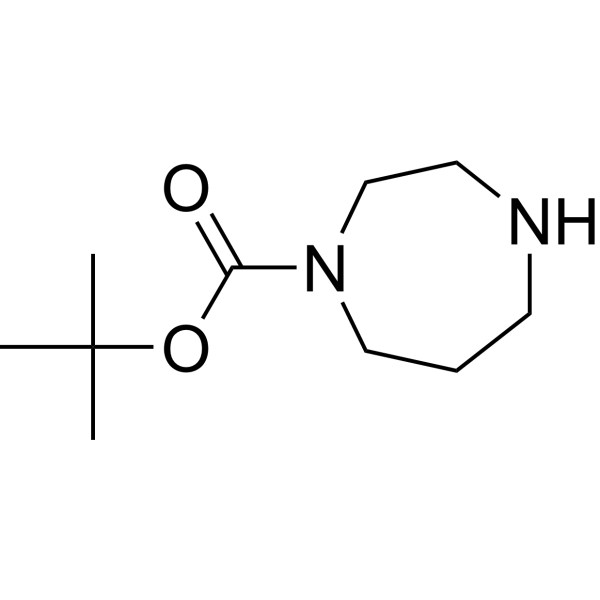
Cat. No.: HY-40181
CAS No.: 112275-50-0
1-Boc-homopiperazine is a drug intermediate that can be used for the synthesis of bacterial FtsZ inhibitors .
loading...
    loading...
Cat. No.: HY-178989
CAS No.: 3054148-68-1
Research Areas:  

Cancer

PGK1-IN-2 (Compound 60) is a PGK1 inhibitor with an IC50 of 8.24 μM. PGK1-IN-2 demonstrates a significant ability to inhibit the proliferation of osteosarcoma cells. PGK1-IN-2 interferes with the glycolytic pathway of tumor cells by inhibiting PGK1. PGK1-IN-2 inhibits cell migration and invasion, and induces cell S phase and G2-M phase cycle arrest. PGK1-IN-2 may kill cells by inducing cuproptosis. PGK1-IN-2 shows a significant anti-tumor effect in the MNNG-HOS osteosarcoma xenograft mouse model. PGK1-IN-2 can be used for the study of osteosarcoma .
loading...
    loading...
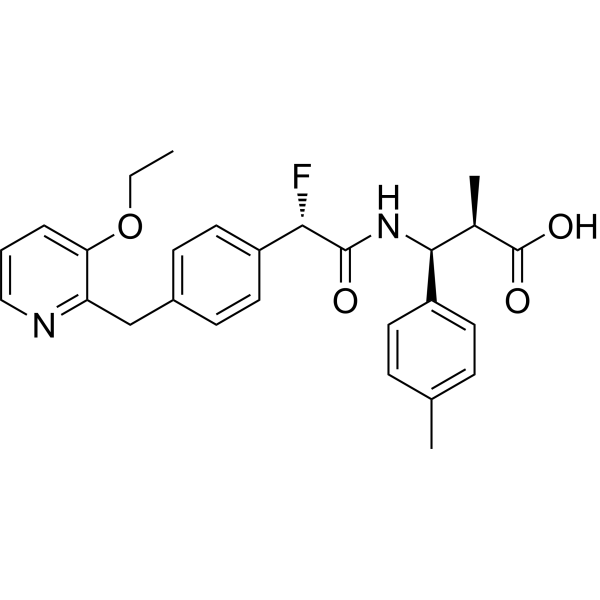
Cat. No.: HY-175818
Target:  

Apelin Receptor (APJ)

Research Areas:  

Cancer

APJ antagonist-1 is an apelin receptor (APJ) antagonist. APJ antagonist-1 shows strong β-arrestin inhibition with an IC50 of 3.1 μM. APJ antagonist-1 selectively inhibits APJ-overexpressing cancer cells and suppresses apelin-induced endothelial cell migration. APJ antagonist-1exhibits high metabolic stability. APJ antagonist-1 can used for the studies of ovarian cancer and tumor angiogenesis .
loading...
    loading...
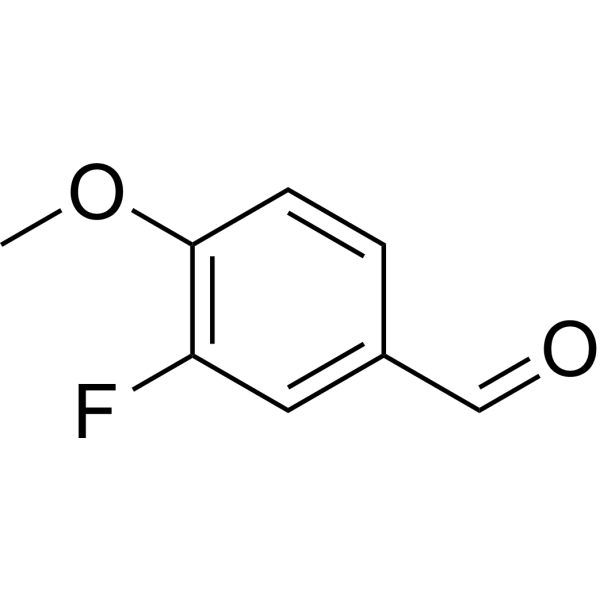
Cat. No.: HY-W007614
CAS No.: 351-54-2
Synonyms: 3-Fluoro-para-anisaldehyde
3-Fluoro-4-methoxybenzaldehyde (3-Fluoro-para-anisaldehyde) is a drug intermediate that can be used to synthesize the fluorinated derivative of Combretastatin A-4 (HY-N2146), which has anti-cancer activity.
loading...
    loading...
Cat. No.: HY-178236
CAS No.: 2768029-03-2
Target:  

TRP Channel

Research Areas:  

Metabolic Disease

TRPM5 agonist-1 is an orally active TRPM5 agonist with a pEC50 of 8.1. TRPM5 agonist-1 shows excellent selectivity (> 100-fold) versus related cation channels (TRPM8, TRPV1, TRPV4, TRPA1, TRPM4). TRPM5 agonist-1 exhibits locally acting stimulatory effect on gastrointestinal transit in mice. TRPM5 agonist-1 can be used for research on promoting gastric motility .
loading...
    loading...
Cat. No.: HY-178112
Target:  

CDK Apoptosis

Research Areas:  

Cancer

CDK2-IN-47 is a potent CDK2 inhibitor with an IC50 of 0.21 μM. CDK2-IN-47 exhibits outstanding anticancer activity against MCF-7, HCT-116, and MGC-803 cell lines. CDK2-IN-47 effectively induces G1 cell cycle arrest, retinoblastoma protein (Rb) dephosphorylation, and significant apoptosis. CDK2-IN-47 can be used for the studies of breast cancer, colorectal cancer and gastric cancer .
loading...
    loading...
Cat. No.: HY-178991
Target:  

DNA/RNA Synthesis

Research Areas:  

Cancer

WRN-IN-21 (Compound 11b) is a WRN helicase inhibitor with pIC50 values for WRN and BLM helicases of 3.6 and 5.4 respectively. WRN-IN-21 can be used for the study of MSI-related cancers .
loading...
    loading...
Cat. No.: HY-123853
CAS No.: 2101206-81-7
Target:  

Casein Kinase

Research Areas:  

Cancer

CAM4066 is a potent CK2α inhibitor, with an IC50 value of 300 nM. CAM4066 exhibits high selectivity, with IC50 values of 22.35, 43.55, and > 50 μM for HIPK3, DAPK3, and CLK2, respectively. CAM4066 shows no cell activity. CAM4066 can be used for the development of highly potent CK2 inhibitors .
loading...
    loading...
Cat. No.: HY-W140555
CAS No.: 3465-69-8
Research Areas:  

Infection

5,7-Dimethoxyphthalide, a dimethoxy derivative of phthalide, can undergo nucleophilic substitution reactions with functionalized long-chain alkyl iodides. 5,7-Dimethoxyphthalide acts as a synthetic building block to prepare anti-Helicobacter pylori products including CJ molecule and sporotricale methyl ether. 5,7-Dimethoxyphthalide can be utilized for relevant researches on Helicobacter pylori infection and structure-activity relationship (SAR) .
loading...
    loading...
Cat. No.: HY-157928
Target:  

Keap1-Nrf2

Research Areas:  

Inflammation/Immunology

Keap1-Nrf2-IN-18 (Compound 22) is an orally active Keap1-Nrf2 protein-protein interaction (PPI) inhibitor with good pharmacokinetics (PK) profiles and more potent in vivo activities in rats. Keap1-Nrf2-IN-18 has the strongest inhibitory activity in structure−activity relationship (SAR) study (KD = 0.0029 μM) .
loading...
    loading...
Cat. No.: HY-177790
CAS No.: 2096315-41-0
Research Areas:  

Neurological Disease

Orexin receptor antagonist 7 (Compound 34) is an antagonist of the orexin receptor (OX1R), with a Ki value of 4.05 nM. Orexin receptor antagonist 7 shows no detectable activity towards OX2R and has very low affinities for the three opioid receptors (μ, δ, κ) (Ki > 1,000 nM). Orexin receptor antagonist 7 can be used for research on opioid addiction .
loading...
    loading...
Cat. No.: HY-P11259
CAS No.: 3090687-02-5
UPG-111 is a peptide compound that acts as a negative allosteric modulator of the Urotensin II receptor (UTR). UPG-111 exhibits a dual inhibitory effect on the vasoconstriction induced by UTR agonists - it reduces both the maximum response intensity and the sensitivity of the agonist. UPG-111 does not induce calcium release or cause contraction of the endothelium-deprived rat aortic rings. UPG-111 can be used for the study of various diseases related to the angiotensinergic system .
loading...
    loading...
Cat. No.: HY-L927
9,937 compounds

Designed to maximize efficiency in hit discovery and optimization, this compound library is built on a foundation of diverse Bemis-Murcko scaffolds, with each scaffold is represented by two specifically derived molecules. This strategy ensures broad chemical space through scaffold diversity while enabling preliminary functional group exploration. This approach provides early structure-activity relationship (SAR) insights for every scaffold, making it a valuable tool for accelerating drug discovery.

Cat. No.: HY-L245
2,262 compounds

At the forefront of innovative drug discovery, every medicinal chemist faces the challenge of rapidly identifying high-quality hit compounds from vast repositories of chemical resources.

The MCE Natural Product Diversity Scaffold Library is the result of a streamlined optimization process built upon our existing natural product collection. Adhering to the rigorous selection principle of "retaining only one representative compound per BMS scaffold", we have concentrated the diversity of thousands of compounds into a high-value, low-redundancy core set containing 2,262 compounds. All compounds are derived from natural sources, inheriting their inherent advantages of structural complexity and drug-likeness. By eliminating redundancy, the library size is significantly reduced without any compromise to chemical diversity. This approach effectively lowers the cost and time required for primary screening while simplifying downstream data analysis and structure-activity relationship (SAR) studies.

Cat. No.: HY-180827
Target:  

VEGFR Apoptosis

Research Areas:  

Cancer

VEGFR-2-IN-79 (Compound 17) is a VEGFR-2 inhibitor with an IC50 of 2.32 μM. VEGFR-2-IN-79 exhibits potent and broad-spectrum cytotoxicity and can induce apoptosis in MCF-7 cells. VEGFR-2-IN-79 does not cause a significant decrease in the mitochondrial membrane potential of MCF-7 cells. VEGFR-2-IN-79 can be used for research on breast cancer .
loading...
    loading...
Cat. No.: HY-114461A
CAS No.: 1228183-92-3
Target:  

Drug Derivative

Research Areas:  

Cancer

(16R,17S)-FD-895, a similar compound to FD-895 (HY-114461), is a potent in vivo splice regulatory agent. (16R,17S)-FD-895 retains the similar anti-proliferative activity as FD-895. (16R,17S)-FD-895 can be used for research on colon cancer .
loading...
    loading...
Cat. No.: HY-164801
CAS No.: 1108750-62-4
Target:  

Drug Intermediate

Research Areas:  

Others

Nile Red phenoxyacetic acid (Compound 4) is a pharmaceutical intermediate that can be used for the synthesis of GPR84 fluorescent probes .
loading...
    loading...
Cat. No.: HY-180791
Target:  

SARS-CoV

Research Areas:  

Infection

SARS-CoV-2-IN-121 (Compound 74) is a SARS-CoV-2 virus inhibitor. SARS-CoV-2-IN-121 exhibits IC50 values in the pseudovirus and live virus systems of 1.6 and 0.45 μM respectively. SARS-CoV-2-IN-121 effectively inhibits the replication or protein expression of the virus within cells and has almost no toxicity to host cells. SARS-CoV-2-IN-121 can be used for SARS-CoV-2 virus infection research .
loading...
    loading...
Cat. No.: HY-180157
CAS No.: 1443-10-3
Target:  

CDK

Research Areas:  

Cancer

CDK2-IN-51 is a pyrazolopyridine derivative, a CDK2 inhibitor with an IC50 of 23.47 nM. CDK2-IN-51 does not have a pro-apoptotic effect and had no significant effect on CDK2 protein expression. CDK2-IN-51 reduces expression of DNA replication factors (Polα, MCM7, ORC2, and ORC4) and pre-G1 cell cycle arrest. CDK2-IN-51 can be used for the research of colorectal cancer .
loading...
    loading...
Cat. No.: HY-180913
CAS No.: 2762499-38-5
Target:  

Connective Peptide

Research Areas:  

Cancer

FQI2-34 is an orally active TFCP2 (LSF) small molecule allosteric inhibitor. FQI2-34 directly binds to the LSF protein (Ki = 63 nM), inhibits the oligomerization of LSF, efficiently suppresses the transcriptional activity of LSF (IC₅₀ = 48 nM), and interferes with the SF-DNA interaction. FQI2-34 exhibits significant anti-proliferative activity against Huh7 cells and induces tumor regression in mouse models. FQI2-34 can be used for research on liver cancer .
loading...
    loading...

