18 Results for "

Suzuki cross-coupling

" in MedChemExpress (MCE) Product Catalog:
Products (18)

18 Results for "Suzuki cross-coupling" in MCE Product Catalog:

Cat. No.: HY-21623
CAS No.: 95464-05-4
Dichloro[1,1'-bis(diphenylphosphino)ferrocene]palladium(II) dichloromethane adduct is a common dichloromethane solvate of the palladium catalyst Pd(dppf)Cl2, a phosphine ligand palladium(II) complex, which can be used as a versatile precatalyst for various cross-coupling reactions. Dichloro[1,1'-bis(diphenylphosphino)ferrocene]palladium(II) dichloromethane adduct can stabilize reaction intermediates and lower the reaction activation energy in coupling reactions, and can be used in Suzuki-Miyaura coupling reaction studies .
loading...
    loading...
Cat. No.: HY-114362
CAS No.: 1309573-60-1
Purity:  ≥99.0%
Synonyms: TPGS-750-M
Research Areas:  

Others

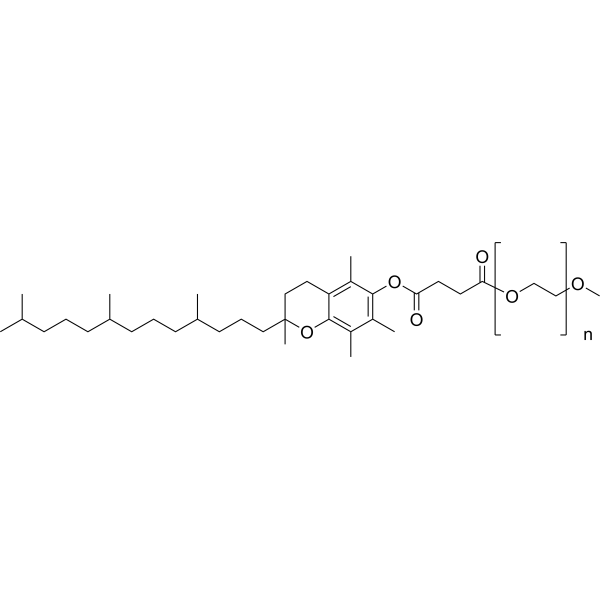
DL-alpha-Tocopherol methoxypolyethylene glycol succinate (TPGS-750-M) is an amphiphile, acts as a surfactant. DL-alpha-Tocopherol methoxypolyethylene glycol succinate has a positive effect on Suzuki-Miyaura cross coupling. DL-alpha-Tocopherol methoxypolyethylene glycol succinate increases the styrene titer. DL-alpha-Tocopherol methoxypolyethylene glycol succinate is used in the stability test of NPYM-modified drugs in biological fluids .
loading...
    loading...
Cat. No.: HY-W002570
CAS No.: 32316-92-0
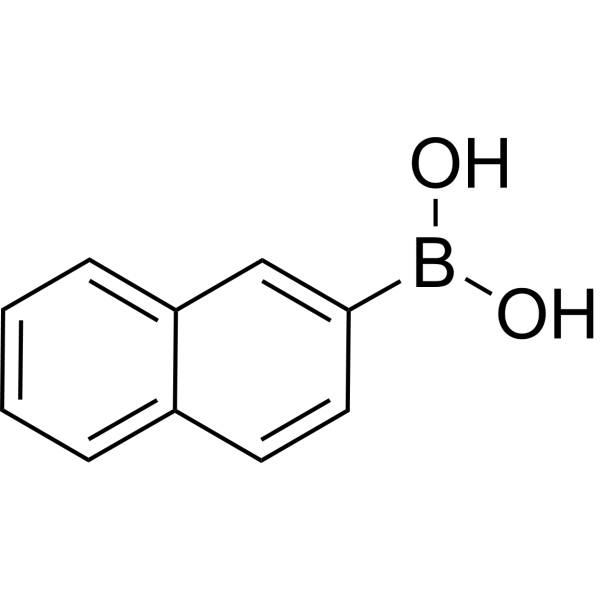
2-Naphthylboronic acid is a biochemical reagent that can be used as a biological material or organic compound for life science related research. 2-Naphthylboronic acid can undergo silylation reaction. 2-Naphthylboronic acid also readily undergo Suzuki-Miyaura cross-coupling .
loading...
    loading...
Cat. No.: HY-W003601
CAS No.: 357927-50-5
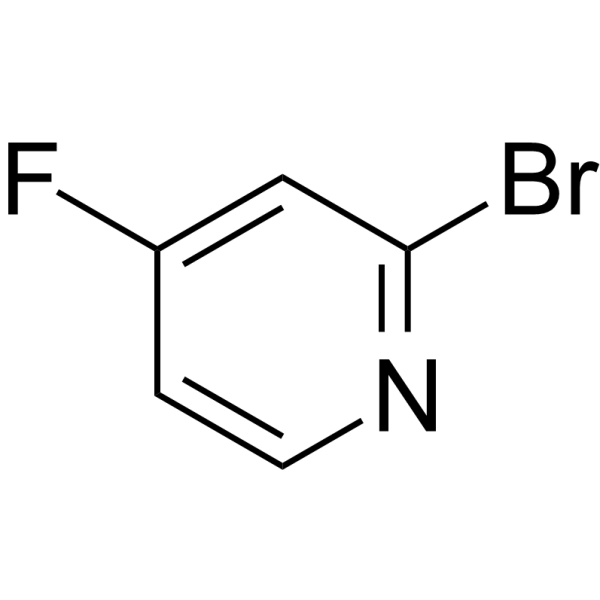
2-Bromo-4-fluoropyridine is a synthetic halogenated heterocyclic organic compound and a key intermediate in the pharmaceutical and agrochemical industries. 2-Bromo-4-fluoropyridine can be used to synthesize bioactive molecules through cross-coupling reactions, such as Suzuki coupling or Buchwald-Hartwig amination.
loading...
    loading...
Cat. No.: HY-32956
CAS No.: 163105-90-6
Research Areas:  

Others

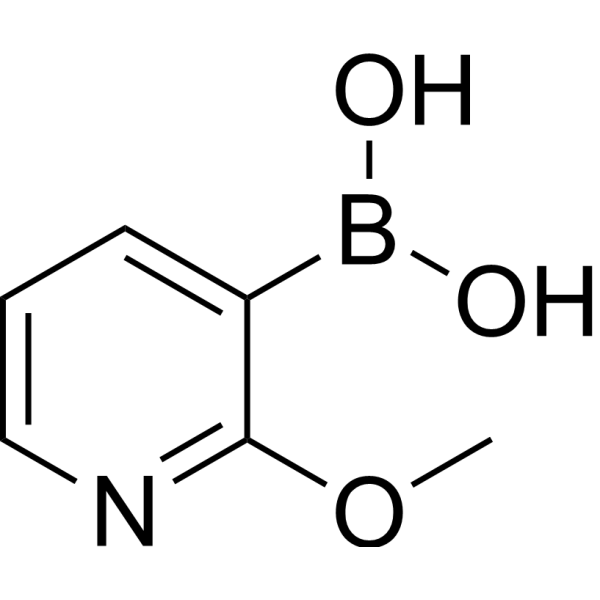
2-Methoxypyridine-3-boronic acid is a pyridine boronic acid compound and also borylation reagent used in Suzuki cross-coupling reactions .
loading...
    loading...
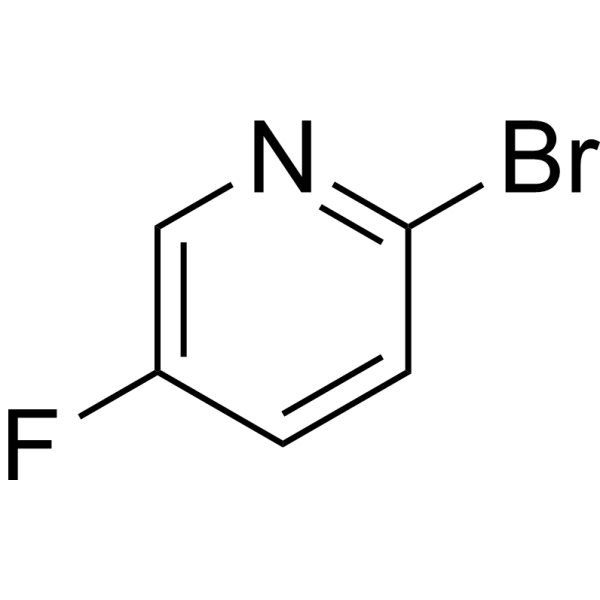
Cat. No.: HY-32748
CAS No.: 41404-58-4
Research Areas:  

Others

2-Bromo-5-fluoropyridine acts as a bromofluoropyridine starting material and an azaaryl halide coupling partner. 2-Bromo-5-fluoropyridine participates in an oxygen-promoted, ligand-free Pd (OAc)2-catalyzed Suzuki reaction, reacting with arylboronic acids to produce 5-fluoro-2-aryl-substituted pyridine derivatives. 2-Bromo-5-fluoropyridine can be used to synthesize 5-fluoro-2-(4-(methylsulfonyl) phenyl) pyridine, an intermediate of the GPR119 agonist GSK1292263A .
loading...
    loading...
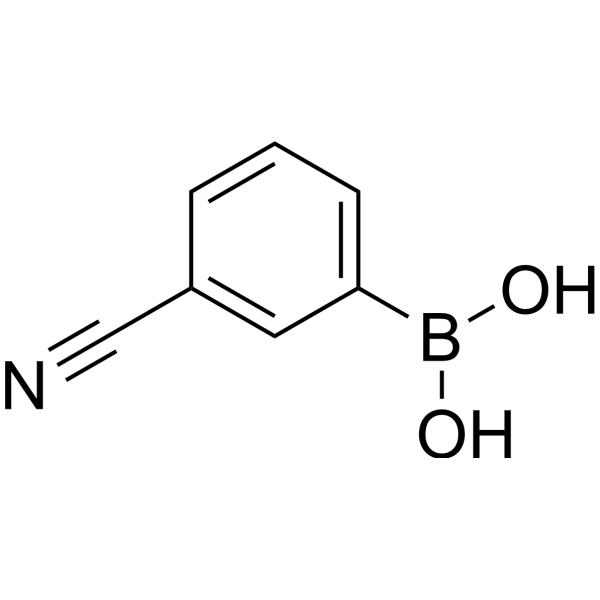
Cat. No.: HY-32927
CAS No.: 150255-96-2
Research Areas:  

Others

3-Cyanophenylboronic acid is an arylboronic acid-based boronic acid reagent that serves as a coupling partner in Suzuki-Miyaura cross-coupling reactions. 3-Cyanophenylboronic acid participates in reactions to synthesize 4'-propoxybiphenyl-3-carbonitrile .
loading...
    loading...
Cat. No.: HY-101974
CAS No.: 1041766-91-9
Biotin-PEG3-Bromide is a short PEG linker featuring a biotin group and a bromide. The bromide is a halogen which is easily displaced by nucleophiles such as alcohols or amines. Alternatively, bromide can be applied in a number of cross-coupling reactions such as in a Suzuki reaction. Biotin is useful for affinity-based applications such as pull-down assays or for ligating with streptavidin proteins.
loading...
    loading...
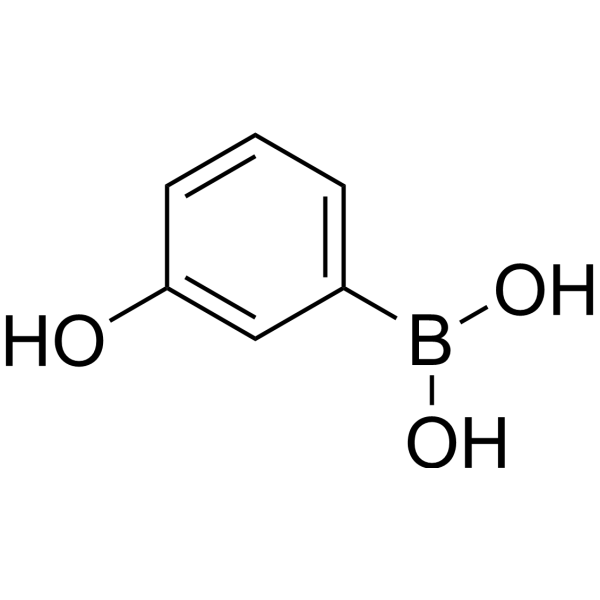
Cat. No.: HY-W002734
CAS No.: 87199-18-6
Synonyms: 3-Hydroxybenzeneboronic acid
(3-Hydroxyphenyl)boronic acid (3-Hydroxybenzeneboronic acid) is a drug intermediate that can be used for the synthesis of 17β-hydroxysteroid dehydrogenase type 1 inhibitors .
loading...
    loading...
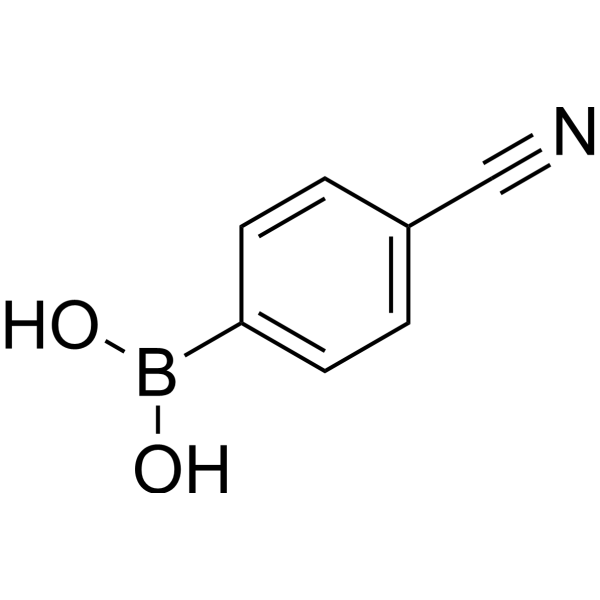
Cat. No.: HY-32928
CAS No.: 126747-14-6
Research Areas:  

Others

4-Cyanobenzeneboronic acid is a boronic acid derivative and also coupling reagent in Suzuki cross-coupling reactions .
loading...
    loading...
Cat. No.: HY-W001987
CAS No.: 5413-85-4
Organic ligands can be prepared through Suzuki cross-coupling reaction between 4,6-Dichloropyrimidin-5-amine and dimethyl(5-pinyl)isophthalate .
loading...
    loading...
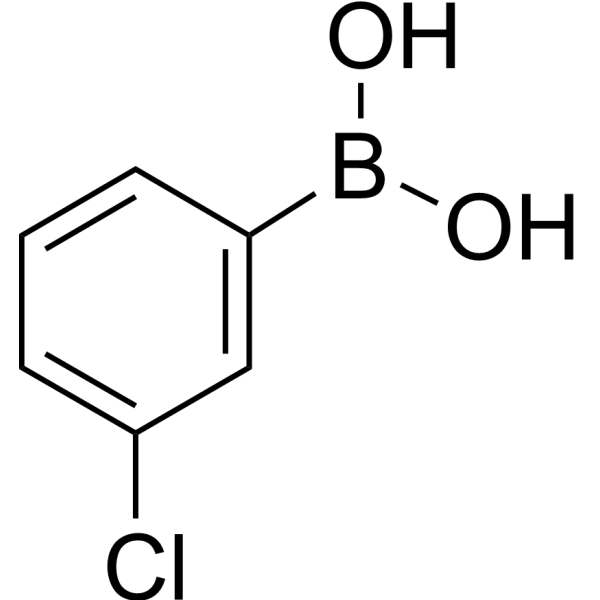
Cat. No.: HY-W002463
CAS No.: 63503-60-6
3-Chlorophenylboronic acid is employed as a reactant involved in 1,4-conjugate addition reactions with ethenesulfonamides to form arylethanesulfonamides, Suzuki-Miyaura reactions with dibromotrifluoromethylbenzene, cross-coupling reactions with diazoesters3 or potassium cyanate. 3-Chlorophenylboronic acid is involved in the synthesis of biarylketones and phthalides and synthesis of inhibitors including PDE4 inhibitors among others. 3-Chlorophenyl boronic acid can affect cell migration. 3-Chlorophenyl boronic acid can be used to study wound healing .
loading...
    loading...
Cat. No.: HY-W020985
CAS No.: 31277-98-2
Synonyms: Pd(DIPHOS)2
Bis[1,2-bis(diphenylphosphino)ethane]palladium(0), often abbreviated as Pd(PPh3)2 or Pd(dppf), is an organometallic compound. This compound is widely used as a catalyst for organic chemical reactions, especially cross-coupling reactions such as Suzuki-Miyaura reaction and Heck reaction, and its high catalytic activity, selectivity and stability make it a versatile tool for the synthesis of complex organic compounds , in addition, the potential application of Pd(PPh3)2 in the production of electronic materials and in medical and biochemical research has also been investigated.
loading...
    loading...
Cat. No.: HY-175553
Target:  

VEGFR Apoptosis

Research Areas:  

Cancer

VEGFR-2-IN-72 is a selective VEGFR-2 inhibitor with an IC50 of 22.2 nM. VEGFR-2-IN-72 exhibits anticancer activity against HepG2 and Hep3B human HCC cell lines with IC50s of 15.7 and 2.4 μM. VEGFR-2-IN-72 can cause a mild blockage of the cell cycle and induce cell aopoptosis. VEGFR-2-IN-72 can used for the study of hepatocellular carcinoma (HCC) .
loading...
    loading...
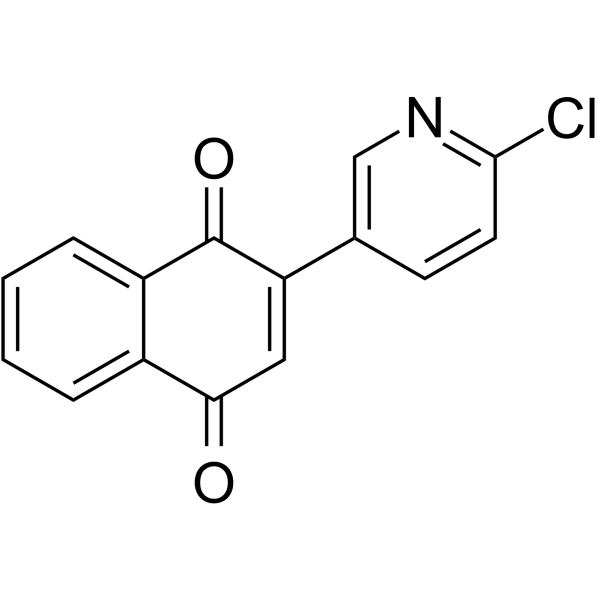
Cat. No.: HY-146489
CAS No.: 2521629-86-5
Target:  

Bacterial Parasite

Research Areas:  

Infection

Anti-infective agent 3 (compound 3l) shows antiparasitic activity against P. falciparum and T. brucei rhodesiense, with IC50 values of 0.47 and 0.13 μM, respectively. Anti-infective agent 3 shows antimycobacterial activity against Mycobacterium smegmatis with a MIC of 4 μg/mL .
loading...
    loading...
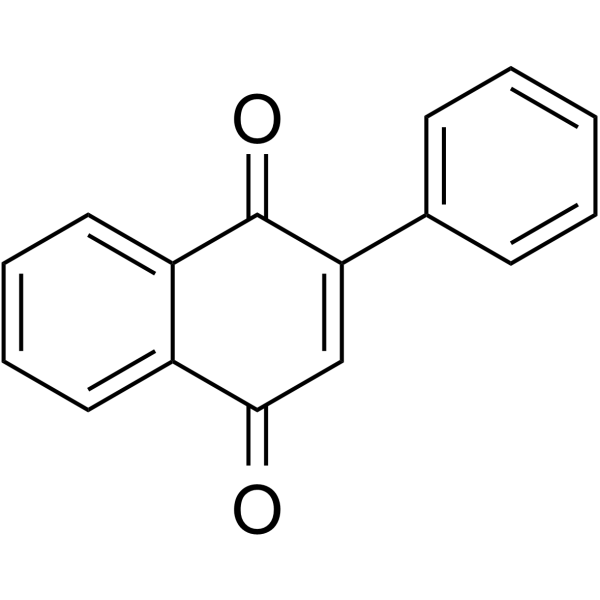
Cat. No.: HY-146487
CAS No.: 2348-77-8
Target:  

Bacterial Parasite

Research Areas:  

Infection

Anti-infective agent 1 (compound 3a) is a potent and selective antiprotozoal and antimycobacterial agent. Anti-infective agent 1 shows antiparasitic activity against P. falciparum and T. brucei rhodesiense, with IC50 values of 10.95 and 0.06 μM, respectively. Anti-infective agent 1 shows antimycobacterial activity against Mycobacterium smegmatis with a MIC of 8 μg/mL .
loading...
    loading...
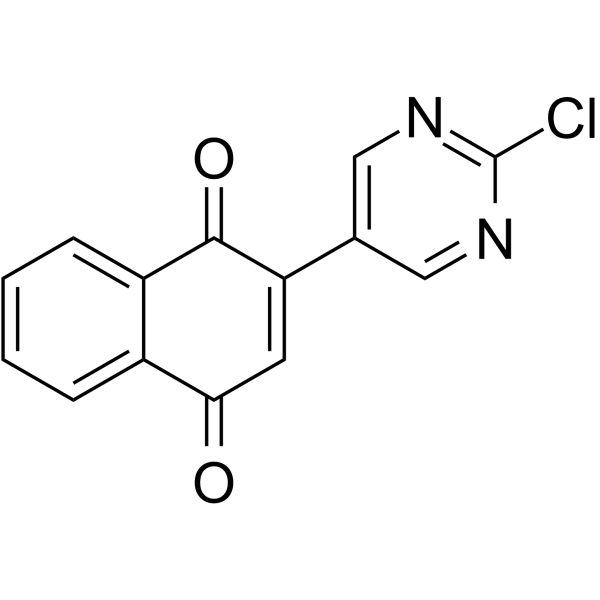
Cat. No.: HY-146488
CAS No.: 2521629-84-3
Target:  

Parasite Bacterial

Research Areas:  

Infection

Anti-infective agent 2 (compound 3k) shows antiparasitic activity against P. falciparum and T. brucei rhodesiense, with IC50 values of 0.07 and 2.20 μM, respectively. Anti-infective agent 2 shows antimycobacterial activity against Mycobacterium smegmatis with a MIC of 32 μg/mL .
loading...
    loading...
Cat. No.: HY-W714973
CAS No.: 943831-98-9
Target:  

Herbicide

Research Areas:  

Others

Halauxifen-methyl is a 6-arylpicolinic acid herbicide. As a synthetic auxin, Halauxifen-methyl interferes with the normal growth and development of sensitive weeds by mimicking the action of endogenous plant auxins, causing malformation, uncontrolled growth and eventual death .
loading...
    loading...
  • 1