15 Results for "

T-cell populations

" in MedChemExpress (MCE) Product Catalog:
Products (15)

15 Results for "T-cell populations" in MCE Product Catalog:

1
1 Cited Publications
Cat. No.: HY-168374
CAS No.: 1829524-73-3
DSPE-PEG 2000-Mannose is a mannose-containing lipid. DSPE-PEG 2000-Mannose is used to prepare mannose-conjugated Liposome (Man-lipo) for siRNA delivery. Mannose-modified liposomes encapsulating IDO siRNA (Man-lipo-siIDO) preferentially knock down IDO expression in the draining lymph nodes and spleens of melanoma-bearing mice. Man-lipo-siIDO delays the onset time of melanoma and reduces tumor volume .
loading...
    loading...
Cat. No.: HY-172736
CAS No.: 3005272-36-3
Synonyms: BMS-986458
Target:  

PROTACs BCL6 CD20

Research Areas:  

Cancer

Toviblideg (BMS-986458) is a highly selective, orally active cereblon-based BCL6 PROTAC degrader and antitumor agent. Toviblideg selectively degrades BCL6 by binding cereblon to the BTB domain of BCL6, thereby regulating the cell cycle, antiproliferative and interferon signaling pathways, and upregulating the expression and distribution of CD20. Toviblideg modulates the phenotype of follicular helper T cells and reduces circulating tumor DNA levels. The combination of Toviblideg with CD20xCD3 bispecific antibody also enhances the efficiency of T cell tumor infiltration and expansion. Toviblideg induces regression of BCL6-positive tumors and prolongs survival, and it is suitable for research related to B-cell non-Hodgkin lymphoma, diffuse large B-cell lymphoma, follicular lymphoma, and relapsed/refractory lymphoma .
loading...
    loading...
Cat. No.: HY-P991526
CAS No.: 2933295-42-0

Target:  

CD3

Research Areas:  

Cancer

M701 is a T-cell engager bispecific humanized antibody targeting epithelial cell adhesion molecule (EpCAM) and cluster of differentiation 3 (CD3). M701 binds to EpCAM on tumor cells and CD3 on T cells, thereby linking the two cell populations to achieve targeted cytotoxicity and T cell-mediated cytotoxicity. M701 is applicable to research related to advanced epithelial solid tumors .
loading...
    loading...
Cat. No.: HY-P990635

Target:  

TGF-β Receptor

Research Areas:  

Cancer

NGM-120 is a fully humanized IgG1 monoclonal antibody targeting GFRAL, which functions by blocking the GDF15-GFRAL axis. NGM-120 reduces serum GDF15 levels, increases body weight, expands central memory and proliferative CD8 + T cell populations, and decreases immunosuppressive and naive regulatory T cell populations. NGM-120 can be used for research on advanced prostate cancer .
loading...
    loading...
Cat. No.: HY-P5425A
Research Areas:  

Cancer

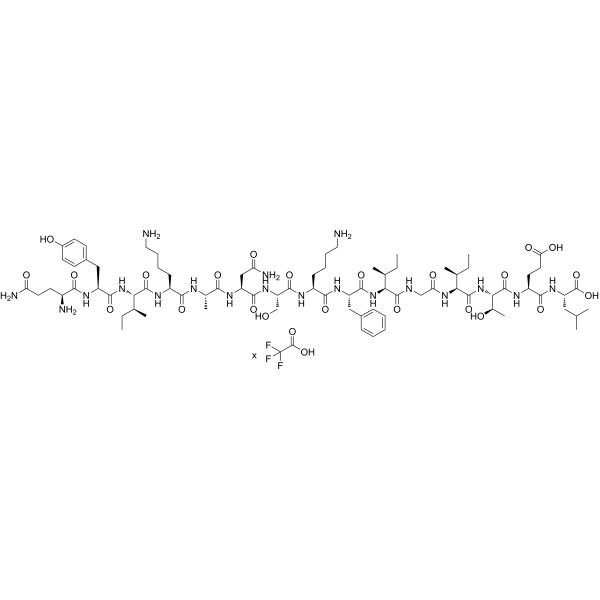
Tetanus Toxin (830–844) TFA is a biological active peptide. (tetanus toxin-derived peptide TT830–844 CD4 + T-cell epitope. This promiscuous CD4 + T-cell epitope can bind to a wide range of HLA–DRB molecules and is thus expected to activate CD4 + T-cell responses in a large part of the human population) .
loading...
    loading...
Cat. No.: HY-171034
CAS No.: 1604678-82-1
PQA-18 is a unique PAK2 inhibitor (IC50: 10 nM). PQA-18 has immunosuppressing effects. PQA-18 suppresses IL2, IL4, IL6, and TNFα. PQA-18 inhibits the population of a subset of regulatory T cells and the immunoglobulin (Ig) production against T cell-dependent antigens as well as alleviates dermatitis in mice .
loading...
    loading...
Cat. No.: HY-160267
CAS No.: 950403-60-8
Target:  

HIV DNA/RNA Synthesis

Research Areas:  

Infection Neurological Disease Cancer

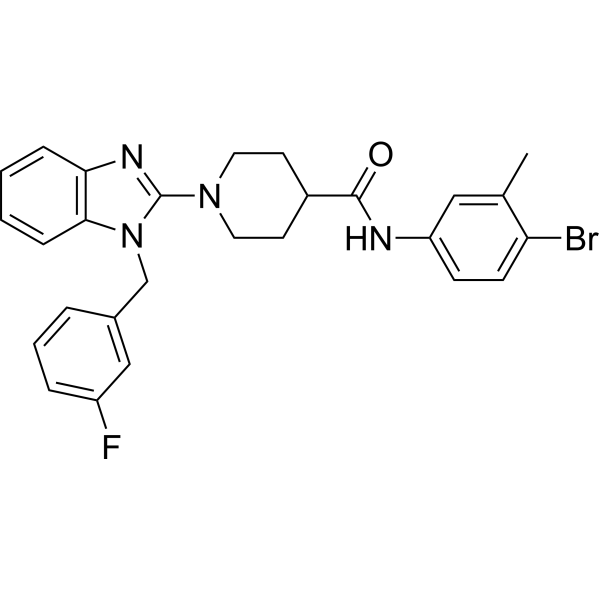
iPAF1C is a inhibitor of the polymerase-associated factor 1 complex (PAF1C) with specific targeting to the PAF1 binding groove of CTR9 (a key subunit of PAF1C). iPAF1C disrupts PAF1C assembly by interfering with the PAF1-CTR9 interaction. iPAF1C selectively impairs BRD4-mediated recruitment of PAF1 to chromatin at hypoxia-responsive genes and inhibits RNA polymerase II (RNAPII) pause release. iPAF1C increases the population of HIV-1 NL4.3 Nef-IRES-GFP infected primary human CD4 +T cells in a dose-dependent manner. PAF1C can be used for the study of infection and diseases associated with abnormal hypoxic adaptation (e.g., cancers, neurological disorders) .
loading...
    loading...
Cat. No.: HY-P5425
CAS No.: 126779-13-3
Target:  

Peptides

Research Areas:  

Others

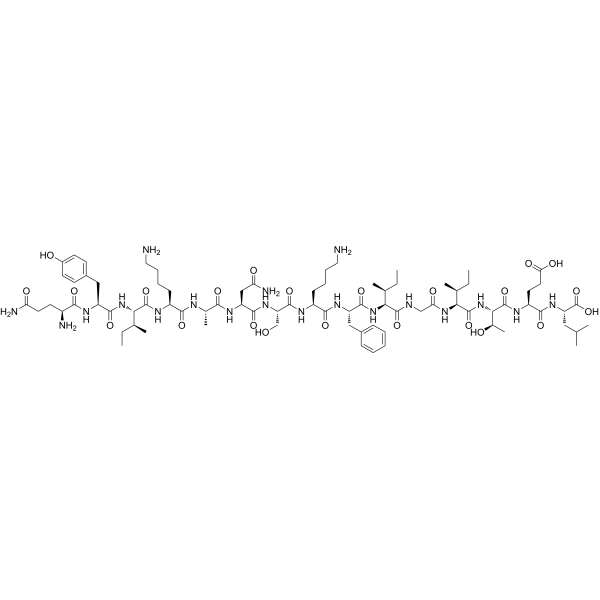
Tetanus Toxin (830–844) is a biological active peptide. (tetanus toxin-derived peptide TT830–844 CD4+ T-cell epitope. This promiscuous CD4+ T-cell epitope can bind to a wide range of HLA–DRB molecules and is thus expected to activate CD4+ T-cell responses in a large part of the human population)
loading...
    loading...
Cat. No.: HY-P10512
CAS No.: 1370451-15-2
Target:  

Peptides

Research Areas:  

Others

BDC2.5 mimotope is a potent antigen-mimicking peptide that can activate CD4+ T cell populations that have the same antigen recognition properties as BDC2.5 cells. BDC2.5 mimotope can be used to study the prevention or treatment of type 1 diabetes by targeting specific T cell populations .
loading...
    loading...
Cat. No.: HY-P991000
CAS No.: 2919583-43-8
Synonyms: AU-007; BD-8; BDG8
Imneskibart (AU-007) is a human monoclonal antibody that binds to the CD25-binding epitope of interleukin-2 (IL-2), blocking the binding of IL-2 to the trimeric IL-2 receptor while retaining the ability to bind to the dimeric IL-2 receptor. Imneskibart expands effector T cell and NK cell populations, reduces regulatory T cells, increases the effector T cell/regulatory T cell ratio, and alleviates vascular leakage. Imneskibart can be used in research related to melanoma and non-small cell lung cancer. The corresponding isotype control is: Human IgG1 kappa, Isotype Control (HY-P99001) .
loading...
    loading...
Cat. No.: HY-W060417
CAS No.: 1019158-02-1
Target:  

Interleukin Related

Research Areas:  

Inflammation/Immunology Cancer

iST2-1 is an Stimulation-2 (ST2) inhibitor with an IC50 value of 46.65 μM, blocks interaction between ST2 and IL-33, inhibits downstream signaling. iST2-1 functions as an immunomodulator, reduces proliferation of CD4 + and CD8 + T cells, increases regulatory T cell populations, reduces IFN-γ +CD4 + T cell populations, increases Foxp3 +CD4 + regulatory T cell populations in the gastrointestinal tract. iST2-1 reduces plasma soluble ST2 and IFN-γ levels, reduces graft-versus-host disease scores, improves survival in graft-versus-host disease animal models, preserves graft-versus-tumor effect. iST2-1 can be used for the research of graft-versus-host disease .
loading...
    loading...
Cat. No.: HY-P992435

Target:  

TNF Receptor

Research Areas:  

Cancer

OX118 is a fully human, ADCC-enhanced monoclonal antibody targeting OX40L, the recommended isotype control is HY-P99001. OX118 blocks OX40L, suppresses effector T-cell proliferation, expands regulatory T-cell populations, and reduces bystander activation across natural killer cells, B cells, and CD14+ monocytes. OX118 can be used for the research of graft-versus-host disease .
loading...
    loading...
Cat. No.: HY-P992062

Target:  

PD-1/PD-L1

Research Areas:  

Inflammation/Immunology

Anti-Mouse CD80 Antibody (TKMG48) is an antibody that targets mouse CD80. By specifically binding to and disrupting the CD80:PD-L1 complex to release PD-L1, Anti-Mouse CD80 Antibody (TKMG48) functions as an indirect PD-1 agonist without blocking CD28 co-stimulation or CD80-CTLA4 binding. Anti-Mouse CD80 Antibody (TKMG48) inhibits T cell activation, reduces T cell effector functions and antigen-specific CD8 + T cell populations, and does not interfere with the differentiation, migration, antigen presentation or surface marker expression of dendritic cells. Anti-Mouse CD80 Antibody (TKMG48) significantly attenuates disease severity in mouse models of arthritis, spondyloarthritis, multiple sclerosis and Sjögren's syndrome, and its activity depends on the expression of PD-1 and PD-L1 .
loading...
    loading...
Cat. No.: HY-P992356

Target:  

Topoisomerase

Research Areas:  

Cancer

GENA-104A16 is a humanized monoclonal antibody targeting CNTN4, with multiple functions including immunostimulation, cytotoxicity and immunoregulation. By binding to CNTN4, GENA-104A16 blocks its interaction with APP, thereby restoring T cell function, inducing tumor cell death and regulating tumor-infiltrating immune cell populations. GENA-104A16 also exerts topoisomerase I inhibitory activity via the payload Exatecan (HY-13631). GENA-104A16 can be used in research related to colon cancer liver metastasis and other CNTN4-expressing solid tumors .
loading...
    loading...
Cat. No.: HY-P991896
Synonyms: AT14-012
AT1412 is a CD9-binding antibody. AT1412 binds to the tetraspanin protein CD9 and modulates CD9 function by enhancing T cell adhesion to endothelial cells (HUVECs) and transendothelial migration. AT1412 binds to B-ALL cell lines but not to T-ALL. AT1412 induces antibody-dependent cellular cytotoxicity in B-ALL cell lines. AT1412 binds to melanoma cells, B-ALL, gastric cancer, colorectal cancer, and pancreatic cancer cells [1] .
loading...
    loading...
  • 1

