5 Results for "

UGT2B7 Inhibitors

" in MedChemExpress (MCE) Product Catalog:
Products (5)

5 Results for "UGT2B7 Inhibitors" in MCE Product Catalog:

6
6 Cited Publications
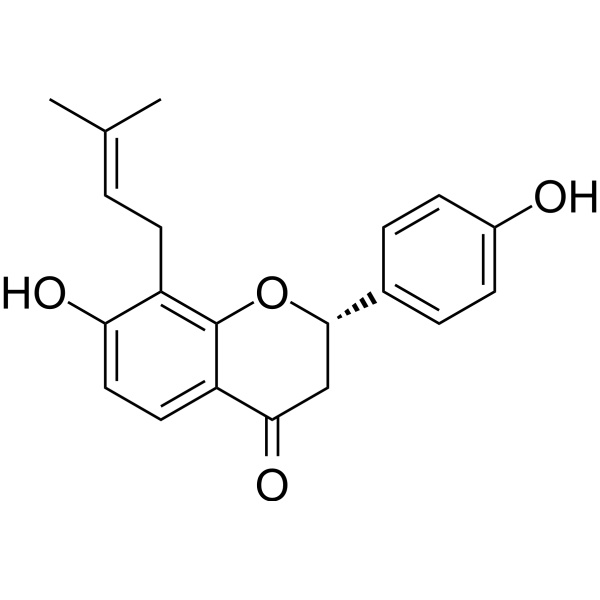
Cat. No.: HY-N0762
CAS No.: 31524-62-6
Isobavachin is an orally active, blood-brain barrier-penetrating prenylated flavonoid present in Psoralea corylifolia. Isobavachin inhibits human CYP2B6, CYP2C9, CYP2C19, UGT1A1, UGT1A9, and UGT2B7. Isobavachin suppresses MAPK activation, NF-κB nuclear translocation, overexpression of iNOS/COX-2, FcεRI-mediated signaling pathways, and RANKL-induced osteoclastogenesis. Isobavachin induces autophagy, cytotoxicity, neuronal differentiation, and NRF2 activation; it alleviates oxidative damage, inflammatory responses, apoptosis, iron accumulation, mitochondrial biogenesis, and mast cell degranulation. Isobavachin is applicable to research related to liver injury, inflammatory diseases, osteoporosis, liver cancer, prostate cancer, glioma, periodontitis-induced bone loss, and Alzheimer's disease .
loading...
    loading...
2
2 Cited Publications
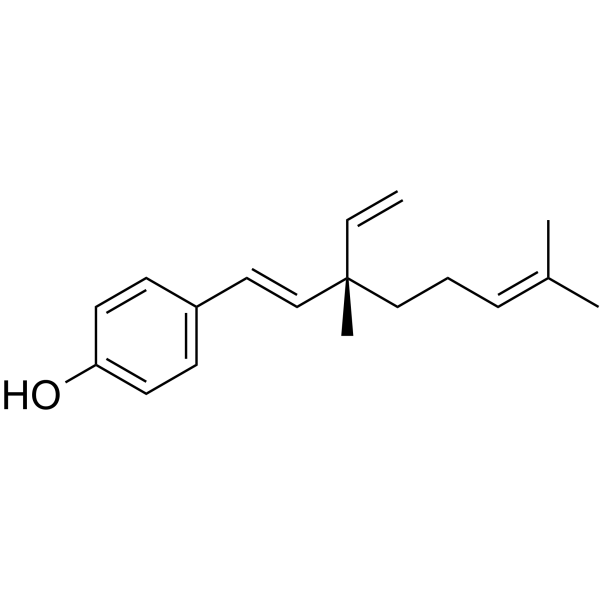
Cat. No.: HY-N0235
CAS No.: 10309-37-2
Synonyms: (S)-(+)-Bakuchiol
Bakuchiol is a phytoestrogen that can be obtained from psoralen seeds. Bakuchiol has been proven to be a non-competitive inhibitor of multiple enzymes, including UDP-glucuronosyltransferase 2B7 (UGT2B7) and human carboxylesterase 2 (hCE2) , with IC50s values of 40.9 μM and 7.28 μM, respectively. Bakuchiol exhibits significant research and application potential in areas such as anti-inflammatory , antibacterial , antitumor therapies, as well as drug metabolism regulation.
loading...
    loading...
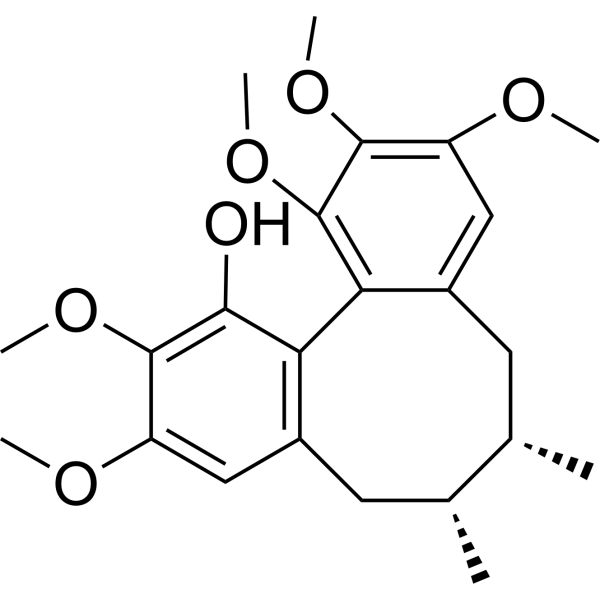
Cat. No.: HY-N0859
CAS No.: 69363-14-0
Synonyms: Schizanhenol; Gomisin-K3
Schisanhenol (Schizanhenol), a lignan, is an orally active antioxidant. Schisanhenol reduces AChE activity, increases SIRT1 and PGC-1α expression, and decreases phosphorylated Tau (Ser 396) levels. Schisanhenol increases SOD and glutathione peroxidase activity, decreases malondialdehyde (MDA) content, and inhibits UGT2B7 activitY. Schisanhenol attenuates ox-LDL-induced apoptosis, intracellular reactive oxygen species generation, and cytotoxicity in endothelial cells. Schisanhenol inhibits LDL oxidation, brain mitochondrial and membrane peroxidative damage, and brain mitochondrial swelling and disintegration. Schisanhenol can be used for the research of Alzheimer’s disease, atherosclerosis, brain ischemia, and age-related brain deterioration .
loading...
    loading...
Cat. No.: HY-N0235R
CAS No.: 10309-37-2
Synonyms: (S)-(+)-Bakuchiol (Standard)
Bakuchiol (Standard) is the analytical standard of Bakuchiol. This product is intended for research and analytical applications. Bakuchiol is a phytoestrogen that can be obtained from psoralen seeds. Bakuchiol has been proven to be a non-competitive inhibitor of multiple enzymes, including UDP-glucuronosyltransferase 2B7 (UGT2B7) and human carboxylesterase 2 (hCE2) , with IC50s values of 40.9 μM and 7.28 μM, respectively. Bakuchiol exhibits significant research and application potential in areas such as anti-inflammatory , antibacterial , antitumor therapies, as well as drug metabolism regulation.
loading...
    loading...
Cat. No.: HY-N0859R
CAS No.: 69363-14-0
Synonyms: Schizanhenol (Standard); Gomisin-K3 (Standard)
Schisanhenol (Standard) (Schizanhenol (Standard)) is the analytical standard of Schisanhenol (HY-N0859). This product is intended for research and analytical applications. Schisanhenol, a lignan, is an orally active antioxidant. Schisanhenol reduces AChE activity, increases SIRT1 and PGC-1α expression, and decreases phosphorylated Tau (Ser 396) levels. Schisanhenol increases SOD and glutathione peroxidase activity, decreases malondialdehyde (MDA) content, and inhibits UGT2B7 activitY. Schisanhenol attenuates ox-LDL-induced apoptosis, intracellular reactive oxygen species generation, and cytotoxicity in endothelial cells. Schisanhenol inhibits LDL oxidation, brain mitochondrial and membrane peroxidative damage, and brain mitochondrial swelling and disintegration. Schisanhenol can be used for the research of Alzheimer’s disease, atherosclerosis, brain ischemia, and age-related brain deterioration.
loading...
    loading...

