1. Search Result
Search Result
Results for "

anaerobe

" in MedChemExpress (MCE) Product Catalog:

36

Inhibitors & Agonists

1

Biochemical Assay Reagents

2

Peptides

4

Natural
Products

1

Isotope-Labeled Compounds

Cat. No. Product Name Target Research Areas Chemical Structure
  • HY-13625
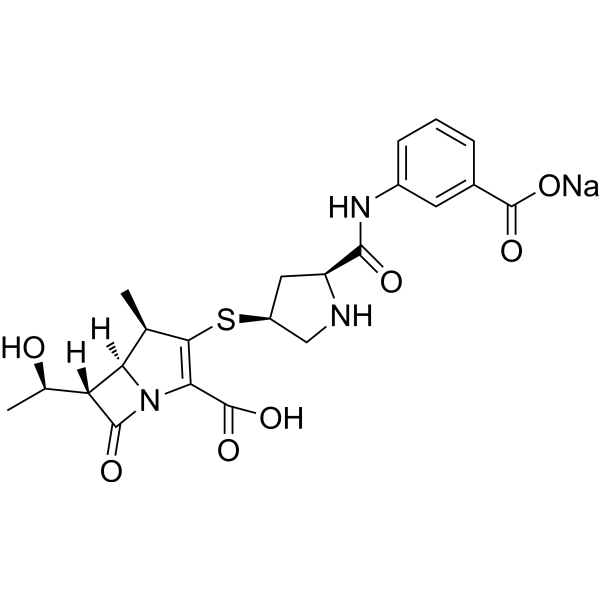
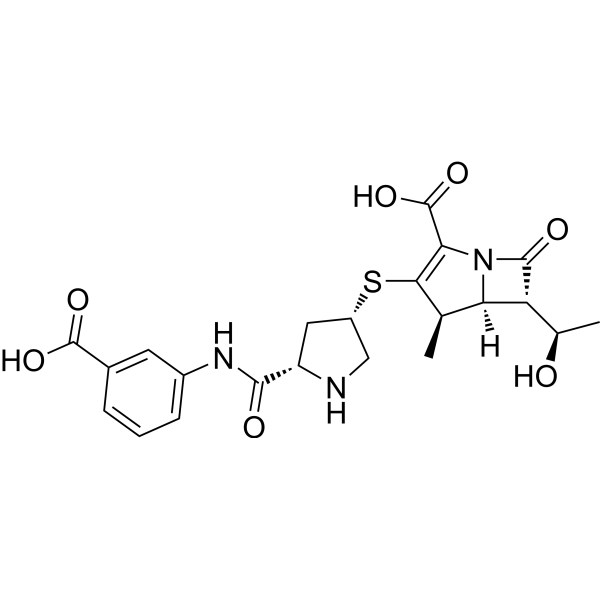
    Ertapenem sodium
    Maximum Cited Publications
    12 Publications Verification

    L-749345; MK-826

    Bacterial Antibiotic Infection Cancer
    Ertapenem sodium (L-749345) is a broad spectrum and long acting β-lactam antibiotic. Ertapenem sodium has a broad-spectrum anti-anaerobic activity against a variety of anaerobes with a mode MIC of 0.12 μg/mL. Ertapenem sodium can be used for the research of severe infections caused by bacteria in the skin, lungs, stomach, pelvis, and urinary tract .
    Ertapenem sodium
  • HY-12479A
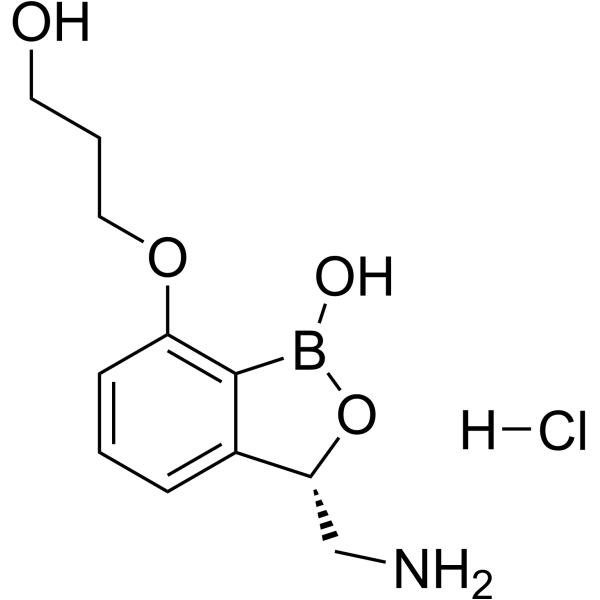
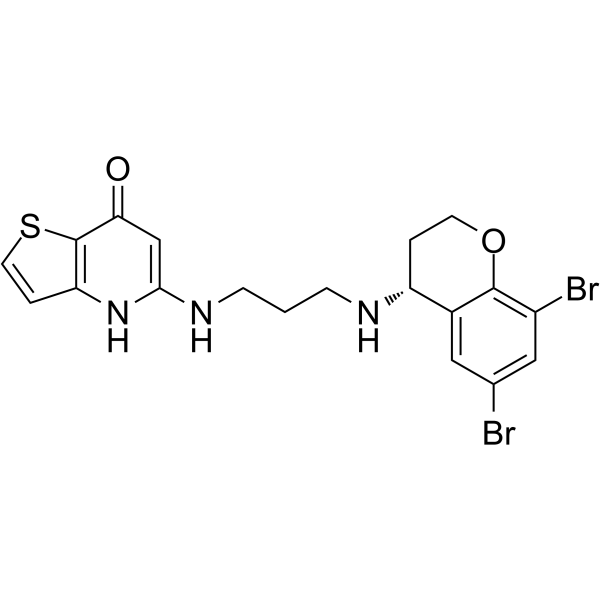
    Epetraborole hydrochloride
    2 Publications Verification

    GSK2251052 hydrochloride

    Bacterial Aminoacyl-tRNA Synthetase Infection
    Epetraborole (GSK2251052) hydrochloride is a novel leucyl-tRNA synthetase (LeuRS) inhibitor (IC50=0.31 μM), thereby inhibiting protein synthesis. Epetraborole hydrochloride can be used in multidrug-resistant gram-negative pathogens infection research .
    Epetraborole hydrochloride
  • HY-17460A

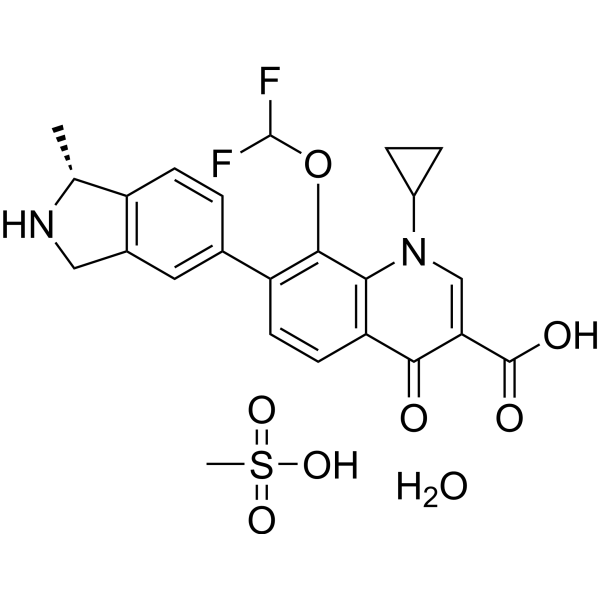
    BMS284756 Mesylate hydrate

    Bacterial Topoisomerase DNA/RNA Synthesis Antibiotic Infection
    Garenoxacin (BMS284756) Mesylate hydrate is an orally active quinolone antibiotic and has a broad spectrum of activity against a wide array of gram-positive and gram-negative bacteria, anaerobes, and fastidious organisms .
    Garenoxacin Mesylate hydrate
  • HY-A0294

    MK-0826

    Antibiotic Bacterial Infection Cancer
    Ertapenem (MK-0826) is a broad spectrum and long acting β-lactam antibiotic. Ertapenem has a broad-spectrum anti-anaerobic activity against a variety of anaerobes with a mode MIC of 0.12 μg/mL. Ertapenem can be used for the research of severe infections caused by bacteria in the skin, lungs, stomach, pelvis, and urinary tract .
    Ertapenem
  • HY-A0294A
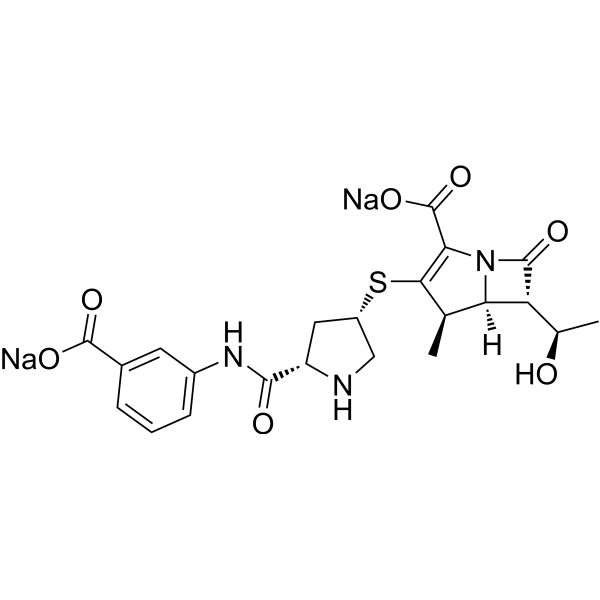
    Ertapenem disodium
    Maximum Cited Publications
    12 Publications Verification

    MK-0826 disodium

    Bacterial Antibiotic Infection Cancer
    Ertapenem (MK-0826) disodium is a broad spectrum and long acting β-lactam antibiotic. Ertapenem disodium has a broad-spectrum anti-anaerobic activity against a variety of anaerobes with a mode MIC of 0.12 μg/mL. Ertapenem disodium can be used for the research of severe infections caused by bacteria in the skin, lungs, stomach, pelvis, and urinary tract .
    Ertapenem disodium
  • HY-13625R

    L-749345 (Standard); MK-826 (Standard)

    Reference Standards Bacterial Antibiotic Infection Cancer
    Ertapenem sodium (Standard) is the analytical standard of Ertapenem sodium. This product is intended for research and analytical applications. Ertapenem sodium (L-749345) is a broad spectrum and long acting β-lactam antibiotic. Ertapenem sodium has a broad-spectrum anti-anaerobic activity against a variety of anaerobes with a mode MIC of 0.12 μg/mL. Ertapenem sodium can be used for the research of severe infections caused by bacteria in the skin, lungs, stomach, pelvis, and urinary tract[1][2].
    Ertapenem sodium (Standard)
  • HY-B1460
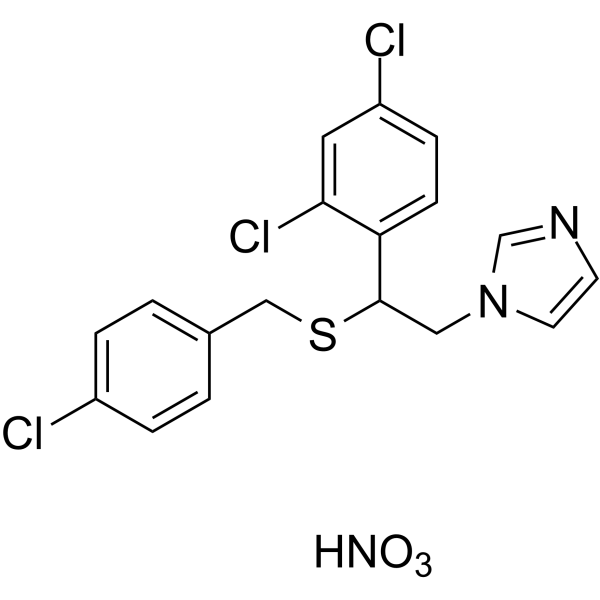
    Sulconazole mononitrate
    3 Publications Verification

    (±)-Sulconazole mononitrate

    Fungal Bacterial Infection
    Sulconazole mononitrate ((±)-Sulconazole mononitrate), an imidazole derivative, is a broad-spectrum fungicide. Sulconazole mononitrate can be used for the research of dermatomycoses, pityriasis versicolor, and cutaneous candidiasis .
    Sulconazole mononitrate
  • HY-18324
    CRS3123
    1 Publications Verification

    REP-3123

    Antibiotic Inflammation/Immunology
    CRS3123 is a potent and orally active narrow-spectrum antibiotic. CRS3123 inhibits bacterial methionyl-tRNA synthetase. CRS3123 has potent activity against Clostridium difficile (C. difficile) and aerobic Gram-positive bacteria but little activity against Gram-negative bacteria, including anaerobes. CRS3123 has the potential for the research of C. difficile infections .
    CRS3123
  • HY-17460

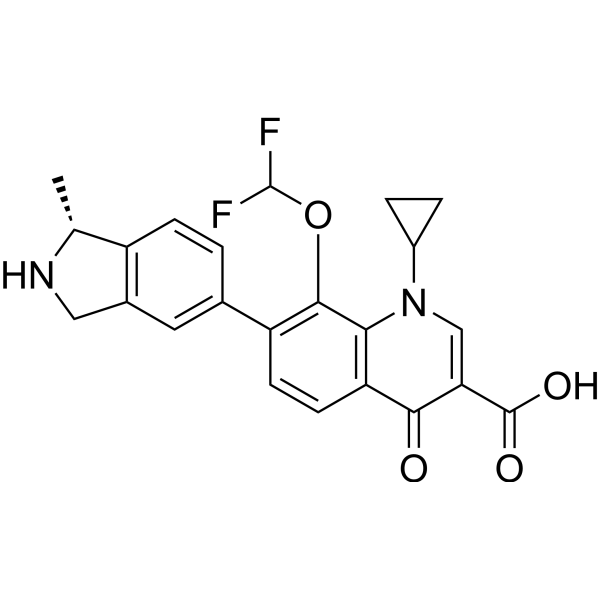
    BMS284756

    Bacterial Topoisomerase DNA/RNA Synthesis Antibiotic Infection
    Garenoxacin (BMS284756) is an orally active quinolone antibiotic and has a broad spectrum of activity against a wide array of gram-positive and gram-negative bacteria, anaerobes, and fastidious organisms .
    Garenoxacin
  • HY-A0035

    Antibiotic Bacterial Infection
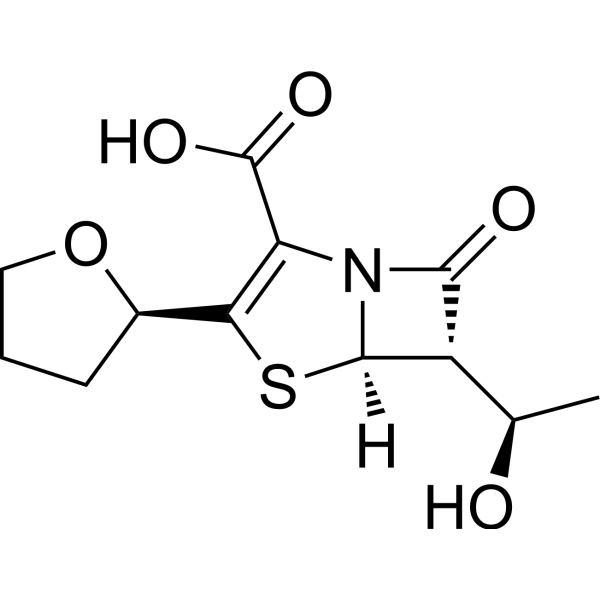
    Faropenem is a potent and orally active beta-lactam antibiotic. Faropenem demonstrates broad-spectrum in vitro antimicrobial activity against many gram-positive and -negative aerobes and anaerobes. Faropenem is resistant to hydrolysis by nearly all beta-lactamases, including extended-spectrum beta-lactamases and AmpC beta-lactamases. Faropenem is developed as an oral proagent, faropenem medoxomil, for the research of respiratory tract infections .
    Faropenem
  • HY-148209

    Antibiotic Bacterial Infection
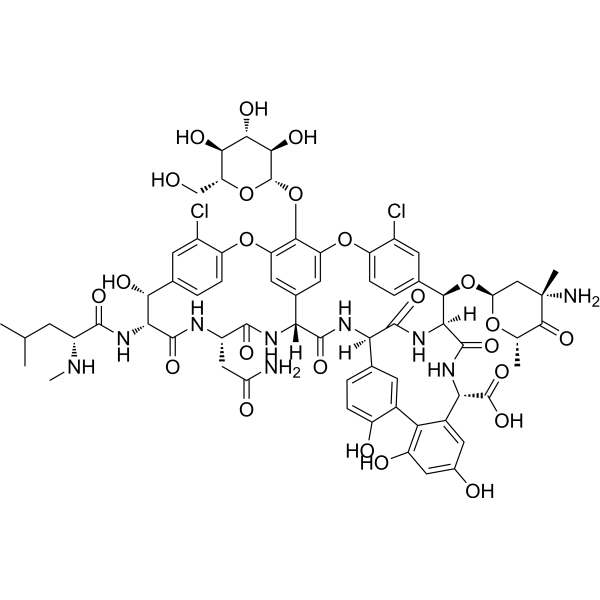
    Balhimycin is a glycopeptide antibiotic, found from the fermentation broth of a Amycolatopsis sp. Balhimycin shows anti-bacterial activity against staphylococci and anaerobes .
    Balhimycin
  • HY-106882

    MDL 62879

    Bacterial Antibiotic Infection
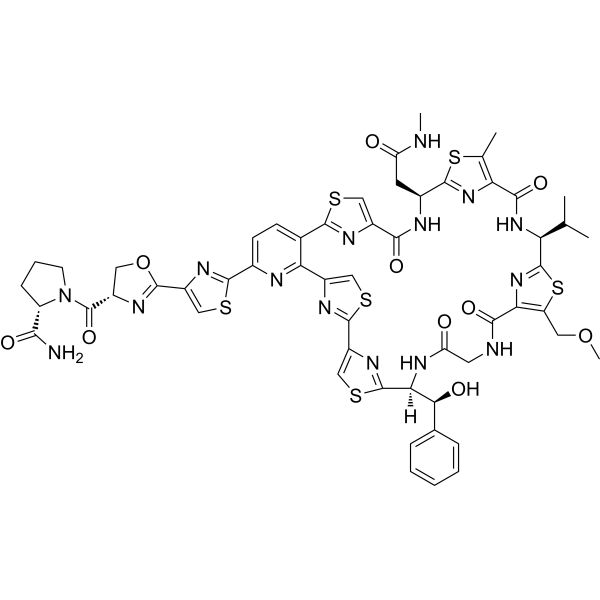
    GE 2270A (MDL 62879) is an antibiotic. GE 2270A inhibits gram-positive bacteria and anaerobes by inhibiting protein synthesis. GE 2270A can be used for the research of infection .
    GE 2270A
  • HY-136295

    Antibiotic Bacterial Infection Inflammation/Immunology
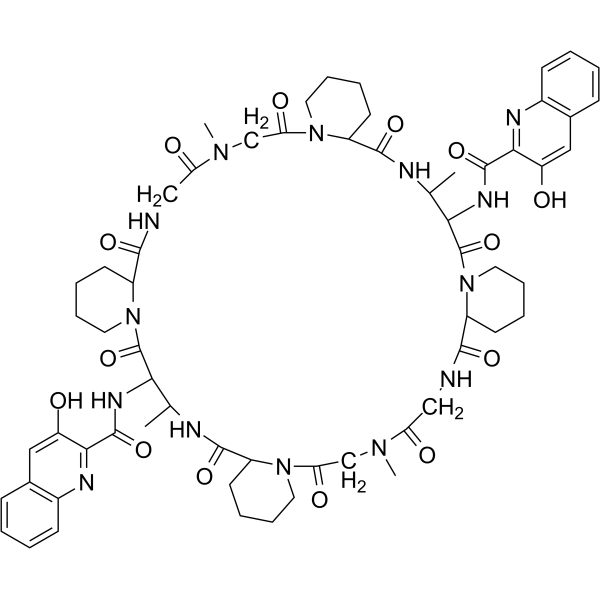
    Quinaldopeptin, a quinomycin antibiotic isolated from the culture of Streptoverticillium album strain, is highly active against Gram-positive bacteria and anaerobes and strongly cytotoxic against cultured B16 melanoma cells .
    Quinaldopeptin
  • HY-12479

    GSK-2251052; AN 3365

    Bacterial Aminoacyl-tRNA Synthetase Infection
    Epetraborole (GSK2251052) is a leucyl-tRNA synthetase (LeuRS) inhibitor (IC50=0.31 μM), thereby inhibiting protein synthesis. Epetraborole can be used in multidrug-resistant gram-negative pathogens infection research .
    Epetraborole
  • HY-19428A

    RBx-7644

    Antibiotic Bacterial Infection Cardiovascular Disease
    Ranbezolid (RBx7644 free base) is an orally active, oxazolidinone antibiotic against Gram-positive and Gram-negative anaerobes including Staphylococcus aureus, Staphylococcus epidermidis and Bacteroides fragilis. Ranbezolid can inhibit the 50s ribosomal subunit with an IC50 of 17 μM for bacterial ribosomes. Ranbezolid interferes cell wall and lipid synthesis. Ranbezolid can rapidly kill bacteria, significantly reduce bacterial load, and has better cardiovascular safety. Ranbezolid can be used for the study of antibiotics for anaerobic bacteria .
    Ranbezolid hydrochloride
  • HY-19428

    RBx7644 free base

    Antibiotic Bacterial Infection Cardiovascular Disease
    Ranbezolid (RBx7644 free base) is an orally active, oxazolidinone antibiotic against Gram-positive and Gram-negative anaerobes including Staphylococcus aureus, Staphylococcus epidermidis and Bacteroides fragilis. Ranbezolid can inhibit the 50s ribosomal subunit with an IC50 of 17 μM for bacterial ribosomes. Ranbezolid interferes cell wall and lipid synthesis. Ranbezolid can rapidly kill bacteria, significantly reduce bacterial load, and has better cardiovascular safety. Ranbezolid can be used for the study of antibiotics for anaerobic bacteria .
    Ranbezolid
  • HY-19234

    Antibiotic Bacterial Penicillin-binding protein (PBP) Beta-lactamase Infection
    FK-041 is an orally active cephalosporin antibiotic with high affinity for penicillin-binding proteins (PBPs). FK-041 exhibits broad-spectrum antibacterial activity, exerting potent antibacterial effects against Gram-positive bacteria, most Gram-negative bacteria, anaerobes, and so on. FK-041 also shows good efficacy against some drug-resistant strains such as penicillin-resistant Streptococcus pneumoniae. FK-041 is an antibacterial agent and can be used in the research of infectious diseases .
    FK-041
  • HY-N12228

    Bacterial Antibiotic Infection
    Phenelfamycin E is an elfamycin-type antibiotic and is active against Gram-positive anaerobes, including Clostridium difficile. Phenelfamycin E can be used for anti-bacteria research .
    Phenelfamycin E
  • HY-A0294AR

    MK-0826 disodium (Standard)

    Reference Standards Bacterial Antibiotic Infection Cancer
    Ertapenem (disodium) (Standard) is the analytical standard of Ertapenem (disodium). This product is intended for research and analytical applications. Ertapenem (MK-0826) disodium is a broad spectrum and long acting β-lactam antibiotic. Ertapenem disodium has a broad-spectrum anti-anaerobic activity against a variety of anaerobes with a mode MIC of 0.12 μg/mL. Ertapenem disodium can be used for the research of severe infections caused by bacteria in the skin, lungs, stomach, pelvis, and urinary tract[1][2].
    Ertapenem disodium (Standard)
  • HY-17460B

    BMS 284756 mesylate

    Bacterial Topoisomerase Antibiotic Infection
    Garenoxacin (BMS 284756) mesylate is an orally active quinolone antibiotic and Garenoxacin mesylate has a broad spectrum of activity against a wide array of gram-positive and gram-negative bacteria, anaerobes. Garenoxacin mesylate also inhibits Gyrase and TOPO IV .
    Garenoxacin mesylate
  • HY-N14906

    Bacterial Infection
    4-Diazo-3-methoxy-2,5-cyclohexadien-1-one has favourable anti-anaerobe activity. MIC: 0.4 μg/mL for Clostridium and Bacterioids, 0.2 μg/mL for Haemophilus .
    4-Diazo-3-methoxy-2,5-cyclohexadien-1-one
  • HY-113945

    Antibiotic Bacterial Infection
    Abbeymycin is an antibiotic derived from the actinobacterium Streptomyces sp. AB-999F-52. Abbeymycin is a specifically acting antibiotic with antimicrobial activity, primarily targeting anaerobic bacteria. Abbeymycin is employed in research concerning antibiotic discovery and screening .
    Abbeymycin
  • HY-17460R

    BMS284756 (Standard)

    Reference Standards Bacterial Topoisomerase DNA/RNA Synthesis Antibiotic Infection
    Garenoxacin (Standard) is the analytical standard of Garenoxacin. This product is intended for research and analytical applications. Garenoxacin (BMS284756) is an orally active quinolone antibiotic and has a broad spectrum of activity against a wide array of gram-positive and gram-negative bacteria, anaerobes, and fastidious organisms .
    Garenoxacin (Standard)
  • HY-N1750R

    Reference Standards Tyrosinase Endogenous Metabolite Others
    Garenoxacin (Standard) is the analytical standard of Garenoxacin. This product is intended for research and analytical applications. Garenoxacin (BMS284756) is an orally active quinolone antibiotic and has a broad spectrum of activity against a wide array of gram-positive and gram-negative bacteria, anaerobes, and fastidious organisms .
    3-(2,4-Dihydroxyphenyl)propanoic acid (Standard)
  • HY-12479B

    GSK-2251052 (R-mandelate); AN 3365 (R-mandelate)

    Bacterial Aminoacyl-tRNA Synthetase Infection
    Epetraborole R-mandelate is a novel leucyl-tRNA synthetase (LeuRS) inhibitor (IC50=0.31 μM), thereby inhibiting protein synthesis. Epetraborole R-mandelate can be used in multidrug-resistant gram-negative pathogens infection research .
    Epetraborole (R-mandelate)
  • HY-106668

    Sch 21420

    Antibiotic Bacterial Infection
    Isepamicin (Sch 21420) is an aminoglycoside antibacterial. Isepamicin has better activity against strains producing type I 6'-acetyltransferase. Isepamicin’s antibacterial spectrum includes Enterobacteriaceae and staphylococci. Anaerobes, Neisseriaceae and streptococci are resistant. Isepamicin exhibits a strong concentration-dependent bactericidal effect, a long post-antibiotic effect (several hours) and induces adaptive resistance .
    Isepamicin
  • HY-B1460R

    (±)-Sulconazole mononitrate (Standard)

    Reference Standards Fungal Bacterial Infection
    Sulconazole (mononitrate) (Standard) is the analytical standard of Sulconazole (mononitrate). This product is intended for research and analytical applications. Sulconazole mononitrate ((±)-Sulconazole mononitrate), an imidazole derivative, is a broad-spectrum fungicide. Sulconazole mononitrate can be used for the research of dermatomycoses, pityriasis versicolor, and cutaneous candidiasis .
    Sulconazole mononitrate (Standard)
  • HY-U00092

    Bacterial Infection
    BAY-Y 3118 is a quinolone antibacterial agent. BAY-Y 3118 has a broad antibacterial spectrum in vitro. BAY-Y 3118 exhibits high activity against gram-positive cocci and anaerobes. BAY-Y 3118 shows moderate activity against Enterobacteriaceae and Pseudomonas aeruginosa. BAY-Y 3118 can be used in the research of infectious diseases .
    BAY-Y 3118
  • HY-A0294S

    MK-0826-d4

    Isotope-Labeled Compounds Bacterial Antibiotic Infection Cancer
    Ertapenem-d4 (MK-0826-d4) is deuterium labeled Ertapenem. Ertapenem (MK-0826) is a broad spectrum and long acting β-lactam antibiotic. Ertapenem has a broad-spectrum anti-anaerobic activity against a variety of anaerobes with a mode MIC of 0.12 μg/mL. Ertapenem can be used for the research of severe infections caused by bacteria in the skin, lungs, stomach, pelvis, and urinary tract .
    Ertapenem-d4
  • HY-W353258R

    BAY 12-8039 monohydrate (Standard)

    Reference Standards Antibiotic Topoisomerase Bacterial Infection
    Moxifloxacin hydrochloride (BAY 12-8039) monohydrate (Standard) is the analytical standard of Moxifloxacin hydrochloride monohydrate. This product is intended for research and analytical applications. Moxifloxacin hydrochloride monohydrate is a blood-brain barrier-permeable, orally active topoisomerase II/IV inhibitor and a fluoroquinolone antibiotic. Moxifloxacin hydrochloride monohydrate disrupts bacterial DNA replication, transcription, repair and chromosome segregation processes. Moxifloxacin hydrochloride monohydrate exhibits activity against Gram-positive bacteria, Gram-negative bacteria, anaerobes, atypical pathogens, drug-resistant respiratory pathogens, Mycobacterium tuberculosis, mycoplasmas and Ureaplasma urealyticum.
    Moxifloxacin hydrochloride monohydrate (Standard)
  • HY-116880

    Bacterial DNA/RNA Synthesis Infection
    DS-2969b is an orally active GyrB inhibitor with antibacterial activity. DS-2969b is is active against Clostridium difficile infection (MIC90: 0.06 μg/mL), which is 2-, 16-, and 32-fold lower than those of Fidaxomicin (HY-17580), Metronidazole (HY-B0318), and Vancomycin (HY-B0671), respectively. DS-2969b inhibits the supercoiling activity of C. difficile DNA gyrase. DS-2969b also exhibits activity against other Gram-positive anaerobes, including strict and facultative anaerobes. DS-2969b is safe and well tolerated in preclinical toxicology studies .
    DS-2969b
  • HY-106026

    IMC-XV

    Antibiotic Bacterial Infection
    YM 133 (IMC-XV) is a semisynthetic macrolide antibiotic with potent bactericidal activity. YM 133 shows activity against Erythromycin (HY-B0220)-, Josamycin (HY-B1920)-, and rokitamycin-resistant (MIC ≥ 100 μg/mL) strains of staphylococci, streptococci, Bacteroides spp., and Clostridium spp. YM 133 exhibits excellent activity against macrolide-resistant strains and against anaerobes. YM 133 can be used for antibacterial research .
    YM 133
  • HY-106946

    Bacterial
    E 5065 is an orally active antibacterial agent. E 5065 exhibits potent in vitro activity against Gram-negative microorganisms, Gram-positive cocci, and anaerobes. E 5065 exhibits an MIC90 of 0.5 μg/mL against Clostridium spp. E 5065 provides protection against experimental infections caused by P. aeruginosa .
    E 5065
  • HY-138024

    R-95867

    Drug Metabolite Bacterial Infection
    Tacapenem (R-95867), the active metabolite of CS-834, is an antibacterial agent. Tacapenem exhibits a broad antibacterial spectrum, with activity against gram-positive and -negative aerobes and anaerobes. Tacapenem shows potent bactericidal activity against S. aureus and Escherichia coli .
    Tacapenem
  • HY-U00092A

    Bacterial Infection
    BAY-Y 3118 hydrochloride is a quinolone antibacterial agent. BAY-Y 3118 hydrochloride has a broad antibacterial spectrum in vitro. BAY-Y 3118 hydrochloride exhibits high activity against gram-positive cocci and anaerobes. BAY-Y 3118 hydrochloride shows moderate activity against Enterobacteriaceae and Pseudomonas aeruginosa. BAY-Y 3118 hydrochloride can be used in the research of infectious diseases .
    BAY-Y 3118 hydrochloride
  • HY-185351

    Ampicillin/Sulbactam combination

    Bacterial Antibiotic Infection
    Ampicillin sodium and Sulbactam sodium are formed by mixing HY-B0522A Ampicillin sodium with HY-B0334A Sulbactam sodium (each 1.5 g of this product contains 1 g amoxicillin sodium and 0.5 g sulbactam sodium). Ampicillin is a β-lactam antimicrobial, whereas sulbactam is a β-lactamase inhibitor. Ampicillin has a broad spectrum of bactericidal activity against many gram-positive and gram-negative aerobic and anaerobic bacteria. However, ampicillin is degraded by beta-lactamases. The combination of ampicillin and sulbactam demonstrates synergy in addressing bacterial strains resistant to ampicillin, thus providing broader coverage. Bacteria susceptible to ampicillin/sulbactam include Haemophilus influenzae, Escherichia coli, Acinetobacter, Klebsiella, Staphylococcus aureus, Enterobacter, and anaerobes.
    Ampicillin sodium and Sulbactam sodium

Inquiry Online

Your information is safe with us. * Required Fields.

Salutation


Country or Region *

Applicant Name *


Organization Name *

Department *


Email Address *


Product Name *

Cat. No.


Requested quantity *

Phone Number *


Remarks

Inquiry Online

Inquiry Information

Product Name:
Cat. No.:
Quantity:
MCE Japan Authorized Agent:

