1. Search Result
Search Result
Results for "

binge

" in MedChemExpress (MCE) Product Catalog:
Cat. No. Product Name Target Research Areas Chemical Structure
  • HY-123856

    Phosphatase NF-κB c-Met/HGFR Anaplastic lymphoma kinase (ALK) Cardiovascular Disease Neurological Disease
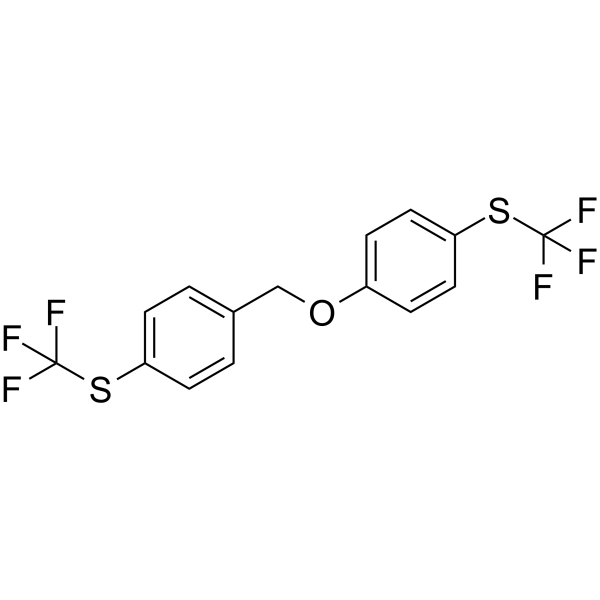
    MY10 is a potent and orally active receptor protein tyrosine phosphatase (RPTPβ/ζ) inhibitor. MY10 reduces NF-κB p65 expression. MY10 activates tyrosine phosphorylation of c-Met. MY10 prevents the alcohol-induced downregulation of Ptprz1 and Alk expression. MY10 attenuates binge-like ethanol consumption and ethanol reward. MY10 can be used in the study of neurological and vascular diseases .
    MY10
  • HY-W007087

    GABA Receptor Metabolic Disease
    Valerate sodium is the sodium salt of valeric acid, a short-chain fatty acid, and exhibits oral activity. Valerate sodium reduces binge ethanol intake and decreases blood ethanol concentration in mice, while also exerting anxiolytic effects. Valerate sodium increases GABA levels, regulates epigenetics and alters gut microbiome function. Valerate sodium can be used in research related to excessive alcohol consumption .
    Valerate sodium
  • HY-147294

    ACT-539313

    Orexin Receptor (OX Receptor) Cytochrome P450 Neurological Disease
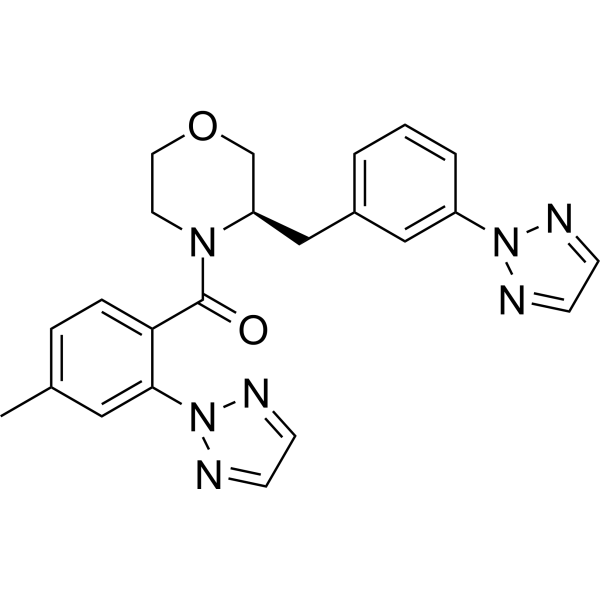
    Nivasorexant (ACT-539313) is an orally active, blood-brain barrier penetrant, selective orexin OX1R inhibitor. Nivasorexant specifically blocks central OX1Rs without affecting OX2Rs, and exhibits competitive inhibitory activity against CYP2C8, CYP2C9, CYP2C19 and CYP3A4 (IC50 values are 25 μM, 8.6 μM, 1.6 μM, 19 μM/44 μM, respectively). Nivasorexant significantly reduces binge-like eating behavior of highly palatable food in rat models and has long-acting properties. Nivasorexant shows no relevant off-target activity against over 130 selected proteins, exhibits favorable safety profiles, and can be used for studies related to binge eating disorder .
    Nivasorexant
  • HY-167856

    GPR88 Neurological Disease
    RTI-122 is a selective, blood-brain barrier-permeable GPR88 agonist (cAMP EC50=11 nM), with EC50 values of 11.5 nM and 155 nM for human and mouse GPR88, respectively ([ 35S]GTPγS assay). By activating the GPR88 receptor to regulate the cAMP signaling pathway and G protein activity, RTI-122 significantly attenuates Binge-like drinking, reduces alcohol intake, and decreases alcohol-seeking motivation. RTI-122 blocks the reinstatement of alcohol-seeking behavior without affecting water or sucrose intake. RTI-122 exhibits metabolic stability in mice (T1/2=5.8 h) and can be used to investigate alcohol use disorder .
    RTI-122
  • HY-176800

    CCR Neurological Disease Inflammation/Immunology
    LMD-902, a LMD-009 (HY-121885) analog, is a CCR8 agonist with an EC50 of 15  nM. LMD-902 has a superior binging capacity depending on key residues such as PheVI:16. LMD-902 can be used for inflammation diseases like bronchial asthma and central nervous system diseases like multiple sclerosis research .
    LMD-902
  • HY-111469
    CPT-157633
    1 Publications Verification

    Phosphatase Metabolic Disease
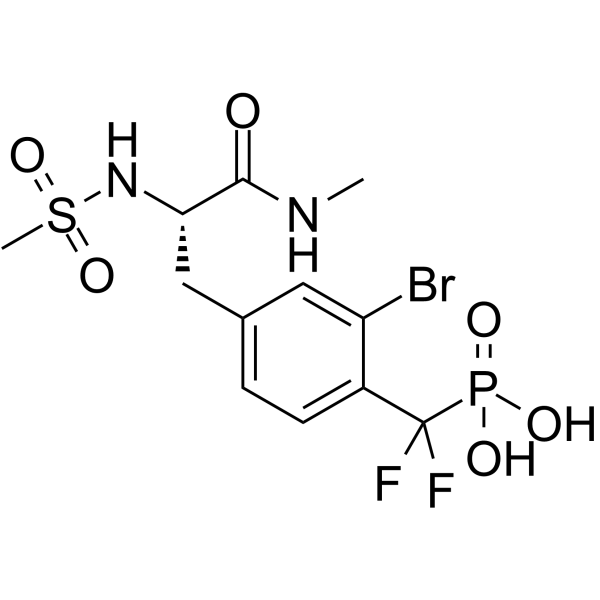
    CPT-157633, a difluoro-phosphonomethyl phenylalanine derivative, and is a PTP1B inhibitor. CPT-157633 prevents binge drinking-induced glucose intolerance .
    CPT-157633
  • HY-U00387

    Cholecystokinin Receptor Metabolic Disease Endocrinology
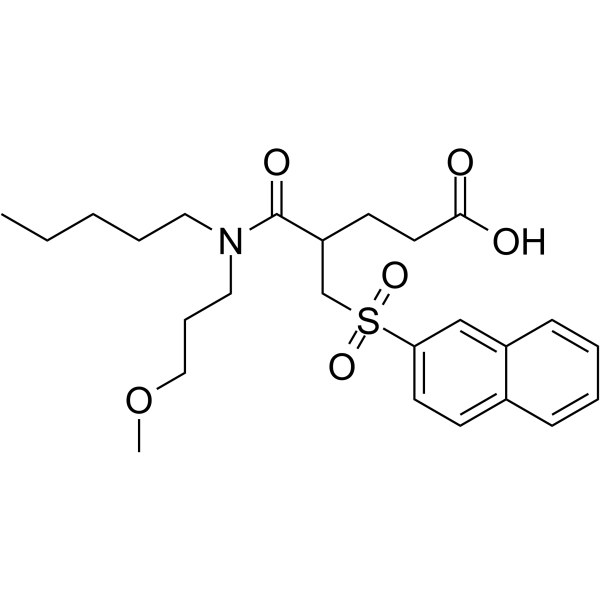
    CCK-A receptor inhibitor 1 is a cholecystokinin A (CCK-A) receptor inhibitor with a binging IC50 of 340 nM.
    CCK-A receptor inhibitor 1
  • HY-181960

    Histamine Receptor Neurological Disease
    BP1.3656B is a selective, orally active, blood-brain barrier-permeable histamine H3 receptor (histamine H3 receptor) inverse agonist/antagonist, with a KB value of 0.08 nM for antagonizing agonist-induced activity and an IC50 value of 0.38 nM for directly inhibiting the basal activity of the receptor. BP1.3656B reduces alcohol consumption, alcohol-seeking behavior, alcohol self-administration, motivation to drink, alcohol relapse, alcohol-induced hyperlocomotion, and binge alcohol intake. BP1.3656B is applicable for the research of alcohol use disorder .
    BP1.3656B
  • HY-167856A

    GPR88 Neurological Disease
    RTI-122 dihydrochloride is a selective, blood-brain barrier-permeable GPR88 agonist (cAMP EC50=11 nM), with EC50 values of 11.5 nM and 155 nM for human and mouse GPR88, respectively ([ 35S]GTPγS assay). By activating the GPR88 receptor to regulate the cAMP signaling pathway and G protein activity, RTI-122 dihydrochloride significantly attenuates Binge-like drinking, reduces alcohol intake, and decreases alcohol-seeking motivation. RTI-122 dihydrochloride blocks the reinstatement of alcohol-seeking behavior without affecting water or sucrose intake. RTI-122 dihydrochloride exhibits metabolic stability in mice (T1/2=5.8 h) and can be used to investigate alcohol use disorder .
    RTI-122 dihydrochloride

Inquiry Online

Your information is safe with us. * Required Fields.

Salutation


Country or Region *

Applicant Name *


Organization Name *

Department *


Email Address *


Product Name *

Cat. No.


Requested quantity *

Phone Number *


Remarks

Inquiry Online

Inquiry Information

Product Name:
Cat. No.:
Quantity:
MCE Japan Authorized Agent:

