
Search Result
Results for "
biodegradation
" in MedChemExpress (MCE) Product Catalog:
33
Biochemical Assay Reagents
| Cat. No. |
Product Name |
Target |
Research Areas |
Chemical Structure |
-
- HY-P2890
-
|
Denilite IIS
|
Endogenous Metabolite
|
Others
|
|
Laccase, Microorganisms (Denilite IIS) is a multi-copper oxidase (MCOs), which widely exists in microorganisms, plants and fungi, and can catalyze the oxidation of one electron of various phenolic compounds. Laccase can promote the oxidative coupling of single lignin, which plays an important role in the formation and biodegradation of lignin, and also has the potential to cross-link food polymers .
|
-
-
- HY-B0242
-
|
Sulphanilamide
|
Environmental Pollutants
Antibiotic
Bacterial
|
Infection
|
|
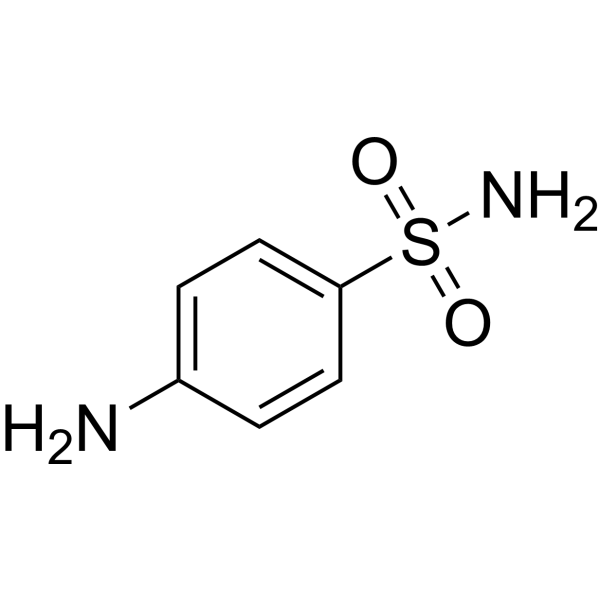
ulfanilamide (Sulphanilamide) is a potent and orally active sulfonamide antibiotic and can be a major intermediate of sulfamethoxazole biodegradation. Sulfanilamide also is a carbonic anhydrase inhibitor. Sulfanilamide shows inhibition on virus of lymphogranuloma venereum .
|
-
-
- HY-166198
-
|
|
Drug Derivative
|
Metabolic Disease
|
|
9(Z)-Octadecenedioic acid is a C18 cutin monomer and marine biodegradation rate accelerator for biodegradable resins.9(Z)-Octadecenedioic acid is a structural analog of 9,10,16-trihydroxyhexadecanoic acid (HY-W992515) .
|
-
-
- HY-B1941
-
|
|
Endogenous Metabolite
Apoptosis
DNA/RNA Synthesis
|
Neurological Disease
Metabolic Disease
Inflammation/Immunology
Endocrinology
|
|
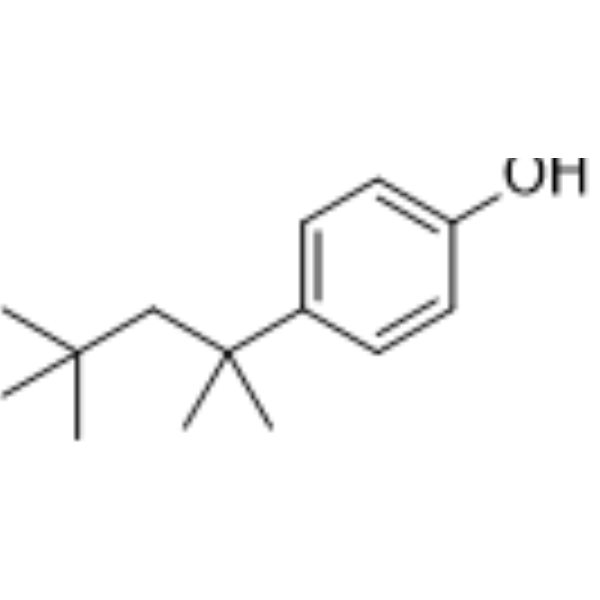
4-tert-Octylphenol, a endocrine-disrupting chemical, is an estrogenic agent. 4-tert-Octylphenol is also a biodegradation product of non-ionic surfactants alkylphenol polyethoxylates. 4-tert-Octylphenol induces apoptosis in neuronal progenitor cells in offspring mouse brain. 4-tert-Octylphenol reduces bromodeoxyuridine (BrdU), mitotic marker Ki67, and phospho-histone H3 (p-Histone-H3), resulting in a reduction of neuronal progenitor proliferation. 4-tert-Octylphenol disrupts brain development and behavior in mice, which is promising for reserch of immune response, neuro-related diseases and ethology .
|
-
-
- HY-132188
-
|
|
Endogenous Metabolite
|
Others
|
|
Manganese peroxidase is a heme protein that oxidizes Mn2+ to Mn3+. Manganese peroxidase catalyzes plant lignin de-polymerization. Manganese peroxidase can be used for the biodegradation of hazardous environmental contaminants, and especially for dye wastewater decolorization .
|
-
-
- HY-131314
-
|
|
Drug Metabolite
|
Others
|
|
Ibuprofen carboxylic acid is the metabolite of Ibuprofen (HY-78131), that has high concentrations in wastewater and water environments, and disappears fast during biodegradation, compared to the other ibuprofen metabolite .
|
-
-
- HY-B0242R
-
|
Sulphanilamide (Standard)
|
Reference Standards
Bacterial
Antibiotic
|
Infection
|
|
Sulfanilamide (Standard) is the analytical standard of Sulfanilamide. This product is intended for research and analytical applications. ulfanilamide (Sulphanilamide) is a potent and orally active sulfonamide antibiotic and can be a major intermediate of sulfamethoxazole biodegradation. Sulfanilamide also is a carbonic anhydrase inhibitor. Sulfanilamide shows inhibition on virus of lymphogranuloma venereum .
|
-
-
- HY-W250312
-
|
|
Environmental Pollutants
Biochemical Assay Reagents
|
Others
|
|
Polycaprolactone is a biodegradable polyester commonly used in various biomedical and industrial applications. It is a white waxy polymer that can be molded into various shapes and forms. Polycaprolactone has various properties suitable for these applications, including low melting point, high flexibility and slow biodegradation rate. It can be used as a raw material for the production of tissue engineering scaffolds, drug delivery systems, and medical implants. In addition, it is used as a binder in the production of adhesives, coatings and paints.
|
-
-
- HY-W112021
-
|
2,5-Dimethoxybenzoquinone
|
Biochemical Assay Reagents
|
Others
|
|
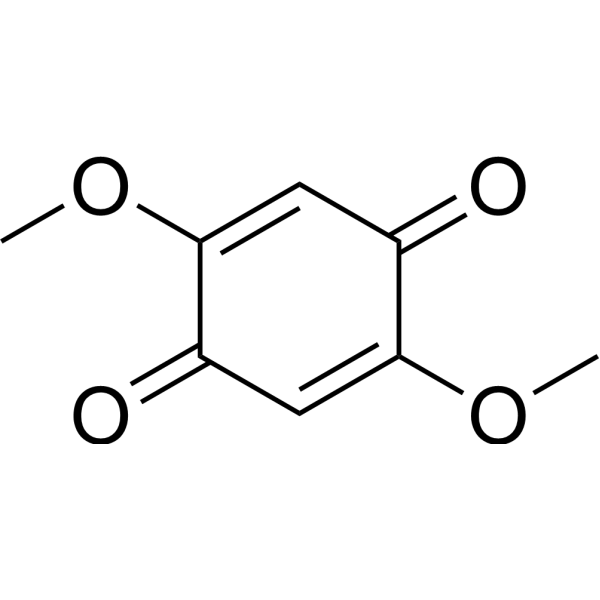
2,5-DMBQ (2,5-Dimethoxybenzoquinone) serves as an extracellular reductant. 2,5-DMBQ is involved in a crucial redox cycle, namely the extracellular hydroquinone-quinone redox cycle. In this cycle, 2,5-DMBQ is capable of reducing extracellular Fe ³⁺ and generating H2O2. 2,5-DMBQ plays a pivotal role in the biodegradation mechanism of brown rot fungal, assisting the fungi in decomposing and utilizing organic matter .
|
-
-
- HY-113897
-
|
|
Bacterial
|
Infection
|
|
Chloramphenicol 3-acetate is the main intermediate in the biodegradation of CAP, formed by the acetylation of the 3-hydroxy group of CAP through chloramphenicol acetyltransferase, this is a common resistance mechanism that microbes have against chloramphenicol .
|
-
-
- HY-133604
-
|
|
Drug Intermediate
|
Others
|
|
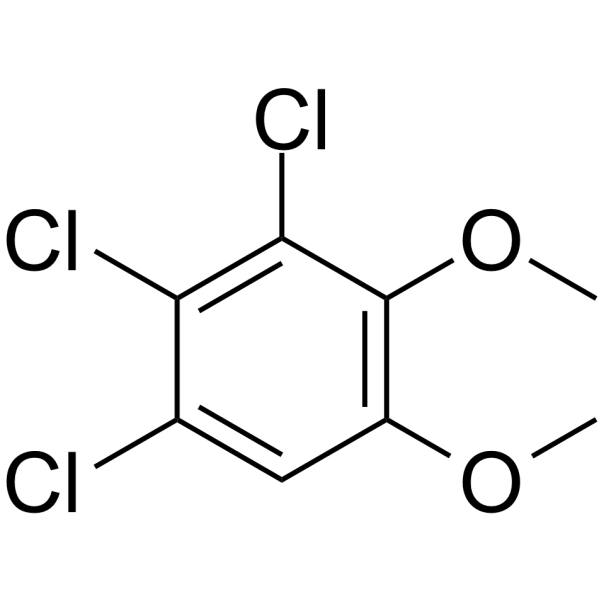
3,4,5-Trichloroveratrole is one of the biodegradation products of bacterial O-methylation of Tri- and Tetra chloroguaiacols. The Tri- and Tetra chloroguaiacols are formed during bleaching of wood pulp in the paper manufacturing industry .
|
-
-
- HY-Y1771
-
|
Phthalaldehydic acid
|
Drug Metabolite
Bacterial
|
Infection
|
|
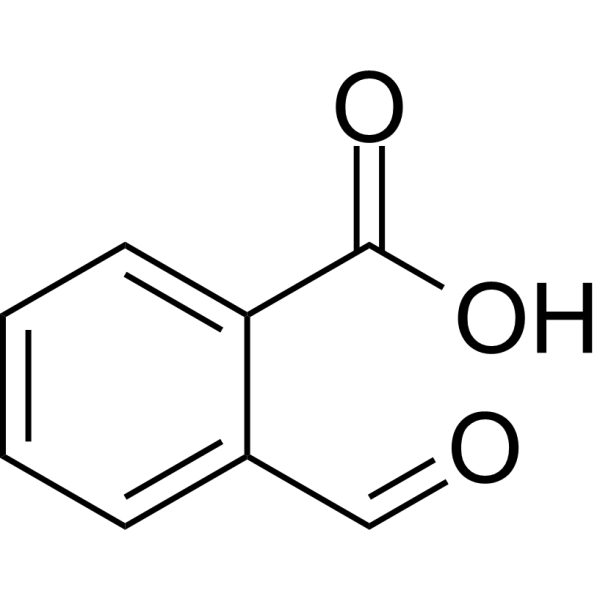
2-Carboxybenzaldehyde is a key intermediate metabolite in the biodegradation of polycyclic aromatic hydrocarbons (PAHs) such as fluoranthene and phenanthrene. 2-Carboxybenzaldehyde can be produced by the degradation of fluoranthene by Pasteurella sp. IFA and Mycobacterium sp. PYR-1. 2-Carboxybenzaldehyde can also be produced by the degradation of phenanthrene by Pseudomonas sp. PPD .
|
-
-
- HY-B1941R
-
|
|
Reference Standards
Endogenous Metabolite
Apoptosis
DNA/RNA Synthesis
|
Neurological Disease
Metabolic Disease
Inflammation/Immunology
Endocrinology
|
|
4-tert-Octylphenol (Standard) is the analytical standard of 4-tert-Octylphenol. This product is intended for research and analytical applications. 4-tert-Octylphenol, a endocrine-disrupting chemical, is an estrogenic agent. 4-tert-Octylphenol is also a biodegradation product of non-ionic surfactants alkylphenol polyethoxylates. 4-tert-Octylphenol induces apoptosis in neuronal progenitor cells in offspring mouse brain. 4-tert-Octylphenol reduces bromodeoxyuridine (BrdU), mitotic marker Ki67, and phospho-histone H3 (p-Histone-H3), resulting in a reduction of neuronal progenitor proliferation. 4-tert-Octylphenol disrupts brain development and behavior in mice, which is promising for reserch of immune response, neuro-related diseases and ethology .
|
-
-
- HY-133605
-
|
|
Bacterial
|
Others
|
|
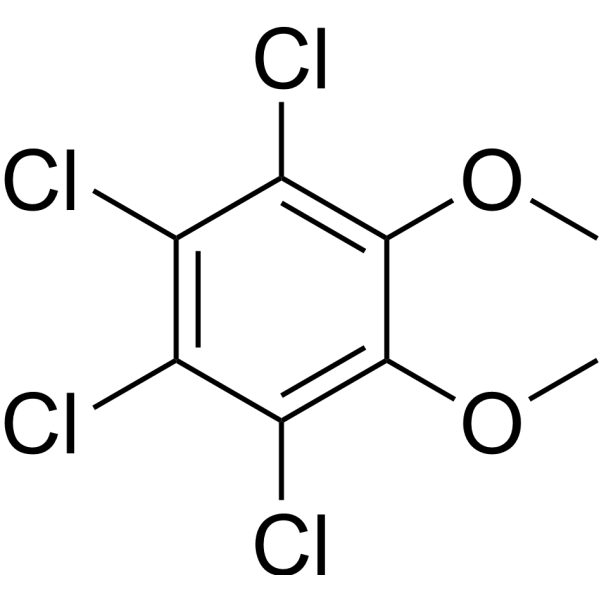
Tetrachloroveratrole is one of the biodegradation products of bacterial O-methylation of Tri- and Tetra chloroguaiacols. The Tri- and Tetra chloroguaiacols are formed during bleaching of wood pulp in the paper manufacturing industry .
|
-
-
- HY-116476
-
|
|
Neprilysin
|
Others
|
|
Risotilide is an inhibitor of enkephalinase B, which has the ability to inhibit enkephalinase B activity (IC50 value is 0.35 microM), and can also effectively inhibit enkephalinase A (IC50 = 0.02 microM) and aminopeptidase activity (IC50 = 13 microM), and can be regarded as a complete inhibitor of enkephalin biodegradation.
|
-
-
- HY-W112021R
-
|
2,5-Dimethoxybenzoquinone (Standard)
|
Biochemical Assay Reagents
Reference Standards
|
Others
|
|
2,5-DMBQ (2,5-Dimethoxybenzoquinone) serves as an extracellular reductant. 2,5-DMBQ is involved in a crucial redox cycle, namely the extracellular hydroquinone-quinone redox cycle. In this cycle, 2,5-DMBQ is capable of reducing extracellular Fe³⁺ and generating H2O2. 2,5-DMBQ plays a pivotal role in the biodegradation mechanism of brown rot fungal, assisting the fungi in decomposing and utilizing organic matter .
|
-
-
- HY-Y1771R
-
|
Phthalaldehydic acid (Standard)
|
Reference Standards
Drug Metabolite
Bacterial
|
Infection
|
|
2-Carboxybenzaldehyde (Standard) is the analytical standard of 2-Carboxybenzaldehyde (HY-Y1771). This product is intended for research and analytical applications. 2-Carboxybenzaldehyde is a key intermediate metabolite in the biodegradation of polycyclic aromatic hydrocarbons (PAHs) such as fluoranthene and phenanthrene. 2-Carboxybenzaldehyde can be produced by the degradation of fluoranthene by Pasteurella sp. IFA and Mycobacterium sp. PYR-1. 2-Carboxybenzaldehyde can also be produced by the degradation of phenanthrene by Pseudomonas sp. PPD .
|
-
-
- HY-158219A
-
|
GelMA, 60% methacrylation, blue fluorescent
|
Biochemical Assay Reagents
|
Others
|
Gelatin Methacryloyl (GelMA), 60% methacrylation, blue fluorescent is methacrylated gelatin (GelMA) with blue fluorescence, which is obtained by "grafting" fluorescent molecules on GelMA. Gelatin Methacryloyl, 60% methacrylation, blue fluorescent has a scaffolding effect and can be used to design tissue analogs from vasculature to cartilage and bone, allowing cell proliferation and spreading. Gelatin Methacryloyl, 30% methacrylation, blue fluorescent needs to be self-assembled into fibrous hydrogels under the action of the photoinitiator LAP (HY-44076), and target bioactive adhesion sites, exert inherent support for tissue cells and biodegradation activity. Application direction: cell culture, biological 3D printing, tissue engineering, etc.
|
-
-
- HY-158219
-
|
GelMA, 30% methacrylation, blue fluorescent
|
Biochemical Assay Reagents
|
Others
|
Gelatin Methacryloyl (GelMA), 30% methacrylation, blue fluorescent is methacrylated gelatin (GelMA) with blue fluorescence, which is obtained by "grafting" fluorescent molecules on GelMA. Gelatin Methacryloyl, 30% methacrylation, blue fluorescent has a scaffolding effect and can be used to design tissue analogs from vasculature to cartilage and bone, allowing cell proliferation and spreading. Gelatin Methacryloyl, 30% methacrylation, blue fluorescent needs to be self-assembled into fibrous hydrogels under the action of the photoinitiator LAP (HY-44076), and target bioactive adhesion sites, exert inherent support for tissue cells and biodegradation activity. Application direction: cell culture, biological 3D printing, tissue engineering, etc.
|
-
-
- HY-158219B
-
|
GelMA, 90% methacrylation, blue fluorescent
|
Biochemical Assay Reagents
|
Others
|
Gelatin Methacryloyl (GelMA), 90% methacrylation, blue fluorescent is methacrylated gelatin (GelMA) with blue fluorescence, which is obtained by "grafting" fluorescent molecules on GelMA. Gelatin Methacryloyl, 90% methacrylation, blue fluorescent has a scaffolding effect and can be used to design tissue analogs from vasculature to cartilage and bone, allowing cell proliferation and spreading. Gelatin Methacryloyl, 30% methacrylation, blue fluorescent needs to be self-assembled into fibrous hydrogels under the action of the photoinitiator LAP (HY-44076), and target bioactive adhesion sites, exert inherent support for tissue cells and biodegradation activity. Application direction: cell culture, biological 3D printing, tissue engineering, etc.
|
-
-
- HY-167306
-
|
|
Biochemical Assay Reagents
|
Others
|
|
PLLA2000-PEG5000-Thiol is a polylactic acid derivative that forms micelles in water and initiates biodegradation by attacking ester bonds through hydrolysis. PLLA2000-PEG5000-Thiol can be used in drug delivery research .
|
-
-
- HY-167299
-
|
|
Biochemical Assay Reagents
|
Others
|
|
PLLA4000-PEG3000-Thiol is a polylactic acid derivative that forms micelles in water and initiates biodegradation by attacking ester bonds through hydrolysis. PLLA4000-PEG3000-Thiol can be used in drug delivery research .
|
-
-
- HY-167295
-
|
|
Biochemical Assay Reagents
|
Others
|
|
PLLA5000-PEG3000-Thiol is a polylactic acid derivative that forms micelles in water and initiates biodegradation by attacking ester bonds through hydrolysis. PLLA5000-PEG3000-Thiol can be used in drug delivery research .
|
-
-
- HY-167311
-
|
|
Biochemical Assay Reagents
|
Others
|
|
PLLA1000-PEG3000-Thiol is a polylactic acid derivative that forms micelles in water and initiates biodegradation by attacking ester bonds through hydrolysis. PLLA1000-PEG3000-Thiol can be used in drug delivery research .
|
-
-
- HY-167316
-
|
|
Biochemical Assay Reagents
|
Others
|
|
PLLA10000-PEG2000-Thiol is a polylactic acid derivative that forms micelles in water and initiates biodegradation by attacking ester bonds through hydrolysis. PLLA10000-PEG2000-Thiol can be used in drug delivery research .
|
-
-
- HY-167305
-
|
|
Biochemical Assay Reagents
|
Others
|
|
PLLA3000-PEG1000-Thiol is a polylactic acid derivative that forms micelles in water and initiates biodegradation by attacking ester bonds through hydrolysis. PLLA3000-PEG1000-Thiol can be used in drug delivery research .
|
-
-
- HY-167304
-
|
|
Biochemical Assay Reagents
|
Others
|
|
PLLA3000-PEG2000-Thiol is a polylactic acid derivative that forms micelles in water and initiates biodegradation by attacking ester bonds through hydrolysis. PLLA3000-PEG2000-Thiol can be used in drug delivery research .
|
-
-
- HY-167301
-
|
|
Biochemical Assay Reagents
|
Others
|
|
PLLA4000-PEG1000-Thiol is a polylactic acid derivative that forms micelles in water and initiates biodegradation by attacking ester bonds through hydrolysis. PLLA4000-PEG1000-Thiol can be used in drug delivery research .
|
-
-
- HY-167309
-
|
|
Biochemical Assay Reagents
|
Others
|
|
PLLA2000-PEG1000-Thiol is a polylactic acid derivative that forms micelles in water and initiates biodegradation by attacking ester bonds through hydrolysis. PLLA2000-PEG1000-Thiol can be used in drug delivery research .
|
-
-
- HY-167296
-
|
|
Biochemical Assay Reagents
|
Others
|
|
PLLA5000-PEG2000-Thiol is a polylactic acid derivative that forms micelles in water and initiates biodegradation by attacking ester bonds through hydrolysis. PLLA5000-PEG2000-Thiol can be used in drug delivery research .
|
-
-
- HY-167297
-
|
|
Biochemical Assay Reagents
|
Others
|
|
PLLA5000-PEG1000-Thiol is a polylactic acid derivative that forms micelles in water and initiates biodegradation by attacking ester bonds through hydrolysis. PLLA5000-PEG1000-Thiol can be used in drug delivery research .
|
-
-
- HY-167300
-
|
|
Biochemical Assay Reagents
|
Others
|
|
PLLA4000-PEG2000-Thiol is a polylactic acid derivative that forms micelles in water and initiates biodegradation by attacking ester bonds through hydrolysis. PLLA4000-PEG2000-Thiol can be used in drug delivery research .
|
-
-
- HY-167315
-
|
|
Biochemical Assay Reagents
|
Others
|
|
PLLA10000-PEG3000-Thiol is a polylactic acid derivative that forms micelles in water and initiates biodegradation by attacking ester bonds through hydrolysis. PLLA10000-PEG3000-Thiol can be used in drug delivery research .
|
-
-
- HY-167317
-
|
|
Biochemical Assay Reagents
|
Others
|
|
PLLA10000-PEG1000-Thiol is a polylactic acid derivative that forms micelles in water and initiates biodegradation by attacking ester bonds through hydrolysis. PLLA10000-PEG1000-Thiol can be used in drug delivery research .
|
-
-
- HY-167303
-
|
|
Biochemical Assay Reagents
|
Others
|
|
PLLA3000-PEG3000-Thiol is a polylactic acid derivative that forms micelles in water and initiates biodegradation by attacking ester bonds through hydrolysis. PLLA3000-PEG3000-Thiol can be used in drug delivery research .
|
-
-
- HY-167314
-
|
|
Biochemical Assay Reagents
|
Others
|
|
PLLA10000-PEG5000-Thiol is a polylactic acid derivative that forms micelles in water and initiates biodegradation by attacking ester bonds through hydrolysis. PLLA10000-PEG5000-Thiol can be used in drug delivery research .
|
-
-
- HY-167312
-
|
|
Biochemical Assay Reagents
|
Others
|
|
PLLA1000-PEG2000-Thiol is a polylactic acid derivative that forms micelles in water and initiates biodegradation by attacking ester bonds through hydrolysis. PLLA1000-PEG2000-Thiol can be used in drug delivery research .
|
-
-
- HY-167308
-
|
|
Biochemical Assay Reagents
|
Others
|
|
PLLA2000-PEG2000-Thiol is a polylactic acid derivative that forms micelles in water and initiates biodegradation by attacking ester bonds through hydrolysis. PLLA2000-PEG2000-Thiol can be used in drug delivery research .
|
-
-
- HY-167294
-
|
|
Biochemical Assay Reagents
|
Others
|
|
PLLA5000-PEG5000-Thiol is a polylactic acid derivative that forms micelles in water and initiates biodegradation by attacking ester bonds through hydrolysis. PLLA5000-PEG5000-Thiol can be used in drug delivery research .
|
-
-
- HY-167302
-
|
|
Biochemical Assay Reagents
|
Others
|
|
PLLA3000-PEG5000-Thiol is a polylactic acid derivative that forms micelles in water and initiates biodegradation by attacking ester bonds through hydrolysis. PLLA3000-PEG5000-Thiol can be used in drug delivery research .
|
-
-
- HY-167310
-
|
|
Biochemical Assay Reagents
|
Others
|
|
PLLA1000-PEG5000-Thiol is a polylactic acid derivative that forms micelles in water and initiates biodegradation by attacking ester bonds through hydrolysis. PLLA1000-PEG5000-Thiol can be used in drug delivery research .
|
-
-
- HY-167298
-
|
|
Biochemical Assay Reagents
|
Others
|
|
PLLA4000-PEG5000-Thiol is a polylactic acid derivative that forms micelles in water and initiates biodegradation by attacking ester bonds through hydrolysis. PLLA4000-PEG5000-Thiol can be used in drug delivery research .
|
-
-
- HY-167307
-
|
|
Biochemical Assay Reagents
|
Others
|
|
PLLA2000-PEG3000-Thiol is a polylactic acid derivative that forms micelles in water and initiates biodegradation by attacking ester bonds through hydrolysis. PLLA2000-PEG3000-Thiol can be used in drug delivery research .
|
-
-
- HY-167313
-
|
|
Biochemical Assay Reagents
|
Others
|
|
PLLA1000-PEG1000-Thiol is a polylactic acid derivative that forms micelles in water and initiates biodegradation by attacking ester bonds through hydrolysis. PLLA1000-PEG1000-Thiol can be used in drug delivery research .
|
-
-
- HY-E71104
-
|
|
Biochemical Assay Reagents
|
Others
|
|
(R)-Specific secondary-alkylsulfatase (EC 3.1.6.19) from Rhodococcus ruber is involved in the biodegradation of alkyl sulfate esters used as detergents and released into the environment.
|
-
-
- HY-W019881
-
|
RH-0265
|
Herbicide
|
Others
|
|
Fluoroglycofen-ethyl (RH-0265) is a diphenylether herbicide and a substrate for biodegradation. Fluoroglycofen-ethyl can be degraded by Mycobacterium phocaicum MBWY-1. Fluoroglycofen-ethyl can be used for protecting wheat, barley, rice, peanuts, and soybeans .
|
-
-
- HY-W042298
-
|
|
Environmental Pollutants
|
Others
|
|
Triisobutyl phosphate is an environmental pollutant that undergoes biodegradation. TiBP can be degraded in activated sludge via hydrolysis, dehydrogenation and hydroxylation, a process mediated by an acclimated microbial community with Pseudomonas as the key strain, and enhanced by TiBP-induced enzymatic activity. TiBP exerts toxic effects on zebrafish embryos .
|
-
-
- HY-167412
-
|
|
Biochemical Assay Reagents
|
Others
|
|
PLLA5000-PEG2000-FOL is a polylactic acid derivative. Polylactic acid derivatives have strong binding affinity to folate receptors and clear biodegradability. PLLA5000-PEG2000-FOL can be used in drug delivery research .
|
-
-
- HY-167415
-
|
|
Biochemical Assay Reagents
|
Others
|
|
PLLA10000-PEG5000-FOL is a polylactic acid derivative. Polylactic acid derivatives have strong binding affinity to folate receptors and clear biodegradability. PLLA10000-PEG5000-FOL can be used in drug delivery research .
|
-
-
- HY-167413
-
|
|
Biochemical Assay Reagents
|
Others
|
|
PLLA20000-PEG5000-FOL is a polylactic acid derivative. Polylactic acid derivatives have strong binding affinity to folate receptors and clear biodegradability. PLLA20000-PEG5000-FOL can be used in drug delivery research .
|
-
- HY-167411
-
|
|
Biochemical Assay Reagents
|
Others
|
|
PLLA5000-PEG5000-FOL is a polylactic acid derivative. Polylactic acid derivatives have strong binding affinity to folate receptors and clear biodegradability. PLLA5000-PEG5000-FOL can be used in drug delivery research .
|
-
- HY-167416
-
|
|
Biochemical Assay Reagents
|
Others
|
|
PLLA10000-PEG2000-FOL is a polylactic acid derivative. Polylactic acid derivatives have strong binding affinity to folate receptors and clear biodegradability. PLLA10000-PEG2000-FOL can be used in drug delivery research .
|
-
- HY-167414
-
|
|
Biochemical Assay Reagents
|
Others
|
|
PLLA20000-PEG2000-FOL is a polylactic acid derivative. Polylactic acid derivatives have strong binding affinity to folate receptors and clear biodegradability. PLLA20000-PEG2000-FOL can be used in drug delivery research .
|
-
- HY-D0335
-
|
|
Biochemical Assay Reagents
|
Others
|
|
Acid blue 9 diammonium is a triarylmethane dye and inducer. Acid blue 9 diammonium induces chromosomal aberrations in onion root tip meristematic cells. Acid blue 9 diammonium exhibits cytogenetic toxicity to onion root tip meristematic cells .
|
-
- HY-N18050
-
|
|
Endogenous Metabolite
Bacterial
|
Infection
|
|
Petrobactin is a photoreactive siderophore. Petrobactin can be produced by the oil-degrading marine bacterium Marinobacter hydrocarbonoclasticus. Petrobactin can be synthesized by Bacillus anthracis str. Sterne under conditions of iron starvation. Petrobactin readily undergoes a light-mediated decarboxylation reaction when bound to Fe(III) .
|
-
| Cat. No. |
Product Name |
Type |
-
- HY-D0335
-
|
|
Fluorescent Dye
|
|
Acid blue 9 diammonium is a triarylmethane dye and inducer. Acid blue 9 diammonium induces chromosomal aberrations in onion root tip meristematic cells. Acid blue 9 diammonium exhibits cytogenetic toxicity to onion root tip meristematic cells .
|
| Cat. No. |
Product Name |
Type |
-
- HY-158219A
-
|
GelMA, 60% methacrylation, blue fluorescent
|
Biochemical Assay Reagents
|
Gelatin Methacryloyl (GelMA), 60% methacrylation, blue fluorescent is methacrylated gelatin (GelMA) with blue fluorescence, which is obtained by "grafting" fluorescent molecules on GelMA. Gelatin Methacryloyl, 60% methacrylation, blue fluorescent has a scaffolding effect and can be used to design tissue analogs from vasculature to cartilage and bone, allowing cell proliferation and spreading. Gelatin Methacryloyl, 30% methacrylation, blue fluorescent needs to be self-assembled into fibrous hydrogels under the action of the photoinitiator LAP (HY-44076), and target bioactive adhesion sites, exert inherent support for tissue cells and biodegradation activity. Application direction: cell culture, biological 3D printing, tissue engineering, etc.
|
-
- HY-158219
-
|
GelMA, 30% methacrylation, blue fluorescent
|
Biochemical Assay Reagents
|
Gelatin Methacryloyl (GelMA), 30% methacrylation, blue fluorescent is methacrylated gelatin (GelMA) with blue fluorescence, which is obtained by "grafting" fluorescent molecules on GelMA. Gelatin Methacryloyl, 30% methacrylation, blue fluorescent has a scaffolding effect and can be used to design tissue analogs from vasculature to cartilage and bone, allowing cell proliferation and spreading. Gelatin Methacryloyl, 30% methacrylation, blue fluorescent needs to be self-assembled into fibrous hydrogels under the action of the photoinitiator LAP (HY-44076), and target bioactive adhesion sites, exert inherent support for tissue cells and biodegradation activity. Application direction: cell culture, biological 3D printing, tissue engineering, etc.
|
-
- HY-158219B
-
|
GelMA, 90% methacrylation, blue fluorescent
|
Biochemical Assay Reagents
|
Gelatin Methacryloyl (GelMA), 90% methacrylation, blue fluorescent is methacrylated gelatin (GelMA) with blue fluorescence, which is obtained by "grafting" fluorescent molecules on GelMA. Gelatin Methacryloyl, 90% methacrylation, blue fluorescent has a scaffolding effect and can be used to design tissue analogs from vasculature to cartilage and bone, allowing cell proliferation and spreading. Gelatin Methacryloyl, 30% methacrylation, blue fluorescent needs to be self-assembled into fibrous hydrogels under the action of the photoinitiator LAP (HY-44076), and target bioactive adhesion sites, exert inherent support for tissue cells and biodegradation activity. Application direction: cell culture, biological 3D printing, tissue engineering, etc.
|
-
- HY-167306
-
|
|
Biochemical Assay Reagents
|
|
PLLA2000-PEG5000-Thiol is a polylactic acid derivative that forms micelles in water and initiates biodegradation by attacking ester bonds through hydrolysis. PLLA2000-PEG5000-Thiol can be used in drug delivery research .
|
-
- HY-167299
-
|
|
Biochemical Assay Reagents
|
|
PLLA4000-PEG3000-Thiol is a polylactic acid derivative that forms micelles in water and initiates biodegradation by attacking ester bonds through hydrolysis. PLLA4000-PEG3000-Thiol can be used in drug delivery research .
|
-
- HY-167295
-
|
|
Biochemical Assay Reagents
|
|
PLLA5000-PEG3000-Thiol is a polylactic acid derivative that forms micelles in water and initiates biodegradation by attacking ester bonds through hydrolysis. PLLA5000-PEG3000-Thiol can be used in drug delivery research .
|
-
- HY-167311
-
|
|
Biochemical Assay Reagents
|
|
PLLA1000-PEG3000-Thiol is a polylactic acid derivative that forms micelles in water and initiates biodegradation by attacking ester bonds through hydrolysis. PLLA1000-PEG3000-Thiol can be used in drug delivery research .
|
-
- HY-167316
-
|
|
Biochemical Assay Reagents
|
|
PLLA10000-PEG2000-Thiol is a polylactic acid derivative that forms micelles in water and initiates biodegradation by attacking ester bonds through hydrolysis. PLLA10000-PEG2000-Thiol can be used in drug delivery research .
|
-
- HY-167305
-
|
|
Biochemical Assay Reagents
|
|
PLLA3000-PEG1000-Thiol is a polylactic acid derivative that forms micelles in water and initiates biodegradation by attacking ester bonds through hydrolysis. PLLA3000-PEG1000-Thiol can be used in drug delivery research .
|
-
- HY-167304
-
|
|
Biochemical Assay Reagents
|
|
PLLA3000-PEG2000-Thiol is a polylactic acid derivative that forms micelles in water and initiates biodegradation by attacking ester bonds through hydrolysis. PLLA3000-PEG2000-Thiol can be used in drug delivery research .
|
-
- HY-167301
-
|
|
Biochemical Assay Reagents
|
|
PLLA4000-PEG1000-Thiol is a polylactic acid derivative that forms micelles in water and initiates biodegradation by attacking ester bonds through hydrolysis. PLLA4000-PEG1000-Thiol can be used in drug delivery research .
|
-
- HY-167309
-
|
|
Biochemical Assay Reagents
|
|
PLLA2000-PEG1000-Thiol is a polylactic acid derivative that forms micelles in water and initiates biodegradation by attacking ester bonds through hydrolysis. PLLA2000-PEG1000-Thiol can be used in drug delivery research .
|
-
- HY-167296
-
|
|
Biochemical Assay Reagents
|
|
PLLA5000-PEG2000-Thiol is a polylactic acid derivative that forms micelles in water and initiates biodegradation by attacking ester bonds through hydrolysis. PLLA5000-PEG2000-Thiol can be used in drug delivery research .
|
-
- HY-167297
-
|
|
Biochemical Assay Reagents
|
|
PLLA5000-PEG1000-Thiol is a polylactic acid derivative that forms micelles in water and initiates biodegradation by attacking ester bonds through hydrolysis. PLLA5000-PEG1000-Thiol can be used in drug delivery research .
|
-
- HY-167300
-
|
|
Biochemical Assay Reagents
|
|
PLLA4000-PEG2000-Thiol is a polylactic acid derivative that forms micelles in water and initiates biodegradation by attacking ester bonds through hydrolysis. PLLA4000-PEG2000-Thiol can be used in drug delivery research .
|
-
- HY-167315
-
|
|
Biochemical Assay Reagents
|
|
PLLA10000-PEG3000-Thiol is a polylactic acid derivative that forms micelles in water and initiates biodegradation by attacking ester bonds through hydrolysis. PLLA10000-PEG3000-Thiol can be used in drug delivery research .
|
-
- HY-167317
-
|
|
Biochemical Assay Reagents
|
|
PLLA10000-PEG1000-Thiol is a polylactic acid derivative that forms micelles in water and initiates biodegradation by attacking ester bonds through hydrolysis. PLLA10000-PEG1000-Thiol can be used in drug delivery research .
|
-
- HY-167303
-
|
|
Biochemical Assay Reagents
|
|
PLLA3000-PEG3000-Thiol is a polylactic acid derivative that forms micelles in water and initiates biodegradation by attacking ester bonds through hydrolysis. PLLA3000-PEG3000-Thiol can be used in drug delivery research .
|
-
- HY-167314
-
|
|
Biochemical Assay Reagents
|
|
PLLA10000-PEG5000-Thiol is a polylactic acid derivative that forms micelles in water and initiates biodegradation by attacking ester bonds through hydrolysis. PLLA10000-PEG5000-Thiol can be used in drug delivery research .
|
-
- HY-167312
-
|
|
Biochemical Assay Reagents
|
|
PLLA1000-PEG2000-Thiol is a polylactic acid derivative that forms micelles in water and initiates biodegradation by attacking ester bonds through hydrolysis. PLLA1000-PEG2000-Thiol can be used in drug delivery research .
|
-
- HY-167308
-
|
|
Biochemical Assay Reagents
|
|
PLLA2000-PEG2000-Thiol is a polylactic acid derivative that forms micelles in water and initiates biodegradation by attacking ester bonds through hydrolysis. PLLA2000-PEG2000-Thiol can be used in drug delivery research .
|
-
- HY-167294
-
|
|
Biochemical Assay Reagents
|
|
PLLA5000-PEG5000-Thiol is a polylactic acid derivative that forms micelles in water and initiates biodegradation by attacking ester bonds through hydrolysis. PLLA5000-PEG5000-Thiol can be used in drug delivery research .
|
-
- HY-167302
-
|
|
Biochemical Assay Reagents
|
|
PLLA3000-PEG5000-Thiol is a polylactic acid derivative that forms micelles in water and initiates biodegradation by attacking ester bonds through hydrolysis. PLLA3000-PEG5000-Thiol can be used in drug delivery research .
|
-
- HY-167310
-
|
|
Biochemical Assay Reagents
|
|
PLLA1000-PEG5000-Thiol is a polylactic acid derivative that forms micelles in water and initiates biodegradation by attacking ester bonds through hydrolysis. PLLA1000-PEG5000-Thiol can be used in drug delivery research .
|
-
- HY-167298
-
|
|
Biochemical Assay Reagents
|
|
PLLA4000-PEG5000-Thiol is a polylactic acid derivative that forms micelles in water and initiates biodegradation by attacking ester bonds through hydrolysis. PLLA4000-PEG5000-Thiol can be used in drug delivery research .
|
-
- HY-167307
-
|
|
Biochemical Assay Reagents
|
|
PLLA2000-PEG3000-Thiol is a polylactic acid derivative that forms micelles in water and initiates biodegradation by attacking ester bonds through hydrolysis. PLLA2000-PEG3000-Thiol can be used in drug delivery research .
|
-
- HY-167313
-
|
|
Biochemical Assay Reagents
|
|
PLLA1000-PEG1000-Thiol is a polylactic acid derivative that forms micelles in water and initiates biodegradation by attacking ester bonds through hydrolysis. PLLA1000-PEG1000-Thiol can be used in drug delivery research .
|
-
- HY-167412
-
|
|
Biochemical Assay Reagents
|
|
PLLA5000-PEG2000-FOL is a polylactic acid derivative. Polylactic acid derivatives have strong binding affinity to folate receptors and clear biodegradability. PLLA5000-PEG2000-FOL can be used in drug delivery research .
|
-
- HY-167415
-
|
|
Biochemical Assay Reagents
|
|
PLLA10000-PEG5000-FOL is a polylactic acid derivative. Polylactic acid derivatives have strong binding affinity to folate receptors and clear biodegradability. PLLA10000-PEG5000-FOL can be used in drug delivery research .
|
-
- HY-167413
-
|
|
Biochemical Assay Reagents
|
|
PLLA20000-PEG5000-FOL is a polylactic acid derivative. Polylactic acid derivatives have strong binding affinity to folate receptors and clear biodegradability. PLLA20000-PEG5000-FOL can be used in drug delivery research .
|
-
- HY-167411
-
|
|
Biochemical Assay Reagents
|
|
PLLA5000-PEG5000-FOL is a polylactic acid derivative. Polylactic acid derivatives have strong binding affinity to folate receptors and clear biodegradability. PLLA5000-PEG5000-FOL can be used in drug delivery research .
|
-
- HY-167416
-
|
|
Biochemical Assay Reagents
|
|
PLLA10000-PEG2000-FOL is a polylactic acid derivative. Polylactic acid derivatives have strong binding affinity to folate receptors and clear biodegradability. PLLA10000-PEG2000-FOL can be used in drug delivery research .
|
-
- HY-167414
-
|
|
Biochemical Assay Reagents
|
|
PLLA20000-PEG2000-FOL is a polylactic acid derivative. Polylactic acid derivatives have strong binding affinity to folate receptors and clear biodegradability. PLLA20000-PEG2000-FOL can be used in drug delivery research .
|
| Cat. No. |
Product Name |
Category |
Target |
Chemical Structure |
-
- HY-B1941
-
-
-
- HY-132188
-
-
-
- HY-Y1771
-
-
-
- HY-B1941R
-
|
|
Monophenols
Phenols
Endogenous metabolite
Source Classification
|
Reference Standards
Endogenous Metabolite
Apoptosis
DNA/RNA Synthesis
|
|
4-tert-Octylphenol (Standard) is the analytical standard of 4-tert-Octylphenol. This product is intended for research and analytical applications. 4-tert-Octylphenol, a endocrine-disrupting chemical, is an estrogenic agent. 4-tert-Octylphenol is also a biodegradation product of non-ionic surfactants alkylphenol polyethoxylates. 4-tert-Octylphenol induces apoptosis in neuronal progenitor cells in offspring mouse brain. 4-tert-Octylphenol reduces bromodeoxyuridine (BrdU), mitotic marker Ki67, and phospho-histone H3 (p-Histone-H3), resulting in a reduction of neuronal progenitor proliferation. 4-tert-Octylphenol disrupts brain development and behavior in mice, which is promising for reserch of immune response, neuro-related diseases and ethology .
|
-
-
- HY-Y1771R
-
|
Phthalaldehydic acid (Standard)
|
Microorganisms
Ketones, Aldehydes, Acids
Endogenous metabolite
Source Classification
|
Reference Standards
Drug Metabolite
Bacterial
|
|
2-Carboxybenzaldehyde (Standard) is the analytical standard of 2-Carboxybenzaldehyde (HY-Y1771). This product is intended for research and analytical applications. 2-Carboxybenzaldehyde is a key intermediate metabolite in the biodegradation of polycyclic aromatic hydrocarbons (PAHs) such as fluoranthene and phenanthrene. 2-Carboxybenzaldehyde can be produced by the degradation of fluoranthene by Pasteurella sp. IFA and Mycobacterium sp. PYR-1. 2-Carboxybenzaldehyde can also be produced by the degradation of phenanthrene by Pseudomonas sp. PPD .
|
-
-
- HY-N18050
-
-
Your information is safe with us. * Required Fields.
Inquiry Information
- Product Name:
- Cat. No.:
- Quantity:
- MCE Japan Authorized Agent: