1. Search Result
Search Result
Pathways Recommended: Stem Cell/Wnt Cell Cycle/DNA Damage
Results for "

cell colonies

" in MedChemExpress (MCE) Product Catalog:

15

Inhibitors & Agonists

2

Fluorescent Dyes

3

Biochemical Assay Reagents

1

Peptides

1

MCE Kits

2

Natural
Products

1

Isotope-Labeled Compounds

1

GMP Molecules

Cat. No. Product Name Target Research Areas Chemical Structure
  • HY-10966
    SB-590885
    Maximum Cited Publications
    8 Publications Verification

    Raf Apoptosis Neurological Disease Metabolic Disease Cancer
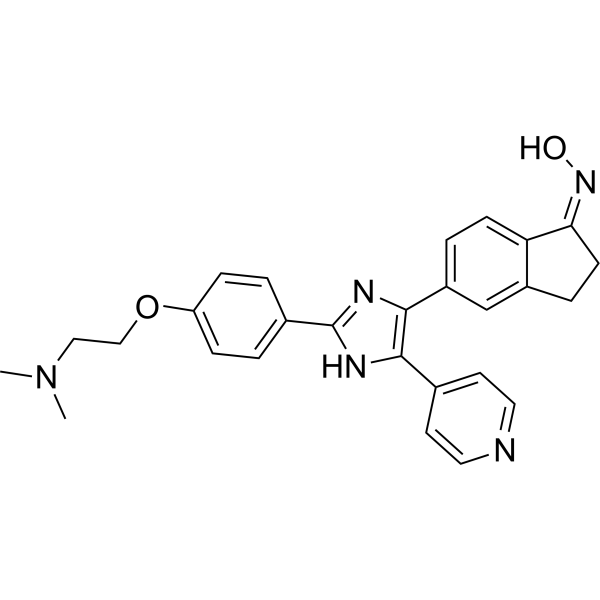
    SB-590885 is a BRAF/c-Raf kinase inhibitor that selectively targets B-Raf, and it amplifies the ERK/MAPK signaling pathway in RAS-activated cells. SB-590885 effectively inhibits the malignant proliferation, transformation and tumorigenicity of oncogenic B-Raf cells; it also induces the proliferation of erythroid progenitor cells, delays their differentiation and promotes hemoglobin synthesis, thereby improving ineffective erythropoiesis and reducing apoptosis. SB-590885 exerts a synergistic effect with TGF-β inhibitors and glucocorticoids, significantly promoting the formation of erythroid colonies in cells from patients with Diamond-Blackfan anemia (DBA). SB-590885 is mainly used in relevant studies on DBA, cisplatin-induced myelosuppression-related anemia, and pan-cancers such as melanoma and colorectal cancer .
    SB-590885
  • HY-P3161

    HSV Infection Inflammation/Immunology Cancer
    Lactoferrin from Bovine milk is a substance released by neutrophils. Lactoferrin from Bovine milk is an orally active multifunctional iron binding glycoprotein. Lactoferrin from Bovine milk prevents cell adhesion, growth and spreading of cell colonies. Lactoferrin from Bovine milk also has antiviral activity and inhibits microbial and viral adhesion and entry into host cells. Besides, Lactoferrin from Bovine milk has anti-inflammatory, immunomodulatory, and anti-cancer activities .
    Lactoferrin from Bovine milk
  • HY-Y0262
    Oxalic acid, 99%
    1 Publications Verification

    Ethanedioic acid

    Environmental Pollutants Endogenous Metabolite Infection Inflammation/Immunology
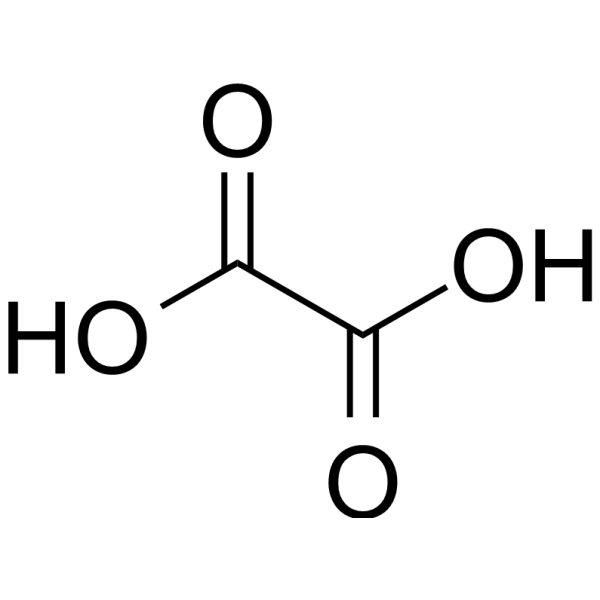
    Oxalic acid, 99% (Ethanedioic acid) is a dicarboxylic acid found in a wide variety of plants. Oxalic acid, 99% shows antioxidant acyivity and suppresses lipid peroxidation. Oxalic acid, 99% is a pathogenicity factor for sclerotinia sclerotiorum, and suppresses the oxidative burst of the host plant. Oxalic acid, 99% exerts acaricidal activity. Oxalic acid can be used for the researches of sclerotinia disease, varroatosis and inflammatory diseases .
    Oxalic acid, 99%
  • HY-134601

    HuR Cancer
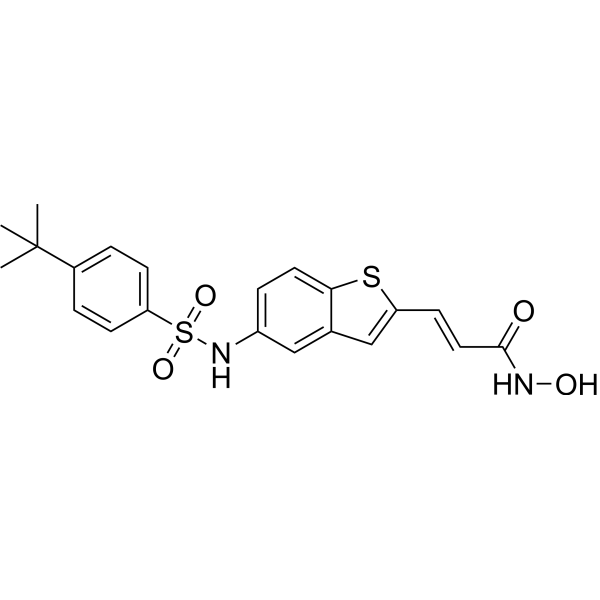
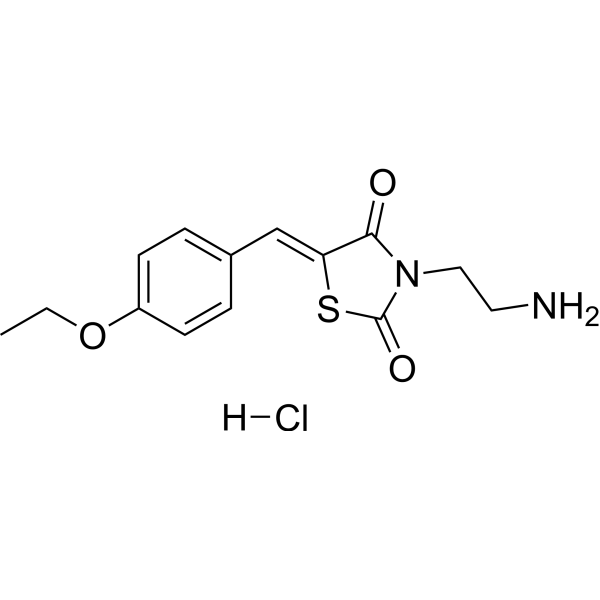
    KH-3 is a potent RNA-binding protein Hu antigen R (HuR) inhibitor with an IC50 value of 0.35 μM. KH-3 has anti-proliferative activity. KH-3 suppresses breast cancer cell invasion as well as delays the initiation of lung colonies by disrupting HuR-FOXQ1 mRNA interaction .
    KH-3
  • HY-B1953
    Thiacloprid
    1 Publications Verification

    Environmental Pollutants Insecticide nAChR Infection
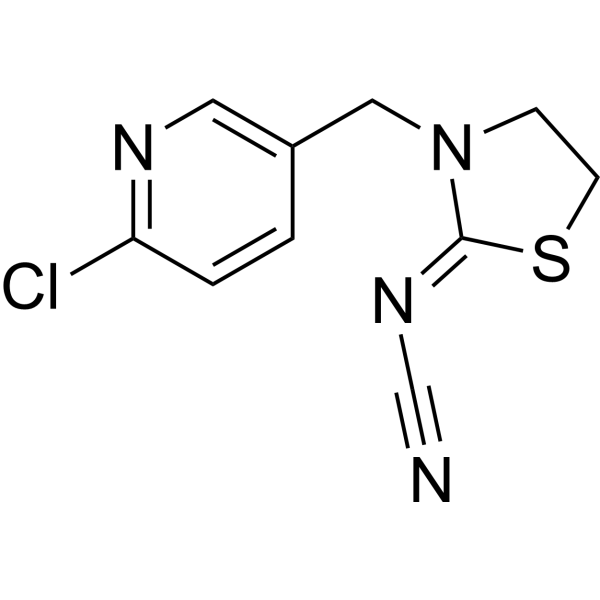
    Thiacloprid is an orally active neurotoxic insecticide and also a nAChR agonist. Thiacloprid reduces the viability of healthy cells, depletes reduced glutathione, and increases MDA levels, thereby inducing cytotoxicity and oxidative stress damage. In practical applications, Thiacloprid has lower acute toxicity to honeybees than other compounds of the same class such as Imidacloprid (HY-B0838), but it still significantly impairs the learning and memory function, immune capacity and survival status of honeybees. Thiacloprid induces intestinal microbial dysbiosis and reduces survival rate in middle-aged honeybees, increases the risk of premature collapse in bumblebee colonies, and significantly decreases the final colony weight and reproductive output. Thiacloprid is used in broad-spectrum agricultural pest control, often alone or in combination with Deltamethrin (HY-B1971), and meets the pest management needs of various crops including potatoes, cabbages, various fruits and vegetables, and nuts .
    Thiacloprid
  • HY-113592
    ERK-IN-4
    1 Publications Verification

    ERK Cancer
    ERK-IN-4 is an ERK inhibitor binds preferentially to ERK2 with a Kd of 5 μM. ERK-IN-4 specificity inhibits ERK Rsk-1 and Elk-1 phosphorylation. ERK-IN-4 has little effect on ERK protein phosphorylation by its upstream activator MEK1/2 .
    ERK-IN-4
  • HY-Y0262A
    Oxalic acid diammonium monohydrate
    1 Publications Verification

    Ethanedioic acid diammonium monohydrate

    Environmental Pollutants Endogenous Metabolite Infection Inflammation/Immunology
    Oxalic acid (Ethanedioic acid) diammonium monohydrate is a dicarboxylic acid found in a wide variety of plants.
    Oxalic acid diammonium monohydrate shows antioxidant acyivity and suppresses lipid peroxidation.
    Oxalic acid diammonium monohydrate is a pathogenicity factor for sclerotinia sclerotiorum, and suppresses the oxidative burst of the host plant. Oxalic acid diammonium monohydrate exerts acaricidal activity. Oxalic acid can be used for the researches of sclerotinia disease varroatosis and inflammatory diseases .
    Oxalic acid diammonium monohydrate
  • HY-N2927

    β-Costic acid

    Parasite Infection
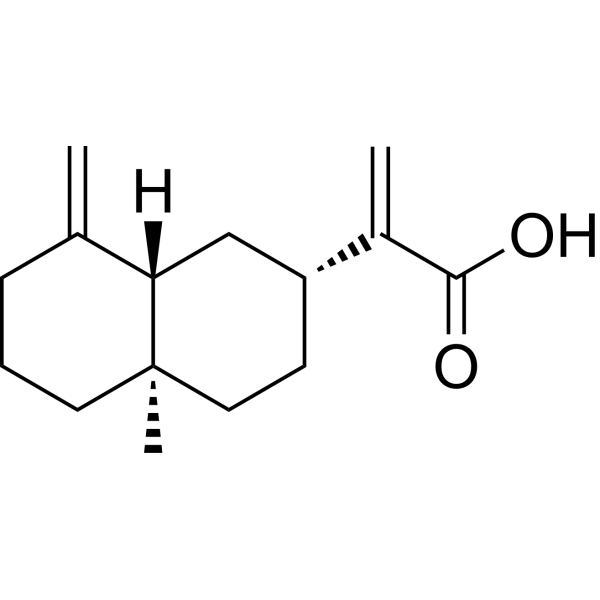
    Costic acid (β-Costic acid) is a natural product, that can be isolated from Dittrichia viscosa. Costic acid exhibits potent in vivo acaricidal activity against the parasite. Costic acid is not toxic for human umbilical vein endothelial cells (HUVEC) at concentrations of up to 230 μM. Costic acid can be used for the research of varroosis in honey bee colonies .
    Costic acid
  • HY-P11424

    Integrin Cancer
    Cyclo(GRGDSPA) is a cyclic RGD peptide targeting αvβ3 integrin. Cyclo(GRGDSPA) reduces the formation of colonies in mice injected with B16-FE7 melanoma cells. Cyclo(GRGDSPA) can be used for melanoma research .
    Cyclo(GRGDSPA)
  • HY-B1953R

    Reference Standards nAChR Insecticide Infection
    Thiacloprid (Standard) is the analytical standard of Thiacloprid. This product is intended for research and analytical applications. Thiacloprid is an orally active neurotoxic insecticide and also a nAChR agonist. Thiacloprid reduces the viability of healthy cells, depletes reduced glutathione, and increases MDA levels, thereby inducing cytotoxicity and oxidative stress damage. In practical applications, Thiacloprid has lower acute toxicity to honeybees than other compounds of the same class such as Imidacloprid (HY-B0838), but it still significantly impairs the learning and memory function, immune capacity and survival status of honeybees. Thiacloprid induces intestinal microbial dysbiosis and reduces survival rate in middle-aged honeybees, increases the risk of premature collapse in bumblebee colonies, and significantly decreases the final colony weight and reproductive output. Thiacloprid is used in broad-spectrum agricultural pest control, often alone or in combination with Deltamethrin (HY-B1971), and meets the pest management needs of various crops including potatoes, cabbages, various fruits and vegetables, and nuts .
    Thiacloprid (Standard)
  • HY-155069

    Apoptosis Cancer
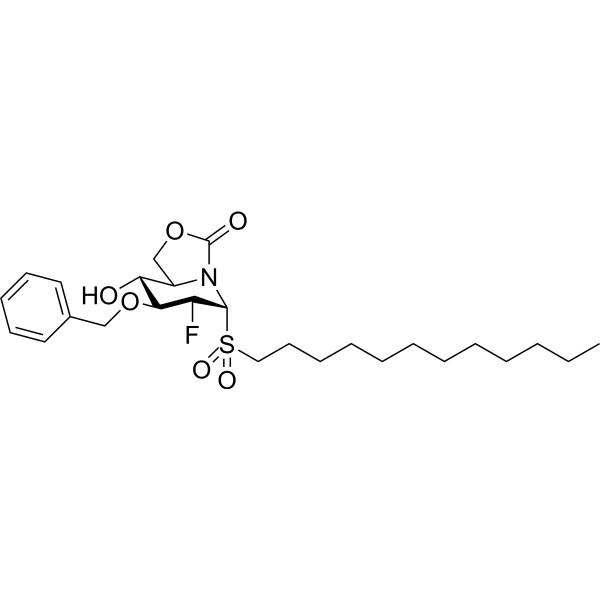
    Antiproliferative agent-27 (compound 11) is an antiproliferative agent that significantly reduces the number of tumor cell colonies and induces apoptosis. Antiproliferative agent-27 has the potential to be used in the study of cancer .
    Antiproliferative agent-27
  • HY-10966R
    SB-590885 (Standard)
    Maximum Cited Publications
    8 Publications Verification

    Reference Standards Raf Apoptosis Cancer
    SB-590885 (Standard) is the analytical standard of SB-590885 (HY-10966). This product is intended for research and analytical applications. SB-590885 is a BRAF/c-Raf kinase inhibitor that selectively targets B-Raf, and it amplifies the ERK/MAPK signaling pathway in RAS-activated cells. SB-590885 effectively inhibits the malignant proliferation, transformation and tumorigenicity of oncogenic B-Raf cells; it also induces the proliferation of erythroid progenitor cells, delays their differentiation and promotes hemoglobin synthesis, thereby improving ineffective erythropoiesis and reducing apoptosis. SB-590885 exerts a synergistic effect with TGF-β inhibitors and glucocorticoids, significantly promoting the formation of erythroid colonies in cells from patients with Diamond-Blackfan anemia (DBA). SB-590885 is mainly used in relevant studies on DBA, cisplatin-induced myelosuppression-related anemia, and pan-cancers such as melanoma and colorectal cancer .
    SB-590885 (Standard)
  • HY-B1953S

    nAChR Insecticide Infection
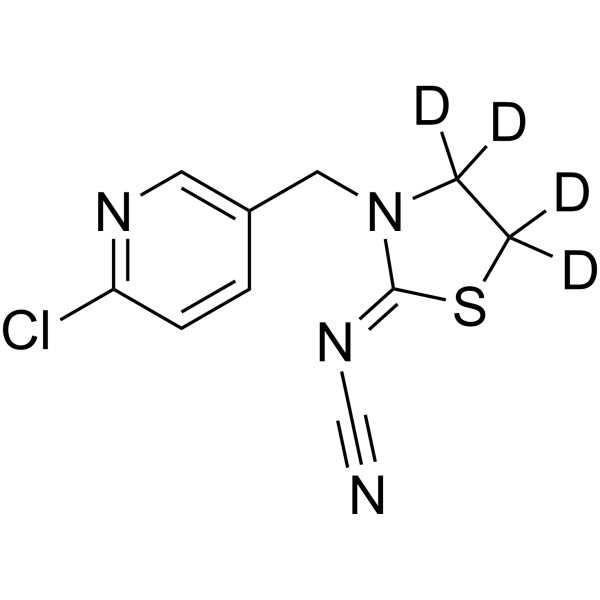
    Thiacloprid-d4 is the deuterium labeled Thiacloprid. Thiacloprid is an orally active neurotoxic insecticide and also a nAChR agonist. Thiacloprid reduces the viability of healthy cells, depletes reduced glutathione, and increases MDA levels, thereby inducing cytotoxicity and oxidative stress damage. In practical applications, Thiacloprid has lower acute toxicity to honeybees than other compounds of the same class such as Imidacloprid (HY-B0838), but it still significantly impairs the learning and memory function, immune capacity and survival status of honeybees. Thiacloprid induces intestinal microbial dysbiosis and reduces survival rate in middle-aged honeybees, increases the risk of premature collapse in bumblebee colonies, and significantly decreases the final colony weight and reproductive output. Thiacloprid is used in broad-spectrum agricultural pest control, often alone or in combination with Deltamethrin (HY-B1971), and meets the pest management needs of various crops including potatoes, cabbages, various fruits and vegetables, and nuts .
    Thiacloprid-d4
  • HY-10966G

    Raf Apoptosis Cardiovascular Disease Cancer
    SB-590885 GMP is SB-590885 (HY-10966) produced by using GMP guidelines. GMP small molecules works appropriately as an auxiliary reagent for cell therapy manufacture. SB-590885 is a BRAF/c-Raf kinase inhibitor that selectively targets B-Raf, and it amplifies the ERK/MAPK signaling pathway in RAS-activated cells. SB-590885 effectively inhibits the malignant proliferation, transformation and tumorigenicity of oncogenic B-Raf cells; it also induces the proliferation of erythroid progenitor cells, delays their differentiation and promotes hemoglobin synthesis, thereby improving ineffective erythropoiesis and reducing apoptosis. SB-590885 exerts a synergistic effect with TGF-β inhibitors and glucocorticoids, significantly promoting the formation of erythroid colonies in cells from patients with Diamond-Blackfan anemia (DBA). SB-590885 is mainly used in relevant studies on DBA, cisplatin-induced myelosuppression-related anemia, and pan-cancers such as melanoma and colorectal cancer .
    SB-590885
  • HY-D3193

    Fluorescent Dye Others
    CDg4 is a green fluorescent probe and member of the fluorescent diamino-chalcone library.CDg4 binds to glycogen on mouse embryonic stem cell colony surfaces .
    CDg4

Inquiry Online

Your information is safe with us. * Required Fields.

Salutation


Country or Region *

Applicant Name *


Organization Name *

Department *


Email Address *


Product Name *

Cat. No.


Requested quantity *

Phone Number *


Remarks

Inquiry Online

Inquiry Information

Product Name:
Cat. No.:
Quantity:
MCE Japan Authorized Agent:

