



Oxalic acid diammonium monohydrate
Based on 1 publication(s) in Google Scholar
Oxalic acid (Ethanedioic acid) diammonium monohydrate is a dicarboxylic acid found in a wide variety of plants.
Oxalic acid diammonium monohydrate shows antioxidant acyivity and suppresses lipid peroxidation.
Oxalic acid diammonium monohydrate is a pathogenicity factor for sclerotinia sclerotiorum, and suppresses the oxidative burst of the host plant. Oxalic acid diammonium monohydrate exerts acaricidal activity. Oxalic acid can be used for the researches of sclerotinia disease varroatosis and inflammatory diseases.
For research use only. We do not sell to patients.
- Purity : 98.0%
- CAS No.: 6009-70-7
- Formula: (NH4)2C2O4·H2O
- Molecular Weight:142.11
-
Storage:
4°C, sealed storage, away from moisture
* In solvent : -80°C, 6 months; -20°C, 1 month (sealed storage, away from moisture)


To place orders, for customer services and technical support, please contact: MedChemExpress USA
Tel: 609-228-6898 E-mail: [email protected] [email protected]


-
 Biological Activity
-
Chemical Information
-
Solvent & Solubility
- Purity & Documentation
- References
-
 Help & FAQs


-
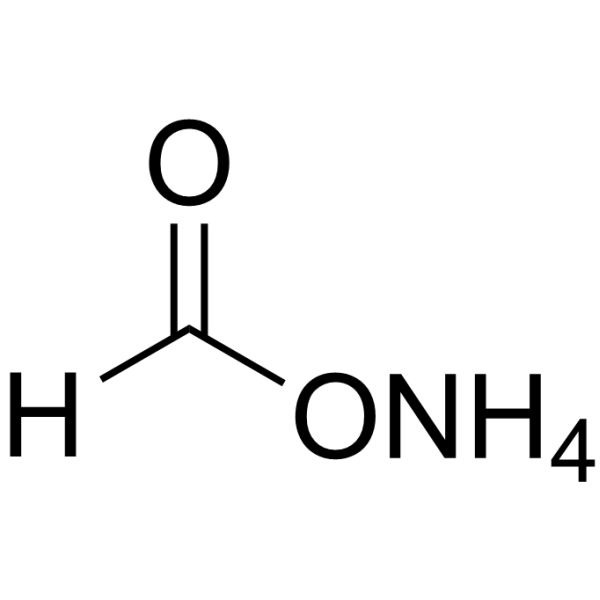
HY-Y0488A
Formic acid ammonium -
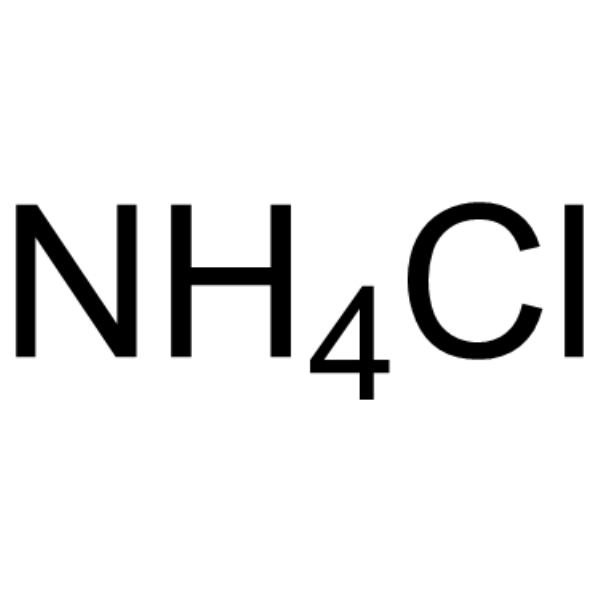
HY-Y1269
Ammonium chloride, AR, 99.5% -
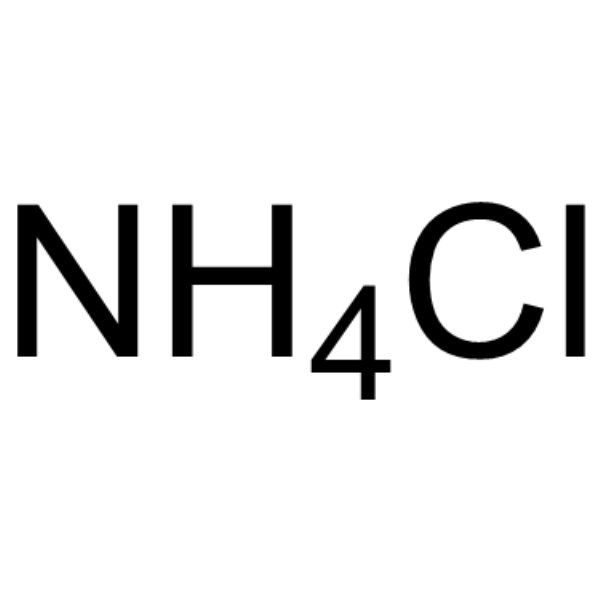
HY-Y1269C
Ammonium chloride, for cell culture -

HY-Y0488AR
Formic acid ammonium (Standard) -

HY-Y0998
Potassium hexacyanoferrate(III), 99.5% -

HY-Y0344D
Sodium chloride, for cell culture -

HY-B1770
Sodium Iodide,99% -

HY-Y0416
Potassium ferrocyanide trihydrate, 98.5% -

HY-Y0344I
Sodium chloride, meets analytical specification of Ph. Eur. BP USP, ≤0.00002% Al -

HY-Y0344J
Sodium chloride, for molecular biology
Publications Citing Use of MedChemExpress (MCE) Oxalic acid diammonium monohydrate
MoreAll Endogenous Metabolite Isoforms
More

Biological Activity
Description
Oxalic acid diammonium monohydrate shows antioxidant acyivity and suppresses lipid peroxidation.
Oxalic acid diammonium monohydrate is a pathogenicity factor for sclerotinia sclerotiorum, and suppresses the oxidative burst of the host plant. Oxalic acid diammonium monohydrate exerts acaricidal activity. Oxalic acid can be used for the researches of sclerotinia disease varroatosis and inflammatory diseases[1][2][3].
IC50 & Target
|
Microbial Metabolite |
Human Endogenous Metabolite |
In Vitro
Oxalic acid (4-32 mM; 10 min) diammonium monohydrate suppresses Fe3+-ADP/NADPH-induced lipid peroxidation in rat liver microsomes in a concentration-dependent manner, with 32 mM reducing levels to 5.9% of control values[1].
Oxalic acid (16 mM; 90 min) diammonium monohydrate almost completely suppresses lipid peroxidation in rat brain homogenate, reducing TBARS levels to 10% of control values[1].
Oxalic acid (0.5-8.0 mM; 5 min) diammonium monohydrate reduces Cu2+/H2O2-induced oxidation of ascorbic acid in a cell-free in vitro system in a concentration-dependent manner, with 8.0 mM maintaining the highest ascorbate levels after 5 min of incubation[1].
Oxalic acid (4-10 mM) diammonium monohydrate inhibits OGA-induced oxidative burst in suspension-cultured Glycine max cells with an IC50 of 4 mM and achieves maximal inhibition at 6 mM[2].
Oxalic acid (4-10 mM) diammonium monohydrate inhibits oxidative bursts induced by multiple distinct elicitors in suspension-cultured tobacco and soybean cells with IC50 values of 4 to 5 mM and achieves maximal inhibition at 6 to 7 mM[2].
Oxalic acid (10 mM) diammonium monohydrate increases OGA-induced cytosolic Ca2+ transients in aequorin-transformed suspension-cultured tobacco cells rather than inhibiting them[2].
MedChemExpress (MCE) has not independently confirmed the accuracy of these methods. They are for reference only.


Chemical Information
-
CAS No. 6009-70-7
-
Appearance Solid
-
Molecular Weight 142.11
-
Formula (NH4)2C2O4·H2O
-
Color White to off-white
-
SMILES
O=C(C(O)=O)O.O.N.N
-
Synonyms
Ethanedioic acid diammonium monohydrate
-
Shipping
Room temperature in continental US; may vary elsewhere.
-
Storage
4°C, sealed storage, away from moisture
* In solvent : -80°C, 6 months; -20°C, 1 month (sealed storage, away from moisture)


Publications (1)
-
Journal Impact Factor
-
Most Recent
-
Nature
2025 Jul;643(8070):192-200. PMID: 39695227


Solvent & Solubility
In Vitro:
H2O : 4 mg/mL (28.15 mM; ultrasonic and warming and heat to 60°C)
Please refer to the solubility information to select the appropriate solvent. Once prepared, please aliquot and store the solution to prevent product inactivation from repeated freeze-thaw cycles.
Storage method and period of stock solution: -80°C, 6 months; -20°C, 1 month (sealed storage, away from moisture). When stored at -80°C, please use it within 6 months. When stored at -20°C, please use it within 1 month.
* Note: If you choose water as the stock solution, please dilute it to the working solution, then filter and sterilize it with a 0.22 μm filter before use.
Please refer to the solubility information to select the appropriate solvent. Once prepared, please aliquot and store the solution to prevent product inactivation from repeated freeze-thaw cycles.
Storage method and period of stock solution: -80°C, 6 months; -20°C, 1 month (sealed storage, away from moisture). When stored at -80°C, please use it within 6 months. When stored at -20°C, please use it within 1 month.
* Note: If you choose water as the stock solution, please dilute it to the working solution, then filter and sterilize it with a 0.22 μm filter before use.
Concentration (start) × Volume (start) = Concentration (final) × Volume (final)


Purity & Documentation
-
Data Sheet (276 KB)
-
SDS (393 KB)
- English - EN (393 KB)
- Français - FR (393 KB)
- Deutsch - DE (393 KB)
- Norwegian - NO (393 KB)
- Español - ES (393 KB)
- Swedish - SV (393 KB)
- Italian - IT (393 KB)
- Korean - KR (393 KB)
- Portuguese - PT (393 KB)
-
Handling Instructions (2659 KB)
References
[1]. Kayashima T, et al. Oxalic acid is available as a natural antioxidant in some systems. Biochim Biophys Acta. 2002;1573(1):1-3. [Content Brief]
[2]. Cessna SG, et al. Oxalic acid, a pathogenicity factor for Sclerotinia sclerotiorum, suppresses the oxidative burst of the host plant. Plant Cell. 2000;12(11):2191-2200. [Content Brief]


Complete Stock Solution Preparation Table
Please refer to the solubility information to select the appropriate solvent. Once prepared, please aliquot and store the solution to prevent product inactivation from repeated freeze-thaw cycles.
Storage method and period of stock solution: -80°C, 6 months; -20°C, 1 month (sealed storage, away from moisture). When stored at -80°C, please use it within 6 months. When stored at -20°C, please use it within 1 month.
| Optional Solvent | Concentration Solvent Mass | 1 mg | 5 mg | 10 mg | 25 mg |
|---|---|---|---|---|---|
| H2O | 1 mM | 7.0368 mL | 35.1840 mL | 70.3680 mL | 175.9201 mL |
| 5 mM | 1.4074 mL | 7.0368 mL | 14.0736 mL | 35.1840 mL | |
| 10 mM | 0.7037 mL | 3.5184 mL | 7.0368 mL | 17.5920 mL | |
| 15 mM | 0.4691 mL | 2.3456 mL | 4.6912 mL | 11.7280 mL | |
| 20 mM | 0.3518 mL | 1.7592 mL | 3.5184 mL | 8.7960 mL | |
| 25 mM | 0.2815 mL | 1.4074 mL | 2.8147 mL | 7.0368 mL |
* Note: If you choose water as the stock solution, please dilute it to the working solution, then filter and sterilize it with a 0.22 μm filter before use.


Oxalic acid diammonium monohydrate Related Classifications
HY-Y0262A Related Classifications
 Powered by Bioz
Keywords
- Oxalic acid diammonium
- 6009-70-7
- Ethanedioic acid diammonium
- Environmental Pollutants
- Endogenous Metabolite
- suspension-cultured soybean cells
- varroa mites
- lipid peroxidation
- Sclerotinia sclerotiorum
- oxidative burst
- rat liver microsomes
- honey bee colonies
- suspension-cultured tobacco cells
- cytosolic Ca2+ fluxes
- rat brain homogenate
- Inhibitor
- inhibitor
- inhibit