9 Results for "

deformability

" in MedChemExpress (MCE) Product Catalog:
Products (9)

9 Results for "deformability" in MCE Product Catalog:

1
1 Cited Publications
Cat. No.: HY-P1856
CAS No.: 33017-11-7
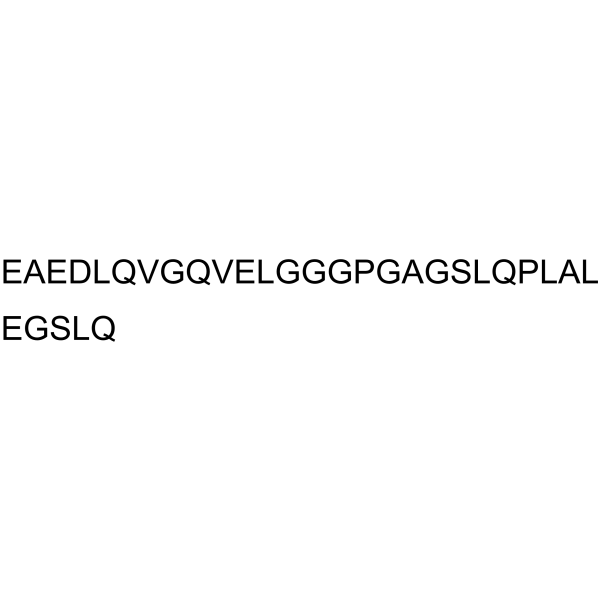
Proinsulin C-peptide (human) is a peptide consisting of 31 amino acids that links the A and B chains of proinsulin to ensure its correct folding. Proinsulin C-peptide (human) inhibits the high glucose-induced increase in PDGF-β receptor protein expression and the phosphorylation of p42/p44 MAP kinase. Proinsulin C-peptide (human) increases the deformability of erythrocytes derived from type 1 diabetes, inhibits insulin-induced neointimal thickening, and suppresses the proliferation of rat aortic smooth muscle cells cultured under high-glucose conditions .
loading...
    loading...
Cat. No.: HY-121161C
CAS No.: 259200-30-1
Purity:  99.83%
Target:  

Phytohormone

Research Areas:  

Metabolic Disease

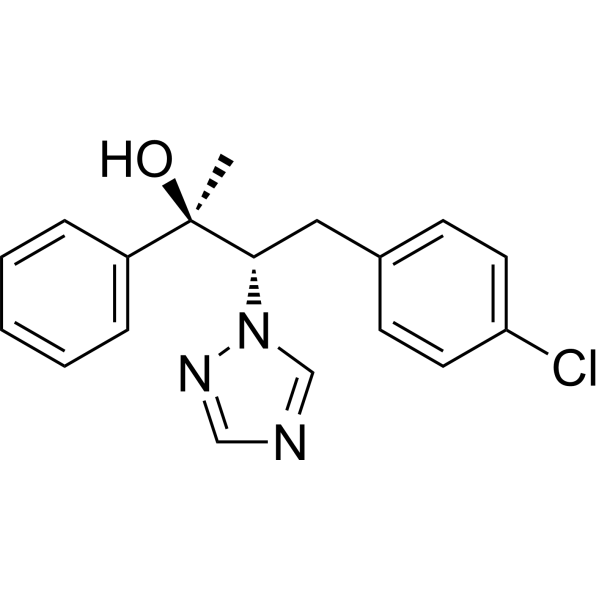
Brassinazole (0.5, 1, 5 μM) causes markedly deformed seedlings, whose morphology is similar to that of BR-deficient mutants. Brassinazole causes cress dwarfism, altering leaf morphology such as the typical downward curl and dark green appearance of Arabidopsis BR-deficient mutants. However, administration of 10 nM BR reversed dwarfism .
loading...
    loading...
Cat. No.: HY-145996
CAS No.: 401513-39-1
Target:  

Others

Research Areas:  

Cardiovascular Disease Infection

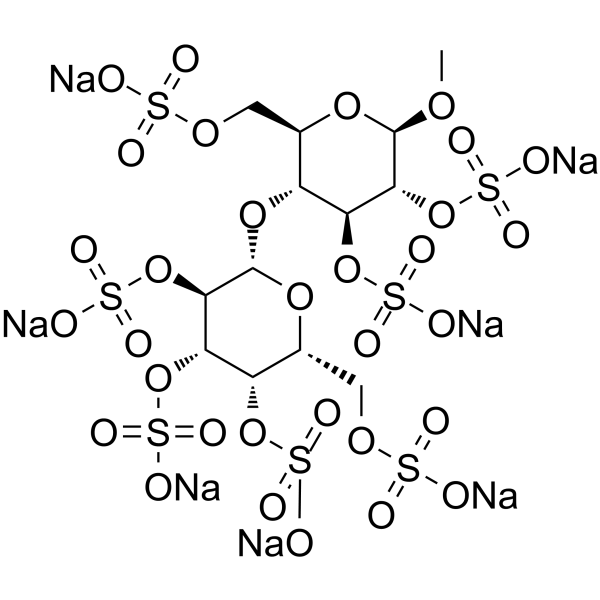
STC314 is a histone-neutralizing agent. STC314 inhibits histone-mediated cytotoxicity, blocks histone-induced erythrocyte aggregation, reduces fragility, restores deformability and inhibits histone-induced aggregation and degranulation in human erythrocytes. STC314 reduces histone-mediated tissue damage, thrombocytopenia, anemia, and cell death, and improves survival in preclinical models. STC314 can be used for the research of sepsis, ischemia-reperfusion injury, and deep-vein thrombosis .
loading...
    loading...
Cat. No.: HY-126795
CAS No.: 483305-08-4
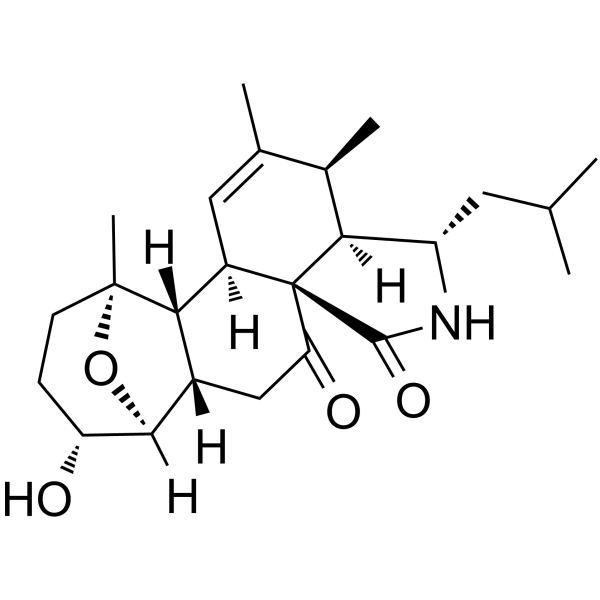
Aspergillin PZ is a novel isoindole-alkaloid from Aspergillus awamori. Aspergillin PZ induces conidia of P. oryzae to deform moderately .
loading...
    loading...
Cat. No.: HY-W127408
CAS No.: 20246-55-3
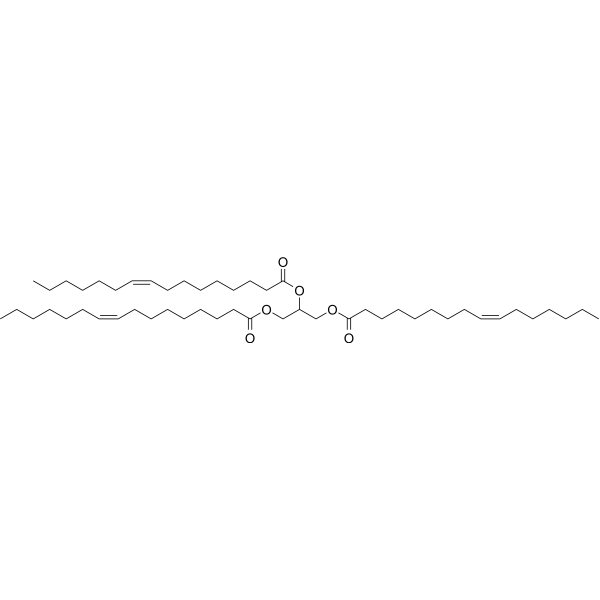
1,2,3-Tripalmitoleoyl-rac-glycerol is a triacylglycerol containing palmitoleic acid at the sn-1, sn-2 and sn-3 positions. It reduces erythrocyte deformability in a concentration-dependent manner in the Reid filtration assay. Hepatic levels of 1,2,3-tripalmitoleoyl-rac-glycerol are increased in a JAK2L mouse model of hepatic steatosis. 1,2,3-Tripalmitoleoyl-rac-glycerol plasma levels are reduced in patients with predialysis renal disease.
loading...
    loading...
Cat. No.: HY-135004
CAS No.: 3194-36-3
Target:  

Adrenergic Receptor

Research Areas:  

Endocrinology

Su-4029 is an agent that interacts with alpha receptors. It negates the blockade of norepinephrine by the reversible adrenergic blocker phentolamine but not by the irreversible blocker Dibenamine, suggesting Su-4029 acts at the same site as these blockers. Su-4029 pretreatment results in three categories of responses to pressor phenylalkylamines: irreversible blockade of amines with no or only p-hydroxylation, reversible blockade of amines with beta-carbon hydroxylation, and no blockade or augmentation of amines with m and p-hydroxylation or m or p plus beta-hydroxylation. Su-4029 may deform the alpha receptor site affected by adrenergic blocking agents .
loading...
    loading...
Cat. No.: HY-N5190
CAS No.: 2271109-33-0
Enamidonin is a lipopeptide antibiotic. Enamidonin inhibits EGF-dependent [ 3H] thymidine involvement in Balb/MK cells (IC50 is 10 μg/mL), and it can restore the deformed SRCTS-NRK form to the normal flat form (ED50 is 10 μg/mL). No antimicrobial activity .
loading...
    loading...
Cat. No.: HY-167142
CAS No.: 3397-16-8
Synonyms: N-Stearoyl-L-glutamic acid
Research Areas:  

Others

Stearoyl glutamic acid (N-Stearoyl-L-glutamic acid) is a saturated aliphatic amide compound and also an additive for lipid cubic phase materials. Stearoyl glutamic acid is used in studies as a surfactant and emulsifier .
loading...
    loading...
Cat. No.: HY-L140
232 compounds

Withdrawal or delisting drugs refer to drugs that are recalled or discontinued from the market due to low efficiency, serious side effects, financial and regulatory problems and other reasons. Once the drug is withdrawn from the market, it will cause heavy losses to the original research company that invested a lot of time, finance and other costs to develop the drug.

Adverse drug reaction (ADR) is the main reason for drug withdrawal from the market. ADR refers to the unexpected effects caused by the reasons such as the target-directed interaction during the treatment. However, studying the mechanism of these ADRs may just be a breakthrough in finding new indications. For example, thalidomide, the protagonist of the drug damage event that caused numerous "seal babies" deformed infants, was found to be due to the degradation of a transcription factor - SALL4 after delisting, which made thalidomide have a new clinical application. In 1998, it was approved by FDA for the treatment of leprosy nodular erythema, and in 2006, it was approved for the treatment of multiple myeloma. ADR study of delisted drugs can not only avoid the loss of drug development in advance but also bring hope to new indications.

MCE has sorted out 232 drug compounds withdrawn from the market through FDA, EMA and other authoritative platforms. Each compound has withdrawal records in at least one country/market. It is a useful tool for conducting research on drug side effects or drug toxicity mechanisms and discovering new indications of drugs.

