1. Search Result
Search Result
Results for "

deodorant

" in MedChemExpress (MCE) Product Catalog:

12

Inhibitors & Agonists

4

Isotope-Labeled Compounds

Cat. No. Product Name Target Research Areas Chemical Structure
  • HY-U00087

    Bacterial Infection
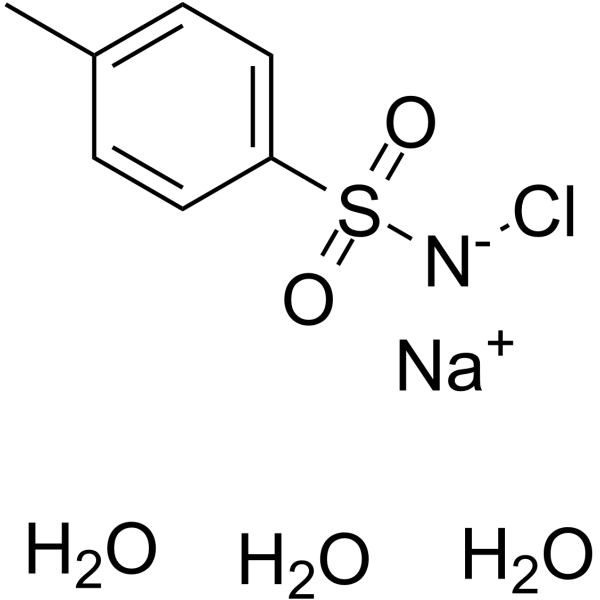
    Tosylchloramide sodium trihydrate (Chloramine T sodium trihydrate) is a disinfectant agent widely used in laboratories, kitchens and hospitals. It is also used as a biocide in air fresheners and deodorants.
    Tosylchloramide sodium trihydrate
  • HY-B2205
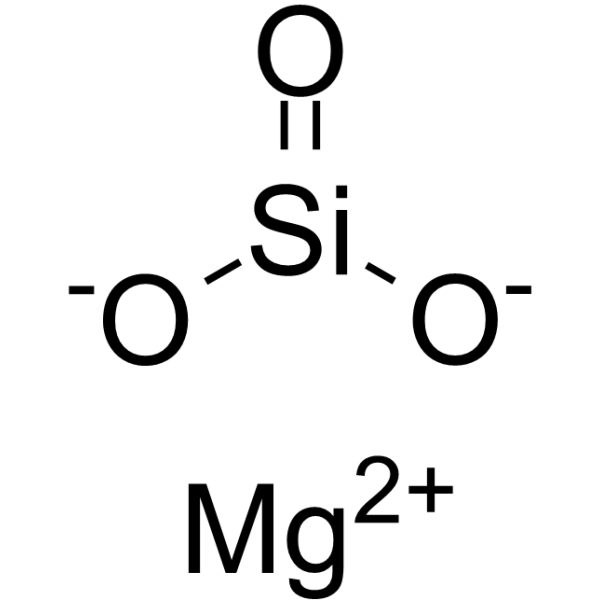
    Magnesium silicate
    1 Publications Verification

    Activated magnesium silicate

    Environmental Pollutants Fungal Infection Inflammation/Immunology
    Magnesium silicate (Activated magnesium silicate) is an orally active compound composed of magnesium oxide (MgO) and silicon dioxide (SiO2). Magnesium silicate can be used in the preparation of food additives, antacids and anti-ulcer agents. Magnesium silicate is also a piezoelectric biomaterial, deodorant, decolorizing agent and antifungal agent .
    Magnesium silicate
  • HY-B1805
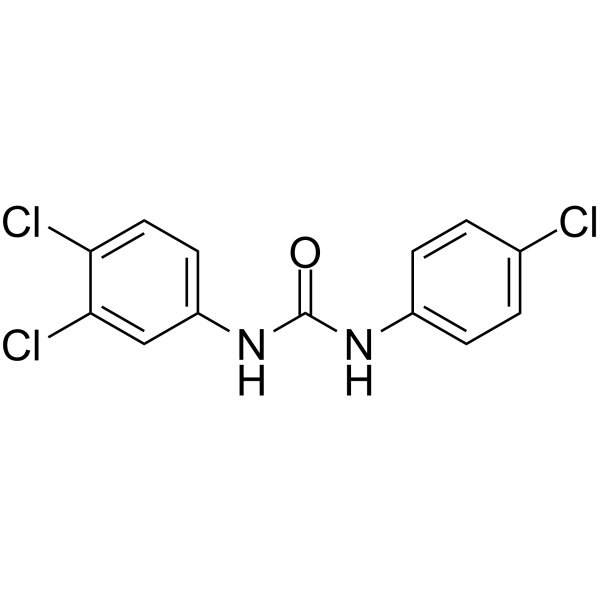
    Triclocarban
    3 Publications Verification

    3,4,4′-Trichlorocarbanilide

    Environmental Pollutants Bacterial Infection
    Triclocarban (3,4,4′-Trichlorocarbanilide), a broad spectrum antibacterial compound, is widely used in a broad range of applications such as the production of soaps, skin creams, toothpastes and deodorants. Triclocarban is a potential endocrine-disrupting chemical with the capacity to modulate androgen and estrogen activities as well as other hormone-mediated biological processes .
    Triclocarban
  • HY-Y0496

    Insecticide Environmental Pollutants Mitosis Cancer
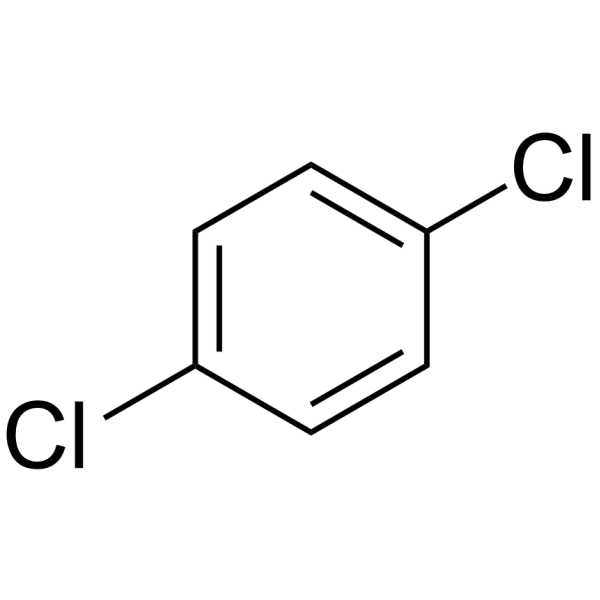
    1,4-Dichlorobenzene is a non-genotoxic, orally active mitogenic/tumor-promoting carcinogen that is also widely used as a dye, resin intermediate, and deodorant, moth repellent/insecticide. 1,4-Dichlorobenzene induces liver tumors in mice and promotes the growth of spontaneous precancerous lesions, but shows no liver tumor-inducing activity in F344 rats. Exposure to 1,4-dichlorobenzene leads to elevated leukocyte counts, serum alanine aminotransferase, and blood urea nitrogen levels. Due to the hepatotoxic characteristics, 1,4-Dichlorobenzene is applicable to liver cancer-related research .
    1,4-Dichlorobenzene
  • HY-116587

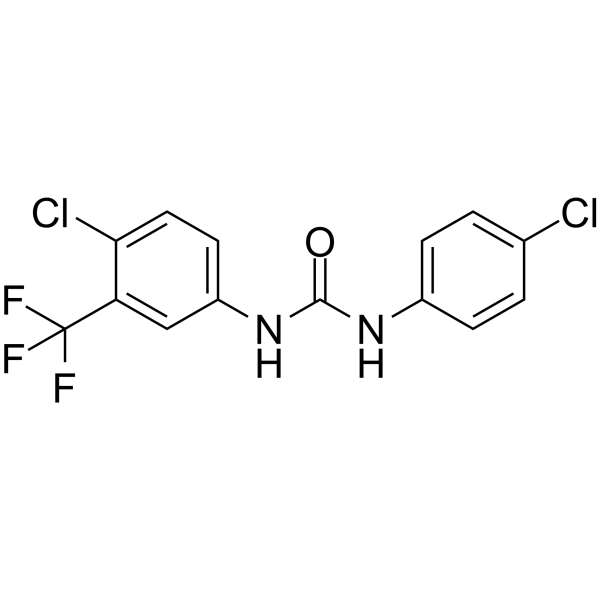
    Cloflucarban

    Bacterial Infection
    Halocarban is a chemical with antibacterial properties sometimes used in deodorant and soap .
    Halocarban
  • HY-W585956

    3,4,4′-Trichlorocarbanilide-13C6

    Isotope-Labeled Compounds Others
    Triclocarban- 13C6 is the 13C labeled isotope of Triclocarban (HY-B1805). Triclocarban (3,4,4′-Trichlorocarbanilide), a broad spectrum antibacterial compound, is widely used in a broad range of applications such as the production of soaps, skin creams, toothpastes and deodorants. Triclocarban is a potential endocrine-disrupting chemical with the capacity to modulate androgen and estrogen activities as well as other hormone-mediated biological processes .
    Triclocarban-13C6
  • HY-B1805R

    3,4,4′-Trichlorocarbanilide (Standard)

    Reference Standards Bacterial Infection Endocrinology
    Triclocarban (Standard) (3,4,4′-Trichlorocarbanilide (Standard)) is the analytical standard of Triclocarban (HY-B1805). This product is intended for research and analytical applications. Triclocarban, a broad spectrum antibacterial compound, is widely used in a broad range of applications such as the production of soaps, skin creams, toothpastes and deodorants. Triclocarban is a potential endocrine-disrupting chemical with the capacity to modulate androgen and estrogen activities as well as other hormone-mediated biological processes .
    Triclocarban (Standard)
  • HY-W140799

    Environmental Pollutants Bacterial Infection Inflammation/Immunology
    Dichloroxylenol is a bactericide, preservative and deodorant. Dichloroxylenol can be used for the research of endometritis and cervicitis in Holstein cows .
    Dichloroxylenol
  • HY-Y0496S

    Isotope-Labeled Compounds Insecticide Others
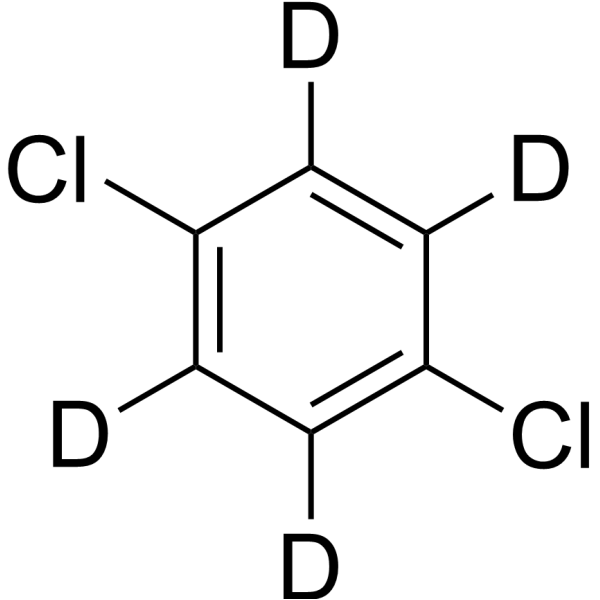
    1,4-Dichlorobenzene-d4 is the deuterium labeled 1,4-Dichlorobenzene. 1,4-Dichlorobenzene is a non-genotoxic, orally active mitogenic/tumor-promoting carcinogen that is also widely used as a dye, resin intermediate, and deodorant, moth repellent/insecticide. 1,4-Dichlorobenzene induces liver tumors in mice and promotes the growth of spontaneous precancerous lesions, but shows no liver tumor-inducing activity in F344 rats. 1,4-Dichlorobenzene increases the levels of white blood cell count, serum alanine aminotransferase and blood urea nitrogen in occupationally exposed populations. 1,4-Dichlorobenzene is metabolized to 2,5-dichlorophenol and excreted in urine, and this metabolite can serve as a biomarker for 1,4-Dichlorobenzene exposure. Due to its specific hepatotoxic characteristics, 1,4-Dichlorobenzene is applicable to liver cancer-related research .
    1,4-Dichlorobenzene-d4
  • HY-B1805S

    3,4,4′-Trichlorocarbanilide-d4

    Bacterial Infection
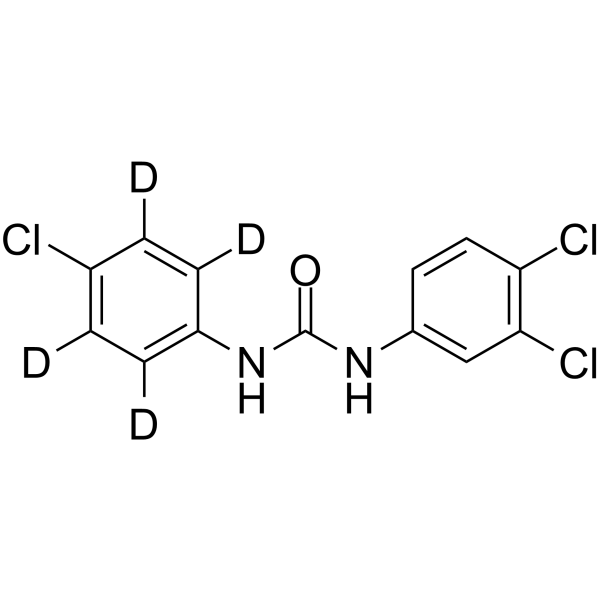
    Triclocarban-d4 is the deuterium labeled Triclocarban. Triclocarban (3,4,4′-Trichlorocarbanilide), a broad spectrum antibacterial compound, is widely used in a broad range of applications such as the production of soaps, skin creams, toothpastes and deodorants. Triclocarban is a potential endocrine-disrupting chemical with the capacity to modulate androgen and estrogen activities as well as other hormone-mediated biological processes .
    Triclocarban-d4
  • HY-B1805S1

    3,4,4'-Trichlorocarbanilide-13C13

    Isotope-Labeled Compounds Bacterial Infection
    Triclocarban- 13C13 (3,4,4'-Trichlorocarbanilide- 13C13) is 13C labeled Triclocarban. Triclocarban (3,4,4′-Trichlorocarbanilide), a broad spectrum antibacterial compound, is widely used in a broad range of applications such as the production of soaps, skin creams, toothpastes and deodorants. Triclocarban is a potential endocrine-disrupting chemical with the capacity to modulate androgen and estrogen activities as well as other hormone-mediated biological processes .
    Triclocarban-13C13
  • HY-Y0496R

    Reference Standards Insecticide Others
    1,4-Dichlorobenzene (Standard) is the analytical standard of 1,4-Dichlorobenzene. This product is intended for research and analytical applications. 1,4-Dichlorobenzene is a non-genotoxic, orally active mitogenic/tumor-promoting carcinogen that is also widely used as a dye, resin intermediate, and deodorant, moth repellent/insecticide. 1,4-Dichlorobenzene induces liver tumors in mice and promotes the growth of spontaneous precancerous lesions, but shows no liver tumor-inducing activity in F344 rats. 1,4-Dichlorobenzene increases the levels of white blood cell count, serum alanine aminotransferase and blood urea nitrogen in occupationally exposed populations. 1,4-Dichlorobenzene is metabolized to 2,5-dichlorophenol and excreted in urine, and this metabolite can serve as a biomarker for 1,4-Dichlorobenzene exposure. Due to its specific hepatotoxic characteristics, 1,4-Dichlorobenzene is applicable to liver cancer-related research .
    1,4-Dichlorobenzene (Standard)

Inquiry Online

Your information is safe with us. * Required Fields.

Salutation


Country or Region *

Applicant Name *


Organization Name *

Department *


Email Address *


Product Name *

Cat. No.


Requested quantity *

Phone Number *


Remarks

Inquiry Online

Inquiry Information

Product Name:
Cat. No.:
Quantity:
MCE Japan Authorized Agent:

