
18 Results for "

endocrine disorders

" in MedChemExpress (MCE) Product Catalog:
Products (18)

18 Results for "endocrine disorders" in MCE Product Catalog:

2
2 Cited Publications
Cat. No.: HY-P1723
CAS No.: 1370290-58-6
Synonyms: Neuropeptide Q
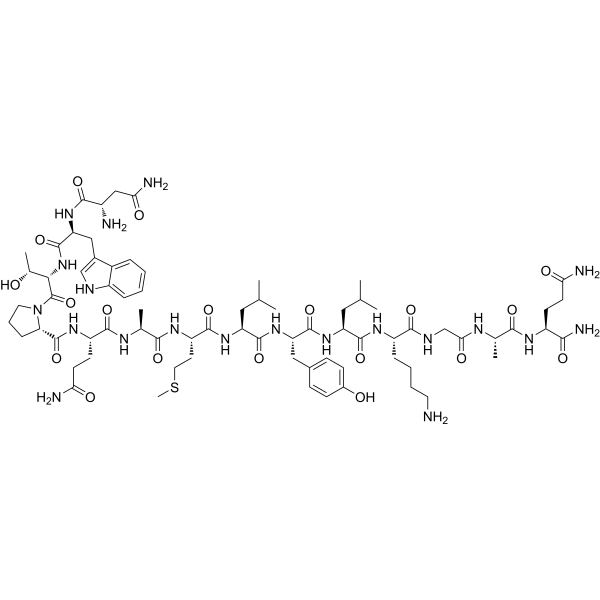
Spexin (Neuropeptide Q) is a selective agonist of galanin receptors GAL2 and GAL3, and is a conserved peptide that functions as a neurotransmitter/neuromodulator and endocrine factor. Spexin can function through both central and peripheral actions. Spexin upregulates Beclin 1 to inhibit ferroptosis induced by excessive autophagy, reduces the uptake of long-chain fatty acids by adipocytes, and regulates energy metabolism by increasing lipid oxidation (e.g., reducing the respiratory exchange ratio in rodents). Spexin improves cardiac function in the Doxorubicin hydrochloride (HY-15142)-induced cardiotoxicity model, protects mitochondrial membrane potential, and reduces iron accumulation and lipid peroxidation. Spexin can be used to study obesity and its related metabolic disorders, cardiovascular diseases (e.g., cardioprotection), and side effects of tumor chemotherapy .
loading...
    loading...
Cat. No.: HY-154918
CAS No.: 85046-18-0
Purity:  99.59%
Target:  

Drug Metabolite

Research Areas:  

Metabolic Disease

LysoPE (18:2/0:0) is a lysophosphatidylethanolamine implicated in phospholipid metabolism. LysoPE (18:2/0:0) shows significantly altered serum levels in mice exposed to a combination of DEHP (HY-B1945) and Aroclor 1254, which is associated with disturbed phospholipid metabolism. LysoPE (18:2/0:0) can be used for the research of endocrine-disrupting compound-induced metabolic disorders and lipid metabolism disturbance. LysoPE (18:2/0:0) is identified as a potential biomarker for the combined toxicity of DEHP and Aroclor 1254 .
loading...
    loading...
Cat. No.: HY-122697
CAS No.: 1928763-08-9
Purity:  99.78%
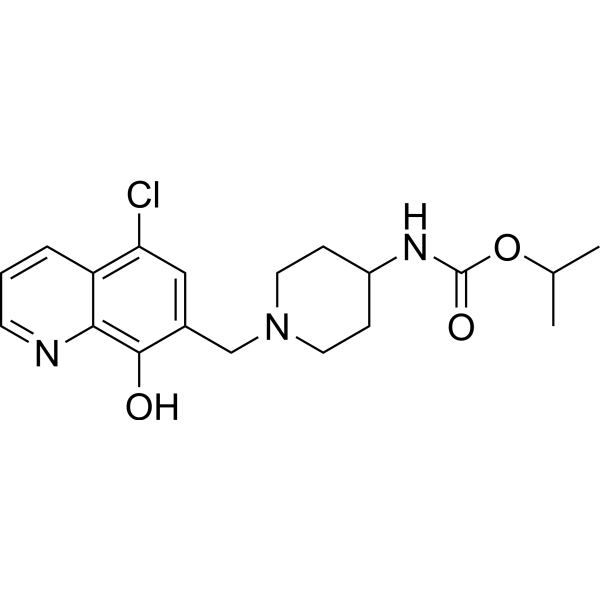
ML418 is a potent, selective and CNS penetrating Kir7.1 potassium channel blocker. ML418 inhibits Kir7.1 with an IC50 value of 0.31 μM. ML418 can be used for the research of neurological, cardiovascular, endocrine and muscle disorders.
loading...
    loading...
Cat. No.: HY-A0278
CAS No.: 79983-71-4
Synonyms: (-)-Hexaconazol
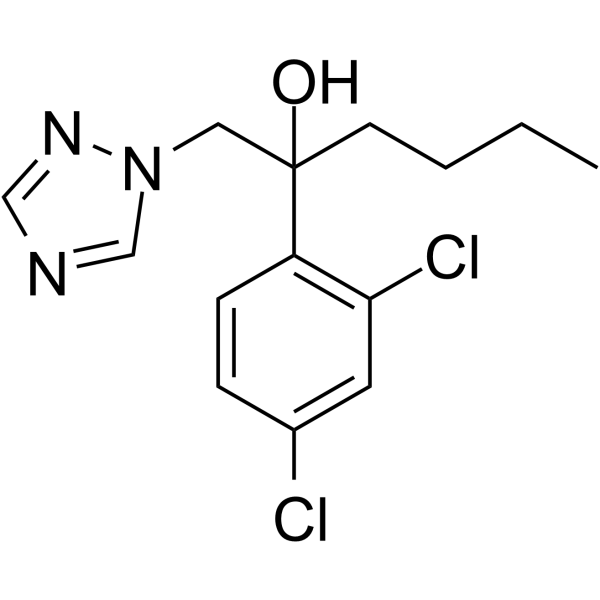
Hexaconazole is a demethylation enzyme inhibitor and a synthetic fungicide that targets many fungi, especially ascomycetes and basidiomycetes, and it can enhance the activity of SOD and peroxidase. Hexaconazole causes endocrine disorders in zebrafish larvae .
loading...
    loading...
Cat. No.: HY-W036120
CAS No.: 131-55-5
Synonyms: 2,2′,4,4′-Tetrahydroxybenzophenone
Benzophenone-2 (2,2',4,4'-Tetrahydroxybenzophenone) is an organic ultraviolet absorber that is widely used in personal care products and industrial products such as plastics and coatings. Benzophenone-2 is an endocrine disruptor that can interfere with estrogen receptors (ERα receptor) and pregnane X receptor (PXR receptor) activity, leading to reproductive toxicity, immune disorders, and metabolic abnormalities. Benzophenone-2 can inhibit the activity of α-glucosidase (IC50 = 49.72 μM), and can be used for research on diabetes .
loading...
    loading...
Cat. No.: HY-165595
CAS No.: 8058-79-5
Target:  

5 alpha Reductase

Research Areas:  

Endocrinology

The glutamic acid-alanine-glycine mixture is an orally active activator of testosterone 5α-reductase (5α-reductase). It promotes prostate function by enhancing the activity of 5α-reductase and increasing the levels of free amino acids. However, when combined with testosterone and estradiol (HY-B0141R), the glutamic acid-alanine-glycine mixture inhibits 5α-reductase activity and decreases the levels of free amino acids. The glutamic acid-alanine-glycine mixture can be used in research related to prostate function and endocrine disorders .
loading...
    loading...
Cat. No.: HY-W040047S
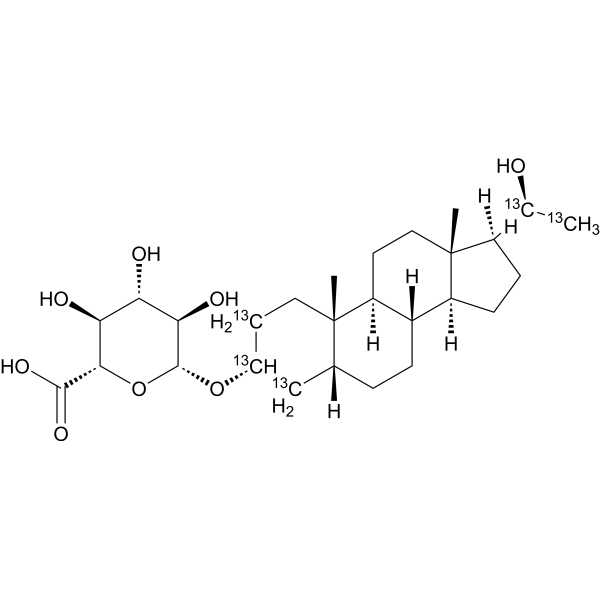
Pregnanediol 3-glucuronide is the main end-metabolite of Progesterone (HY-N0437). Pregnanediol 3-glucuronide is a metabolite of Progesterone formed by hydroxylation and glucuronidation in the liver, with high hydrophilicity and easy excretion through urine. Pregnanediol 3-glucuronide excretion rate of ≥ 9 μmol/24 h can serve as biochemical evidence of ovulation. Pregnanediol 3-glucuronide reflects the quality of the luteal phase, and a level of < 7 μmol/24 h may indicate anovulation or luteal insufficiency. Pregnanediol 3-glucuronide holds significant importance in monitoring female reproductive health, assessing pregnancy, and diagnosing endocrine disorders.
loading...
    loading...
Cat. No.: HY-P1723A
Synonyms: Neuropeptide Q TFA
Spexin (Neuropeptide Q) TFA is a selective agonist of galanin receptors GAL2 and GAL3, and is a conserved peptide that functions as a neurotransmitter/neuromodulator and endocrine factor. Spexin TFA can function through both central and peripheral actions. Spexin TFA upregulates Beclin 1 to inhibit ferroptosis induced by excessive autophagy, reduces the uptake of long-chain fatty acids by adipocytes, and regulates energy metabolism by increasing lipid oxidation (e.g., reducing the respiratory exchange ratio in rodents). Spexin TFA improves cardiac function in the Doxorubicin hydrochloride (HY-15142)-induced cardiotoxicity model, protects mitochondrial membrane potential, and reduces iron accumulation and lipid peroxidation. Spexin TFA can be used to study obesity and its related metabolic disorders, cardiovascular diseases (e.g., cardioprotection), and side effects of tumor chemotherapy .
loading...
    loading...
Cat. No.: HY-160548
CAS No.: 2170358-67-3
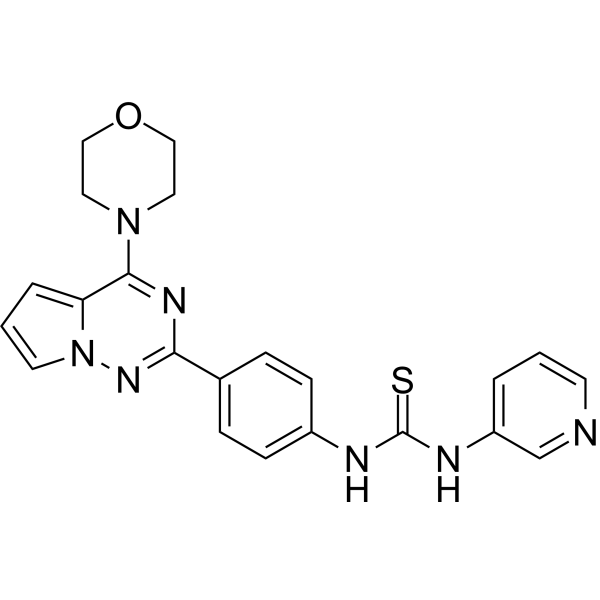
mTOR inhibitor-18 (Example 106) is a mTOR inhibitor. mTOR inhibitor-18 can be used for mTOR related research, such as cancer, immune disorders, cardiovascular disease, viral infection, inflammation, metabolism/endocrine function disorders and neurological disorders .
loading...
    loading...
Cat. No.: HY-160168
CAS No.: 2662512-02-7
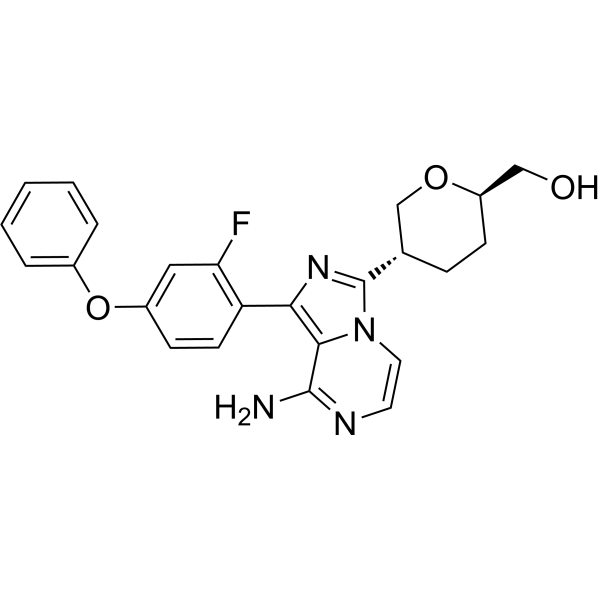
BTK-IN-31 (Compound 2) is a selective, non-covalently reversible, and blood-brain barrier (BBB) permeable Btk inhibitor. BTK-IN-31 has research potential in immune disorders, cancer, cardiovascular disease, viral infections, inflammation, metabolic/endocrine dysfunction, and neurological disorders .
loading...
    loading...
Cat. No.: HY-118091
CAS No.: 146117-78-4
Target:  

5 alpha Reductase

Research Areas:  

Endocrinology

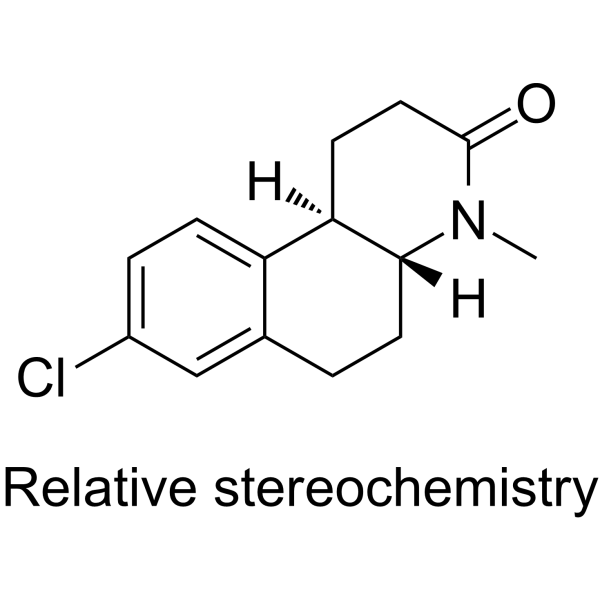
LY191704, as a benzoquinolinone, is a potent, nonsteroidal, noncompetitive and selective human type I 5α-reductase inhibitor. LY191704 is a racemic mixture of the compounds LY300502 and LY300503. LY191704 may be useful in the research of human endocrine disorders associated with overproduction of dihydrotestosterone (DHT) by 5α-reductase type 1 .
loading...
    loading...
Cat. No.: HY-177278
CAS No.: 868057-23-2
SST1 receptor antagonist-1 (Compound 23) is a selective Somatostatin receptor 1 (SST1) antagonist with pKds of 9.11 and 8.79 for rSST1 and hSST1, respectively. SST1 receptor antagonist-1 can be used for retinal and endocrine dysfunctions, cancer and neuropsychiatric disorders research .
loading...
    loading...
Cat. No.: HY-N15342
CAS No.: 39380-16-0
Tschimganidin is an ERα agonist with an IC50 of 1.4 μM. Found in plants of the Apiaceae family, Tschimganidin is a terpenoid compound with anti-obesity activity. It can be used for research in the field of endocrine and metabolic disorders .
loading...
    loading...
Cat. No.: HY-142932
Target:  

Btk

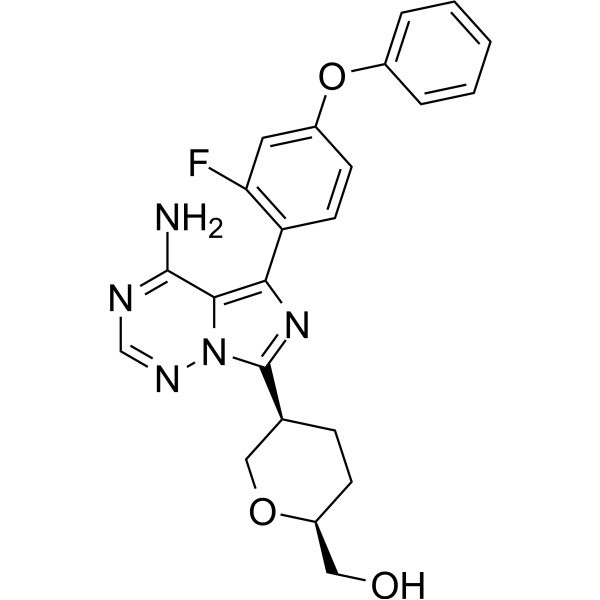
BTK-IN-6 is a potent inhibitor of Bruton's Tyrosine Kinase (BTK). BTK is a member of the Tec family of tyrosine kinases and plays an important role in the regulation of early B-cell development and mature B-cell activation and survival. BTK-IN-6 has the potential for the research of immune disorders, cancer, cardiovascular diseases, viral infections, inflammation, metabolism/endocrine function disorders, and neurological disorders (extracted from patent WO2021136219A1, compound 8) .
loading...
    loading...
Cat. No.: HY-13736
CAS No.: 87056-78-8
Synonyms: CV205-502
Target:  

Dopamine Receptor

Research Areas:  

Neurological Disease

Quinagolide (CV205-502) is a non-ergot dopamine D(2) receptor agonist that promotes dopamine activity. Quinagolide has shown effectiveness in modulating endocrine function, particularly in inhibiting disorders associated with dopamine deficiency. Quinagolide is used to suppress hyperprolactinemia and corresponding clinical symptoms, showing good efficacy. Quinagolide's biological activity enables its use as an important research compound in drug isolation and analysis .
loading...
    loading...
Cat. No.: HY-W587442
CAS No.: 74192-35-1
Target:  

Estrogen Receptor/ERR

Research Areas:  

Cancer

3-Chlorobisphenol A, a chlorinated derivatives of bisphenol A, is an endocrine-disrupting compound. It binds to estrogen receptors, causing disorders in hormone signaling pathways. Bisphenol A is an industrial chemical used in the production of polycarbonate plastics and epoxy resin.
loading...
    loading...
Cat. No.: HY-184833
CAS No.: 2417137-50-7
Target:  

JAK STAT

Tyk2-IN-25 is a TYK2 inhibitor that binds to the JH2 domain of TYK2. Tyk2-IN-25 inhibits p-STAT4 and p-STAT3 in human peripheral blood mononuclear cells. Tyk2-IN-25 is applicable to research related to multiple diseases such as immune and inflammatory diseases, and neurological diseases .
loading...
    loading...
Cat. No.: HY-135446
CAS No.: 141595-53-1
Target:  

Endothelin Receptor

BQ-610 is a selective antagonist of the endothelin A receptor (ETA receptor). BQ-610 specifically blocks the ETA receptor, competitively inhibiting the binding of endothelin-1 (ET-1) (a vasoconstrictive peptide) to the receptor, thereby blocking the effects of ET-1 such as vascular smooth muscle contraction, cell mitosis, and inhibition of hormone secretion. BQ-610 significantly alleviates cerebral vasospasm in rabbits. BQ-610 blocks the bronchial epithelial and pulmonary vascular cell proliferation caused by cigarette smoke in rat models. BQ-610 can delay the natural luteal regression in the cow's uterus. BQ-610 can be used for research on vasospasm, abnormal cell proliferation, and reproductive endocrine disorders .
loading...
    loading...
  • 1

