26 Results for "

epigenetic modification

" in MedChemExpress (MCE) Product Catalog:
Products (26)

26 Results for "epigenetic modification" in MCE Product Catalog:

3
3 Cited Publications
Cat. No.: HY-I0626
CAS No.: 71-30-7
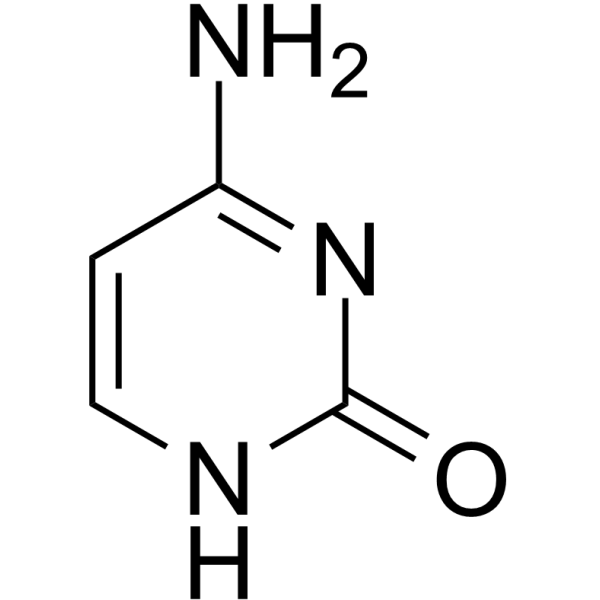
Cytosine is one of the four main bases found in DNA and RNA. Cytosine modifications exhibit circadian oscillations that are involved in epigenetic diversity and aging. Cytosine can be used in cancer research .
loading...
    loading...
2
2 Cited Publications
Cat. No.: HY-W008091
CAS No.: 554-01-8
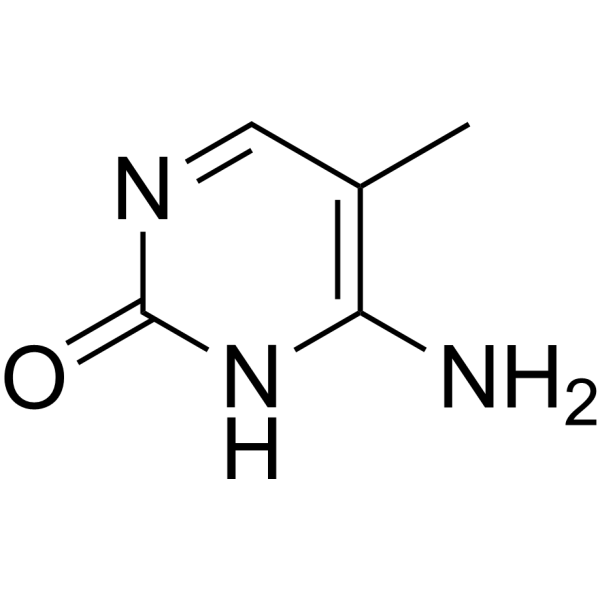
5-Methylcytosine is a well-characterized DNA modification in prokaryotes and eukaryotes. 5-Methylcytosine forms symmetrical methylation on CpG dinucleotides in DNA, stabilizes tRNA/rRNA structure in RNA, and affects mRNA translation. 5-Methylcytosine can be oxidized to generate 5hmC, 5fC, and 5caC. 5-Methylcytosine can be used in epigenetics, developmental biology, and the study of diseases such as colorectal cancer and hepatocellular carcinoma .
loading...
    loading...
2
2 Cited Publications
Cat. No.: HY-162080
CAS No.: 374705-10-9
Research Areas:  

Cancer

METTL1-WDR4-IN-1 (Compound 1) is a selective competitive inhibitor of the methyltransferase complex METTL1-WDR4 (IC50 = 144 μM). METTL1-WDR4-IN-1 inhibits the m 7G methyltransferase activity of the METTL1-WDR4 complex, blocking m 7G modification of PKM mRNA, reducing PKM2 protein expression, disrupting the METTL1/PKM2/H3K9la positive feedback loop, and simultaneously inhibiting PKM2 nuclear translocation-mediated CD155 transcriptional activation. METTL1-WDR4-IN-1 can inhibit tumor cell proliferation, weaken glycolytic metabolism, reverse tumor immune evasion (restoring NK cell and CD8 + T cell function), and regulate RNA epigenetic modification and the tumor immune microenvironment. METTL1-WDR4-IN-1 can be used in immunotherapy research for cancers such as colorectal cancer, and is particularly suitable for use in combination with PKM2 inhibitors to enhance anti-tumor treatment efficacy .
loading...
    loading...
2
2 Cited Publications
Cat. No.: HY-W008091R
CAS No.: 554-01-8
5-Methylcytosine (Standard) is the analytical standard of 5-Methylcytosine (HY-W008091). This product is intended for research and analytical applications. 5-Methylcytosine is a well-characterized DNA modification in prokaryotes and eukaryotes. 5-Methylcytosine forms symmetrical methylation on CpG dinucleotides in DNA, stabilizes tRNA/rRNA structure in RNA, and affects mRNA translation. 5-Methylcytosine can be oxidized to generate 5hmC, 5fC, and 5caC. 5-Methylcytosine can be used in epigenetics, developmental biology, and the study of diseases such as colorectal cancer and hepatocellular carcinoma .
loading...
    loading...
2
2 Cited Publications
Cat. No.: HY-W008091A
CAS No.: 58366-64-6
Research Areas:  

Cancer

5-Methylcytosine hydrochloride is a well-characterized DNA modification in prokaryotes and eukaryotes. 5-Methylcytosine hydrochloride forms symmetrical methylation on CpG dinucleotides in DNA, stabilizes tRNA/rRNA structure in RNA, and affects mRNA translation. 5-Methylcytosine hydrochloride can be oxidized to generate 5hmC, 5fC, and 5caC. 5-Methylcytosine hydrochloride can be used in epigenetics, developmental biology, and the study of diseases such as colorectal cancer and hepatocellular carcinoma .
loading...
    loading...
2
2 Cited Publications
Cat. No.: HY-162080A
Research Areas:  

Cancer

METTL1-WDR4-IN-1 (Compound 1) TFA is a selective competitive inhibitor of the methyltransferase complex METTL1-WDR4 (IC50=144 μM). METTL1-WDR4-IN-1 TFA inhibits the m 7G methyltransferase activity of the METTL1-WDR4 complex, blocking the m 7G modification of PKM mRNA, reducing PKM2 protein expression, disrupting the METTL1/PKM2/H3K9la positive feedback loop, and simultaneously inhibiting PKM2 nuclear translocation-mediated CD155 transcriptional activation. METTL1-WDR4-IN-1 TFA can inhibit tumor cell proliferation, weaken glycolytic metabolism, reverse tumor immune evasion (restoring NK cell and CD8 + T cell function), and regulate RNA epigenetic modification and the tumor immune microenvironment. METTL1-WDR4-IN-1 TFA can be used in immunotherapy research for cancers such as colorectal cancer, and is particularly suitable for use in combination with PKM2 inhibitors to enhance anti-tumor treatment efficacy .
loading...
    loading...
Cat. No.: HY-116887
CAS No.: 443-72-1
Purity:  98.79%
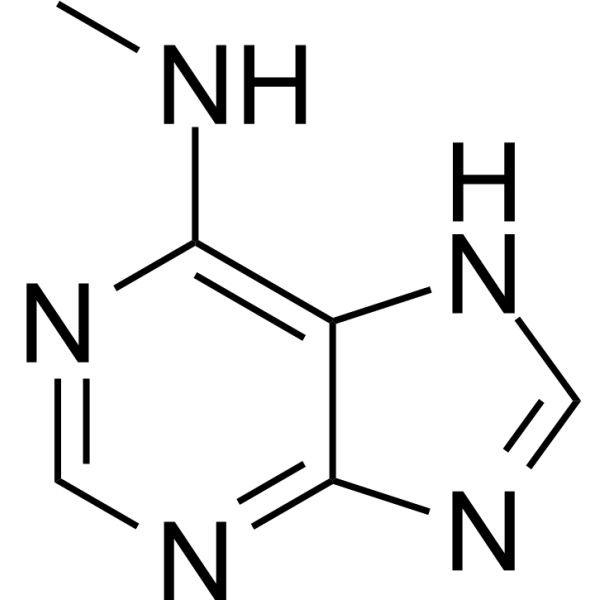
N6-Methyladenine is a DNA epigenetic modification that involves the addition of a methyl group to the sixth position of adenine. N6-Methyladenine plays an important role in distinguishing host DNA from exogenous DNA and controls many biological functions, such as DNA replication, transcription, mismatch repair, and chromosome replication. N6-Methyladenine can be used for the kidney diseases .
loading...
    loading...
Cat. No.: HY-W414799
CAS No.: 79416-87-8
Nε,Nε-Dimethyl-L-lysine monohydrochloride is an unnatural amino acid with the activity of regulating protein post-translational modification. Nε,Nε-Dimethyl-L-lysine monohydrochloride can be used as a tool for epigenetic research to promote the research process of acetylation and methylation. Nε,Nε-Dimethyl-L-lysine monohydrochloride is also widely used in compound development and biochemical research.
loading...
    loading...
Cat. No.: HY-P1958
CAS No.: 667899-73-2
Research Areas:  

Others

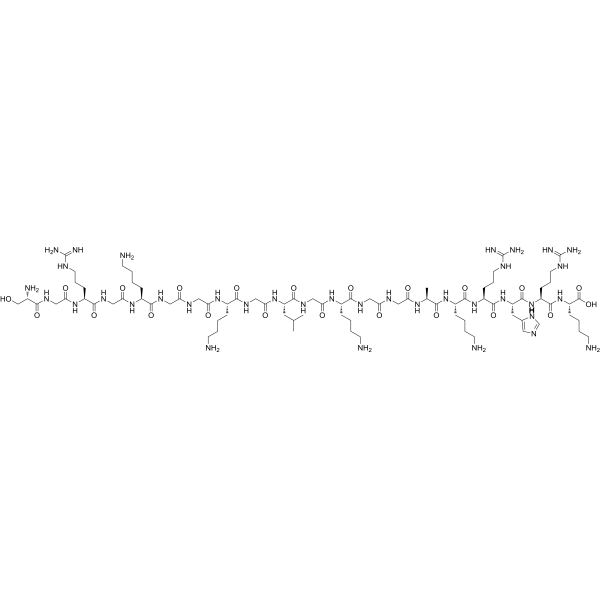
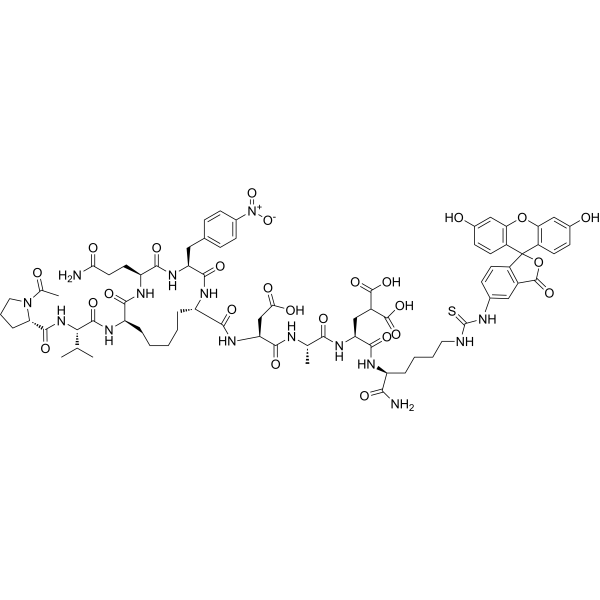
Histone H4 (2-21) is a substrate peptide derived from the N-terminal region of histone H4, which serves as an acyl acceptor for lysine acetyltransferases of the MYST family (KAT). Histone H4 (2-21) participates in enzymatic reactions together with acyl-coenzyme A (acyl-CoA, and undergoes lysine acetylation and propionylation modifications catalyzed by KATs such as MOF. The apparent Km of Histone H4 (2-21) for MOF is 788.8 μM, while in the picNuA4 catalytic system, the Km and Kd values of the H4 peptide are 192 μM and 251 μM, respectively. Histone H4 (2-21) can be used in studies related to histone post-translational modifications, epigenetic regulation, and lysine acylation .
loading...
    loading...
Cat. No.: HY-I0626R
CAS No.: 71-30-7
Cytosine (Standard) is the analytical standard of Cytosine. This product is intended for research and analytical applications. Cytosine is one of the four main bases found in DNA and RNA. Cytosine modifications exhibit circadian oscillations that are involved in epigenetic diversity and aging .
loading...
    loading...
Cat. No.: HY-W008091S
CAS No.: 1219795-15-9
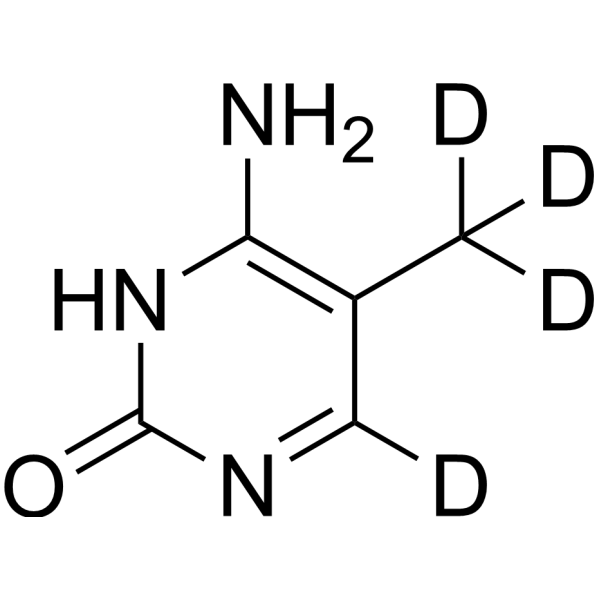
5-Methylcytosine-d4 is the deuterium labeled 5-Methylcytosine (HY-W008091). 5-Methylcytosine is a well-characterized DNA modification in prokaryotes and eukaryotes. 5-Methylcytosine forms symmetrical methylation on CpG dinucleotides in DNA, stabilizes tRNA/rRNA structure in RNA, and affects mRNA translation. 5-Methylcytosine can be oxidized to generate 5hmC, 5fC, and 5caC. 5-Methylcytosine can be used in epigenetics, developmental biology, and the study of diseases such as colorectal cancer and hepatocellular carcinoma .
loading...
    loading...
Cat. No.: HY-I0626S2
CAS No.: 106391-24-6
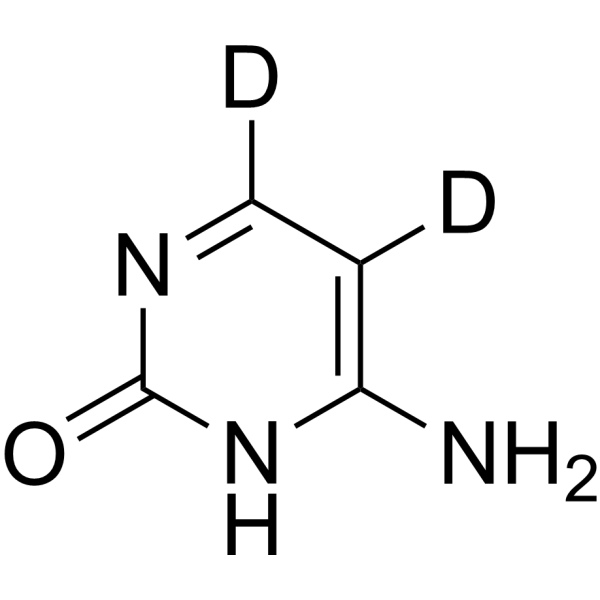
Cytosine-d2 is the deuterium labeled Cytosine . Cytosine is one of the four main bases found in DNA and RNA. Cytosine modifications exhibit circadian oscillations that are involved in epigenetic diversity and aging .
loading...
    loading...
Cat. No.: HY-I0626S1
CAS No.: 181517-10-2
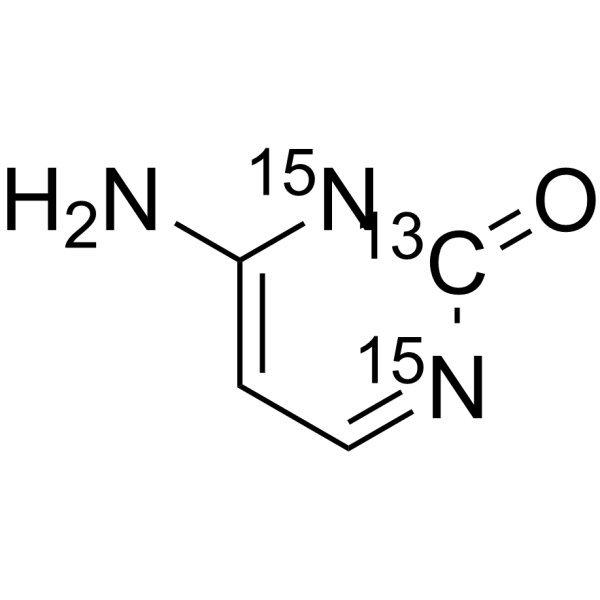
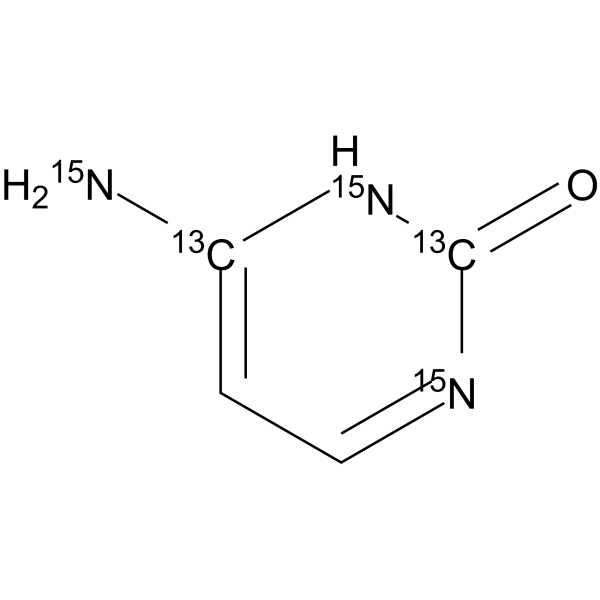
Cytosine- 13C, 15N2 is the 13C and 15N labeled Cytosine . Cytosine is one of the four main bases found in DNA and RNA. Cytosine modifications exhibit circadian oscillations that are involved in epigenetic diversity and aging .
loading...
    loading...
Cat. No.: HY-I0626S
CAS No.: 285978-06-5
Cytosine- 13C2, 15N3 is the 13C-labeled and 15N-labeled Cytosine. Cytosine is one of the four main bases found in DNA and RNA. Cytosine modifications exhibit circadian oscillations that are involved in epigenetic diversity and aging .
loading...
    loading...
Cat. No.: HY-144187
CAS No.: 2755304-16-4
Research Areas:  

Cancer

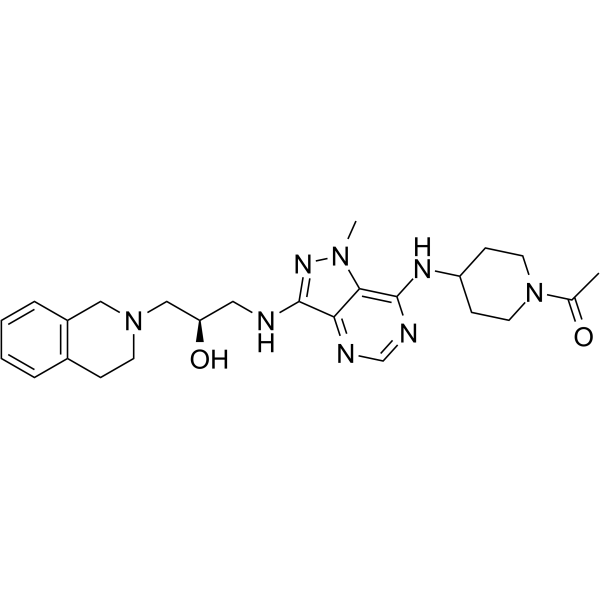
PRMT5-IN-16 (Compound 20) is a PRMT5 inhibitor with anti-tumor activity. PRMT5 is a type of protein arginine methyltransferase, and is a new anti-tumor target related to epigenetic modification .
loading...
    loading...
Cat. No.: HY-144188
CAS No.: 2755304-03-9
Research Areas:  

Cancer

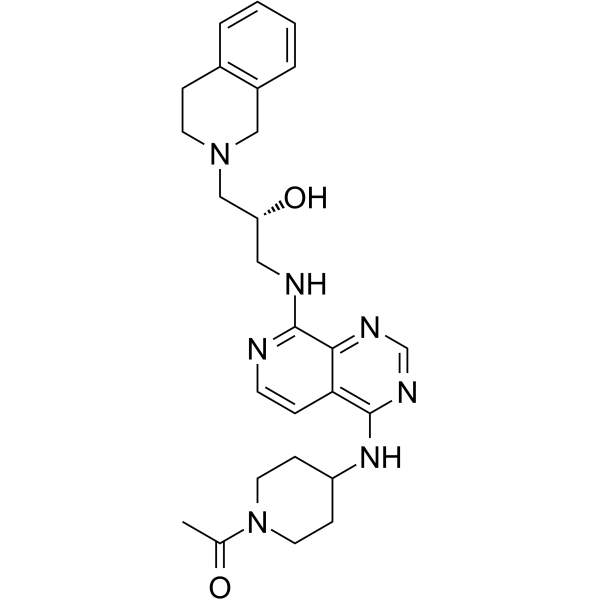
PRMT5-IN-17 (Compound 6) is a PRMT5 inhibitor with anti-tumor activity. PRMT5 is a type of protein arginine methyltransferase, and is a new anti-tumor target related to epigenetic modification .
loading...
    loading...
Cat. No.: HY-P3822
Research Areas:  

Cancer

PRMT5-IN-23 (compound 50) is an inhibitor of protein arginine methyltransferase 5 (PRMT5) with anti-tumor activity. PRMT5 is a type of protein arginine methyltransferase, and is a new anti-tumor target related to epigenetic modification .
loading...
    loading...
Cat. No.: HY-15313B
CAS No.: 2070014-96-7
Purity:  ≥98.0%
Target:  

Histone Demethylase

Research Areas:  

Metabolic Disease Cancer

CBB1007 hydrochloride is a reversible and selective LSD1 inhibitor with an IC50 of 5.27 µM for human LSD1. CBB1007 hydrochloride significantly blocks the demethylase activity of LSD1 on H3K4Me2 and H3K4Me. CBB1007 hydrochloride shows selectivity for LSD1 over LSD2 or JARID1A, and induces differentiation-related genes in pluripotent cells. CBB1007 hydrochloride is studied in  non-pluripotent cancer research, targeting teratocarcinoma, embryonic carcinoma, and seminoma .
loading...
    loading...
Cat. No.: HY-L024
920 compounds

A histone modification, a covalent post-translational modification (PTM) to histone proteins, includes methylation, phosphorylation, acetylation, ubiquitylation, and sumoylation, etc. In general, histone modifications are catalyzed by specific enzymes that act predominantly at the histone N-terminal tails involving amino acids such as lysine or arginine, as well as serine, threonine, tyrosine, etc. The PTMs made to histones can impact gene expression by altering chromatin structure or recruiting histone modifiers. Histone modifications act in diverse biological processes such as transcriptional activation/inactivation, chromosome packaging, and DNA damage/repair. Deregulation of histone modification contributes to many diseases, including cancer and autoimmune diseases.

MCE owns a unique collection of 920 bioactive compounds targeting Epigenetic Reader Domain, HDAC, Histone Acetyltransferase, Histone Demethylase, Histone Methyltransferase, Sirtuin, etc. Histone Modification Research Compound Library is a useful tool for histone modification research and drug screening.

Cat. No.: HY-L005
1,999 compounds

Epigenetics refers to changes in phenotype that are not rooted in DNA sequence. Many types of epigenetic processes have been identified, including DNA methylation, alteration in the structure of histone proteins and gene regulation by small noncoding microRNAs. Modification of DNA, protein, or RNA, resulting in changes to the function and/or regulation of these molecules, without altering their primary sequences, reveals the complexities of cellular differentiation, embryology, the regulation of gene expression, aging, cancer, and other diseases.

MCE provide a unique collection of 1,999 epigenetics-related compounds that can be used in the research of the related diseases.

