13 Results for "

gallstone

" in MedChemExpress (MCE) Product Catalog:
Products (13)

13 Results for "gallstone" in MCE Product Catalog:

2
2 Cited Publications
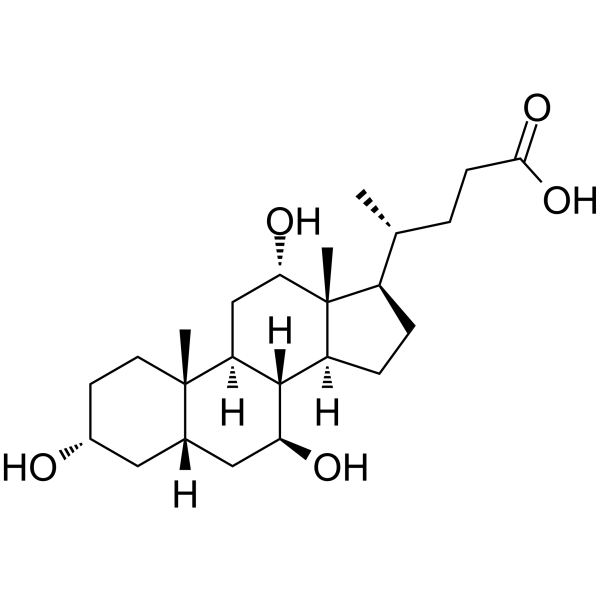
Cat. No.: HY-113212
CAS No.: 2955-27-3
Purity:  99.91%
Ursocholic acid, a bile acid present in mammalian bile, is converted to deoxycholic acid (UDC) by the mouse intestinal flora. Ursocholic acid acts as a gallstone dissolving agent in the liver through anti-apoptosis, anti-inflammatory, immunomodulatory, bile regulation, and coordinated changes in mitochondrial integrity and cell signaling, Ursocholic acid also has favorable effects on bones in patients with chronic cholestasis .
loading...
    loading...
1
1 Cited Publications
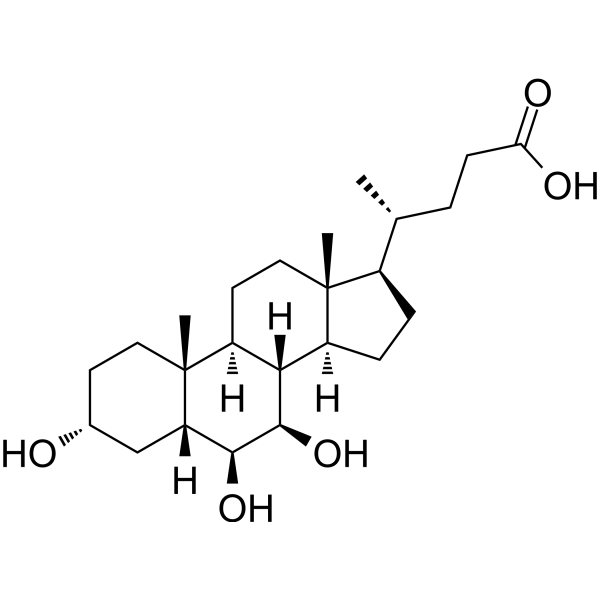
Cat. No.: HY-133707
CAS No.: 2393-59-1
Purity:  99.91%
β-Muricholic acid is a potent and orally active biliary cholesterol-desaturating agent. β-Muricholic acid prevents cholesterol gallstones. β-Muricholic acid inhibits lipid accumulation. β-Muricholic acid has the potential for the research of nonalcoholic fatty liver disease (NAFLD) .
loading...
    loading...
1
1 Cited Publications
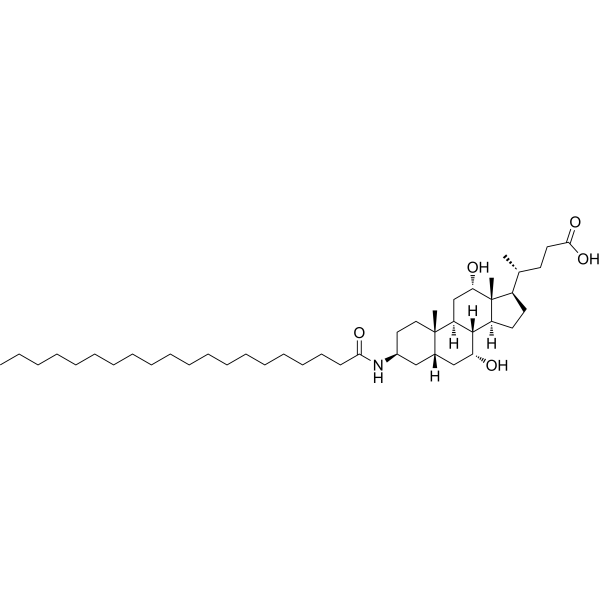
Cat. No.: HY-19796
CAS No.: 246529-22-6
Synonyms: Aramchol; C20-FABAC
Research Areas:  

Metabolic Disease

Icomidocholic acid (Aramchol) is a lipid molecule synthesized from cholic acid and arachidic acid. Icomidocholic acid is an orally active SCD1 inhibitor and cholesterol solubilizer with antifibrotic effects. Icomidocholic acid can reduce liver fat content, dissolve cholesterol crystals and prevent gallstone formation. Icomidocholic acid can be used in the study of nonalcoholic fatty liver disease (NAFLD) and nonalcoholic steatohepatitis (NASH) .
loading...
    loading...
Cat. No.: HY-133707R
CAS No.: 2393-59-1
Deracoxib (Standard) is the analytical standard of Deracoxib. This product is intended for research and analytical applications. 0
loading...
    loading...
Cat. No.: HY-175434
Target:  

Estrogen Receptor/ERR

Research Areas:  

Endocrinology

CIMBA hydrochloride is a selective G protein-coupled estrogen receptor (GPER) antagonist. CIMBA hydrochloride is used in the research of cholesterol gallstones in women .
loading...
    loading...
Cat. No.: HY-123666
CAS No.: 78991-74-9
Synonyms: Bay o 2752
Target:  

Acyltransferase

Research Areas:  

Cardiovascular Disease

Bay-02752 (Bay o 2752) is a lipid-lowering agent. Bay-02752 inhibits acyl-CoA activity in liver microsomes (IC50 = 0.95 μg/mL). Bay-02752 inhibits intestinal cholesterol absorption in rats. Bay-02752 inhibits gallstone formation in hamsters .
loading...
    loading...
Cat. No.: HY-118311
CAS No.: 63250-48-6
Synonyms: (Z)-Probilin; (Z)-Secrebil; (Z)-Piprozolin
Target:  

Others

Research Areas:  

Metabolic Disease

(Z)-W 3699 is a potential choleretic. (Z)-W 3699 can increase the solubility of cholesterol in the gallbladder by altering the secretion of micellar bile acids. (Z)-W 3699 can prevent the formation of cholesterol-containing gallstones in dogs.
loading...
    loading...
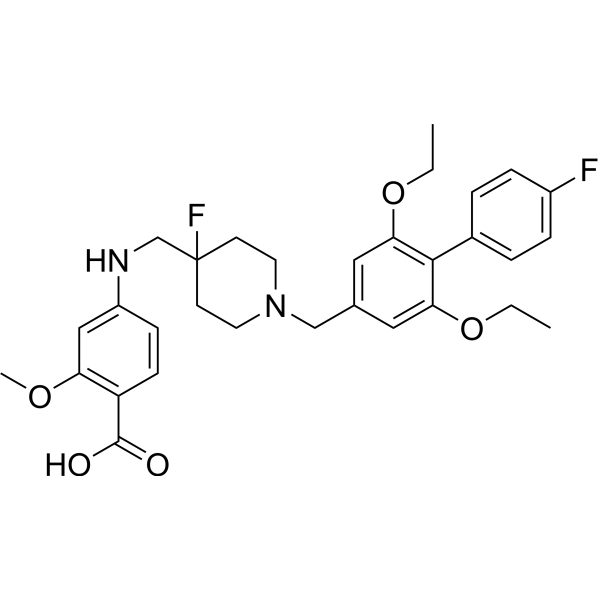
Cat. No.: HY-157303
CAS No.: 2851454-42-5
Target:  

Somatostatin Receptor

Research Areas:  

Cardiovascular Disease

SSTR5 antagonist 3 (Compound 23) is an orally active somatostatin receptor subtype 5 (SSTR5) antagonist with low hERG inhibition. SSTR5 antagonist 3 exhibits potency with IC50 values of 2.8 nM and 1.4 nM in human and mouse, respectively. SSTR5 antagonist 3 can be used for the research of anti-gallstone .
loading...
    loading...
Cat. No.: HY-113212S
Ursocholic acid-d4 is deuterium labeled Ursocholic acid. Ursocholic acid, a bile acid present in mammalian bile, is converted to deoxycholic acid (UDC) by the mouse intestinal flora. Ursocholic acid acts as a gallstone dissolving agent in the liver through anti-apoptosis, anti-inflammatory, immunomodulatory, bile regulation, and coordinated changes in mitochondrial integrity and cell signaling, Ursocholic acid also has favorable effects on bones in patients with chronic cholestasis .
loading...
    loading...
Cat. No.: HY-113212R
CAS No.: 2955-27-3
Ursocholic acid (Standard) is the analytical standard of Ursocholic acid. This product is intended for research and analytical applications. Ursocholic acid, a bile acid present in mammalian bile, is converted to deoxycholic acid (UDC) by the mouse intestinal flora. Ursocholic acid acts as a gallstone dissolving agent in the liver through anti-apoptosis, anti-inflammatory, immunomodulatory, bile regulation, and coordinated changes in mitochondrial integrity and cell signaling, Ursocholic acid also has favorable effects on bones in patients with chronic cholestasis[1][2][3][4][5].
loading...
    loading...
Cat. No.: HY-184354
CAS No.: 733034-46-3
NO-Pravastatin is a derivative of Pravastatin (HY-B0165) covalently linked with an NO donor moiety, endowing it with dual functions of HMG-CoA reductase (HMGCR) inhibition and exogenous nitric oxide (NO) release. NO-Pravastatin activates PPARα/γ and ABCA1, and inhibits LPS (HY-D1056)-induced TNFα production. NO-Pravastatin can be used in research related to gallstones and cardiovascular diseases .
loading...
    loading...
Cat. No.: HY-N18737
CAS No.: 84775-91-7
Category:  

Extract

Target:  

Others

Phyllanthus niruri extract, extracted from the whole plant of Phyllanthus niruri, is rich in bioactive compounds such as alkaloids, flavonoids, and tannins. Phyllanthus niruri extract has alkalizing properties, which may help prevent the formation of gallstones and acidic kidney stones.
loading...
    loading...
Cat. No.: HY-L087
3,695 compounds

Obesity is widely recognized as the largest and fastest growing public health problem and is associated with numerous chronic disorders including osteoarthritis, obstructive sleep apnea, gallstones, fatty liver disease, reproductive and gastrointestinal cancers, dyslipidemia, hypertension, type 2 diabetes, heart failure, coronary artery disease, stroke, etc. Although obesity has long been associated with serious health issues, it has only recently been regarded as a disease in the sense of being a specific target for medical therapy. Obesity may be viewed as the dysregulation of two physiological functions, appetite regulation and energy metabolism, which combine to create disordered energy balance. Consequently, developing obesity treatments that target novel pathways is a growing focus for both biopharmaceutical industries.

MCE Anti-Obesity Compound Library owns a unique collection of 3,695 compounds, which mainly target signaling pathway of controlling appetite, fatty acid metabolism and energy expenditure, etc. This library is a useful tool for discovery anti-obesity drugs.

  • 1

