14 Results for "

heterocyclic structures

" in MedChemExpress (MCE) Product Catalog:
Products (14)

14 Results for "heterocyclic structures" in MCE Product Catalog:

Cat. No.: HY-D0827
CAS No.: 260430-02-2
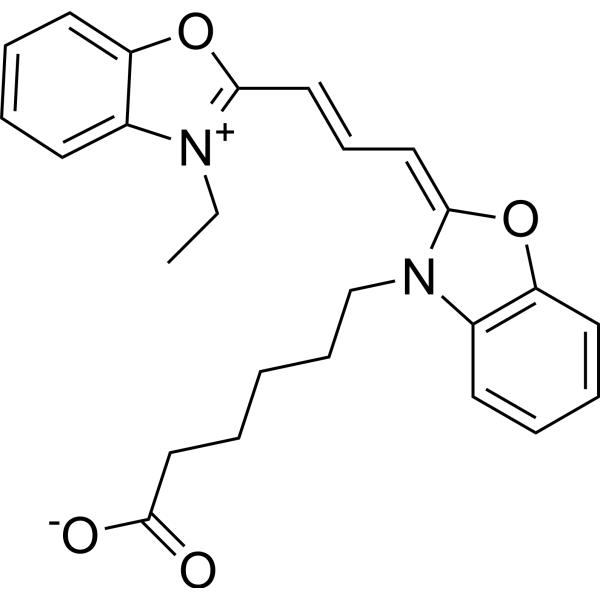
Synonyms: Cyanine2
Cyanines are formally compounds with two nitrogen atoms linked by an odd number of methene units. 26 28 The nitrogen atoms are parts of the heterocyclic units (such as indole, benzoxazol, or benzothiazol) . The structures and optical properties of representative cyanine dyes used for in vivo imaging are presented . Cyanines are characterized by long wavelength, tunable absorption and emission, very high extinction coefficient (up to 300,000 M 1 cm 1), good water solubility, and relatively straightforward synthesis .
loading...
    loading...
Cat. No.: HY-Y1078
CAS No.: 4637-24-5
Synonyms: N-Dimethoxymethyl-N,N-dimethylamine
Research Areas:  

Others

DMF-DMA (N-Dimethoxymethyl-N,N-dimethylamine) is a reagent with both condensation and alkylation functions. DMF-DMA can undergo condensation reactions with active methylene groups or amino groups to generate enamine and imino derivatives, and can also act as an alkylating agent to methylate nitrogen and oxygen atoms in heterocyclic structures. DMF-DMA is widely used in the synthesis of enaminones and dimethylamino imine intermediates, as well as in the construction of heterocyclic backbones such as pyridine, pyrimidine and pyrazole. DMF-DMA can also serve as a polar aprotic co-solvent; although DMF-DMA cannot dissolve cellulose alone, it can form an efficient cellulose dissolution system with diallylimidazolium methoxyacetate .
loading...
    loading...
Cat. No.: HY-145657
CAS No.: 207671-99-6
Purity:  99.89%
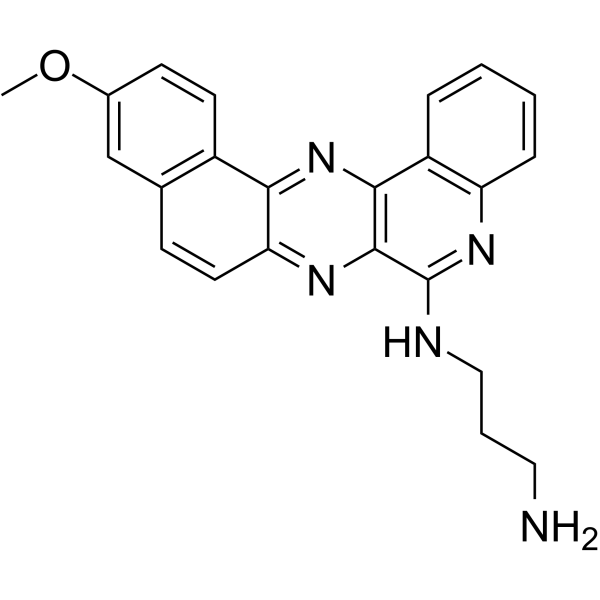
Synonyms: BQQ
Research Areas:  

Others

Benzoquinoquinoxaline (BQQ) is a heterocyclic compound with an aminoalkyl side chain. Benzoquinoquinoxaline preferentially binds to DNA triplex structures, intercalates between the bases, thus, stabilising the triplex conformation. Conjugation of Benzoquinoquinoxaline to 1,10-phenanthroline specifically binds and cleaves double strand DNA at the site of formation of a triplex structure .
loading...
    loading...
Cat. No.: HY-W011579
CAS No.: 4551-69-3
4-Benzoyl-3-methyl-1-phenyl-5-pyrazolone, is a heterocyclic compound with a five-membered ring structure, which can be used as a starting material for organic synthesis, a reagent for organic transformation, and a biological probe for studying biological processes. 4-Benzoyl-3-methyl-1-phenyl-5-pyrazolone is a biomaterial or organic compound that can be used as a research-related biomaterial or organic compound in life sciences .
loading...
    loading...
Cat. No.: HY-W016568
CAS No.: 529-69-1
Category:  

Natural Products Animals

Target:  

Endogenous Metabolite

Isoxanthopterin is a heterocyclic compound belonging to the pteridine family and its activity is mainly reflected in its optical properties. Isoxanthopterin can form a reflective layer in the eyes of animals, enhancing visual function. The main regulatory mechanism of isoxanthopterin involves its ability to form a crystalline structure within organisms, which achieves a high refractive index through specific hydrogen bonding patterns and molecular arrangements. Isoxanthopterin can be used for research in materials science and optical engineering .
loading...
    loading...
Cat. No.: HY-44087
CAS No.: 54716-02-8
Ethyl (E)-3-(1-pyrrolidinyl)crotonate is an organic synthetic intermediate of the enamine ester type. Ethyl (E)-3-(1-pyrrolidinyl)crotonate has a stable structure and strong reactivity, and is mainly used for the construction of heterocyclic compounds and drug molecules.
loading...
    loading...
Cat. No.: HY-Y0425
CAS No.: 623-27-8
Terephthalaldehyde is a crosslinking agent. Terephthalaldehyde forms a crosslinked structure inside the gelatin matrix by forming Schiff base imines with the amino groups of gelatin, thereby constructing a three-dimensional network. Terephthalaldehyde improves the hydrophobicity of the gelatin matrix, delays water vapor penetration and enhances the liquid water resistance of gelatin films. Terephthalaldehyde can be used as a crosslinking agent to prepare crosslinked chitosan hydrogel (CAAT) via ultrasound-induced synthesis. Terephthalaldehyde helps CAAT hydrogels selectively adsorb anionic dyes from aqueous media, including multi-component systems containing cationic dyes. Terephthalaldehyde serves as a starting material for the synthesis of bis-heterocyclic compounds (including bis-thiazole and bis-triazolopyrimidine compounds) .
loading...
    loading...
Cat. No.: HY-W800619
CAS No.: 2055024-61-6
Target:  

ADC Linkers

Research Areas:  

Others

NH2-PEG4-Val-Cit-PAB-OH is a cleavable ADC linker featuring a primary amine, a hydrophilic PEG spacer, a Val-Cit dipeptide, and a PAB group. The benzylic alcohol on the PAB can be used to attach with reactive groups such as PNP for conjugation with drug payloads. The primary amine is free to perform a wide variety of reactions such as coupling with carboxylic acids, reductive aminations with ketones or aldehydes, or other more specialized uses such as in SNAr reactions or heterocyclic chemistry. The Val-Cit dipeptide is cleaved by cellular proteases within the cell to allow for efficient payload delivery via an elimination mechanism within the PAB structure.
loading...
    loading...
Cat. No.: HY-W800617
CAS No.: 2055024-63-8
Target:  

ADC Linkers

Research Areas:  

Cancer

NH2-PEG1-Val-Cit-PAB-OH is a cleavable ADC linker intermediate featuring a primary amine, a hydrophilic PEG spacer, a Val-Cit dipeptide, and a PAB group. The benzylic alcohol on the PAB can be used to attach with reactive groups such as PNP for conjugation with drug payloads. The primary amine is free to perform a wide variety of reactions such as coupling with carboxylic acids, reductive aminations with ketones or aldehydes, or other more specialized uses such as in SNAr reactions or heterocyclic chemistry. The Val-Cit dipeptide is cleaved by cellular proteases within the cell to allow for efficient payload delivery via an elimination mechanism within the PAB structure.
loading...
    loading...
Cat. No.: HY-W800618
CAS No.: 2055024-62-7
Target:  

ADC Linkers

Research Areas:  

Others

NH2-PEG3-Val-Cit-PAB-OH is a cleavable ADC linker featuring a primary amine, a hydrophilic PEG spacer, a Val-Cit dipeptide, and a PAB group. The benzylic alcohol on the PAB can be used to attach with reactive groups such as PNP for conjugation with drug payloads. The primary amine is free to perform a wide variety of reactions such as coupling with carboxylic acids, reductive aminations with ketones or aldehydes, or other more specialized uses such as in SNAr reactions or heterocyclic chemistry. The Val-Cit dipeptide is cleaved by cellular proteases within the cell to allow for efficient payload delivery via an elimination mechanism within the PAB structure.
loading...
    loading...
Cat. No.: HY-W800620
CAS No.: 2055024-60-5
Target:  

ADC Linkers

Research Areas:  

Others

NH2-PEG6-Val-Cit-PAB-OH is a cleavable ADC linker featuring a primary amine, a hydrophilic PEG spacer, a Val-Cit dipeptide, and a PAB group. The benzylic alcohol on the PAB can be used to attach with reactive groups such as PNP for conjugation with drug payloads. The primary amine is free to perform a wide variety of reactions such as coupling with carboxylic acids, reductive aminations with ketones or aldehydes, or other more specialized uses such as in SNAr reactions or heterocyclic chemistry. The Val-Cit dipeptide is cleaved by cellular proteases within the cell to allow for efficient payload delivery via an elimination mechanism within the PAB structure.
loading...
    loading...
Cat. No.: HY-L138
6,546 compounds

Heterocyclic compounds are cyclic organic compounds which contain at least one hetero atom, the most common heteroatoms are nitrogen, oxygen ,and sulfur. Heterocycles are common in biology, featuring a wide range of structures from enzyme co-factors to amino acids and proteins. On the one hand, heterocycles are common structural units in approved drugs and in medicinal chemistry targets in the drug discovery process. In addition, heterocycles have been found as a key structure in medical chemistry and also they are frequently found in large percent of biomolecules such as vitamins, natural products ,and biologically active compounds including antifungal, anti-inflammatory, antibacterial, antioxidant, antiallergic, anti-HIV, antidiabetic, anticancer activity.

MCE offers a unique collection of 6,546 heterocyclic compounds which can be used for drug discovery for high throughput screening (HTS) and high content screening (HCS). MCE heterocyclic compound library is critical for drug discovery and development.

Cat. No.: HY-LD002
100 billion compounds

The discovery of hit molecule is a cornerstone of drug development. Among the diverse tools available, DNA-encoded libraries have emerged a revolutionary platform for high-throughput screening. Compared with traditional HTS, DEL features shorter screening processes, lower costs, simpler assays, and larger library capacities.

DEL Construction utilizes split-and-pool synthesis, a combinatorial chemistry approach that involves iterative splitting, reaction, and pooling. This strategy enables rapid, exponential assembly of fragments in minimal steps without the need for individual compound synthesis andassoicicated isolation or purification steps, thus greatly reducing overall costs. The technology enables simultaneous affinity screeningof massive compound collections to target proteins in a single step. By coupling chemical structures with unique DNA barcodes, each compound is tagged with a distinct DNA sequence for convenient tracking and decoding.DELs readily enable the construction and efficient screening of libraries containing millions to billions of compounds. As a result, DEL screening combines the dual advantages of high efficiency and low cost, making DEL a transformative technology in modern drug discovery.

The DEL kit consists of 50 independent libraries with a total scale of 100 billion compounds. It is constructed through stepwise combinatorial chemistry strategies involving 2-, 3-, and 4-round synthesis. By employing diverse scaffolds and flexible linking strategies, it encompasses various ring systems, linear frameworks, and heterocyclic structures. Screening can be achieved solely through affinity, independent of target-specific activity detection methods. This library is suitable for DEL screening against a wide range of targets.

Cat. No.: HY-L0105V
485,000 compounds
InterBioScreen Synthetic Compounds Library contains about 485,000 immediately available compounds. The library is generated by very rigorously selecting the most interesting classes of compounds that are most likely to become new drugs or plant protection agents or veterinary preparations.
  • 1

