1. Search Result
Search Result
Results for "

highly bioavailable

" in MedChemExpress (MCE) Product Catalog:

102

Inhibitors & Agonists

3

Screening Libraries

8

Isotope-Labeled Compounds

Cat. No. Product Name Target Research Areas Chemical Structure
  • HY-15531
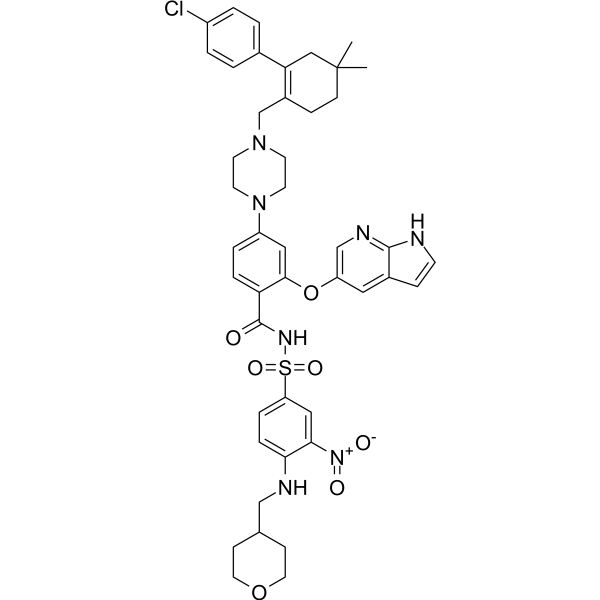
    Venetoclax
    Maximum Cited Publications
    227 Publications Verification

    ABT-199; GDC-0199; RG7601

    Bcl-2 Family Autophagy Cancer
    Venetoclax (ABT-199; GDC-0199) is a highly potent, selective and orally bioavailable Bcl-2 inhibitor with a Ki of less than 0.01 nM. Venetoclax induces autophagy .
    Venetoclax
  • HY-10619
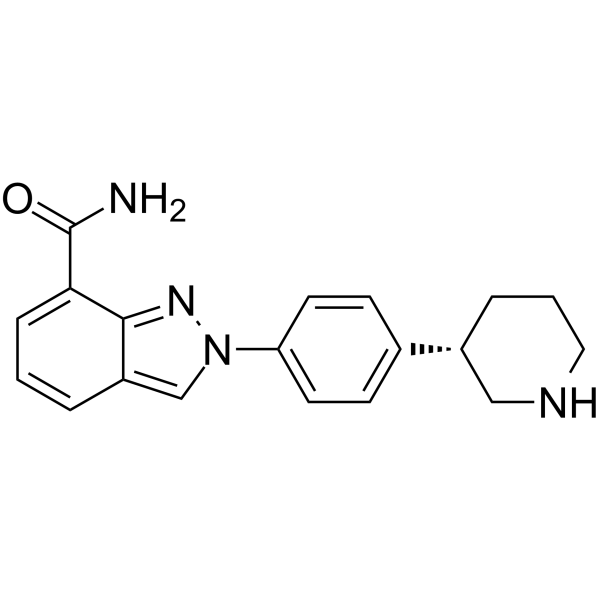
    Niraparib
    80+ Cited Publications

    MK-4827

    PARP Apoptosis Cancer
    Niraparib (MK-4827) is a highly potent and orally bioavailable PARP1 and PARP2 inhibitor with IC50s of 3.8 and 2.1 nM, respectively. Niraparib leads to inhibition of repair of DNA damage, activates apoptosis and shows anti-tumor activity .
    Niraparib
  • HY-50855
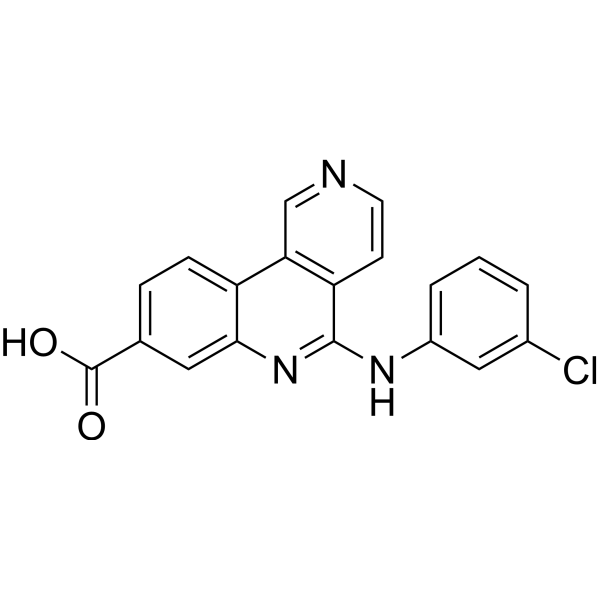
    Silmitasertib
    55+ Cited Publications

    CX-4945

    Casein Kinase Autophagy Cancer
    Silmitasertib (CX-4945) is an orally bioavailable, highly selective and potent CK2 inhibitor, with IC50 values of 1 nM against CK2α and CK2α'.
    Silmitasertib
  • HY-100818
    Futibatinib
    5+ Cited Publications

    TAS-120

    FGFR Cancer
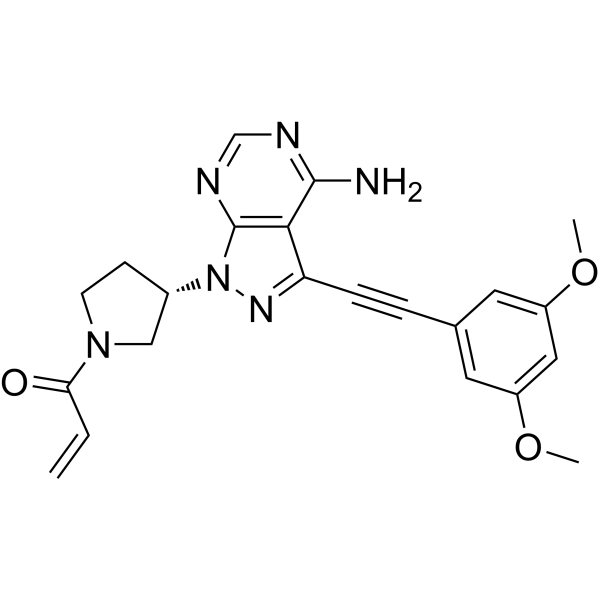
    Futibatinib (TAS-120) is an orally bioavailable, highly selective, and irreversible FGFR inhibitor, with IC50s of 3.9, 1.3, 1.6, and 8.3 nM for FGFR 1-4, respectively. Futibatinib inhibits mutant and wild-type FGFR2 with similar IC50s (wild-type FGFR2=0.9 nM; V5651=1-3 nM; N550H=3.6 nM; E566G=2.4 nM) .
    Futibatinib
  • HY-109566
    AZD1390
    5+ Cited Publications

    ATM/ATR Inflammation/Immunology Cancer
    AZD1390 is a potent, highly selective, orally bioavailable, brain-penetrant ATM inhibitor with an IC50 of 0.78 nM in cell .
    AZD1390
  • HY-13026
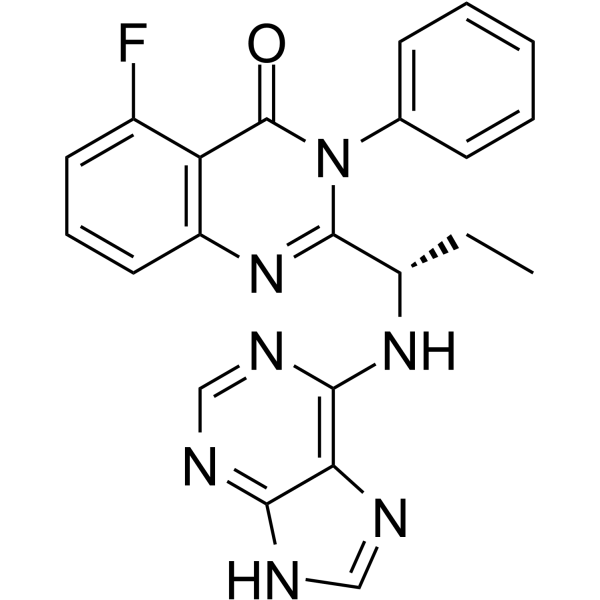
    Idelalisib
    55+ Cited Publications

    CAL-101; GS-1101

    PI3K Autophagy Cancer
    Idelalisib (CAL-101; GS-1101) is a highly selective and orally bioavailable p110δ inhibitor with an IC50 of 2.5 nM, showing 40- to 300-fold selectivity for p110δ over other PI3K class I enzymes.
    Idelalisib
  • HY-15785
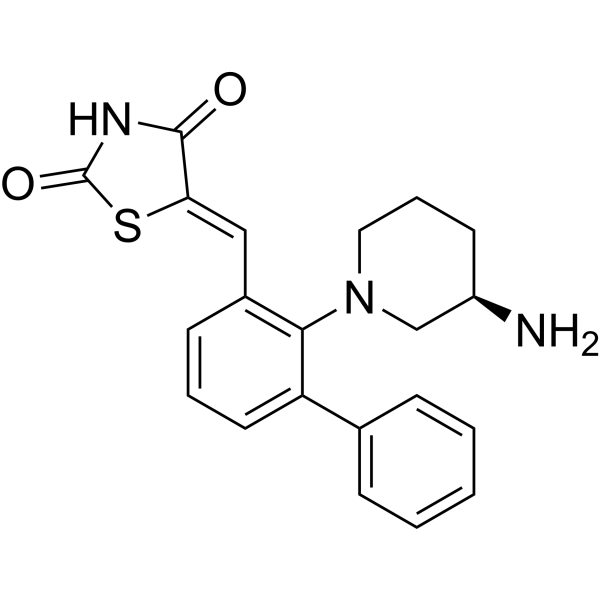
    Pimitespib
    5+ Cited Publications

    TAS-116

    HSP Cancer
    Pimitespib (TAS-116) is an oral bioavailable, ATP-competitive, highly specific HSP90α/HSP90β inhibitor (Kis of 34.7 nM and 21.3 nM, respectively) without inhibiting other HSP90 family proteins such as GRP94 . Pimitespib demonstrates less ocular toxicity .
    Pimitespib
  • HY-13238
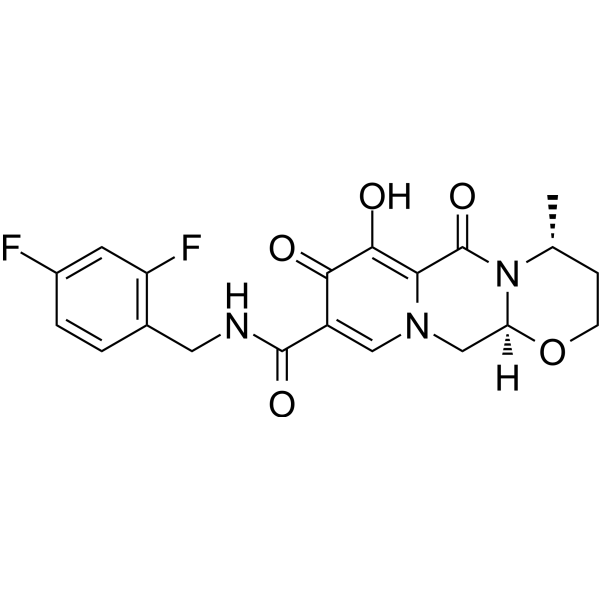
    Dolutegravir
    30+ Cited Publications

    S/GSK1349572

    HIV Integrase HIV Infection
    Dolutegravir (S/GSK1349572) is a highly potent and orally bioavailable HIV integrase strand transfer inhibitor with an IC50 of 2.7 nM for HIV-1 integrase-catalyzed strand transfer. Dolutegravir (S/GSK1349572) inhibits HIV-1 viral replication with an IC50 of 0.51 nM in peripheral blood mononuclear cells. Dolutegravir retains a high potency against the HIV-1 Y143R, N155H, and G140S/Q148H mutants (EC50=3.6-5.8 nM) .
    Dolutegravir
  • HY-15959
    Savolitinib
    5+ Cited Publications

    Volitinib; HMPL-504; AZD-6094

    c-Met/HGFR Cancer
    Savolitinib (AZD-6094) is a potent, highly selective, and orally bioavailable c-Met inhibitor with IC50 s of 5 nM and 3 nM for c-Met and p-Met, respectively. Savolitinib (AZD-6094) selectively binds to and inhibits the activation of c-Met in an ATP-competitive manner, and disrupts c-Met signal transduction pathways. Antineoplastic activity .
    Savolitinib
  • HY-15604
    AZD1208
    20+ Cited Publications

    Pim Autophagy Apoptosis Cancer
    AZD1208 is an orally bioavailable, highly selective PIM kinases inhibitor .
    AZD1208
  • HY-139567
    Afimetoran
    1 Publications Verification

    BMS-986256

    Toll-like Receptor (TLR) NF-κB Apoptosis Inflammation/Immunology
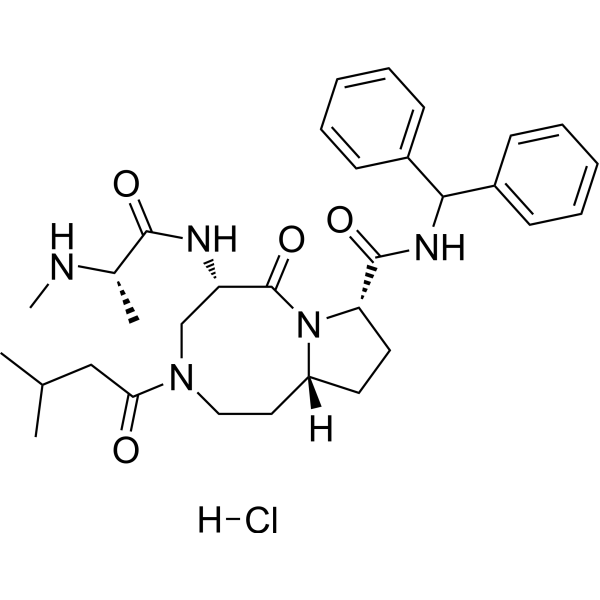
    Afimetoran (BMS-986256) is an orally active, selective, and highly bioavailable TLR7/8 antagonist. Afimetoran (BMS-986256) can inhibit TLR7/8 activation of the NF-κB pathway and reverse TLR7 mediated resistance to steroid induced apoptosis in plasma cell like dendritic cells (pDCs). Afimetoran (BMS-986256) can be used for research on inflammation and autoimmune diseases (systemic lupus erythematosus) .
    Afimetoran
  • HY-16925
    MI-503
    5+ Cited Publications

    Epigenetic Reader Domain Cancer
    MI-503 is a highly potent and orally bioavailable small molecule inhibitor of the menin-mLL interaction.
    MI-503
  • HY-10237
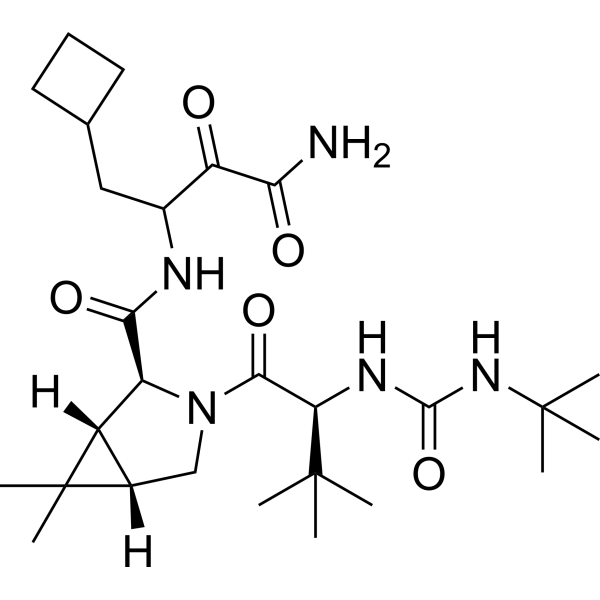
    Boceprevir
    30+ Cited Publications

    EBP 520; SCH 503034

    HCV Protease HCV SARS-CoV Infection
    Boceprevir (EBP 520) is a potent, highly selective, orally bioavailable HCV NS3 protease inhibitor with a Ki of 14 nM in both enzyme assay and an EC90 of 350 nM in cell-based replicon assay . Boceprevir inhibits SARS-CoV-2 3CL pro activity .
    Boceprevir
  • HY-50855B
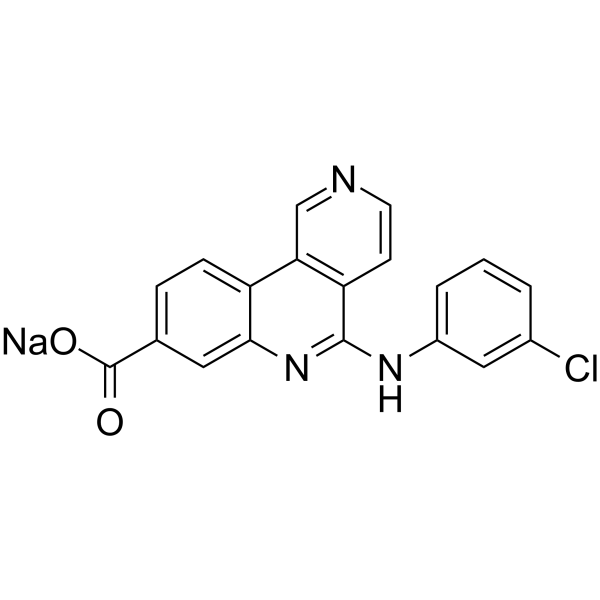
    Silmitasertib sodium salt
    55+ Cited Publications

    CX-4945 sodium salt

    Casein Kinase Autophagy Cancer
    Silmitasertib sodium salt is an orally bioavailable, highly selective and potent CK2 inhibitor, with IC50 values of 1 nM against CK2α and CK2α'.
    Silmitasertib sodium salt
  • HY-101340
    Luvixasertib
    5+ Cited Publications

    CFI-402257

    Mps1 Cancer
    CFI-402257 is a highly selective and orally bioavailable TTK/Mps1 inhibitor with an IC50 of 1.7 nM for TTK in vitro. CFI-402257 has anti-cancer activity .
    Luvixasertib
  • HY-117650A
    RG7834
    5+ Cited Publications

    RO 7020322; (S)-RO0321

    HBV Infection
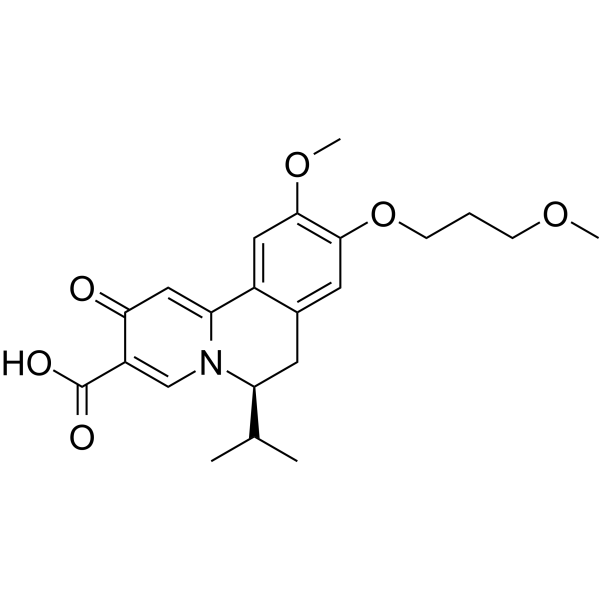
    RG7834 (RO 7020322) is a highly selective and orally bioavailable HBV inhibitor, potently inhibits HBV antigens (both HBsAg and HBeAg) and HBV DNA, with IC50s of 2.8, 2.6, and 3.2 nM, respectively, in dHepaRG Cells .
    RG7834
  • HY-15531S

    ABT-199-d8; GDC-0199-d8; RG7601-d8

    Bcl-2 Family Autophagy Cancer
    Venetoclax-d8 is deuterium labeled Venetoclax. Venetoclax (ABT-199; GDC-0199) is a highly potent, selective and orally bioavailable Bcl-2 inhibitor with a Ki of less than 0.01 nM. Venetoclax induces autophagy .
    Venetoclax-d8
  • HY-120062
    TVB-3664
    5 Publications Verification

    Fatty Acid Synthase (FASN) Cancer
    TVB-3664 is an orally available, reversible, potent, selective and highly bioavailable fatty acid synthase (FASN) inhibitor, with IC50 values of 18 nM and 12 nM for human and mouse cell palmitate synthesis, respectively. TVB-3664 significantly reduces tubulin palmitoylation and mRNA expression .
    TVB-3664
  • HY-13270

    E7010

    Microtubule/Tubulin Autophagy Apoptosis Cancer
    ABT-751 (E7010) is a novel, highly orally bioavailable sulfonamides antimitotic compound and tubulin binder. It prevents tubulin aggregation by binding to the colchicine site on β-tubulin, leading to cell cycle arrest in G2/M phase and inducing apoptosis, thus effectively preventing cell division. ABT-751 induces autophagy by inhibiting the AKT/MTOR signaling pathway. ABT-751 showed significant inhibition against various types of cancer cells, including lung, gastric, colon, and breast cancer .
    ABT-751
  • HY-18658
    Siremadlin
    10+ Cited Publications

    NVP-HDM201; HDM201

    MDM-2/p53 E1/E2/E3 Enzyme Cancer
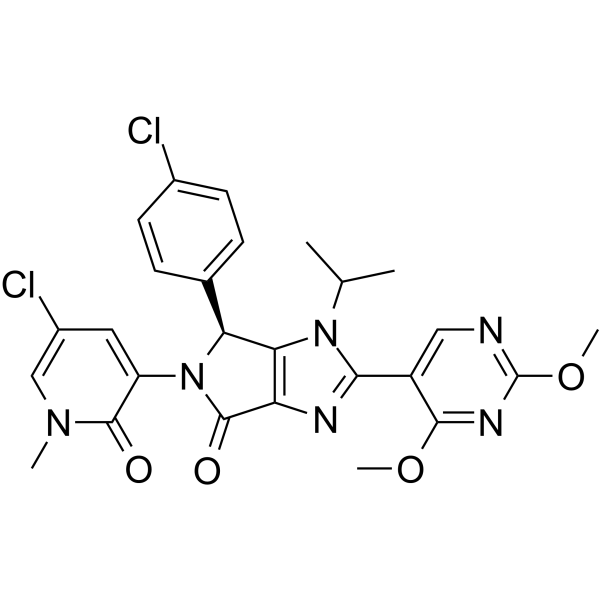
    Siremadlin (NVP-HDM201) is a potent, orally bioavailable and highly specific p53-MDM2 interaction inhibitor.
    Siremadlin
  • HY-10619B
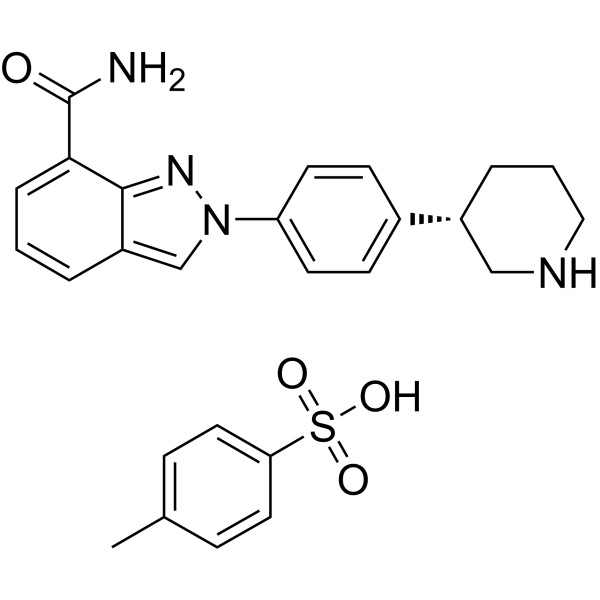
    Niraparib tosylate
    80+ Cited Publications

    MK-4827 tosylate

    PARP Apoptosis Cancer
    Niraparib tosylate (MK-4827 tosylate) is a highly potent and orally bioavailable PARP1 and PARP2 inhibitor with an IC50 of 3.8 and 2.1 nM, respectively. Niraparib tosylate leads to inhibition of repair of DNA damage, activates apoptosis and shows anti-tumor activity .
    Niraparib tosylate
  • HY-10619A
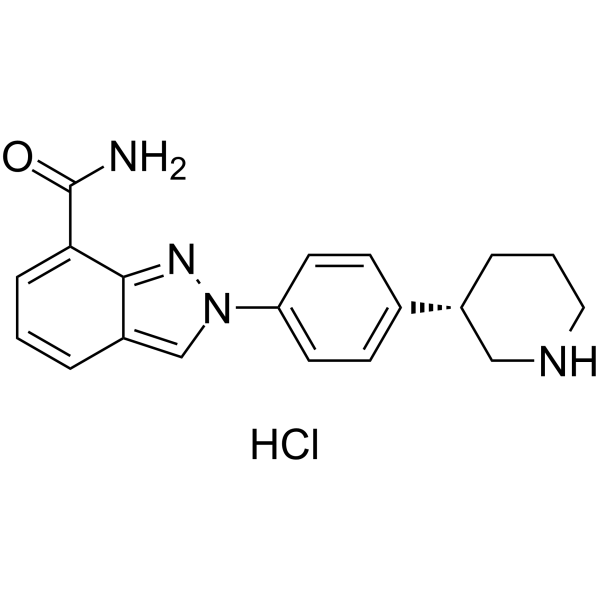
    Niraparib hydrochloride
    80+ Cited Publications

    MK-4827 hydrochloride

    PARP Apoptosis Cancer
    Niraparib hydrochloride (MK-4827 hydrochloride) is a highly potent and orally bioavailable PARP1 and PARP2 inhibitor with IC50s of 3.8 and 2.1 nM, respectively. Niraparib hydrochloride leads to inhibition of repair of DNA damage, activates apoptosis and shows anti-tumor activity .
    Niraparib hydrochloride
  • HY-13238A
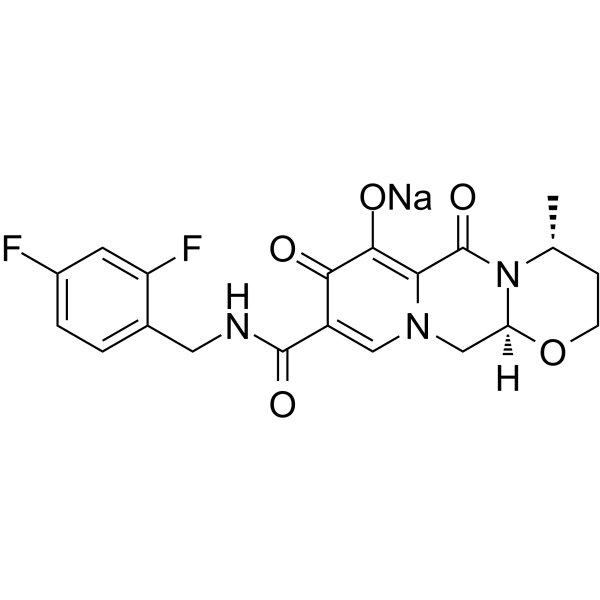
    Dolutegravir sodium
    30+ Cited Publications

    S/GSK1349572 sodium

    HIV Integrase HIV Infection
    Dolutegravir sodium (S/GSK1349572 sodium) is a highly potent and orally bioavailable HIV integrase strand transfer inhibitor with an IC50 of 2.7 nM for HIV-1 integrase-catalyzed strand transfer. Dolutegravir sodium (S/GSK1349572 sodium) inhibits HIV-1 viral replication with an IC50 of 0.51 nM in peripheral blood mononuclear cells. Dolutegravir sodium (S/GSK1349572 sodium) retains a high potency against the HIV-1 Y143R, N155H, and G140S/Q148H mutants (EC50=3.6-5.8 nM) .
    Dolutegravir sodium
  • HY-101800
    Senexin B
    2 Publications Verification

    SNX2-1-165; BCD-115

    CDK Cancer
    Senexin B (SNX2-1-165; BCD-115) is a potent, highly water-soluble and bioavailable CDK8/19 inhibitor, with Kds of 140 nM for CDK8 and 80 nM for CDK19.
    Senexin B
  • HY-10619E
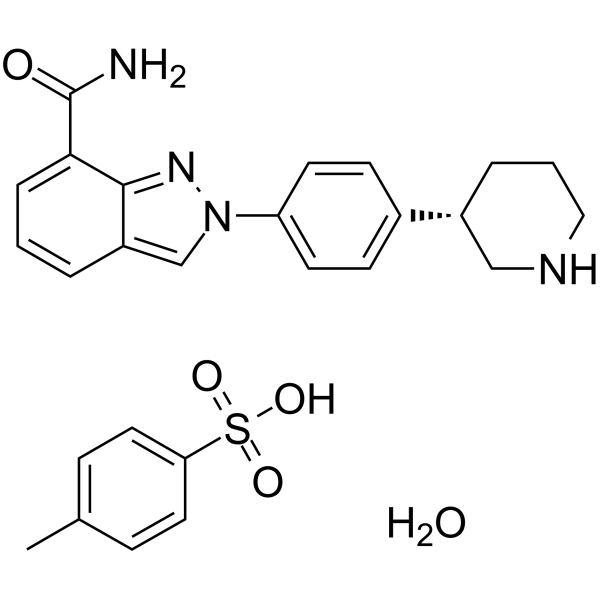
    Niraparib tosylate hydrate
    80+ Cited Publications

    MK-4827 tosylate hydrate

    PARP Apoptosis Cancer
    Niraparib (MK-4827) tosylate hydrate is a highly potent and orally bioavailable PARP1 and PARP2 inhibitor with IC50s of 3.8 and 2.1 nM, respectively. Niraparib tosylate hydrate leads to inhibition of repair of DNA damage, activates apoptosis and shows anti-tumor activity .
    Niraparib tosylate hydrate
  • HY-15531R

    ABT-199 (Standard); GDC-0199 (Standard); RG7601 (Standard)

    Reference Standards Bcl-2 Family Autophagy Cancer
    Venetoclax (Standard) is the analytical standard of Venetoclax. This product is intended for research and analytical applications. Venetoclax (ABT-199; GDC-0199) is a highly potent, selective and orally bioavailable Bcl-2 inhibitor with a Ki of less than 0.01 nM. Venetoclax induces autophagy .
    Venetoclax (Standard)
  • HY-13208
    Xevinapant hydrochloride
    10+ Cited Publications

    AT-406 hydrochloride; Debio 1143 hydrochloride; SM-406 hydrochloride

    IAP Apoptosis Cancer
    Xevinapant (AT-406) hydrochloride is a potent and orally bioavailable Smac mimetic and an antagonist of the inhibitor of apoptosis proteins (IAPs). Xevinapant hydrochloride binds to XIAP, cIAP1, and cIAP2 proteins with Kis of 66.4, 1.9, and 5.1 nM, respectively. Xevinapant hydrochloride effectively antagonizes XIAP BIR3 protein in a cell-free functional assay, induces rapid degradation of cellular cIAP1 protein, and inhibits cancer cell growth in various human cancer cell lines. Xevinapant hydrochloride is highly effective in induction of apoptosis in xenograft tumors .
    Xevinapant hydrochloride
  • HY-W698249

    Ferroptosis Bacterial Cardiovascular Disease Infection
    Ferrous gluconate is a highly water-soluble iron-containing agent with high bioavailability and bactericidal activity. As a non-heme iron, Ferrous gluconate is used for meat product fortification and improvement of iron deficiency anemia. Ferrous gluconate induces ferroptosis in E. coli through Fe 2+ infiltration, reactive oxygen species burst, lipid peroxidation and direct interaction with DNA. Ferrous gluconate also downregulates the SOS responsive transcriptional repressor LexA. In addition, Ferrous gluconate regulates multiple key pathways in E. coli such as fatty acid metabolism, iron-sulfur cluster assembly and pyruvate metabolism, and is applied in studies related to *E. coli* infection and iron deficiency anemia .
    Ferrous gluconate
  • HY-19809
    MI-463
    2 Publications Verification

    Epigenetic Reader Domain Cancer
    MI-463 is a highly potent and orally bioavailable small molecule inhibitor of the menin-mLL interaction.
    MI-463
  • HY-116000
    Glumetinib
    2 Publications Verification

    Gumarontinib; SCC244

    c-Met/HGFR Cancer
    Glumetinib (SCC244) is a highly selective, orally bioavailable, ATP-competitive c-Met inhibitor with an IC50 of 0.42 nM. Glumetinib has greater than 2400-fold selectivity for c-Met over those 312 kinases evaluated, including the c-Met family member RON and highly homologous kinases Axl, Mer, TyrO3. Antitumor activity .
    Glumetinib
  • HY-128570

    Complement System Inflammation/Immunology
    FD-IN-1 (Compound 12) is an orally bioavailable and selective factor D (FD) inhibitor with an IC50 of 12 nM. Complement FD, a highly specific S1 serine protease, plays a central role in the alternative complement pathway of the innate immune system. FD-IN-1 also inhibits factor XIa (FXIa) and Tryptase β2 with IC50s of 7.7 and 6.5 µM, respectively .
    FD-IN-1
  • HY-176533

    LPL Receptor Neurological Disease
    S1PR5-IN-1 (Compound 7a) is a highly selective S1PR5 antagonist and orally bioavailable inhibitor with a human S1PR5 IC50 of 85.4 nM and human S1PR5 Kd of 2.173 nM.S1PR5-IN-1 binds to S1PR5 and inhibits natural killer cell migration toward sphingosine-1-phosphate.S1PR5-IN-1 can be used for the research of multiple sclerosis .
    S1PR5-IN-1
  • HY-18175
    CCT244747
    5 Publications Verification

    Checkpoint Kinase (Chk) Cancer
    CCT244747 is a potent, orally bioavailable and highly selective CHK1 inhibitor, with an IC50 of 7.7 nM; CCT244747 also abrogates G2 checkpoint with an IC50 of 29 nM.
    CCT244747
  • HY-101340A
    Luvixasertib hydrochloride
    5+ Cited Publications

    CFI-402257 hydrochloride

    Mps1 Cancer
    CFI-402257 hydrochloride is a highly selective and orally bioavailable TTK/Mps1 inhibitor with an IC50 of 1.7 nM for TTK in vitro. CFI-402257 hydrochloride has anti-cancer activity .
    Luvixasertib hydrochloride
  • HY-111457A
    BAY-678
    1 Publications Verification

    Elastase Inflammation/Immunology
    BAY-678 is an orally bioavailable, highly potent, selective and cell-permeable inhibitor of human neutrophil elastase (HNE), with an IC50 of 20 nM. BAY-678 is also nominated as a chemical probe to the public via the Structural Genomics Consortium (SGC).
    BAY-678
  • HY-19631A
    Ilginatinib
    1 Publications Verification

    NS-018

    JAK Cancer
    Ilginatinib (NS-018) is a highly active and orally bioavailable JAK2 inhibitor, with an IC50 of 0.72 nM, 46-, 54-, and 31-fold selectivity for JAK2 over JAK1 (IC50, 33 nM), JAK3 (IC50, 39 nM), and Tyk2 (IC50, 22 nM).
    Ilginatinib
  • HY-111790
    M3258
    5 Publications Verification

    Proteasome Apoptosis Cancer
    M3258 is an orally bioavailable, potent, reversible and highly selective immunoproteasome subunit LMP7 (β5i) inhibitor. M3258 exerts high biochemical (IC50=3.6 nM) and cellular (IC50=3.4 nM) potency against the LMP7 subunit. M3258 shows strong antitumor efficacy in multiple myeloma xenograft models. M3258 leads to a significant and prolonged suppression of tumor LMP7 activity and ubiquitinated protein turnover and the induction of apoptosis in multiple myeloma cells .
    M3258
  • HY-141711

    mAChR Neurological Disease
    VU6028418 is a potent, highly selective and orally bioavailable M4 mAChR antagonist with an IC50 of 4.1 nM against hM4 .
    VU6028418
  • HY-107457
    AZD-8529
    1 Publications Verification

    mGluR Neurological Disease
    AZD-8529 is a potent, highly selective and orally bioavailable positive allosteric modulator of mGluR2, with an EC50 of 285 nM, and shows no positive allosteric modulator responses at 20-25 M on the mGluR1, 3, 4, 5, 6, 7, and 8 subtypes.
    AZD-8529
  • HY-19631B
    Ilginatinib hydrochloride
    1 Publications Verification

    NS-018 hydrochloride

    JAK Cancer
    Ilginatinib hydrochloride (NS-018 hydrochloride) is a highly active and orally bioavailable JAK2 inhibitor, with an IC50 of 0.72 nM, 46-, 54-, and 31-fold selectivity for JAK2 over JAK1 (IC50, 33 nM), JAK3 (IC50, 39 nM), and Tyk2 (IC50, 22 nM).
    Ilginatinib hydrochloride
  • HY-19631
    Ilginatinib maleate
    1 Publications Verification

    NS-018 maleate

    JAK Cancer
    Ilginatinib maleate (NS-018 maleate) is a highly active and orally bioavailable JAK2 inhibitor, with an IC50 of 0.72 nM, 46-, 54-, and 31-fold selectivity for JAK2 over JAK1 (IC50, 33 nM), JAK3 (IC50, 39 nM), and Tyk2 (IC50, 22 nM).
    Ilginatinib maleate
  • HY-100886

    PI3K Apoptosis Cancer
    BAY1082439 is an orally bioavailable, selective PI3Kα/β/δ inhibitor. BAY1082439 also inhibits mutated forms of PIK3CA. BAY1082439 is highly effective in inhibiting Pten-null prostate cancer growth .
    BAY1082439
  • HY-132292

    PROTACs Androgen Receptor Cancer
    ARD-2128 is a highly potent, orally bioavailable PROTAC androgen receptor (AR) degrader. ARD-2128 effectively reduces AR protein, suppresses AR-regulated genes in tumor tissues, and inhibits growth of tumor without signs of toxicity. ARD-2128 has the potential for the research of the prostate cancer .
    ARD-2128
  • HY-10302
    MK-3207 Hydrochloride
    5 Publications Verification

    CGRP Receptor Neurological Disease
    MK-3207 (Hydrochloride) is a potent and orally bioavailable CGRP receptor antagonist with IC50 of 0.12 nM and Ki of 0.024 nM, and is highly selective versus human AM1, AM2, CTR, and AMY3.
    MK-3207 Hydrochloride
  • HY-116804

    Histone Methyltransferase Cancer
    ZLD1039 is a potent, highly selective, and orally bioavailable EZH2 inhibitor. ZLD1039 shows potent and concentration-dependent inhibition of PRC2 enzymatic activity against EZH2 wild-type as well as Y641F, and A677G mutant enzymes with IC50 values of 5.6, 15, and 4.0 nM, respectively. ZLD1039 inhibits breast tumor growth and metastasis .
    ZLD1039
  • HY-117482

    γ-secretase Neurological Disease
    BPN-15606 is a highly potent, orally active γ-secretase modulator (GSM), attenuates the production of Aβ42 and Aβ40 by SHSY5Y neuroblastoma cells with IC50 values of 7 nM and 17nM, respectively. BPN-15606 lowers Aβ42 and Aβ40 levels in the central nervous system of rats and mice. BPN-15606 has acceptable PK/PD properties, including bioavailability, half-life, and clearance .
    BPN-15606
  • HY-138563

    Epigenetic Reader Domain Cancer
    GSK973, a chemical probe, is a highly selective, orally bioavailable inhibitor of the BD2s (second bromodomains) of the BET family, with a pIC50 of 7.8 and a pKd of 8.7 for BRD4 BD2. GSK973 displays a 1600-fold selectivity for BRD4 BD2 over BRD4 BD1. GSK973 shows good potency against BRD2 BD2, BRD3 BD2, and BRDT BD2 (pIC50=7.4~7.8; pKd=8.3~8.5) .
    GSK973
  • HY-125879

    PTHR Metabolic Disease Endocrinology
    DS08210767 is a highly potent, orally bioavailable PTHR1 antagonist with IC50 of 90 nM .
    DS08210767
  • HY-10096

    GSK-3 Neurological Disease
    TCS2002 (Compound 9b) is a highly selective, orally bioavailable and potent GSK-3β inhibitor with the IC50 of 35 nM. TCS2002 shows good pharmacokinetic profiles including favorable BBB penetration. TCS2002 can be used for the research of Alzheimer’s disease .
    TCS2002
  • HY-142160

    Raf Cancer
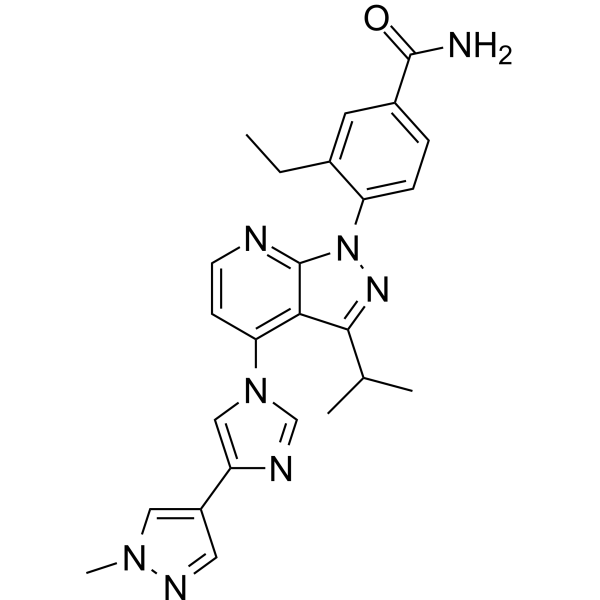
    GNE-9815 (compound 7) is a highly selective, pan-RAF inhibitor with good oral bioavailability. GNE-9815 exhibits Ki values of 0.062 and 0.19 nM for CRAF and BRAF, respectively. GNE-9815 combines with MEK inhibitor Cobimetinib (HY-13064) shows synergistic modulation of MAPK pathway. GNE-9815 can be used in studies of KRAS mutant cancers .
    GNE-9815

Inquiry Online

Your information is safe with us. * Required Fields.

Salutation


Country or Region *

Applicant Name *


Organization Name *

Department *


Email Address *


Product Name *

Cat. No.


Requested quantity *

Phone Number *


Remarks

Inquiry Online

Inquiry Information

Product Name:
Cat. No.:
Quantity:
MCE Japan Authorized Agent:

