1. Search Result
Search Result
Results for "

inflammatory stimuli

" in MedChemExpress (MCE) Product Catalog:

10

Inhibitors & Agonists

1

Screening Libraries

1

Peptides

2

Natural
Products

1

Oligonucleotides

Cat. No. Product Name Target Research Areas Chemical Structure
  • HY-N2543
    Damascenone
    1 Publications Verification

    (E/Z)-Damascenone

    Environmental Pollutants Endogenous Metabolite NF-κB Inflammation/Immunology
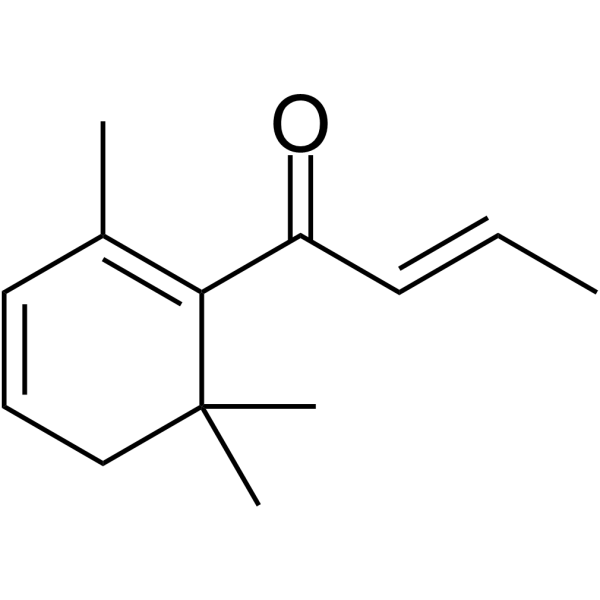
    Damascenone ((E/Z)-Damascenone) is an active compound of Epipremnum pinnatum with anti-inflammatory activity . Damascenone is a mixture complex of E-isomer-Damascenone and Z-isomer Damascenone.
    Damascenone
  • HY-149143
    JNJ-28583113
    5 Publications Verification

    TRP Channel Inflammation/Immunology
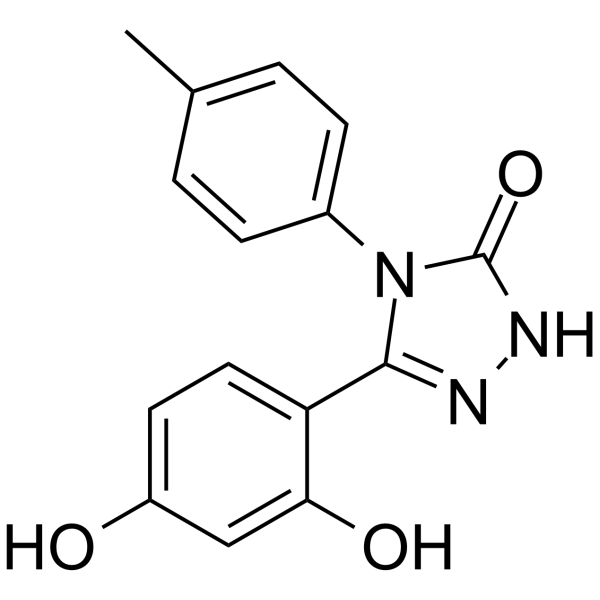
    JNJ-28583113 is an TRPM2 antagonist with brain permeability. JNJ-28583113 inhibits TRPM2 blocked phosphorylation of GSK3α and β subunits. JNJ-28583113 protects cells from oxidative stress induced cell death. JNJ-28583113 also suppresses cytokine release in response to pro-inflammatory stimuli in microglia .
    JNJ-28583113
  • HY-112825

    Platelet-activating Factor Receptor (PAFR) Inflammation/Immunology
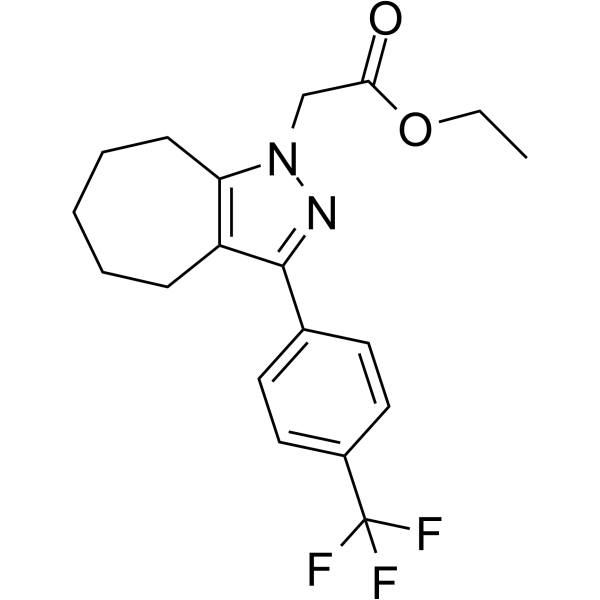
    TSI-01 is a pro-inflammatory phospholipid mediator that is rapidly synthesized by lyso-PAF acetyltransferase (lyso-PAFAT) in response to extracellular stimuli. Two types of lyso-PAFAT have been identified: lysophosphatidylcholine acyltransferase (LPCAT)1, which is mostly expressed in the lungs, and LPCAT2, which is expressed in inflammatory cells. TSI-01 is a selective inhibitor of LPCAT2 (IC50s=0.47 versus 3.02 μM for human LPCAT2 and LPCAT1, respectively). 60 μM it is shown to suppress PAF biosynthesis in mouse peritoneal macrophages stimulated with a calcium ionophore.
    TSI-01
  • HY-128578
    KPLH1130
    2 Publications Verification

    PDHK NO Synthase Interleukin Related HIF/HIF Prolyl-Hydroxylase Metabolic Disease Inflammation/Immunology
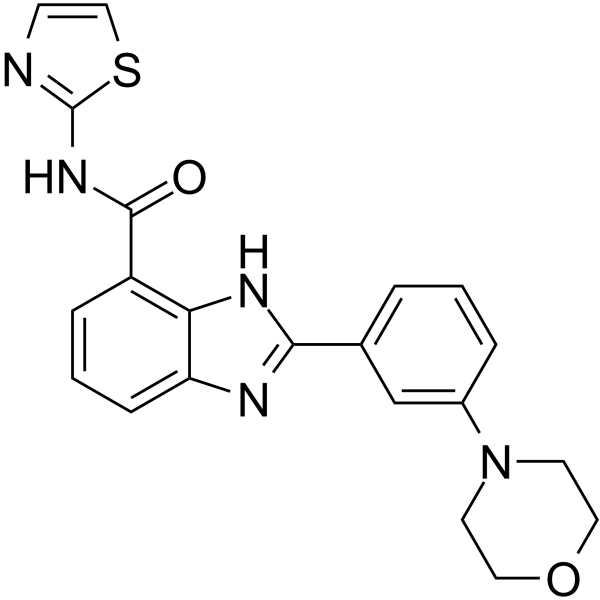
    KPLH1130 is a pyruvate dehydrogenase kinase (PDK) inhibitor. KPLH1130 potently inhibits M1 macrophage polarization by reducing the expression of pro-inflammatory cytokines, decreasing the levels of M1 phenotype markers (HIF-1α, iNOS) and nitric oxide (NO) production. KPLH1130 prevents the reduction of mitochondrial oxygen consumption rate (OCR) induced by inflammatory stimuli (LPS ((HY-D1056) + IFN-γ) in various macrophage types. KPLH1130 improves glucose tolerance in HFD-fed mice. KPLH1130 can be used for the study of obesity-associated metabolic disorders and other inflammatory conditions .
    KPLH1130
  • HY-N2543R

    (E/Z)-Damascenone (Standard)

    Reference Standards NF-κB Endogenous Metabolite Inflammation/Immunology
    Damascenone (Standard) is the analytical standard of Damascenone. This product is intended for research and analytical applications. Damascenone ((E/Z)-Damascenone) is an active compound of Epipremnum pinnatum with anti-inflammatory activity . Damascenone is a mixture complex of E-isomer-Damascenone and Z-isomer Damascenone.
    Damascenone (Standard)
  • HY-106981

    OR 1384

    NADPH Oxidase Reactive Oxygen Species (ROS) Apoptosis NF-κB NO Synthase STAT Inflammation/Immunology
    Orazipone (OR 1384) is a small molecule immunomodulator with strong anti-inflammatory properties. Orazipone exerts its immunomodulatory effect by forming reversible thiol complexes, which bind to intracellular signaling proteins and the thiol groups of glutathione. Orazipone exhibits potent anti-eosinophilic activity by inducing apoptosis. Orazipone inhibits activation of inflammatory transcription factors NF-kB and STAT 1 and decreases inducible iNOS expression and NO production in response to inflammatory stimuli. Orazipone reduces NADPH oxidase activity and thereby decreases ROS production. Orazipone has a protective effect in intestinal radiation injury .
    Orazipone
  • HY-174569

    mRNA Inflammation/Immunology
    Human NFKB1 mRNA encodes the human nuclear factor kappa B subunit 1 (NFKB1) protein, a transcription regulator that is activated by various intra- and extra-cellular stimuli such as cytokines, oxidant-free radicals, ultraviolet irradiation, and bacterial or viral products. Inappropriate activation of NFKB has been associated with a number of inflammatory diseases while persistent inhibition of NFKB leads to inappropriate immune cell development or delayed cell growth. NFKB is a critical regulator of the immediate-early response to viral infection.
    Human NFKB1 mRNA
  • HY-114981

    Sirtuin Inflammation/Immunology
    SRTCX1002 is a potent activator of SIRT1 (STAC), suppresses inflammatory responses through promotion of p65 deacetylation and inhibition of NF-κB Activity. SRTCX1002 suppresses stimuli-induced NF-κB transcriptional activation and LPS-induced TNFα secretion with IC50s of 0.71 and 7.58 µM, respectively .
    SRTCX1002
  • HY-P10464

    TRP Channel Neurological Disease Inflammation/Immunology
    TAT-AKAP79 326-336 is a cytoosmotic peptide. TAT-AKAP79 326-336 mimics a specific region on the AKAP79 protein that binds to TRPV1 ion channels (amino acid sequence 326-336). TAT-AKAP79 326-336 inhibits the sensitization of TRPV1 and reduce the overresponse of TRPV1 channels to stimuli caused by the activation of cellular kinases such as protein kinase A (PKA) and protein kinase C (PKC) by inflammatory mediators. TAT-AKAP79 326-336 can be used to study the mechanism of pain transduction and inflammatory hyperalgesia .
    Tat-AKAP79 (326-336)
  • HY-105628

    CI-427

    Others Neurological Disease Inflammation/Immunology
    Prodilidine (CI-427) is an orally active, pyrrolidine-derived non-narcotic pain inhibitor. Prodilidine exerts analgesic activity against various nociceptive stimuli, and shows no antipyretic, anti-inflammatory or respiratory depressive effects. Prodilidine fails to inhibit withdrawal symptoms of addictive agents in monkeys, but exhibits excitatory effects and enhances the crossed extensor reflex at toxic doses. Prodilidine is well absorbed from the gastrointestinal tract and metabolized via hepatic microsomal N-demethylation, displaying isomer-specific activity, toxicity and metabolic characteristics. Prodilidine can be used in research related to chronic pain (e.g., cancer-, musculoskeletal/arthritis-derived), traumatic pain and arthritic pain .
    Prodilidine

Inquiry Online

Your information is safe with us. * Required Fields.

Salutation


Country or Region *

Applicant Name *


Organization Name *

Department *


Email Address *


Product Name *

Cat. No.


Requested quantity *

Phone Number *


Remarks

Inquiry Online

Inquiry Information

Product Name:
Cat. No.:
Quantity:
MCE Japan Authorized Agent:

