1. Search Result
Search Result
Results for "

intestinal processing

" in MedChemExpress (MCE) Product Catalog:

15

Inhibitors & Agonists

1

Screening Libraries

1

Peptides

5

Natural
Products

2

Isotope-Labeled Compounds

Cat. No. Product Name Target Research Areas Chemical Structure
  • HY-W013061

    Endogenous Metabolite Metabolic Disease
    Propane-1,2,3-triyl tripalmitate is a saturated fat. Propane-1,2,3-triyl tripalmitate enhances the lymphatic transport of Glycerol tristearate (HY-127035) .
    Propane-1,2,3-triyl tripalmitate
  • HY-78726
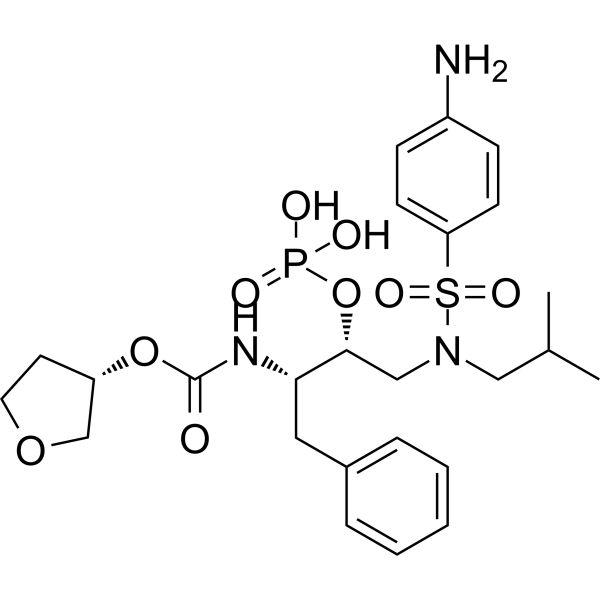
    Fosamprenavir
    4 Publications Verification

    Amprenavir phosphate; GW 433908

    Drug Intermediate HIV HIV Protease Infection
    Fosamprenavir is an orally active inhibitor targeting HIV-1 protease and is a prodrug of Amprenavir (HY-17430). Fosamprenavir is hydrolyzed into Amprenavir (VX-478) by cell phosphatases in the intestinal epithelium. Amprenavir binds to the active site of HIV-1 protease, preventing the processing of viral gag and gag-pol polyprotein precursors, thereby inhibiting the formation of mature infectious virus particles and exerting anti-HIV-1 infection activity. Fosamprenavir can be used for the study of human immunodeficiency virus (HIV-1) infection .
    Fosamprenavir
  • HY-119826

    WIN-40014

    Parasite Infection
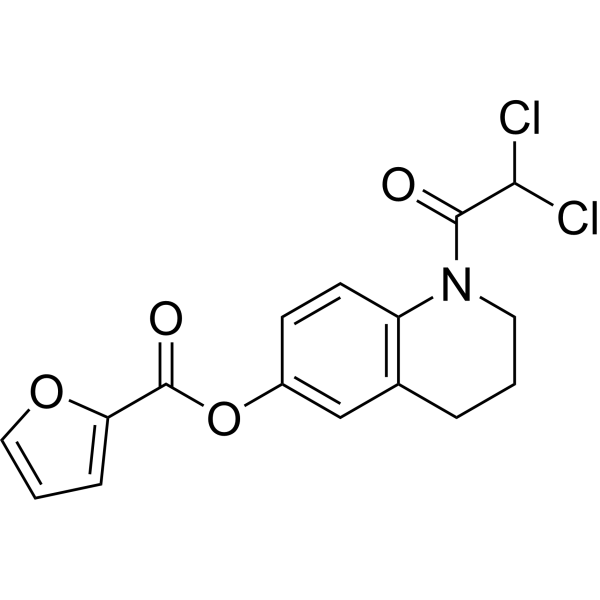
    Quinfamide (WIN-40014) is an orally active class of dichloroacetyl derivative with significant anti-intestinal protozoan, particularly mmoeba histolytica activity. Quinfamide exhibits antiamoebic activity under solvent-free conditions with an IC50 of 28.15 μg/mL in a suspension condition. Quinfamide particles are actively engulfed by the amoebas, then cells are affected, and finally, amoebas are killed and lysed, and this process directly relies on the physical intake of the drug particles. Quinfamide can be used in the research of tropical parasitic infections such as amoebiasis and helminthiasis .
    Quinfamide
  • HY-17431
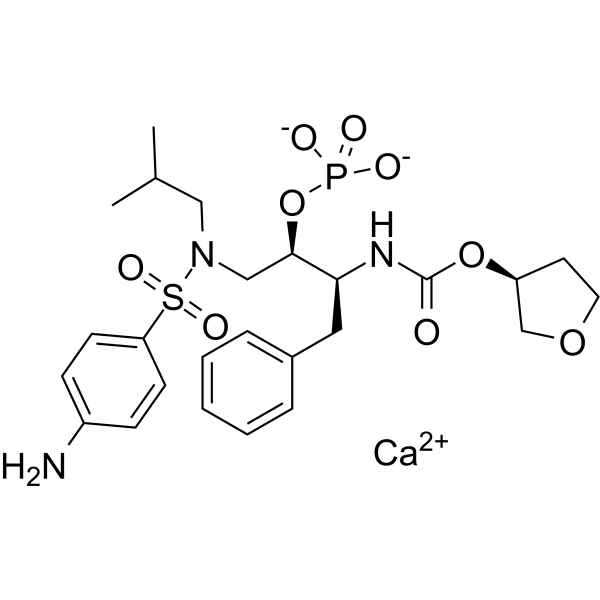
    Fosamprenavir Calcium Salt
    4 Publications Verification

    GW433908G

    Drug Intermediate HIV HIV Protease Infection
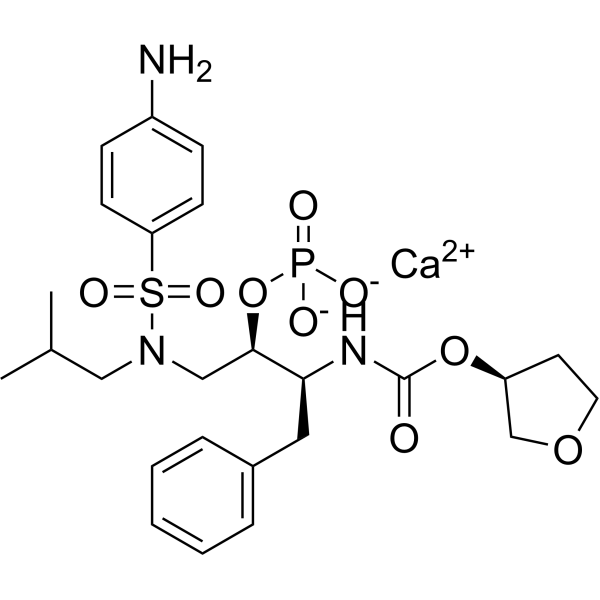
    Fosamprenavir Calcium Salt (GW433908G) is an orally active inhibitor targeting HIV-1 protease and is a prodrug of Amprenavir (HY-17430). Fosamprenavir Calcium Salt is hydrolyzed into Amprenavir (VX-478) by cell phosphatases in the intestinal epithelium. Amprenavir binds to the active site of HIV-1 protease, preventing the processing of viral gag and gag-pol polyprotein precursors, thereby inhibiting the formation of mature infectious virus particles and exerting anti-HIV-1 infection activity. Fosamprenavir Calcium Salt can be used for the study of human immunodeficiency virus (HIV-1) infection .
    Fosamprenavir Calcium Salt
  • HY-155801

    Toll-like Receptor (TLR) NF-κB TNF Receptor MyD88 Apoptosis DNA/RNA Synthesis Cardiovascular Disease Infection Neurological Disease Inflammation/Immunology Cancer
    CRX 527 is a TLR4 agonist. CRX 527 activates the MyD88-dependent, TRIF-dependent, and TRAF6/NF-κB signaling pathways downstream of TLR4, mimics lipid A, and regulates antigen processing and presentation by dendritic cells. CRX 527 stimulates innate immune responses and enhances vaccine efficacy. CRX 527 maintains the structural integrity of hematopoietic tissues, spleen and intestine, alleviates radiation-induced damage, preserves intestinal homeostasis, and inhibits apoptosis, inflammatory responses, oxidative stress and DNA damage. CRX 527 can be used in the research of acute radiation syndrome, melanoma, HPV-related tumors and intracerebral hemorrhage .
    CRX 527
  • HY-130046

    16-epi-Estriol; 16β,17β-Estriol

    UGT Bacterial Infection Inflammation/Immunology
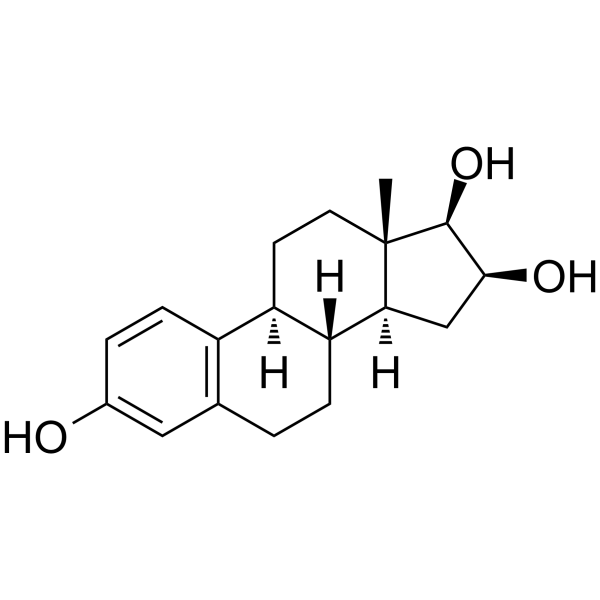
    16-Epiestriol (16-epi-Estriol; 16β,17β-Estriol) is a natural stereoisomer of estriol and an anti-inflammatory agent that targets UGT. The Ki values of 16-Epiestriol against human UGT1A10 and UGT2B7 are 98.1 μM and 162 μM, respectively. As a glucuronidation substrate, 16-Epiestriol can be modified at the 3-OH, 16-OH and 17-OH sites by various UGT enzymes; in liver microsomes, the modification mainly occurs at the 16-OH and 17-OH sites, while reactions take place at all three sites in intestinal microsomes. 16-Epiestriol acts on the phase II inflammatory process by blocking edema mediated by prostaglandins and leukocyte infiltration. It lacks glycogenic activity or any effect on blood glucose levels, and serves as an important candidate molecule in the research of inflammatory diseases .
    16-Epiestriol
  • HY-78726S

    Amprenavir phosphate-d4; GW 433908-d4

    Isotope-Labeled Compounds Drug Intermediate HIV HIV Protease Infection
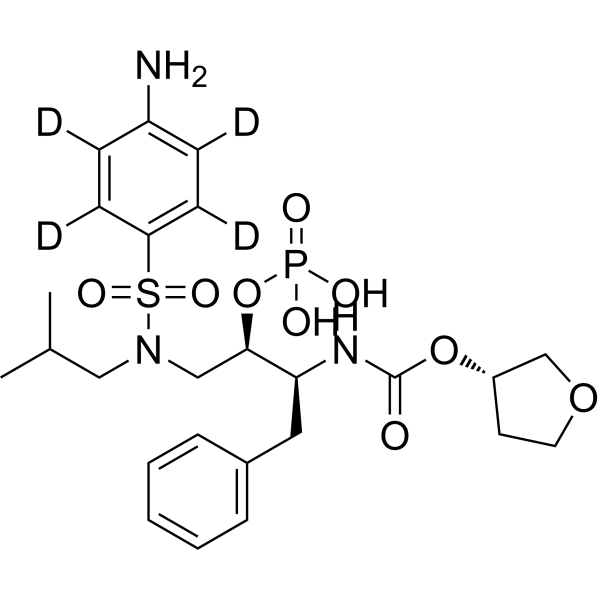
    Fosamprenavir-d4 is the Deuterium-labeled Fosamprenavir (HY-78726). Fosamprenavir is an orally active inhibitor targeting HIV-1 protease and is a prodrug of Amprenavir (HY-17430). Fosamprenavir is hydrolyzed into Amprenavir (VX-478) by cell phosphatases in the intestinal epithelium. Amprenavir binds to the active site of HIV-1 protease, preventing the processing of viral gag and gag-pol polyprotein precursors, thereby inhibiting the formation of mature infectious virus particles and exerting anti-HIV-1 infection activity. Fosamprenavir can be used for the study of human immunodeficiency virus (HIV-1) infection .
    Fosamprenavir-d4
  • HY-N16479

    Insecticide Infection
    Azadirachtin I is an insecticide targeting insect growth and development-related pathways (e.g., ecdysone signaling pathway, chitin synthesis pathway). Azadirachtin I inhibits chitin synthesis and disrupting intestinal function by interfering with the growth and development processes of insect larvae such as molting and pupation, increasing insect mortality and reducing adult fecundity. Azadirachtin I is promising for research of agricultural pests, such as Lepidoptera, Coleoptera .
    Azadirachtin I
  • HY-78726A

    Amprenavir phosphate sodium; GW 433908 sodium

    Drug Intermediate HIV HIV Protease Infection
    Fosamprenavir sodium is an orally active inhibitor targeting HIV-1 protease and is a prodrug of Amprenavir (HY-17430). Fosamprenavir sodium is hydrolyzed into Amprenavir (VX-478) by cell phosphatases in the intestinal epithelium. Amprenavir binds to the active site of HIV-1 protease, preventing the processing of viral gag and gag-pol polyprotein precursors, thereby inhibiting the formation of mature infectious virus particles and exerting anti-HIV-1 infection activity. Fosamprenavir sodium can be used for the study of human immunodeficiency virus (HIV-1) infection .
    Fosamprenavir sodium
  • HY-78726S2

    Amprenavir phosphate-13C6; GW 433908-13C6

    Isotope-Labeled Compounds Drug Intermediate HIV HIV Protease Infection
    Fosamprenavir- 13C6 is the 13C-labeled Fosamprenavir (HY-78726). Fosamprenavir is an orally active inhibitor targeting HIV-1 protease and is a prodrug of Amprenavir (HY-17430). Fosamprenavir is hydrolyzed into Amprenavir (VX-478) by cell phosphatases in the intestinal epithelium. Amprenavir binds to the active site of HIV-1 protease, preventing the processing of viral gag and gag-pol polyprotein precursors, thereby inhibiting the formation of mature infectious virus particles and exerting anti-HIV-1 infection activity. Fosamprenavir can be used for the study of human immunodeficiency virus (HIV-1) infection .
    Fosamprenavir-13C6
  • HY-17431R

    GW433908G (Standard)

    Reference Standards Drug Intermediate HIV HIV Protease Infection
    Fosamprenavir Calcium Salt (GW433908G) (Standard) is the analytical standard of Fosamprenavir Calcium Salt (HY-17431R). This product is intended for research and analytical applications. Fosamprenavir Calcium Salt (GW433908G) is an orally active inhibitor targeting HIV-1 protease and is a prodrug of Amprenavir (HY-17430). Fosamprenavir Calcium Salt is hydrolyzed into Amprenavir (VX-478) by cell phosphatases in the intestinal epithelium. Amprenavir binds to the active site of HIV-1 protease, preventing the processing of viral gag and gag-pol polyprotein precursors, thereby inhibiting the formation of mature infectious virus particles and exerting anti-HIV-1 infection activity. Fosamprenavir Calcium Salt can be used for the study of human immunodeficiency virus (HIV-1) infection .
    Fosamprenavir Calcium Salt (Standard)
  • HY-E70968

    Endogenous Metabolite Metabolic Disease
    Enterokinase, Porcine (EC 3.4.21.9), is an enzyme produced by duodenal cells and participates in the digestive process in humans and animals. Enterokinase converts trypsinogen (an enzyme precursor) into its active form, trypsin, thereby activating pancreatic digestive enzymes. Deficiency of enterokinase can lead to intestinal digestive dysfunction.
    Enterokinase, Porcine
  • HY-114118F4

    Semaglutide-Lys(FITC)

    Fluorescent Dye GLP Receptor Metabolic Disease
    Semaglutide-FITC (Semaglutide-Lys(FITC)) is a FITC-labeled Semaglutide (a GLP-1R agonist) (HY-114118). Semaglutide-FITC can be used to directly track the distribution, cellular uptake, and transmembrane transport process of vesicles through techniques such as fluorescence imaging and flow cytometry. Semaglutide-FITC can be employed to study the movement and penetration ability of mixed vesicles in porcine intestinal mucus in vitro .
    Semaglutide-FITC
  • HY-W854443

    6-Deoxy-L-galactopyranose

    Endogenous Metabolite Inflammation/Immunology Cancer
    L-Fucose (6-Deoxy-L-galactopyranose) is an orally active dietary sugar. L-Fucose is one of the key metabolites involved in the interaction between humans and the intestinal microbiota. L-Fucose binds to proteins as a post-translational modification through the fucosylation process, thereby regulating the behavior and function of proteins. L-Fucose has shown the ability to inhibit tumor growth and increase the infiltration of immune cells within tumors. L-Fucose can be used in cancer and anti-tumor immune research .
    L-Fucose
  • HY-130046R

    16-epi-Estriol (Standard); 16β,17β-Estriol (Standard)

    Endogenous Metabolite Reference Standards Bacterial Infection Inflammation/Immunology
    16-Epiestriol (Standard) is the analytical standard of 16-Epiestriol (HY-130046). This product is intended for research and analytical applications. 16-Epiestriol (16-epi-Estriol; 16β,17β-Estriol) is a natural stereoisomer of estriol and an anti-inflammatory agent that targets UGT. The Ki values of 16-Epiestriol against human UGT1A10 and UGT2B7 are 98.1 μM and 162 μM, respectively. As a glucuronidation substrate, 16-Epiestriol can be modified at the 3-OH, 16-OH and 17-OH sites by various UGT enzymes; in liver microsomes, the modification mainly occurs at the 16-OH and 17-OH sites, while reactions take place at all three sites in intestinal microsomes. 16-Epiestriol acts on the phase II inflammatory process by blocking edema mediated by prostaglandins and leukocyte infiltration. It lacks glycogenic activity or any effect on blood glucose levels, and serves as an important candidate molecule in the research of inflammatory diseases .
    16-Epiestriol (Standard)

Inquiry Online

Your information is safe with us. * Required Fields.

Salutation


Country or Region *

Applicant Name *


Organization Name *

Department *


Email Address *


Product Name *

Cat. No.


Requested quantity *

Phone Number *


Remarks

Inquiry Online

Inquiry Information

Product Name:
Cat. No.:
Quantity:
MCE Japan Authorized Agent:

