18 Results for "

late sodium current

" in MedChemExpress (MCE) Product Catalog:
Products (18)

18 Results for "late sodium current" in MCE Product Catalog:

9
9 Publications Verification
Cat. No.: HY-12593
CAS No.: 1262618-39-2
Purity:  99.55%
Target:  

Sodium Channel

Research Areas:  

Cardiovascular Disease

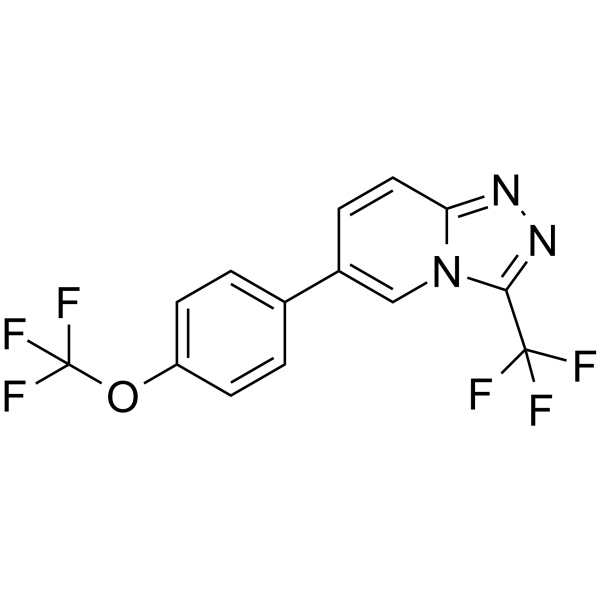
GS967 (GS-458967) is a potent, and selective inhibitor of cardiac late sodium current (late INa ) with IC50 values of 0.13 and 0.21 μM for ventricular myocytes and isolated hearts, respectively.
loading...
    loading...
5
5 Cited Publications
Cat. No.: HY-B0280
CAS No.: 95635-55-5
Synonyms: CVT 303; RS 43285-003
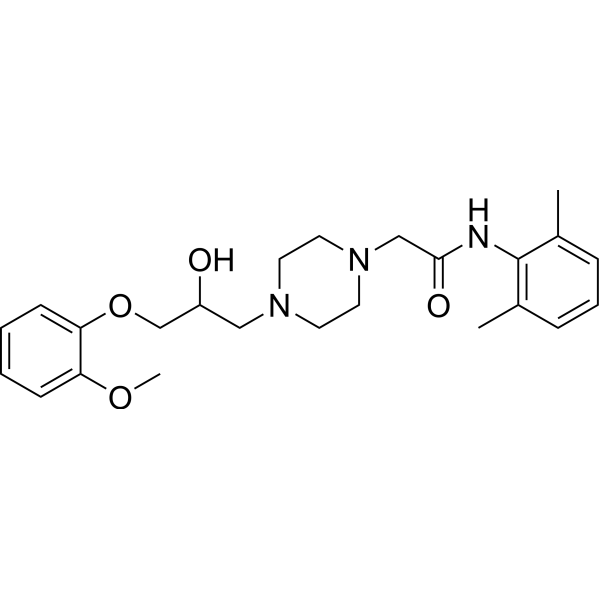
Ranolazine (CVT 303) is an anti-angina drug that achieves its effects by inhibiting the late phase of inward sodium current (INa and IKr with IC50 values of 6 μM and 12 μM, respectively) without affecting heart rate or blood pressure (BP) . Ranolazine is also a partial fatty acid oxidation (FAO) inhibitor . Antianginal agent.
loading...
    loading...
5
5 Cited Publications
Cat. No.: HY-17401
CAS No.: 95635-56-6
Synonyms: CVT 303 dihydrochloride; RS 43285
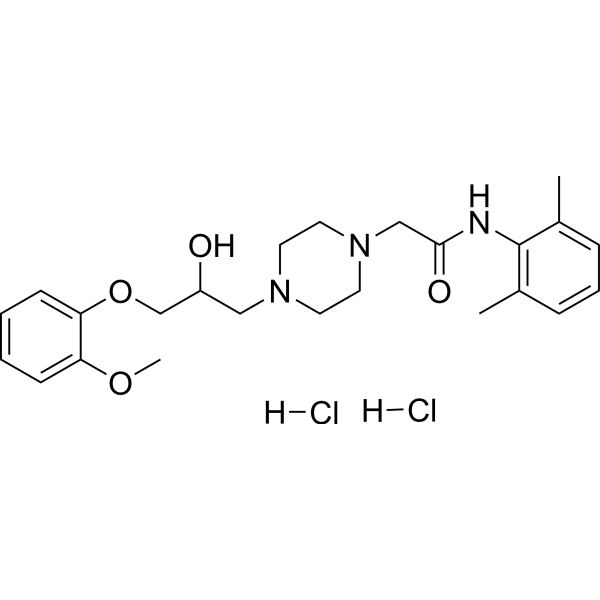
Ranolazine dihydrochloride (CVT 303 dihydrochloride) is an anti-angina agent that achieves its effects by inhibiting the late phase of inward sodium current (INa and IKr with IC50 values of 6 μM and 12 μM, respectively) without affecting heart rate or blood pressure (BP) . Ranolazine dihydrochloride is also a partial fatty acid oxidation inhibitor .
loading...
    loading...
2
2 Cited Publications
Cat. No.: HY-16738A
CAS No.: 1448754-43-5
Synonyms: GS 6615 hydrochloride
Research Areas:  

Cardiovascular Disease

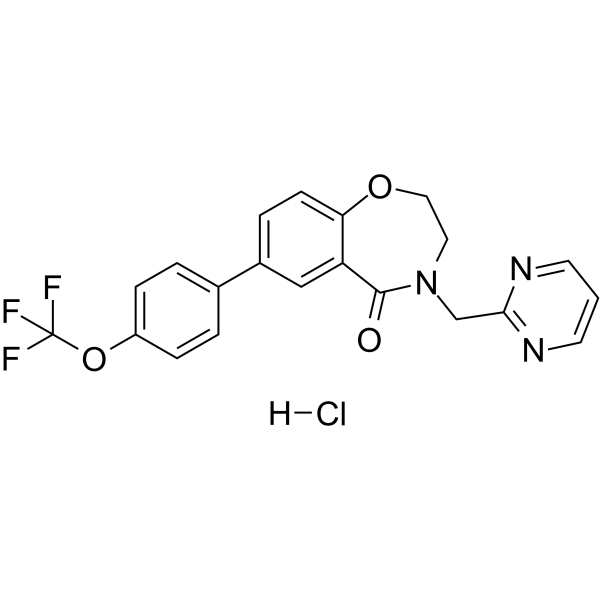
Eleclazine (GS 6615) hydrochloride is a selective cardiac late sodium current inhibitor and a weak inhibitor of potassium current with IC50 value of <1 μM and approximately 14.2 μM, respectively. Eleclazine hydrochloride shows concurrent protection against autonomically induced atrial premature beats, repolarization alternans and heterogeneity, and atrial fibrillation in porcine model. Eleclazine hydrochloride can be used to research cardiac arrhythmias .
loading...
    loading...
2
2 Cited Publications
Cat. No.: HY-16738
CAS No.: 1443211-72-0
Synonyms: GS-6615
Research Areas:  

Cardiovascular Disease

Eleclazine (GS 6615) is a selective cardiac late sodium current inhibitor and a weak inhibitor of potassium current with IC50 of <1 μM and approximately 14.2 μM, respectively. Eleclazine shows concurrent protection against autonomically induced atrial premature beats, repolarization alternans and heterogeneity, and atrial fibrillation in porcine model. Eleclazine can be used to research cardiac arrhythmias .
loading...
    loading...
1
1 Cited Publications
Cat. No.: HY-P1604
CAS No.: 60748-45-0
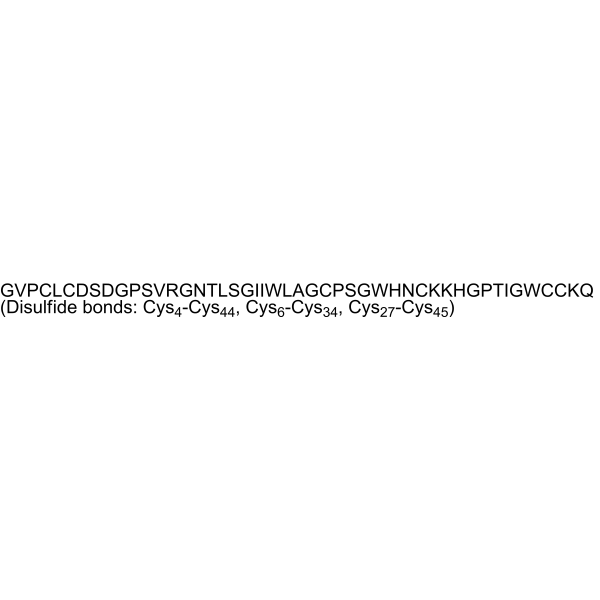
ATX-II is a selective sodium channel modulator toxin. ATX-II enhances late sodium current, prevents full sodium channel inactivation, and generates persistent current fractions. ATX-II has pro-arrhythmic effect. ATX-II slows intrinsic heart rate, prolongs QT interval and sinus node recovery time, and causes sinus pauses and arrests. ATX-II can be used for the research of atrial fibrillation, long QT syndrome, and long QT3 syndrome .
loading...
    loading...
1
1 Cited Publications
Cat. No.: HY-P1604A
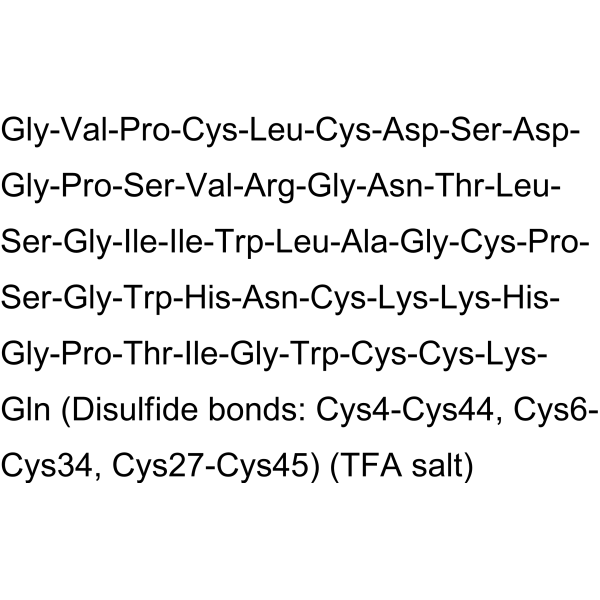
ATX-II TFA is a selective sodium channel modulator toxin. ATX-II TFA enhances late sodium current, prevents full sodium channel inactivation, and generates persistent current fractions. ATX-II TFA has pro-arrhythmic effect. ATX-II TFA slows intrinsic heart rate, prolongs QT interval and sinus node recovery time, and causes sinus pauses and arrests. ATX-II TFA can be used for the research of atrial fibrillation, long QT syndrome, and long QT3 syndrome .
loading...
    loading...
Cat. No.: HY-120774
CAS No.: 1354198-41-6
Target:  

Sodium Channel

Research Areas:  

Cardiovascular Disease

GS-462808 is an oral active late sodium current inhibitor (Late INai) of the cardiac Nav1.5 channel with the IC50 of 1.33 μM. GS-462808 can be used for study of arrhythmia .
loading...
    loading...
Cat. No.: HY-17401S
CAS No.: 1219802-60-4
Synonyms: CVT 303-d8 dihydrochloride; RS 43285-d8
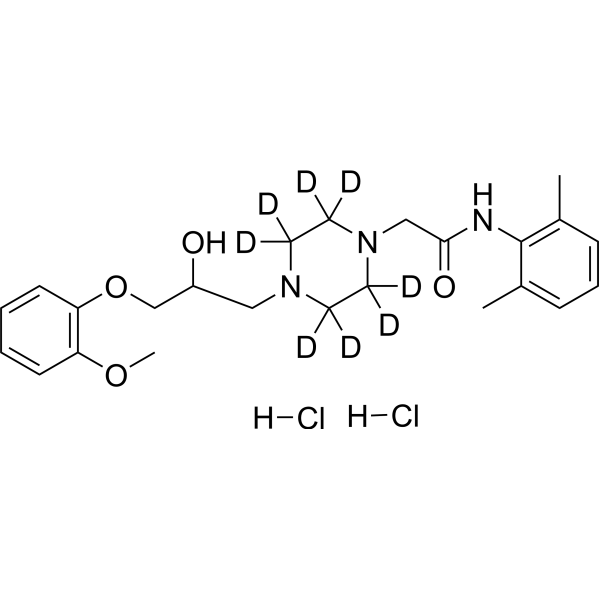
Ranolazine-d8 (dihydrochloride) is the deuterium labeled Ranolazine dihydrochloride. Ranolazine dihydrochloride (CVT 303 dihydrochloride) is an anti-angina agent that achieves its effects by inhibiting the late phase of inward sodium current (INa and IKr with IC50 values of 6 μM and 12 μM, respectively) without affecting heart rate or blood pressure (BP) . Ranolazine dihydrochloride is also a partial fatty acid oxidation inhibitor .
loading...
    loading...
Cat. No.: HY-B0280S1
CAS No.: 1092804-88-0
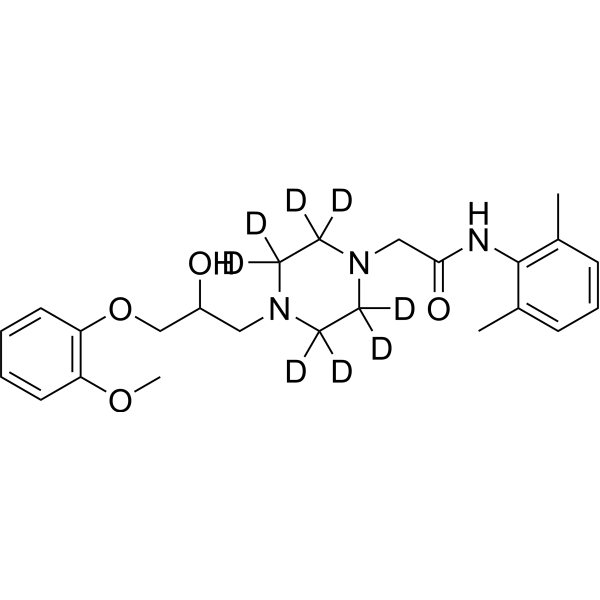
Ranolazine-d8 is the deuterium labeled Ranolazine. Ranolazine (CVT 303) is an anti-angina agent that achieves its effects by inhibiting the late phase of inward sodium current (INa and IKr with IC50 values of 6 μM and 12 μM, respectively) without affecting heart rate or blood pressure (BP) . Ranolazine is also a partial fatty acid oxidation (FAO) inhibitor . Antianginal agent.
loading...
    loading...
Cat. No.: HY-B0280S2
CAS No.: 1054624-77-9
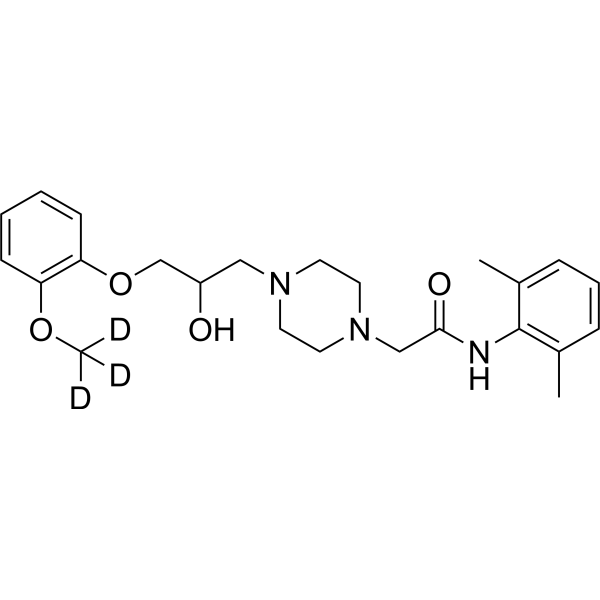
Ranolazine-d3 is the deuterium labeled Ranolazine. Ranolazine (CVT 303) is an anti-angina agent that achieves its effects by inhibiting the late phase of inward sodium current (INa and IKr with IC50 values of 6 μM and 12 μM, respectively) without affecting heart rate or blood pressure (BP) . Ranolazine is also a partial fatty acid oxidation (FAO) inhibitor . Antianginal agent.
loading...
    loading...
Cat. No.: HY-B0280S
CAS No.: 1092804-87-9
Synonyms: CVT 303-d5; RS 43285-003-d5
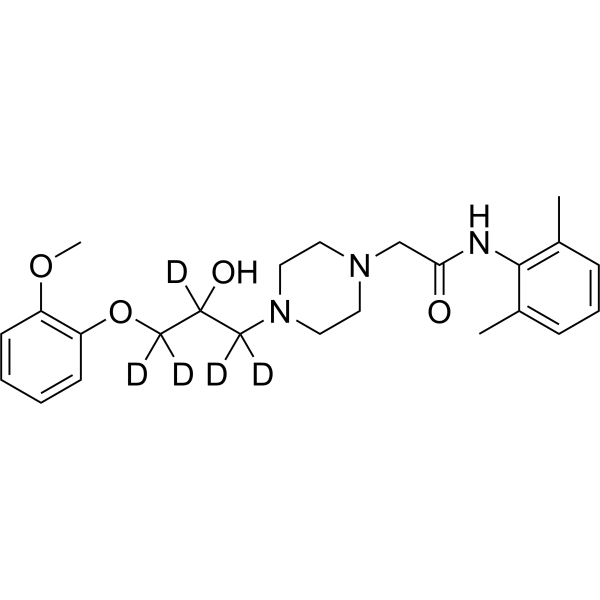
Ranolazine-d5 is the deuterium labeled Ranolazine. Ranolazine (CVT 303) is an anti-angina drug that achieves its effects by inhibiting the late phase of inward sodium current (INa and IKr with IC50 values of 6 μM and 12 μM, respectively) without affecting heart rate or blood pressure (BP) . Ranolazine is also a partial fatty acid oxidation (FAO) inhibitor . Antianginal agent.
loading...
    loading...
Cat. No.: HY-17401R
CAS No.: 95635-56-6
Synonyms: CVT 303 dihydrochloride (Standard); RS 43285 (Standard)
Ranolazine (dihydrochloride) (Standard) is the analytical standard of Ranolazine (dihydrochloride). This product is intended for research and analytical applications. Ranolazine dihydrochloride (CVT 303 dihydrochloride) is an anti-angina agent that achieves its effects by inhibiting the late phase of inward sodium current (INa and IKr with IC50 values of 6 μM and 12 μM, respectively) without affecting heart rate or blood pressure (BP) . Ranolazine dihydrochloride is also a partial fatty acid oxidation inhibitor .
loading...
    loading...
Cat. No.: HY-12593R
CAS No.: 1262618-39-2
Target:  

Sodium Channel

Research Areas:  

Cardiovascular Disease

GS967 (Standard) is the analytical standard of GS967. This product is intended for research and analytical applications. GS967 (GS-458967) is a potent, and selective inhibitor of cardiac late sodium current (late INa ) with IC50 values of 0.13 and 0.21 μM for ventricular myocytes and isolated hearts, respectively.
loading...
    loading...
Cat. No.: HY-B0280R
CAS No.: 95635-55-5
Synonyms: CVT 303 (Standard); RS 43285-003 (Standard)
Ranolazine (Standard) is the analytical standard of Ranolazine. This product is intended for research and analytical applications. Ranolazine (CVT 303) is an anti-angina drug that achieves its effects by inhibiting the late phase of inward sodium current (INa and IKr with IC50 values of 6 μM and 12 μM, respectively) without affecting heart rate or blood pressure (BP) . Ranolazine is also a partial fatty acid oxidation (FAO) inhibitor . Antianginal agent.
loading...
    loading...
Cat. No.: HY-16738AR
CAS No.: 1448754-43-5
Synonyms: GS 6615 hydrochloride (Standard)
Eleclazine (hydrochloride) (Standard) is the analytical standard of Eleclazine (hydrochloride). This product is intended for research and analytical applications. Eleclazine (GS 6615) hydrochloride is a selective cardiac late sodium current inhibitor and a weak inhibitor of potassium current with IC50 value of <1 μM and approximately 14.2 μM, respectively. Eleclazine hydrochloride shows concurrent protection against autonomically induced atrial premature beats, repolarization alternans and heterogeneity, and atrial fibrillation in porcine model. Eleclazine hydrochloride can be used to research cardiac arrhythmias .
loading...
    loading...
Cat. No.: HY-182464
CAS No.: 893603-33-3
Target:  

Potassium Channel

Research Areas:  

Infection Others

DABMA is a TMEM175 channel activator with a human EC50 of 17.9 μM. DABMA directly increases TMEM175 channel current via interaction with intracellular, transmembrane, or endosomal lumen-associated domains, and does not alter TMEM175 mRNA or protein levels. DABMA delays endolysosomal substrate degradation, modulates endolysosomal trafficking, increases acidic organelle accumulation, induces cholesterol accumulation and altered late endosome morphology. DABMA can be used for the research of coronavirus disease, Clostridium difficile infection, Pseudomonas aeruginosa infection, rabies, and influenza virus infection .
loading...
    loading...
Cat. No.: HY-L187
2,193 compounds

Fragment-based drug development (FBDD) is a strategy for drug discovery that can be applied both academically and commercially to enhance the identification of some non-drug targets. Fragment-based drug development has identified low molecular weight molecules (<300 Da) capable of binding to related macromolecules. These fragments can cover a wide chemical space and are easy to optimize later. Currently, several fragment-based drugs have entered clinical trials, of which two drugs, Vemurafenib and Venetoclax, have been approved for marketing.

Based on Tanimoto coefficient, MCE uses similarity algorithm to carefully select 2,193 high-structurally diverse 'RO3' compliant fragment molecules from large-scale fragment molecules, which can be applied to fragment based drug development.

  • 1

