Search Result
Results for "
micelles
" in MedChemExpress (MCE) Product Catalog:
212
Biochemical Assay Reagents
7
Isotope-Labeled Compounds
| Cat. No. |
Product Name |
Target |
Research Areas |
Chemical Structure |
-
- HY-111915
-
|
18:1 PA sodium salt
|
Liposome
|
Cancer
|
|
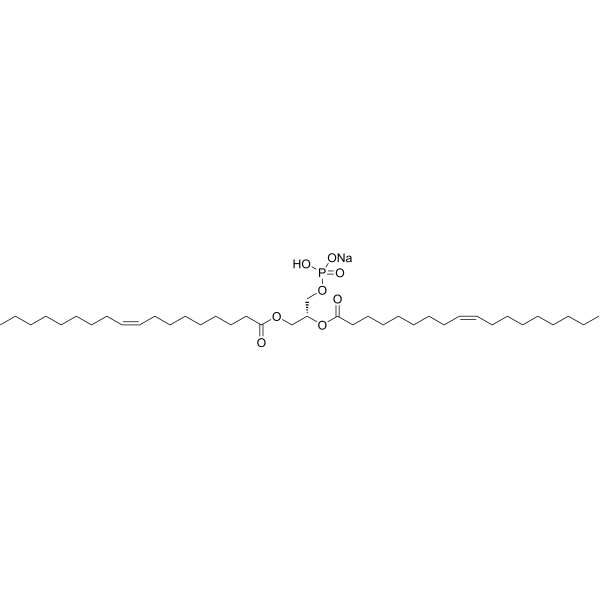
1,2-Dioleoyl-sn-glycero-3-phosphate sodium salt (18:1 PA sodium salt) is an anionic lipid that can be used to prepare liposomes, micelles and artificial membranes .
|
-
-
- HY-W099535
-
|
|
Biochemical Assay Reagents
|
Others
|
|
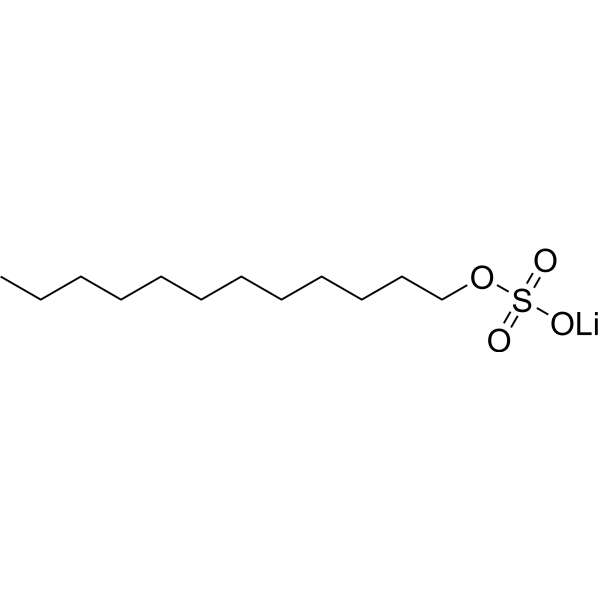
Lithium dodecyl sulfate is an anionic hydrocarbon surfactant with both surface tension reduction and interfacial adsorption capabilities. Lithium dodecyl sulfate induces low surface viscosity; it forms micelles in aqueous solutions through entropy-driven (low temperature) and enthalpy-driven (high temperature) mechanisms. When acting synergistically with tetrabutylammonium bromide, Lithium dodecyl sulfate exhibits cloud point behavior due to micelle aggregation and phase separation. Lithium dodecyl sulfate can form an adsorption layer at the air-water interface with quantifiable surface excess and minimum area per molecule, and it has higher equilibrium surface tension and foamability compared to other dodecyl sulfate counterion variants. The foam stability of Lithium dodecyl sulfate above its critical micelle concentration is low, and its dynamic surface tension pattern changes dynamically with bubble frequency .
|
-
-
- HY-156197
-
-
-
- HY-W440702
-
|
|
Biochemical Assay Reagents
|
Others
|
|
Cholesterol-PEG2000-NHS is a cholesterol PEG derivative that can form micelles through molecular self-assembly and has a longer half-life in vivo. Cholesterol-PEG2000-NHS can be used in drug delivery research .
|
-
-
- HY-W040217
-
-
-
- HY-W440697
-
|
|
Biochemical Assay Reagents
|
Others
|
|
Cholesterol-PEG1000-NHS is a cholesterol PEG derivative that can form micelles through molecular self-assembly and has a longer half-life in vivo. Cholesterol-PEG1000-NHS can be used in drug delivery research .
|
-
-
- HY-W286073
-
|
|
Biochemical Assay Reagents
|
Others
|
|
Hexaethylene glycol decyl ether is a non-ionic surfactant, which forms micelle, and can be utilized in the cosmetics, pharmaceuticals and food industries .
|
-
-
- HY-W440718
-
|
|
Biochemical Assay Reagents
|
Others
|
|
Cholesterol-PEG1000-Mal is a cholesterol PEG derivative that can form micelles through molecular self-assembly and has a longer half-life in vivo. Cholesterol-PEG1000-Mal can be used in drug delivery research .
|
-
-
- HY-W440704
-
|
|
Biochemical Assay Reagents
|
Others
|
|
Cholesterol-PEG5000-NHS is a cholesterol PEG derivative that can form micelles through molecular self-assembly and has a longer half-life in vivo. Cholesterol-PEG5000-NHS can be used in drug delivery research .
|
-
-
- HY-W155121
-
-
-
- HY-167410
-
|
|
Biochemical Assay Reagents
|
Others
|
|
PLLA10000-PEG2000-ALK is a polylactic acid derivative that can form micelles in water. PLLA10000-PEG2000-ALK can be used in drug delivery research .
|
-
-
- HY-167405
-
|
|
Biochemical Assay Reagents
|
Others
|
|
PLLA1000-PEG3000-ALK is a polylactic acid derivative that can form micelles in water. PLLA1000-PEG3000-ALK can be used in drug delivery research .
|
-
-
- HY-167401
-
|
|
Biochemical Assay Reagents
|
Others
|
|
PLLA2000-PEG3000-ALK is a polylactic acid derivative that can form micelles in water. PLLA2000-PEG3000-ALK can be used in drug delivery research .
|
-
-
- HY-W591891
-
|
|
Biochemical Assay Reagents
|
Others
|
|
Cholesterol-PEG1000-acid is a cholesterol PEG derivative that can form micelles through molecular self-assembly and has a longer half-life in vivo. Cholesterol-PEG1000-acid can be used in drug delivery research .
|
-
-
- HY-W440695
-
|
|
Biochemical Assay Reagents
|
Others
|
|
Cholesterol-PEG3400-azide is a cholesterol PEG derivative that can form micelles through molecular self-assembly and has a longer half-life in vivo. Cholesterol-PEG3400-azide can be used in drug delivery research .
|
-
-
- HY-W440692
-
|
|
Biochemical Assay Reagents
|
Others
|
|
Cholesterol-PEG5000-amine is a cholesterol PEG derivative that can form micelles through molecular self-assembly and has a longer half-life in vivo. Cholesterol-PEG5000-amine can be used in drug delivery research .
|
-
-
- HY-W440696
-
|
|
Biochemical Assay Reagents
|
Others
|
|
Cholesterol-PEG5000-azide is a cholesterol PEG derivative that can form micelles through molecular self-assembly and has a longer half-life in vivo. Cholesterol-PEG5000-azide can be used in drug delivery research .
|
-
-
- HY-W591912
-
|
|
Biochemical Assay Reagents
|
Others
|
|
Cholesterol-PEG1000-methoxy is a cholesterol PEG derivative that can form micelles through molecular self-assembly and has a longer half-life in vivo. Cholesterol-PEG1000-methoxy can be used in drug delivery research .
|
-
-
- HY-W440723
-
|
|
Biochemical Assay Reagents
|
Others
|
|
Cholesterol-PEG2000-Thiol is a cholesterol PEG derivative that can form micelles through molecular self-assembly and has a longer half-life in vivo. Cholesterol-PEG2000-Thiol can be used in drug delivery research .
|
-
-
- HY-W440707
-
|
|
Biochemical Assay Reagents
|
Others
|
|
Cholesterol-PEG3400-alcohol is a cholesterol PEG derivative that can form micelles through molecular self-assembly and has a longer half-life in vivo. Cholesterol-PEG3400-alcohol can be used in drug delivery research .
|
-
-
- HY-W440721
-
|
|
Biochemical Assay Reagents
|
Others
|
|
Cholesterol-PEG5000-Mal is a cholesterol PEG derivative that can form micelles through molecular self-assembly and has a longer half-life in vivo. Cholesterol-PEG5000-Mal can be used in drug delivery research .
|
-
-
- HY-W440693
-
|
|
Biochemical Assay Reagents
|
Others
|
|
Cholesterol-PEG1000-azide is a cholesterol PEG derivative that can form micelles through molecular self-assembly and has a longer half-life in vivo. Cholesterol-PEG1000-azide can be used in drug delivery research .
|
-
-
- HY-W440691
-
|
|
Biochemical Assay Reagents
|
Others
|
|
Cholesterol-PEG3400-amine is a cholesterol PEG derivative that can form micelles through molecular self-assembly and has a longer half-life in vivo. Cholesterol-PEG3400-amine can be used in drug delivery research .
|
-
-
- HY-W440705
-
|
|
Biochemical Assay Reagents
|
Others
|
|
Cholesterol-PEG1000-alcohol is a cholesterol PEG derivative that can form micelles through molecular self-assembly and has a longer half-life in vivo. Cholesterol-PEG1000-alcohol can be used in drug delivery research .
|
-
-
- HY-W440720
-
|
|
Biochemical Assay Reagents
|
Others
|
|
Cholesterol-PEG3400-Mal is a cholesterol PEG derivative that can form micelles through molecular self-assembly and has a longer half-life in vivo. Cholesterol-PEG3400-Mal can be used in drug delivery research .
|
-
-
- HY-W440708
-
|
|
Biochemical Assay Reagents
|
Others
|
|
Cholesterol-PEG5000-alcohol is a cholesterol PEG derivative that can form micelles through molecular self-assembly and has a longer half-life in vivo. Cholesterol-PEG5000-alcohol can be used in drug delivery research .
|
-
-
- HY-W440703
-
|
|
Biochemical Assay Reagents
|
Others
|
|
Cholesterol-PEG3400-NHS is a cholesterol PEG derivative that can form micelles through molecular self-assembly and has a longer half-life in vivo. Cholesterol-PEG3400-NHS can be used in drug delivery research .
|
-
-
- HY-W440712
-
|
|
Biochemical Assay Reagents
|
Others
|
|
Cholesterol-PEG3400-Biotin is a cholesterol PEG derivative that can form micelles through molecular self-assembly and has a longer half-life in vivo. Cholesterol-PEG3400-Biotin can be used in drug delivery research .
|
-
-
- HY-167388
-
|
|
Biochemical Assay Reagents
|
Others
|
|
PLLA5000-PEG5000-ALK is a polylactic acid derivative that can form micelles in water. PLLA5000-PEG5000-ALK can be used in drug delivery research .
|
-
-
- HY-167408
-
|
|
Biochemical Assay Reagents
|
Others
|
|
PLLA10000-PEG5000-ALK is a polylactic acid derivative that can form micelles in water. PLLA10000-PEG5000-ALK can be used in drug delivery research .
|
-
-
- HY-167409
-
|
|
Biochemical Assay Reagents
|
Others
|
|
PLLA10000-PEG3000-ALK is a polylactic acid derivative that can form micelles in water. PLLA10000-PEG3000-ALK can be used in drug delivery research .
|
-
-
- HY-167404
-
|
|
Biochemical Assay Reagents
|
Others
|
|
PLLA1000-PEG5000-ALK is a polylactic acid derivative that can form micelles in water. PLLA1000-PEG5000-ALK can be used in drug delivery research .
|
-
-
- HY-167392
-
|
|
Biochemical Assay Reagents
|
Others
|
|
PLLA4000-PEG5000-ALK is a polylactic acid derivative that can form micelles in water. PLLA4000-PEG5000-ALK can be used in drug delivery research .
|
-
-
- HY-167394
-
|
|
Biochemical Assay Reagents
|
Others
|
|
PLLA4000-PEG2000-ALK is a polylactic acid derivative that can form micelles in water. PLLA4000-PEG2000-ALK can be used in drug delivery research .
|
-
-
- HY-167391
-
|
|
Biochemical Assay Reagents
|
Others
|
|
PLLA5000-PEG1000-ALK is a polylactic acid derivative that can form micelles in water. PLLA5000-PEG1000-ALK can be used in drug delivery research .
|
-
-
- HY-167400
-
|
|
Biochemical Assay Reagents
|
Others
|
|
PLLA2000-PEG5000-ALK is a polylactic acid derivative that can form micelles in water. PLLA2000-PEG5000-ALK can be used in drug delivery research .
|
-
-
- HY-167403
-
|
|
Biochemical Assay Reagents
|
Others
|
|
PLLA2000-PEG1000-ALK is a polylactic acid derivative that can form micelles in water. PLLA2000-PEG1000-ALK can be used in drug delivery research .
|
-
-
- HY-167393
-
|
|
Biochemical Assay Reagents
|
Others
|
|
PLLA4000-PEG3000-ALK is a polylactic acid derivative that can form micelles in water. PLLA4000-PEG3000-ALK can be used in drug delivery research .
|
-
-
- HY-167389
-
|
|
Biochemical Assay Reagents
|
Others
|
|
PLLA5000-PEG3000-ALK is a polylactic acid derivative that can form micelles in water. PLLA5000-PEG3000-ALK can be used in drug delivery research .
|
-
-
- HY-167390
-
|
|
Biochemical Assay Reagents
|
Others
|
|
PLLA5000-PEG2000-ALK is a polylactic acid derivative that can form micelles in water. PLLA5000-PEG2000-ALK can be used in drug delivery research .
|
-
-
- HY-167402
-
|
|
Biochemical Assay Reagents
|
Others
|
|
PLLA2000-PEG2000-ALK is a polylactic acid derivative that can form micelles in water. PLLA2000-PEG2000-ALK can be used in drug delivery research .
|
-
-
- HY-167396
-
|
|
Biochemical Assay Reagents
|
Others
|
|
PLLA3000-PEG5000-ALK is a polylactic acid derivative that can form micelles in water. PLLA3000-PEG5000-ALK can be used in drug delivery research .
|
-
-
- HY-167407
-
|
|
Biochemical Assay Reagents
|
Others
|
|
PLLA1000-PEG1000-ALK is a polylactic acid derivative that can form micelles in water. PLLA1000-PEG1000-ALK can be used in drug delivery research .
|
-
-
- HY-167395
-
|
|
Biochemical Assay Reagents
|
Others
|
|
PLLA4000-PEG1000-ALK is a polylactic acid derivative that can form micelles in water. PLLA4000-PEG1000-ALK can be used in drug delivery research .
|
-
-
- HY-167398
-
|
|
Biochemical Assay Reagents
|
Others
|
|
PLLA3000-PEG2000-ALK is a polylactic acid derivative that can form micelles in water. PLLA3000-PEG2000-ALK can be used in drug delivery research .
|
-
-
- HY-167406
-
|
|
Biochemical Assay Reagents
|
Others
|
|
PLLA1000-PEG2000-ALK is a polylactic acid derivative that can form micelles in water. PLLA1000-PEG2000-ALK can be used in drug delivery research .
|
-
-
- HY-167397
-
|
|
Biochemical Assay Reagents
|
Others
|
|
PLLA3000-PEG3000-ALK is a polylactic acid derivative that can form micelles in water. PLLA3000-PEG3000-ALK can be used in drug delivery research .
|
-
-
- HY-167399
-
|
|
Biochemical Assay Reagents
|
Others
|
|
PLLA3000-PEG1000-ALK is a polylactic acid derivative that can form micelles in water. PLLA3000-PEG1000-ALK can be used in drug delivery research .
|
-
-
- HY-W440699
-
|
|
Biochemical Assay Reagents
|
Others
|
|
Cholesterol-PEG3400-acid is a cholesterol PEG derivative that can form micelles through molecular self-assembly and has a longer half-life in vivo. Cholesterol-PEG3400-acid can be used in drug delivery research .
|
-
-
- HY-W440700
-
|
|
Biochemical Assay Reagents
|
Others
|
|
Cholesterol-PEG5000-acid is a cholesterol PEG derivative that can form micelles through molecular self-assembly and has a longer half-life in vivo. Cholesterol-PEG5000-acid can be used in drug delivery research .
|
-
- HY-W591914
-
|
|
Biochemical Assay Reagents
|
Others
|
|
Cholesterol-PEG5000-methoxy is a cholesterol PEG derivative that can form micelles through molecular self-assembly and has a longer half-life in vivo. Cholesterol-PEG5000-methoxy can be used in drug delivery research .
|
-
- HY-W440726
-
|
|
Biochemical Assay Reagents
|
Others
|
|
Cholesterol-PEG1000-Vinylsulfone is a cholesterol PEG derivative that can form micelles through molecular self-assembly and has a longer half-life in vivo. Cholesterol-PEG1000-Vinylsulfone can be used in drug delivery research .
|
-
- HY-W440728
-
|
|
Biochemical Assay Reagents
|
Others
|
|
Cholesterol-PEG3400-Vinylsulfone is a cholesterol PEG derivative that can form micelles through molecular self-assembly and has a longer half-life in vivo. Cholesterol-PEG3400-Vinylsulfone can be used in drug delivery research .
|
-
- HY-W440717
-
|
|
Biochemical Assay Reagents
|
Others
|
|
Cholesterol-PEG5000-Folate is a cholesterol PEG derivative that can form micelles through molecular self-assembly and has a longer half-life in vivo. Cholesterol-PEG5000-Folate can be used in drug delivery research .
|
-
- HY-W440716
-
|
|
Biochemical Assay Reagents
|
Others
|
|
Cholesterol-PEG3400-Folate is a cholesterol PEG derivative that can form micelles through molecular self-assembly and has a longer half-life in vivo. Cholesterol-PEG3400-Folate can be used in drug delivery research .
|
-
- HY-W440725
-
|
|
Biochemical Assay Reagents
|
Others
|
|
Cholesterol-PEG5000-Thiol is a cholesterol PEG derivative that can form micelles through molecular self-assembly and has a longer half-life in vivo. Cholesterol-PEG5000-Thiol can be used in drug delivery research .
|
-
- HY-W440713
-
|
|
Biochemical Assay Reagents
|
Others
|
|
Cholesterol-PEG5000-Biotin is a cholesterol PEG derivative that can form micelles through molecular self-assembly and has a longer half-life in vivo. Cholesterol-PEG5000-Biotin can be used in drug delivery research .
|
-
- HY-W440709
-
|
|
Biochemical Assay Reagents
|
Others
|
|
Cholesterol-PEG10000-alcohol is a cholesterol PEG derivative that can form micelles through molecular self-assembly and has a longer half-life in vivo. Cholesterol-PEG10000-alcohol can be used in drug delivery research .
|
-
- HY-W440729
-
|
|
Biochemical Assay Reagents
|
Others
|
|
Cholesterol-PEG5000-Vinylsulfone is a cholesterol PEG derivative that can form micelles through molecular self-assembly and has a longer half-life in vivo. Cholesterol-PEG5000-Vinylsulfone can be used in drug delivery research .
|
-
- HY-167306
-
|
|
Biochemical Assay Reagents
|
Others
|
|
PLLA2000-PEG5000-Thiol is a polylactic acid derivative that forms micelles in water and initiates biodegradation by attacking ester bonds through hydrolysis. PLLA2000-PEG5000-Thiol can be used in drug delivery research .
|
-
- HY-167299
-
|
|
Biochemical Assay Reagents
|
Others
|
|
PLLA4000-PEG3000-Thiol is a polylactic acid derivative that forms micelles in water and initiates biodegradation by attacking ester bonds through hydrolysis. PLLA4000-PEG3000-Thiol can be used in drug delivery research .
|
-
- HY-167295
-
|
|
Biochemical Assay Reagents
|
Others
|
|
PLLA5000-PEG3000-Thiol is a polylactic acid derivative that forms micelles in water and initiates biodegradation by attacking ester bonds through hydrolysis. PLLA5000-PEG3000-Thiol can be used in drug delivery research .
|
-
- HY-167311
-
|
|
Biochemical Assay Reagents
|
Others
|
|
PLLA1000-PEG3000-Thiol is a polylactic acid derivative that forms micelles in water and initiates biodegradation by attacking ester bonds through hydrolysis. PLLA1000-PEG3000-Thiol can be used in drug delivery research .
|
-
- HY-167316
-
|
|
Biochemical Assay Reagents
|
Others
|
|
PLLA10000-PEG2000-Thiol is a polylactic acid derivative that forms micelles in water and initiates biodegradation by attacking ester bonds through hydrolysis. PLLA10000-PEG2000-Thiol can be used in drug delivery research .
|
-
- HY-167305
-
|
|
Biochemical Assay Reagents
|
Others
|
|
PLLA3000-PEG1000-Thiol is a polylactic acid derivative that forms micelles in water and initiates biodegradation by attacking ester bonds through hydrolysis. PLLA3000-PEG1000-Thiol can be used in drug delivery research .
|
-
- HY-167304
-
|
|
Biochemical Assay Reagents
|
Others
|
|
PLLA3000-PEG2000-Thiol is a polylactic acid derivative that forms micelles in water and initiates biodegradation by attacking ester bonds through hydrolysis. PLLA3000-PEG2000-Thiol can be used in drug delivery research .
|
-
- HY-167301
-
|
|
Biochemical Assay Reagents
|
Others
|
|
PLLA4000-PEG1000-Thiol is a polylactic acid derivative that forms micelles in water and initiates biodegradation by attacking ester bonds through hydrolysis. PLLA4000-PEG1000-Thiol can be used in drug delivery research .
|
-
- HY-167309
-
|
|
Biochemical Assay Reagents
|
Others
|
|
PLLA2000-PEG1000-Thiol is a polylactic acid derivative that forms micelles in water and initiates biodegradation by attacking ester bonds through hydrolysis. PLLA2000-PEG1000-Thiol can be used in drug delivery research .
|
-
- HY-167296
-
|
|
Biochemical Assay Reagents
|
Others
|
|
PLLA5000-PEG2000-Thiol is a polylactic acid derivative that forms micelles in water and initiates biodegradation by attacking ester bonds through hydrolysis. PLLA5000-PEG2000-Thiol can be used in drug delivery research .
|
-
- HY-167297
-
|
|
Biochemical Assay Reagents
|
Others
|
|
PLLA5000-PEG1000-Thiol is a polylactic acid derivative that forms micelles in water and initiates biodegradation by attacking ester bonds through hydrolysis. PLLA5000-PEG1000-Thiol can be used in drug delivery research .
|
-
- HY-167300
-
|
|
Biochemical Assay Reagents
|
Others
|
|
PLLA4000-PEG2000-Thiol is a polylactic acid derivative that forms micelles in water and initiates biodegradation by attacking ester bonds through hydrolysis. PLLA4000-PEG2000-Thiol can be used in drug delivery research .
|
-
- HY-167315
-
|
|
Biochemical Assay Reagents
|
Others
|
|
PLLA10000-PEG3000-Thiol is a polylactic acid derivative that forms micelles in water and initiates biodegradation by attacking ester bonds through hydrolysis. PLLA10000-PEG3000-Thiol can be used in drug delivery research .
|
-
- HY-167317
-
|
|
Biochemical Assay Reagents
|
Others
|
|
PLLA10000-PEG1000-Thiol is a polylactic acid derivative that forms micelles in water and initiates biodegradation by attacking ester bonds through hydrolysis. PLLA10000-PEG1000-Thiol can be used in drug delivery research .
|
-
- HY-167303
-
|
|
Biochemical Assay Reagents
|
Others
|
|
PLLA3000-PEG3000-Thiol is a polylactic acid derivative that forms micelles in water and initiates biodegradation by attacking ester bonds through hydrolysis. PLLA3000-PEG3000-Thiol can be used in drug delivery research .
|
-
- HY-167314
-
|
|
Biochemical Assay Reagents
|
Others
|
|
PLLA10000-PEG5000-Thiol is a polylactic acid derivative that forms micelles in water and initiates biodegradation by attacking ester bonds through hydrolysis. PLLA10000-PEG5000-Thiol can be used in drug delivery research .
|
-
- HY-167312
-
|
|
Biochemical Assay Reagents
|
Others
|
|
PLLA1000-PEG2000-Thiol is a polylactic acid derivative that forms micelles in water and initiates biodegradation by attacking ester bonds through hydrolysis. PLLA1000-PEG2000-Thiol can be used in drug delivery research .
|
-
- HY-167308
-
|
|
Biochemical Assay Reagents
|
Others
|
|
PLLA2000-PEG2000-Thiol is a polylactic acid derivative that forms micelles in water and initiates biodegradation by attacking ester bonds through hydrolysis. PLLA2000-PEG2000-Thiol can be used in drug delivery research .
|
-
- HY-167294
-
|
|
Biochemical Assay Reagents
|
Others
|
|
PLLA5000-PEG5000-Thiol is a polylactic acid derivative that forms micelles in water and initiates biodegradation by attacking ester bonds through hydrolysis. PLLA5000-PEG5000-Thiol can be used in drug delivery research .
|
-
- HY-167302
-
|
|
Biochemical Assay Reagents
|
Others
|
|
PLLA3000-PEG5000-Thiol is a polylactic acid derivative that forms micelles in water and initiates biodegradation by attacking ester bonds through hydrolysis. PLLA3000-PEG5000-Thiol can be used in drug delivery research .
|
-
- HY-167310
-
|
|
Biochemical Assay Reagents
|
Others
|
|
PLLA1000-PEG5000-Thiol is a polylactic acid derivative that forms micelles in water and initiates biodegradation by attacking ester bonds through hydrolysis. PLLA1000-PEG5000-Thiol can be used in drug delivery research .
|
-
- HY-167298
-
|
|
Biochemical Assay Reagents
|
Others
|
|
PLLA4000-PEG5000-Thiol is a polylactic acid derivative that forms micelles in water and initiates biodegradation by attacking ester bonds through hydrolysis. PLLA4000-PEG5000-Thiol can be used in drug delivery research .
|
-
- HY-167307
-
|
|
Biochemical Assay Reagents
|
Others
|
|
PLLA2000-PEG3000-Thiol is a polylactic acid derivative that forms micelles in water and initiates biodegradation by attacking ester bonds through hydrolysis. PLLA2000-PEG3000-Thiol can be used in drug delivery research .
|
-
- HY-167313
-
|
|
Biochemical Assay Reagents
|
Others
|
|
PLLA1000-PEG1000-Thiol is a polylactic acid derivative that forms micelles in water and initiates biodegradation by attacking ester bonds through hydrolysis. PLLA1000-PEG1000-Thiol can be used in drug delivery research .
|
-
- HY-167335
-
|
|
Biochemical Assay Reagents
|
Others
|
|
PLLA1000-PEG3000-SPDP is a polylactic acid derivative that can form micelles in water and the SPDP moiety can react with thiols. PLLA1000-PEG3000-SPDP can be used in drug delivery research .
|
-
- HY-167338
-
|
|
Biochemical Assay Reagents
|
Others
|
|
PLLA10000-PEG5000-SPDP is a polylactic acid derivative that can form micelles in water and the SPDP moiety can react with thiols. PLLA10000-PEG5000-SPDP can be used in drug delivery research .
|
-
- HY-167341
-
|
|
Biochemical Assay Reagents
|
Others
|
|
PLLA10000-PEG1000-SPDP is a polylactic acid derivative that can form micelles in water and the SPDP moiety can react with thiols. PLLA10000-PEG1000-SPDP can be used in drug delivery research .
|
-
- HY-167336
-
|
|
Biochemical Assay Reagents
|
Others
|
|
PLLA1000-PEG2000-SPDP is a polylactic acid derivative that can form micelles in water and the SPDP moiety can react with thiols. PLLA1000-PEG2000-SPDP can be used in drug delivery research .
|
-
- HY-167324
-
|
|
Biochemical Assay Reagents
|
Others
|
|
PLLA4000-PEG2000-SPDP is a polylactic acid derivative that can form micelles in water and the SPDP moiety can react with thiols. PLLA4000-PEG2000-SPDP can be used in drug delivery research .
|
-
- HY-167333
-
|
|
Biochemical Assay Reagents
|
Others
|
|
PLLA2000-PEG1000-SPDP is a polylactic acid derivative that can form micelles in water and the SPDP moiety can react with thiols. PLLA2000-PEG1000-SPDP can be used in drug delivery research .
|
-
- HY-167331
-
|
|
Biochemical Assay Reagents
|
Others
|
|
PLLA2000-PEG3000-SPDP is a polylactic acid derivative that can form micelles in water and the SPDP moiety can react with thiols. PLLA2000-PEG3000-SPDP can be used in drug delivery research .
|
-
- HY-167332
-
|
|
Biochemical Assay Reagents
|
Others
|
|
PLLA2000-PEG2000-SPDP is a polylactic acid derivative that can form micelles in water and the SPDP moiety can react with thiols. PLLA2000-PEG2000-SPDP can be used in drug delivery research .
|
-
- HY-167321
-
|
|
Biochemical Assay Reagents
|
Others
|
|
PLLA5000-PEG1000-SPDP is a polylactic acid derivative that can form micelles in water and the SPDP moiety can react with thiols. PLLA5000-PEG1000-SPDP can be used in drug delivery research .
|
-
- HY-167328
-
|
|
Biochemical Assay Reagents
|
Others
|
|
PLLA3000-PEG2000-SPDP is a polylactic acid derivative that can form micelles in water and the SPDP moiety can react with thiols. PLLA3000-PEG2000-SPDP can be used in drug delivery research .
|
-
- HY-167320
-
|
|
Biochemical Assay Reagents
|
Others
|
|
PLLA5000-PEG2000-SPDP is a polylactic acid derivative that can form micelles in water and the SPDP moiety can react with thiols. PLLA5000-PEG2000-SPDP can be used in drug delivery research .
|
-
- HY-167327
-
|
|
Biochemical Assay Reagents
|
Others
|
|
PLLA3000-PEG3000-SPDP is a polylactic acid derivative that can form micelles in water and the SPDP moiety can react with thiols. PLLA3000-PEG3000-SPDP can be used in drug delivery research .
|
-
- HY-167326
-
|
|
Biochemical Assay Reagents
|
Others
|
|
PLLA3000-PEG5000-SPDP is a polylactic acid derivative that can form micelles in water and the SPDP moiety can react with thiols. PLLA3000-PEG5000-SPDP can be used in drug delivery research .
|
-
- HY-167334
-
|
|
Biochemical Assay Reagents
|
Others
|
|
PLLA1000-PEG5000-SPDP is a polylactic acid derivative that can form micelles in water and the SPDP moiety can react with thiols. PLLA1000-PEG5000-SPDP can be used in drug delivery research .
|
-
- HY-167318
-
|
|
Biochemical Assay Reagents
|
Others
|
|
PLLA5000-PEG5000-SPDP is a polylactic acid derivative that can form micelles in water and the SPDP moiety can react with thiols. PLLA5000-PEG5000-SPDP can be used in drug delivery research .
|
-
- HY-167323
-
|
|
Biochemical Assay Reagents
|
Others
|
|
PLLA4000-PEG3000-SPDP is a polylactic acid derivative that can form micelles in water and the SPDP moiety can react with thiols. PLLA4000-PEG3000-SPDP can be used in drug delivery research .
|
-
- HY-167322
-
|
|
Biochemical Assay Reagents
|
Others
|
|
PLLA4000-PEG5000-SPDP is a polylactic acid derivative that can form micelles in water and the SPDP moiety can react with thiols. PLLA4000-PEG5000-SPDP can be used in drug delivery research .
|
-
- HY-167339
-
|
|
Biochemical Assay Reagents
|
Others
|
|
PLLA10000-PEG3000-SPDP is a polylactic acid derivative that can form micelles in water and the SPDP moiety can react with thiols. PLLA10000-PEG3000-SPDP can be used in drug delivery research .
|
-
- HY-167330
-
|
|
Biochemical Assay Reagents
|
Others
|
|
PLLA2000-PEG5000-SPDP is a polylactic acid derivative that can form micelles in water and the SPDP moiety can react with thiols. PLLA2000-PEG5000-SPDP can be used in drug delivery research .
|
-
- HY-167325
-
|
|
Biochemical Assay Reagents
|
Others
|
|
PLLA4000-PEG1000-SPDP is a polylactic acid derivative that can form micelles in water and the SPDP moiety can react with thiols. PLLA4000-PEG1000-SPDP can be used in drug delivery research .
|
-
- HY-167340
-
|
|
Biochemical Assay Reagents
|
Others
|
|
PLLA10000-PEG2000-SPDP is a polylactic acid derivative that can form micelles in water and the SPDP moiety can react with thiols. PLLA10000-PEG2000-SPDP can be used in drug delivery research .
|
-
- HY-167337
-
|
|
Biochemical Assay Reagents
|
Others
|
|
PLLA1000-PEG1000-SPDP is a polylactic acid derivative that can form micelles in water and the SPDP moiety can react with thiols. PLLA1000-PEG1000-SPDP can be used in drug delivery research .
|
-
- HY-167319
-
|
|
Biochemical Assay Reagents
|
Others
|
|
PLLA5000-PEG3000-SPDP is a polylactic acid derivative that can form micelles in water and the SPDP moiety can react with thiols. PLLA5000-PEG3000-SPDP can be used in drug delivery research .
|
-
- HY-167329
-
|
|
Biochemical Assay Reagents
|
Others
|
|
PLLA3000-PEG1000-SPDP is a polylactic acid derivative that can form micelles in water and the SPDP moiety can react with thiols. PLLA3000-PEG1000-SPDP can be used in drug delivery research .
|
-
- HY-167384
-
|
|
Biochemical Assay Reagents
|
Others
|
|
PLLA1000-PEG1000-BIO is a polylactic acid derivative that can form micelles in water. In addition, PLLA1000-PEG1000-BIO can bind tightly to avidin or streptavidin for protein labeling. PLLA1000-PEG1000-BIO can be used in drug delivery research .
|
-
- HY-167376
-
|
|
Biochemical Assay Reagents
|
Others
|
|
PLLA3000-PEG5000-BIO is a polylactic acid derivative that can form micelles in water. In addition, PLLA3000-PEG5000-BIO can bind tightly to avidin or streptavidin for protein labeling. PLLA3000-PEG5000-BIO can be used in drug delivery research .
|
-
- HY-167373
-
|
|
Biochemical Assay Reagents
|
Others
|
|
PLLA4000-PEG5000-BIO is a polylactic acid derivative that can form micelles in water. In addition, PLLA4000-PEG5000-BIO can bind tightly to avidin or streptavidin for protein labeling. PLLA4000-PEG5000-BIO can be used in drug delivery research .
|
-
- HY-167379
-
|
|
Biochemical Assay Reagents
|
Others
|
|
PLLA2000-PEG5000-BIO is a polylactic acid derivative that can form micelles in water. In addition, PLLA2000-PEG5000-BIO can bind tightly to avidin or streptavidin for protein labeling. PLLA2000-PEG5000-BIO can be used in drug delivery research .
|
-
- HY-167381
-
|
|
Biochemical Assay Reagents
|
Others
|
|
PLLA2000-PEG1000-BIO is a polylactic acid derivative that can form micelles in water. In addition, PLLA2000-PEG1000-BIO can bind tightly to avidin or streptavidin for protein labeling. PLLA2000-PEG1000-BIO can be used in drug delivery research .
|
-
- HY-167372
-
|
|
Biochemical Assay Reagents
|
Others
|
|
PLLA5000-PEG1000-BIO is a polylactic acid derivative that can form micelles in water. In addition, PLLA5000-PEG1000-BIO can bind tightly to avidin or streptavidin for protein labeling. PLLA5000-PEG1000-BIO can be used in drug delivery research .
|
-
- HY-167377
-
|
|
Biochemical Assay Reagents
|
Others
|
|
PLLA3000-PEG2000-BIO is a polylactic acid derivative that can form micelles in water. In addition, PLLA3000-PEG2000-BIO can bind tightly to avidin or streptavidin for protein labeling. PLLA3000-PEG2000-BIO can be used in drug delivery research .
|
-
- HY-167380
-
|
|
Biochemical Assay Reagents
|
Others
|
|
PLLA2000-PEG2000-BIO is a polylactic acid derivative that can form micelles in water. In addition, PLLA2000-PEG2000-BIO can bind tightly to avidin or streptavidin for protein labeling. PLLA2000-PEG2000-BIO can be used in drug delivery research .
|
-
- HY-167378
-
|
|
Biochemical Assay Reagents
|
Others
|
|
PLLA3000-PEG1000-BIO is a polylactic acid derivative that can form micelles in water. In addition, PLLA3000-PEG1000-BIO can bind tightly to avidin or streptavidin for protein labeling. PLLA3000-PEG1000-BIO can be used in drug delivery research .
|
-
- HY-167383
-
|
|
Biochemical Assay Reagents
|
Others
|
|
PLLA1000-PEG2000-BIO is a polylactic acid derivative that can form micelles in water. In addition, PLLA1000-PEG2000-BIO can bind tightly to avidin or streptavidin for protein labeling. PLLA1000-PEG2000-BIO can be used in drug delivery research .
|
-
- HY-167385
-
|
|
Biochemical Assay Reagents
|
Others
|
|
PLLA10000-PEG5000-BIO is a polylactic acid derivative that can form micelles in water. In addition, PLLA10000-PEG5000-BIO can bind tightly to avidin or streptavidin for protein labeling. PLLA10000-PEG5000-BIO can be used in drug delivery research .
|
-
- HY-167370
-
|
|
Biochemical Assay Reagents
|
Others
|
|
PLLA5000-PEG5000-BIO is a polylactic acid derivative that can form micelles in water. In addition, PLLA5000-PEG5000-BIO can bind tightly to avidin or streptavidin for protein labeling. PLLA5000-PEG5000-BIO can be used in drug delivery research .
|
-
- HY-167374
-
|
|
Biochemical Assay Reagents
|
Others
|
|
PLLA4000-PEG2000-BIO is a polylactic acid derivative that can form micelles in water. In addition, PLLA4000-PEG2000-BIO can bind tightly to avidin or streptavidin for protein labeling. PLLA4000-PEG2000-BIO can be used in drug delivery research .
|
-
- HY-167387
-
|
|
Biochemical Assay Reagents
|
Others
|
|
PLLA10000-PEG1000-BIO is a polylactic acid derivative that can form micelles in water. In addition, PLLA10000-PEG1000-BIO can bind tightly to avidin or streptavidin for protein labeling. PLLA10000-PEG1000-BIO can be used in drug delivery research .
|
-
- HY-167386
-
|
|
Biochemical Assay Reagents
|
Others
|
|
PLLA10000-PEG2000-BIO is a polylactic acid derivative that can form micelles in water. In addition, PLLA10000-PEG2000-BIO can bind tightly to avidin or streptavidin for protein labeling. PLLA10000-PEG2000-BIO can be used in drug delivery research .
|
-
- HY-167375
-
|
|
Biochemical Assay Reagents
|
Others
|
|
PLLA4000-PEG1000-BIO is a polylactic acid derivative that can form micelles in water. In addition, PLLA4000-PEG1000-BIO can bind tightly to avidin or streptavidin for protein labeling. PLLA4000-PEG1000-BIO can be used in drug delivery research .
|
-
- HY-167371
-
|
|
Biochemical Assay Reagents
|
Others
|
|
PLLA5000-PEG2000-BIO is a polylactic acid derivative that can form micelles in water. In addition, PLLA5000-PEG2000-BIO can bind tightly to avidin or streptavidin for protein labeling. PLLA5000-PEG2000-BIO can be used in drug delivery research .
|
-
- HY-W013205
-
|
|
Biochemical Assay Reagents
|
Others
|
|
Bis(4-nitrophenyl) phosphate is a catalyst for metal micelles and can catalyze the hydrolysis of (4-nitrophenyl) phosphate. Bis(4-nitrophenyl) phosphate is also an effective catalyst for ring-opening polymerization (ROP), which can achieve controlled polymerization of β-butyrolactone (β-BL) ring-opening and can be used to prepare diembedded polymers without quenching. segment copolymer .
|
-
- HY-185061
-
|
|
Biochemical Assay Reagents
|
Others
|
|
HEGA-10 is a mild detergent with a high critical micelle concentration (CMC), which can be used to dissolve and extract proteins (HIV-1 spike protein) from the membranes of virus-like particles (VLPs) .
|
-
- HY-W013205R
-
|
|
Biochemical Assay Reagents
Reference Standards
|
Others
|
|
Bis(4-nitrophenyl) phosphate (Standard) is the analytical standard of Bis(4-nitrophenyl) phosphate. This product is intended for research and analytical applications. Bis(4-nitrophenyl) phosphate is a catalyst for metal micelles and can catalyze the hydrolysis of (4-nitrophenyl) phosphate. Bis(4-nitrophenyl) phosphate is also an effective catalyst for ring-opening polymerization (ROP), which can achieve controlled polymerization of β-butyrolactone (β-BL) ring-opening and can be used to prepare diembedded polymers without quenching. segment copolymer .
|
-
- HY-160113E
-
|
|
Biochemical Assay Reagents
|
Others
|
|
Sodium phosphate buffer 0.1M, pH 8.0 is an aqueous sodium phosphate buffer with a concentration of 0.1M and a pH value of 8.0. Sodium phosphate buffer 0.1M, pH 8.0 can be used for the preparation of hydrated micellar membranes, the construction of pH-sensitive nanocarriers, and the maintenance of stable environmental conditions for pH-cleavable PEG-Hz-PE micelles. Sodium phosphate buffer 0.1M, pH 8.0 can also serve as a universal solvent, reaction medium and eluent, and is widely applied in experimental processes such as antibody thiolation, nanoparticle purification and cross-linking reactions .
|
-
- HY-170851
-
|
|
Apoptosis
|
Inflammation/Immunology
Cancer
|
|
GL392 is a senolytic agent that selectively delivers the potent senolytic compound Dasatinib (HY-10181) to senescent cells. GL392 targets lipofuscin in senescent cells via the LBD domain and is linked to Dasatinib through an ester bond. Upon internalization in senescent cells, Dasatinib is released, inducing apoptosis of the senescent cells. GL392 in micelle encapsulation (mGL392) enables selective delivery to senescent cells, achieving selective senescent cell elimination in vitro and in vivo. GL392 can be used for the research of melanoma .
|
-
- HY-W1048558A
-
|
mPEG2000-COOH
|
Biochemical Assay Reagents
|
Others
|
|
mPEG2000-CM (mPEG2000-COOH) is a carboxyl-terminated monomethoxy polyethylene glycol. mPEG2000-CM bears a reactive carboxyl group (-COOH) at its structural terminal site, which can form stable amide bonds with amino groups and ester bonds with hydroxyl groups. mPEG2000-CM binds to PCA-g-PCL copolymers via electrostatic interaction to form polyion complex micelles with a hydrophilic PEG surface, which enhances the stability of micelles in aqueous media. mPEG2000-CM can be used for drug delivery .
|
-
- HY-N17984
-
|
|
Biochemical Assay Reagents
|
Others
|
|
Hemsloside Ma3 is an anionic surfactant and solubilizer. Hemsloside Ma3 is an oleanolic acid bisdesmosidic saponin that can be isolated from the rhizomes of Hemsleya macrosperma and Hemsleya chinensis. Hemsloside Ma3 improves the water solubility of saikosaponin a, a poorly water-soluble monodesmosidic saponin, and its solubilizing effect appears near the critical micelle concentration. At a constant ionic strength, Hemsloside Ma3 exhibits the property of reduced surface tension with the increase in hydrogen ion concentration .
|
-
- HY-P11781
-
|
|
Drug Derivative
|
Cancer
|
|
HW12 is a random peptide containing an N-terminal cysteine and is not an EGFR ligand. HW12 can serve as a control for GE11 (HY-P10128)-conjugated mixed micelles targeting EGFR. HW12 is applicable to pancreatic cancer-related research .
|
-
- HY-123813
-
|
|
CXCR
Arrestin
|
Cancer
|
|
CCX-777 is an orthosteric binder and partial agonist of CXCR7/ACKR3. CCX-777 induces the recruitment of β-arrestin 2 and affects the rebinding of chemokines to ACKR3. CCX-777 functions to stabilize the ACKR3 receptor and promotes the formation of a monodisperse, stable complex of the receptor in DDM/CHS micelles. CCX-777 is widely used in cancer-related research .
|
-
- HY-W590593
-
|
|
Liposome
|
Cancer
|
|
mPEG-Cholesterol,MW 2000 is a PEG derivative which self-assembles in water to form micelle-like structure. The cholesterol tail can be used to encapsulate hydrophobic drugs while the PEG chain ehances the water solubility of the micelles.
|
-
- HY-185564
-
|
|
Biochemical Assay Reagents
|
Others
|
|
F6OM, a nonionic fluorinated octyl maltoside derivative, is a surfactant. F6OM readily interacts with and completely solubilizes phospholipid vesicles via a heterogeneous solubilization mechanism, without compromising membrane order at subsolubilizing concentrations. F6OM promotes bilayer insertion of an integral membrane enzyme in the absence of micelles to support functional refolding of integral membrane proteins. F6OM can be used for membrane-protein applications .
|
-
- HY-W591913
-
|
|
Liposome
|
Cancer
|
|
Cholesterol-PEG2000-methoxy is a PEG derivative which self-assembles in water to form micelle-like structure. The cholesterol tail can be used to encapsulate hydrophobic drugs while the PEG chain ehances the water solubility of the micelles.
|
-
- HY-D1553
-
|
|
Fluorescent Dye
|
Others
|
|
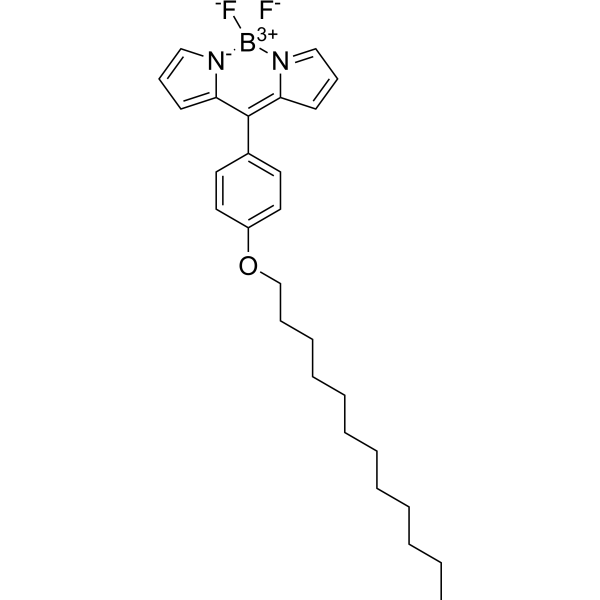
BODIPY-C12 is a boron-dipyrromethene derivative containing a lipophilic tail (excitation 490 nm). BODIPY-C12 is a hydrophobic molecular and sensitivity to the surrounding environment and can be used to quantify viscosity, critical micelle concentration, and critical micelle temperature .
|
-
- HY-W010851
-
-
- HY-W040258
-
-
- HY-P11781A
-
|
|
Drug Derivative
|
Cancer
|
|
Cys-HW12 is a random peptide containing an N-terminal cysteine. Cys-HW12 can be coupled via the thiol group of Cys. Cys-HW12 can serve as a control for GE11 (HY-P10128)-conjugated mixed micelles targeting EGFR, and also functions as a cytotoxic agent, cellular uptake inhibitor, and tumor growth inhibitor. Cys-HW12 is applicable to pancreatic cancer-related research .
|
-
- HY-121447
-
|
|
Endogenous Metabolite
|
Metabolic Disease
|
|
Heneicosanoic acid is an odd-chain saturated fatty acid widely present in human milk, fish, seeds, and cerebrosides in the cell membranes of the nervous system. Heneicosanoic acid can form Langmuir monolayers and is often used as a model to study lipid self-assembly and disassembly processes in biological membranes and drug delivery systems. In the low-temperature L'2 and CS crystalline phases, Heneicosanoic acid undergoes local oscillations, which in turn drive the spontaneous formation and expulsion of micelles and vesicles .
|
-
- HY-P11800A
-
|
|
Exosomes
MMP
|
Inflammation/Immunology
|
|
GPLGVRGC is a cysteine-tagged variant of GPLGVRG (HY-P11800). GPLGVRGC is hydrolyzable by MMP13. GPLGVRGC mediates the disassembly of micelle-exosome systems, enhances chondrocyte endocytosis, and promotes responsive system uptake. GPLGVRGC confers targeted delivery and responsive release properties to micelle-exosome systems. GPLGVRGC is applicable to the research of osteoarthritis .
|
-
- HY-179260A
-
|
|
Biochemical Assay Reagents
|
Others
|
|
PDLLA3000-mPEG2000, PDI≤1.25 is an amphiphilic block copolymer composed of methoxy poly(ethylene glycol) and poly(D,L-lactide). PDLLA3000-mPEG2000, PDI≤1.25 functions as a self-assembled polymeric micelle component to enhance aqueous solubility and oral bioavailability in bioactive substances. PDLLA3000-mPEG2000, PDI≤1.25 can be used in the study of drug delivery .
|
-
- HY-155884
-
|
mPEG4000-NH2
|
Biochemical Assay Reagents
|
Cancer
|
|
mPEG4000-amine can be used to synthesize folate-conjugated polymer micelles for encapsulating anticancer agent 9-nitrocamptothecin (HY-16560). folate-conjugated polymer micelles are effective carriers of insoluble anticancer drugs, which can avoid macrophages and play a role in endocytosis of tumor cells mediated by folate receptors (FR).
|
-
- HY-155880
-
|
mPEG350-NH2
|
Biochemical Assay Reagents
|
Cancer
|
|
mPEG350-amine can synthesize folate-conjugated polymer micelles for encapsulation of anticancer agent 9-nitrocamptothecin (HY-16560). folate-conjugated polymer micelles are effective carriers of insoluble anticancer drugs, which can avoid macrophages and play a role in endocytosis of tumor cells mediated by folate receptors (FR).
|
-
- HY-155883
-
|
mPEG3400-NH2
|
Biochemical Assay Reagents
|
Cancer
|
|
mPEG3400-amine can synthesize folate-conjugated polymer micelles for encapsulation of anticancer agent 9-nitrocamptothecin (HY-16560). folate-conjugated polymer micelles are effective carriers of insoluble anticancer drugs, which can avoid macrophages and play a role in endocytosis of tumor cells mediated by folate receptors (FR).
|
-
- HY-172754
-
|
|
Fluorescent Dye
|
Cancer
|
|
ICAAc is a solvatochromic fluorophore with reduced basicity. ICAAc demonstrates significant solvatochromic behavior across solvents of varying polarity, with a large dipole moment difference and low quantum yield in water, making it a tunable solvatochromic fluorophore. ICAAc enables pH sensing via UV-vis/fluorescence detection and in microenvironments including sodium lauryl sulfate micelle Stern layers. ICAAc acts as a supravital cell stain for epifluorescence imaging of live cancer cells .
|
-
- HY-W591632
-
|
Poly(ethylene glycol)-bis-amine (MW 1000)
|
Biochemical Assay Reagents
|
Cancer
|
|
PEG-bis-amine (MW 1000) synthesizes folate-conjugated polymeric micelles for encapsulation of the anticancer agent 9-nitrocamptothecin HY-16560 (HY-16560). Folic acid-conjugated polymer micelles are effective carriers of insoluble anticancer drugs, which can avoid macrophages and play a role in endocytosis of tumor cells mediated by folate receptors (FR).
|
-
- HY-W115607
-
|
Poly(ethylene glycol)-bis-amine 4000
|
Biochemical Assay Reagents
|
Cancer
|
|
PEG4000-bis-amine synthesizes folate-conjugated polymeric micelles for encapsulation of the anticancer agent 9-nitrocamptothecin HY-16560 (HY-16560). Folic acid-conjugated polymer micelles are effective carriers of insoluble anticancer drugs, which can avoid macrophages and play a role in endocytosis of tumor cells mediated by folate receptors (FR).
|
-
- HY-W888521
-
-
- HY-174901C
-
|
|
Biochemical Assay Reagents
|
Others
|
|
DSPE-PEG5000-Furan is a lipid-containing PEG derivative that can be used to form micelles as nanoparticles for drug delivery .
|
-
- HY-174901B
-
|
|
Biochemical Assay Reagents
|
Others
|
|
DSPE-PEG3400-Furan is a lipid-containing PEG derivative that can be used to form micelles as nanoparticles for drug delivery .
|
-
- HY-174950
-
|
|
Biochemical Assay Reagents
|
Others
|
|
DSPE-PEG1000-Pyrene is a lipid-containing PEG derivative that can be used to form micelles as nanoparticles for drug delivery .
|
-
- HY-174950C
-
|
|
Biochemical Assay Reagents
|
Others
|
|
DSPE-PEG5000-Pyrene is a lipid-containing PEG derivative that can be used to form micelles as nanoparticles for drug delivery .
|
-
- HY-172356A
-
|
|
Biochemical Assay Reagents
|
Others
|
|
Biotin-PEG-NH2 (Mn 5300) can be used for biotinylation of polymerized worm micelles for targeting and drug transfer to cells .
|
-
- HY-174950B
-
|
|
Biochemical Assay Reagents
|
Others
|
|
DSPE-PEG3400-Pyrene is a lipid-containing PEG derivative that can be used to form micelles as nanoparticles for drug delivery .
|
-
- HY-174901A
-
|
|
Biochemical Assay Reagents
|
Others
|
|
DSPE-PEG2000-Furan is a lipid-containing PEG derivative that can be used to form micelles as nanoparticles for drug delivery .
|
-
- HY-174950A
-
|
|
Biochemical Assay Reagents
|
Others
|
|
DSPE-PEG2000-Pyrene is a lipid-containing PEG derivative that can be used to form micelles as nanoparticles for drug delivery .
|
-
- HY-172356
-
|
|
Biochemical Assay Reagents
|
Others
|
|
Biotin-PEG-NH2 (Mn 3700) can be used for biotinylation of polymerized worm micelles for targeting and drug transfer to cells .
|
-
- HY-174901
-
|
|
Biochemical Assay Reagents
|
Others
|
|
DSPE-PEG1000-Furan is a lipid-containing PEG derivative that can be used to form micelles as nanoparticles for drug delivery .
|
-
- HY-140696C
-
|
mPEG20000-Hydroxy; Polyethylene glycol monomethyl ether 20000
|
PROTAC Linkers
|
Cancer
|
|
m-PEG20000-OH can be used as a macroinitiator to participate in the synthesis of amphiphilic block copolymers. Nanoscale micelles can be prepared by using amphiphilic block copolymers to deliver active drugs. Paclitaxel (HY-B0015), a hydrophobic anticancer agent encapsulated in micelles, has stronger activity in killing cancer cells than free Paclitaxel. And it preferentially accumulates in tumor tissue with only limited distribution in healthy organs.
|
-
- HY-172351
-
|
|
Biochemical Assay Reagents
|
Cancer
|
|
PEG400-bis-amine synthesizes folate-conjugated polymeric micelles for encapsulation of the anticancer agent Rubitecan (HY-16560) .
|
-
- HY-172351A
-
|
|
Biochemical Assay Reagents
|
Cancer
|
|
PEG6000-bis-amine synthesizes folate-conjugated polymeric micelles for encapsulation of the anticancer agent Rubitecan (HY-16560) .
|
-
- HY-172351B
-
|
|
Biochemical Assay Reagents
|
Cancer
|
|
PEG10000-bis-amine synthesizes folate-conjugated polymeric micelles for encapsulation of the anticancer agent Rubitecan (HY-16560) .
|
-
- HY-172378
-
|
|
Biochemical Assay Reagents
|
Others
|
|
Poly(styrene)-block-poly(acrylic acid) (PS:PAA 30000:2000) is a diblock copolymer used to prepare polymer micelles or vesicles and other encapsulation applications .
|
-
- HY-W142692
-
|
|
Biochemical Assay Reagents
|
Others
|
|
Dodecyl β-D-glucopyranoside is a non-ionic detergent and surfactant commonly used to solubilize and purify membrane proteins in biochemical research. Dodecyl β-D-glucopyranoside also interacts with bovine serum albumin (BSA) to quench its intrinsic fluorescence. The critical micelle concentration (CMC) of Dodecyl β-D-glucopyranoside (DG) and DG/BSA complex is 2.0 mM and 2.34 mM, respectively. Micelles can be formed in aqueous solutions above this concentration .
|
-
- HY-15934A
-
-
- HY-139818
-
|
|
Biochemical Assay Reagents
|
Others
|
|
Mal-PEG-PLA (PEG MW 3000 & PLA MW 70,000) is a block copolymer, which can be used to preparenanoparticles and micelles for targeted drug delivery .
|
-
- HY-182369
-
|
|
Toll-like Receptor (TLR)
TNF Receptor
Interleukin Related
IFNAR
Drug Derivative
|
Inflammation/Immunology
|
|
VA06 is a derivative of QS-21 (HY-101092A) that retains potent adjuvant activity while significantly reducing toxicity. VA06 self-assembles into flexible worm-like micelles with continuously elongated nanostructures and enhanced drug-loading encapsulation capacity. VA06 induces antigen-specific antibody production, enhances the secretion of TNF-α, IFN-γ and IL-2 in CD4 + and CD8 + T cells, and promotes the expression of immune-related and antiviral-related genes in mature dendritic cells. VA06 does not require liposome formulation, which simplifies production and storage processes. VA06 can be used in the research of varicella-zoster virus infection and Mycobacterium tuberculosis infection .
|
-
- HY-127125
-
|
|
COX
|
Inflammation/Immunology
|
|
Diclofenac ethyl ester is the prodrug of Diclofenac (HY-15036), that is encapsulated in polymer micelles in vitro, and released with prolonged circulation time and reduced drug concentrations in the heart and kidneys in vivo .
|
-
- HY-W099682
-
|
n-Hexyl trimethylammonium bromide
|
Biochemical Assay Reagents
|
Others
|
|
Hexyltrimethylammonium bromide is a cationic surfactant, quaternary ammonium compound, detergent, emulsifier, phase transfer catalyst, antibacterial agent, electrochemical device, corrosion inhibitor, micelle former, industrial chemical.
|
-
- HY-142979
-
DSPE-PEG 2000
Maximum Cited Publications
13 Publications Verification
(C2H4O)nC42H82NO10P
|
Liposome
|
Others
|
|
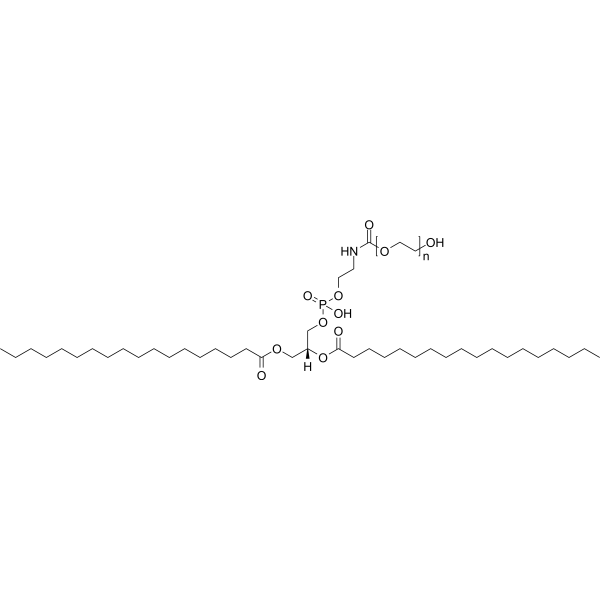
DSPE-PEG 2000 is a PEG polymer containing DSPE and amine end groups. DSPE-PEG 2000 can be used to form micelles as nanoparticles for drug delivery .
|
-
- HY-168379
-
|
|
Biochemical Assay Reagents
|
Others
|
|
DLAC is a detergent synthesized from Lactobionic acid (HY-N7059). DLAC can be used to solubilize membrane proteins, with a critical micelle concentration (CMC) of 1.3 mM .
|
-
- HY-W1122892
-
|
Lauryl D-glucoside; Dodecyl D-glucoside
|
Biochemical Assay Reagents
|
Others
|
|
Dodecyl D-glucopyranoside is a nonionic detergent. Dodecyl D-glucopyranoside has a critical micelle concentration of 125 μM. Dodecyl D-glucopyranoside can be used in Vitamin E emulsification .
|
-
- HY-113424A
-
|
DOPC
|
Liposome
Endogenous Metabolite
|
Others
|
|
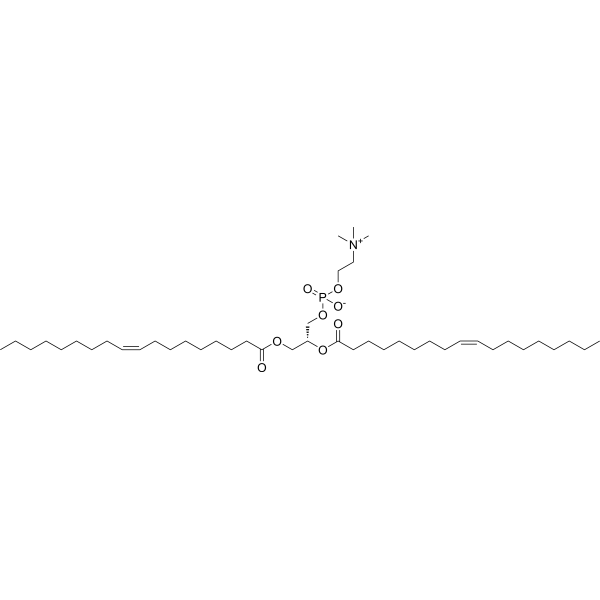
1,2-Dioleoyl-sn-glycero-3-phosphocholine (DOPC) is a phospholipid and is commonly used alone, or with other components, in the generation of micelles, liposomes, and other types of artificial membranes.
|
-
- HY-W127457
-
|
|
Liposome
|
Others
|
|
1,2-dihexanoyl-sn-glycero-3-phosphocholine is a phosphatidylcholine. It can play a role as a surfactant and is commonly used in the generation of micelles, liposomes, and other types of artificial membranes.
|
-
- HY-164217
-
|
|
Drug Derivative
|
Others
|
|
β-D-Glucuronylmonomethylauristatin E is a derivative of MMAE (HY-15162). β-D-Glucuronylmonomethylauristatin E does not interact with pure phospholipid membranes, but can be effectively solubilized by micelles .
|
-
- HY-172378A
-
|
|
Biochemical Assay Reagents
|
Others
|
|
Poly(styrene)-block-poly(acrylic acid) (PS:PAA 3,000:5,000,DDMAT terminated) is a diblock copolymer used to prepare polymer micelles or vesicles and other encapsulation applications .
|
-
- HY-113437A
-
|
|
Endogenous Metabolite
|
Metabolic Disease
|
|
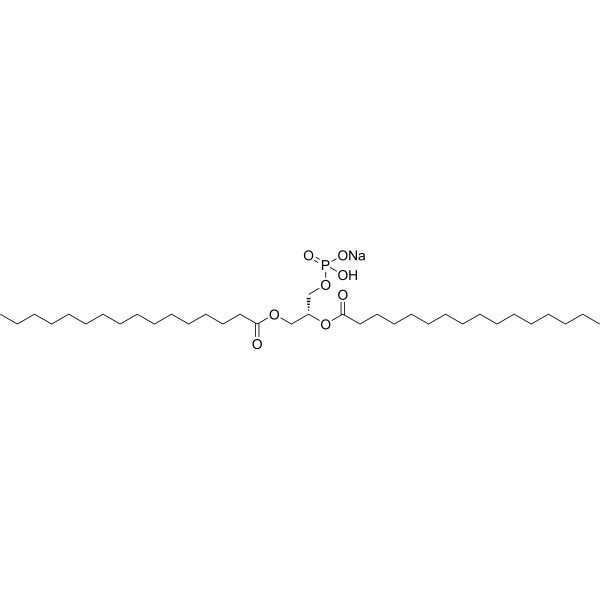
1,2-Dipalmitoyl-sn-glycerol 3-phosphate sodium (compound 3-F7) is a phosphatidic acid and a human endogenous metabolite . It is used in the generation of micelles, liposomes, and artificial membranes.
|
-
- HY-W845699
-
|
|
Amino Acid Derivatives
|
Others
|
|
H-His-Arg-OH is a dipeptide containing guanidine groups. H-His-Arg-OH can be used as a dissociating agent to reduce the critical micelle concentration and form a stable nano lotion .
|
-
- HY-W800733
-
|
1,2-Dilauroyl-sn-glycero-3-phosphorylglycerol; PG(12:0/12:0)
|
Liposome
|
Cancer
|
|
DLPG is a phospholipid containing lauric acid (12 chain fatty acid) inserted at the sn-1 and sn-2 positions. Its phosphate group is attached to glycerol. It is used in the generation of micelles, liposomes, and other artificial membranes.
|
-
- HY-W440722
-
|
|
Liposome
|
Others
|
|
Cholesterol-PEG1000-Thiol is a PEGylated lipid that forms micelles in water and can be used to prepare liposomes or nanoparticles as drug delivery systems. The thiol moiety reacts with maleimide to form a stable thioether bond .
|
-
- HY-U00037
-
|
PLA 725
|
Phospholipase
|
Inflammation/Immunology
|
|
Ecopladib is a sub-micromolar inhibitor of cytosolic phospholipase A2α (cPLA2α), with IC50s of 0.15 μM and 0.11 μM in the GLU micelle and rat whole blood assays, respectively.
|
-
- HY-W322575
-
|
DHPC
|
Liposome
|
Others
|
|
1,2-Diheptadecanoyl-sn-glycero-3-phosphorylcholine (DHPC) is a biologically active phospholipid compound and a derivative of phosphatidylcholine (PC) . It can be used in the generation of micelles, liposomes, and other types of artificial membranes.
|
-
- HY-W440690
-
|
|
Liposome
|
Cancer
|
|
Cholesterol-PEG2000-amine is a pegylated lipids which can be used for preparation of liposome or nanoparticle. The lipophilic moiety can encapsulate hydrophobic drugs whereas the hydrophilic PEG chain helps the overal water solubility of the micelles.
|
-
- HY-W440927
-
|
|
Liposome
|
Others
|
|
Stearic acid-PEG2000-NHS is an amphiphatic PEG polymer which forms micelles in an aqueous solution for drug-loaded nanoparticles. The NHS ester is reactive with amine to form a stable amide bond. Reagent grade, for research purpose.
|
-
- HY-W440724
-
|
|
Liposome
|
Cancer
|
|
Cholesterol-PEG3400-Thiol is an amphiphatic PEG derivative which forms micelles in water and can be used to prepare liposomes or nanoparticles for drug delivery system. The thiol moiety is reactive with maleimide to form a stable thioether bond.
|
-
- HY-174897
-
|
|
Biochemical Assay Reagents
|
Others
|
|
DSPE-PEG4-NHS ester is a lipid-containing PEG derivative that can be used to form micelles as nanoparticles for drug delivery . NHS esters can be conjugated to amino acids or other molecules containing an amino group.
|
-
- HY-157623
-
|
1-Palmitoyl-2-hydroxy-sn-glycero-3-phospho-L-serine sodium
|
Biochemical Assay Reagents
|
Others
|
|
16:0 Lyso PS (1-Palmitoyl-2-hydroxy-sn-glycero-3-phospho-L-serine sodium) is a lysophospholipid. 16:0 Lyso PS serves as a standard for preparing standard curves .
|
-
- HY-112554
-
|
|
Phosphatase
|
Others
|
|
PDM11 is a derivative of antioxidant resveratrol. PDM11 do not exhibit any significant protective effect against oxidation of linoleate micelles initiated by radiolysis-generated hydroxyl radicals. PDM11 is inactive in resveratrol activity assays .
|
-
- HY-W590536
-
|
1-Palmitoyl-2-Lauroyl-sn-glycero-3-Phosphatidylcholine; 1-Palmitoyl-2-Lauroyl-sn-glycero-3-Phosphocholine
|
Liposome
|
Cancer
|
|
1,2-PLPC is a phospholipid containing palmitoyl (16:0) and lauryl (12:0) acyl substituents at the sn-1 and sn-2 positions, respectively. It can be used in the generation of micelles, liposomes, and other types of artificial membranes.
|
-
- HY-W440934
-
|
|
Liposome
|
Others
|
|
Stearic acid-PEG2000-Rhodamine is an amphiphilic PEG polymer which can form micelles in water. The rhodamine can be used for staining sample and easily traced by fluorescence microscopy. Rhodamine has maximum absorption at 570 nm and emission around 595 nm.
|
-
- HY-W440834
-
|
|
Liposome
|
Others
|
|
DSPE-PEG5000-azide is a click chemistry reactive phospholipid polyPEG which forms lipid bilayer or micelles in an aqueous solution. The polymer can be used to prepare liposomes or nanoparticles used for delivering nutrients or therapeutic agents, for example mRNA or DNA vaccine.
|
-
- HY-W440914
-
|
|
Fluorescent Dye
|
Others
|
|
DSPE-PEG1000-FITC is an amphiphile PEG polymer which has unsaturated lipid tails. The polymer can form micelles in an aqueous solution and can be used to prepare liposome/nano particles for drug nanocarriers. . Reagent grade, for research use only.
|
-
- HY-170706
-
|
|
Liposome
|
Cancer
|
|
DSPE-PEG (2000)-COOH is a pegylated derivative of 1,2-Distearoyl-sn-glycero-3-phosphorylethanolamine (HY-112530) . DSPE-PEG2000-COOH can form micelles for targeted drug delivery .
|
-
- HY-W440914B
-
|
|
Fluorescent Dye
|
Others
|
|
DSPE-PEG10000-FITC is an amphiphile PEG polymer which has unsaturated lipid tails. DSPE-PEG10000-FITC can form micelles in an aqueous solution and can be used to prepare liposome/nano particles for drug nanocarriers .
|
-
- HY-W040185
-
|
1,2-DPPA sodium; PA(14:0/14:0) sodium; 1,2-Dimyristoyl-sn-glycero-3-phosphate sodium
|
Liposome
|
Metabolic Disease
|
|
1,2-Dimyristoyl-sn-glycero-3-phosphate monosodium is a phospholipid containing the long-chain (14:0) myristic acid inserted at the sn-1 and sn-2 positions. It can be used in the generation of micelles, liposomes, and other types of artificial membranes.
|
-
- HY-W440914A
-
|
|
Fluorescent Dye
|
Others
|
|
DSPE-PEG400-FITC is an amphiphile PEG polymer which has unsaturated lipid tails. DSPE-PEG400-FITC can form micelles in an aqueous solution and can be used to prepare liposome/nano particles for drug nanocarriers .
|
-
- HY-W096983
-
|
Dodecyltrimethylammonium chloride,for IPC,≥99%
|
Environmental Pollutants
Biochemical Assay Reagents
|
Others
|
|
DTAC (Dodecyltrimethylammonium chloride), for IPC, ≥99% is a quaternary ammonium cationic surfactant. DTAC, for IPC, ≥99% can form micelles in aqueous media, which interact with and encapsulate Diclofenac sodium (HY-15037) molecules; the micellization process is entropy-driven at lower temperatures and enthalpy-driven at higher temperatures .
|
-
- HY-157721
-
|
DBPC
|
Liposome
|
Others
|
|
1,2-Dibehenoyl-sn-glycero-3-phosphocholine (DBPC) is a phospholipid found in cell membranes. 1, 2-dibehenoyl-SN-glycero-3-phosphocholine can be used to generate micelles, liposomes, and other types of artificial membranes .
|
-
- HY-W893751
-
|
|
Biochemical Assay Reagents
|
Metabolic Disease
|
|
PMO-G is a spherical-shape polymeric micelles. PMO-G has skin permeation. PMO-G can result in up to a 50-fold higher level of dystrophin in abdominal muscles of mdx mice. PMO-G can be studied in research on Duchenne muscular dystrophy .
|
-
- HY-W440888B
-
|
|
Biochemical Assay Reagents
|
Others
|
|
DSPE-PEG3400-Folate is a PEG derivative containing folic acid. DSPE-PEG-Folate has a targeting effect and bind to folate receptors in cancer cells. DSPE-PEG-Folate form micelles/lipid bilayer and can be used to targeted drug delivery system research .
|
-
- HY-W440888A
-
|
|
Biochemical Assay Reagents
|
Others
|
|
DSPE-PEG1000-Folate is a PEG derivative containing folic acid. DSPE-PEG-Folate has a targeting effect and bind to folate receptors in cancer cells. DSPE-PEG-Folate form micelles/lipid bilayer and can be used to targeted drug delivery system research .
|
-
- HY-W440888C
-
|
|
Biochemical Assay Reagents
|
Others
|
|
DSPE-PEG5000-Folate is a PEG derivative containing folic acid. DSPE-PEG-Folate has a targeting effect and bind to folate receptors in cancer cells. DSPE-PEG-Folate form micelles/lipid bilayer and can be used to targeted drug delivery system research .
|
-
- HY-W441013
-
|
|
Liposome
|
Others
|
|
DSPE-PEG1000-NHS is a PEG-modified phospholipid derivative that can be used to prepare liposomes. DSPE-PEG1000-NHS is commonly employed as a linker molecule for the surface modification of liposomes to confer targeting capabilities. DSPE-PEG1000-NHS can be used in the study of drug delivery .
|
-
- HY-174896A
-
|
|
Biochemical Assay Reagents
|
Others
|
|
DSPE-PEG2000-Fmoc is a lipid-containing PEG derivative that can be used to form micelles as nanoparticles for drug delivery . Fmoc is a commonly used amino protecting group that protects the amino group from unwanted reactions until it is removed when a specific coupling reaction is required.
|
-
- HY-174896
-
|
|
Biochemical Assay Reagents
|
Others
|
|
DSPE-PEG1000-Fmoc is a lipid-containing PEG derivative that can be used to form micelles as nanoparticles for drug delivery . Fmoc is a commonly used amino protecting group that protects the amino group from unwanted reactions until it is removed when a specific coupling reaction is required.
|
-
- HY-144009
-
|
|
Liposome
|
Cancer
|
|
DSPE-PEG-Folate, MW 3350 is a PEG derivative containing folic acid. DSPE-PEG-Folate has a targeting effect and bind to folate receptors in cancer cells. DSPE-PEG-Folate form micelles/lipid bilayer and can be used to targeted drug delivery system research .
|
-
- HY-174896B
-
|
|
Biochemical Assay Reagents
|
Others
|
|
DSPE-PEG3400-Fmoc is a lipid-containing PEG derivative that can be used to form micelles as nanoparticles for drug delivery . Fmoc is a commonly used amino protecting group that protects the amino group from unwanted reactions until it is removed when a specific coupling reaction is required.
|
-
- HY-W440910
-
|
|
Liposome
|
Others
|
|
DSPE-PEG5000-Cy3 is a phospholipid PEG polymer with Cy3 dye used in labeling and fluorescence microscopy. The polymer can self-assemble in aqueous solution to form micelles/lipid bilayer and used to prepare liposomes or nanoparticles for nutrients delivery such as mRNA or DNA vaccine.
|
-
- HY-174896C
-
|
|
Biochemical Assay Reagents
|
Others
|
|
DSPE-PEG5000-Fmoc is a lipid-containing PEG derivative that can be used to form micelles as nanoparticles for drug delivery . Fmoc is a commonly used amino protecting group that protects the amino group from unwanted reactions until it is removed when a specific coupling reaction is required.
|
-
- HY-W440909
-
|
|
Liposome
|
Others
|
|
DSPE-PEG3400-Cy3 is a phospholipid PEG polymer with Cy3 dye used in labeling and fluorescence microscopy. The polymer can self-assemble in aqueous solution to form micelles/lipid bilayer and used to prepare liposomes or nanoparticles for nutrients delivery such as mRNA or DNA vaccine.
|
-
- HY-113925
-
|
1,2-DLPA Sodium; (2R)-2,3-bis(dodecanoyloxy)propyl hydrogen phosphate sodium
|
Liposome
|
Metabolic Disease
|
|
1,2-Dilauroyl-sn-glycero-3-phosphate (1,2-DLPA) sodium is a phospholipid containing the medium-chain (12:0) lauric acid inserted at the sn-1 and sn-2 positions. It can be used in the generation of micelles, liposomes, and other types of artificial membranes.
|
-
- HY-125940S
-
|
1,2-Dipalmitoyl-sn-glycero-3-phosphoglycerol-d62 sodium
|
Isotope-Labeled Compounds
|
Others
|
|
DPPG-d62 (sodium) is deuterium labeled DPPG. DPPG sodium (1,2-Dipalmitoyl-sn-glycero-3-PG sodium) is a phospholipid containing the long-chain(16:0) palmitic acid inserted at the sn-1 and sn-2 positions. DPPG sodium is used in the generation of micelles, l
|
-
- HY-W440706
-
|
|
Liposome
|
Cancer
|
|
Cholesterol-PEG2000-alcohol is a pegylated lipids which can be used for preparation of liposome or nanoparticle. The lipophilic moiety can encapsulate hydrophobic drugs whereas the hydrophilic PEG chain helps the overal water solubility of the micelles. The amine can react with an activated NHS ester to form a stable amide bond.
|
-
- HY-W440912
-
|
|
Liposome
|
Others
|
|
DSPE-PEG3400-Cy5 is a PEG phospholipid with Cy5 dye used in protein/nucelic acid labeling and fluorescence microscopy. The polymer can self-assemble in aqueous solution to form micelles/lipid bilayer and used to prepare liposomes or nanoparticles for nutrients delivery such as mRNA or DNA vaccine.
|
-
- HY-P11339
-
|
|
Integrin
|
Cancer
|
|
c-RGD-SH is a ligand for integrin αvβ3 (Integrin αvβ3). Conjugation of c-RGD-SH with core-crosslinked polymeric micelles (CCPM) enables the synthesis of a bimodal nanoprobe, which can be labeled with Cy7 and 111In for SPECT and NIRF imaging of tumors .
|
-
- HY-141571
-
|
Dioleoylphosphatidylglycerol sodium
|
Liposome
|
Others
|
|
DOPG sodium is a naturally occurring anionic phospholipid, containing oleic acid (18:1) inserted at the sn-1 and sn-2 positions. DOPG can form a lipid bilayer in an aqueous solution and is used in the generation of micelles, liposomes, and other artificial membranes. DOPG also exhibits anti-inflammatory properties .
|
-
- HY-W339838
-
|
14:0 Lyso PG
|
Liposome
|
Cancer
|
|
1-Myristoyl-2-hydroxy-sn-glycero-3-PG sodium is a lysophospholipid containing myristic acid (14:0) at the sn-1 position. It has been used in the generation of micelles, liposomes, and other types of artificial membranes, including lipid-based drug carrier systems.
|
-
- HY-W440914C
-
|
|
Fluorescent Dye
|
Others
|
|
DSPE-PEG600-FITC is an amphiphile PEG polymer which has unsaturated lipid tails. DSPE-PEG600-FITC can form micelles in an aqueous solution and can be used to prepare liposome/nano particles for drug nanocarriers (Ex/Em=488/525 nm) .
|
-
- HY-141614
-
|
Phosphatidylcholine Diarachidoyl; 1,2-DAPC; L-α-Diarachidonoyl lecithin
|
Liposome
|
Metabolic Disease
|
|
1,2-Diarachidoyl-sn-glycero-3-phosphocholine (1,2-DAPC) is a phospholipid containing the saturated long-chain (20:0) arachidic acid inserted at the sn-1 and sn-2 positions. It can be used in the generation of micelles, liposomes, and other types of artificial membranes.
|
-
- HY-158373
-
|
|
Autophagy
|
Cancer
|
|
Anticancer agent 213 (Compound 1) exhibits anticancer efficacy by self-assembling into micelles, depleting membran cholesterol and thus inhibiting cancer cells. Anticancer agent 213 exhibits cytotoxicity against HeLa and PC3, with IC50 of 10.3 and 13.7 μM. Anticancer agent 213 induces autophagy .
|
-
- HY-W343736
-
|
1,3-DPPE; 1,3-Dipalmitoyl-sn-glycero-2-PE
|
Liposome
|
Cancer
|
|
1,3-Dipalmitoyl-glycero-2-phosphoethanolamine is a phospholipid containing the saturated long-chain (16:0) stearic acid inserted at the sn-1 and sn-3 positions and PE at the sn-2 site. It can be used in the generation of micelles, liposomes, and other types of artificial membranes.
|
-
- HY-W440953
-
|
|
Biochemical Assay Reagents
|
Others
|
|
Stearic acid-PEG1000-CH2CO2H is an amphiphilic PEG polymer which forms micelles in an aqueous solution. The aliphatic chain of stearic acid can be used to encapsulate or congregate hydrophobic therapeutic agents while the PEG chain enhances overall solubility of the polymer.
|
-
- HY-145505
-
|
18:1 Lyso-PG; 1-Oleoyl-2-hydroxy-sn-glycero-3-phospho-(1'-rac-glycerol); 1-Oleoyl-2-hydroxy-sn-glycero-3-phosphoglycerol
|
Endogenous Metabolite
Liposome
|
Metabolic Disease
|
|
1-Oleoyl-2-hydroxy-sn-glycero-3-PG (18:1 Lyso PE) sodium is a lysophospholipid containing oleic acid (18:1) at the sn-1 position. It can be used in the generation of micelles, liposomes, and other types of artificial membranes, including lipid-based drug carrier systems.
|
-
- HY-W440991
-
|
DOPE-PEG2000-NH2
|
Liposome
|
Cancer
|
|
DOPE-PEG-Amine (MW 2000) is a polydisperse PEG covalently attached to a phospholipid. The polymer is an amphiphilic molecule with hydrophobic fatty acid chains and hydrophilic PEG head which enables lipid bilayer or micelle formation in water. The phospholipid PEG can be used to prepare liposome or nanoparticles for targeted drug delivery and is reactive with alkyne to form a triazole ring.
|
-
- HY-P11339A
-
|
|
Integrin
|
Cancer
|
|
c-RGD-SH TFA is an Integrin αvβ3 ligand. c-RGD-SH TFA conjugated with core-crosslinked polymeric micelles (CCPM) can be used for synthesis a dual modality nanoparticle probe, and this probe labeled with both Cy7 and 111In can be used for SPECT and NIRF imaging of tumor .
|
-
- HY-W800734
-
|
MPPC; PC(14:0/16:0)
|
Liposome
|
Cancer
|
|
1-Myristoyl-2-palmitoyl-sn-glycero-3-phosphocholine (MPPC) is an asymmetrical phosphatidylcholine containing a myristic acid (14:0) at the sn-1 position and a palmitic acid (16:0) at the sn-2 position. It is commonly used in the generation of micelles, liposomes, and other types of artificial membranes.
|
-
- HY-W440890
-
|
|
Liposome
|
Cancer
|
|
DSPE-PEG-Folate, MW 5000 is a PEG derivative containing folic acid. DSPE-PEG-Folate, MW 5000 has a targeting effect and bind to folate receptors in cancer cells. DSPE-PEG-Folate, MW 5000 form micelles/lipid bilayer and can be used to targeted drug delivery system research .
|
-
- HY-W440955
-
|
|
Biochemical Assay Reagents
|
Others
|
|
Stearic acid-PEG3400-CH2CO2H is an amphiphilic PEG polymer which forms micelles in an aqueous solution. The aliphatic chain of stearic acid can be used to encapsulate or congregate hydrophobic therapeutic agents while the PEG chain enhances overall solubility of the polymer.
|
-
- HY-W440956
-
|
|
Biochemical Assay Reagents
|
Others
|
|
Stearic acid-PEG5000-CH2CO2H is an amphiphilic PEG polymer which forms micelles in an aqueous solution. The aliphatic chain of stearic acid can be used to encapsulate or congregate hydrophobic therapeutic agents while the PEG chain enhances overall solubility of the polymer.
|
-
- HY-134174
-
|
|
Liposome
|
Cancer
|
|
1-Palmitoyl-2-oleoyl-sn-glycero-3-phosphate is a phospholipid containing saturated palmitic acid (16:0) and monounsaturated oleic acid (18:1) inserted at the sn-1 and sn-2 positions, respectively. It can be used in the generation of micelles, liposomes, and other types of artificial membranes.
|
-
- HY-D2526
-
|
|
Fluorescent Dye
Liposome
|
Others
|
|
Cy3 IRGD-PEG-DSPE is a PEG phospholipid with Cy3 (HY-D0822) dye used in protein/nucelic acid labeling and fluorescence microscopy. Cy3 IRGD-PEG-DSPE can self-assemble in aqueous solution to form micelles/lipid bilayer and used to prepare liposomes or nanoparticles for nutrients delivery such as mRNA or DNA vaccine.
|
-
- HY-W440835
-
|
DSPE-PEG2000(2000)-DBCO
|
Liposome
|
Others
|
|
DSPE-PEG2000-DBCO is a phospholipid-PEG polymer that can be used to form micelles as lipid nanoparticles for drug delivery . DSPE-PEG2000-DBCO is a click chemistry reagent, it contains a DBCO group that can undergo strain-promoted alkyne-azide cycloaddition (SPAAC) with molecules containing Azide groups.
|
-
- HY-W440835A
-
|
|
Biochemical Assay Reagents
|
Others
|
|
DSPE-PEG400-DBCO is a phospholipid-PEG polymer that can be used to form micelles as lipid nanoparticles for drug delivery . DSPE-PEG400-DBCO is a click chemistry reagent, it contains a DBCO group that can undergo strain-promoted alkyne-azide cycloaddition (SPAAC) with molecules containing Azide groups.
|
-
- HY-W440938
-
|
|
Liposome
|
Others
|
|
Stearic acid-PEG2000-FITC is an amphiphatic polyPEG which can self assemble to form micelles in water. The polymer can be used to encapsulate therapeutic agent. FITC is a green dye with peak absorption at 494 nm and maximum emission at 520 nm and can be used for staining biological samples or nanoparticles. FITC can be easily traced by fluorescence microscopy.
|
-
- HY-W440835B
-
|
|
Biochemical Assay Reagents
|
Others
|
|
DSPE-PEG600-DBCO is a phospholipid-PEG polymer that can be used to form micelles as lipid nanoparticles for drug delivery . DSPE-PEG600-DBCO is a click chemistry reagent, it contains a DBCO group that can undergo strain-promoted alkyne-azide cycloaddition (SPAAC) with molecules containing Azide groups.
|
-
- HY-W440835D
-
|
|
Biochemical Assay Reagents
|
Others
|
|
DSPE-PEG3400-DBCO is a phospholipid-PEG polymer that can be used to form micelles as lipid nanoparticles for drug delivery . DSPE-PEG3400-DBCO is a click chemistry reagent, it contains a DBCO group that can undergo strain-promoted alkyne-azide cycloaddition (SPAAC) with molecules containing Azide groups.
|
-
- HY-W440835C
-
|
|
Biochemical Assay Reagents
|
Others
|
|
DSPE-PEG1000-DBCO is a phospholipid-PEG polymer that can be used to form micelles as lipid nanoparticles for drug delivery . DSPE-PEG1000-DBCO is a click chemistry reagent, it contains a DBCO group that can undergo strain-promoted alkyne-azide cycloaddition (SPAAC) with molecules containing Azide groups.
|
-
- HY-W440936
-
|
|
Liposome
|
Others
|
|
Stearic acid-PEG5000-Rhodamine is a fatty acid containing PEG polymer which can self assemble in an aqueous solution to form micelles. The polymer can be used to prepare nanoparticles for drug encapsulation. The red dye rhodamine can be easily traced by fluorescence microscopy. Rhodamine has maximum absorption at 570 nm and emission around 595 nm.
|
-
- HY-W440835E
-
|
|
Biochemical Assay Reagents
|
Others
|
|
DSPE-PEG5000-DBCO is a phospholipid-PEG polymer that can be used to form micelles as lipid nanoparticles for drug delivery . DSPE-PEG5000-DBCO is a click chemistry reagent, it contains a DBCO group that can undergo strain-promoted alkyne-azide cycloaddition (SPAAC) with molecules containing Azide groups.
|
-
- HY-W250300
-
|
Ethylene glycol monododecyl ether
|
Biochemical Assay Reagents
|
Others
|
|
2-(Dodecyloxy) ethanol (Ethylene glycol monododecyl ether) is a nonionic ether monohydroxy C12 surfactant with a fragrance-like odor similar to jasmone and gardenia. 2-(Dodecyloxy) ethanol acts as a phase transition inducer and micelle-forming agent. 2-(Dodecyloxy) ethanol also serves as a skin penetration enhancer .
|
-
- HY-W440935
-
|
|
Liposome
|
Others
|
|
Stearic acid-PEG3400-Rhodamine is a fatty acid containing PEG polymer which can self assemble in an aqueous solution to form micelles. The polymer can be used to prepare nanoparticles for drug encapsulation. The red dye rhodamine can be easily traced by fluorescence microscopy. Rhodamine has maximum absorption at 570 nm and emission around 595 nm.
|
-
- HY-W440833
-
|
|
Liposome
|
Others
|
|
DSPE-PEG3400-azide is a polydisperse PEG covalently attached to a phospholipid. The polymer is an amphiphilic molecule with hydrophobic fatty acid chains and hydrophilic PEG head which enables lipid bilayer or micelles formation in water. The phospholipid PEG can be used to prepare liposome or nanoparticles for targeted drug delivery and is reactive with alkyne to form triazole bond.
|
-
- HY-N16025
-
|
|
Liposome
Biochemical Assay Reagents
|
Others
|
|
DOPE-PEG(2000) Amine ammonium is a polydisperse PEG covalently attached to a phospholipid. The polymer is an amphiphilic molecule with hydrophobic fatty acid chains and hydrophilic PEG head which enables lipid bilayer or micelle formation in water. The phospholipid PEG can be used to prepare liposome or nanoparticles for targeted agent delivery and is reactive with alkyne to form a triazole ring .
|
-
- HY-W440835H
-
|
|
Biochemical Assay Reagents
|
Others
|
|
DSPE-PEG10000-DBCO is a phospholipid-PEG polymer that can be used to form micelles as lipid nanoparticles for drug delivery . DSPE-PEG10000-DBCO is a click chemistry reagent, it contains a DBCO group that can undergo strain-promoted alkyne-azide cycloaddition (SPAAC) with molecules containing Azide groups.
|
-
- HY-W440902
-
|
|
Biochemical Assay Reagents
|
Others
|
|
DSPE-PEG3400-IA is an iodoacetyll PEG lipid. The polymer can form lipid bilayer or micelles spontaneoulsy in water. The lipophilic tails can be used to encapsulate hydrophobic therapeutic agents while the hydrophilic head can be used to encapuslate hydrophilic drugs/nutrient, such as antibody, mRNA/DNA. The iodoacetyl group is reactive with thiol to produce a thioether linkage.
|
-
- HY-W440939
-
|
|
Liposome
|
Others
|
|
Stearic acid-PEG3400-FITC is a PEG lipid which forms micelles in water and can be used for drug delivery applications. The FITC fluorescent can be easily traced by miscroscopy. FITC is a green dye with peak absorption at 494 nm and maximum emission at 520 nm and can be used for staining biological samples or nanoparticles. FITC can be easily traced by fluorescence microscopy.
|
-
- HY-W440940
-
|
|
Liposome
|
Others
|
|
Stearic acid-PEG5000-FITC is a PEG lipid which forms micelles in water and can be used for drug delivery applications. The FITC fluorescent can be easily traced by miscroscopy. FITC is a green dye with peak absorption at 494 nm and maximum emission at 520 nm and can be used for staining biological samples or nanoparticles. FITC can be easily traced by fluorescence microscopy.
|
-
- HY-113424AS
-
|
DOPC-d9
|
Isotope-Labeled Compounds
Endogenous Metabolite
|
Others
|
|
1,2-Dioleoyl-sn-glycero-3-phosphocholine-d9 is deuterium labeled 1,2-Dioleoyl-sn-glycero-3-phosphocholine. 1,2-Dioleoyl-sn-glycero-3-phosphocholine (DOPC) is a phospholipid and is commonly used alone, or with other components, in the generation of micelle
|
-
- HY-W440903
-
|
|
Biochemical Assay Reagents
|
Others
|
|
DSPE-PEG5000-IA is a cyclooctyne containing phospholipid PEG polymer. The polymer can self-assemble spontaneously in water to form micelles/lipid bilayer. It can be used to prepare nanoparticles or liposomes as drug carrier in targeted drug delivery system. The DBCO can react with azide molecule via copper free click chemistry to form a stable triazole bond.
|
-
- HY-D2609
-
|
|
Fluorescent Dye
|
Others
|
|
ICG PEG1000 DSPE is a PEG phospholipid with Indocyanine green (ICG) (HY-D0711) dye used in protein/nucelic acid labeling and fluorescence microscopy. ICG PEG1000 DSPE can self-assemble in aqueous solution to form micelles/lipid bilayer and used to prepare liposomes or nanoparticles for nutrients delivery such as mRNA or DNA vaccine (Ex/Em=785/813 nm).
|
-
- HY-W591332
-
|
|
Liposome
|
Cancer
|
|
mPEG2000-DMPE is a PEGylated 1,2-Dimyristoyl-sn-glycero-3-phosphoethanolamine (14:0 PE) compound with a methyl group at the other end of the PEG chain. The PEG polymer exhibits amphiphatic behavior and helps to form stable micelles in an aqueous solution. It can be used to prepare nanoparticles or liposomes for targeted drug delivery applications.
|
-
- HY-145507
-
|
1-Palmitoyl-2-hydroxy-sn-glycero-3-PG sodium; 16:0 Lyso PG; PG(16:0/0:0); 1-Hexadecanoyl-sn-glycero-3-phospho-(1'racglycerol) sodium
|
Liposome
|
Metabolic Disease
|
|
1-Palmitoyl-2-hydroxy-sn-glycero-3-phospho-(1'-rac-glycerol) (16:0 Lyso PE) sodium is a lysophospholipid containing palmitic acid (16:0) at the sn-1 position. It can be used in the generation of micelles, liposomes, and other types of artificial membranes, including lipid-based drug carrier systems.
|
-
- HY-145506
-
|
18:0 Lyso PG sodium
|
Liposome
|
Metabolic Disease
|
|
1-Stearoyl-2-hydroxy-sn-glycero-3-phospho-(1'-rac-glycerol) (18:0 Lyso PE) sodium is a lysophospholipid containing stearic acid (18:0) at the sn-1 position. It can be used in the generation of micelles, liposomes, and other types of artificial membranes, including lipid-based drug carrier systems.
|
-
- HY-W440915
-
|
|
Liposome
|
Inflammation/Immunology
|
|
DSPE-PEG2000-FITC is a PEG lipid conjugated with fluorescein. FITC is a green dye with a peak absorption at 494 nm and a maximum emission at 520 nm, which is used for staining biological samples or nanoparticles. DSPE-PEG2000-FITC spontaneously forms lipid bilayers or micelles in water and can be used to prepare liposomes for delivering substances such as mRNA vaccines .
|
-
- HY-D2611
-
|
|
Fluorescent Dye
|
Others
|
|
ICG PEG3400 DSPE is a PEG phospholipid with Indocyanine green (ICG) (HY-D0711) dye used in protein/nucelic acid labeling and fluorescence microscopy. ICG PEG3400 DSPE can self-assemble in aqueous solution to form micelles/lipid bilayer and used to prepare liposomes or nanoparticles for nutrients delivery such as mRNA or DNA vaccine (Ex/Em=785/813 nm).
|
-
- HY-D2613
-
|
|
Fluorescent Dye
|
Others
|
|
ICG PEG10000 DSPE is a PEG phospholipid with Indocyanine green (ICG) (HY-D0711) dye used in protein/nucelic acid labeling and fluorescence microscopy. ICG PEG10000 DSPE can self-assemble in aqueous solution to form micelles/lipid bilayer and used to prepare liposomes or nanoparticles for nutrients delivery such as mRNA or DNA vaccine (Ex/Em=785/813 nm).
|
-
- HY-113424AS1
-
|
1,2-Dioleoyl-sn-glycero-3-phosphocholine-d31
|
Isotope-Labeled Compounds
|
Others
|
|
DOPC-d31 (1,2-Dioleoyl-sn-glycero-3-phosphocholine-d31) is the deuterium labeled DOPC (HY-113424A). 1,2-Dioleoyl-sn-glycero-3-phosphocholine (DOPC) is a phospholipid and is commonly used alone, or with other components, in the generation of micelles, liposomes, and other types of artificial membranes.
|
-
- HY-D2612
-
|
|
Fluorescent Dye
|
Others
|
|
ICG PEG5000 DSPE is a PEG phospholipid with Indocyanine green (ICG) (HY-D0711) dye used in protein/nucelic acid labeling and fluorescence microscopy. ICG PEG5000 DSPE can self-assemble in aqueous solution to form micelles/lipid bilayer and used to prepare liposomes or nanoparticles for nutrients delivery such as mRNA or DNA vaccine (Ex/Em=785/813 nm).
|
-
- HY-D2610
-
|
|
Fluorescent Dye
|
Others
|
|
ICG PEG2000 DSPE is a PEG phospholipid with Indocyanine green (ICG) (HY-D0711) dye used in protein/nucelic acid labeling and fluorescence microscopy. ICG PEG2000 DSPE can self-assemble in aqueous solution to form micelles/lipid bilayer and used to prepare liposomes or nanoparticles for nutrients delivery such as mRNA or DNA vaccine (Ex/Em=785/813 nm).
|
-
- HY-W440926
-
|
|
Liposome
|
Others
|
|
Stearic acid-PEG1000-NHS is a cyclooctyne containing phospholipid PEG polymer. The polymer can self-assemble spontaneously in water to form micelles/lipid bilayer. It can be used to prepare nanoparticles or liposomes as drug carrier in targeted drug delivery system. The DBCO can react with azide molecule via copper free click chemistry to form a stable triazole bond.
|
-
- HY-W440945
-
|
|
Liposome
|
Others
|
|
Stearic acid-PEG2000-amine is an amphiphilic PEG polymer which forms micelles in an aqueous solution. The terminal amine can react with an NHS ester to form a stable amide linkage. The aliphatic chain of stearic acid can be used to encapsulate or congregate hydrophobic therapeutic agents while the PEG chain enhances overall solubility of the polymer. Reagent grade, for research use only.
|
-
- HY-P10318
-
|
|
GLP Receptor
|
Endocrinology
|
|
SHR-2042 is a selective agonist of the GLP-1 receptor.SHR-2042 improves glycemic control by activating the GLP-1 receptor, enhancing insulin secretion and inhibiting glucagon secretion. SHR-2042 combined with sodium N-(8-[2-hydroxybenzoyl] amino) caprylate (SNAC) promotes monomerization through the formation of micelles and improves oral absorption efficiency .
|
-
- HY-140696H
-
|
mPEG750-Hydroxy; Polyethylene glycol monomethyl ether 750
|
Biochemical Assay Reagents
|
Cancer
|
|
m-PEG750-OH (mPEG750-Hydroxy) is a monomethoxypolyethylene glycol and also a macroinitiator for organocatalytic ring-opening polymerization of aliphatic cyclic carbonate monomers. m-PEG750-OH can participate in the synthesis of amphiphilic block copolymers. Amphiphilic block copolymers can be used to prepare nanoscale micelles for active drug delivery .
|
-
- HY-160269
-
|
|
Fluorescent Dye
|
Others
|
|
DSPE-PEG2000-Fluor 488 is a PEG-dye-lipid conjugate consisting of a DSPE phospholipid and a Fluor 488 dye. DSPE is a phospholipid that spontaneously forms micelles in a water medium, and Fluor 488 is a cyanine dye that is widely used in fluorescence microscopy. Fluor 488 has excitation and emission maxima at 499 nm and 520 nm. Polyethylene glycol lipids are commonly used for the stabilization of lipid nanoparticles .
|
-
- HY-140697
-
|
mPEG5000-Hydroxy; Polyethylene glycol monomethyl ether 5000
|
Environmental Pollutants
PROTAC Linkers
|
Cancer
|
|
m-PEG5000-OH (mPEG5000-Hydroxy) is a monomethoxypolyethylene glycol and also a macroinitiator for organocatalytic ring-opening polymerization of aliphatic cyclic carbonate monomers. m-PEG1000-OH can participate in the synthesis of amphiphilic block copolymers. Amphiphilic block copolymers can be used to prepare nanoscale micelles for active drug delivery .
|
-
- HY-W127457S3
-
|
|
Isotope-Labeled Compounds
|
Others
|
|
1,2-Dihexanoyl-sn-glycero-3-phosphocholine-d31 is the deuterium labeled 1,2-Dihexanoyl-sn-glycero-3-phosphocholine. 1,2-Dihexanoyl-sn-glycero-3-phosphocholine is a phosphatidylcholine. It can play a role as a surfactant and is commonly used in the generation of micelles, liposomes, and other types of artificial membranes.
|
-
- HY-140696B
-
|
mPEG550-Hydroxy; Polyethylene glycol monomethyl ether 550
|
Environmental Pollutants
Biochemical Assay Reagents
|
Cancer
|
|
m-PEG550-OH (mPEG550-Hydroxy) is a monomethoxypolyethylene glycol and also a macroinitiator for organocatalytic ring-opening polymerization of aliphatic cyclic carbonate monomers. m-PEG550-OH can participate in the synthesis of amphiphilic block copolymers. Amphiphilic block copolymers can be used to prepare nanoscale micelles for active drug delivery .
|
-
- HY-D2517
-
|
|
Fluorescent Dye
Liposome
|
Others
|
|
Cy3-PEG5000-DSPE is a PEG phospholipid with Cy3 (HY-D0822) dye used in protein/nucelic acid labeling. Cy3-PEG5000-DSPE can self-assemble in aqueous solution to form micelles/lipid bilayer and used to prepare liposomes or nanoparticles for nutrients delivery such as mRNA or DNA vaccine.
|
-
- HY-140696E
-
|
mPEG1000-Hydroxy; Polyethylene glycol monomethyl ether 1000
|
Environmental Pollutants
Biochemical Assay Reagents
|
Cancer
|
|
m-PEG1000-OH (mPEG1000-Hydroxy) is a monomethoxypolyethylene glycol and also a macroinitiator for organocatalytic ring-opening polymerization of aliphatic cyclic carbonate monomers. m-PEG1000-OH can participate in the synthesis of amphiphilic block copolymers. Amphiphilic block copolymers can be used to prepare nanoscale micelles for active drug delivery .
|
-
- HY-W127457S2
-
|
|
Isotope-Labeled Compounds
|
Others
|
|
1,2-Dihexanoyl-sn-glycero-3-phosphocholine-d9 is the deuterium labeled 1,2-Dihexanoyl-sn-glycero-3-phosphocholine. 1,2-Dihexanoyl-sn-glycero-3-phosphocholine is a phosphatidylcholine. It can play a role as a surfactant and is commonly used in the generation of micelles, liposomes, and other types of artificial membranes.
|
-
- HY-W591332A
-
|
|
Biochemical Assay Reagents
|
Others
|
|
mPEG1000-DMPE is a PEGylated 1,2-Dimyristoyl-sn-glycero-3-phosphoethanolamine (14:0 PE) compound with a methyl group at the?other?end of the PEG chain. The PEG polymer exhibits amphiphatic behavior and helps to form stable micelles in an aqueous solution. It can be used to prepare nanoparticles or liposomes for targeted drug delivery applications .
|
-
- HY-D2544
-
|
|
Fluorescent Dye
|
Others
|
|
Cy5-PEG5000-DSPE is a PEG phospholipid with Cy5 (HY-D0821) dye used in protein/nucelic acid labeling and fluorescence microscopy. Cy5-PEG5000-DSPE can self-assemble in aqueous solution to form micelles/lipid bilayer and used to prepare liposomes or nanoparticles for nutrients delivery such as mRNA or DNA vaccine.
|
-
- HY-D2542
-
|
|
Fluorescent Dye
|
Others
|
|
Cy5-PEG2000-DSPE is a PEG phospholipid with Cy5 (HY-D0821) dye used in protein/nucelic acid labeling and fluorescence microscopy. Cy5-PEG2000-DSPE can self-assemble in aqueous solution to form micelles/lipid bilayer and used to prepare liposomes or nanoparticles for nutrients delivery such as mRNA or DNA vaccine.
|
-
- HY-161750
-
|
|
PROTACs
Anaplastic lymphoma kinase (ALK)
|
Cancer
|
|
PROTAC ALK degrader-2 (B1-PEG) is an ALK degrader based on PROTACs, with the DC50 of 45 nM in H3122 EML4-ALK DC50 (GSH+). PROTAC ALK degrader-2, through PEGylation, is engineered to self-organize into micelles in water and releases its active form in response to the tumor-specific high GSH environment .
|
-
- HY-W451406B
-
|
|
Drug Intermediate
Biochemical Assay Reagents
|
Metabolic Disease
|
|
NH2-PEG1000-NH2 is a double-ended amino polyethylene glycol with a number-average molecular weight of 1000, which serves as a synthetic raw material for adamantyl polyethylene glycol amine. NH2-PEG1000-NH2 can be used for the preparation of reduction-responsive liver-targeted polymeric micelles .
|
-
- HY-D2541
-
|
|
Fluorescent Dye
|
Others
|
|
Cy5-PEG1000-DSPE is a PEG phospholipid with Cy5 (HY-D0821) dye used in protein/nucelic acid labeling and fluorescence microscopy. Cy5-PEG1000-DSPE can self-assemble in aqueous solution to form micelles/lipid bilayer and used to prepare liposomes or nanoparticles for nutrients delivery such as mRNA or DNA vaccine.
|
-
- HY-D2516
-
|
|
Fluorescent Dye
Liposome
|
Others
|
|
Cy3-PEG3400-DSPE is a PEG phospholipid with Cy3 (HY-D0822) dye used in protein/nucelic acid labeling and fluorescence microscopy. Cy3-PEG3400-DSPE can self-assemble in aqueous solution to form micelles/lipid bilayer and used to prepare liposomes or nanoparticles for nutrients delivery such as mRNA or DNA vaccine.
|
-
- HY-W440885
-
|
|
Biochemical Assay Reagents
|
Others
|
|
DSPE-PEG5000-Ald is a phospholipid PEG polymer which can self-assemble spontaneously in water with their hydrophilic heads oriented toward the water (micelles). The polymer can be used to prepare liposome as a drug nanocarrier for administration of nutrients and therapeutic drugs, such as lipid nanoparticles in mRNA or DNA vaccines. The aldehyde is reactive with aminooxy to form a stable oxime linkage or with amine at pH < 7 to form a reversible imine bond.
|
-
- HY-D2543
-
|
|
Fluorescent Dye
|
Others
|
|
Cy5-PEG3400-DSPE is a PEG phospholipid with Cy5 (HY-D0821) dye used in protein/nucelic acid labeling and fluorescence microscopy. Cy5-PEG3400-DSPE can self-assemble in aqueous solution to form micelles/lipid bilayer and used to prepare liposomes or nanoparticles for nutrients delivery such as mRNA or DNA vaccine.
|
-
- HY-P2936
-
|
|
Phospholipase
|
Cardiovascular Disease
Infection
|
|
Sphingomyelin phosphodiesterase, Streptomyces sp. is a sphingomyelin phosphodiesterase derived from the genus Streptomyces, which cleaves the phosphodiester bond of sphingomyelin. Sphingomyelin phosphodiesterase, Streptomyces sp. catalyzes the hydrolysis of sphingomyelin in micelles, synthetic substrates, erythrocyte ghost membranes and liposomes, as well as the hydrolysis of the substrate HNP. In the presence of Mg 2+ or Mn 2+ , Sphingomyelin phosphodiesterase, Streptomyces sp. induces hemolysis of bovine erythrocytes through the hydrolysis of membrane sphingomyelin .
|
-
- HY-D2545
-
|
|
Fluorescent Dye
|
Others
|
|
Cy5-PEG10000-DSPE is a PEG phospholipid with Cy5 (HY-D0821) dye used in protein/nucelic acid labeling and fluorescence microscopy. Cy5-PEG10000-DSPE can self-assemble in aqueous solution to form micelles/lipid bilayer and used to prepare liposomes or nanoparticles for nutrients delivery such as mRNA or DNA vaccine.
|
-
- HY-W414390
-
|
2-Cyclohexylethyl-4-O-(alpha-D-glucopyranosyl)-beta-D-glucopyranoside, 98%
|
Biochemical Assay Reagents
|
Others
|
|
2-Cyclohexylethyl-4-O-(α-D-glucopyranosyl)-β-D-glucopyranoside, 98% (2-Cyclohexylethyl-4-O-(alpha-D-glucopyranosyl)-beta-D-glucopyranoside, 98%) is a detergent that can be used for the purification and crystallization of membrane-bound proteins in their native structure. It can self-assemble into micelles and vesicles in aqueous solution and can be used for the study of biomembrane models.
|
-
- HY-W440954
-
|
|
Liposome
|
Others
|
|
Stearic acid-PEG2000-CH2CO2H is a heterobifunctional polyPEG with 18-carbon aliphatic chain and carboxyl. The polymer has stearic acid as the hydrophobic tail and PEG as the hydrophilic chain, therefore it forms micelles in water. Carboxyl can react with amine in the presence of activator, such as HATU/EDC to generate a stable amide bond. Reagent grade, for research use only.
|
-
- HY-D2567
-
|
|
Fluorescent Dye
|
Others
|
|
Cy5.5-PEG5000-DSPE is a PEG phospholipid with Cy5.5 (HY-D0924) dye used in protein/nucelic acid labeling and fluorescence microscopy. Cy5.5-PEG5000-DSPE can self-assemble in aqueous solution to form micelles/lipid bilayer and used to prepare liposomes or nanoparticles for nutrients delivery such as mRNA or DNA vaccine.
|
-
- HY-D2566
-
|
|
Fluorescent Dye
|
Others
|
|
Cy5.5-PEG3400-DSPE is a PEG phospholipid with Cy5.5 (HY-D0924) dye used in protein/nucelic acid labeling and fluorescence microscopy. Cy5.5-PEG3400-DSPE can self-assemble in aqueous solution to form micelles/lipid bilayer and used to prepare liposomes or nanoparticles for nutrients delivery such as mRNA or DNA vaccine.
|
-
- HY-D2565
-
|
|
Fluorescent Dye
|
Others
|
|
Cy5.5-PEG2000-DSPE is a PEG phospholipid with Cy5.5 (HY-D0924) dye used in protein/nucelic acid labeling and fluorescence microscopy. Cy5.5-PEG2000-DSPE can self-assemble in aqueous solution to form micelles/lipid bilayer and used to prepare liposomes or nanoparticles for nutrients delivery such as mRNA or DNA vaccine.
|
-
- HY-125940
-
|
1,2-Dipalmitoyl-sn-glycero-3-phosphoglycerol sodium
|
Liposome
|
Others
|
|
DPPG (1,2-Dipalmitoyl-sn-glycero-3-phosphoglycerol sodium) is a phospholipid that contains long-chain (16:0) palmitic acid inserted at the sn-1 and sn-2 positions, and it serves as an active component to prevent BaP molecules from entering the water subphase. DPPG is used to prepare micelles, liposomes, and other types of artificial membranes that can resist damage from UV radiation .
|
-
- HY-D2564
-
|
|
Fluorescent Dye
|
Others
|
|
Cy5.5-PEG1000-DSPE is a PEG phospholipid with Cy5.5 (HY-D0924) dye used in protein/nucelic acid labeling and fluorescence microscopy. Cy5.5-PEG1000-DSPE can self-assemble in aqueous solution to form micelles/lipid bilayer and used to prepare liposomes or nanoparticles for nutrients delivery such as mRNA or DNA vaccine.
|
-
- HY-D2568
-
|
|
Fluorescent Dye
|
Others
|
|
Cy5.5-PEG10000-DSPE is a PEG phospholipid with Cy5.5 (HY-D0924) dye used in protein/nucelic acid labeling and fluorescence microscopy. Cy5.5-PEG10000-DSPE can self-assemble in aqueous solution to form micelles/lipid bilayer and used to prepare liposomes or nanoparticles for nutrients delivery such as mRNA or DNA vaccine.
|
-
- HY-160800
-
|
BR-DT
|
Drug Derivative
|
Inflammation/Immunology
|
|
Bilirubin ditaurine (BR-DT) is a mimetic compound of conjugated bilirubin. Bilirubin ditaurine can completely prevent the oxidation of phosphatidylcholine induced by reactive oxygen species in multilayer liposomes or micelles. Bilirubin ditaurine does not significantly decompose 18:2-OOH on its own, but it can greatly accelerate the decomposition of 18:2-OOH catalyzed by copper ions. Bilirubin ditaurine can be used to study the detoxification effect of conjugated bilirubin .
|
-
- HY-173606
-
|
|
Liposome
|
Others
|
|
DSPE-PEG2000-Azide ammonium is an azide containing lipid that can be used to form micelles as nanoparticles for drug delivery . DSPE-PEG2000-Azide ammonium is a click chemistry reagent, it contains an Azide group and can undergo copper-catalyzed azide-alkyne cycloaddition reaction (CuAAc) with molecules containing Alkyne groups. It can also undergo strain-promoted alkyne-azide cycloaddition (SPAAC) reactions with molecules containing DBCO or BCN groups.
|
-
- HY-W440832
-
|
|
Liposome
|
Infection
|
|
DSPE-PEG2000-azide is an azide containing lipid that can be used to form micelles as nanoparticles for drug delivery . DSPE-PEG2000-azide is a click chemistry reagent, it contains an Azide group and can undergo copper-catalyzed azide-alkyne cycloaddition reaction (CuAAc) with molecules containing Alkyne groups. It can also undergo strain-promoted alkyne-azide cycloaddition (SPAAC) reactions with molecules containing DBCO or BCN groups.
|
-
- HY-W099547
-
|
|
Liposome
|
Others
|
|
Dihexadecyl hydrogen phosphateIt is an organic compound belonging to phospholipids. It's often used as an emulsifier, which means it helps mix two substances together that don't usually mix well, such as oil and water. Dihexadecyl hydrogen phosphateIt has several applications in the food industry, especially in the production of processed foods where it improves texture and stability. Additionally, it has applications in the pharmaceutical industry where it can be used ain the generation of micelles, liposomes, and other types of artificial membranes.
|
-
- HY-W012472
-
|
|
Environmental Pollutants
Biochemical Assay Reagents
|
Others
|
|
1,3,5-Triisopropylbenzene is a symmetric aromatic hydrocarbon compound. 1,3,5-Triisopropylbenzene serves as a saturated crosslinker to participate in the "inverse vulcanization" reaction of elemental sulfur. 1,3,5-Triisopropylbenzene acts as a probe molecule to evaluate the external surface acidity and accessibility of zeolite materials. 1,3,5-Triisopropylbenzene is also used as fuel and fuel additive, lubricant and lubricant additive, as well as micelle swelling agent .
|
-
- HY-123622
-
|
|
Biochemical Assay Reagents
|
Others
|
|
CYMAL-5, 98% (TLC) is a cycloalkyl aliphatic saccharide. CYMAL-5, 98% (TLC) is a glycosidic surfactant (GS) with a chiral maltose polar head group and a cyclohexyl-pentyl hydrophobic tail. CYMAL-5, 98% (TLC) is a non-ionic detergent that has a tenfold lower critical micelle concentration (CMC) in comparison with OG, and has previously been used for membrane protein extraction or crystallization of membrane proteins for X-ray crystallographic studies .
|
-
- HY-155882
-
|
mPEG750-NH2
|
Biochemical Assay Reagents
|
Cancer
|
|
mPEG750-amine (mPEG750-NH2) is a chemical modification reagent for nanoparticles, capable of covalently binding to Ad-PVA to form Ad-PVA-PEG polymers. mPEG750-amine stabilizes gene delivery complexes by providing steric hindrance, reducing particle aggregation, while enhancing the water solubility and serum stability of the complex, reducing carrier cytotoxicity, and assisting in the efficient condensation of pDNA by cationic components to form nanoparticles that can be endocytosed by cells. mPEG750-amine can also be used to synthesize folate-conjugated polymer micelles for encapsulating the anticancer agent Camptothecin (HY-16560). Folate-conjugated polymer micelles are effective carriers for poorly soluble anticancer drugs, capable of avoiding macrophages and acting through folate receptor (FR)-mediated endocytosis to target tumor cells. mPEG750-amine can be applied to research in the field of non-viral gene delivery, as a component of gene delivery vectors, facilitating the safe and efficient delivery of nucleic acid drugs to target cells .
|
-
- HY-D2593
-
|
|
Fluorescent Dye
|
Others
|
|
Cy7.5-PEG2000-DSPE is a PEG phospholipid with CY7.5 (HY-D0926) dye used in protein/nucelic acid labeling and fluorescence microscopy. Cy7.5-PEG2000-DSPE can self-assemble in aqueous solution to form micelles/lipid bilayer and used to prepare liposomes or nanoparticles for nutrients delivery such as mRNA or DNA vaccine (Ex/Em=770/820 nm).
|
-
- HY-D2596
-
|
|
Fluorescent Dye
|
Others
|
|
Cy7.5-PEG10000-DSPE is a PEG phospholipid with CY7.5 (HY-D0926) dye used in protein/nucelic acid labeling and fluorescence microscopy. Cy7.5-PEG10000-DSPE can self-assemble in aqueous solution to form micelles/lipid bilayer and used to prepare liposomes or nanoparticles for nutrients delivery such as mRNA or DNA vaccine (Ex/Em=770/820 nm).
|
-
- HY-D2595
-
|
|
Fluorescent Dye
|
Others
|
|
Cy7.5-PEG5000-DSPE is a PEG phospholipid with CY7.5 (HY-D0926) dye used in protein/nucelic acid labeling and fluorescence microscopy. Cy7.5-PEG5000-DSPE can self-assemble in aqueous solution to form micelles/lipid bilayer and used to prepare liposomes or nanoparticles for nutrients delivery such as mRNA or DNA vaccine (Ex/Em=770/820 nm).
|
-
- HY-123813A
-
|
|
CXCR
Arrestin
|
Cancer
|
|
CCX-777 formic is an orthosteric binder and partial agonist of CXCR7/ACKR3. CCX-777 formic induces the recruitment of β-arrestin 2 and affects the rebinding of chemokines to ACKR3. CCX-777 formic functions to stabilize the ACKR3 receptor and promotes the formation of a monodisperse, stable complex of the receptor in DDM/CHS micelles. CCX-777 formic is widely used in cancer-related research .
|
-
- HY-D2592
-
|
|
Fluorescent Dye
|
Others
|
|
Cy7.5-PEG1000-DSPE is a PEG phospholipid with CY7.5 (HY-D0926) dye used in protein/nucelic acid labeling and fluorescence microscopy. Cy7.5-PEG1000-DSPE can self-assemble in aqueous solution to form micelles/lipid bilayer and used to prepare liposomes or nanoparticles for nutrients delivery such as mRNA or DNA vaccine (Ex/Em=770/820 nm).
|
-
- HY-D2594
-
|
|
Fluorescent Dye
|
Others
|
|
Cy7.5-PEG3400-DSPE is a PEG phospholipid with CY7.5 (HY-D0926) dye used in protein/nucelic acid labeling and fluorescence microscopy. Cy7.5-PEG3400-DSPE can self-assemble in aqueous solution to form micelles/lipid bilayer and used to prepare liposomes or nanoparticles for nutrients delivery such as mRNA or DNA vaccine (Ex/Em=770/820 nm).
|
-
- HY-W440888
-
|
DSPE-PEG2000(2000) Folate
|
Liposome
Folate Receptor (FR)
|
Cancer
|
|
DSPE-PEG2000-Folate (DSPE-PEG2000 Folate) is a folate-containing PEG derivative. DSPE-PEG2000-Folate possesses targeting activity and binds to folate receptors in cancer cells. DSPE-PEG2000-Folate can be post-inserted into preformed liposomal bilayers to prepare folate-targeted liposomal formulations. DSPE-PEG2000-Folate forms micelles/lipid bilayers and can be used in studies of targeted drug delivery systems [2].
|
-
- HY-174945B
-
|
DSPE-PEG8-N3
|
Biochemical Assay Reagents
|
Others
|
|
DSPE-PEG8-azide (DSPE-PEG8-N3) is an azide containing lipid that can be used to form micelles as nanoparticles for drug delivery. DSPE-PEG8-azide is a click chemistry reagent, it contains an Azide group and can undergo copper-catalyzed azide-alkyne cycloaddition reaction (CuAAc) with molecules containing Alkyne groups. It can also undergo strain-promoted alkyne-azide cycloaddition (SPAAC) reactions with molecules containing DBCO or BCN groups .
|
-
- HY-174945A
-
|
DSPE-PEG1-N3
|
Biochemical Assay Reagents
|
Others
|
|
DSPE-PEG1-azide (DSPE-PEG1-N3) is an azide containing lipid that can be used to form micelles as nanoparticles for drug delivery. DSPE-PEG1-azide is a click chemistry reagent, it contains an Azide group and can undergo copper-catalyzed azide-alkyne cycloaddition reaction (CuAAc) with molecules containing Alkyne groups. It can also undergo strain-promoted alkyne-azide cycloaddition (SPAAC) reactions with molecules containing DBCO or BCN groups .
|
-
- HY-174945
-
|
DSPE-PEG3-N3
|
Biochemical Assay Reagents
|
Others
|
|
DSPE-PEG3-azide (DSPE-PEG3-N3) is an azide containing lipid that can be used to form micelles as nanoparticles for drug delivery. DSPE-PEG3-azide is a click chemistry reagent, it contains an Azide group and can undergo copper-catalyzed azide-alkyne cycloaddition reaction (CuAAc) with molecules containing Alkyne groups. It can also undergo strain-promoted alkyne-azide cycloaddition (SPAAC) reactions with molecules containing DBCO or BCN groups .
|
-
- HY-B2119
-
|
Tauroglycocholic acid sodium salt
|
Biochemical Assay Reagents
|
Metabolic Disease
|
|
Sodium tauroglycocholate (Tauroglycocholic acid sodium salt) is a multifunctional surfactant and penetration enhancer that can serve as a cholegraphic contrast agent. In organic solvents, Sodium tauroglycocholate embeds and stabilizes invertase by forming reverse micelles, and prolongs its active lifespan. In terms of transdermal absorption, Sodium tauroglycocholate effectively regulates the flux of aminophylline through snake slough by binding to keratin filaments, disrupting keratinocytes and altering lipid components of the stratum corneum. It exhibits rapid penetration characteristics without lag time at a concentration of 100 μg/mL. Sodium tauroglycocholate does not interfere with the hepatic uptake of Gd-EOB-DTPA by the bile acid transport system in rat hepatocytes .
|
-
- HY-13614
-
|
|
Microtubule/Tubulin
Apoptosis
Caspase
|
Cardiovascular Disease
Cancer
|
|
E7974 is a selective inhibitor of α-tubulin (α-tubulin) with an IC50 of 3.9 μM. E7974 disrupts mitotic spindle formation, induces G2-M phase cell cycle arrest, initiates apoptosis, activates caspase-3, and induces poly (ADP-ribose) polymerase cleavage. E7974 reduces the area of choroidal neovascularization in mouse models, and exerts anti-angiogenic effects when loaded in modified micelles. E7974 can be used in research related to cancer and choroidal neovascularization .
|
-
- HY-W009311
-
|
4,4'-Bis(dimethylamino)thiobenzophenone
|
Biochemical Assay Reagents
|
Others
|
|
Thiomichler's ketone (4,4'-Bis (dimethylamino) thiobenzophenone) is a heavy metal complexing agent and a colorimetric/spectrophotometric reagent. Thiomichler's ketone shows selectivity for Hg 2+ at pH 3, and exhibits activity towards Pd 2+ and Ag + at pH 3.5. Thiomichler's ketone enables accurate detection of trace Pd 2+ by forming an extractable Hg 2+ complex via micelle-mediated cloud point extraction, or generating a red coordination complex including Pd (TMK)4. Thiomichler's ketone is applicable for the determination of trace Pd 2+ in antibiotics and catalysts of automobile exhaust purifiers .
|
-
- HY-W339838S
-
|
14:0 Lyso PG-d27 sodium
|
Isotope-Labeled Compounds
|
Cancer
|
|
1-Myristoyl-2-hydroxy-sn-glycero-3-PG-d27 sodium (14:0 Lyso PG-d27) is the deuterium labeled 1-Myristoyl-2-hydroxy-sn-glycero-3-PG sodium (HY-W339838). 1-Myristoyl-2-hydroxy-sn-glycero-3-PG sodium is a lysophospholipid containing myristic acid (14:0) at the sn-1 position. It has been used in the generation of micelles, liposomes, and other types of artificial membranes, including lipid-based drug carrier systems.
|
-
- HY-128854
-
|
|
Biochemical Assay Reagents
JAK
STAT
IFNAR
DNA/RNA Synthesis
HBV
|
Infection
Metabolic Disease
|
|
Dimethyl biphenyl-4,4'-dicarboxylate (Biphenyl dimethyl dicarboxylate) is a hepatoprotective agent. Dimethyl biphenyl-4,4'-dicarboxylate stimulates the Jak/Stat signaling pathway and induces the expression of IFN-α-stimulated genes, particularly 6-16 and ISG12. Dimethyl biphenyl-4,4'-dicarboxylate inhibits the replication of pregenomic RNA and HBeAg. Polymer micelles loaded with Dimethyl biphenyl-4,4'-dicarboxylate can serve as carriers for the compound. Dimethyl biphenyl-4,4'-dicarboxylate can be used as an auxiliary improving agent for chronic hepatitis. Dimethyl biphenyl-4,4'-dicarboxylate is applicable to research related to chronic hepatitis B .\n
|
-
- HY-W127558
-
|
|
Amyloid-β
|
Neurological Disease
|
|
Cholesterol-PEG 600 is a synthetic cholesterol derivative and also a Aβ (1-42) binder. Cholesterol-PEG 600 promotes the fibrillogenesis of Aβ (1-42). Cholesterol-PEG 600 is applicable to the research of Alzheimer's disease .
|
-
- HY-W250183B
-
|
Polyethylene glycol octadecyl ether (n~20)
|
Environmental Pollutants
Liposome
|
Others
|
|
Polyoxyethylene (20) stearyl ether (Polyethylene glycol octadecyl ether (n~20)) is a PEGylated lipid surfactant. Polyoxyethylene (20) stearyl ether is used in studies on the formation and stabilization of lipid nanoparticles .
|
-
- HY-145507S
-
|
1-Palmitoyl-2-hydroxy-sn-glycero-3-PG-d31 ammonium; 16:0 Lyso PG-d31 ammonium; PG(16:0/0:0)-d31 ammonium; 1-Hexadecanoyl-sn-glycero-3-phospho-(1'racglycerol)-d31 ammonium
|
Isotope-Labeled Compounds
|
Metabolic Disease
|
|
1-Palmitoyl-2-hydroxy-sn-glycero-3-phospho-(1'-rac-glycerol)-d31 ammonium (1-Palmitoyl-2-hydroxy-sn-glycero-3-PG-d31 ammonium) is the deuterium labeled 1-Palmitoyl-2-hydroxy-sn-glycero-3-phospho-(1'-rac-glycerol) ammonium (HY-145507). 1-Palmitoyl-2-hydroxy-sn-glycero-3-phospho-(1'-rac-glycerol) (16:0 Lyso PE) sodium is a lysophospholipid containing palmitic acid (16:0) at the sn-1 position. It can be used in the generation of micelles, liposomes, and other types of artificial membranes, including lipid-based drug carrier systems.
|
-
- HY-15435
-
CHAPS
4 Publications Verification
|
Exosomes
Biochemical Assay Reagents
|
Others
|
|
CHAPS is a cholic acid-derived, sulfobetaine-type zwitterionic detergent and micelle-forming agent. CHAPS exhibits properties of weak cationic or nonionic surfactants in different solution systems, undergoes micellization, and forms small, loose hydrophilic aggregates that are temperature-dependent. CHAPS stabilizes mononucleosomes under different ionic strengths, reduces nucleosome sequence specificity, promotes sliding of histone cores along DNA, solubilizes Tamm-Horsfall protein to reduce its interference with urinary exosome isolation, and maintains vesicle structure and the activity of related proteins at the same time. CHAPS is used to recover native folded fusion proteins, enhance the binding capacity of GST fusion proteins, and restore GST enzyme activity. However, CHAPS cannot refold proteins denatured by urea, guanidine hydrochloride or heat, nor can it construct the structure of intrinsically disordered proteins. CHAPS is commonly used in research on the separation and purification of membrane proteins .
|
-
- HY-15435A
-
|
|
Biochemical Assay Reagents
Exosomes
|
Others
|
|
CHAPS hydrate is a cholic acid-derived, sulfobetaine-type zwitterionic detergent and micelle-forming agent. CHAPS hydrate exhibits properties of weak cationic or nonionic surfactants in different solution systems, undergoes micellization, and forms small, loose hydrophilic aggregates that are temperature-dependent. CHAPS hydrate stabilizes mononucleosomes under different ionic strengths, reduces nucleosome sequence specificity, promotes sliding of histone cores along DNA, solubilizes Tamm‑Horsfall protein to reduce its interference with urinary exosome isolation, and maintains vesicle structure and the activity of related proteins at the same time. CHAPS hydrate is used to recover native folded fusion proteins, enhance the binding capacity of GST fusion proteins, and restore GST enzyme activity. However, CHAPS hydrate cannot refold proteins denatured by urea, guanidine hydrochloride or heat, nor can it construct the structure of intrinsically disordered proteins. CHAPS hydrate is commonly used in research on the separation and purification of membrane proteins .
|
-
- HY-N18490
-
|
|
Drug Derivative
|
Metabolic Disease
|
|
5α-Cyprinol sulfate is an orally active bile salt and heterospecific pheromone. 5α-Cyprinol sulfate promotes lipid digestion in fish. 5α-Cyprinol sulfate inhibits taurocholic acid uptake mediated by apical bile salt transporters in rat ileum. 5α-Cyprinol sulfate can be used in studies of fish toxic acute renal failure .
|
-
- HY-D3314
-
|
NBD-SAG
|
Fluorescent Dye
DGK
|
Others
|
|
1-NBD-Stearoyl-2-arachidonoyl-sn-glycerol (NBD-SAG) is a fluorescently labeled 1-Stearoyl-2-arachidonoyl-sn-glycerol (HY-131897). 1-NBD-Stearoyl-2-arachidonoyl-sn-glycerol acts as a fluorescent probe for the measurement of DGKε enzymatic activity .
|
-
- HY-117401
-
|
|
Fluorescent Dye
|
Others
|
|
5-Dodecanoylaminofluorescein is an amphipathic (amphoteric) fluorescent probe (Ex/Em = 485 nm/515-535 nm), which consists of a hydrophilic fluorescein core and a hydrophobic dodecanoyl group (C12 fatty acid chain) linked by an amide bond. 5-Dodecanoylaminofluorescein is mainly used as an interface-localized radical trapping/indicator probe. Dodecanoylaminofluorescein can be used for the determination of the antioxidant properties of emulsions, or can serve as a lipophilic drug model for the study of passive skin penetration when encapsulated in tyrosine-derived nanospheres .
|
-
| Cat. No. |
Product Name |
Type |
-
- HY-D1553
-
|
|
Fluorescent Dye
|
|
BODIPY-C12 is a boron-dipyrromethene derivative containing a lipophilic tail (excitation 490 nm). BODIPY-C12 is a hydrophobic molecular and sensitivity to the surrounding environment and can be used to quantify viscosity, critical micelle concentration, and critical micelle temperature .
|
-
- HY-117401
-
|
|
Fluorescent Dye
|
|
5-Dodecanoylaminofluorescein is an amphipathic (amphoteric) fluorescent probe (Ex/Em = 485 nm/515-535 nm), which consists of a hydrophilic fluorescein core and a hydrophobic dodecanoyl group (C12 fatty acid chain) linked by an amide bond. 5-Dodecanoylaminofluorescein is mainly used as an interface-localized radical trapping/indicator probe. Dodecanoylaminofluorescein can be used for the determination of the antioxidant properties of emulsions, or can serve as a lipophilic drug model for the study of passive skin penetration when encapsulated in tyrosine-derived nanospheres .
|
-
- HY-W440914
-
|
|
Fluorescent Dye
|
|
DSPE-PEG1000-FITC is an amphiphile PEG polymer which has unsaturated lipid tails. The polymer can form micelles in an aqueous solution and can be used to prepare liposome/nano particles for drug nanocarriers. . Reagent grade, for research use only.
|
-
- HY-W440914B
-
|
|
Fluorescent Dye
|
|
DSPE-PEG10000-FITC is an amphiphile PEG polymer which has unsaturated lipid tails. DSPE-PEG10000-FITC can form micelles in an aqueous solution and can be used to prepare liposome/nano particles for drug nanocarriers .
|
-
- HY-D2565
-
|
|
Fluorescent Dye
|
|
Cy5.5-PEG2000-DSPE is a PEG phospholipid with Cy5.5 (HY-D0924) dye used in protein/nucelic acid labeling and fluorescence microscopy. Cy5.5-PEG2000-DSPE can self-assemble in aqueous solution to form micelles/lipid bilayer and used to prepare liposomes or nanoparticles for nutrients delivery such as mRNA or DNA vaccine.
|
-
- HY-D2593
-
|
|
Fluorescent Dye
|
|
Cy7.5-PEG2000-DSPE is a PEG phospholipid with CY7.5 (HY-D0926) dye used in protein/nucelic acid labeling and fluorescence microscopy. Cy7.5-PEG2000-DSPE can self-assemble in aqueous solution to form micelles/lipid bilayer and used to prepare liposomes or nanoparticles for nutrients delivery such as mRNA or DNA vaccine (Ex/Em=770/820 nm).
|
-
- HY-W440914C
-
|
|
Fluorescent Dye
|
|
DSPE-PEG600-FITC is an amphiphile PEG polymer which has unsaturated lipid tails. DSPE-PEG600-FITC can form micelles in an aqueous solution and can be used to prepare liposome/nano particles for drug nanocarriers (Ex/Em=488/525 nm) .
|
-
- HY-D2610
-
|
|
Fluorescent Dye
|
|
ICG PEG2000 DSPE is a PEG phospholipid with Indocyanine green (ICG) (HY-D0711) dye used in protein/nucelic acid labeling and fluorescence microscopy. ICG PEG2000 DSPE can self-assemble in aqueous solution to form micelles/lipid bilayer and used to prepare liposomes or nanoparticles for nutrients delivery such as mRNA or DNA vaccine (Ex/Em=785/813 nm).
|
-
- HY-W440914A
-
|
|
Fluorescent Dye
|
|
DSPE-PEG400-FITC is an amphiphile PEG polymer which has unsaturated lipid tails. DSPE-PEG400-FITC can form micelles in an aqueous solution and can be used to prepare liposome/nano particles for drug nanocarriers .
|
-
- HY-D2526
-
|
|
Fluorescent Dye
|
|
Cy3 IRGD-PEG-DSPE is a PEG phospholipid with Cy3 (HY-D0822) dye used in protein/nucelic acid labeling and fluorescence microscopy. Cy3 IRGD-PEG-DSPE can self-assemble in aqueous solution to form micelles/lipid bilayer and used to prepare liposomes or nanoparticles for nutrients delivery such as mRNA or DNA vaccine.
|
-
- HY-D2609
-
|
|
Fluorescent Dye
|
|
ICG PEG1000 DSPE is a PEG phospholipid with Indocyanine green (ICG) (HY-D0711) dye used in protein/nucelic acid labeling and fluorescence microscopy. ICG PEG1000 DSPE can self-assemble in aqueous solution to form micelles/lipid bilayer and used to prepare liposomes or nanoparticles for nutrients delivery such as mRNA or DNA vaccine (Ex/Em=785/813 nm).
|
-
- HY-D2611
-
|
|
Fluorescent Dye
|
|
ICG PEG3400 DSPE is a PEG phospholipid with Indocyanine green (ICG) (HY-D0711) dye used in protein/nucelic acid labeling and fluorescence microscopy. ICG PEG3400 DSPE can self-assemble in aqueous solution to form micelles/lipid bilayer and used to prepare liposomes or nanoparticles for nutrients delivery such as mRNA or DNA vaccine (Ex/Em=785/813 nm).
|
-
- HY-D2613
-
|
|
Fluorescent Dye
|
|
ICG PEG10000 DSPE is a PEG phospholipid with Indocyanine green (ICG) (HY-D0711) dye used in protein/nucelic acid labeling and fluorescence microscopy. ICG PEG10000 DSPE can self-assemble in aqueous solution to form micelles/lipid bilayer and used to prepare liposomes or nanoparticles for nutrients delivery such as mRNA or DNA vaccine (Ex/Em=785/813 nm).
|
-
- HY-D2517
-
|
|
Fluorescent Dye
|
|
Cy3-PEG5000-DSPE is a PEG phospholipid with Cy3 (HY-D0822) dye used in protein/nucelic acid labeling. Cy3-PEG5000-DSPE can self-assemble in aqueous solution to form micelles/lipid bilayer and used to prepare liposomes or nanoparticles for nutrients delivery such as mRNA or DNA vaccine.
|
-
- HY-D2544
-
|
|
Fluorescent Dye
|
|
Cy5-PEG5000-DSPE is a PEG phospholipid with Cy5 (HY-D0821) dye used in protein/nucelic acid labeling and fluorescence microscopy. Cy5-PEG5000-DSPE can self-assemble in aqueous solution to form micelles/lipid bilayer and used to prepare liposomes or nanoparticles for nutrients delivery such as mRNA or DNA vaccine.
|
-
- HY-D2542
-
|
|
Fluorescent Dye
|
|
Cy5-PEG2000-DSPE is a PEG phospholipid with Cy5 (HY-D0821) dye used in protein/nucelic acid labeling and fluorescence microscopy. Cy5-PEG2000-DSPE can self-assemble in aqueous solution to form micelles/lipid bilayer and used to prepare liposomes or nanoparticles for nutrients delivery such as mRNA or DNA vaccine.
|
-
- HY-D2516
-
|
|
Fluorescent Dye
|
|
Cy3-PEG3400-DSPE is a PEG phospholipid with Cy3 (HY-D0822) dye used in protein/nucelic acid labeling and fluorescence microscopy. Cy3-PEG3400-DSPE can self-assemble in aqueous solution to form micelles/lipid bilayer and used to prepare liposomes or nanoparticles for nutrients delivery such as mRNA or DNA vaccine.
|
-
- HY-D2595
-
|
|
Fluorescent Dye
|
|
Cy7.5-PEG5000-DSPE is a PEG phospholipid with CY7.5 (HY-D0926) dye used in protein/nucelic acid labeling and fluorescence microscopy. Cy7.5-PEG5000-DSPE can self-assemble in aqueous solution to form micelles/lipid bilayer and used to prepare liposomes or nanoparticles for nutrients delivery such as mRNA or DNA vaccine (Ex/Em=770/820 nm).
|
-
- HY-D2592
-
|
|
Fluorescent Dye
|
|
Cy7.5-PEG1000-DSPE is a PEG phospholipid with CY7.5 (HY-D0926) dye used in protein/nucelic acid labeling and fluorescence microscopy. Cy7.5-PEG1000-DSPE can self-assemble in aqueous solution to form micelles/lipid bilayer and used to prepare liposomes or nanoparticles for nutrients delivery such as mRNA or DNA vaccine (Ex/Em=770/820 nm).
|
-
- HY-172754
-
|
|
Fluorescent Dye
|
|
ICAAc is a solvatochromic fluorophore with reduced basicity. ICAAc demonstrates significant solvatochromic behavior across solvents of varying polarity, with a large dipole moment difference and low quantum yield in water, making it a tunable solvatochromic fluorophore. ICAAc enables pH sensing via UV-vis/fluorescence detection and in microenvironments including sodium lauryl sulfate micelle Stern layers. ICAAc acts as a supravital cell stain for epifluorescence imaging of live cancer cells .
|
-
- HY-D2612
-
|
|
Fluorescent Dye
|
|
ICG PEG5000 DSPE is a PEG phospholipid with Indocyanine green (ICG) (HY-D0711) dye used in protein/nucelic acid labeling and fluorescence microscopy. ICG PEG5000 DSPE can self-assemble in aqueous solution to form micelles/lipid bilayer and used to prepare liposomes or nanoparticles for nutrients delivery such as mRNA or DNA vaccine (Ex/Em=785/813 nm).
|
-
- HY-D2541
-
|
|
Fluorescent Dye
|
|
Cy5-PEG1000-DSPE is a PEG phospholipid with Cy5 (HY-D0821) dye used in protein/nucelic acid labeling and fluorescence microscopy. Cy5-PEG1000-DSPE can self-assemble in aqueous solution to form micelles/lipid bilayer and used to prepare liposomes or nanoparticles for nutrients delivery such as mRNA or DNA vaccine.
|
-
- HY-D2543
-
|
|
Fluorescent Dye
|
|
Cy5-PEG3400-DSPE is a PEG phospholipid with Cy5 (HY-D0821) dye used in protein/nucelic acid labeling and fluorescence microscopy. Cy5-PEG3400-DSPE can self-assemble in aqueous solution to form micelles/lipid bilayer and used to prepare liposomes or nanoparticles for nutrients delivery such as mRNA or DNA vaccine.
|
-
- HY-D2545
-
|
|
Fluorescent Dye
|
|
Cy5-PEG10000-DSPE is a PEG phospholipid with Cy5 (HY-D0821) dye used in protein/nucelic acid labeling and fluorescence microscopy. Cy5-PEG10000-DSPE can self-assemble in aqueous solution to form micelles/lipid bilayer and used to prepare liposomes or nanoparticles for nutrients delivery such as mRNA or DNA vaccine.
|
-
- HY-D2567
-
|
|
Fluorescent Dye
|
|
Cy5.5-PEG5000-DSPE is a PEG phospholipid with Cy5.5 (HY-D0924) dye used in protein/nucelic acid labeling and fluorescence microscopy. Cy5.5-PEG5000-DSPE can self-assemble in aqueous solution to form micelles/lipid bilayer and used to prepare liposomes or nanoparticles for nutrients delivery such as mRNA or DNA vaccine.
|
-
- HY-D2566
-
|
|
Fluorescent Dye
|
|
Cy5.5-PEG3400-DSPE is a PEG phospholipid with Cy5.5 (HY-D0924) dye used in protein/nucelic acid labeling and fluorescence microscopy. Cy5.5-PEG3400-DSPE can self-assemble in aqueous solution to form micelles/lipid bilayer and used to prepare liposomes or nanoparticles for nutrients delivery such as mRNA or DNA vaccine.
|
-
- HY-D2564
-
|
|
Fluorescent Dye
|
|
Cy5.5-PEG1000-DSPE is a PEG phospholipid with Cy5.5 (HY-D0924) dye used in protein/nucelic acid labeling and fluorescence microscopy. Cy5.5-PEG1000-DSPE can self-assemble in aqueous solution to form micelles/lipid bilayer and used to prepare liposomes or nanoparticles for nutrients delivery such as mRNA or DNA vaccine.
|
-
- HY-D2568
-
|
|
Fluorescent Dye
|
|
Cy5.5-PEG10000-DSPE is a PEG phospholipid with Cy5.5 (HY-D0924) dye used in protein/nucelic acid labeling and fluorescence microscopy. Cy5.5-PEG10000-DSPE can self-assemble in aqueous solution to form micelles/lipid bilayer and used to prepare liposomes or nanoparticles for nutrients delivery such as mRNA or DNA vaccine.
|
-
- HY-D2596
-
|
|
Fluorescent Dye
|
|
Cy7.5-PEG10000-DSPE is a PEG phospholipid with CY7.5 (HY-D0926) dye used in protein/nucelic acid labeling and fluorescence microscopy. Cy7.5-PEG10000-DSPE can self-assemble in aqueous solution to form micelles/lipid bilayer and used to prepare liposomes or nanoparticles for nutrients delivery such as mRNA or DNA vaccine (Ex/Em=770/820 nm).
|
-
- HY-D2594
-
|
|
Fluorescent Dye
|
|
Cy7.5-PEG3400-DSPE is a PEG phospholipid with CY7.5 (HY-D0926) dye used in protein/nucelic acid labeling and fluorescence microscopy. Cy7.5-PEG3400-DSPE can self-assemble in aqueous solution to form micelles/lipid bilayer and used to prepare liposomes or nanoparticles for nutrients delivery such as mRNA or DNA vaccine (Ex/Em=770/820 nm).
|
-
- HY-D3314
-
|
NBD-SAG
|
Fluorescent Dye
|
|
1-NBD-Stearoyl-2-arachidonoyl-sn-glycerol (NBD-SAG) is a fluorescently labeled 1-Stearoyl-2-arachidonoyl-sn-glycerol (HY-131897). 1-NBD-Stearoyl-2-arachidonoyl-sn-glycerol acts as a fluorescent probe for the measurement of DGKε enzymatic activity .
|
| Cat. No. |
Product Name |
Type |
-
- HY-111915
-
|
18:1 PA sodium salt
|
Biochemical Assay Reagents
|
|
1,2-Dioleoyl-sn-glycero-3-phosphate sodium salt (18:1 PA sodium salt) is an anionic lipid that can be used to prepare liposomes, micelles and artificial membranes .
|
-
- HY-W099535
-
|
|
Biochemical Assay Reagents
|
|
Lithium dodecyl sulfate is an anionic hydrocarbon surfactant with both surface tension reduction and interfacial adsorption capabilities. Lithium dodecyl sulfate induces low surface viscosity; it forms micelles in aqueous solutions through entropy-driven (low temperature) and enthalpy-driven (high temperature) mechanisms. When acting synergistically with tetrabutylammonium bromide, Lithium dodecyl sulfate exhibits cloud point behavior due to micelle aggregation and phase separation. Lithium dodecyl sulfate can form an adsorption layer at the air-water interface with quantifiable surface excess and minimum area per molecule, and it has higher equilibrium surface tension and foamability compared to other dodecyl sulfate counterion variants. The foam stability of Lithium dodecyl sulfate above its critical micelle concentration is low, and its dynamic surface tension pattern changes dynamically with bubble frequency .
|
-
- HY-W440702
-
|
|
Biochemical Assay Reagents
|
|
Cholesterol-PEG2000-NHS is a cholesterol PEG derivative that can form micelles through molecular self-assembly and has a longer half-life in vivo. Cholesterol-PEG2000-NHS can be used in drug delivery research .
|
-
- HY-W040217
-
|
N-Oxodecyl meglumine; Decanoyl N-methylglucamide
|
Biochemical Assay Reagents
|
|
MEGA-10 (N-Oxodecyl meglumine) is a nonionic sugar-based surfactant. MEGA-10 sequesters n-alkylbenzenes into its hydrophobic core via micelle formation as a solubilizer .
|
-
- HY-W440697
-
|
|
Biochemical Assay Reagents
|
|
Cholesterol-PEG1000-NHS is a cholesterol PEG derivative that can form micelles through molecular self-assembly and has a longer half-life in vivo. Cholesterol-PEG1000-NHS can be used in drug delivery research .
|
-
- HY-W440718
-
|
|
Biochemical Assay Reagents
|
|
Cholesterol-PEG1000-Mal is a cholesterol PEG derivative that can form micelles through molecular self-assembly and has a longer half-life in vivo. Cholesterol-PEG1000-Mal can be used in drug delivery research .
|
-
- HY-W440704
-
|
|
Biochemical Assay Reagents
|
|
Cholesterol-PEG5000-NHS is a cholesterol PEG derivative that can form micelles through molecular self-assembly and has a longer half-life in vivo. Cholesterol-PEG5000-NHS can be used in drug delivery research .
|
-
- HY-W155121
-
-
- HY-167410
-
|
|
Biochemical Assay Reagents
|
|
PLLA10000-PEG2000-ALK is a polylactic acid derivative that can form micelles in water. PLLA10000-PEG2000-ALK can be used in drug delivery research .
|
-
- HY-167405
-
|
|
Biochemical Assay Reagents
|
|
PLLA1000-PEG3000-ALK is a polylactic acid derivative that can form micelles in water. PLLA1000-PEG3000-ALK can be used in drug delivery research .
|
-
- HY-167401
-
|
|
Biochemical Assay Reagents
|
|
PLLA2000-PEG3000-ALK is a polylactic acid derivative that can form micelles in water. PLLA2000-PEG3000-ALK can be used in drug delivery research .
|
-
- HY-W591891
-
|
|
Biochemical Assay Reagents
|
|
Cholesterol-PEG1000-acid is a cholesterol PEG derivative that can form micelles through molecular self-assembly and has a longer half-life in vivo. Cholesterol-PEG1000-acid can be used in drug delivery research .
|
-
- HY-W440695
-
|
|
Biochemical Assay Reagents
|
|
Cholesterol-PEG3400-azide is a cholesterol PEG derivative that can form micelles through molecular self-assembly and has a longer half-life in vivo. Cholesterol-PEG3400-azide can be used in drug delivery research .
|
-
- HY-W440692
-
|
|
Biochemical Assay Reagents
|
|
Cholesterol-PEG5000-amine is a cholesterol PEG derivative that can form micelles through molecular self-assembly and has a longer half-life in vivo. Cholesterol-PEG5000-amine can be used in drug delivery research .
|
-
- HY-W440696
-
|
|
Biochemical Assay Reagents
|
|
Cholesterol-PEG5000-azide is a cholesterol PEG derivative that can form micelles through molecular self-assembly and has a longer half-life in vivo. Cholesterol-PEG5000-azide can be used in drug delivery research .
|
-
- HY-W591912
-
|
|
Biochemical Assay Reagents
|
|
Cholesterol-PEG1000-methoxy is a cholesterol PEG derivative that can form micelles through molecular self-assembly and has a longer half-life in vivo. Cholesterol-PEG1000-methoxy can be used in drug delivery research .
|
-
- HY-W440723
-
|
|
Biochemical Assay Reagents
|
|
Cholesterol-PEG2000-Thiol is a cholesterol PEG derivative that can form micelles through molecular self-assembly and has a longer half-life in vivo. Cholesterol-PEG2000-Thiol can be used in drug delivery research .
|
-
- HY-W440707
-
|
|
Biochemical Assay Reagents
|
|
Cholesterol-PEG3400-alcohol is a cholesterol PEG derivative that can form micelles through molecular self-assembly and has a longer half-life in vivo. Cholesterol-PEG3400-alcohol can be used in drug delivery research .
|
-
- HY-W440721
-
|
|
Biochemical Assay Reagents
|
|
Cholesterol-PEG5000-Mal is a cholesterol PEG derivative that can form micelles through molecular self-assembly and has a longer half-life in vivo. Cholesterol-PEG5000-Mal can be used in drug delivery research .
|
-
- HY-W440693
-
|
|
Biochemical Assay Reagents
|
|
Cholesterol-PEG1000-azide is a cholesterol PEG derivative that can form micelles through molecular self-assembly and has a longer half-life in vivo. Cholesterol-PEG1000-azide can be used in drug delivery research .
|
-
- HY-W440691
-
|
|
Biochemical Assay Reagents
|
|
Cholesterol-PEG3400-amine is a cholesterol PEG derivative that can form micelles through molecular self-assembly and has a longer half-life in vivo. Cholesterol-PEG3400-amine can be used in drug delivery research .
|
-
- HY-W440705
-
|
|
Biochemical Assay Reagents
|
|
Cholesterol-PEG1000-alcohol is a cholesterol PEG derivative that can form micelles through molecular self-assembly and has a longer half-life in vivo. Cholesterol-PEG1000-alcohol can be used in drug delivery research .
|
-
- HY-W440720
-
|
|
Biochemical Assay Reagents
|
|
Cholesterol-PEG3400-Mal is a cholesterol PEG derivative that can form micelles through molecular self-assembly and has a longer half-life in vivo. Cholesterol-PEG3400-Mal can be used in drug delivery research .
|
-
- HY-W440708
-
|
|
Biochemical Assay Reagents
|
|
Cholesterol-PEG5000-alcohol is a cholesterol PEG derivative that can form micelles through molecular self-assembly and has a longer half-life in vivo. Cholesterol-PEG5000-alcohol can be used in drug delivery research .
|
-
- HY-W440703
-
|
|
Biochemical Assay Reagents
|
|
Cholesterol-PEG3400-NHS is a cholesterol PEG derivative that can form micelles through molecular self-assembly and has a longer half-life in vivo. Cholesterol-PEG3400-NHS can be used in drug delivery research .
|
-
- HY-W440712
-
|
|
Biochemical Assay Reagents
|
|
Cholesterol-PEG3400-Biotin is a cholesterol PEG derivative that can form micelles through molecular self-assembly and has a longer half-life in vivo. Cholesterol-PEG3400-Biotin can be used in drug delivery research .
|
-
- HY-167388
-
|
|
Biochemical Assay Reagents
|
|
PLLA5000-PEG5000-ALK is a polylactic acid derivative that can form micelles in water. PLLA5000-PEG5000-ALK can be used in drug delivery research .
|
-
- HY-167408
-
|
|
Biochemical Assay Reagents
|
|
PLLA10000-PEG5000-ALK is a polylactic acid derivative that can form micelles in water. PLLA10000-PEG5000-ALK can be used in drug delivery research .
|
-
- HY-167409
-
|
|
Biochemical Assay Reagents
|
|
PLLA10000-PEG3000-ALK is a polylactic acid derivative that can form micelles in water. PLLA10000-PEG3000-ALK can be used in drug delivery research .
|
-
- HY-167404
-
|
|
Biochemical Assay Reagents
|
|
PLLA1000-PEG5000-ALK is a polylactic acid derivative that can form micelles in water. PLLA1000-PEG5000-ALK can be used in drug delivery research .
|
-
- HY-167392
-
|
|
Biochemical Assay Reagents
|
|
PLLA4000-PEG5000-ALK is a polylactic acid derivative that can form micelles in water. PLLA4000-PEG5000-ALK can be used in drug delivery research .
|
-
- HY-167394
-
|
|
Biochemical Assay Reagents
|
|
PLLA4000-PEG2000-ALK is a polylactic acid derivative that can form micelles in water. PLLA4000-PEG2000-ALK can be used in drug delivery research .
|
-
- HY-167391
-
|
|
Biochemical Assay Reagents
|
|
PLLA5000-PEG1000-ALK is a polylactic acid derivative that can form micelles in water. PLLA5000-PEG1000-ALK can be used in drug delivery research .
|
-
- HY-167400
-
|
|
Biochemical Assay Reagents
|
|
PLLA2000-PEG5000-ALK is a polylactic acid derivative that can form micelles in water. PLLA2000-PEG5000-ALK can be used in drug delivery research .
|
-
- HY-167403
-
|
|
Biochemical Assay Reagents
|
|
PLLA2000-PEG1000-ALK is a polylactic acid derivative that can form micelles in water. PLLA2000-PEG1000-ALK can be used in drug delivery research .
|
-
- HY-167393
-
|
|
Biochemical Assay Reagents
|
|
PLLA4000-PEG3000-ALK is a polylactic acid derivative that can form micelles in water. PLLA4000-PEG3000-ALK can be used in drug delivery research .
|
-
- HY-167389
-
|
|
Biochemical Assay Reagents
|
|
PLLA5000-PEG3000-ALK is a polylactic acid derivative that can form micelles in water. PLLA5000-PEG3000-ALK can be used in drug delivery research .
|
-
- HY-167390
-
|
|
Biochemical Assay Reagents
|
|
PLLA5000-PEG2000-ALK is a polylactic acid derivative that can form micelles in water. PLLA5000-PEG2000-ALK can be used in drug delivery research .
|
-
- HY-167402
-
|
|
Biochemical Assay Reagents
|
|
PLLA2000-PEG2000-ALK is a polylactic acid derivative that can form micelles in water. PLLA2000-PEG2000-ALK can be used in drug delivery research .
|
-
- HY-167396
-
|
|
Biochemical Assay Reagents
|
|
PLLA3000-PEG5000-ALK is a polylactic acid derivative that can form micelles in water. PLLA3000-PEG5000-ALK can be used in drug delivery research .
|
-
- HY-167407
-
|
|
Biochemical Assay Reagents
|
|
PLLA1000-PEG1000-ALK is a polylactic acid derivative that can form micelles in water. PLLA1000-PEG1000-ALK can be used in drug delivery research .
|
-
- HY-167395
-
|
|
Biochemical Assay Reagents
|
|
PLLA4000-PEG1000-ALK is a polylactic acid derivative that can form micelles in water. PLLA4000-PEG1000-ALK can be used in drug delivery research .
|
-
- HY-167398
-
|
|
Biochemical Assay Reagents
|
|
PLLA3000-PEG2000-ALK is a polylactic acid derivative that can form micelles in water. PLLA3000-PEG2000-ALK can be used in drug delivery research .
|
-
- HY-167406
-
|
|
Biochemical Assay Reagents
|
|
PLLA1000-PEG2000-ALK is a polylactic acid derivative that can form micelles in water. PLLA1000-PEG2000-ALK can be used in drug delivery research .
|
-
- HY-167397
-
|
|
Biochemical Assay Reagents
|
|
PLLA3000-PEG3000-ALK is a polylactic acid derivative that can form micelles in water. PLLA3000-PEG3000-ALK can be used in drug delivery research .
|
-
- HY-167399
-
|
|
Biochemical Assay Reagents
|
|
PLLA3000-PEG1000-ALK is a polylactic acid derivative that can form micelles in water. PLLA3000-PEG1000-ALK can be used in drug delivery research .
|
-
- HY-W440699
-
|
|
Biochemical Assay Reagents
|
|
Cholesterol-PEG3400-acid is a cholesterol PEG derivative that can form micelles through molecular self-assembly and has a longer half-life in vivo. Cholesterol-PEG3400-acid can be used in drug delivery research .
|
-
- HY-W440700
-
|
|
Biochemical Assay Reagents
|
|
Cholesterol-PEG5000-acid is a cholesterol PEG derivative that can form micelles through molecular self-assembly and has a longer half-life in vivo. Cholesterol-PEG5000-acid can be used in drug delivery research .
|
-
- HY-W591914
-
|
|
Biochemical Assay Reagents
|
|
Cholesterol-PEG5000-methoxy is a cholesterol PEG derivative that can form micelles through molecular self-assembly and has a longer half-life in vivo. Cholesterol-PEG5000-methoxy can be used in drug delivery research .
|
-
- HY-W440726
-
|
|
Biochemical Assay Reagents
|
|
Cholesterol-PEG1000-Vinylsulfone is a cholesterol PEG derivative that can form micelles through molecular self-assembly and has a longer half-life in vivo. Cholesterol-PEG1000-Vinylsulfone can be used in drug delivery research .
|
- HY-W440728
-
|
|
Biochemical Assay Reagents
|
|
Cholesterol-PEG3400-Vinylsulfone is a cholesterol PEG derivative that can form micelles through molecular self-assembly and has a longer half-life in vivo. Cholesterol-PEG3400-Vinylsulfone can be used in drug delivery research .
|
- HY-W440717
-
|
|
Biochemical Assay Reagents
|
|
Cholesterol-PEG5000-Folate is a cholesterol PEG derivative that can form micelles through molecular self-assembly and has a longer half-life in vivo. Cholesterol-PEG5000-Folate can be used in drug delivery research .
|
- HY-W440716
-
|
|
Biochemical Assay Reagents
|
|
Cholesterol-PEG3400-Folate is a cholesterol PEG derivative that can form micelles through molecular self-assembly and has a longer half-life in vivo. Cholesterol-PEG3400-Folate can be used in drug delivery research .
|
- HY-W440725
-
|
|
Biochemical Assay Reagents
|
|
Cholesterol-PEG5000-Thiol is a cholesterol PEG derivative that can form micelles through molecular self-assembly and has a longer half-life in vivo. Cholesterol-PEG5000-Thiol can be used in drug delivery research .
|
- HY-W440713
-
|
|
Biochemical Assay Reagents
|
|
Cholesterol-PEG5000-Biotin is a cholesterol PEG derivative that can form micelles through molecular self-assembly and has a longer half-life in vivo. Cholesterol-PEG5000-Biotin can be used in drug delivery research .
|
- HY-W440709
-
|
|
Biochemical Assay Reagents
|
|
Cholesterol-PEG10000-alcohol is a cholesterol PEG derivative that can form micelles through molecular self-assembly and has a longer half-life in vivo. Cholesterol-PEG10000-alcohol can be used in drug delivery research .
|
- HY-W440729
-
|
|
Biochemical Assay Reagents
|
|
Cholesterol-PEG5000-Vinylsulfone is a cholesterol PEG derivative that can form micelles through molecular self-assembly and has a longer half-life in vivo. Cholesterol-PEG5000-Vinylsulfone can be used in drug delivery research .
|
- HY-167306
-
|
|
Biochemical Assay Reagents
|
|
PLLA2000-PEG5000-Thiol is a polylactic acid derivative that forms micelles in water and initiates biodegradation by attacking ester bonds through hydrolysis. PLLA2000-PEG5000-Thiol can be used in drug delivery research .
|
- HY-167299
-
|
|
Biochemical Assay Reagents
|
|
PLLA4000-PEG3000-Thiol is a polylactic acid derivative that forms micelles in water and initiates biodegradation by attacking ester bonds through hydrolysis. PLLA4000-PEG3000-Thiol can be used in drug delivery research .
|
- HY-167295
-
|
|
Biochemical Assay Reagents
|
|
PLLA5000-PEG3000-Thiol is a polylactic acid derivative that forms micelles in water and initiates biodegradation by attacking ester bonds through hydrolysis. PLLA5000-PEG3000-Thiol can be used in drug delivery research .
|
- HY-167311
-
|
|
Biochemical Assay Reagents
|
|
PLLA1000-PEG3000-Thiol is a polylactic acid derivative that forms micelles in water and initiates biodegradation by attacking ester bonds through hydrolysis. PLLA1000-PEG3000-Thiol can be used in drug delivery research .
|
- HY-167316
-
|
|
Biochemical Assay Reagents
|
|
PLLA10000-PEG2000-Thiol is a polylactic acid derivative that forms micelles in water and initiates biodegradation by attacking ester bonds through hydrolysis. PLLA10000-PEG2000-Thiol can be used in drug delivery research .
|
- HY-167305
-
|
|
Biochemical Assay Reagents
|
|
PLLA3000-PEG1000-Thiol is a polylactic acid derivative that forms micelles in water and initiates biodegradation by attacking ester bonds through hydrolysis. PLLA3000-PEG1000-Thiol can be used in drug delivery research .
|
- HY-167304
-
|
|
Biochemical Assay Reagents
|
|
PLLA3000-PEG2000-Thiol is a polylactic acid derivative that forms micelles in water and initiates biodegradation by attacking ester bonds through hydrolysis. PLLA3000-PEG2000-Thiol can be used in drug delivery research .
|
- HY-167301
-
|
|
Biochemical Assay Reagents
|
|
PLLA4000-PEG1000-Thiol is a polylactic acid derivative that forms micelles in water and initiates biodegradation by attacking ester bonds through hydrolysis. PLLA4000-PEG1000-Thiol can be used in drug delivery research .
|
- HY-167309
-
|
|
Biochemical Assay Reagents
|
|
PLLA2000-PEG1000-Thiol is a polylactic acid derivative that forms micelles in water and initiates biodegradation by attacking ester bonds through hydrolysis. PLLA2000-PEG1000-Thiol can be used in drug delivery research .
|
- HY-167296
-
|
|
Biochemical Assay Reagents
|
|
PLLA5000-PEG2000-Thiol is a polylactic acid derivative that forms micelles in water and initiates biodegradation by attacking ester bonds through hydrolysis. PLLA5000-PEG2000-Thiol can be used in drug delivery research .
|
- HY-167297
-
|
|
Biochemical Assay Reagents
|
|
PLLA5000-PEG1000-Thiol is a polylactic acid derivative that forms micelles in water and initiates biodegradation by attacking ester bonds through hydrolysis. PLLA5000-PEG1000-Thiol can be used in drug delivery research .
|
- HY-167300
-
|
|
Biochemical Assay Reagents
|
|
PLLA4000-PEG2000-Thiol is a polylactic acid derivative that forms micelles in water and initiates biodegradation by attacking ester bonds through hydrolysis. PLLA4000-PEG2000-Thiol can be used in drug delivery research .
|
- HY-167315
-
|
|
Biochemical Assay Reagents
|
|
PLLA10000-PEG3000-Thiol is a polylactic acid derivative that forms micelles in water and initiates biodegradation by attacking ester bonds through hydrolysis. PLLA10000-PEG3000-Thiol can be used in drug delivery research .
|
- HY-167317
-
|
|
Biochemical Assay Reagents
|
|
PLLA10000-PEG1000-Thiol is a polylactic acid derivative that forms micelles in water and initiates biodegradation by attacking ester bonds through hydrolysis. PLLA10000-PEG1000-Thiol can be used in drug delivery research .
|
- HY-167303
-
|
|
Biochemical Assay Reagents
|
|
PLLA3000-PEG3000-Thiol is a polylactic acid derivative that forms micelles in water and initiates biodegradation by attacking ester bonds through hydrolysis. PLLA3000-PEG3000-Thiol can be used in drug delivery research .
|
- HY-167314
-
|
|
Biochemical Assay Reagents
|
|
PLLA10000-PEG5000-Thiol is a polylactic acid derivative that forms micelles in water and initiates biodegradation by attacking ester bonds through hydrolysis. PLLA10000-PEG5000-Thiol can be used in drug delivery research .
|
- HY-167312
-
|
|
Biochemical Assay Reagents
|
|
PLLA1000-PEG2000-Thiol is a polylactic acid derivative that forms micelles in water and initiates biodegradation by attacking ester bonds through hydrolysis. PLLA1000-PEG2000-Thiol can be used in drug delivery research .
|
- HY-167308
-
|
|
Biochemical Assay Reagents
|
|
PLLA2000-PEG2000-Thiol is a polylactic acid derivative that forms micelles in water and initiates biodegradation by attacking ester bonds through hydrolysis. PLLA2000-PEG2000-Thiol can be used in drug delivery research .
|
- HY-167294
-
|
|
Biochemical Assay Reagents
|
|
PLLA5000-PEG5000-Thiol is a polylactic acid derivative that forms micelles in water and initiates biodegradation by attacking ester bonds through hydrolysis. PLLA5000-PEG5000-Thiol can be used in drug delivery research .
|
- HY-167302
-
|
|
Biochemical Assay Reagents
|
|
PLLA3000-PEG5000-Thiol is a polylactic acid derivative that forms micelles in water and initiates biodegradation by attacking ester bonds through hydrolysis. PLLA3000-PEG5000-Thiol can be used in drug delivery research .
|
- HY-167310
-
|
|
Biochemical Assay Reagents
|
|
PLLA1000-PEG5000-Thiol is a polylactic acid derivative that forms micelles in water and initiates biodegradation by attacking ester bonds through hydrolysis. PLLA1000-PEG5000-Thiol can be used in drug delivery research .
|
- HY-167298
-
|
|
Biochemical Assay Reagents
|
|
PLLA4000-PEG5000-Thiol is a polylactic acid derivative that forms micelles in water and initiates biodegradation by attacking ester bonds through hydrolysis. PLLA4000-PEG5000-Thiol can be used in drug delivery research .
|
- HY-167307
-
|
|
Biochemical Assay Reagents
|
|
PLLA2000-PEG3000-Thiol is a polylactic acid derivative that forms micelles in water and initiates biodegradation by attacking ester bonds through hydrolysis. PLLA2000-PEG3000-Thiol can be used in drug delivery research .
|
- HY-167313
-
|
|
Biochemical Assay Reagents
|
|
PLLA1000-PEG1000-Thiol is a polylactic acid derivative that forms micelles in water and initiates biodegradation by attacking ester bonds through hydrolysis. PLLA1000-PEG1000-Thiol can be used in drug delivery research .
|
- HY-167335
-
|
|
Biochemical Assay Reagents
|
|
PLLA1000-PEG3000-SPDP is a polylactic acid derivative that can form micelles in water and the SPDP moiety can react with thiols. PLLA1000-PEG3000-SPDP can be used in drug delivery research .
|
- HY-167338
-
|
|
Biochemical Assay Reagents
|
|
PLLA10000-PEG5000-SPDP is a polylactic acid derivative that can form micelles in water and the SPDP moiety can react with thiols. PLLA10000-PEG5000-SPDP can be used in drug delivery research .
|
- HY-167341
-
|
|
Biochemical Assay Reagents
|
|
PLLA10000-PEG1000-SPDP is a polylactic acid derivative that can form micelles in water and the SPDP moiety can react with thiols. PLLA10000-PEG1000-SPDP can be used in drug delivery research .
|
- HY-167336
-
|
|
Biochemical Assay Reagents
|
|
PLLA1000-PEG2000-SPDP is a polylactic acid derivative that can form micelles in water and the SPDP moiety can react with thiols. PLLA1000-PEG2000-SPDP can be used in drug delivery research .
|
- HY-167324
-
|
|
Biochemical Assay Reagents
|
|
PLLA4000-PEG2000-SPDP is a polylactic acid derivative that can form micelles in water and the SPDP moiety can react with thiols. PLLA4000-PEG2000-SPDP can be used in drug delivery research .
|
- HY-167333
-
|
|
Biochemical Assay Reagents
|
|
PLLA2000-PEG1000-SPDP is a polylactic acid derivative that can form micelles in water and the SPDP moiety can react with thiols. PLLA2000-PEG1000-SPDP can be used in drug delivery research .
|
- HY-167331
-
|
|
Biochemical Assay Reagents
|
|
PLLA2000-PEG3000-SPDP is a polylactic acid derivative that can form micelles in water and the SPDP moiety can react with thiols. PLLA2000-PEG3000-SPDP can be used in drug delivery research .
|
- HY-167332
-
|
|
Biochemical Assay Reagents
|
|
PLLA2000-PEG2000-SPDP is a polylactic acid derivative that can form micelles in water and the SPDP moiety can react with thiols. PLLA2000-PEG2000-SPDP can be used in drug delivery research .
|
- HY-167321
-
|
|
Biochemical Assay Reagents
|
|
PLLA5000-PEG1000-SPDP is a polylactic acid derivative that can form micelles in water and the SPDP moiety can react with thiols. PLLA5000-PEG1000-SPDP can be used in drug delivery research .
|
- HY-167328
-
|
|
Biochemical Assay Reagents
|
|
PLLA3000-PEG2000-SPDP is a polylactic acid derivative that can form micelles in water and the SPDP moiety can react with thiols. PLLA3000-PEG2000-SPDP can be used in drug delivery research .
|
- HY-167320
-
|
|
Biochemical Assay Reagents
|
|
PLLA5000-PEG2000-SPDP is a polylactic acid derivative that can form micelles in water and the SPDP moiety can react with thiols. PLLA5000-PEG2000-SPDP can be used in drug delivery research .
|
- HY-167327
-
|
|
Biochemical Assay Reagents
|
|
PLLA3000-PEG3000-SPDP is a polylactic acid derivative that can form micelles in water and the SPDP moiety can react with thiols. PLLA3000-PEG3000-SPDP can be used in drug delivery research .
|
- HY-167326
-
|
|
Biochemical Assay Reagents
|
|
PLLA3000-PEG5000-SPDP is a polylactic acid derivative that can form micelles in water and the SPDP moiety can react with thiols. PLLA3000-PEG5000-SPDP can be used in drug delivery research .
|
- HY-167334
-
|
|
Biochemical Assay Reagents
|
|
PLLA1000-PEG5000-SPDP is a polylactic acid derivative that can form micelles in water and the SPDP moiety can react with thiols. PLLA1000-PEG5000-SPDP can be used in drug delivery research .
|
- HY-167318
-
|
|
Biochemical Assay Reagents
|
|
PLLA5000-PEG5000-SPDP is a polylactic acid derivative that can form micelles in water and the SPDP moiety can react with thiols. PLLA5000-PEG5000-SPDP can be used in drug delivery research .
|
- HY-167323
-
|
|
Biochemical Assay Reagents
|
|
PLLA4000-PEG3000-SPDP is a polylactic acid derivative that can form micelles in water and the SPDP moiety can react with thiols. PLLA4000-PEG3000-SPDP can be used in drug delivery research .
|
- HY-167322
-
|
|
Biochemical Assay Reagents
|
|
PLLA4000-PEG5000-SPDP is a polylactic acid derivative that can form micelles in water and the SPDP moiety can react with thiols. PLLA4000-PEG5000-SPDP can be used in drug delivery research .
|
- HY-167339
-
|
|
Biochemical Assay Reagents
|
|
PLLA10000-PEG3000-SPDP is a polylactic acid derivative that can form micelles in water and the SPDP moiety can react with thiols. PLLA10000-PEG3000-SPDP can be used in drug delivery research .
|
- HY-167330
-
|
|
Biochemical Assay Reagents
|
|
PLLA2000-PEG5000-SPDP is a polylactic acid derivative that can form micelles in water and the SPDP moiety can react with thiols. PLLA2000-PEG5000-SPDP can be used in drug delivery research .
|
- HY-167325
-
|
|
Biochemical Assay Reagents
|
|
PLLA4000-PEG1000-SPDP is a polylactic acid derivative that can form micelles in water and the SPDP moiety can react with thiols. PLLA4000-PEG1000-SPDP can be used in drug delivery research .
|
- HY-167340
-
|
|
Biochemical Assay Reagents
|
|
PLLA10000-PEG2000-SPDP is a polylactic acid derivative that can form micelles in water and the SPDP moiety can react with thiols. PLLA10000-PEG2000-SPDP can be used in drug delivery research .
|
- HY-167337
-
|
|
Biochemical Assay Reagents
|
|
PLLA1000-PEG1000-SPDP is a polylactic acid derivative that can form micelles in water and the SPDP moiety can react with thiols. PLLA1000-PEG1000-SPDP can be used in drug delivery research .
|
- HY-167319
-
|
|
Biochemical Assay Reagents
|
|
PLLA5000-PEG3000-SPDP is a polylactic acid derivative that can form micelles in water and the SPDP moiety can react with thiols. PLLA5000-PEG3000-SPDP can be used in drug delivery research .
|
- HY-167329
-
|
|
Biochemical Assay Reagents
|
|
PLLA3000-PEG1000-SPDP is a polylactic acid derivative that can form micelles in water and the SPDP moiety can react with thiols. PLLA3000-PEG1000-SPDP can be used in drug delivery research .
|
- HY-167384
-
|
|
Biochemical Assay Reagents
|
|
PLLA1000-PEG1000-BIO is a polylactic acid derivative that can form micelles in water. In addition, PLLA1000-PEG1000-BIO can bind tightly to avidin or streptavidin for protein labeling. PLLA1000-PEG1000-BIO can be used in drug delivery research .
|
- HY-167376
-
|
|
Biochemical Assay Reagents
|
|
PLLA3000-PEG5000-BIO is a polylactic acid derivative that can form micelles in water. In addition, PLLA3000-PEG5000-BIO can bind tightly to avidin or streptavidin for protein labeling. PLLA3000-PEG5000-BIO can be used in drug delivery research .
|
- HY-167373
-
|
|
Biochemical Assay Reagents
|
|
PLLA4000-PEG5000-BIO is a polylactic acid derivative that can form micelles in water. In addition, PLLA4000-PEG5000-BIO can bind tightly to avidin or streptavidin for protein labeling. PLLA4000-PEG5000-BIO can be used in drug delivery research .
|
- HY-167379
-
|
|
Biochemical Assay Reagents
|
|
PLLA2000-PEG5000-BIO is a polylactic acid derivative that can form micelles in water. In addition, PLLA2000-PEG5000-BIO can bind tightly to avidin or streptavidin for protein labeling. PLLA2000-PEG5000-BIO can be used in drug delivery research .
|
- HY-167381
-
|
|
Biochemical Assay Reagents
|
|
PLLA2000-PEG1000-BIO is a polylactic acid derivative that can form micelles in water. In addition, PLLA2000-PEG1000-BIO can bind tightly to avidin or streptavidin for protein labeling. PLLA2000-PEG1000-BIO can be used in drug delivery research .
|
- HY-167372
-
|
|
Biochemical Assay Reagents
|
|
PLLA5000-PEG1000-BIO is a polylactic acid derivative that can form micelles in water. In addition, PLLA5000-PEG1000-BIO can bind tightly to avidin or streptavidin for protein labeling. PLLA5000-PEG1000-BIO can be used in drug delivery research .
|
- HY-167377
-
|
|
Biochemical Assay Reagents
|
|
PLLA3000-PEG2000-BIO is a polylactic acid derivative that can form micelles in water. In addition, PLLA3000-PEG2000-BIO can bind tightly to avidin or streptavidin for protein labeling. PLLA3000-PEG2000-BIO can be used in drug delivery research .
|
- HY-167380
-
|
|
Biochemical Assay Reagents
|
|
PLLA2000-PEG2000-BIO is a polylactic acid derivative that can form micelles in water. In addition, PLLA2000-PEG2000-BIO can bind tightly to avidin or streptavidin for protein labeling. PLLA2000-PEG2000-BIO can be used in drug delivery research .
|
- HY-167378
-
|
|
Biochemical Assay Reagents
|
|
PLLA3000-PEG1000-BIO is a polylactic acid derivative that can form micelles in water. In addition, PLLA3000-PEG1000-BIO can bind tightly to avidin or streptavidin for protein labeling. PLLA3000-PEG1000-BIO can be used in drug delivery research .
|
- HY-167383
-
|
|
Biochemical Assay Reagents
|
|
PLLA1000-PEG2000-BIO is a polylactic acid derivative that can form micelles in water. In addition, PLLA1000-PEG2000-BIO can bind tightly to avidin or streptavidin for protein labeling. PLLA1000-PEG2000-BIO can be used in drug delivery research .
|
- HY-167385
-
|
|
Biochemical Assay Reagents
|
|
PLLA10000-PEG5000-BIO is a polylactic acid derivative that can form micelles in water. In addition, PLLA10000-PEG5000-BIO can bind tightly to avidin or streptavidin for protein labeling. PLLA10000-PEG5000-BIO can be used in drug delivery research .
|
- HY-167370
-
|
|
Biochemical Assay Reagents
|
|
PLLA5000-PEG5000-BIO is a polylactic acid derivative that can form micelles in water. In addition, PLLA5000-PEG5000-BIO can bind tightly to avidin or streptavidin for protein labeling. PLLA5000-PEG5000-BIO can be used in drug delivery research .
|
- HY-167374
-
|
|
Biochemical Assay Reagents
|
|
PLLA4000-PEG2000-BIO is a polylactic acid derivative that can form micelles in water. In addition, PLLA4000-PEG2000-BIO can bind tightly to avidin or streptavidin for protein labeling. PLLA4000-PEG2000-BIO can be used in drug delivery research .
|
- HY-167387
-
|
|
Biochemical Assay Reagents
|
|
PLLA10000-PEG1000-BIO is a polylactic acid derivative that can form micelles in water. In addition, PLLA10000-PEG1000-BIO can bind tightly to avidin or streptavidin for protein labeling. PLLA10000-PEG1000-BIO can be used in drug delivery research .
|
- HY-167386
-
|
|
Biochemical Assay Reagents
|
|
PLLA10000-PEG2000-BIO is a polylactic acid derivative that can form micelles in water. In addition, PLLA10000-PEG2000-BIO can bind tightly to avidin or streptavidin for protein labeling. PLLA10000-PEG2000-BIO can be used in drug delivery research .
|
- HY-167375
-
|
|
Biochemical Assay Reagents
|
|
PLLA4000-PEG1000-BIO is a polylactic acid derivative that can form micelles in water. In addition, PLLA4000-PEG1000-BIO can bind tightly to avidin or streptavidin for protein labeling. PLLA4000-PEG1000-BIO can be used in drug delivery research .
|
- HY-167371
-
|
|
Biochemical Assay Reagents
|
|
PLLA5000-PEG2000-BIO is a polylactic acid derivative that can form micelles in water. In addition, PLLA5000-PEG2000-BIO can bind tightly to avidin or streptavidin for protein labeling. PLLA5000-PEG2000-BIO can be used in drug delivery research .
|
- HY-160113E
-
|
|
Biochemical Assay Reagents
|
|
Sodium phosphate buffer 0.1M, pH 8.0 is an aqueous sodium phosphate buffer with a concentration of 0.1M and a pH value of 8.0. Sodium phosphate buffer 0.1M, pH 8.0 can be used for the preparation of hydrated micellar membranes, the construction of pH-sensitive nanocarriers, and the maintenance of stable environmental conditions for pH-cleavable PEG-Hz-PE micelles. Sodium phosphate buffer 0.1M, pH 8.0 can also serve as a universal solvent, reaction medium and eluent, and is widely applied in experimental processes such as antibody thiolation, nanoparticle purification and cross-linking reactions .
|
- HY-W1048558A
-
|
mPEG2000-COOH
|
Biochemical Assay Reagents
|
|
mPEG2000-CM (mPEG2000-COOH) is a carboxyl-terminated monomethoxy polyethylene glycol. mPEG2000-CM bears a reactive carboxyl group (-COOH) at its structural terminal site, which can form stable amide bonds with amino groups and ester bonds with hydroxyl groups. mPEG2000-CM binds to PCA-g-PCL copolymers via electrostatic interaction to form polyion complex micelles with a hydrophilic PEG surface, which enhances the stability of micelles in aqueous media. mPEG2000-CM can be used for drug delivery .
|
- HY-W010851
-
|
HTAPS
|
Biochemical Assay Reagents
|
|
Hexadecyltrimethylammonium (p-toluenesulfonate) is a cationic surfactant commonly used in micelle experiments.
|
- HY-179260A
-
|
|
Biochemical Assay Reagents
|
|
PDLLA3000-mPEG2000, PDI≤1.25 is an amphiphilic block copolymer composed of methoxy poly(ethylene glycol) and poly(D,L-lactide). PDLLA3000-mPEG2000, PDI≤1.25 functions as a self-assembled polymeric micelle component to enhance aqueous solubility and oral bioavailability in bioactive substances. PDLLA3000-mPEG2000, PDI≤1.25 can be used in the study of drug delivery .
|
- HY-155884
-
|
mPEG4000-NH2
|
Biochemical Assay Reagents
|
|
mPEG4000-amine can be used to synthesize folate-conjugated polymer micelles for encapsulating anticancer agent 9-nitrocamptothecin (HY-16560). folate-conjugated polymer micelles are effective carriers of insoluble anticancer drugs, which can avoid macrophages and play a role in endocytosis of tumor cells mediated by folate receptors (FR).
|
- HY-155880
-
|
mPEG350-NH2
|
Biochemical Assay Reagents
|
|
mPEG350-amine can synthesize folate-conjugated polymer micelles for encapsulation of anticancer agent 9-nitrocamptothecin (HY-16560). folate-conjugated polymer micelles are effective carriers of insoluble anticancer drugs, which can avoid macrophages and play a role in endocytosis of tumor cells mediated by folate receptors (FR).
|
- HY-155883
-
|
mPEG3400-NH2
|
Biochemical Assay Reagents
|
|
mPEG3400-amine can synthesize folate-conjugated polymer micelles for encapsulation of anticancer agent 9-nitrocamptothecin (HY-16560). folate-conjugated polymer micelles are effective carriers of insoluble anticancer drugs, which can avoid macrophages and play a role in endocytosis of tumor cells mediated by folate receptors (FR).
|
- HY-W591632
-
|
Poly(ethylene glycol)-bis-amine (MW 1000)
|
Biochemical Assay Reagents
|
|
PEG-bis-amine (MW 1000) synthesizes folate-conjugated polymeric micelles for encapsulation of the anticancer agent 9-nitrocamptothecin HY-16560 (HY-16560). Folic acid-conjugated polymer micelles are effective carriers of insoluble anticancer drugs, which can avoid macrophages and play a role in endocytosis of tumor cells mediated by folate receptors (FR).
|
- HY-W115607
-
|
Poly(ethylene glycol)-bis-amine 4000
|
Biochemical Assay Reagents
|
|
PEG4000-bis-amine synthesizes folate-conjugated polymeric micelles for encapsulation of the anticancer agent 9-nitrocamptothecin HY-16560 (HY-16560). Folic acid-conjugated polymer micelles are effective carriers of insoluble anticancer drugs, which can avoid macrophages and play a role in endocytosis of tumor cells mediated by folate receptors (FR).
|
- HY-174950
-
|
|
Biochemical Assay Reagents
|
|
DSPE-PEG1000-Pyrene is a lipid-containing PEG derivative that can be used to form micelles as nanoparticles for drug delivery .
|
- HY-174950C
-
|
|
Biochemical Assay Reagents
|
|
DSPE-PEG5000-Pyrene is a lipid-containing PEG derivative that can be used to form micelles as nanoparticles for drug delivery .
|
- HY-172356A
-
|
|
Biochemical Assay Reagents
|
|
Biotin-PEG-NH2 (Mn 5300) can be used for biotinylation of polymerized worm micelles for targeting and drug transfer to cells .
|
- HY-174950B
-
|
|
Biochemical Assay Reagents
|
|
DSPE-PEG3400-Pyrene is a lipid-containing PEG derivative that can be used to form micelles as nanoparticles for drug delivery .
|
- HY-174950A
-
|
|
Biochemical Assay Reagents
|
|
DSPE-PEG2000-Pyrene is a lipid-containing PEG derivative that can be used to form micelles as nanoparticles for drug delivery .
|
- HY-172356
-
|
|
Biochemical Assay Reagents
|
|
Biotin-PEG-NH2 (Mn 3700) can be used for biotinylation of polymerized worm micelles for targeting and drug transfer to cells .
|
- HY-174901
-
|
|
Biochemical Assay Reagents
|
|
DSPE-PEG1000-Furan is a lipid-containing PEG derivative that can be used to form micelles as nanoparticles for drug delivery .
|
- HY-140696C
-
|
mPEG20000-Hydroxy; Polyethylene glycol monomethyl ether 20000
|
Biochemical Assay Reagents
|
|
m-PEG20000-OH can be used as a macroinitiator to participate in the synthesis of amphiphilic block copolymers. Nanoscale micelles can be prepared by using amphiphilic block copolymers to deliver active drugs. Paclitaxel (HY-B0015), a hydrophobic anticancer agent encapsulated in micelles, has stronger activity in killing cancer cells than free Paclitaxel. And it preferentially accumulates in tumor tissue with only limited distribution in healthy organs.
|
- HY-172351
-
|
|
Biochemical Assay Reagents
|
|
PEG400-bis-amine synthesizes folate-conjugated polymeric micelles for encapsulation of the anticancer agent Rubitecan (HY-16560) .
|
- HY-172351A
-
|
|
Biochemical Assay Reagents
|
|
PEG6000-bis-amine synthesizes folate-conjugated polymeric micelles for encapsulation of the anticancer agent Rubitecan (HY-16560) .
|
- HY-172351B
-
|
|
Biochemical Assay Reagents
|
|
PEG10000-bis-amine synthesizes folate-conjugated polymeric micelles for encapsulation of the anticancer agent Rubitecan (HY-16560) .
|
- HY-172378
-
|
|
Biochemical Assay Reagents
|
|
Poly(styrene)-block-poly(acrylic acid) (PS:PAA 30000:2000) is a diblock copolymer used to prepare polymer micelles or vesicles and other encapsulation applications .
|
- HY-W142692
-
|
|
Biochemical Assay Reagents
|
|
Dodecyl β-D-glucopyranoside is a non-ionic detergent and surfactant commonly used to solubilize and purify membrane proteins in biochemical research. Dodecyl β-D-glucopyranoside also interacts with bovine serum albumin (BSA) to quench its intrinsic fluorescence. The critical micelle concentration (CMC) of Dodecyl β-D-glucopyranoside (DG) and DG/BSA complex is 2.0 mM and 2.34 mM, respectively. Micelles can be formed in aqueous solutions above this concentration .
|
- HY-15934A
-
|
|
Biochemical Assay Reagents
|
|
5-Bromo-4-chloro-3-indolyl-α-D-mannopyranoside, 93% is a cationic surfactant commonly used in micelle experiments.
|
- HY-W099682
-
|
n-Hexyl trimethylammonium bromide
|
Biochemical Assay Reagents
|
|
Hexyltrimethylammonium bromide is a cationic surfactant, quaternary ammonium compound, detergent, emulsifier, phase transfer catalyst, antibacterial agent, electrochemical device, corrosion inhibitor, micelle former, industrial chemical.
|
- HY-142979
-
DSPE-PEG 2000
Maximum Cited Publications
13 Publications Verification
(C2H4O)nC42H82NO10P
|
Biochemical Assay Reagents
|
|
DSPE-PEG 2000 is a PEG polymer containing DSPE and amine end groups. DSPE-PEG 2000 can be used to form micelles as nanoparticles for drug delivery .
|
- HY-113424A
-
|
DOPC
|
Biochemical Assay Reagents
|
|
1,2-Dioleoyl-sn-glycero-3-phosphocholine (DOPC) is a phospholipid and is commonly used alone, or with other components, in the generation of micelles, liposomes, and other types of artificial membranes.
|
- HY-W127457
-
|
|
Biochemical Assay Reagents
|
|
1,2-dihexanoyl-sn-glycero-3-phosphocholine is a phosphatidylcholine. It can play a role as a surfactant and is commonly used in the generation of micelles, liposomes, and other types of artificial membranes.
|
- HY-172378A
-
|
|
Biochemical Assay Reagents
|
|
Poly(styrene)-block-poly(acrylic acid) (PS:PAA 3,000:5,000,DDMAT terminated) is a diblock copolymer used to prepare polymer micelles or vesicles and other encapsulation applications .
|
- HY-W440722
-
|
|
Biochemical Assay Reagents
|
|
Cholesterol-PEG1000-Thiol is a PEGylated lipid that forms micelles in water and can be used to prepare liposomes or nanoparticles as drug delivery systems. The thiol moiety reacts with maleimide to form a stable thioether bond .
|
- HY-174897
-
|
|
Biochemical Assay Reagents
|
|
DSPE-PEG4-NHS ester is a lipid-containing PEG derivative that can be used to form micelles as nanoparticles for drug delivery . NHS esters can be conjugated to amino acids or other molecules containing an amino group.
|
- HY-157623
-
|
1-Palmitoyl-2-hydroxy-sn-glycero-3-phospho-L-serine sodium
|
Biochemical Assay Reagents
|
|
16:0 Lyso PS (1-Palmitoyl-2-hydroxy-sn-glycero-3-phospho-L-serine sodium) is a lysophospholipid. 16:0 Lyso PS serves as a standard for preparing standard curves .
|
- HY-W440934
-
|
|
Biochemical Assay Reagents
|
|
Stearic acid-PEG2000-Rhodamine is an amphiphilic PEG polymer which can form micelles in water. The rhodamine can be used for staining sample and easily traced by fluorescence microscopy. Rhodamine has maximum absorption at 570 nm and emission around 595 nm.
|
- HY-W440834
-
|
|
Biochemical Assay Reagents
|
|
DSPE-PEG5000-azide is a click chemistry reactive phospholipid polyPEG which forms lipid bilayer or micelles in an aqueous solution. The polymer can be used to prepare liposomes or nanoparticles used for delivering nutrients or therapeutic agents, for example mRNA or DNA vaccine.
|
- HY-W096983
-
|
Dodecyltrimethylammonium chloride,for IPC,≥99%
|
Biochemical Assay Reagents
|
|
DTAC (Dodecyltrimethylammonium chloride), for IPC, ≥99% is a quaternary ammonium cationic surfactant. DTAC, for IPC, ≥99% can form micelles in aqueous media, which interact with and encapsulate Diclofenac sodium (HY-15037) molecules; the micellization process is entropy-driven at lower temperatures and enthalpy-driven at higher temperatures .
|
- HY-W440888B
-
|
|
Biochemical Assay Reagents
|
|
DSPE-PEG3400-Folate is a PEG derivative containing folic acid. DSPE-PEG-Folate has a targeting effect and bind to folate receptors in cancer cells. DSPE-PEG-Folate form micelles/lipid bilayer and can be used to targeted drug delivery system research .
|
- HY-W440888A
-
|
|
Biochemical Assay Reagents
|
|
DSPE-PEG1000-Folate is a PEG derivative containing folic acid. DSPE-PEG-Folate has a targeting effect and bind to folate receptors in cancer cells. DSPE-PEG-Folate form micelles/lipid bilayer and can be used to targeted drug delivery system research .
|
- HY-W440888C
-
|
|
Biochemical Assay Reagents
|
|
DSPE-PEG5000-Folate is a PEG derivative containing folic acid. DSPE-PEG-Folate has a targeting effect and bind to folate receptors in cancer cells. DSPE-PEG-Folate form micelles/lipid bilayer and can be used to targeted drug delivery system research .
|
- HY-W441013
-
|
|
Biochemical Assay Reagents
|
|
DSPE-PEG1000-NHS is a PEG-modified phospholipid derivative that can be used to prepare liposomes. DSPE-PEG1000-NHS is commonly employed as a linker molecule for the surface modification of liposomes to confer targeting capabilities. DSPE-PEG1000-NHS can be used in the study of drug delivery .
|
- HY-174896A
-
|
|
Biochemical Assay Reagents
|
|
DSPE-PEG2000-Fmoc is a lipid-containing PEG derivative that can be used to form micelles as nanoparticles for drug delivery . Fmoc is a commonly used amino protecting group that protects the amino group from unwanted reactions until it is removed when a specific coupling reaction is required.
|
- HY-174896
-
|
|
Biochemical Assay Reagents
|
|
DSPE-PEG1000-Fmoc is a lipid-containing PEG derivative that can be used to form micelles as nanoparticles for drug delivery . Fmoc is a commonly used amino protecting group that protects the amino group from unwanted reactions until it is removed when a specific coupling reaction is required.
|
- HY-144009
-
|
|
Biochemical Assay Reagents
|
|
DSPE-PEG-Folate, MW 3350 is a PEG derivative containing folic acid. DSPE-PEG-Folate has a targeting effect and bind to folate receptors in cancer cells. DSPE-PEG-Folate form micelles/lipid bilayer and can be used to targeted drug delivery system research .
|
- HY-174896B
-
|
|
Biochemical Assay Reagents
|
|
DSPE-PEG3400-Fmoc is a lipid-containing PEG derivative that can be used to form micelles as nanoparticles for drug delivery . Fmoc is a commonly used amino protecting group that protects the amino group from unwanted reactions until it is removed when a specific coupling reaction is required.
|
- HY-W440910
-
|
|
Biochemical Assay Reagents
|
|
DSPE-PEG5000-Cy3 is a phospholipid PEG polymer with Cy3 dye used in labeling and fluorescence microscopy. The polymer can self-assemble in aqueous solution to form micelles/lipid bilayer and used to prepare liposomes or nanoparticles for nutrients delivery such as mRNA or DNA vaccine.
|
- HY-174896C
-
|
|
Biochemical Assay Reagents
|
|
DSPE-PEG5000-Fmoc is a lipid-containing PEG derivative that can be used to form micelles as nanoparticles for drug delivery . Fmoc is a commonly used amino protecting group that protects the amino group from unwanted reactions until it is removed when a specific coupling reaction is required.
|
- HY-W440909
-
|
|
Biochemical Assay Reagents
|
|
DSPE-PEG3400-Cy3 is a phospholipid PEG polymer with Cy3 dye used in labeling and fluorescence microscopy. The polymer can self-assemble in aqueous solution to form micelles/lipid bilayer and used to prepare liposomes or nanoparticles for nutrients delivery such as mRNA or DNA vaccine.
|
- HY-W440912
-
|
|
Biochemical Assay Reagents
|
|
DSPE-PEG3400-Cy5 is a PEG phospholipid with Cy5 dye used in protein/nucelic acid labeling and fluorescence microscopy. The polymer can self-assemble in aqueous solution to form micelles/lipid bilayer and used to prepare liposomes or nanoparticles for nutrients delivery such as mRNA or DNA vaccine.
|
- HY-141571
-
|
Dioleoylphosphatidylglycerol sodium
|
Biochemical Assay Reagents
|
|
DOPG sodium is a naturally occurring anionic phospholipid, containing oleic acid (18:1) inserted at the sn-1 and sn-2 positions. DOPG can form a lipid bilayer in an aqueous solution and is used in the generation of micelles, liposomes, and other artificial membranes. DOPG also exhibits anti-inflammatory properties .
|
- HY-W440953
-
|
|
Biochemical Assay Reagents
|
|
Stearic acid-PEG1000-CH2CO2H is an amphiphilic PEG polymer which forms micelles in an aqueous solution. The aliphatic chain of stearic acid can be used to encapsulate or congregate hydrophobic therapeutic agents while the PEG chain enhances overall solubility of the polymer.
|
- HY-W440890
-
|
|
Biochemical Assay Reagents
|
|
DSPE-PEG-Folate, MW 5000 is a PEG derivative containing folic acid. DSPE-PEG-Folate, MW 5000 has a targeting effect and bind to folate receptors in cancer cells. DSPE-PEG-Folate, MW 5000 form micelles/lipid bilayer and can be used to targeted drug delivery system research .
|
- HY-W440955
-
|
|
Biochemical Assay Reagents
|
|
Stearic acid-PEG3400-CH2CO2H is an amphiphilic PEG polymer which forms micelles in an aqueous solution. The aliphatic chain of stearic acid can be used to encapsulate or congregate hydrophobic therapeutic agents while the PEG chain enhances overall solubility of the polymer.
|
- HY-W440956
-
|
|
Biochemical Assay Reagents
|
|
Stearic acid-PEG5000-CH2CO2H is an amphiphilic PEG polymer which forms micelles in an aqueous solution. The aliphatic chain of stearic acid can be used to encapsulate or congregate hydrophobic therapeutic agents while the PEG chain enhances overall solubility of the polymer.
|
- HY-W440835
-
|
DSPE-PEG2000(2000)-DBCO
|
Biochemical Assay Reagents
|
|
DSPE-PEG2000-DBCO is a phospholipid-PEG polymer that can be used to form micelles as lipid nanoparticles for drug delivery . DSPE-PEG2000-DBCO is a click chemistry reagent, it contains a DBCO group that can undergo strain-promoted alkyne-azide cycloaddition (SPAAC) with molecules containing Azide groups.
|
- HY-W440835A
-
|
|
Biochemical Assay Reagents
|
|
DSPE-PEG400-DBCO is a phospholipid-PEG polymer that can be used to form micelles as lipid nanoparticles for drug delivery . DSPE-PEG400-DBCO is a click chemistry reagent, it contains a DBCO group that can undergo strain-promoted alkyne-azide cycloaddition (SPAAC) with molecules containing Azide groups.
|
- HY-W440938
-
|
|
Biochemical Assay Reagents
|
|
Stearic acid-PEG2000-FITC is an amphiphatic polyPEG which can self assemble to form micelles in water. The polymer can be used to encapsulate therapeutic agent. FITC is a green dye with peak absorption at 494 nm and maximum emission at 520 nm and can be used for staining biological samples or nanoparticles. FITC can be easily traced by fluorescence microscopy.
|
- HY-W440835B
-
|
|
Biochemical Assay Reagents
|
|
DSPE-PEG600-DBCO is a phospholipid-PEG polymer that can be used to form micelles as lipid nanoparticles for drug delivery . DSPE-PEG600-DBCO is a click chemistry reagent, it contains a DBCO group that can undergo strain-promoted alkyne-azide cycloaddition (SPAAC) with molecules containing Azide groups.
|
- HY-W440835D
-
|
|
Biochemical Assay Reagents
|
|
DSPE-PEG3400-DBCO is a phospholipid-PEG polymer that can be used to form micelles as lipid nanoparticles for drug delivery . DSPE-PEG3400-DBCO is a click chemistry reagent, it contains a DBCO group that can undergo strain-promoted alkyne-azide cycloaddition (SPAAC) with molecules containing Azide groups.
|
- HY-W440835C
-
|
|
Biochemical Assay Reagents
|
|
DSPE-PEG1000-DBCO is a phospholipid-PEG polymer that can be used to form micelles as lipid nanoparticles for drug delivery . DSPE-PEG1000-DBCO is a click chemistry reagent, it contains a DBCO group that can undergo strain-promoted alkyne-azide cycloaddition (SPAAC) with molecules containing Azide groups.
|
- HY-W440936
-
|
|
Biochemical Assay Reagents
|
|
Stearic acid-PEG5000-Rhodamine is a fatty acid containing PEG polymer which can self assemble in an aqueous solution to form micelles. The polymer can be used to prepare nanoparticles for drug encapsulation. The red dye rhodamine can be easily traced by fluorescence microscopy. Rhodamine has maximum absorption at 570 nm and emission around 595 nm.
|
- HY-W440835E
-
|
|
Biochemical Assay Reagents
|
|
DSPE-PEG5000-DBCO is a phospholipid-PEG polymer that can be used to form micelles as lipid nanoparticles for drug delivery . DSPE-PEG5000-DBCO is a click chemistry reagent, it contains a DBCO group that can undergo strain-promoted alkyne-azide cycloaddition (SPAAC) with molecules containing Azide groups.
|
- HY-W250300
-
|
Ethylene glycol monododecyl ether
|
Biochemical Assay Reagents
|
|
2-(Dodecyloxy) ethanol (Ethylene glycol monododecyl ether) is a nonionic ether monohydroxy C12 surfactant with a fragrance-like odor similar to jasmone and gardenia. 2-(Dodecyloxy) ethanol acts as a phase transition inducer and micelle-forming agent. 2-(Dodecyloxy) ethanol also serves as a skin penetration enhancer .
|
- HY-W440935
-
|
|
Biochemical Assay Reagents
|
|
Stearic acid-PEG3400-Rhodamine is a fatty acid containing PEG polymer which can self assemble in an aqueous solution to form micelles. The polymer can be used to prepare nanoparticles for drug encapsulation. The red dye rhodamine can be easily traced by fluorescence microscopy. Rhodamine has maximum absorption at 570 nm and emission around 595 nm.
|
- HY-W440833
-
|
|
Biochemical Assay Reagents
|
|
DSPE-PEG3400-azide is a polydisperse PEG covalently attached to a phospholipid. The polymer is an amphiphilic molecule with hydrophobic fatty acid chains and hydrophilic PEG head which enables lipid bilayer or micelles formation in water. The phospholipid PEG can be used to prepare liposome or nanoparticles for targeted drug delivery and is reactive with alkyne to form triazole bond.
|
- HY-W440835H
-
|
|
Biochemical Assay Reagents
|
|
DSPE-PEG10000-DBCO is a phospholipid-PEG polymer that can be used to form micelles as lipid nanoparticles for drug delivery . DSPE-PEG10000-DBCO is a click chemistry reagent, it contains a DBCO group that can undergo strain-promoted alkyne-azide cycloaddition (SPAAC) with molecules containing Azide groups.
|
- HY-W440902
-
|
|
Biochemical Assay Reagents
|
|
DSPE-PEG3400-IA is an iodoacetyll PEG lipid. The polymer can form lipid bilayer or micelles spontaneoulsy in water. The lipophilic tails can be used to encapsulate hydrophobic therapeutic agents while the hydrophilic head can be used to encapuslate hydrophilic drugs/nutrient, such as antibody, mRNA/DNA. The iodoacetyl group is reactive with thiol to produce a thioether linkage.
|
- HY-W440939
-
|
|
Biochemical Assay Reagents
|
|
Stearic acid-PEG3400-FITC is a PEG lipid which forms micelles in water and can be used for drug delivery applications. The FITC fluorescent can be easily traced by miscroscopy. FITC is a green dye with peak absorption at 494 nm and maximum emission at 520 nm and can be used for staining biological samples or nanoparticles. FITC can be easily traced by fluorescence microscopy.
|
- HY-W440940
-
|
|
Biochemical Assay Reagents
|
|
Stearic acid-PEG5000-FITC is a PEG lipid which forms micelles in water and can be used for drug delivery applications. The FITC fluorescent can be easily traced by miscroscopy. FITC is a green dye with peak absorption at 494 nm and maximum emission at 520 nm and can be used for staining biological samples or nanoparticles. FITC can be easily traced by fluorescence microscopy.
|
- HY-W440903
-
|
|
Biochemical Assay Reagents
|
|
DSPE-PEG5000-IA is a cyclooctyne containing phospholipid PEG polymer. The polymer can self-assemble spontaneously in water to form micelles/lipid bilayer. It can be used to prepare nanoparticles or liposomes as drug carrier in targeted drug delivery system. The DBCO can react with azide molecule via copper free click chemistry to form a stable triazole bond.
|
- HY-W440915
-
|
|
Biochemical Assay Reagents
|
|
DSPE-PEG2000-FITC is a PEG lipid conjugated with fluorescein. FITC is a green dye with a peak absorption at 494 nm and a maximum emission at 520 nm, which is used for staining biological samples or nanoparticles. DSPE-PEG2000-FITC spontaneously forms lipid bilayers or micelles in water and can be used to prepare liposomes for delivering substances such as mRNA vaccines .
|
- HY-W440926
-
|
|
Biochemical Assay Reagents
|
|
Stearic acid-PEG1000-NHS is a cyclooctyne containing phospholipid PEG polymer. The polymer can self-assemble spontaneously in water to form micelles/lipid bilayer. It can be used to prepare nanoparticles or liposomes as drug carrier in targeted drug delivery system. The DBCO can react with azide molecule via copper free click chemistry to form a stable triazole bond.
|
- HY-140696H
-
|
mPEG750-Hydroxy; Polyethylene glycol monomethyl ether 750
|
Biochemical Assay Reagents
|
|
m-PEG750-OH (mPEG750-Hydroxy) is a monomethoxypolyethylene glycol and also a macroinitiator for organocatalytic ring-opening polymerization of aliphatic cyclic carbonate monomers. m-PEG750-OH can participate in the synthesis of amphiphilic block copolymers. Amphiphilic block copolymers can be used to prepare nanoscale micelles for active drug delivery .
|
- HY-160269
-
|
|
Biochemical Assay Reagents
|
|
DSPE-PEG2000-Fluor 488 is a PEG-dye-lipid conjugate consisting of a DSPE phospholipid and a Fluor 488 dye. DSPE is a phospholipid that spontaneously forms micelles in a water medium, and Fluor 488 is a cyanine dye that is widely used in fluorescence microscopy. Fluor 488 has excitation and emission maxima at 499 nm and 520 nm. Polyethylene glycol lipids are commonly used for the stabilization of lipid nanoparticles .
|
- HY-140696B
-
|
mPEG550-Hydroxy; Polyethylene glycol monomethyl ether 550
|
Biochemical Assay Reagents
|
|
m-PEG550-OH (mPEG550-Hydroxy) is a monomethoxypolyethylene glycol and also a macroinitiator for organocatalytic ring-opening polymerization of aliphatic cyclic carbonate monomers. m-PEG550-OH can participate in the synthesis of amphiphilic block copolymers. Amphiphilic block copolymers can be used to prepare nanoscale micelles for active drug delivery .
|
- HY-140696E
-
|
mPEG1000-Hydroxy; Polyethylene glycol monomethyl ether 1000
|
Biochemical Assay Reagents
|
|
m-PEG1000-OH (mPEG1000-Hydroxy) is a monomethoxypolyethylene glycol and also a macroinitiator for organocatalytic ring-opening polymerization of aliphatic cyclic carbonate monomers. m-PEG1000-OH can participate in the synthesis of amphiphilic block copolymers. Amphiphilic block copolymers can be used to prepare nanoscale micelles for active drug delivery .
|
- HY-W591332A
-
|
|
Biochemical Assay Reagents
|
|
mPEG1000-DMPE is a PEGylated 1,2-Dimyristoyl-sn-glycero-3-phosphoethanolamine (14:0 PE) compound with a methyl group at the?other?end of the PEG chain. The PEG polymer exhibits amphiphatic behavior and helps to form stable micelles in an aqueous solution. It can be used to prepare nanoparticles or liposomes for targeted drug delivery applications .
|
- HY-W440885
-
|
|
Biochemical Assay Reagents
|
|
DSPE-PEG5000-Ald is a phospholipid PEG polymer which can self-assemble spontaneously in water with their hydrophilic heads oriented toward the water (micelles). The polymer can be used to prepare liposome as a drug nanocarrier for administration of nutrients and therapeutic drugs, such as lipid nanoparticles in mRNA or DNA vaccines. The aldehyde is reactive with aminooxy to form a stable oxime linkage or with amine at pH < 7 to form a reversible imine bond.
|
- HY-W414390
-
|
2-Cyclohexylethyl-4-O-(alpha-D-glucopyranosyl)-beta-D-glucopyranoside, 98%
|
Biochemical Assay Reagents
|
|
2-Cyclohexylethyl-4-O-(α-D-glucopyranosyl)-β-D-glucopyranoside, 98% (2-Cyclohexylethyl-4-O-(alpha-D-glucopyranosyl)-beta-D-glucopyranoside, 98%) is a detergent that can be used for the purification and crystallization of membrane-bound proteins in their native structure. It can self-assemble into micelles and vesicles in aqueous solution and can be used for the study of biomembrane models.
|
- HY-125940
-
|
1,2-Dipalmitoyl-sn-glycero-3-phosphoglycerol sodium
|
Biochemical Assay Reagents
|
|
DPPG (1,2-Dipalmitoyl-sn-glycero-3-phosphoglycerol sodium) is a phospholipid that contains long-chain (16:0) palmitic acid inserted at the sn-1 and sn-2 positions, and it serves as an active component to prevent BaP molecules from entering the water subphase. DPPG is used to prepare micelles, liposomes, and other types of artificial membranes that can resist damage from UV radiation .
|
- HY-173606
-
|
|
Biochemical Assay Reagents
|
|
DSPE-PEG2000-Azide ammonium is an azide containing lipid that can be used to form micelles as nanoparticles for drug delivery . DSPE-PEG2000-Azide ammonium is a click chemistry reagent, it contains an Azide group and can undergo copper-catalyzed azide-alkyne cycloaddition reaction (CuAAc) with molecules containing Alkyne groups. It can also undergo strain-promoted alkyne-azide cycloaddition (SPAAC) reactions with molecules containing DBCO or BCN groups.
|
- HY-W440832
-
|
|
Biochemical Assay Reagents
|
|
DSPE-PEG2000-azide is an azide containing lipid that can be used to form micelles as nanoparticles for drug delivery . DSPE-PEG2000-azide is a click chemistry reagent, it contains an Azide group and can undergo copper-catalyzed azide-alkyne cycloaddition reaction (CuAAc) with molecules containing Alkyne groups. It can also undergo strain-promoted alkyne-azide cycloaddition (SPAAC) reactions with molecules containing DBCO or BCN groups.
|
- HY-W099547
-
|
|
Biochemical Assay Reagents
|
|
Dihexadecyl hydrogen phosphateIt is an organic compound belonging to phospholipids. It's often used as an emulsifier, which means it helps mix two substances together that don't usually mix well, such as oil and water. Dihexadecyl hydrogen phosphateIt has several applications in the food industry, especially in the production of processed foods where it improves texture and stability. Additionally, it has applications in the pharmaceutical industry where it can be used ain the generation of micelles, liposomes, and other types of artificial membranes.
|
- HY-123622
-
|
|
Biochemical Assay Reagents
|
|
CYMAL-5, 98% (TLC) is a cycloalkyl aliphatic saccharide. CYMAL-5, 98% (TLC) is a glycosidic surfactant (GS) with a chiral maltose polar head group and a cyclohexyl-pentyl hydrophobic tail. CYMAL-5, 98% (TLC) is a non-ionic detergent that has a tenfold lower critical micelle concentration (CMC) in comparison with OG, and has previously been used for membrane protein extraction or crystallization of membrane proteins for X-ray crystallographic studies .
|
- HY-155882
-
|
mPEG750-NH2
|
Biochemical Assay Reagents
|
|
mPEG750-amine (mPEG750-NH2) is a chemical modification reagent for nanoparticles, capable of covalently binding to Ad-PVA to form Ad-PVA-PEG polymers. mPEG750-amine stabilizes gene delivery complexes by providing steric hindrance, reducing particle aggregation, while enhancing the water solubility and serum stability of the complex, reducing carrier cytotoxicity, and assisting in the efficient condensation of pDNA by cationic components to form nanoparticles that can be endocytosed by cells. mPEG750-amine can also be used to synthesize folate-conjugated polymer micelles for encapsulating the anticancer agent Camptothecin (HY-16560). Folate-conjugated polymer micelles are effective carriers for poorly soluble anticancer drugs, capable of avoiding macrophages and acting through folate receptor (FR)-mediated endocytosis to target tumor cells. mPEG750-amine can be applied to research in the field of non-viral gene delivery, as a component of gene delivery vectors, facilitating the safe and efficient delivery of nucleic acid drugs to target cells .
|
- HY-W440888
-
|
DSPE-PEG2000(2000) Folate
|
Biochemical Assay Reagents
|
|
DSPE-PEG2000-Folate (DSPE-PEG2000 Folate) is a folate-containing PEG derivative. DSPE-PEG2000-Folate possesses targeting activity and binds to folate receptors in cancer cells. DSPE-PEG2000-Folate can be post-inserted into preformed liposomal bilayers to prepare folate-targeted liposomal formulations. DSPE-PEG2000-Folate forms micelles/lipid bilayers and can be used in studies of targeted drug delivery systems [2].
|
- HY-174945B
-
|
DSPE-PEG8-N3
|
Biochemical Assay Reagents
|
|
DSPE-PEG8-azide (DSPE-PEG8-N3) is an azide containing lipid that can be used to form micelles as nanoparticles for drug delivery. DSPE-PEG8-azide is a click chemistry reagent, it contains an Azide group and can undergo copper-catalyzed azide-alkyne cycloaddition reaction (CuAAc) with molecules containing Alkyne groups. It can also undergo strain-promoted alkyne-azide cycloaddition (SPAAC) reactions with molecules containing DBCO or BCN groups .
|
- HY-174945A
-
|
DSPE-PEG1-N3
|
Biochemical Assay Reagents
|
|
DSPE-PEG1-azide (DSPE-PEG1-N3) is an azide containing lipid that can be used to form micelles as nanoparticles for drug delivery. DSPE-PEG1-azide is a click chemistry reagent, it contains an Azide group and can undergo copper-catalyzed azide-alkyne cycloaddition reaction (CuAAc) with molecules containing Alkyne groups. It can also undergo strain-promoted alkyne-azide cycloaddition (SPAAC) reactions with molecules containing DBCO or BCN groups .
|
- HY-174945
-
|
DSPE-PEG3-N3
|
Biochemical Assay Reagents
|
|
DSPE-PEG3-azide (DSPE-PEG3-N3) is an azide containing lipid that can be used to form micelles as nanoparticles for drug delivery. DSPE-PEG3-azide is a click chemistry reagent, it contains an Azide group and can undergo copper-catalyzed azide-alkyne cycloaddition reaction (CuAAc) with molecules containing Alkyne groups. It can also undergo strain-promoted alkyne-azide cycloaddition (SPAAC) reactions with molecules containing DBCO or BCN groups .
|
- HY-W009311
-
|
4,4'-Bis(dimethylamino)thiobenzophenone
|
Biochemical Assay Reagents
|
|
Thiomichler's ketone (4,4'-Bis (dimethylamino) thiobenzophenone) is a heavy metal complexing agent and a colorimetric/spectrophotometric reagent. Thiomichler's ketone shows selectivity for Hg 2+ at pH 3, and exhibits activity towards Pd 2+ and Ag + at pH 3.5. Thiomichler's ketone enables accurate detection of trace Pd 2+ by forming an extractable Hg 2+ complex via micelle-mediated cloud point extraction, or generating a red coordination complex including Pd (TMK)4. Thiomichler's ketone is applicable for the determination of trace Pd 2+ in antibiotics and catalysts of automobile exhaust purifiers .
|
- HY-W127558
-
|
|
Biochemical Assay Reagents
|
|
Cholesterol-PEG 600 is a synthetic cholesterol derivative and also a Aβ (1-42) binder. Cholesterol-PEG 600 promotes the fibrillogenesis of Aβ (1-42). Cholesterol-PEG 600 is applicable to the research of Alzheimer's disease .
|
- HY-W250183B
-
|
Polyethylene glycol octadecyl ether (n~20)
|
Biochemical Assay Reagents
|
|
Polyoxyethylene (20) stearyl ether (Polyethylene glycol octadecyl ether (n~20)) is a PEGylated lipid surfactant. Polyoxyethylene (20) stearyl ether is used in studies on the formation and stabilization of lipid nanoparticles .
|
- HY-15435A
-
|
|
Biochemical Assay Reagents
|
|
CHAPS hydrate is a cholic acid-derived, sulfobetaine-type zwitterionic detergent and micelle-forming agent. CHAPS hydrate exhibits properties of weak cationic or nonionic surfactants in different solution systems, undergoes micellization, and forms small, loose hydrophilic aggregates that are temperature-dependent. CHAPS hydrate stabilizes mononucleosomes under different ionic strengths, reduces nucleosome sequence specificity, promotes sliding of histone cores along DNA, solubilizes Tamm‑Horsfall protein to reduce its interference with urinary exosome isolation, and maintains vesicle structure and the activity of related proteins at the same time. CHAPS hydrate is used to recover native folded fusion proteins, enhance the binding capacity of GST fusion proteins, and restore GST enzyme activity. However, CHAPS hydrate cannot refold proteins denatured by urea, guanidine hydrochloride or heat, nor can it construct the structure of intrinsically disordered proteins. CHAPS hydrate is commonly used in research on the separation and purification of membrane proteins .
|
| Cat. No. |
Product Name |
Target |
Research Area |
-
- HY-P11339
-
|
|
Integrin
|
Cancer
|
|
c-RGD-SH is a ligand for integrin αvβ3 (Integrin αvβ3). Conjugation of c-RGD-SH with core-crosslinked polymeric micelles (CCPM) enables the synthesis of a bimodal nanoprobe, which can be labeled with Cy7 and 111In for SPECT and NIRF imaging of tumors .
|
-
- HY-P11339A
-
|
|
Integrin
|
Cancer
|
|
c-RGD-SH TFA is an Integrin αvβ3 ligand. c-RGD-SH TFA conjugated with core-crosslinked polymeric micelles (CCPM) can be used for synthesis a dual modality nanoparticle probe, and this probe labeled with both Cy7 and 111In can be used for SPECT and NIRF imaging of tumor .
|
-
- HY-P10318
-
|
|
GLP Receptor
|
Endocrinology
|
|
SHR-2042 is a selective agonist of the GLP-1 receptor.SHR-2042 improves glycemic control by activating the GLP-1 receptor, enhancing insulin secretion and inhibiting glucagon secretion. SHR-2042 combined with sodium N-(8-[2-hydroxybenzoyl] amino) caprylate (SNAC) promotes monomerization through the formation of micelles and improves oral absorption efficiency .
|
-
- HY-P11781
-
|
|
Drug Derivative
|
Cancer
|
|
HW12 is a random peptide containing an N-terminal cysteine and is not an EGFR ligand. HW12 can serve as a control for GE11 (HY-P10128)-conjugated mixed micelles targeting EGFR. HW12 is applicable to pancreatic cancer-related research .
|
-
- HY-P11781A
-
|
|
Drug Derivative
|
Cancer
|
|
Cys-HW12 is a random peptide containing an N-terminal cysteine. Cys-HW12 can be coupled via the thiol group of Cys. Cys-HW12 can serve as a control for GE11 (HY-P10128)-conjugated mixed micelles targeting EGFR, and also functions as a cytotoxic agent, cellular uptake inhibitor, and tumor growth inhibitor. Cys-HW12 is applicable to pancreatic cancer-related research .
|
-
- HY-P11800A
-
|
|
Exosomes
MMP
|
Inflammation/Immunology
|
|
GPLGVRGC is a cysteine-tagged variant of GPLGVRG (HY-P11800). GPLGVRGC is hydrolyzable by MMP13. GPLGVRGC mediates the disassembly of micelle-exosome systems, enhances chondrocyte endocytosis, and promotes responsive system uptake. GPLGVRGC confers targeted delivery and responsive release properties to micelle-exosome systems. GPLGVRGC is applicable to the research of osteoarthritis .
|
-
- HY-W845699
-
|
|
Amino Acid Derivatives
|
Others
|
|
H-His-Arg-OH is a dipeptide containing guanidine groups. H-His-Arg-OH can be used as a dissociating agent to reduce the critical micelle concentration and form a stable nano lotion .
|
-
- HY-W845699A
-
|
|
Peptides
|
Others
|
|
H-His-Arg-OH acetate is a dipeptide containing guanidine groups. H-His-Arg-OH acetate can be used as a dissociating agent to reduce the critical micelle concentration and form a stable nano lotion .
|
-
- HY-P11709
-
|
cyclo(CLPVASC)
|
Peptides
|
Metabolic Disease
|
|
CLPVASC is a kidney-targeting cyclic peptide that preferentially distributes to kidney tissue, with utility to enhance kidney targeting of nanocarriers.CLPVASC preferentially distributes to the kidney when displayed on PEG-b-PPS micelles. CLPVASC can be used for the research of acute kidney injury .
|
-
- HY-P1876D
-
|
|
Peptides
|
Others
|
|
Cys-NLS is a cysteine-containing nuclear localization signal peptide derived from the simian virus 40 large T antigen, which enhances nuclear import .
|
| Cat. No. |
Product Name |
Category |
Target |
Chemical Structure |
| Cat. No. |
Product Name |
Chemical Structure |
-
- HY-113424AS
-
|
|
|
1,2-Dioleoyl-sn-glycero-3-phosphocholine-d9 is deuterium labeled 1,2-Dioleoyl-sn-glycero-3-phosphocholine. 1,2-Dioleoyl-sn-glycero-3-phosphocholine (DOPC) is a phospholipid and is commonly used alone, or with other components, in the generation of micelle
|
-
-
- HY-125940S
-
|
|
|
DPPG-d62 (sodium) is deuterium labeled DPPG. DPPG sodium (1,2-Dipalmitoyl-sn-glycero-3-PG sodium) is a phospholipid containing the long-chain(16:0) palmitic acid inserted at the sn-1 and sn-2 positions. DPPG sodium is used in the generation of micelles, l
|
-
-
- HY-113424AS1
-
|
|
|
DOPC-d31 (1,2-Dioleoyl-sn-glycero-3-phosphocholine-d31) is the deuterium labeled DOPC (HY-113424A). 1,2-Dioleoyl-sn-glycero-3-phosphocholine (DOPC) is a phospholipid and is commonly used alone, or with other components, in the generation of micelles, liposomes, and other types of artificial membranes.
|
-
-
- HY-W127457S3
-
|
|
|
1,2-Dihexanoyl-sn-glycero-3-phosphocholine-d31 is the deuterium labeled 1,2-Dihexanoyl-sn-glycero-3-phosphocholine. 1,2-Dihexanoyl-sn-glycero-3-phosphocholine is a phosphatidylcholine. It can play a role as a surfactant and is commonly used in the generation of micelles, liposomes, and other types of artificial membranes.
|
-
-
- HY-W127457S2
-
|
|
|
1,2-Dihexanoyl-sn-glycero-3-phosphocholine-d9 is the deuterium labeled 1,2-Dihexanoyl-sn-glycero-3-phosphocholine. 1,2-Dihexanoyl-sn-glycero-3-phosphocholine is a phosphatidylcholine. It can play a role as a surfactant and is commonly used in the generation of micelles, liposomes, and other types of artificial membranes.
|
-
-
- HY-W339838S
-
|
|
|
1-Myristoyl-2-hydroxy-sn-glycero-3-PG-d27 sodium (14:0 Lyso PG-d27) is the deuterium labeled 1-Myristoyl-2-hydroxy-sn-glycero-3-PG sodium (HY-W339838). 1-Myristoyl-2-hydroxy-sn-glycero-3-PG sodium is a lysophospholipid containing myristic acid (14:0) at the sn-1 position. It has been used in the generation of micelles, liposomes, and other types of artificial membranes, including lipid-based drug carrier systems.
|
-
-
- HY-145507S
-
|
|
|
1-Palmitoyl-2-hydroxy-sn-glycero-3-phospho-(1'-rac-glycerol)-d31 ammonium (1-Palmitoyl-2-hydroxy-sn-glycero-3-PG-d31 ammonium) is the deuterium labeled 1-Palmitoyl-2-hydroxy-sn-glycero-3-phospho-(1'-rac-glycerol) ammonium (HY-145507). 1-Palmitoyl-2-hydroxy-sn-glycero-3-phospho-(1'-rac-glycerol) (16:0 Lyso PE) sodium is a lysophospholipid containing palmitic acid (16:0) at the sn-1 position. It can be used in the generation of micelles, liposomes, and other types of artificial membranes, including lipid-based drug carrier systems.
|
-
| Cat. No. |
Product Name |
|
Classification |
-
- HY-W440835
-
|
DSPE-PEG2000(2000)-DBCO
|
|
DBCO
|
|
DSPE-PEG2000-DBCO is a phospholipid-PEG polymer that can be used to form micelles as lipid nanoparticles for drug delivery . DSPE-PEG2000-DBCO is a click chemistry reagent, it contains a DBCO group that can undergo strain-promoted alkyne-azide cycloaddition (SPAAC) with molecules containing Azide groups.
|
-
- HY-W440832
-
|
|
|
Azide
|
|
DSPE-PEG2000-azide is an azide containing lipid that can be used to form micelles as nanoparticles for drug delivery . DSPE-PEG2000-azide is a click chemistry reagent, it contains an Azide group and can undergo copper-catalyzed azide-alkyne cycloaddition reaction (CuAAc) with molecules containing Alkyne groups. It can also undergo strain-promoted alkyne-azide cycloaddition (SPAAC) reactions with molecules containing DBCO or BCN groups.
|
-
- HY-W440835E
-
|
|
|
DBCO
|
|
DSPE-PEG5000-DBCO is a phospholipid-PEG polymer that can be used to form micelles as lipid nanoparticles for drug delivery . DSPE-PEG5000-DBCO is a click chemistry reagent, it contains a DBCO group that can undergo strain-promoted alkyne-azide cycloaddition (SPAAC) with molecules containing Azide groups.
|
-
- HY-W440833
-
|
|
|
Azide
|
|
DSPE-PEG3400-azide is a polydisperse PEG covalently attached to a phospholipid. The polymer is an amphiphilic molecule with hydrophobic fatty acid chains and hydrophilic PEG head which enables lipid bilayer or micelles formation in water. The phospholipid PEG can be used to prepare liposome or nanoparticles for targeted drug delivery and is reactive with alkyne to form triazole bond.
|
-
- HY-W440834
-
|
|
|
Azide
|
|
DSPE-PEG5000-azide is a click chemistry reactive phospholipid polyPEG which forms lipid bilayer or micelles in an aqueous solution. The polymer can be used to prepare liposomes or nanoparticles used for delivering nutrients or therapeutic agents, for example mRNA or DNA vaccine.
|
-
- HY-W440835D
-
|
|
|
DBCO
|
|
DSPE-PEG3400-DBCO is a phospholipid-PEG polymer that can be used to form micelles as lipid nanoparticles for drug delivery . DSPE-PEG3400-DBCO is a click chemistry reagent, it contains a DBCO group that can undergo strain-promoted alkyne-azide cycloaddition (SPAAC) with molecules containing Azide groups.
|
-
- HY-174945
-
|
DSPE-PEG3-N3
|
|
Azide
|
|
DSPE-PEG3-azide (DSPE-PEG3-N3) is an azide containing lipid that can be used to form micelles as nanoparticles for drug delivery. DSPE-PEG3-azide is a click chemistry reagent, it contains an Azide group and can undergo copper-catalyzed azide-alkyne cycloaddition reaction (CuAAc) with molecules containing Alkyne groups. It can also undergo strain-promoted alkyne-azide cycloaddition (SPAAC) reactions with molecules containing DBCO or BCN groups .
|
-
- HY-174945A
-
|
DSPE-PEG1-N3
|
|
Azide
|
|
DSPE-PEG1-azide (DSPE-PEG1-N3) is an azide containing lipid that can be used to form micelles as nanoparticles for drug delivery. DSPE-PEG1-azide is a click chemistry reagent, it contains an Azide group and can undergo copper-catalyzed azide-alkyne cycloaddition reaction (CuAAc) with molecules containing Alkyne groups. It can also undergo strain-promoted alkyne-azide cycloaddition (SPAAC) reactions with molecules containing DBCO or BCN groups .
|
-
- HY-167410
-
|
|
|
Alkynes
|
|
PLLA10000-PEG2000-ALK is a polylactic acid derivative that can form micelles in water. PLLA10000-PEG2000-ALK can be used in drug delivery research .
|
-
- HY-167405
-
|
|
|
Alkynes
|
|
PLLA1000-PEG3000-ALK is a polylactic acid derivative that can form micelles in water. PLLA1000-PEG3000-ALK can be used in drug delivery research .
|
-
- HY-167401
-
|
|
|
Alkynes
|
|
PLLA2000-PEG3000-ALK is a polylactic acid derivative that can form micelles in water. PLLA2000-PEG3000-ALK can be used in drug delivery research .
|
-
- HY-W440835A
-
|
|
|
DBCO
|
|
DSPE-PEG400-DBCO is a phospholipid-PEG polymer that can be used to form micelles as lipid nanoparticles for drug delivery . DSPE-PEG400-DBCO is a click chemistry reagent, it contains a DBCO group that can undergo strain-promoted alkyne-azide cycloaddition (SPAAC) with molecules containing Azide groups.
|
-
- HY-W440835B
-
|
|
|
DBCO
|
|
DSPE-PEG600-DBCO is a phospholipid-PEG polymer that can be used to form micelles as lipid nanoparticles for drug delivery . DSPE-PEG600-DBCO is a click chemistry reagent, it contains a DBCO group that can undergo strain-promoted alkyne-azide cycloaddition (SPAAC) with molecules containing Azide groups.
|
-
- HY-W440835C
-
|
|
|
DBCO
|
|
DSPE-PEG1000-DBCO is a phospholipid-PEG polymer that can be used to form micelles as lipid nanoparticles for drug delivery . DSPE-PEG1000-DBCO is a click chemistry reagent, it contains a DBCO group that can undergo strain-promoted alkyne-azide cycloaddition (SPAAC) with molecules containing Azide groups.
|
-
- HY-W440835H
-
|
|
|
DBCO
|
|
DSPE-PEG10000-DBCO is a phospholipid-PEG polymer that can be used to form micelles as lipid nanoparticles for drug delivery . DSPE-PEG10000-DBCO is a click chemistry reagent, it contains a DBCO group that can undergo strain-promoted alkyne-azide cycloaddition (SPAAC) with molecules containing Azide groups.
|
-
- HY-167388
-
|
|
|
Alkynes
|
|
PLLA5000-PEG5000-ALK is a polylactic acid derivative that can form micelles in water. PLLA5000-PEG5000-ALK can be used in drug delivery research .
|
-
- HY-167408
-
|
|
|
Alkynes
|
|
PLLA10000-PEG5000-ALK is a polylactic acid derivative that can form micelles in water. PLLA10000-PEG5000-ALK can be used in drug delivery research .
|
-
- HY-167409
-
|
|
|
Alkynes
|
|
PLLA10000-PEG3000-ALK is a polylactic acid derivative that can form micelles in water. PLLA10000-PEG3000-ALK can be used in drug delivery research .
|
-
- HY-167404
-
|
|
|
Alkynes
|
|
PLLA1000-PEG5000-ALK is a polylactic acid derivative that can form micelles in water. PLLA1000-PEG5000-ALK can be used in drug delivery research .
|
-
- HY-167392
-
|
|
|
Alkynes
|
|
PLLA4000-PEG5000-ALK is a polylactic acid derivative that can form micelles in water. PLLA4000-PEG5000-ALK can be used in drug delivery research .
|
-
- HY-167394
-
|
|
|
Alkynes
|
|
PLLA4000-PEG2000-ALK is a polylactic acid derivative that can form micelles in water. PLLA4000-PEG2000-ALK can be used in drug delivery research .
|
-
- HY-167391
-
|
|
|
Alkynes
|
|
PLLA5000-PEG1000-ALK is a polylactic acid derivative that can form micelles in water. PLLA5000-PEG1000-ALK can be used in drug delivery research .
|
-
- HY-167400
-
|
|
|
Alkynes
|
|
PLLA2000-PEG5000-ALK is a polylactic acid derivative that can form micelles in water. PLLA2000-PEG5000-ALK can be used in drug delivery research .
|
-
- HY-167403
-
|
|
|
Alkynes
|
|
PLLA2000-PEG1000-ALK is a polylactic acid derivative that can form micelles in water. PLLA2000-PEG1000-ALK can be used in drug delivery research .
|
-
- HY-167393
-
|
|
|
Alkynes
|
|
PLLA4000-PEG3000-ALK is a polylactic acid derivative that can form micelles in water. PLLA4000-PEG3000-ALK can be used in drug delivery research .
|
-
- HY-167389
-
|
|
|
Alkynes
|
|
PLLA5000-PEG3000-ALK is a polylactic acid derivative that can form micelles in water. PLLA5000-PEG3000-ALK can be used in drug delivery research .
|
-
- HY-167390
-
|
|
|
Alkynes
|
|
PLLA5000-PEG2000-ALK is a polylactic acid derivative that can form micelles in water. PLLA5000-PEG2000-ALK can be used in drug delivery research .
|
-
- HY-167402
-
|
|
|
Alkynes
|
|
PLLA2000-PEG2000-ALK is a polylactic acid derivative that can form micelles in water. PLLA2000-PEG2000-ALK can be used in drug delivery research .
|
-
- HY-167396
-
|
|
|
Alkynes
|
|
PLLA3000-PEG5000-ALK is a polylactic acid derivative that can form micelles in water. PLLA3000-PEG5000-ALK can be used in drug delivery research .
|
-
- HY-167407
-
|
|
|
Alkynes
|
|
PLLA1000-PEG1000-ALK is a polylactic acid derivative that can form micelles in water. PLLA1000-PEG1000-ALK can be used in drug delivery research .
|
-
- HY-167395
-
|
|
|
Alkynes
|
|
PLLA4000-PEG1000-ALK is a polylactic acid derivative that can form micelles in water. PLLA4000-PEG1000-ALK can be used in drug delivery research .
|
-
- HY-167398
-
|
|
|
Alkynes
|
|
PLLA3000-PEG2000-ALK is a polylactic acid derivative that can form micelles in water. PLLA3000-PEG2000-ALK can be used in drug delivery research .
|
-
- HY-167406
-
|
|
|
Alkynes
|
|
PLLA1000-PEG2000-ALK is a polylactic acid derivative that can form micelles in water. PLLA1000-PEG2000-ALK can be used in drug delivery research .
|
-
- HY-167397
-
|
|
|
Alkynes
|
|
PLLA3000-PEG3000-ALK is a polylactic acid derivative that can form micelles in water. PLLA3000-PEG3000-ALK can be used in drug delivery research .
|
-
- HY-167399
-
|
|
|
Alkynes
|
|
PLLA3000-PEG1000-ALK is a polylactic acid derivative that can form micelles in water. PLLA3000-PEG1000-ALK can be used in drug delivery research .
|
| Cat. No. |
Product Name |
|
Classification |
-
- HY-142979
-
DSPE-PEG 2000
Maximum Cited Publications
13 Publications Verification
(C2H4O)nC42H82NO10P
|
|
Pegylated Lipids
|
|
DSPE-PEG 2000 is a PEG polymer containing DSPE and amine end groups. DSPE-PEG 2000 can be used to form micelles as nanoparticles for drug delivery .
|
-
- HY-113424A
-
|
DOPC
|
|
Phospholipids
|
|
1,2-Dioleoyl-sn-glycero-3-phosphocholine (DOPC) is a phospholipid and is commonly used alone, or with other components, in the generation of micelles, liposomes, and other types of artificial membranes.
|
-
- HY-111915
-
|
18:1 PA sodium salt
|
|
Phospholipids
|
|
1,2-Dioleoyl-sn-glycero-3-phosphate sodium salt (18:1 PA sodium salt) is an anionic lipid that can be used to prepare liposomes, micelles and artificial membranes .
|
-
- HY-144009
-
|
|
|
Pegylated Lipids
|
|
DSPE-PEG-Folate, MW 3350 is a PEG derivative containing folic acid. DSPE-PEG-Folate has a targeting effect and bind to folate receptors in cancer cells. DSPE-PEG-Folate form micelles/lipid bilayer and can be used to targeted drug delivery system research .
|
-
- HY-141571
-
|
Dioleoylphosphatidylglycerol sodium
|
|
Phospholipids
|
|
DOPG sodium is a naturally occurring anionic phospholipid, containing oleic acid (18:1) inserted at the sn-1 and sn-2 positions. DOPG can form a lipid bilayer in an aqueous solution and is used in the generation of micelles, liposomes, and other artificial membranes. DOPG also exhibits anti-inflammatory properties .
|
-
- HY-W440835
-
|
DSPE-PEG2000(2000)-DBCO
|
|
Pegylated Lipids
|
|
DSPE-PEG2000-DBCO is a phospholipid-PEG polymer that can be used to form micelles as lipid nanoparticles for drug delivery . DSPE-PEG2000-DBCO is a click chemistry reagent, it contains a DBCO group that can undergo strain-promoted alkyne-azide cycloaddition (SPAAC) with molecules containing Azide groups.
|
-
- HY-W440888
-
|
DSPE-PEG2000(2000) Folate
|
|
Pegylated Lipids
|
|
DSPE-PEG2000-Folate (DSPE-PEG2000 Folate) is a folate-containing PEG derivative. DSPE-PEG2000-Folate possesses targeting activity and binds to folate receptors in cancer cells. DSPE-PEG2000-Folate can be post-inserted into preformed liposomal bilayers to prepare folate-targeted liposomal formulations. DSPE-PEG2000-Folate forms micelles/lipid bilayers and can be used in studies of targeted drug delivery systems [2].
|
-
- HY-156197
-
|
|
|
Cholesterol
|
|
Biotin-cholesterol is a biotinylated form of Cholesterol (HY-N0322). Biotin-cholesterol can be used in the synthesis of biotin-conjugated liposomes and micelles for drug delivery .
|
-
- HY-125940
-
|
1,2-Dipalmitoyl-sn-glycero-3-phosphoglycerol sodium
|
|
Phospholipids
|
|
DPPG (1,2-Dipalmitoyl-sn-glycero-3-phosphoglycerol sodium) is a phospholipid that contains long-chain (16:0) palmitic acid inserted at the sn-1 and sn-2 positions, and it serves as an active component to prevent BaP molecules from entering the water subphase. DPPG is used to prepare micelles, liposomes, and other types of artificial membranes that can resist damage from UV radiation .
|
-
- HY-W440832
-
|
|
|
Pegylated Lipids
|
|
DSPE-PEG2000-azide is an azide containing lipid that can be used to form micelles as nanoparticles for drug delivery . DSPE-PEG2000-azide is a click chemistry reagent, it contains an Azide group and can undergo copper-catalyzed azide-alkyne cycloaddition reaction (CuAAc) with molecules containing Alkyne groups. It can also undergo strain-promoted alkyne-azide cycloaddition (SPAAC) reactions with molecules containing DBCO or BCN groups.
|
-
- HY-155882
-
|
mPEG750-NH2
|
|
Polymers
|
|
mPEG750-amine (mPEG750-NH2) is a chemical modification reagent for nanoparticles, capable of covalently binding to Ad-PVA to form Ad-PVA-PEG polymers. mPEG750-amine stabilizes gene delivery complexes by providing steric hindrance, reducing particle aggregation, while enhancing the water solubility and serum stability of the complex, reducing carrier cytotoxicity, and assisting in the efficient condensation of pDNA by cationic components to form nanoparticles that can be endocytosed by cells. mPEG750-amine can also be used to synthesize folate-conjugated polymer micelles for encapsulating the anticancer agent Camptothecin (HY-16560). Folate-conjugated polymer micelles are effective carriers for poorly soluble anticancer drugs, capable of avoiding macrophages and acting through folate receptor (FR)-mediated endocytosis to target tumor cells. mPEG750-amine can be applied to research in the field of non-viral gene delivery, as a component of gene delivery vectors, facilitating the safe and efficient delivery of nucleic acid drugs to target cells .
|
-
- HY-113437A
-
|
|
|
Phospholipids
|
|
1,2-Dipalmitoyl-sn-glycerol 3-phosphate sodium (compound 3-F7) is a phosphatidic acid and a human endogenous metabolite . It is used in the generation of micelles, liposomes, and artificial membranes.
|
-
- HY-W099547
-
|
|
|
Phospholipids
|
|
Dihexadecyl hydrogen phosphateIt is an organic compound belonging to phospholipids. It's often used as an emulsifier, which means it helps mix two substances together that don't usually mix well, such as oil and water. Dihexadecyl hydrogen phosphateIt has several applications in the food industry, especially in the production of processed foods where it improves texture and stability. Additionally, it has applications in the pharmaceutical industry where it can be used ain the generation of micelles, liposomes, and other types of artificial membranes.
|
-
- HY-W127558
-
|
|
|
Cholesterol
|
|
Cholesterol-PEG 600 is a synthetic cholesterol derivative and also a Aβ (1-42) binder. Cholesterol-PEG 600 promotes the fibrillogenesis of Aβ (1-42). Cholesterol-PEG 600 is applicable to the research of Alzheimer's disease .
|
-
- HY-W127457
-
|
|
|
Phospholipids
|
|
1,2-dihexanoyl-sn-glycero-3-phosphocholine is a phosphatidylcholine. It can play a role as a surfactant and is commonly used in the generation of micelles, liposomes, and other types of artificial membranes.
|
-
- HY-W441013
-
|
|
|
Pegylated Lipids
|
|
DSPE-PEG1000-NHS is a PEG-modified phospholipid derivative that can be used to prepare liposomes. DSPE-PEG1000-NHS is commonly employed as a linker molecule for the surface modification of liposomes to confer targeting capabilities. DSPE-PEG1000-NHS can be used in the study of drug delivery .
|
-
- HY-W440702
-
|
|
|
Pegylated Lipids
|
|
Cholesterol-PEG2000-NHS is a cholesterol PEG derivative that can form micelles through molecular self-assembly and has a longer half-life in vivo. Cholesterol-PEG2000-NHS can be used in drug delivery research .
|
-
- HY-W440690
-
|
|
|
Pegylated Lipids
|
|
Cholesterol-PEG2000-amine is a pegylated lipids which can be used for preparation of liposome or nanoparticle. The lipophilic moiety can encapsulate hydrophobic drugs whereas the hydrophilic PEG chain helps the overal water solubility of the micelles.
|
-
- HY-W440914
-
|
|
|
Pegylated Lipids
Fluorescent Lipids
|
|
DSPE-PEG1000-FITC is an amphiphile PEG polymer which has unsaturated lipid tails. The polymer can form micelles in an aqueous solution and can be used to prepare liposome/nano particles for drug nanocarriers. . Reagent grade, for research use only.
|
-
- HY-W040185
-
|
1,2-DPPA sodium; PA(14:0/14:0) sodium; 1,2-Dimyristoyl-sn-glycero-3-phosphate sodium
|
|
Phospholipids
|
|
1,2-Dimyristoyl-sn-glycero-3-phosphate monosodium is a phospholipid containing the long-chain (14:0) myristic acid inserted at the sn-1 and sn-2 positions. It can be used in the generation of micelles, liposomes, and other types of artificial membranes.
|
-
- HY-W440890
-
|
|
|
Pegylated Lipids
|
|
DSPE-PEG-Folate, MW 5000 is a PEG derivative containing folic acid. DSPE-PEG-Folate, MW 5000 has a targeting effect and bind to folate receptors in cancer cells. DSPE-PEG-Folate, MW 5000 form micelles/lipid bilayer and can be used to targeted drug delivery system research .
|
-
- HY-W440915
-
|
|
|
Pegylated Lipids
Fluorescent Lipids
|
|
DSPE-PEG2000-FITC is a PEG lipid conjugated with fluorescein. FITC is a green dye with a peak absorption at 494 nm and a maximum emission at 520 nm, which is used for staining biological samples or nanoparticles. DSPE-PEG2000-FITC spontaneously forms lipid bilayers or micelles in water and can be used to prepare liposomes for delivering substances such as mRNA vaccines .
|
-
- HY-W440697
-
|
|
|
Pegylated Lipids
|
|
Cholesterol-PEG1000-NHS is a cholesterol PEG derivative that can form micelles through molecular self-assembly and has a longer half-life in vivo. Cholesterol-PEG1000-NHS can be used in drug delivery research .
|
-
- HY-W322575
-
|
DHPC
|
|
Phospholipids
|
|
1,2-Diheptadecanoyl-sn-glycero-3-phosphorylcholine (DHPC) is a biologically active phospholipid compound and a derivative of phosphatidylcholine (PC) . It can be used in the generation of micelles, liposomes, and other types of artificial membranes.
|
-
- HY-157623
-
|
1-Palmitoyl-2-hydroxy-sn-glycero-3-phospho-L-serine sodium
|
|
Phospholipids
|
|
16:0 Lyso PS (1-Palmitoyl-2-hydroxy-sn-glycero-3-phospho-L-serine sodium) is a lysophospholipid. 16:0 Lyso PS serves as a standard for preparing standard curves .
|
-
- HY-157721
-
|
DBPC
|
|
Phospholipids
|
|
1,2-Dibehenoyl-sn-glycero-3-phosphocholine (DBPC) is a phospholipid found in cell membranes. 1, 2-dibehenoyl-SN-glycero-3-phosphocholine can be used to generate micelles, liposomes, and other types of artificial membranes .
|
-
- HY-W440706
-
|
|
|
Pegylated Lipids
|
|
Cholesterol-PEG2000-alcohol is a pegylated lipids which can be used for preparation of liposome or nanoparticle. The lipophilic moiety can encapsulate hydrophobic drugs whereas the hydrophilic PEG chain helps the overal water solubility of the micelles. The amine can react with an activated NHS ester to form a stable amide bond.
|
-
- HY-W339838
-
|
14:0 Lyso PG
|
|
Phospholipids
|
|
1-Myristoyl-2-hydroxy-sn-glycero-3-PG sodium is a lysophospholipid containing myristic acid (14:0) at the sn-1 position. It has been used in the generation of micelles, liposomes, and other types of artificial membranes, including lipid-based drug carrier systems.
|
-
- HY-145505
-
|
18:1 Lyso-PG; 1-Oleoyl-2-hydroxy-sn-glycero-3-phospho-(1'-rac-glycerol); 1-Oleoyl-2-hydroxy-sn-glycero-3-phosphoglycerol
|
|
Phospholipids
|
|
1-Oleoyl-2-hydroxy-sn-glycero-3-PG (18:1 Lyso PE) sodium is a lysophospholipid containing oleic acid (18:1) at the sn-1 position. It can be used in the generation of micelles, liposomes, and other types of artificial membranes, including lipid-based drug carrier systems.
|
-
- HY-W440833
-
|
|
|
Pegylated Lipids
|
|
DSPE-PEG3400-azide is a polydisperse PEG covalently attached to a phospholipid. The polymer is an amphiphilic molecule with hydrophobic fatty acid chains and hydrophilic PEG head which enables lipid bilayer or micelles formation in water. The phospholipid PEG can be used to prepare liposome or nanoparticles for targeted drug delivery and is reactive with alkyne to form triazole bond.
|
-
- HY-145507
-
|
1-Palmitoyl-2-hydroxy-sn-glycero-3-PG sodium; 16:0 Lyso PG; PG(16:0/0:0); 1-Hexadecanoyl-sn-glycero-3-phospho-(1'racglycerol) sodium
|
|
Phospholipids
|
|
1-Palmitoyl-2-hydroxy-sn-glycero-3-phospho-(1'-rac-glycerol) (16:0 Lyso PE) sodium is a lysophospholipid containing palmitic acid (16:0) at the sn-1 position. It can be used in the generation of micelles, liposomes, and other types of artificial membranes, including lipid-based drug carrier systems.
|
-
- HY-155884
-
|
mPEG4000-NH2
|
|
Polymers
|
|
mPEG4000-amine can be used to synthesize folate-conjugated polymer micelles for encapsulating anticancer agent 9-nitrocamptothecin (HY-16560). folate-conjugated polymer micelles are effective carriers of insoluble anticancer drugs, which can avoid macrophages and play a role in endocytosis of tumor cells mediated by folate receptors (FR).
|
-
- HY-155880
-
|
mPEG350-NH2
|
|
Polymers
|
|
mPEG350-amine can synthesize folate-conjugated polymer micelles for encapsulation of anticancer agent 9-nitrocamptothecin (HY-16560). folate-conjugated polymer micelles are effective carriers of insoluble anticancer drugs, which can avoid macrophages and play a role in endocytosis of tumor cells mediated by folate receptors (FR).
|
-
- HY-155883
-
|
mPEG3400-NH2
|
|
Polymers
|
|
mPEG3400-amine can synthesize folate-conjugated polymer micelles for encapsulation of anticancer agent 9-nitrocamptothecin (HY-16560). folate-conjugated polymer micelles are effective carriers of insoluble anticancer drugs, which can avoid macrophages and play a role in endocytosis of tumor cells mediated by folate receptors (FR).
|
-
- HY-139818
-
|
|
|
Polymers
|
|
Mal-PEG-PLA (PEG MW 3000 & PLA MW 70,000) is a block copolymer, which can be used to preparenanoparticles and micelles for targeted drug delivery .
|
-
- HY-W440834
-
|
|
|
Pegylated Lipids
|
|
DSPE-PEG5000-azide is a click chemistry reactive phospholipid polyPEG which forms lipid bilayer or micelles in an aqueous solution. The polymer can be used to prepare liposomes or nanoparticles used for delivering nutrients or therapeutic agents, for example mRNA or DNA vaccine.
|
-
- HY-W440910
-
|
|
|
Pegylated Lipids
Fluorescent Lipids
|
|
DSPE-PEG5000-Cy3 is a phospholipid PEG polymer with Cy3 dye used in labeling and fluorescence microscopy. The polymer can self-assemble in aqueous solution to form micelles/lipid bilayer and used to prepare liposomes or nanoparticles for nutrients delivery such as mRNA or DNA vaccine.
|
-
- HY-W440939
-
|
|
|
Pegylated Lipids
Fluorescent Lipids
|
|
Stearic acid-PEG3400-FITC is a PEG lipid which forms micelles in water and can be used for drug delivery applications. The FITC fluorescent can be easily traced by miscroscopy. FITC is a green dye with peak absorption at 494 nm and maximum emission at 520 nm and can be used for staining biological samples or nanoparticles. FITC can be easily traced by fluorescence microscopy.
|
-
- HY-160269
-
|
|
|
Pegylated Lipids
Fluorescent Lipids
|
|
DSPE-PEG2000-Fluor 488 is a PEG-dye-lipid conjugate consisting of a DSPE phospholipid and a Fluor 488 dye. DSPE is a phospholipid that spontaneously forms micelles in a water medium, and Fluor 488 is a cyanine dye that is widely used in fluorescence microscopy. Fluor 488 has excitation and emission maxima at 499 nm and 520 nm. Polyethylene glycol lipids are commonly used for the stabilization of lipid nanoparticles .
|
-
- HY-W591632
-
|
Poly(ethylene glycol)-bis-amine (MW 1000)
|
|
Polymers
|
|
PEG-bis-amine (MW 1000) synthesizes folate-conjugated polymeric micelles for encapsulation of the anticancer agent 9-nitrocamptothecin HY-16560 (HY-16560). Folic acid-conjugated polymer micelles are effective carriers of insoluble anticancer drugs, which can avoid macrophages and play a role in endocytosis of tumor cells mediated by folate receptors (FR).
|
-
- HY-W115607
-
|
Poly(ethylene glycol)-bis-amine 4000
|
|
Polymers
|
|
PEG4000-bis-amine synthesizes folate-conjugated polymeric micelles for encapsulation of the anticancer agent 9-nitrocamptothecin HY-16560 (HY-16560). Folic acid-conjugated polymer micelles are effective carriers of insoluble anticancer drugs, which can avoid macrophages and play a role in endocytosis of tumor cells mediated by folate receptors (FR).
|
-
- HY-W440927
-
|
|
|
Pegylated Lipids
|
|
Stearic acid-PEG2000-NHS is an amphiphatic PEG polymer which forms micelles in an aqueous solution for drug-loaded nanoparticles. The NHS ester is reactive with amine to form a stable amide bond. Reagent grade, for research purpose.
|
-
- HY-W440912
-
|
|
|
Pegylated Lipids
Fluorescent Lipids
|
|
DSPE-PEG3400-Cy5 is a PEG phospholipid with Cy5 dye used in protein/nucelic acid labeling and fluorescence microscopy. The polymer can self-assemble in aqueous solution to form micelles/lipid bilayer and used to prepare liposomes or nanoparticles for nutrients delivery such as mRNA or DNA vaccine.
|
-
- HY-141614
-
|
Phosphatidylcholine Diarachidoyl; 1,2-DAPC; L-α-Diarachidonoyl lecithin
|
|
Phospholipids
|
|
1,2-Diarachidoyl-sn-glycero-3-phosphocholine (1,2-DAPC) is a phospholipid containing the saturated long-chain (20:0) arachidic acid inserted at the sn-1 and sn-2 positions. It can be used in the generation of micelles, liposomes, and other types of artificial membranes.
|
-
- HY-W343736
-
|
1,3-DPPE; 1,3-Dipalmitoyl-sn-glycero-2-PE
|
|
Phospholipids
|
|
1,3-Dipalmitoyl-glycero-2-phosphoethanolamine is a phospholipid containing the saturated long-chain (16:0) stearic acid inserted at the sn-1 and sn-3 positions and PE at the sn-2 site. It can be used in the generation of micelles, liposomes, and other types of artificial membranes.
|
-
- HY-W440718
-
|
|
|
Pegylated Lipids
|
|
Cholesterol-PEG1000-Mal is a cholesterol PEG derivative that can form micelles through molecular self-assembly and has a longer half-life in vivo. Cholesterol-PEG1000-Mal can be used in drug delivery research .
|
-
- HY-W440704
-
|
|
|
Pegylated Lipids
|
|
Cholesterol-PEG5000-NHS is a cholesterol PEG derivative that can form micelles through molecular self-assembly and has a longer half-life in vivo. Cholesterol-PEG5000-NHS can be used in drug delivery research .
|
-
- HY-W800733
-
|
1,2-Dilauroyl-sn-glycero-3-phosphorylglycerol; PG(12:0/12:0)
|
|
Phospholipids
|
|
DLPG is a phospholipid containing lauric acid (12 chain fatty acid) inserted at the sn-1 and sn-2 positions. Its phosphate group is attached to glycerol. It is used in the generation of micelles, liposomes, and other artificial membranes.
|
-
- HY-W590536
-
|
1-Palmitoyl-2-Lauroyl-sn-glycero-3-Phosphatidylcholine; 1-Palmitoyl-2-Lauroyl-sn-glycero-3-Phosphocholine
|
|
Phospholipids
|
|
1,2-PLPC is a phospholipid containing palmitoyl (16:0) and lauryl (12:0) acyl substituents at the sn-1 and sn-2 positions, respectively. It can be used in the generation of micelles, liposomes, and other types of artificial membranes.
|
-
- HY-113925
-
|
1,2-DLPA Sodium; (2R)-2,3-bis(dodecanoyloxy)propyl hydrogen phosphate sodium
|
|
Phospholipids
|
|
1,2-Dilauroyl-sn-glycero-3-phosphate (1,2-DLPA) sodium is a phospholipid containing the medium-chain (12:0) lauric acid inserted at the sn-1 and sn-2 positions. It can be used in the generation of micelles, liposomes, and other types of artificial membranes.
|
- HY-W591332
-
|
|
|
Pegylated Lipids
|
|
mPEG2000-DMPE is a PEGylated 1,2-Dimyristoyl-sn-glycero-3-phosphoethanolamine (14:0 PE) compound with a methyl group at the other end of the PEG chain. The PEG polymer exhibits amphiphatic behavior and helps to form stable micelles in an aqueous solution. It can be used to prepare nanoparticles or liposomes for targeted drug delivery applications.
|
- HY-145506
-
|
18:0 Lyso PG sodium
|
|
Phospholipids
|
|
1-Stearoyl-2-hydroxy-sn-glycero-3-phospho-(1'-rac-glycerol) (18:0 Lyso PE) sodium is a lysophospholipid containing stearic acid (18:0) at the sn-1 position. It can be used in the generation of micelles, liposomes, and other types of artificial membranes, including lipid-based drug carrier systems.
|
- HY-W440926
-
|
|
|
Pegylated Lipids
|
|
Stearic acid-PEG1000-NHS is a cyclooctyne containing phospholipid PEG polymer. The polymer can self-assemble spontaneously in water to form micelles/lipid bilayer. It can be used to prepare nanoparticles or liposomes as drug carrier in targeted drug delivery system. The DBCO can react with azide molecule via copper free click chemistry to form a stable triazole bond.
|
- HY-W440945
-
|
|
|
Pegylated Lipids
|
|
Stearic acid-PEG2000-amine is an amphiphilic PEG polymer which forms micelles in an aqueous solution. The terminal amine can react with an NHS ester to form a stable amide linkage. The aliphatic chain of stearic acid can be used to encapsulate or congregate hydrophobic therapeutic agents while the PEG chain enhances overall solubility of the polymer. Reagent grade, for research use only.
|
- HY-W440695
-
|
|
|
Pegylated Lipids
|
|
Cholesterol-PEG3400-azide is a cholesterol PEG derivative that can form micelles through molecular self-assembly and has a longer half-life in vivo. Cholesterol-PEG3400-azide can be used in drug delivery research .
|
- HY-W440692
-
|
|
|
Pegylated Lipids
|
|
Cholesterol-PEG5000-amine is a cholesterol PEG derivative that can form micelles through molecular self-assembly and has a longer half-life in vivo. Cholesterol-PEG5000-amine can be used in drug delivery research .
|
- HY-W440696
-
|
|
|
Pegylated Lipids
|
|
Cholesterol-PEG5000-azide is a cholesterol PEG derivative that can form micelles through molecular self-assembly and has a longer half-life in vivo. Cholesterol-PEG5000-azide can be used in drug delivery research .
|
- HY-W440723
-
|
|
|
Pegylated Lipids
|
|
Cholesterol-PEG2000-Thiol is a cholesterol PEG derivative that can form micelles through molecular self-assembly and has a longer half-life in vivo. Cholesterol-PEG2000-Thiol can be used in drug delivery research .
|
- HY-W440707
-
|
|
|
Pegylated Lipids
|
|
Cholesterol-PEG3400-alcohol is a cholesterol PEG derivative that can form micelles through molecular self-assembly and has a longer half-life in vivo. Cholesterol-PEG3400-alcohol can be used in drug delivery research .
|
- HY-W440721
-
|
|
|
Pegylated Lipids
|
|
Cholesterol-PEG5000-Mal is a cholesterol PEG derivative that can form micelles through molecular self-assembly and has a longer half-life in vivo. Cholesterol-PEG5000-Mal can be used in drug delivery research .
|
- HY-W440693
-
|
|
|
Pegylated Lipids
|
|
Cholesterol-PEG1000-azide is a cholesterol PEG derivative that can form micelles through molecular self-assembly and has a longer half-life in vivo. Cholesterol-PEG1000-azide can be used in drug delivery research .
|
- HY-W440691
-
|
|
|
Pegylated Lipids
|
|
Cholesterol-PEG3400-amine is a cholesterol PEG derivative that can form micelles through molecular self-assembly and has a longer half-life in vivo. Cholesterol-PEG3400-amine can be used in drug delivery research .
|
- HY-W440705
-
|
|
|
Pegylated Lipids
|
|
Cholesterol-PEG1000-alcohol is a cholesterol PEG derivative that can form micelles through molecular self-assembly and has a longer half-life in vivo. Cholesterol-PEG1000-alcohol can be used in drug delivery research .
|
- HY-W440720
-
|
|
|
Pegylated Lipids
|
|
Cholesterol-PEG3400-Mal is a cholesterol PEG derivative that can form micelles through molecular self-assembly and has a longer half-life in vivo. Cholesterol-PEG3400-Mal can be used in drug delivery research .
|
- HY-W440708
-
|
|
|
Pegylated Lipids
|
|
Cholesterol-PEG5000-alcohol is a cholesterol PEG derivative that can form micelles through molecular self-assembly and has a longer half-life in vivo. Cholesterol-PEG5000-alcohol can be used in drug delivery research .
|
- HY-W440703
-
|
|
|
Pegylated Lipids
|
|
Cholesterol-PEG3400-NHS is a cholesterol PEG derivative that can form micelles through molecular self-assembly and has a longer half-life in vivo. Cholesterol-PEG3400-NHS can be used in drug delivery research .
|
- HY-W440712
-
|
|
|
Pegylated Lipids
|
|
Cholesterol-PEG3400-Biotin is a cholesterol PEG derivative that can form micelles through molecular self-assembly and has a longer half-life in vivo. Cholesterol-PEG3400-Biotin can be used in drug delivery research .
|
- HY-W590593
-
|
|
|
Pegylated Lipids
|
|
mPEG-Cholesterol,MW 2000 is a PEG derivative which self-assembles in water to form micelle-like structure. The cholesterol tail can be used to encapsulate hydrophobic drugs while the PEG chain ehances the water solubility of the micelles.
|
- HY-W591913
-
|
|
|
Pegylated Lipids
|
|
Cholesterol-PEG2000-methoxy is a PEG derivative which self-assembles in water to form micelle-like structure. The cholesterol tail can be used to encapsulate hydrophobic drugs while the PEG chain ehances the water solubility of the micelles.
|
- HY-W440722
-
|
|
|
Pegylated Lipids
|
|
Cholesterol-PEG1000-Thiol is a PEGylated lipid that forms micelles in water and can be used to prepare liposomes or nanoparticles as drug delivery systems. The thiol moiety reacts with maleimide to form a stable thioether bond .
|
- HY-W440724
-
|
|
|
Pegylated Lipids
|
|
Cholesterol-PEG3400-Thiol is an amphiphatic PEG derivative which forms micelles in water and can be used to prepare liposomes or nanoparticles for drug delivery system. The thiol moiety is reactive with maleimide to form a stable thioether bond.
|
- HY-W440934
-
|
|
|
Pegylated Lipids
Fluorescent Lipids
|
|
Stearic acid-PEG2000-Rhodamine is an amphiphilic PEG polymer which can form micelles in water. The rhodamine can be used for staining sample and easily traced by fluorescence microscopy. Rhodamine has maximum absorption at 570 nm and emission around 595 nm.
|
- HY-W440888C
-
|
|
|
Pegylated Lipids
|
|
DSPE-PEG5000-Folate is a PEG derivative containing folic acid. DSPE-PEG-Folate has a targeting effect and bind to folate receptors in cancer cells. DSPE-PEG-Folate form micelles/lipid bilayer and can be used to targeted drug delivery system research .
|
- HY-W440909
-
|
|
|
Pegylated Lipids
Fluorescent Lipids
|
|
DSPE-PEG3400-Cy3 is a phospholipid PEG polymer with Cy3 dye used in labeling and fluorescence microscopy. The polymer can self-assemble in aqueous solution to form micelles/lipid bilayer and used to prepare liposomes or nanoparticles for nutrients delivery such as mRNA or DNA vaccine.
|
- HY-W440991
-
|
DOPE-PEG2000-NH2
|
|
Pegylated Lipids
|
|
DOPE-PEG-Amine (MW 2000) is a polydisperse PEG covalently attached to a phospholipid. The polymer is an amphiphilic molecule with hydrophobic fatty acid chains and hydrophilic PEG head which enables lipid bilayer or micelle formation in water. The phospholipid PEG can be used to prepare liposome or nanoparticles for targeted drug delivery and is reactive with alkyne to form a triazole ring.
|
- HY-134174
-
|
|
|
Phospholipids
|
|
1-Palmitoyl-2-oleoyl-sn-glycero-3-phosphate is a phospholipid containing saturated palmitic acid (16:0) and monounsaturated oleic acid (18:1) inserted at the sn-1 and sn-2 positions, respectively. It can be used in the generation of micelles, liposomes, and other types of artificial membranes.
|
- HY-W440953
-
|
|
|
Pegylated Lipids
|
|
Stearic acid-PEG1000-CH2CO2H is an amphiphilic PEG polymer which forms micelles in an aqueous solution. The aliphatic chain of stearic acid can be used to encapsulate or congregate hydrophobic therapeutic agents while the PEG chain enhances overall solubility of the polymer.
|
- HY-W800734
-
|
MPPC; PC(14:0/16:0)
|
|
Phospholipids
|
|
1-Myristoyl-2-palmitoyl-sn-glycero-3-phosphocholine (MPPC) is an asymmetrical phosphatidylcholine containing a myristic acid (14:0) at the sn-1 position and a palmitic acid (16:0) at the sn-2 position. It is commonly used in the generation of micelles, liposomes, and other types of artificial membranes.
|
- HY-D2526
-
|
|
|
Fluorescent Lipids
|
|
Cy3 IRGD-PEG-DSPE is a PEG phospholipid with Cy3 (HY-D0822) dye used in protein/nucelic acid labeling and fluorescence microscopy. Cy3 IRGD-PEG-DSPE can self-assemble in aqueous solution to form micelles/lipid bilayer and used to prepare liposomes or nanoparticles for nutrients delivery such as mRNA or DNA vaccine.
|
- HY-W440938
-
|
|
|
Pegylated Lipids
Fluorescent Lipids
|
|
Stearic acid-PEG2000-FITC is an amphiphatic polyPEG which can self assemble to form micelles in water. The polymer can be used to encapsulate therapeutic agent. FITC is a green dye with peak absorption at 494 nm and maximum emission at 520 nm and can be used for staining biological samples or nanoparticles. FITC can be easily traced by fluorescence microscopy.
|
- HY-W440936
-
|
|
|
Pegylated Lipids
Fluorescent Lipids
|
|
Stearic acid-PEG5000-Rhodamine is a fatty acid containing PEG polymer which can self assemble in an aqueous solution to form micelles. The polymer can be used to prepare nanoparticles for drug encapsulation. The red dye rhodamine can be easily traced by fluorescence microscopy. Rhodamine has maximum absorption at 570 nm and emission around 595 nm.
|
- HY-W440935
-
|
|
|
Pegylated Lipids
Fluorescent Lipids
|
|
Stearic acid-PEG3400-Rhodamine is a fatty acid containing PEG polymer which can self assemble in an aqueous solution to form micelles. The polymer can be used to prepare nanoparticles for drug encapsulation. The red dye rhodamine can be easily traced by fluorescence microscopy. Rhodamine has maximum absorption at 570 nm and emission around 595 nm.
|
- HY-W440940
-
|
|
|
Pegylated Lipids
Fluorescent Lipids
|
|
Stearic acid-PEG5000-FITC is a PEG lipid which forms micelles in water and can be used for drug delivery applications. The FITC fluorescent can be easily traced by miscroscopy. FITC is a green dye with peak absorption at 494 nm and maximum emission at 520 nm and can be used for staining biological samples or nanoparticles. FITC can be easily traced by fluorescence microscopy.
|
- HY-W440903
-
|
|
|
Pegylated Lipids
|
|
DSPE-PEG5000-IA is a cyclooctyne containing phospholipid PEG polymer. The polymer can self-assemble spontaneously in water to form micelles/lipid bilayer. It can be used to prepare nanoparticles or liposomes as drug carrier in targeted drug delivery system. The DBCO can react with azide molecule via copper free click chemistry to form a stable triazole bond.
|
- HY-D2517
-
|
|
|
Fluorescent Lipids
|
|
Cy3-PEG5000-DSPE is a PEG phospholipid with Cy3 (HY-D0822) dye used in protein/nucelic acid labeling. Cy3-PEG5000-DSPE can self-assemble in aqueous solution to form micelles/lipid bilayer and used to prepare liposomes or nanoparticles for nutrients delivery such as mRNA or DNA vaccine.
|
- HY-D2516
-
|
|
|
Fluorescent Lipids
|
|
Cy3-PEG3400-DSPE is a PEG phospholipid with Cy3 (HY-D0822) dye used in protein/nucelic acid labeling and fluorescence microscopy. Cy3-PEG3400-DSPE can self-assemble in aqueous solution to form micelles/lipid bilayer and used to prepare liposomes or nanoparticles for nutrients delivery such as mRNA or DNA vaccine.
|
- HY-W440885
-
|
|
|
Pegylated Lipids
|
|
DSPE-PEG5000-Ald is a phospholipid PEG polymer which can self-assemble spontaneously in water with their hydrophilic heads oriented toward the water (micelles). The polymer can be used to prepare liposome as a drug nanocarrier for administration of nutrients and therapeutic drugs, such as lipid nanoparticles in mRNA or DNA vaccines. The aldehyde is reactive with aminooxy to form a stable oxime linkage or with amine at pH < 7 to form a reversible imine bond.
|
- HY-W440954
-
|
|
|
Pegylated Lipids
|
|
Stearic acid-PEG2000-CH2CO2H is a heterobifunctional polyPEG with 18-carbon aliphatic chain and carboxyl. The polymer has stearic acid as the hydrophobic tail and PEG as the hydrophilic chain, therefore it forms micelles in water. Carboxyl can react with amine in the presence of activator, such as HATU/EDC to generate a stable amide bond. Reagent grade, for research use only.
|
- HY-W440699
-
|
|
|
Pegylated Lipids
|
|
Cholesterol-PEG3400-acid is a cholesterol PEG derivative that can form micelles through molecular self-assembly and has a longer half-life in vivo. Cholesterol-PEG3400-acid can be used in drug delivery research .
|
- HY-W440700
-
|
|
|
Pegylated Lipids
|
|
Cholesterol-PEG5000-acid is a cholesterol PEG derivative that can form micelles through molecular self-assembly and has a longer half-life in vivo. Cholesterol-PEG5000-acid can be used in drug delivery research .
|
- HY-W440726
-
|
|
|
Pegylated Lipids
|
|
Cholesterol-PEG1000-Vinylsulfone is a cholesterol PEG derivative that can form micelles through molecular self-assembly and has a longer half-life in vivo. Cholesterol-PEG1000-Vinylsulfone can be used in drug delivery research .
|
- HY-W440728
-
|
|
|
Pegylated Lipids
|
|
Cholesterol-PEG3400-Vinylsulfone is a cholesterol PEG derivative that can form micelles through molecular self-assembly and has a longer half-life in vivo. Cholesterol-PEG3400-Vinylsulfone can be used in drug delivery research .
|
- HY-W440717
-
|
|
|
Pegylated Lipids
|
|
Cholesterol-PEG5000-Folate is a cholesterol PEG derivative that can form micelles through molecular self-assembly and has a longer half-life in vivo. Cholesterol-PEG5000-Folate can be used in drug delivery research .
|
- HY-W440716
-
|
|
|
Pegylated Lipids
|
|
Cholesterol-PEG3400-Folate is a cholesterol PEG derivative that can form micelles through molecular self-assembly and has a longer half-life in vivo. Cholesterol-PEG3400-Folate can be used in drug delivery research .
|
- HY-W440725
-
|
|
|
Pegylated Lipids
|
|
Cholesterol-PEG5000-Thiol is a cholesterol PEG derivative that can form micelles through molecular self-assembly and has a longer half-life in vivo. Cholesterol-PEG5000-Thiol can be used in drug delivery research .
|
- HY-W440713
-
|
|
|
Pegylated Lipids
|
|
Cholesterol-PEG5000-Biotin is a cholesterol PEG derivative that can form micelles through molecular self-assembly and has a longer half-life in vivo. Cholesterol-PEG5000-Biotin can be used in drug delivery research .
|
- HY-W440709
-
|
|
|
Pegylated Lipids
|
|
Cholesterol-PEG10000-alcohol is a cholesterol PEG derivative that can form micelles through molecular self-assembly and has a longer half-life in vivo. Cholesterol-PEG10000-alcohol can be used in drug delivery research .
|
- HY-W440729
-
|
|
|
Pegylated Lipids
|
|
Cholesterol-PEG5000-Vinylsulfone is a cholesterol PEG derivative that can form micelles through molecular self-assembly and has a longer half-life in vivo. Cholesterol-PEG5000-Vinylsulfone can be used in drug delivery research .
|
- HY-W440955
-
|
|
|
Pegylated Lipids
|
|
Stearic acid-PEG3400-CH2CO2H is an amphiphilic PEG polymer which forms micelles in an aqueous solution. The aliphatic chain of stearic acid can be used to encapsulate or congregate hydrophobic therapeutic agents while the PEG chain enhances overall solubility of the polymer.
|
- HY-W440956
-
|
|
|
Pegylated Lipids
|
|
Stearic acid-PEG5000-CH2CO2H is an amphiphilic PEG polymer which forms micelles in an aqueous solution. The aliphatic chain of stearic acid can be used to encapsulate or congregate hydrophobic therapeutic agents while the PEG chain enhances overall solubility of the polymer.
|
- HY-W250183B
-
|
Polyethylene glycol octadecyl ether (n~20)
|
|
Pegylated Lipids
|
|
Polyoxyethylene (20) stearyl ether (Polyethylene glycol octadecyl ether (n~20)) is a PEGylated lipid surfactant. Polyoxyethylene (20) stearyl ether is used in studies on the formation and stabilization of lipid nanoparticles .
|
Your information is safe with us. * Required Fields.
Inquiry Information
- Product Name:
- Cat. No.:
- Quantity:
- MCE Japan Authorized Agent:

