



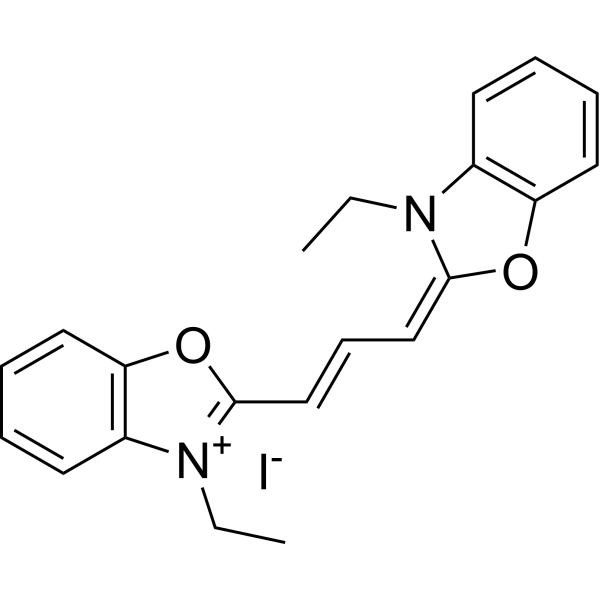
3,3'-Diethyloxacarbocyanine iodide
Based on 3 publication(s) in Google Scholar
3,3'-Diethyloxacarbocyanine iodide (DiOC2 (3)) is a Fluorescent probe used for microviscosity detection, micelle and microemulsion probing, critical micelle concentration determination, photophysical property research, and bacterial membrane potential assessment. The excitation wavelength of 3,3'-Diethyloxacarbocyanine iodide is 355 nm.
For research use only. We do not sell to patients.
- Purity : 99.42%
- CAS No.: 905-96-4
- Formula: C21H21IN2O2
- Molecular Weight:460.31
-
Storage:Powder -20°C, 3 years , 4°C, 2 years ; In solvent -80°C, 6 months , -20°C, 1 month

To place orders, for customer services and technical support, please contact: MedChemExpress USA
Tel: 609-228-6898 E-mail: [email protected] [email protected]


-
 Biological Activity
-
Chemical Information
-
Solvent & Solubility
- Purity & Documentation
- References
-
 Help & FAQs


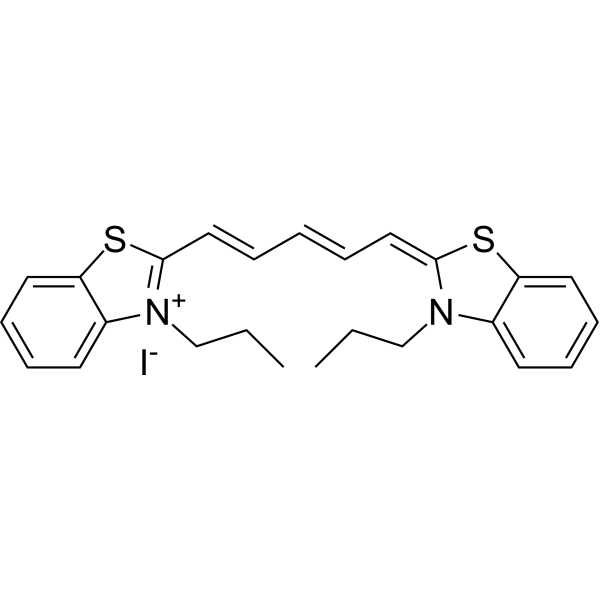
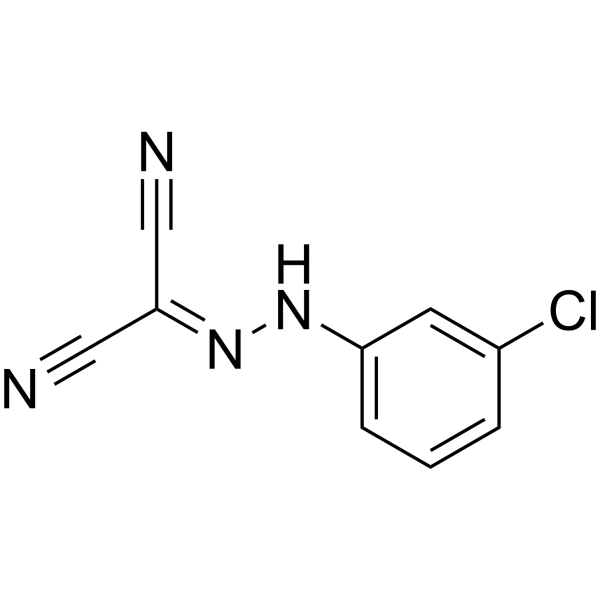

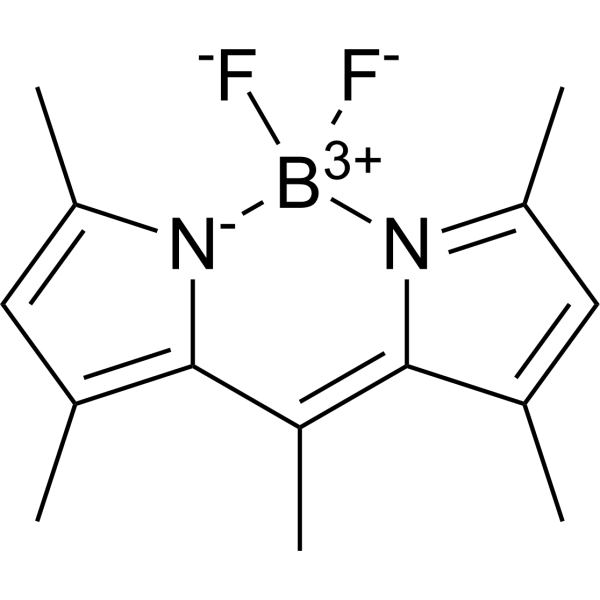
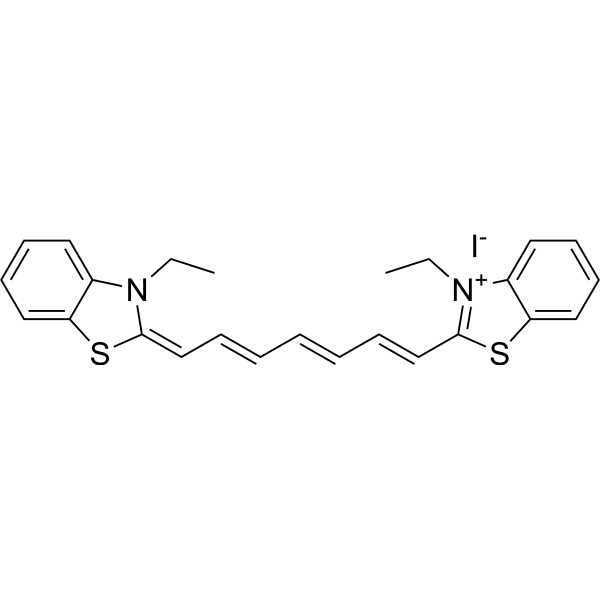

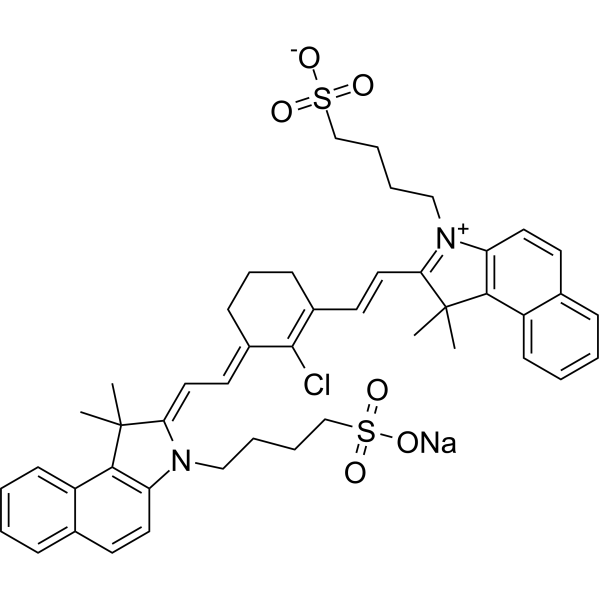
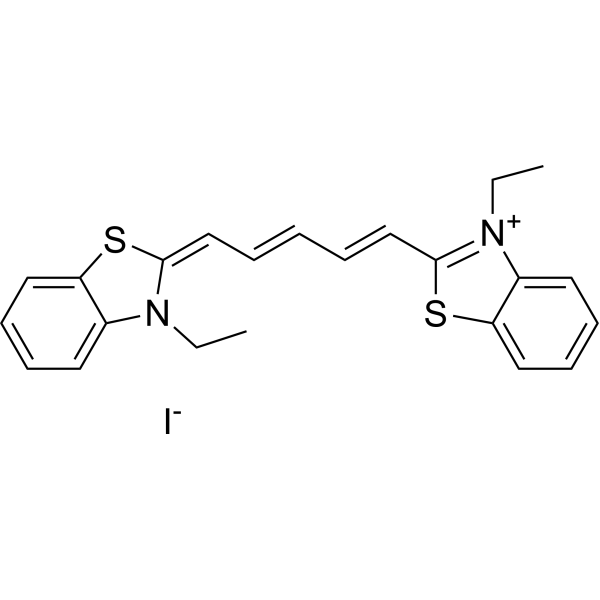
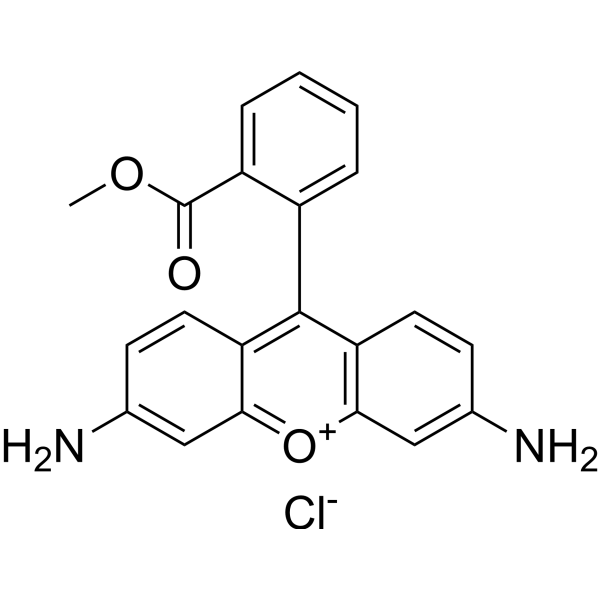
Publications Citing Use of MedChemExpress (MCE) 3,3'-Diethyloxacarbocyanine iodide
More

Biological Activity
Description
In Vitro
Guide (The following is our recommended protocol. This protocol is for guidance only and should be modified according to your specific needs).
1. Stock Solution Preparation
1.1 Solvent: Spectroscopic grade monohydroxy alcohols, triply distilled water, n-heptane, 9:1 (v/v) iso-octane/1-hexanol mixture, or PBS.
1.2 Concentration recommendation: 0.005 μM g-1 to 25.0 μM g-1, or 30 mM.
2. Working Solution Preparation
2.1 Diluent: Spectroscopic grade monohydroxy alcohols, triply distilled water, 0.09 M AOT in n-heptane, 0.05 M CTAB in 9:1 (v/v) iso-octane/1-hexanol mixture, or PBS.
2.2 Working concentration: 30 μM.
2.3 Note: Adjust working solution concentration as needed; prepare fresh before use.
3. Staining Procedure
3.1 Sample type descriptions
3.1.1 For supramolecular assemblies including micelles and microemulsions[1]:
3.1.1.1 Aqueous micelles: Prepare with CTAB, SDS, TX-100, or Pluronic F-68 at specified concentrations.
3.1.1.2 Reverse microemulsions: Prepare with 0.09 M AOT in n-heptane (w = [H2O]/[AOT] from 0 to 10) or 0.05 M CTAB in 9:1 (v/v) iso-octane/1-hexanol (w = [H2O]/[CTAB] from 5 to 40).
3.1.2 For microcrystalline cellulose powder[2]:
3.1.3 For suspension bacterial cells (E. coli MDR ESBL)[3]:
3.1.3.1 Use bacterial suspension at 2.5 × 10⁶ CFU mL-1; no centrifugation step specified.
3.2 Incubation conditions
3.2.1 For supramolecular assemblies including micelles and microemulsions[1]: Incubate at 22°C.
3.2.2 For microcrystalline cellulose powder[2]: Air-equilibrate samples unless otherwise specified.
3.2.3 For suspension bacterial cells (E. coli MDR ESBL)[3]: Incubate with 30 μM DiOC2(3) at 37°C for 1 h.
3.3 Washing steps
3.3.1 For microcrystalline cellulose powder[2]: Not applicable.
3.3.2 For suspension bacterial cells (E. coli MDR ESBL)[3]: No washing steps specified.
4. Controls
4.1 Set up untreated (polarized) bacterial cells as negative control.
4.2 Set up bacterial cells treated with 5 mM carbonyl cyanide CCCP as positive control (fully depolarized state).
5. Detection & Analysis
5.1 Instrument type: Fluorimeter, time-correlated single photon counting (TCSPC) setup, spectrophotometer, steady-state fluorescence spectrometer, laser-excited fluorescence spectrometer, diffuse reflectance laser flash photolysis system, flow cytometer.
5.2 Ex/Em wavelengths
5.3 Result analysis
5.3.1 For supramolecular assemblies including micelles and microemulsions[1]: Fluorescence intensity and lifetime increase with increasing solvent/microenvironment viscosity.
5.3.2 For microcrystalline cellulose powder[2]:
5.3.2.1 Fluorescence intensity decreases as dye loading concentration increases; laser-excited fluorescence intensity increases with increasing laser fluence.
5.3.2.2 Dye is adsorbed on microcrystalline cellulose surfaces.
5.3.2.3 At concentrations >10 μM g-1, DOCI forms both H (hypsochromically shifted absorption) and J (bathochromically shifted absorption) aggregates; high-concentration samples show fluorescence distortion due to reabsorption by aggregates.
5.3.3 For suspension bacterial cells (E. coli MDR ESBL)[3]:
5.3.3.1 Evaluate membrane potential based on the ratio of red/green fluorescence signals.
5.3.3.2 Reduced red/green fluorescence ratio indicates bacterial membrane depolarization.
5.3.3.3 Positive control (CCCP-treated cells) shows fully depolarized state with altered red/green fluorescence ratio.
5.3.3.4 Treated cells exhibiting membrane potential dissipation will show a changed red/green fluorescence ratio similar to the positive control.
MedChemExpress (MCE) has not independently confirmed the accuracy of these methods. They are for reference only.


Chemical Information
-
CAS No. 905-96-4
-
Appearance Solid
-
Molecular Weight 460.31
-
Formula C21H21IN2O2
-
Color Purplish red to red
-
SMILES
CCN1C2=C(C=CC=C2)O/C1=C/C=C/C(OC3=C4C=CC=C3)=[N+]4CC.[I-]
-
Synonyms
DiOC2(3)
-
Shipping
Room temperature in continental US; may vary elsewhere.
-
Storage
Powder -20°C 3 years 4°C 2 years In solvent -80°C 6 months -20°C 1 month


Publications (3)
-
Journal Impact Factor
-
Most Recent
-
ACS Nano
Overcoming Nanosilver Resistance: Resensitizing Bacteria and Targeting Evolutionary Mechanisms. [Abstract]2025 Jan 14;19(1):1702-1712. PMID: 39739341 -
Chem Biol Interact
A microfluidic human blood-brain barrier model reveals neurovascular toxicity and barrier disruption induced by E-cigarette additives. [Abstract]2026 Aug 1:436:112206. PMID: 42285244 -
Antimicrob Agents Chemother
Microbiological evidence for the trisubstituted benzimidazoles targeting MmpL3 in Mycobacterium tuberculosis. [Abstract]2025 Aug 19:e0036825. PMID: 40827962


Solvent & Solubility
In Vitro:
DMSO : 16.67 mg/mL (36.21 mM; Need ultrasonic; Hygroscopic DMSO has a significant impact on the solubility of product, please use newly opened DMSO)
Please refer to the solubility information to select the appropriate solvent. Once prepared, please aliquot and store the solution to prevent product inactivation from repeated freeze-thaw cycles.
Storage method and period of stock solution: -80°C, 6 months; -20°C, 1 month. When stored at -80°C, please use it within 6 months. When stored at -20°C, please use it within 1 month.
Please refer to the solubility information to select the appropriate solvent. Once prepared, please aliquot and store the solution to prevent product inactivation from repeated freeze-thaw cycles.
Storage method and period of stock solution: -80°C, 6 months; -20°C, 1 month. When stored at -80°C, please use it within 6 months. When stored at -20°C, please use it within 1 month.
Concentration (start) × Volume (start) = Concentration (final) × Volume (final)
In Vivo:
Select the appropriate dissolution method based on your experimental animal and administration route.
- For the following dissolution methods, please ensure to first prepare a clear stock solution using an In Vitro approach and then sequentially add co-solvents:
- To ensure reliable experimental results, the clarified stock solution can be appropriately stored based on storage conditions. As for the working solution for In Vivo experiments, it is recommended to prepare freshly and use it on the same day.
- The percentages shown for the solvents indicate their volumetric ratio in the final prepared solution. If precipitation or phase separation occurs during preparation, heat and/or sonication can be used to aid dissolution.
Add each solvent one by one: 10% DMSO 90% (20% SBE-β-CD in Saline)
Solubility: ≥ 2.08 mg/mL (4.52 mM); Clear solution
This protocol yields a clear solution of ≥ 2.08 mg/mL (saturation unknown).
Taking 1 mL working solution as an example, add 100 μL DMSO stock solution (20.8 mg/mL) to 900 μL 20% SBE-β-CD in Saline, and mix evenly.
Preparation of 20% SBE-β-CD in Saline (4°C, storage for one week): 2 g SBE-β-CD powder is dissolved in 10 mL Saline, completely dissolve until clear.
In Vivo Dissolution Calculator
Please enter the basic information of animal experiments:
-
-
-
-
Recommended: Prepare an additional quantity of animals to account for potential losses during experiments.
Please enter your animal formula composition:
-
%DMSO +
Recommended: Keep the proportion of DMSO in working solution below 2% if your animal is weak.
-
%+
-
+%Tween-80 + +
-
%Saline +
The co-solvents required include: DMSO, . All of co-solvents are available by MedChemExpress (MCE). , Tween 80. All of co-solvents are available by MedChemExpress (MCE).
Working solution concentration: 0.22 mg/mL
Method for preparing stock solution: mg drug dissolved in μL DMSO. Stock solution concentration: mg/mL.
1. Take μL DMSO stock solution;
2. Add μL .
μL , mix evenly;
3. Then add μL Tween 80, mix evenly;
4. Then add μL
Please ensure that the stock solution in the first step is dissolved to a clear state, and add co-solvents in sequence. You can use ultrasonic heating (ultrasonic cleaner, recommended frequency 20-40 kHz), vortexing, etc. to assist dissolution.


Purity & Documentation
-
Data Sheet (294 KB)
-
SDS (393 KB)
- English - EN (393 KB)
- Français - FR (393 KB)
- Deutsch - DE (393 KB)
- Norwegian - NO (393 KB)
- Español - ES (393 KB)
- Swedish - SV (393 KB)
- Italian - IT (393 KB)
- Korean - KR (393 KB)
- Portuguese - PT (393 KB)
-
Handling Instructions (2659 KB)
References


Complete Stock Solution Preparation Table
Please refer to the solubility information to select the appropriate solvent. Once prepared, please aliquot and store the solution to prevent product inactivation from repeated freeze-thaw cycles.
Storage method and period of stock solution: -80°C, 6 months; -20°C, 1 month. When stored at -80°C, please use it within 6 months. When stored at -20°C, please use it within 1 month.
| Optional Solvent | Concentration Solvent Mass | 1 mg | 5 mg | 10 mg | 25 mg |
|---|---|---|---|---|---|
| DMSO | 1 mM | 2.1724 mL | 10.8622 mL | 21.7245 mL | 54.3112 mL |
| 5 mM | 0.4345 mL | 2.1724 mL | 4.3449 mL | 10.8622 mL | |
| 10 mM | 0.2172 mL | 1.0862 mL | 2.1724 mL | 5.4311 mL | |
| 15 mM | 0.1448 mL | 0.7241 mL | 1.4483 mL | 3.6207 mL | |
| 20 mM | 0.1086 mL | 0.5431 mL | 1.0862 mL | 2.7156 mL | |
| 25 mM | 0.0869 mL | 0.4345 mL | 0.8690 mL | 2.1724 mL | |
| 30 mM | 0.0724 mL | 0.3621 mL | 0.7241 mL | 1.8104 mL |


3,3'-Diethyloxacarbocyanine iodide Related Classifications
HY-W040258 Related Classifications
 Powered by Bioz