1. Search Result
Search Result
Results for "

mismatch

" in MedChemExpress (MCE) Product Catalog:

19

Inhibitors & Agonists

1

Peptides

2

Natural
Products

2

Recombinant Proteins

1

Isotope-Labeled Compounds

13

Antibodies

1

Oligonucleotides

Cat. No. Product Name Target Research Areas Chemical Structure
  • HY-17364
    Temozolomide
    185+ Cited Publications

    NSC 362856; CCRG 81045; TMZ

    DNA Alkylator/Crosslinker Autophagy Apoptosis Cancer
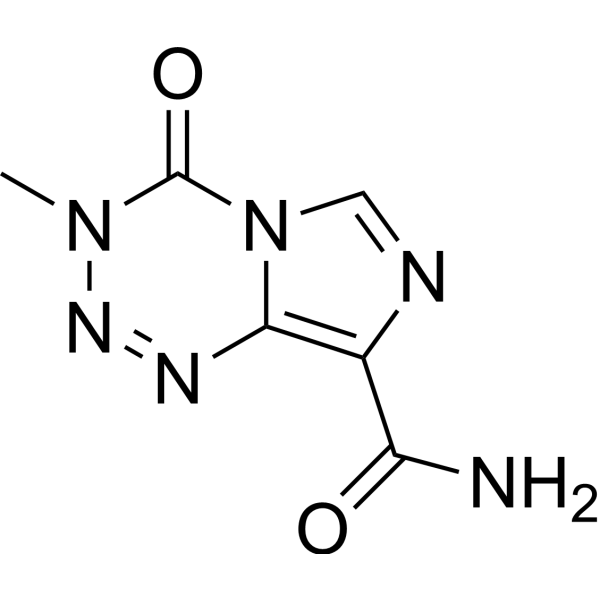
    Temozolomide (NSC 362856) is an oral active DNA alkylating agent that crosses the blood-brain barrier. Temozolomide is also a proautophagic and proapoptotic agent. Temozolomide is effective against tumor cells that are characterized by low levels of O6-alkylguanine DNA alkyltransferase (OGAT) and a functional mismatch repair system. Temozolomide has antitumor and antiangiogenic effects .
    Temozolomide
  • HY-148503

    Phosphoramidites Nucleoside Antimetabolite/Analog Others
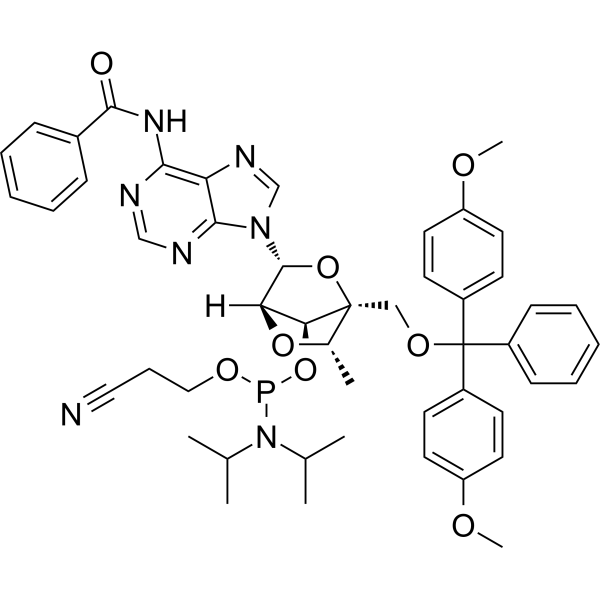
    5'-ODMT cEt N-Bz A Phosphoramidite (Amidite) is a nucleoside phosphoramidite monomer used to synthesize locked nucleic acid (LNA) analog oligonucleotides. It can be used as a building block of antisense oligonucleotides (ASOs) to target complementary RNA sequences. 5'-ODMT cEt N-Bz A Phosphoramidite (Amidite) locks the furanose ring into an N-type conformation through 2',4'-constrained ethyl (cEt) modification, enhancing hybridization affinity and mismatch discrimination with RNA, while significantly improving the resistance of oligonucleotides to exonuclease digestion. 5'-ODMT cEt N-Bz A Phosphoramidite (Amidite) mediates RNase H-dependent mRNA degradation or inhibits translation by forming a stable hybrid with RNA, thereby achieving gene expression regulation. 5'-ODMT cEt N-Bz A Phosphoramidite (Amidite) is mainly used in the development of antisense drugs, gene function research and oligonucleotide synthesis related to disease treatment .
    5'-ODMT cEt N-Bz A Phosphoramidite (Amidite)
  • HY-173455

    DNA/RNA Synthesis Inflammation/Immunology Cancer
    NP1867 is a potent, selective, covalent PMS2 inhibitor. NP1867 functionally inhibits DNA mismatch repair. NP1867 enhances immune surveillance. NP1867 can be used in the research of colorectal cancer .
    NP1867
  • HY-17364S

    DNA Alkylator/Crosslinker Autophagy Apoptosis Cancer
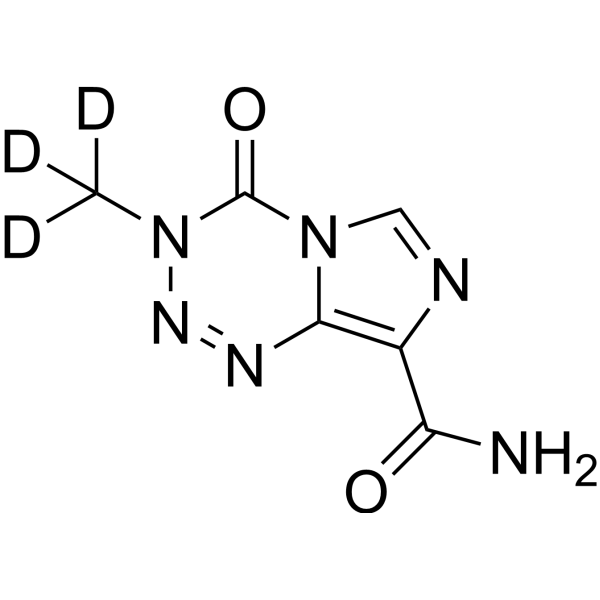
    Temozolomide-d3 is the deuterium labeled Temozolomide. Temozolomide (NSC 362856) is an oral active DNA alkylating agent that crosses the blood-brain barrier. Temozolomide is also a proautophagic and proapoptotic agent. Temozolomide is effective against tumor cells that are characterized by low levels of O6-alkylguanine DNA alkyltransferase (OGAT) and a functional mismatch repair system. Temozolomide has antitumor and antiangiogenic effects .
    Temozolomide-d3
  • HY-139621

    DNA Alkylator/Crosslinker Cancer
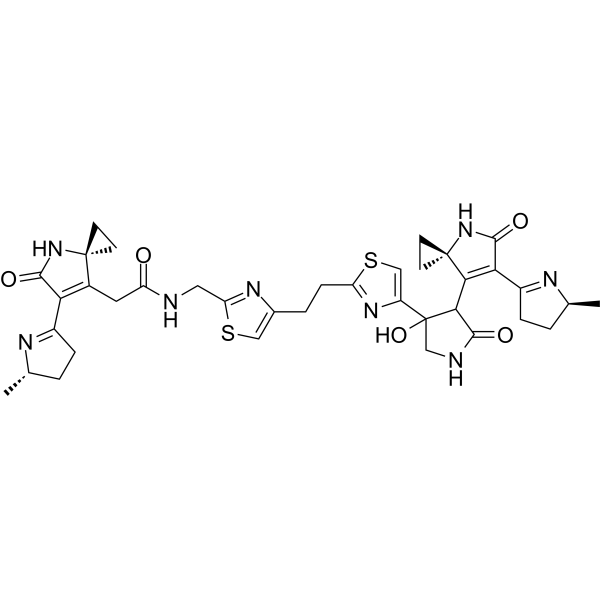
    Colibactin 742 is a covalently binding DNA-damaging agent targeting DNA, with an IC50 of 5.2 μM against human cervical cancer cells (HeLa). Colibactin 742 covalently binds to DNA, forming interstrand crosslinks (ICLs), activating the Fanconi anemia DNA repair pathway, inducing γH2AX and FANCD2 foci formation and cell cycle arrest, while exacerbating mismatch repair deficiency (MMRd)-related mutations. Colibactin 742 can mimic the genotoxicity of natural Colibactin while avoiding its instability, and is mainly used in colorectal cancer (CRC) related research, including microbial tumorigenesis mechanisms, DNA damage repair pathways, and mutation signature analysis .
    Colibactin 742
  • HY-116887

    Endogenous Metabolite Nucleoside Antimetabolite/Analog DNA/RNA Synthesis Cancer
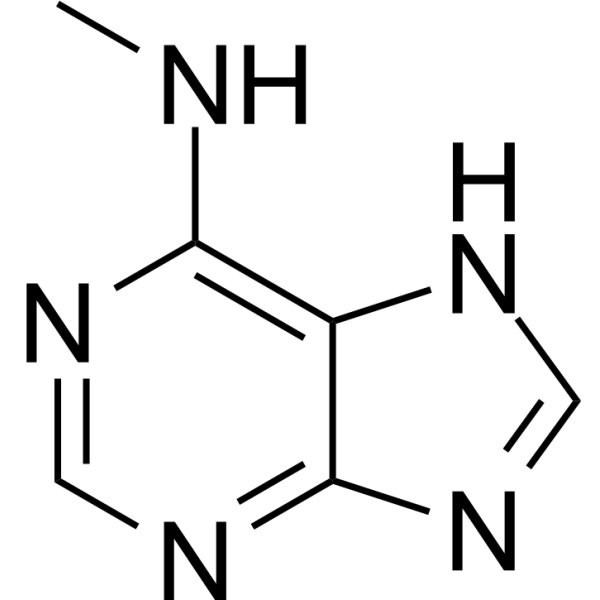
    N6-Methyladenine is a DNA epigenetic modification that involves the addition of a methyl group to the sixth position of adenine. N6-Methyladenine plays an important role in distinguishing host DNA from exogenous DNA and controls many biological functions, such as DNA replication, transcription, mismatch repair, and chromosome replication. N6-Methyladenine can be used for the kidney diseases .
    N6-Methyladenine
  • HY-14826

    AVE8112

    Phosphodiesterase (PDE) Neurological Disease
    Tilivapram (AVE8112) is an orally active PDE4 inhibitor with procognitive effects. Tilivapram exhibits in vivo efficacy and improves processing speed and psychomotor speed. Oral administration of tilivapram may induce dose-related adverse reactions such as nausea and dizziness, but transdermal delivery enables slow, controlled elevation of plasma concentrations, thereby significantly reducing gastrointestinal discomfort and dizziness. Tilivapram is applicable to research related to neuropsychiatric disorders .
    Tilivapram
  • HY-164496

    DNA/RNA Synthesis Cancer
    KL-50 is a selective toxin toward tumors that lack the DNA repair protein O 6-methylguanine-DNA-methyltransferase (MGMT), which reverses the formation of O 6-alkylguanine lesions. KL-50 activates DNA damage response pathways and cycle arrest in MGMT-cells, independent of mismatch repair (MMR). KL-50 is promising for research of brain tumors that lack the DNA repair protein MGMT .
    KL-50
  • HY-116887R

    Endogenous Metabolite Nucleoside Antimetabolite/Analog DNA/RNA Synthesis Reference Standards Cancer
    N6-Methyladenine (Standard) is the analytical standard of N6-Methyladenine (HY-116887). This product is intended for research and analytical applications. N6-Methyladenine is a modified purine that is widely present in prokaryotes. In prokaryotes, N6-Methyladenine plays an important role in distinguishing host DNA from exogenous DNA and controls many biological functions, such as DNA replication, transcription, mismatch repair, and chromosome replication. N6-Methyladenine can be used for the kidney diseases .
    N6-Methyladenine (Standard)
  • HY-156581

    DNA/RNA Synthesis Cancer
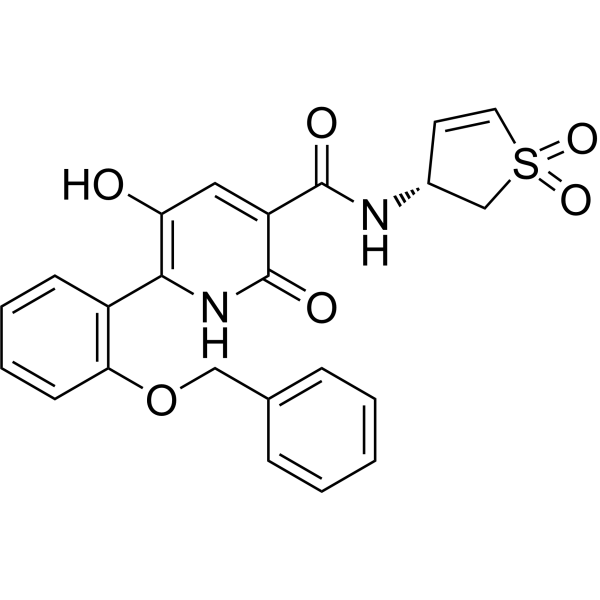
    WRN inhibitor 5, a cyclic vinyl sulfone compound, is a Wemer Syndrome ATP dependent helicase enzyme (WRN) inhibitor. WRN inhibitor 5 can be used for the research of cancer, including cancers characterized by microsatellite instability (MSI) and/or defective DNA mismatch repair system (dMMR) .
    WRN inhibitor 5
  • HY-17364R

    NSC 362856 (Standard); CCRG 81045 (Standard); TMZ (Standard)

    Reference Standards DNA Alkylator/Crosslinker Autophagy Apoptosis Cancer
    Temozolomide (Standard) is the analytical standard of Temozolomide. This product is intended for research and analytical applications. Temozolomide (NSC 362856) is an oral active DNA alkylating agent that crosses the blood-brain barrier. Temozolomide is also a proautophagic and proapoptotic agent. Temozolomide is effective against tumor cells that are characterized by low levels of O6-alkylguanine DNA alkyltransferase (OGAT) and a functional mismatch repair system. Temozolomide has antitumor and antiangiogenic effects .
    Temozolomide (Standard)
  • HY-153805

    Molecular Glues Cancer
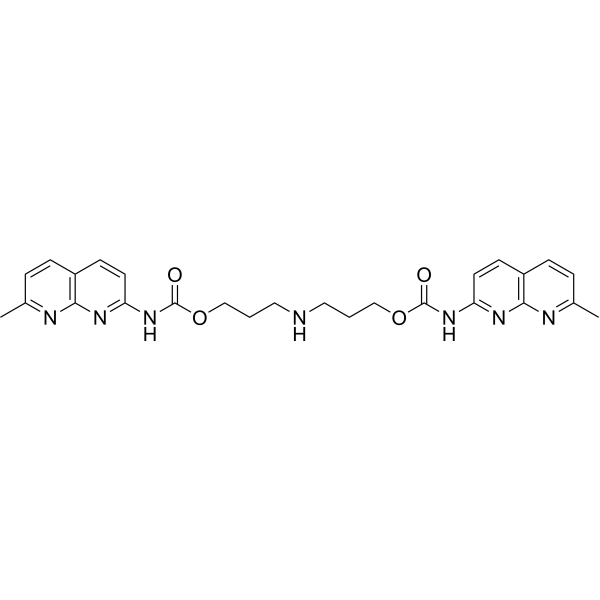
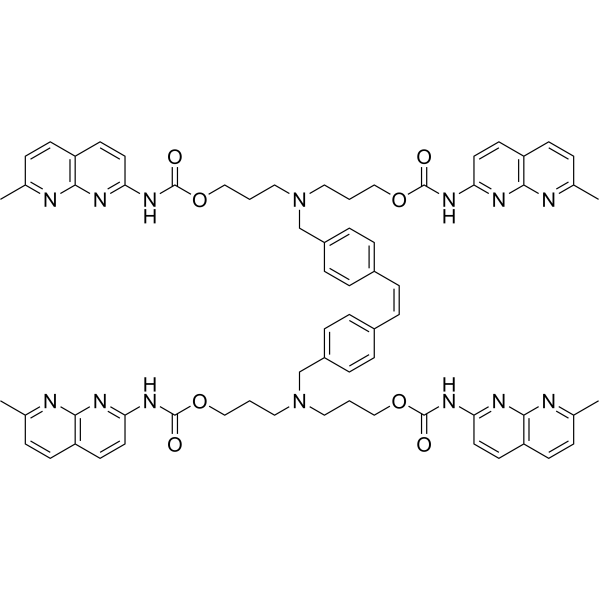
    Z-NCTS is an RNA mismatch binding molecule that recognizes the 5’-r(XGG)-3’/5’-r(XGG)-3’ sequence (X=U or A) and acts as a molecular glue for RNA .
    Z-NCTS
  • HY-160641

    Others Others
    isoG Nucleoside-1 (compound 15) is an isoguanine (isoG) nucleoside. In the HNA(h)-DNA(d) mosaic scaffold, h-isoG base mismatches follow the order G>C>T, while h-isoG base mismatches follow the order G>C>T .
    isoG Nucleoside-1
  • HY-E70603

    Endonuclease Others
    T4 endonuclease VII displays broad substrate specificity and can bind and cleave single-base mismatches in a DNA duplex as well as three-way and four-way branched DNA structures .
    T4 endonuclease VII
  • HY-176912

    DNA/RNA Synthesis Cancer
    WRN-IN-22 (compound A01) is a potent Werner syndrome RecQ helicase (WRN) inhibitor (IC50 < 100 nM). WRN-IN-22 can be used for microsatellite instability-high (MSI-H) or mismatch repair deficient (dMMR) cancer research, such as colorectal, gastric, prostate and endometrial cancer .
    WRN-IN-22
  • HY-179326

    DNA/RNA Synthesis Cancer
    WRN-IN-23 is a Werner Syndrome helicase enzyme (WRN) inhibitor. WRN-IN-23 inhibits the ATP-dependent helicase domain activity of WRN. WRN-IN-23 can be used for the research of cancers characterized by microsatellite instability (MSI) and/or defective DNA mismatch repair system (dMMR) .
    WRN-IN-23
  • HY-E70607

    DNA/RNA Synthesis Others
    MutS protein, thermophilic bacteria is a DNA mismatch-binding protein that can be used to detect mismatched double-stranded DNA (dsDNA) .
    MutS protein, thermophilic bacteria
  • HY-P11732

    Bacterial Infection
    acpP PNA is a 10-mer peptide nucleic acid targeting the bacterial essential gene acpP. acpP PNA can inhibit bacterial growth and reduce the level of target transcripts, and still retains activity with double terminal mismatches. acpP PNA may also cause off-target effects .
    acpP PNA
  • HY-115464

    Endogenous Metabolite Inflammation/Immunology
    NC1153 is a Mannich base with the activity to block IL-2-induced JAK3 activation and its downstream substrate STAT5a/b. NC1153 effectively prolongs the survival of kidney transplants in MHC/non-MHC mismatched rats. NC1153 promotes long-term graft survival and includes multiple toxicity protection for recipients. NC1153 combined with cyclosporine A (CsA) can synergistically prolong graft survival without producing nephrotoxicity, myelotoxicity or lipotoxicity .
    NC1153

Inquiry Online

Your information is safe with us. * Required Fields.

Salutation


Country or Region *

Applicant Name *


Organization Name *

Department *


Email Address *


Product Name *

Cat. No.


Requested quantity *

Phone Number *


Remarks

Inquiry Online

Inquiry Information

Product Name:
Cat. No.:
Quantity:
MCE Japan Authorized Agent:

