1. Search Result
Search Result
Results for "

murine platelets

" in MedChemExpress (MCE) Product Catalog:

15

Inhibitors & Agonists

5

Biochemical Assay Reagents

3

Natural
Products

2

Isotope-Labeled Compounds

5

Click Chemistry

Targets Recommended:
Cat. No. Product Name Target Research Areas Chemical Structure
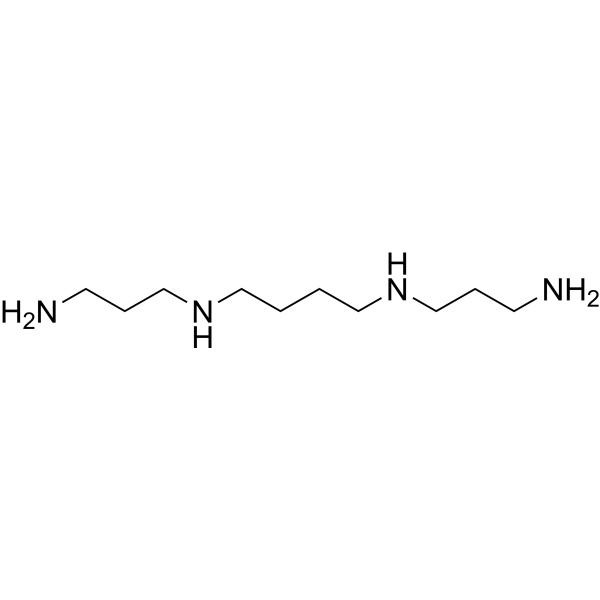
  • HY-B1777
    Spermine
    5+ Cited Publications

    NSC 268508; Neuridine

    Endogenous Metabolite Bacterial Reactive Oxygen Species (ROS) DNA/RNA Synthesis Infection Neurological Disease Inflammation/Immunology
    Spermine is a natural antioxidant and anti-inflammatory agent. Spermine is known to inhibit some bacterial cultures, especially strains of Staphylococcus aureus. Spermine induces neurotoxicity in the striarum dose-dependently. Spermine can reversibly inhibits DNA synthetic response, mixed lymphocyte response and the induction of cytolytic lymphocyte response in primary cultures of murine spleen cells. Spermine tetrahydrochloride is a polyamine nitric oxide donor that can provide nitric oxide to platelets and inhibit platelet activation to a certain extent concentration-dependently. Spermine tetrahydrochloride occurs in mammalian tissues, plants, bacteria, ribosomes and bacteriophage. Spermine tetrahydrochloride inhibits primary human embryo lung fibroblasts in vitro .
    Spermine
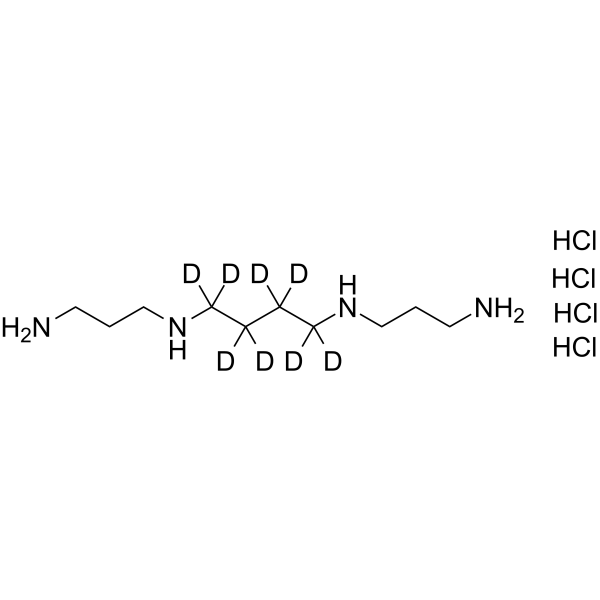
  • HY-B1777AS

    Isotope-Labeled Compounds Endogenous Metabolite Reactive Oxygen Species (ROS) Bacterial DNA/RNA Synthesis Metabolic Disease
    Spermine-d8 (tetrahydrochloride) is the deuterium labeled Spermine tetrahydrochloride. Spermine tetrahydrochloride is a polyamine nitric oxide donor that can provide nitric oxide to platelets and inhibit platelet activation to a certain extent concentration-dependently. Spermine tetrahydrochloride occurs in mammalian tissues, plants, bacteria, ribosomes and bacteriophage. Spermine tetrahydrochloride inhibits primary human embryo lung fibroblasts in vitro. Spermine is a natural antioxidant and anti-inflammatory agent. Spermine is known to inhibit some bacterial cultures, especially strains of Staphylococcus aureus. Spermine induces neurotoxicity in the striarum dose-dependently. Spermine can reversibly inhibits DNA synthetic response, mixed lymphocyte response and the induction of cytolytic lymphocyte response in primary cultures of murine spleen cells .
    Spermine-d8 tetrahydrochloride
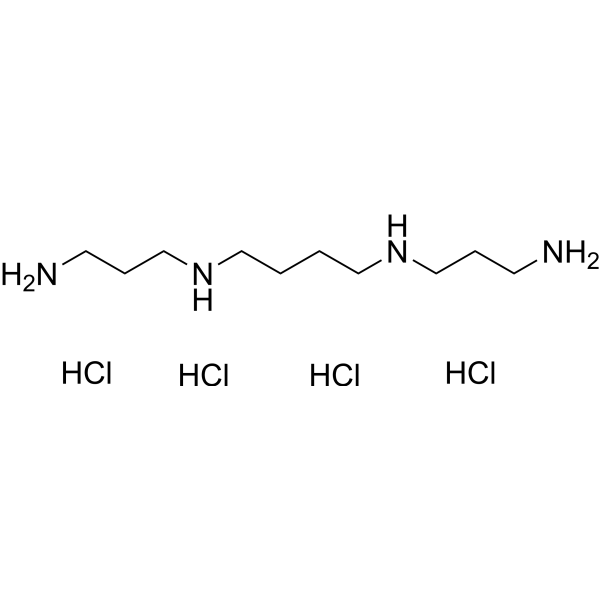
  • HY-B1777A
    Spermine tetrahydrochloride
    5+ Cited Publications

    Endogenous Metabolite Bacterial Reactive Oxygen Species (ROS) DNA/RNA Synthesis Infection Neurological Disease Inflammation/Immunology
    Spermine tetrahydrochloride is a polyamine nitric oxide donor that can provide nitric oxide to platelets and inhibit platelet activation to a certain extent concentration-dependently. Spermine tetrahydrochloride occurs in mammalian tissues, plants, bacteria, ribosomes and bacteriophage. Spermine tetrahydrochloride inhibits primary human embryo lung fibroblasts in vitro. Spermine is a natural antioxidant and anti-inflammatory agent. Spermine is known to inhibit some bacterial cultures, especially strains of Staphylococcus aureus. Spermine induces neurotoxicity in the striarum dose-dependently. Spermine can reversibly inhibits DNA synthetic response, mixed lymphocyte response and the induction of cytolytic lymphocyte response in primary cultures of murine spleen cells .
    Spermine tetrahydrochloride
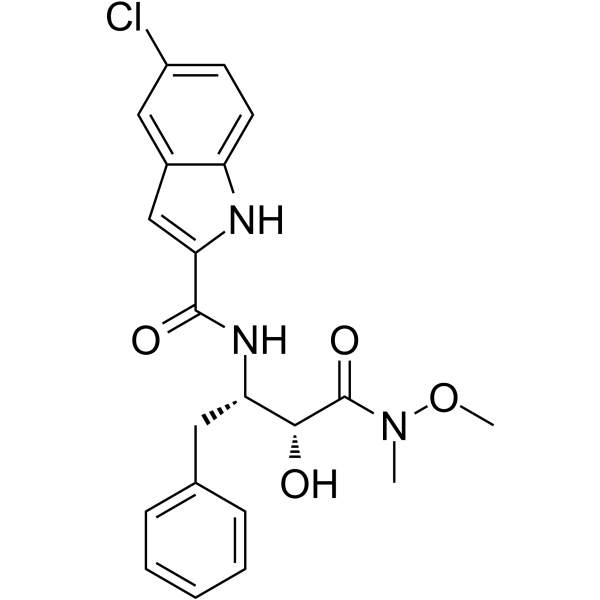
  • HY-108615

    GPi 819

    Phosphorylase Cardiovascular Disease Neurological Disease Metabolic Disease
    CP-316819 (GPi 819) is a blood-brain barrier permeable glycogen phosphorylase inhibitor. CP-316819 inhibits hepatic glycogenolysis, safely reduces blood glucose in type 2 diabetes, and rarely induces hypoglycemia. CP-316819 increases brain glycogen reserves, protects neurons, alleviates hypoglycemic brain injury, and inhibits excessive platelet activation, exerting both neuroprotective and vasculoprotective effects. CP-316819 can be used in research related to hypoglycemia, thrombosis, autoimmune inflammatory diseases, and type 2 diabetes .
    CP-316819
  • HY-174935

    Biochemical Assay Reagents Others
    DBCO-PEG1000-NHS is a dibenzocyclooctyne-conjugated polyethylene glycol derivative bearing an NHS group. DBCO-PEG-NHS forms a stable covalent linkage with the amino group of target molecules via the NHS ester at one end, while introducing a DBCO group at the other end, thus preparing for subsequent click chemical conjugation with any azide-bearing molecule or material .
    DBCO-PEG1000-NHS
  • HY-174935A

    Biochemical Assay Reagents Others
    DBCO-PEG2000-NHS is a dibenzocyclooctyne-conjugated polyethylene glycol derivative bearing an NHS group. DBCO-PEG-NHS forms a stable covalent linkage with the amino group of target molecules via the NHS ester at one end, while introducing a DBCO group at the other end, thus preparing for subsequent click chemical conjugation with any azide-bearing molecule or material .
    DBCO-PEG2000-NHS
  • HY-B1777S

    NSC 268508-15N2; Neuridine-15N2

    Isotope-Labeled Compounds Endogenous Metabolite Bacterial Reactive Oxygen Species (ROS) DNA/RNA Synthesis Infection Neurological Disease Inflammation/Immunology
    Spermine- 15N2 (NSC 268508- 15N2) is the 15N-labeled Spermine (HY-B1777). Spermine is a natural antioxidant and anti-inflammatory agent. Spermine is known to inhibit some bacterial cultures, especially strains of Staphylococcus aureus. Spermine induces neurotoxicity in the striarum dose-dependently. Spermine can reversibly inhibits DNA synthetic response, mixed lymphocyte response and the induction of cytolytic lymphocyte response in primary cultures of murine spleen cells. Spermine tetrahydrochloride is a polyamine nitric oxide donor that can provide nitric oxide to platelets and inhibit platelet activation to a certain extent concentration-dependently. Spermine tetrahydrochloride occurs in mammalian tissues, plants, bacteria, ribosomes and bacteriophage. Spermine tetrahydrochloride inhibits primary human embryo lung fibroblasts in vitro .
    Spermine-15N2
  • HY-113484

    LTB5

    Leukotriene Receptor Cancer
    Leukotriene B5 (LTB5) is a leukotriene with diverse biological activities. It is a metabolite of eicosapentaenoic acid formed through the 5-lipoxygenase (5-LO) pathway. LTB5 increases contraction of bullfrog lung strips ex vivo in a concentration-dependent manner. In vivo, LTB5 (100 nM) reduces tumor volume in mice injected with Tm1 murine melanoma cells. LTB5 also elicits chemokinesis and lysosomal enzyme release from polymorphonuclear leukocytes (PMNLs) 20- to 30-fold less, and induces platelet aggregation 8-fold less, potently than LTB4.
    Leukotriene B5
  • HY-174935C

    Biochemical Assay Reagents Others
    DBCO-PEG5000-NHS is a dibenzocyclooctyne-conjugated polyethylene glycol derivative bearing an NHS group. DBCO-PEG-NHS forms a stable covalent linkage with the amino group of target molecules via the NHS ester at one end, while introducing a DBCO group at the other end, thus preparing for subsequent click chemical conjugation with any azide-bearing molecule or material .
    DBCO-PEG5000-NHS
  • HY-134070

    ET-18-O-OCH3

    TNF Receptor Inflammation/Immunology
    2-O-Methyl PAF C-16 (ET-18-O-OCH3), a structural analog of the mediator of inflammation platelet-activating factor (PAF), is a cytotoxic ether lipid. 2-O-Methyl PAF C-16 stimulates TNF-α release in murine macrophages .
    2-O-Methyl PAF C-16
  • HY-B1777AR

    Reference Standards Endogenous Metabolite Bacterial Reactive Oxygen Species (ROS) DNA/RNA Synthesis Infection Neurological Disease Inflammation/Immunology
    Spermine (tetrahydrochloride) (Standard) is the analytical standard of Spermine (tetrahydrochloride). This product is intended for research and analytical applications. Spermine tetrahydrochloride is a polyamine nitric oxide donor that can provide nitric oxide to platelets and inhibit platelet activation to a certain extent concentration-dependently. Spermine tetrahydrochloride occurs in mammalian tissues, plants, bacteria, ribosomes and bacteriophage. Spermine tetrahydrochloride inhibits primary human embryo lung fibroblasts in vitro. Spermine is a natural antioxidant and anti-inflammatory agent. Spermine is known to inhibit some bacterial cultures, especially strains of Staphylococcus aureus. Spermine induces neurotoxicity in the striarum dose-dependently. Spermine can reversibly inhibits DNA synthetic response, mixed lymphocyte response and the induction of cytolytic lymphocyte response in primary cultures of murine spleen cells .
    Spermine tetrahydrochloride (Standard)
  • HY-174935B

    Biochemical Assay Reagents Others
    DBCO-PEG3400-NHS is a dibenzocyclooctyne-conjugated polyethylene glycol derivative bearing an NHS group. DBCO-PEG-NHS forms a stable covalent linkage with the amino group of target molecules via the NHS ester at one end, while introducing a DBCO group at the other end, thus preparing for subsequent click chemical conjugation with any azide-bearing molecule or material .
    DBCO-PEG3400-NHS
  • HY-174935D

    Biochemical Assay Reagents Others
    DBCO-PEG10000-NHS is a dibenzocyclooctyne-conjugated polyethylene glycol derivative bearing an NHS group. DBCO-PEG-NHS forms a stable covalent linkage with the amino group of target molecules via the NHS ester at one end, while introducing a DBCO group at the other end, thus preparing for subsequent click chemical conjugation with any azide-bearing molecule or material .
    DBCO-PEG10000-NHS
  • HY-116028

    15-Deoxy-Δ12,14-PGD2

    Endogenous Metabolite Prostaglandin Receptor PPAR Src Cardiovascular Disease
    15-deoxy-Δ12,14-Prostaglandin D2 (15-Deoxy-Δ12,14-PGD2), a metabolite of PGD2 (HY-101988), is an agonist of prostaglandin receptor 2 (DP2). 15-deoxy-Δ12,14-Prostaglandin D2 binds to DP2 (Ki=50 nM) and induces eosinophil activation (EC50=8 nM). 15-deoxy-Δ12,14-Prostaglandin D2 also stimulates the recruitment of steroid receptor coactivator-1 (SRC-1) to peroxisome proliferator-activated receptor γ (PPARγ), inducing PPARγ-mediated transcription. 15-deoxy-Δ12,14-Prostaglandin D2 (15-Deoxy-Δ12,14-PGD2) is cytotoxic to L1210 murine leukemia cells (IC50=0.3 μg/ml) and inhibits ADP-induced platelet aggregation (IC50=320 ng/mL).
    15-deoxy-Δ12,14-Prostaglandin D2
  • HY-W676872

    COX Parasite Infection Inflammation/Immunology
    Dihydroflavokawin B is a selective COX-1 inhibitor with an IC50 of 1.22 μM. Dihydroflavokawin B weakly inhibits COX-2 and 5-LOX. Dihydroflavokawin B inhibits promastigote forms of Leishmania panamensis and Leishmania braziliensis. Dihydroflavokawin B inhibits rabbit platelet aggregation induced by Arachidonic acid, platelet activating factor, and adenosine diphosphate. Dihydroflavokawin B exhibits in vitro anti-inflammatory activity. Dihydroflavokawin B can be used for the research of leishmaniasis .
    Dihydroflavokawin B

Inquiry Online

Your information is safe with us. * Required Fields.

Salutation


Country or Region *

Applicant Name *


Organization Name *

Department *


Email Address *


Product Name *

Cat. No.


Requested quantity *

Phone Number *


Remarks

Inquiry Online

Inquiry Information

Product Name:
Cat. No.:
Quantity:
MCE Japan Authorized Agent:

