



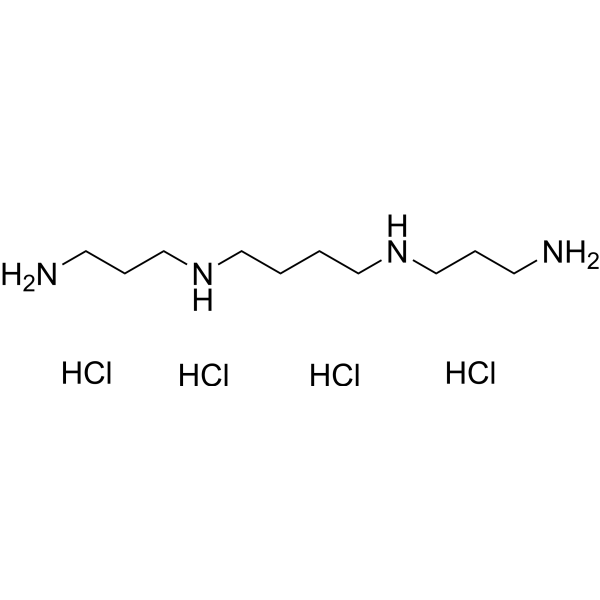
Spermine tetrahydrochloride
Based on 11 publication(s) in Google Scholar
Spermine tetrahydrochloride is a polyamine nitric oxide donor that can provide nitric oxide to platelets and inhibit platelet activation to a certain extent concentration-dependently. Spermine tetrahydrochloride occurs in mammalian tissues, plants, bacteria, ribosomes and bacteriophage. Spermine tetrahydrochloride inhibits primary human embryo lung fibroblasts in vitro. Spermine is a natural antioxidant and anti-inflammatory agent. Spermine is known to inhibit some bacterial cultures, especially strains of Staphylococcus aureus. Spermine induces neurotoxicity in the striarum dose-dependently. Spermine can reversibly inhibits DNA synthetic response, mixed lymphocyte response and the induction of cytolytic lymphocyte response in primary cultures of murine spleen cells.
For research use only. We do not sell to patients.
- Purity : 99.66%
- CAS No.: 306-67-2
- Formula: C10H30Cl4N4
- Molecular Weight:348.18
-
Storage:
RT, protect from light.
In solvent -80°C, 1 year , -20°C, 6 months

To place orders, for customer services and technical support, please contact: MedChemExpress USA
Tel: 609-228-6898 E-mail: [email protected] [email protected]


-
 Biological Activity
-
Chemical Information
-
Solvent & Solubility
- Purity & Documentation
- References
-
 Help & FAQs


-
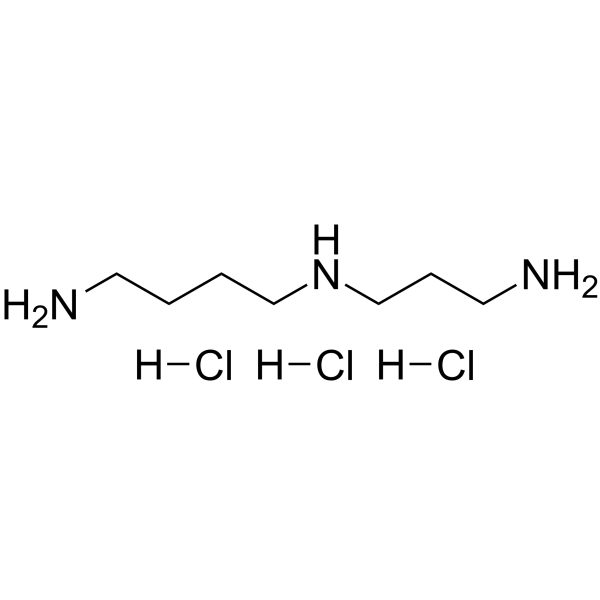
HY-B1776A
Spermidine hydrochloride -
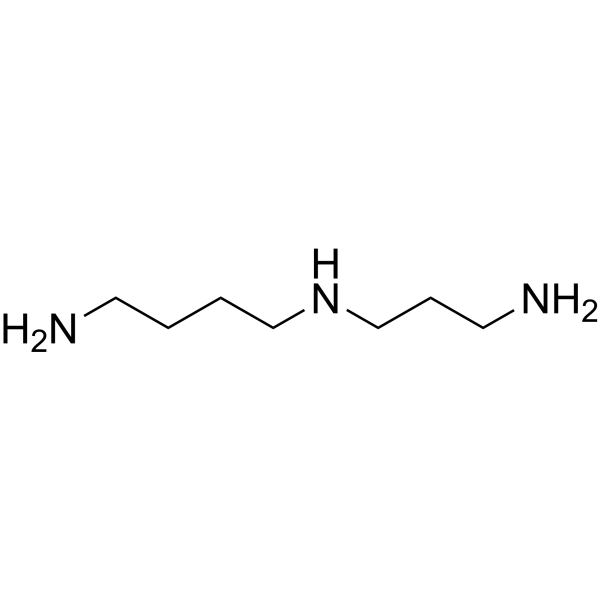
HY-B1776
Spermidine -

HY-B1777AR
Spermine tetrahydrochloride (Standard) -
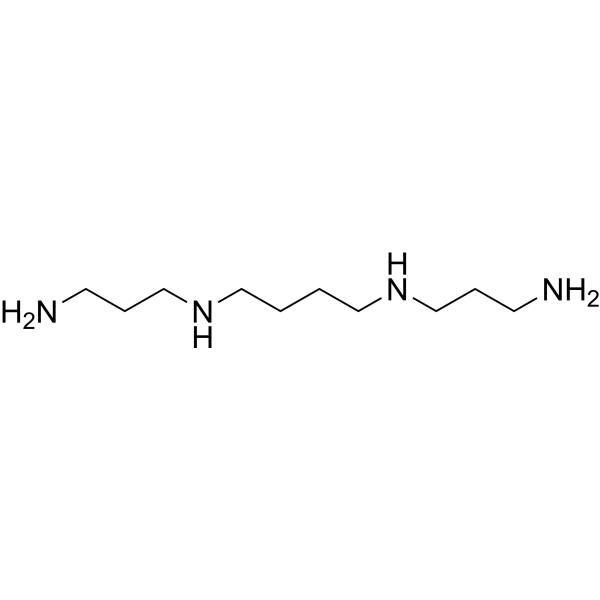
HY-B1777
Spermine -

HY-B1777R
Spermine (Standard) -
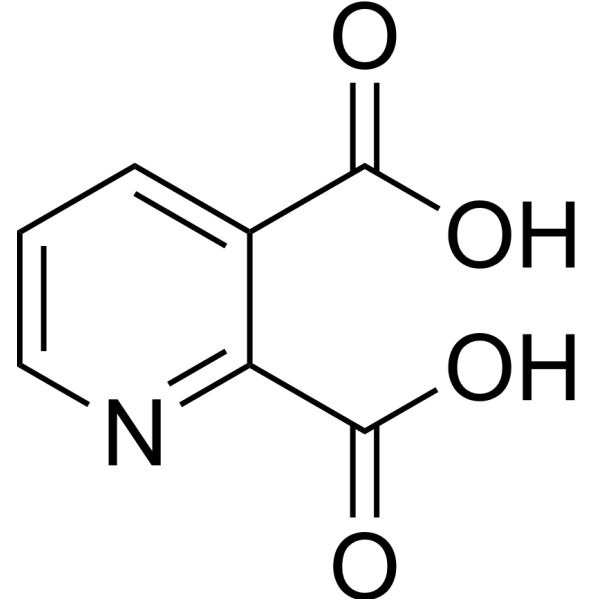
HY-100807
Quinolinic acid -
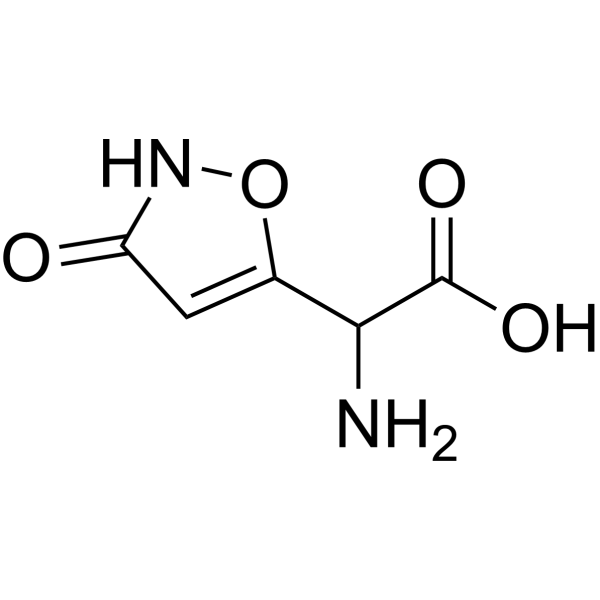
HY-N2311
Ibotenic acid -

HY-B1776R
Spermidine (Standard) -
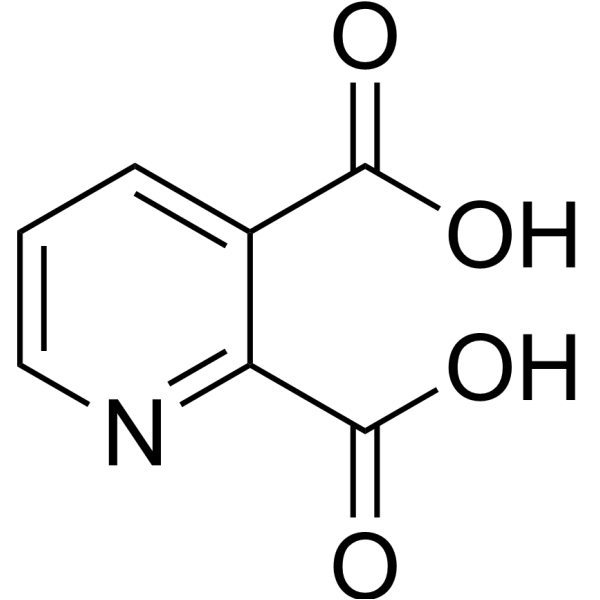
HY-100807R
Quinolinic acid (Standard) -
HY-D0843
N-Ethylmaleimide -
HY-100714A
D-AP5 -
HY-100804
L-Cysteinesulfinic acid
Publications Citing Use of MedChemExpress (MCE) Spermine tetrahydrochloride
More- Cell. 2026 Jan 22;189(2):418-434.e24. [Abstract]
- Nat Commun. 2025 Dec 8. [Abstract]
- Phytomedicine. 2026 Oct:160:158623.
- Basic Res Cardiol. 2021 Dec 16;116(1):65. [Abstract]
- Chin Med. 2026 Jun 10;21(1):167. [Abstract]
- Acta Physiol. 2023 Apr;237(4):e13926. [Abstract]
- J Biol Chem. 2024 Nov;300(11):107862. [Abstract]
- PLoS Genet. 2026 Jan 23;22(1):e1012013. [Abstract]
- Virus Res. 2022 Apr 15:312:198708. [Abstract]
- Vet Microbiol. 2026 May:316:110992. [Abstract]
- Res Sq. 2026 May 18.
 Customer Validation & Images

-
Cell Imaging/Staining
-
Bio/Physico-chemical Assay
-
Bio/Physico-chemical Assay
-
In Vivo Efficacy Study

-
WB
All Endogenous Metabolite Isoforms
MoreAll DNA/RNA Synthesis Isoforms
More

Biological Activity
Description
IC50 & Target
|
Microbial Metabolite |
Human Endogenous Metabolite |
In Vitro
Spermine tetrahydrochloride (10-50 mM) increases the concentration of NO in platelets and inhibits the expression of CD62p concentration-dependently[2].
Spermine (10 μg/well, when added up to 29 h after inception of culture) can inhibit the bacterial Lipopolysaccharide (HY-D1056) in BALB/c spleen cells[3].
Spermine (5-10 μg/well, when added within 22 h after inception of culture) can completely inhibit concanavalin A (HY-P2149) in BALB/c spleen cells[3].
Spermine (40-100 μg/mL, 5 d) has ID50 of 25 μg/mL and 35 μg/mL in H.E.L. cells and H.Ep.2 cells, respectively[4].
Spermine (0.5 mM) shows 50% inhibition of peroxidation reaction in brain phospholipid liposomes[5].
MedChemExpress (MCE) has not independently confirmed the accuracy of these methods. They are for reference only.
In Vivo
MedChemExpress (MCE) has not independently confirmed the accuracy of these methods. They are for reference only.


Chemical Information
-
CAS No. 306-67-2
-
Appearance Solid
-
Molecular Weight 348.18
-
Formula C10H30Cl4N4
-
Color White to off-white
-
SMILES
NCCCNCCCCNCCCN.Cl.Cl.Cl.Cl
-
Structure Classification
-
Initial Source
-
Shipping
Room temperature in continental US; may vary elsewhere.
-
Storage
RT, protect from light
In solvent -80°C 1 year -20°C 6 months


Publications (11)
-
Journal Impact Factor
-
Most Recent
-
Cell
Tumor-produced ammonia is metabolized by regulatory T cells to further impede anti-tumor immunity. [Abstract]2026 Jan 22;189(2):418-434.e24. PMID: 41448182 -
Nat Commun
2025 Dec 8. PMID: 41361241
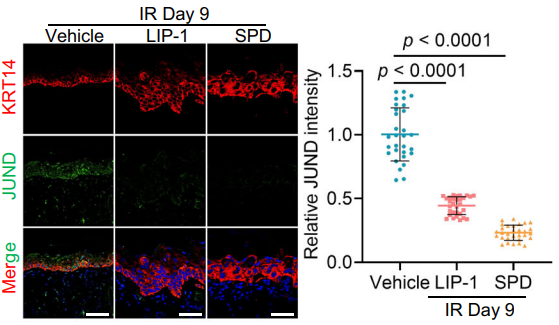
Spermine tetrahydrochloride purchased from MedChemExpress. Usage Cited in: Nat Commun. 2025 Dec 8. [Abstract]
Immunofluorescence showed the expression of JunD in basal cells before and within 9 days after irradiation (Spermine, 10 mg/kg, ip, 16 days).
-
-
Basic Res Cardiol
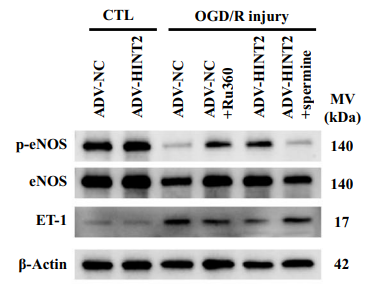
Protective effect of HINT2 on mitochondrial function via repressing MCU complex activation attenuates cardiac microvascular ischemia-reperfusion injury. [Abstract]2021 Dec 16;116(1):65. PMID: 34914018
Spermine tetrahydrochloride purchased from MedChemExpress. Usage Cited in: Basic Res Cardiol. 2021 Dec 16;116(1):65. [Abstract]
Spermine (5 mg/kg, ip, single dose) treatment failed to alleviate no-reflow phenomenon and enhance microvascular perfusion.
Spermine tetrahydrochloride purchased from MedChemExpress. Usage Cited in: Basic Res Cardiol. 2021 Dec 16;116(1):65. [Abstract]
The beneficial effects of HINT2 on nitrite levels, eNOS expression, and eNOS phosphorylation were completely suppressed after Spermine (10 μM, 2 h) treatment.
-
Chin Med
Heterophyllin B ameliorates diabetic lower limb ischemia by inhibiting SMOX to activate the Nrf2 antioxidant pathway. [Abstract]2026 Jun 10;21(1):167. PMID: 42271493 -
Acta Physiol
2023 Apr;237(4):e13926. PMID: 36606511 -
J Biol Chem
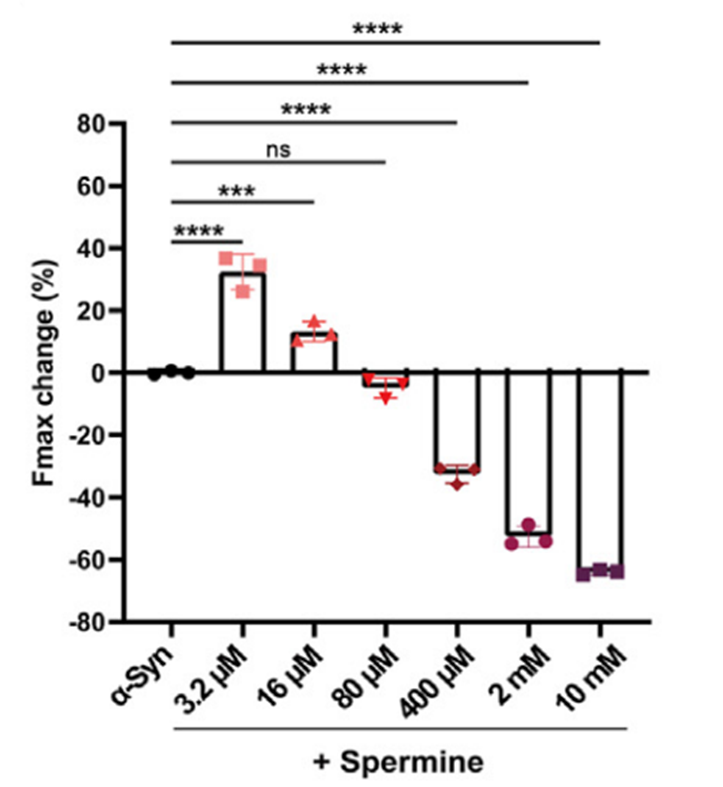
Different charged biopolymers induce α-synuclein to form fibrils with distinct structures. [Abstract]2024 Nov;300(11):107862. PMID: 39374778
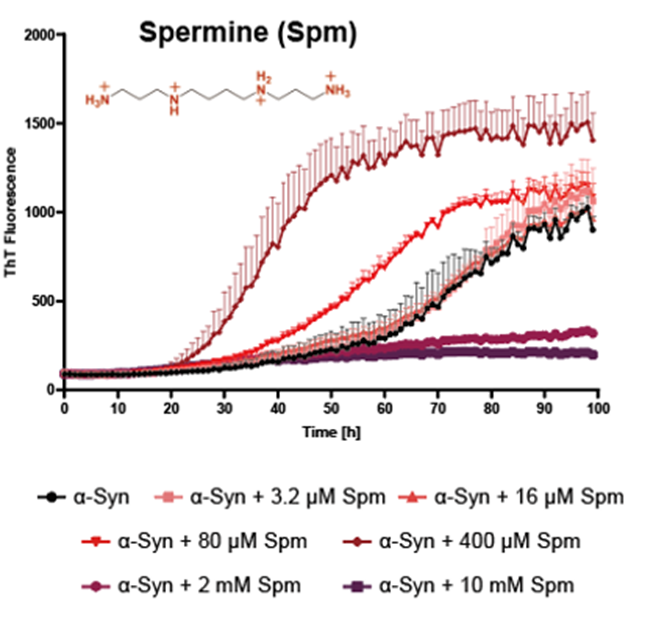
Spermine tetrahydrochloride purchased from MedChemExpress. Usage Cited in: J Biol Chem. 2024 Nov;300(11):107862. [Abstract]
ThT kinetics of α-synuclein aggregation in the presence of different concentrations of Spermine (0-10 mM).
Spermine tetrahydrochloride purchased from MedChemExpress. Usage Cited in: J Biol Chem. 2024 Nov;300(11):107862. [Abstract]
Statistical analysis was performed on the maximum fluorescence intensity (Fmax) of the kinetic curve after 99 hours of Spermine (3.2-16 μM) incubation.
-
PLoS Genet
A C. elegans model of copper deficiency: Dietary interventions rescue CTR1/CHCA-1 copper transporter mutant phenotype. [Abstract]2026 Jan 23;22(1):e1012013. PMID: 41575937 -
Virus Res
PEDV infection affects the expression of polyamine-related genes inhibiting viral proliferation. [Abstract]2022 Apr 15:312:198708. PMID: 35151773 -
Vet Microbiol
The Chinese medicine monomer Schisandrin C inhibits PRRSV infection by regulating the OGT-PI3K/AKT/mTOR signaling pathway. [Abstract]2026 May:316:110992. PMID: 41865607 -


Solvent & Solubility
In Vitro:
H2O : 50 mg/mL (143.60 mM; Need ultrasonic)
Please refer to the solubility information to select the appropriate solvent. Once prepared, please aliquot and store the solution to prevent product inactivation from repeated freeze-thaw cycles.
Storage method and period of stock solution: -80°C, 1 year; -20°C, 6 months. When stored at -80°C, please use it within 1 year. When stored at -20°C, please use it within 6 months.
* Note: If you choose water as the stock solution, please dilute it to the working solution, then filter and sterilize it with a 0.22 μm filter before use.
Please refer to the solubility information to select the appropriate solvent. Once prepared, please aliquot and store the solution to prevent product inactivation from repeated freeze-thaw cycles.
Storage method and period of stock solution: -80°C, 1 year; -20°C, 6 months. When stored at -80°C, please use it within 1 year. When stored at -20°C, please use it within 6 months.
* Note: If you choose water as the stock solution, please dilute it to the working solution, then filter and sterilize it with a 0.22 μm filter before use.
Concentration (start) × Volume (start) = Concentration (final) × Volume (final)


Purity & Documentation
-
Data Sheet (272 KB)
-
SDS (393 KB)
- English - EN (393 KB)
- Français - FR (393 KB)
- Deutsch - DE (393 KB)
- Norwegian - NO (393 KB)
- Español - ES (393 KB)
- Swedish - SV (393 KB)
- Italian - IT (393 KB)
- Korean - KR (393 KB)
- Portuguese - PT (393 KB)
-
Handling Instructions (2659 KB)
References
[3]. Byrd, W. J., et al., (1977). Synthetic polyamines added to cultures containing bovine sera reversibly inhibit in vitro parameters of immunity. Nature, 267(5612), 621–623. [Content Brief]
[4]. Dawson, M., & Dryden, W. F. (1969). The toxicity of spermine and spermidine to cells in culture. Biochemical pharmacology, 18(6), 1307–1313. [Content Brief]
[5]. Løvaas, E., & Carlin, G. (1991). Spermine: an anti-oxidant and anti-inflammatory agent. Free radical biology & medicine, 11(5), 455–461. [Content Brief]
[6]. Otsuki, M., et al., (1995). In vivo pharmacological study of spermine-induced neurotoxicity. Neuroscience letters, 196(1-2), 81–84. [Content Brief]


Complete Stock Solution Preparation Table
Please refer to the solubility information to select the appropriate solvent. Once prepared, please aliquot and store the solution to prevent product inactivation from repeated freeze-thaw cycles.
Storage method and period of stock solution: -80°C, 1 year; -20°C, 6 months. When stored at -80°C, please use it within 1 year. When stored at -20°C, please use it within 6 months.
| Optional Solvent | Concentration Solvent Mass | 1 mg | 5 mg | 10 mg | 25 mg |
|---|---|---|---|---|---|
| H2O | 1 mM | 2.8721 mL | 14.3604 mL | 28.7208 mL | 71.8019 mL |
| 5 mM | 0.5744 mL | 2.8721 mL | 5.7442 mL | 14.3604 mL | |
| 10 mM | 0.2872 mL | 1.4360 mL | 2.8721 mL | 7.1802 mL | |
| 15 mM | 0.1915 mL | 0.9574 mL | 1.9147 mL | 4.7868 mL | |
| 20 mM | 0.1436 mL | 0.7180 mL | 1.4360 mL | 3.5901 mL | |
| 25 mM | 0.1149 mL | 0.5744 mL | 1.1488 mL | 2.8721 mL | |
| 30 mM | 0.0957 mL | 0.4787 mL | 0.9574 mL | 2.3934 mL | |
| 40 mM | 0.0718 mL | 0.3590 mL | 0.7180 mL | 1.7950 mL | |
| 50 mM | 0.0574 mL | 0.2872 mL | 0.5744 mL | 1.4360 mL | |
| 60 mM | 0.0479 mL | 0.2393 mL | 0.4787 mL | 1.1967 mL | |
| 80 mM | 0.0359 mL | 0.1795 mL | 0.3590 mL | 0.8975 mL | |
| 100 mM | 0.0287 mL | 0.1436 mL | 0.2872 mL | 0.7180 mL |
* Note: If you choose water as the stock solution, please dilute it to the working solution, then filter and sterilize it with a 0.22 μm filter before use.


Spermine tetrahydrochloride Related Classifications
HY-B1777A Related Classifications
 Powered by Bioz