1. Search Result
Search Result
Results for "

oxidative burst

" in MedChemExpress (MCE) Product Catalog:

10

Inhibitors & Agonists

1

Biochemical Assay Reagents

2

Natural
Products

Targets Recommended:
Cat. No. Product Name Target Research Areas Chemical Structure
  • HY-Y0262
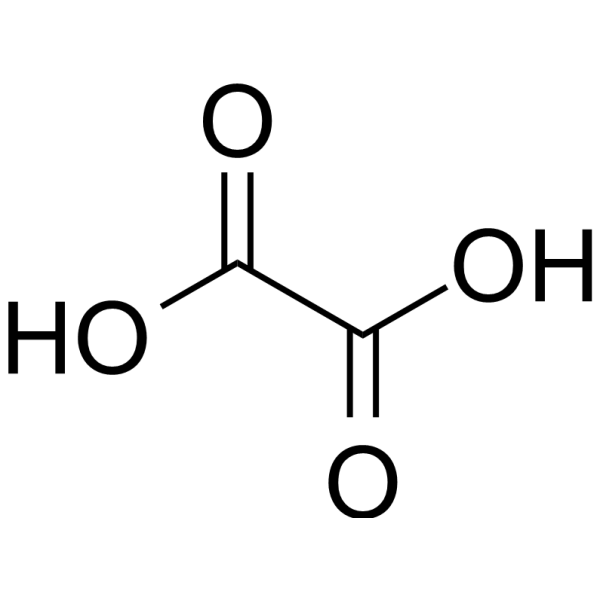
    Oxalic acid, 99%
    1 Publications Verification

    Ethanedioic acid

    Environmental Pollutants Endogenous Metabolite Infection Inflammation/Immunology
    Oxalic acid, 99% (Ethanedioic acid) is a dicarboxylic acid found in a wide variety of plants. Oxalic acid, 99% shows antioxidant acyivity and suppresses lipid peroxidation. Oxalic acid, 99% is a pathogenicity factor for sclerotinia sclerotiorum, and suppresses the oxidative burst of the host plant. Oxalic acid, 99% exerts acaricidal activity. Oxalic acid can be used for the researches of sclerotinia disease, varroatosis and inflammatory diseases .
    Oxalic acid, 99%
  • HY-B0880
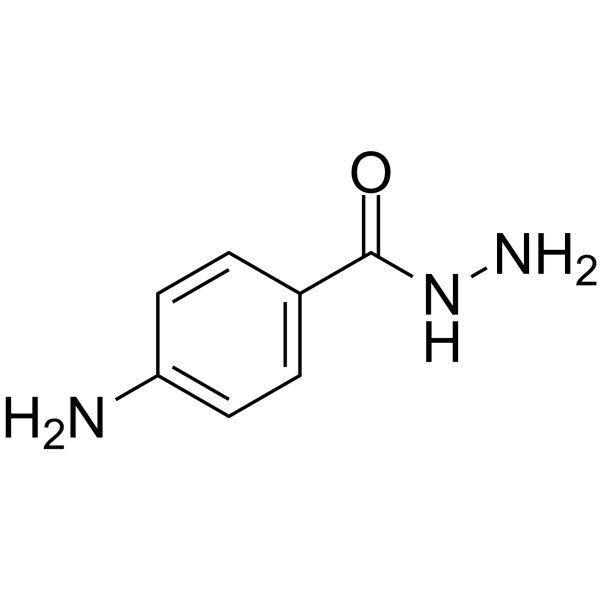
    4-Aminobenzohydrazide
    1 Publications Verification

    p-Aminobenzohydrazide; p-Aminobenzoic acid hydrazide

    Glutathione Peroxidase Neurological Disease
    4-Aminobenzohydrazide (p-Aminobenzohydrazide) is an irreversible myeloperoxidase (MPO) inhibitor (IC50=0.3 μM) that induces oxidative stress burst in neutrophils (ROS IC50=43.6 μM). 4-Aminobenzohydrazide has been used in subacute stroke research .
    4-Aminobenzohydrazide
  • HY-Y0262A
    Oxalic acid diammonium monohydrate
    1 Publications Verification

    Ethanedioic acid diammonium monohydrate

    Environmental Pollutants Endogenous Metabolite Infection Inflammation/Immunology
    Oxalic acid (Ethanedioic acid) diammonium monohydrate is a dicarboxylic acid found in a wide variety of plants.
    Oxalic acid diammonium monohydrate shows antioxidant acyivity and suppresses lipid peroxidation.
    Oxalic acid diammonium monohydrate is a pathogenicity factor for sclerotinia sclerotiorum, and suppresses the oxidative burst of the host plant. Oxalic acid diammonium monohydrate exerts acaricidal activity. Oxalic acid can be used for the researches of sclerotinia disease varroatosis and inflammatory diseases .
    Oxalic acid diammonium monohydrate
  • HY-121641

    Reactive Oxygen Species (ROS)
    Nitrosobenzene is a radical scavenger that can be used to study oxidative DNA damage and the respiratory burst reaction of neutrophils induced by nitro compounds .
    Nitrosobenzene
  • HY-N7798

    Reactive Oxygen Species (ROS) Inflammation/Immunology
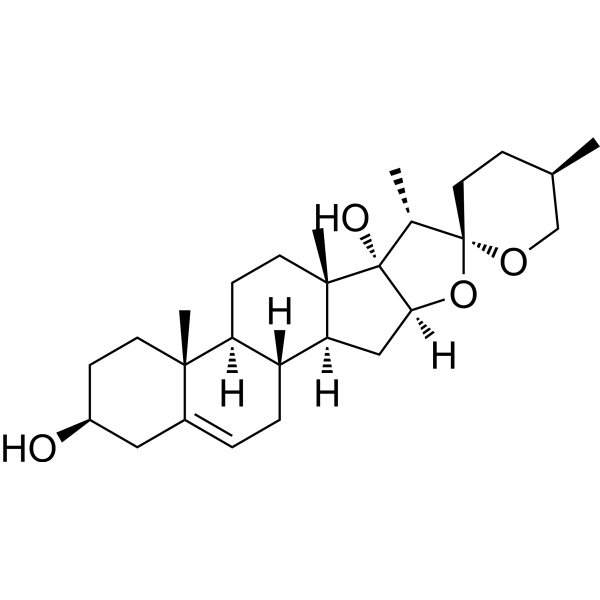
    Pennogenin is a bioactive component which can be isolated from T. govanianum rhizomes. Pennogenin exhibits significant in vitro inhibitory effect on release of ROS .
    Pennogenin
  • HY-W749980A

    cis-9,10-Epoxy-12(Z)-octadecenoic acid

    Endogenous Metabolite Others
    cis-Coronaric acid is the 9,10-cis epoxide of linoleic acid, generated by neutrophils during the oxidative burst. It has been recovered from the lungs of hyperoxic rats and from humans with acute respiratory distress syndrome. Mitochondrial dysfunction is the main feature of cis-Coronaric acid cytotoxicity, which may be due to the diol metabolites as well as the parent epoxide.
    cis-Coronaric acid
  • HY-138877A

    Phosphatase Cancer
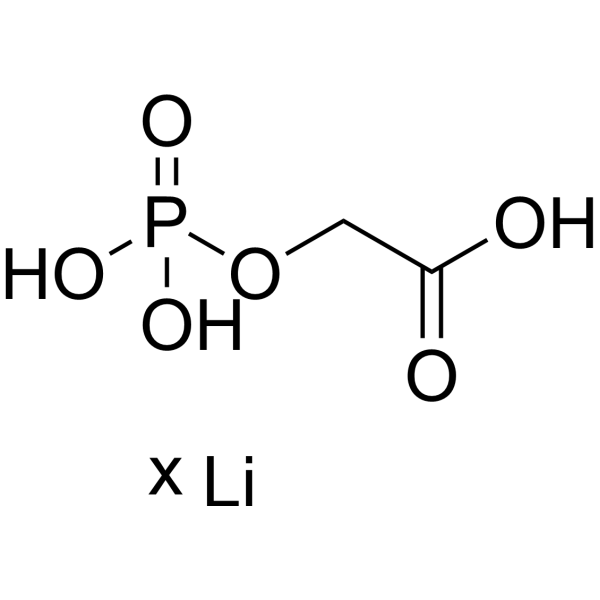
    Phosphoglycolic acid (lithium) is a competitive inhibitor of phosphoglycerate mutase (PGAM)-B, an enzyme of the glycolytic pathway. Phosphoglycolic acid increases basal and fMLF-induced levels of G6P in intact neutrophils. Phosphoglycolic acid thereby increases upstream intermediates in neutrophils, thereby amplifying the respiratory oxidative burst .
    Phosphoglycolic acid lithium
  • HY-B0880R

    p-Aminobenzohydrazide (Standard); p-Aminobenzoic acid hydrazide (Standard)

    Glutathione Peroxidase Reference Standards Neurological Disease
    4-Aminobenzohydrazide (Standard) is the analytical standard of 4-Aminobenzohydrazide. This product is intended for research and analytical applications. 4-Aminobenzohydrazide (p-Aminobenzohydrazide) is an irreversible myeloperoxidase (MPO) inhibitor (IC50=0.3 μM) that induces oxidative stress burst in neutrophils (ROS IC50=43.6 μM). 4-Aminobenzohydrazide has been used in subacute stroke research .
    4-Aminobenzohydrazide (Standard)
  • HY-114052

    Phosphodiesterase (PDE) Inflammation/Immunology
    NVP-ABE171 is an efficient, long-lasting and orally active PDE4 inhibitor with IC50 values for PDE4D, PDE4B, PDE4A and PDE4C of 1.5, 34, 602 and 1230 nM respectively. NVP-ABE171 enhances the cAMP accumulation induced by isoproterenol, inhibits the oxidative burst of eosinophils and the release of inflammatory cytokines from T cells and monocytes. NVP-ABE171 exhibits potent anti-inflammatory activity in animal models of asthma and pulmonary inflammation. NVP-ABE171 can be used for research on asthma and chronic obstructive pulmonary disease .
    NVP-ABE171
  • HY-182284

    Reactive Oxygen Species (ROS) Apoptosis Bcl-2 Family Caspase SHMT Methylenetetrahydrofolate Dehydrogenase (MTHFD) Cytochrome P450 Cancer
    Anticancer agent 310 is an antitumor agent. Anticancer agent 310 releases nitric oxide to induce mitochondrial ROS burst, triggers mitochondrial dysfunction and activates the Bax/Bcl-2-Cyt c-Caspase-9/Caspase-3 apoptotic pathway. Anticancer agent 310 also reduces the levels of SHMT2 and MTHFD2, decreases the ratios of NADPH/NADP + and GSH/GSSG, thereby disrupting redox homeostasis and exacerbating intracellular ROS accumulation. Anticancer agent 310 can be used in research related to gastric cancer .
    Anticancer agent 310

Inquiry Online

Your information is safe with us. * Required Fields.

Salutation


Country or Region *

Applicant Name *


Organization Name *

Department *


Email Address *


Product Name *

Cat. No.


Requested quantity *

Phone Number *


Remarks

Inquiry Online

Inquiry Information

Product Name:
Cat. No.:
Quantity:
MCE Japan Authorized Agent:

